


Caprarica di Lecce
 Plains
2,250 residents and a living Griko heritage make Caprarica di Lecce a village where language, stone and landscape form a coherent, unbroken identity.
Caprarica di Lecce: A Salentine Village Between Griko Roots and Olive Groves
On a flat stretch of the Salento peninsula, where the limestone soil turns ochre in summer light and old olive trees mark the edges of every field, a small village keeps a rhythm that belongs entirely to itself. The streets narrow toward a compact historic centre, the stone glows pale gold in the afternoon, and the dialect spoken on the doorsteps carries sounds that predate the modern Italian language by many centuries.
Caprarica di Lecce sits at roughly 60 metres above sea level in the province of Lecce, drawing visitors who come for two reasons that few villages in the Salento can offer together: a direct connection to the ancient Griko linguistic world, and a landscape of working olive groves and dry-stone walls that has not been rearranged for tourism. Both rewards are genuine, and both require a slow pace to appreciate.
Roots Written in Stone and Language: The Historical Identity of the Village
The name itself is the first document the village offers. In the local Salentine dialect it becomes Crapàrica, a form that points toward an older naming tradition rooted in the territory rather than in administrative convention. More remarkable still is the Griko name: Krapàreka, written in Greek characters as Κραπάρεκα. This dual naming is not a curiosity for linguists alone. It is evidence that the community once lived inside the Grecìa Salentina, the cluster of villages in the Lecce hinterland where a form of Greek — direct descendant of the Byzantine and earlier Hellenic presence in southern Italy — survived as a spoken language into the modern era.
The broader historical arc of this corner of Puglia follows the familiar Salentine sequence of pre-Roman settlement, Roman organisation, Byzantine administration, and then the long medieval period under Lombard, Norman and later Aragonese influence. Each phase left its mark not in dramatic monuments but in the logic of the land: the placement of the village centre, the orientation of the oldest streets, the presence of minor rural chapels at the edges of the territory. The community that consolidated here over the centuries was agricultural at its core, built around the olive harvest and the management of a flat but not unproductive landscape.
The patron saint of the village is San Nicola, whose feast organises the liturgical and social calendar of the year with the particular intensity that characterises Salentine religious life. Devotion to San Nicola in this part of Puglia carries layers of meaning: the saint arrived in southern Italy partly through Byzantine channels, and his presence in a village with Griko roots is not incidental. The annual celebrations concentrate community life in a way that no other moment in the calendar matches, bringing back residents who have moved to larger cities and marking the village’s sense of collective identity in public space.
The Griko language, once spoken across a much wider arc of the Salento, survives today in a handful of villages whose names still carry Greek phonetic traces — among them Κραπάρεκα, the ancient designation of modern Caprarica di Lecce.
The Village in Detail: Spaces, Buildings and Territory
The Historic Centre and Its Stone Architecture
The old core of the village is built in the warm local limestone that defines almost every settlement in the Lecce hinterland. Streets are narrow by design, offering shade against the long Salentine summer, and the ground floors of the oldest buildings press close to the lane. The scale is domestic rather than monumental: this is a village that was built by and for agricultural families, and the architecture reflects that priority. Walking through the centre at midday, when the light is hardest, the stone reads almost white; at dusk it shifts toward amber. There are no vast piazzas, but the central square functions as the social hinge of the settlement, the point where morning routines and evening gatherings concentrate.
The Parish Church Dedicated to San Nicola
The main religious building of the village is dedicated to its patron, San Nicola, and stands as the vertical reference point of the historic centre. Like many Salentine parish churches, it was built and modified across several centuries, accumulating decorative elements that reflect different periods of local prosperity. The façade addresses the square, and the interior preserves the devotional objects and votive offerings that mark a living place of worship rather than a museum space. The feast of San Nicola transforms the area immediately around the church: temporary structures, music and processions extend the sacred space outward into the surrounding streets.
Rural Chapels and Wayside Shrines
Beyond the built centre, the territory of the village is punctuated by minor chapels and roadside shrines that map a network of devotion across the agricultural land. These small structures — some barely larger than a niche, others with enough space for a small gathering — mark the old paths between fields and document how religious practice in the Salento was never confined to the parish church alone. They are worth noticing when moving through the countryside on foot or by bicycle, as each one anchors a specific place in the landscape with a name and a story.
The Olive Grove Landscape
At 60 metres above sea level on flat Salentine terrain, the territory around the village is dominated by olive cultivation. The groves here include trees of considerable age, their trunks thickened and twisted into forms that take generations to develop. This is not decorative countryside: it is a working landscape, and the olive harvest in autumn remains a practical and social event. The density of the groves, the dry-stone walls dividing the plots, and the absence of dramatic topography give the land a particular horizontal quality that rewards attention paid over time rather than at a glance.
The Griko Cultural Dimension
Caprarica di Lecce belongs to the cultural area of the Grecìa Salentina, the group of villages where the Griko language and its associated oral culture — songs, prayers, expressions — formed a distinct local identity. While the spoken language has contracted significantly over the past century, the cultural associations and municipal initiatives that work to document and transmit it give the village a living connection to this heritage. Visitors interested in this dimension will find context in the neighbouring villages of the Grecìa: the nearby community of Calimera is one of the most active centres for Griko cultural preservation in the Salento.
The Table and the Land: Agricultural Roots of the Local Kitchen
The food culture of Caprarica di Lecce grows directly from its agricultural landscape. Olive oil, produced from the old groves that surround the village, is the base ingredient around which the Salentine kitchen organises itself. Vegetables grown on the flat land nearby — including the legumes, wild greens and preserved produce that define the inland Salentine table — appear in a cuisine that is economical in its logic and generous in its results. Bread, local cheeses and the seasonal rhythm of what the garden and field produce remain the structural elements of domestic cooking here.
The food of this part of the Lecce hinterland is consistent with the broader tradition of the cucina povera salentina: a kitchen that made intelligent use of available ingredients rather than importing luxury products. The village sits within easy reach of Galatina, one of the major market towns of the Salento interior, where the food traditions of the whole area converge in a more visible way.
When and How to Visit: Planning Your Time in the Salento Interior
The months between April and June offer the most comfortable conditions for exploring Caprarica di Lecce and the surrounding Salentine countryside. Temperatures are moderate, the olive groves are in their full spring growth, and the roads are accessible without the congestion that affects the coastal areas in July and August. September and October bring the olive harvest and a return of cooler air, making the agricultural landscape particularly expressive. The summer months are viable for those already based in Lecce or along the coast, but the midday heat requires an adjusted schedule.
The village is accessible by car from Lecce in a short drive through the flat inland roads. If you arrive by car, parking is straightforward on the edges of the historic centre. The absence of a direct rail connection makes private transport practical for most visitors. The compact size of the village means that the centre can be explored on foot in a single morning, leaving time to drive or cycle through the surrounding groves in the afternoon. Visitors interested in the Griko cultural area can extend their visit to include Cannole or Arnesano, both within easy reach and each carrying a distinct character within the same Salentine landscape. Further south, Bagnolo del Salento completes a possible circuit through the quieter villages of the Lecce hinterland.
| Departure | Distance | Time by car |
|---|---|---|
| Lecce | approx. 12 km | 15–20 minutes |
| Galatina | approx. 18 km | 20–25 minutes |
| Otranto | approx. 30 km | 35–40 minutes |
| Brindisi | approx. 45 km | 45–55 minutes |
For practical and administrative information, the official municipal website at comune.capraricadilecce.le.it provides updated contact details and local notices. A visit planned around the feast of San Nicola will give access to the full expression of the village’s religious and social calendar — and to the specific energy that arrives when a community marks its own identity in public, together.
In Apulia More villages to discover
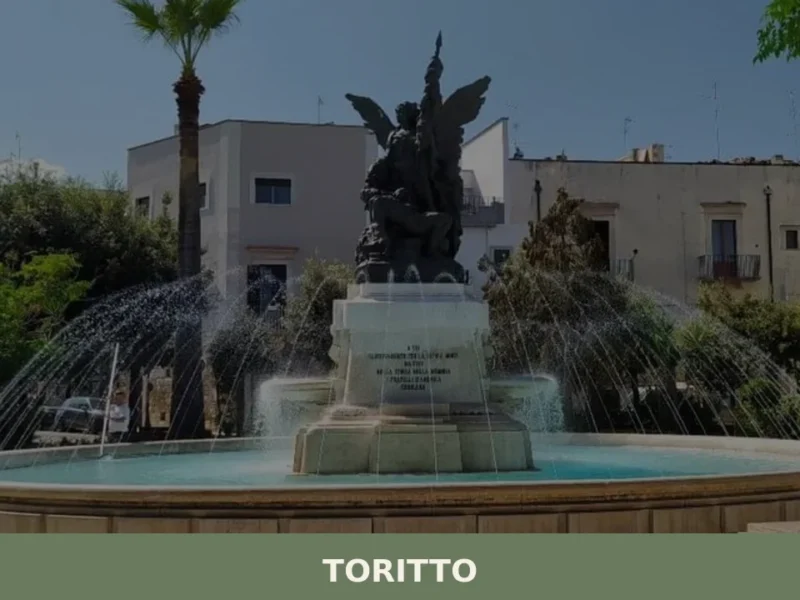
Toritto
 Hills
Hills
What to see in Toritto, Italy: Explore almond groves and the Chiesa Madre at 240 m. Discover vibrant festivals and indulge in local cuisine.
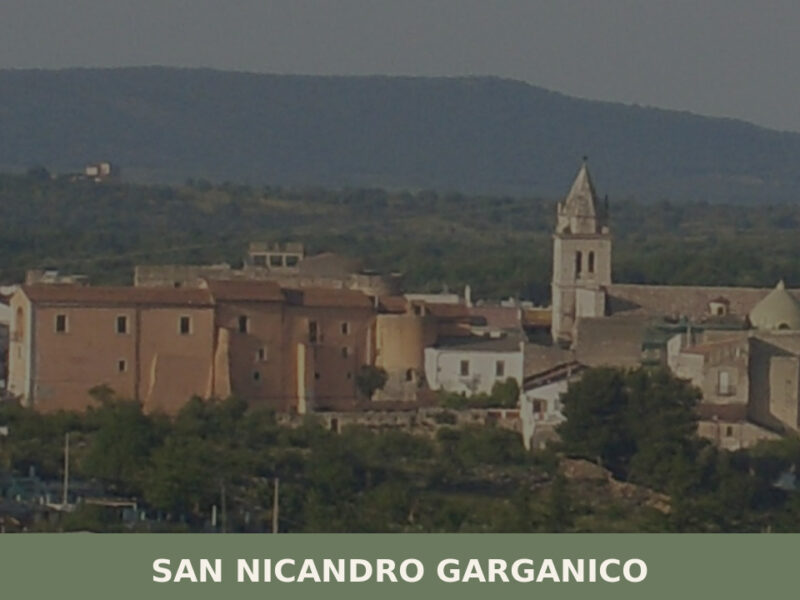
San Nicandro Garganico
 Sea
Sea
A hilltop settlement on the Gargano promontory with a Norman castle, prehistoric dolmen, and a living agricultural culture shaped by wheat, olives, and limestone.
San Paolo di Civitate
Plains
A ridge-top village above the Tavoliere plain in Foggia province, San Paolo di Civitate holds Roman ruins, Norman battlefield history, and an unhurried agricultural life.
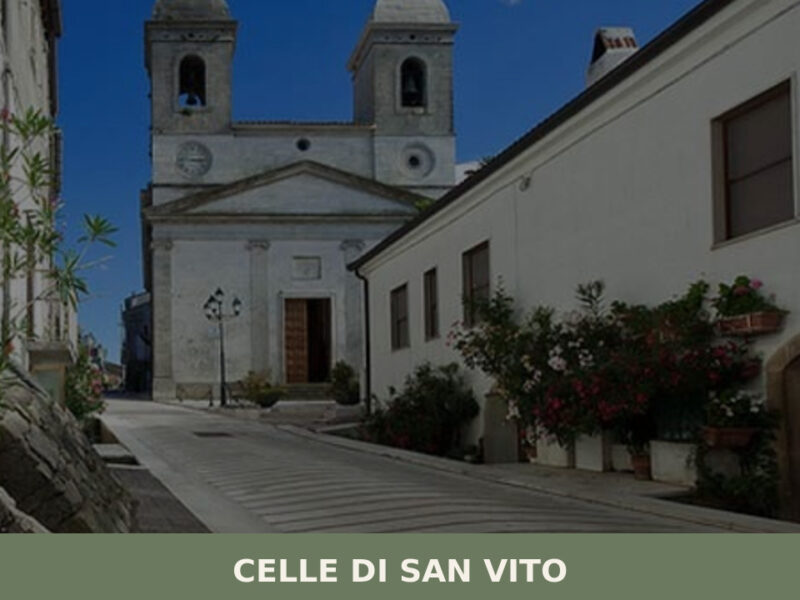
Celle di San Vito
 Mountain
A 148-resident Franco-Provençal enclave at 726 metres in the Daunia sub-Apennines. Discover what to see in Celle di San Vito, from medieval stone lanes to linguistic heritage.
Giovinazzo
Sea
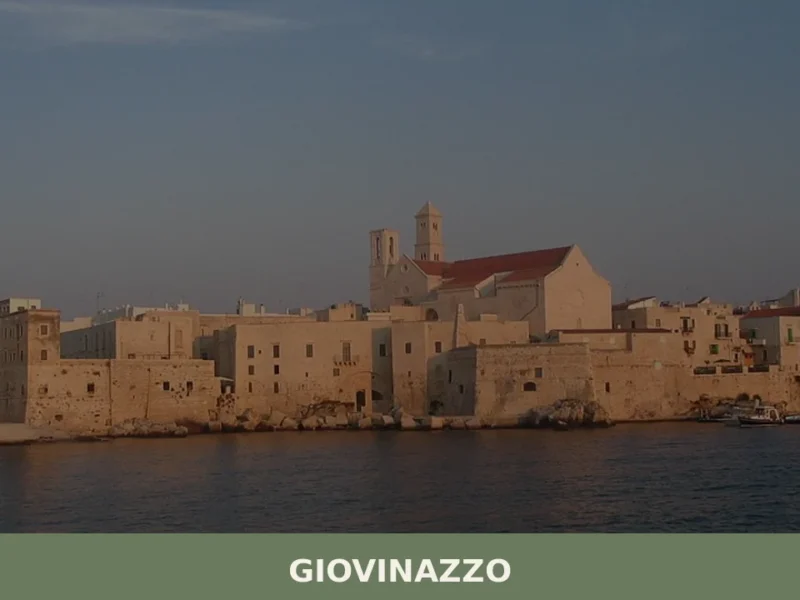
The walls of Giovinazzo’s old port form an irregular semicircle jutting out into the Adriatic Sea, visible from the SS16 state road that runs along the Bari coastline. This small city of 19,366 inhabitants, sitting at just 7 metres above sea level, retains a compact medieval historic centre, still partly surrounded by the original city […]
Monopoli
Sea
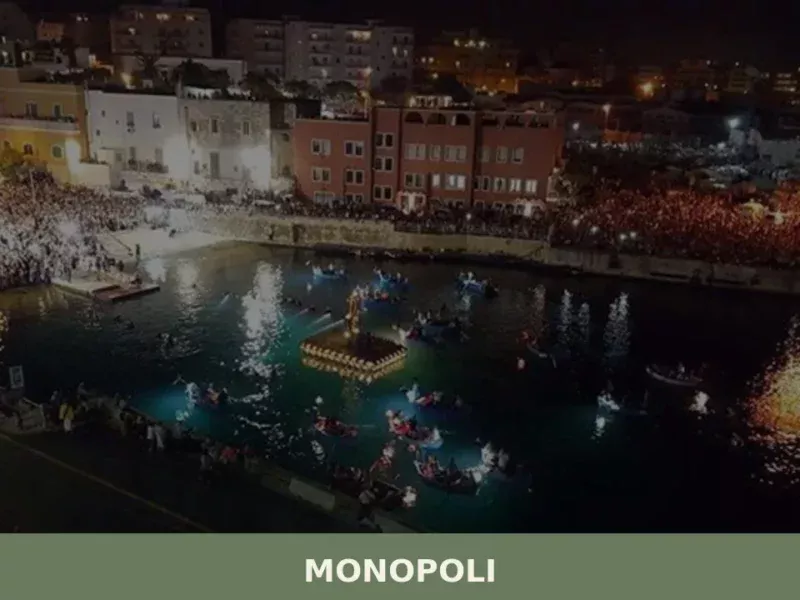
From the promontory where the Castle of Charles V stands, the view sweeps across the Adriatic, a horizon of waters that have shaped Monopoli’s identity for centuries. This port city, whose name evokes the idea of a “unique city,” reveals itself through its architecture, which tells of historical layers, from Messapian walls to Spanish fortifications. […]
Casalvecchio di Puglia
Hills
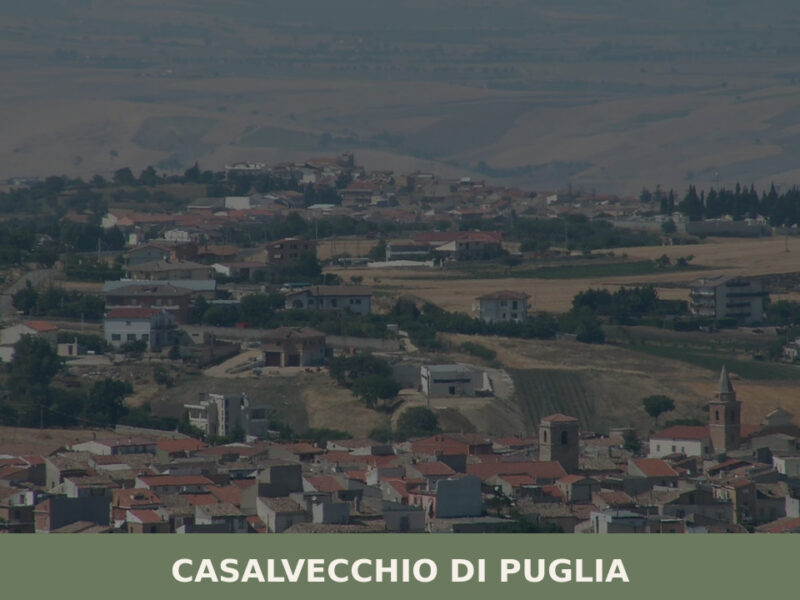
An Arbëreshë village of 1,689 inhabitants perched at 465 metres in the Daunia hills. A guide to its historic centre, rural paths, and slow-paced southern Italian life.
San Severo
Plains
A ridge-top village above the Tavoliere plain in Foggia province, San Paolo di Civitate holds Roman ruins, Norman battlefield history, and an unhurried agricultural life.
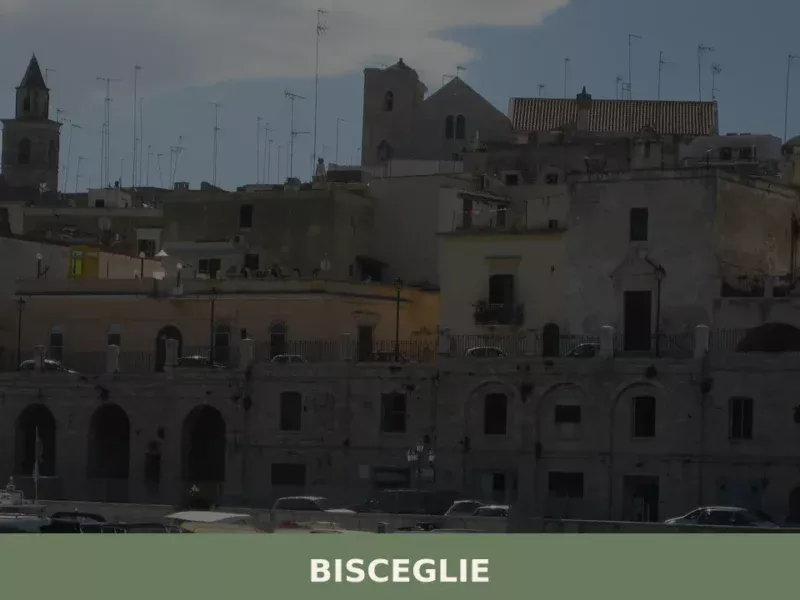
Bisceglie
Sea
Discover what to see in Bisceglie, Puglia: Bronze Age dolmens, a Norman cathedral, Swabian castle, local food and practical travel tips for the Adriatic coast.
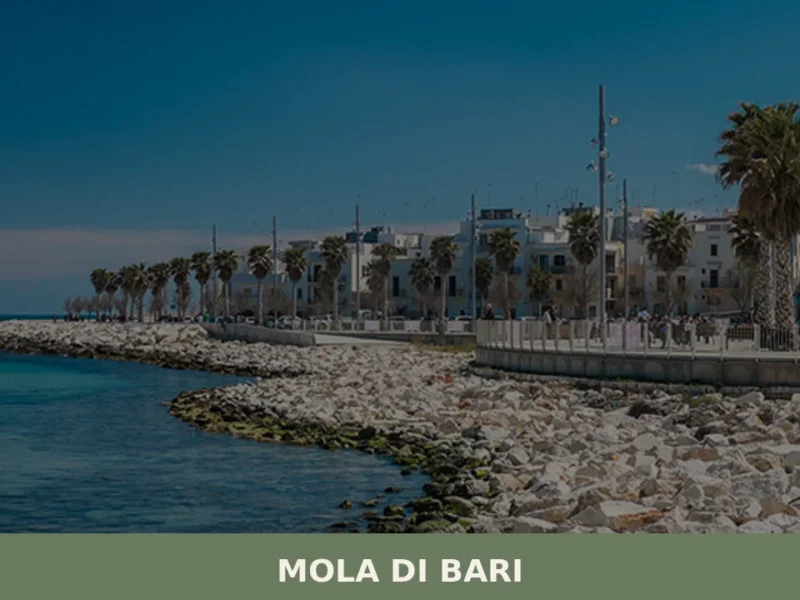
Mola di Bari
Sea
In 1278, Charles I of Anjou ordered the construction of a castle on the Adriatic coast south of Bari, at a spot where fishermen had been hauling their boats ashore for generations. That castle still stands, and it marks the exact centre of Mola di Bari, a town of 24,416 inhabitants spread out at just […]
🏡 Know Caprarica di Lecce better than we do?
If you’re a local or have been there, your knowledge matters: add what’s missing or fix a detail on this page.