


Bisceglie
 Sea
Sea
Discover what to see in Bisceglie, Puglia: Bronze Age dolmens, a Norman cathedral, Swabian castle, local food and practical travel tips for the Adriatic coast.
Discover Bisceglie
Bisceglie is a coastal town of 53,184 inhabitants on the Adriatic shore of Puglia, in the province of Barletta-Andria-Trani. Its economy has long been anchored in agriculture and textile manufacturing — a dual identity, part field and part factory floor, that distinguishes it from the purely fishing towns of the same coastline. For visitors deciding what to see in Bisceglie, the town offers a compact medieval centre, a well-preserved castle, and one of the most significant prehistoric dolmen sites in southern Italy, all within a few kilometres of each other.
History of Bisceglie
The territory around Bisceglie was inhabited long before any medieval chronicle recorded the town by name. The dolmen known as La Chianca, a megalithic funerary monument erected during the Bronze Age, stands in the agricultural hinterland as direct physical evidence of settlement dating back roughly three thousand years. The structure — a horizontal stone slab supported by vertical uprights — was used as a collective burial site, and skeletal remains discovered within it confirm its funerary function. This makes Bisceglie one of the few towns along the Adriatic coast where prehistoric occupation is not merely assumed but materially documented.
During the Norman period, Bisceglie acquired the administrative and ecclesiastical framework that still defines its historic centre. The Cathedral of San Pietro Apostolo was consecrated in 1167, a date confirmed by documentary record, making it a reliable anchor for understanding the town’s medieval development. The Normans also fortified the town, and the castle — later modified under subsequent rulers — reflects the layered political control that characterised much of Apulian history: Norman, Swabian, and Angevin authority each left architectural traces. The town also fell within the orbit of the Bishopric of Bisceglie, which existed as an independent diocese before being merged with the Diocese of Trani in later centuries.
From the early modern period onward, Bisceglie developed as an agricultural centre, with olive cultivation and viticulture forming the economic backbone of the surrounding countryside. The textile manufacturing sector, which today constitutes a significant share of local industry, expanded during the twentieth century, giving the town a productive character distinct from the more exclusively touristic identity of some Adriatic neighbours. The local dialect — Vescegghie in the biscegliese tongue — remains a living marker of the town’s distinct cultural identity within the broader Apulian linguistic landscape.
What to see in Bisceglie: 5 must-visit attractions
Dolmen La Chianca
Dating to the Bronze Age, La Chianca is one of the largest and best-preserved dolmens in Puglia. The covering slab measures approximately 5.5 metres in length and rests on several vertical stone supports. Excavations confirmed its use as a communal burial chamber, with multiple human skeletal remains recovered from beneath and around the structure.
Cathedral of San Pietro Apostolo
Consecrated in 1167 and built in the Apulian Romanesque style, the cathedral features a three-portal façade with carved stone decorations and a blind arcade typical of Norman ecclesiastical architecture in southern Italy. The interior preserves carved capitals and liturgical furnishings accumulated over several centuries of continuous use.
Castello Svevo
The castle of Bisceglie, originally built during the Norman period and substantially reworked under Swabian and later Aragonese rule, stands at the edge of the old town close to the harbour. Its square tower plan and reinforced walls reflect the defensive priorities of successive rulers who held the Adriatic coastline as a strategic corridor.
Church of Santa Margherita
Built in the twelfth century and later modified, Santa Margherita is notable for its Romanesque portal and the cycle of frescoes preserved in its interior, which represent some of the earliest figurative painting surviving in the Bisceglie area. The church is dedicated to the early Christian martyr Margaret of Antioch and sits in the lower section of the historic centre.
The Historic Harbour and Old Town
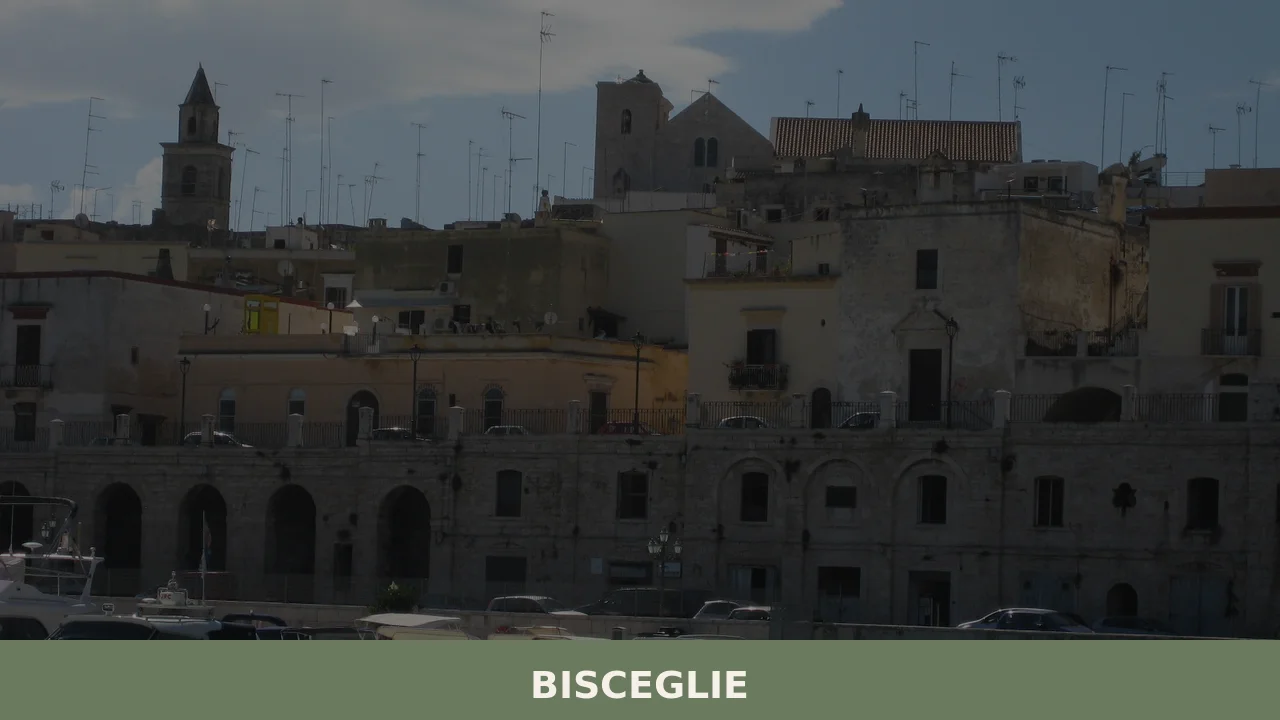
Bisceglie’s historic centre runs down toward a small working harbour that has served coastal trade for centuries. The tight grid of the centro storico, with its pale limestone buildings, connects the Norman-era religious monuments to the waterfront, where fishing boats still operate alongside the tourism infrastructure of the Adriatic coast.
Local food and typical products
Puglia’s agricultural wealth is well represented in Bisceglie’s local food culture. The surrounding territory produces olives, almonds, and grapes, and these raw materials translate directly into the kitchen. Seppie e piselli — cuttlefish with peas — is a coastal staple, and tiella di riso, patate e cozze, the layered baked dish of rice, potatoes, and mussels that defines the Bari-area Adriatic table, appears on local menus with regularity. Almonds from the area have a long cultivation history and appear in local pastry in the form of dolci di mandorle, a category of almond-based confections that stretches across the whole province. For a broader orientation on Puglia’s designated food products, the Regione Puglia maintains an official register of regional agricultural and food heritage.
Olive oil produced in the Barletta-Andria-Trani province falls within the wider Apulian olive oil tradition, much of it based on the Coratina cultivar, known for its high polyphenol content and pronounced bitterness when fresh. Local bread, shaped in the pane di Altamura tradition that dominates much of central Puglia, accompanies most meals. Markets in and around the town centre are the most direct way to engage with the seasonal produce cycle, particularly in autumn when almonds and late-harvest olives are both available fresh.
Best time to visit Bisceglie
The Adriatic coast of Puglia has a Mediterranean climate: hot, dry summers and mild, occasionally wet winters. For those visiting primarily to see the dolmen site, the churches, and the castle, May and June offer the most practical conditions — warm enough to spend extended time outdoors, but before the peak summer crowds that concentrate along the coast in July and August. September and early October are equally viable, with harvest activity in the agricultural hinterland adding an additional layer of local life to observe. The Comune di Bisceglie publishes the official calendar of local festivals and events, including the patronal feast of the town’s saints, which typically takes place in spring.
Summer brings the beach-going population in numbers, and the stretch of Adriatic coast adjacent to the town fills with seasonal activity from late June through August. Visitors who want direct access to the sea alongside the historical sites will find the summer months logistically straightforward, though accommodation books up quickly. Winter visits are feasible for those focused on the monuments rather than the coast — the dolmen site is accessible year-round, and the cathedral and castle can be visited outside the holiday calendar without competition for space.
How to get to Bisceglie
Bisceglie sits on the Adriatic coast of Puglia, roughly midway between Bari and Barletta, and is well connected by both rail and road.
- By train: Bisceglie has its own station on the main Adriatic railway line (Ferrovie dello Stato). Direct regional trains run from Bari Centrale in approximately 30–40 minutes, and from Barletta in around 20 minutes. The station sits close to the town centre, making arrival on foot practical.
- By car: The A14 Bologna–Taranto motorway runs inland; the nearest useful exit is Trani or Barletta, each roughly 10–15 kilometres from Bisceglie, with the SS16 Adriatica connecting the coast road directly to the town.
- By air: Bari Karol Wojtyła Airport (BRI) is the closest international airport, approximately 35–40 kilometres south of Bisceglie. Car rental is available at the airport; alternatively, a train from Bari Centrale provides a direct connection.
- From Bari city centre: By regional train, around 30–40 minutes. By car via the SS16 coastal road, approximately the same time depending on traffic.
Where to stay in Bisceglie
Accommodation in Bisceglie ranges from small hotels and B&Bs in the historic centre to holiday apartments along the coastal strip. Staying within or immediately adjacent to the old town puts visitors within walking distance of the cathedral, the castle, and the harbour, which is the most practical base for those focused on the historic monuments. The coastal zone south and north of the centre has a higher concentration of seasonal accommodation — apartments and small hotels that cater to the summer beach market and are often more affordable outside July and August.
Agriturismo options exist in the agricultural territory inland from the town, particularly among olive and almond farms, and these offer a different orientation: quieter surroundings and closer proximity to the dolmen site at La Chianca. For visitors who prefer this type of stay, booking well in advance is advisable for the summer period. The Viaggiare in Puglia portal, the official regional tourism platform, provides a searchable database of registered accommodation across all categories in the Barletta-Andria-Trani province.
More villages to discover in Puglia
The Puglia region extends across markedly different landscapes, and the towns of the Adriatic coast share only a surface similarity with those further inland or in the deep south. Visitors who have explored what to see in Bisceglie and want to continue along the coast might consider Mola di Bari, a fishing town south of Bari with its own Angevin castle and a direct relationship with the sea that has shaped its urban form and economy over centuries. Further south still, Acquaviva delle Fonti offers a very different character — an inland town of the Alta Murgia plateau, built around a cathedral and a ducal palace, where the agricultural rhythms of the interior rather than the coast define daily life.
For those willing to travel the full length of the region, Patù in the Salento peninsula represents Puglia’s southern edge, with its own prehistoric monument — the Centopietre, a structure of uncertain medieval or earlier origin — providing an interesting counterpoint to Bisceglie’s Bronze Age dolmen. In the northern part of the region, Poggio Imperiale occupies the Capitanata plain of the Foggia province, a landscape of wide grain fields and isolated rural settlements that reflects the agricultural economy of the Tavoliere in a register entirely unlike the Adriatic coast towns of the Barletta-Andria-Trani province.
Frequently asked questions about Bisceglie
What is the best time to visit Bisceglie?
The ideal time to visit Bisceglie depends on your interests. For exploring historical sites like the Dolmen La Chianca, the Cathedral, and the Castle, May and June offer pleasant temperatures before the peak summer heat and crowds. September and early October are also excellent, providing warm weather, fewer visitors, and the chance to observe agricultural harvest activities. If you're primarily interested in beach activities, July and August are perfect, although accommodation books up quickly. Don't miss the town's patronal feast honoring Saints Mauro, Sergio, and Pantaleone, which takes place on the first Sunday of August, offering a vibrant local experience.
What are the historical origins of Bisceglie?
Bisceglie boasts deep historical roots, evidenced by the Dolmen La Chianca, a significant Bronze Age megalithic funerary monument dating back approximately three thousand years. This prehistoric site confirms early human settlement in the area. The town's medieval identity was largely shaped during the Norman period, when structures like the Cathedral of San Pietro Apostolo were consecrated in 1167, and fortifications, including the castle, were established. Over centuries, various rulers like the Swabians and Aragonese further influenced its architecture and development, contributing to its rich historical tapestry.
What to see in Bisceglie? Main monuments and landmarks
Bisceglie offers a compact array of historical and cultural sights. Must-visit attractions include the **Dolmen La Chianca**, a remarkably preserved Bronze Age megalithic monument located in the agricultural hinterland. In the historic center, explore the **Cathedral of San Pietro Apostolo**, a stunning example of Apulian Romanesque architecture consecrated in 1167. Nearby, the **Castello Svevo**, originally Norman and later modified, stands as a testament to various rulers. Don't miss the **Church of Santa Margherita** with its Romanesque portal and early frescoes, and take time to wander through the charming **Historic Harbour and Old Town**, where narrow streets lead to the waterfront.
What are the main natural or scenic attractions of Bisceglie?
Bisceglie's primary natural and scenic attraction is its position along the Adriatic coastline. The town's historic harbour provides picturesque views of fishing boats set against the backdrop of the old town's pale limestone buildings. Visitors can enjoy the coastal strip, which comes alive with seasonal activity during the summer months. While there are no extensive natural parks or reserves explicitly mentioned, the sea itself and the characteristic Apulian agricultural hinterland, dotted with olive and almond groves, offer a tranquil and authentic natural landscape perfect for leisurely drives or quiet contemplation.
Where to take the best photos in Bisceglie?
For photographers, Bisceglie offers several captivating spots. The **Historic Harbour** is ideal, especially at sunrise or sunset, capturing fishing boats, the old town, and the Adriatic Sea. The **Castello Svevo**, particularly from its exterior vantage points near the harbour, provides impressive shots of medieval fortifications. Wander through the narrow, winding streets of the **Old Town (centro storico)** to capture charming architectural details and the authentic atmosphere of Apulian life. Lastly, the ancient **Dolmen La Chianca**, set amidst the agricultural landscape, offers a unique and evocative subject, especially with the golden light of late afternoon.
Are there museums, churches or historic buildings to visit in Bisceglie?
Yes, Bisceglie is rich in historical and architectural sites. You can visit the impressive **Cathedral of San Pietro Apostolo**, a Norman-era edifice consecrated in 1167, showcasing Apulian Romanesque style with intricate carvings. The **Church of Santa Margherita**, dating from the twelfth century, is also notable for its Romanesque portal and preserved interior frescoes. Dominating the edge of the old town is the **Castello Svevo**, a robust fortress with Norman origins and later modifications. While no specific museums are detailed, the entire **Historic Centre** functions as an open-air museum, with its ancient streets and buildings telling centuries of history.
What can you do in Bisceglie? Activities and experiences
In Bisceglie, visitors can immerse themselves in a blend of history, culture, and coastal relaxation. Explore the ancient **Dolmen La Chianca** to connect with prehistoric Puglia, then delve into the medieval past by visiting the **Cathedral of San Pietro Apostolo**, the **Castello Svevo**, and the **Church of Santa Margherita**. Stroll through the charming **Historic Harbour and Old Town**, admiring the architecture and coastal views. During summer, enjoy the nearby beaches and sea. Engage with local food culture by sampling specialties like 'seppie e piselli' or 'tiella di riso, patate e cozze,' and discover regional products at local markets, especially almonds and olive oil.
Who is Bisceglie suitable for? Families, couples, hikers, solo travelers?
Bisceglie is a versatile destination appealing to a range of travelers. It's excellent for **history and culture enthusiasts** eager to explore its prehistoric dolmen, medieval castle, and Romanesque churches. **Families** will appreciate the combination of historical sites and access to the Adriatic coast for summer beach activities, with varied accommodation options. **Couples** can enjoy romantic strolls through the historic old town and along the harbour. **Foodies** will delight in the local culinary traditions and agricultural products. While not specifically a hiking destination, its blend of coastal charm and historical depth makes it an engaging spot for **solo travelers** seeking an authentic Apulian experience.
What to eat in Bisceglie? Local products and specialties
Bisceglie's cuisine proudly reflects Puglia's agricultural abundance and coastal influences. Must-try specialties include 'seppie e piselli' (cuttlefish with peas), a beloved coastal staple, and 'tiella di riso, patate e cozze,' a flavorful baked dish of rice, potatoes, and mussels. The fertile hinterland provides excellent olives, almonds, and grapes. Local pastries feature 'dolci di mandorle,' delicious almond-based confections. Don't miss the high-quality local olive oil, often from the Coratina cultivar, and the traditional 'pane di Altamura' style bread that accompanies most meals. Seasonal markets are perfect for discovering fresh produce and regional delicacies.
Nearby Villages near Bisceglie
In Apulia More villages to discover
San Paolo di Civitate
 Plains
A ridge-top village above the Tavoliere plain in Foggia province, San Paolo di Civitate holds Roman ruins, Norman battlefield history, and an unhurried agricultural life.
Deliceto
 Hills
Hills
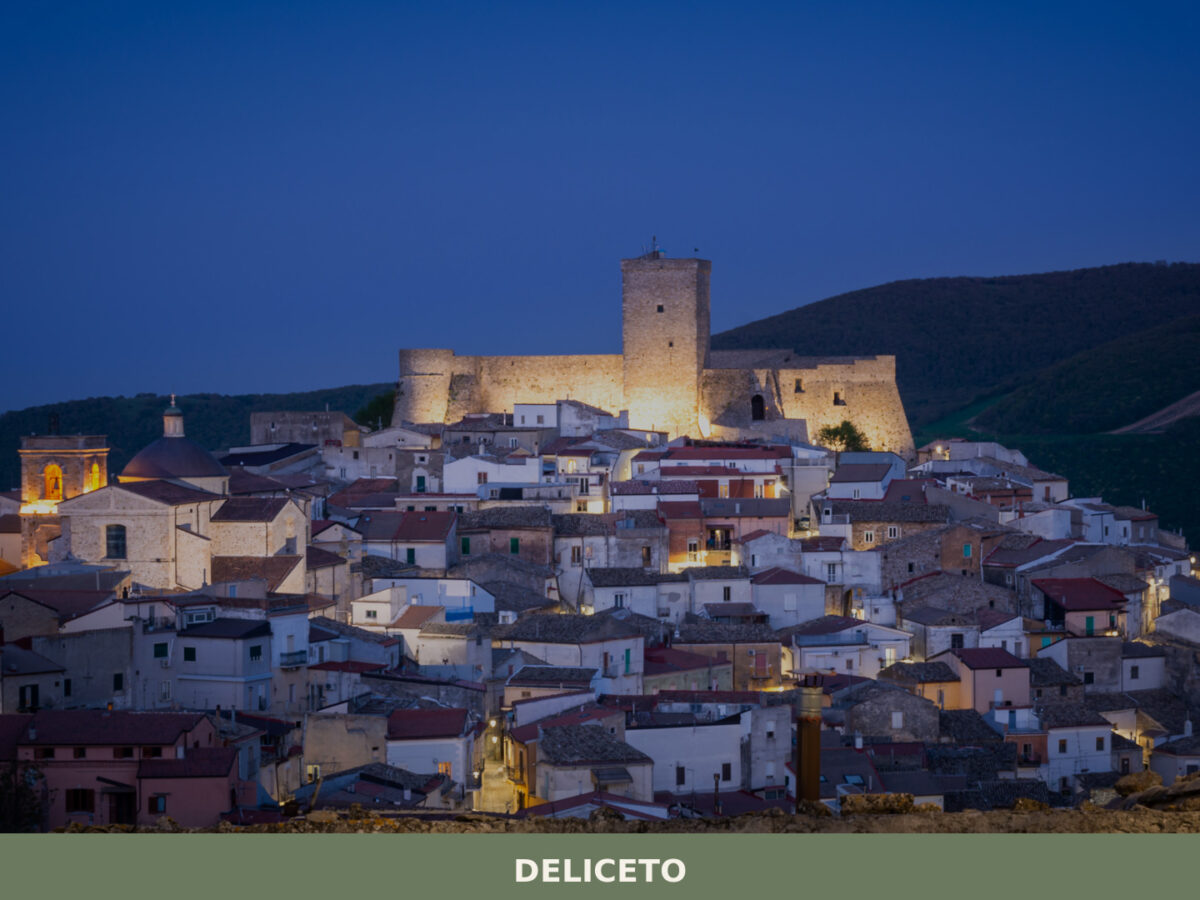
Deliceto rises at 575 metres on a ridge of the Subappennino Dauno, commanding the Tavoliere plain. A Norman castle, layered churches, and a stone-built historic centre define this compact Puglia hill village.
Sammichele di Bari
Hills
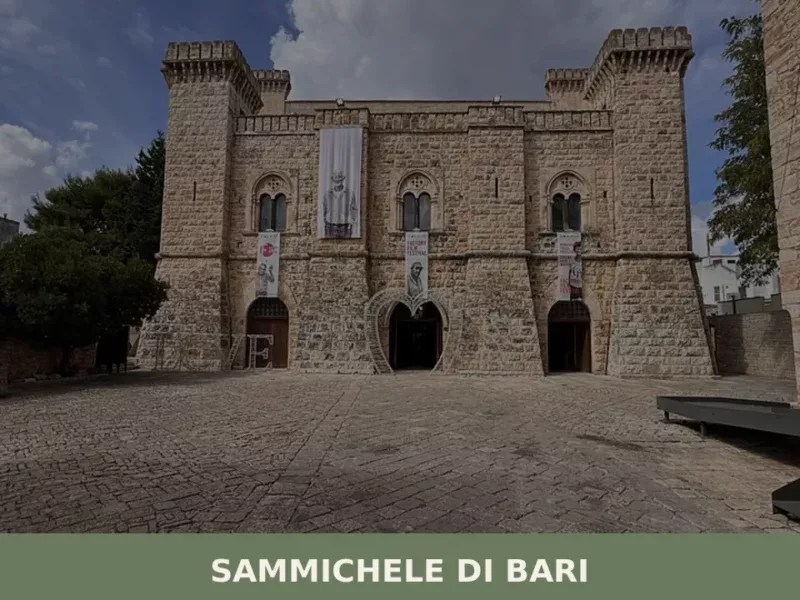
Sammichele di Bari, a settlement of 6,656 inhabitants, is located 280 meters above sea level, in the heart of the Murgia dei Trulli and the Canale di Pirro. Its geographical position, on a rise overlooking the surrounding plain, has defined its role throughout the centuries. Officially founded in the 17th century by the will of […]
Ordona
Plains
Ordona sits on the Tavoliere plain near Foggia, above the ancient Daunian-Roman city of Herdonia. A guide to its archaeology, food, and surroundings.
Arnesano
Plains
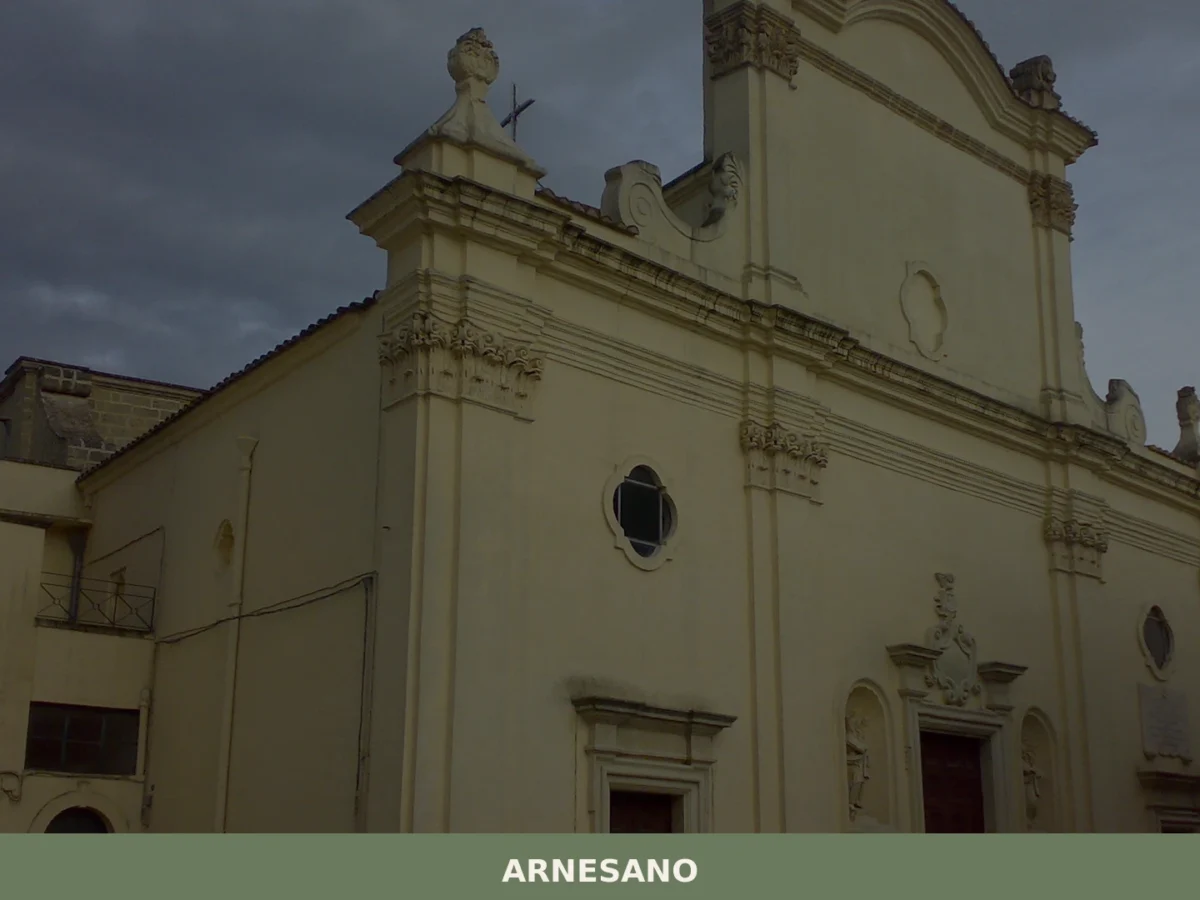
Discover what to see in Arnesano, a Lecce hinterland comune in the Valle della Cupa. History, food, travel tips and the best of the Salento interior.
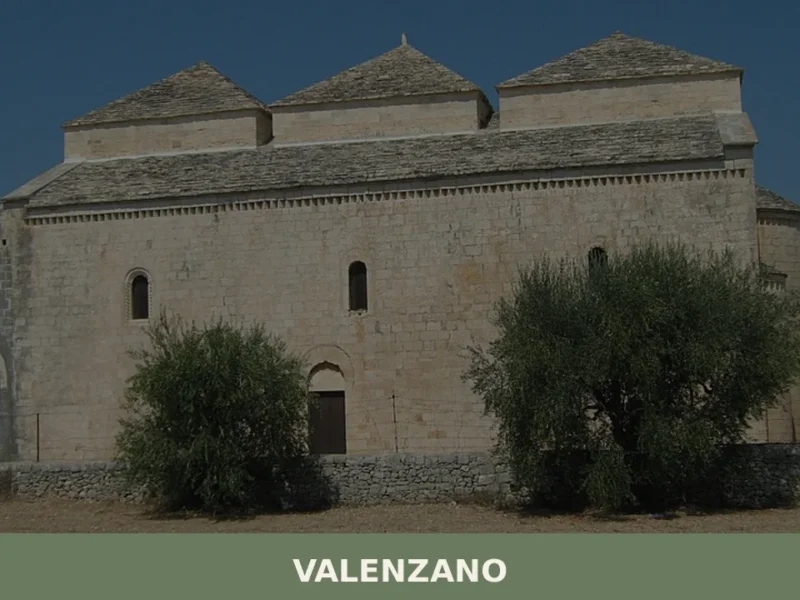
Valenzano
Plains
What to See in Valenzano: explore the Castle and Mother Church. Discover authentic flavors and experience memorable events in the Apulian village.
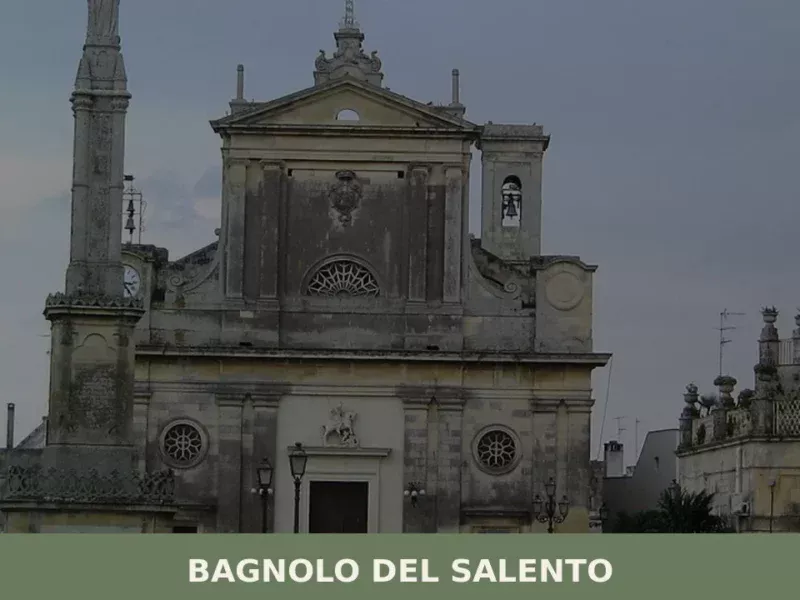
Bagnolo del Salento
Plains
Bagnolo del Salento: discover the village, visit historic churches, and taste traditional cuisine. Plan your trip now!
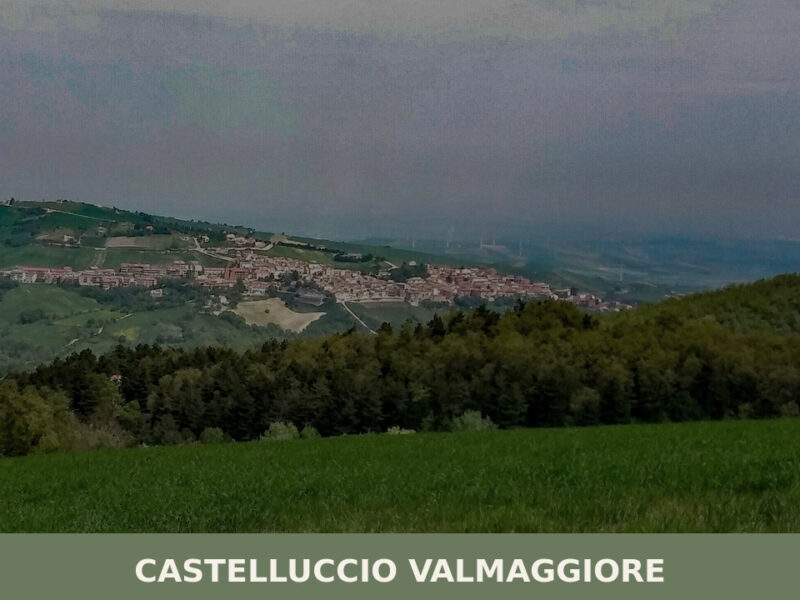
Castelluccio Valmaggiore
 Mountain
A hilltop village of 1,207 residents at 630 metres in the Daunian Sub-Apennines. Medieval lanes, long views over the Tavoliere plain, and mountain cuisine far from coastal Puglia.
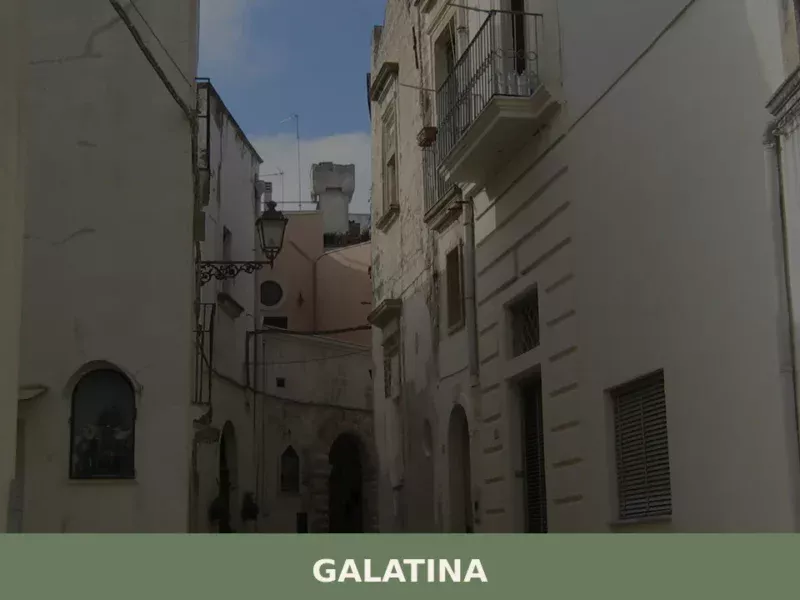
Galatina
Plains
Discover what to see in Galatina, Puglia: Gothic frescoes, tarantismo history, local food and practical travel tips for this Salento city near Lecce.
Manduria
Sea
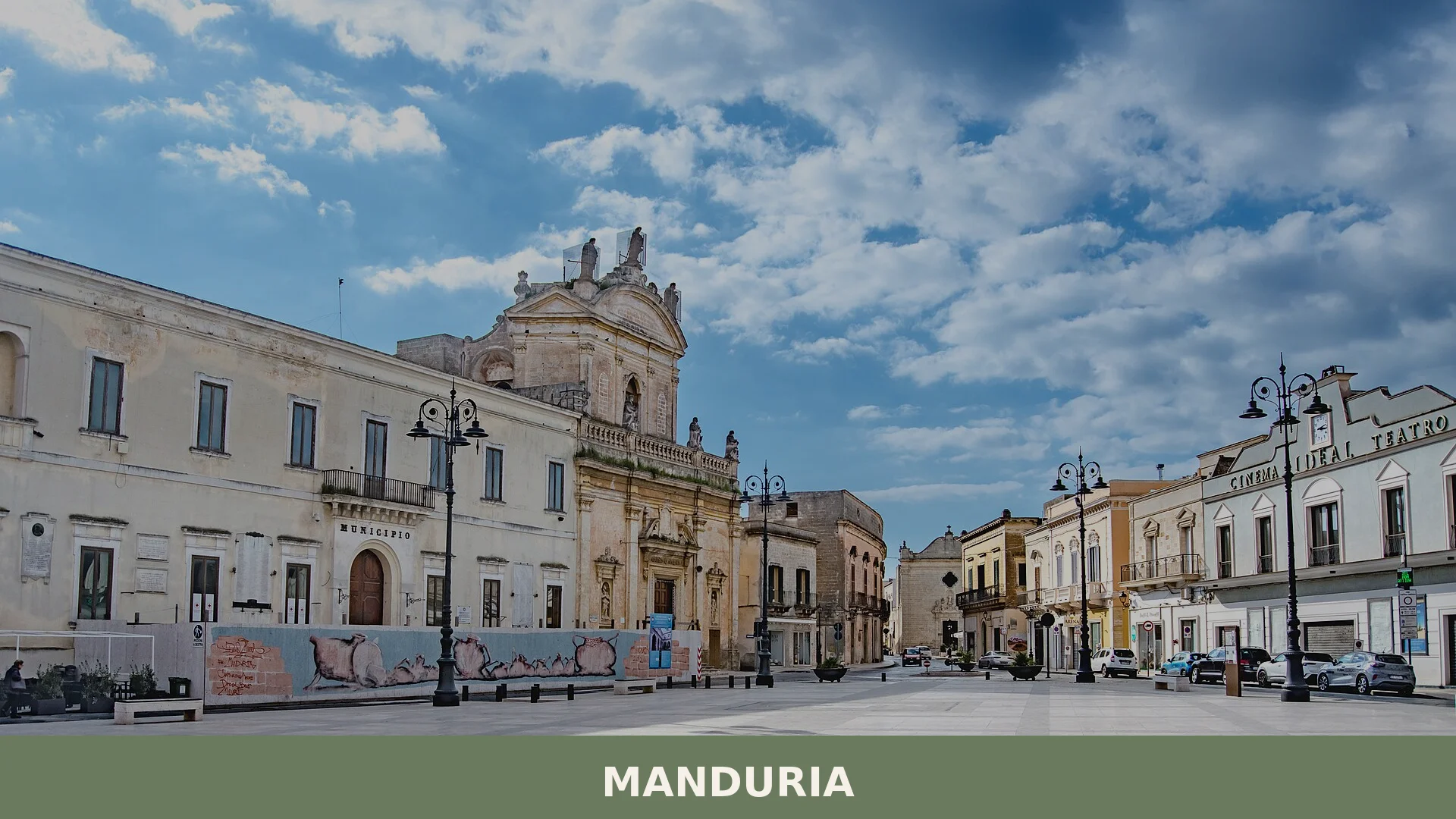
A territory where Messapic walls still stand and Roman roads connect to the coast. Manduria earned its title as a City of Art through centuries of layered stone and faith.


🏡 Know Bisceglie better than we do?
If you’re a local or have been there, your knowledge matters: add what’s missing or fix a detail on this page.