


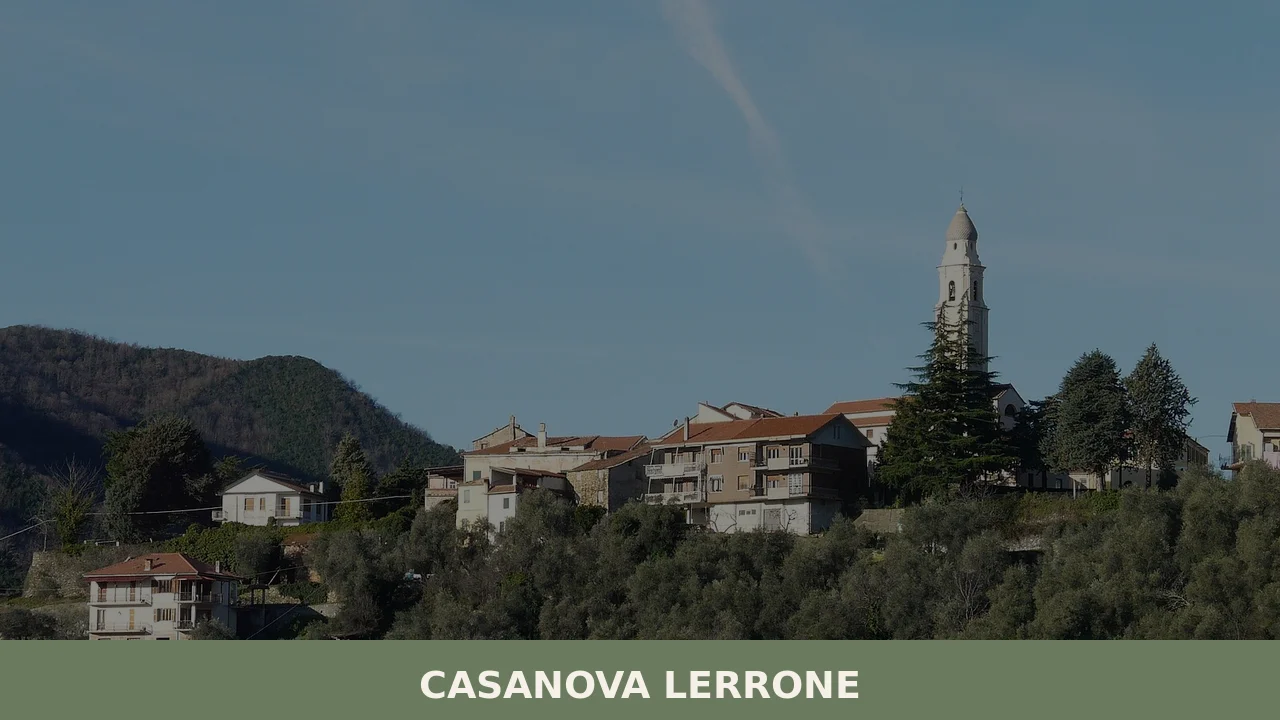
Casanova Lerrone
 Hills
Hills
What to see in Casanova Lerrone, Italy: 752 inhabitants, 10 bordering municipalities. Discover top attractions, local food and how to get there. Explore now.
Discover Casanova Lerrone
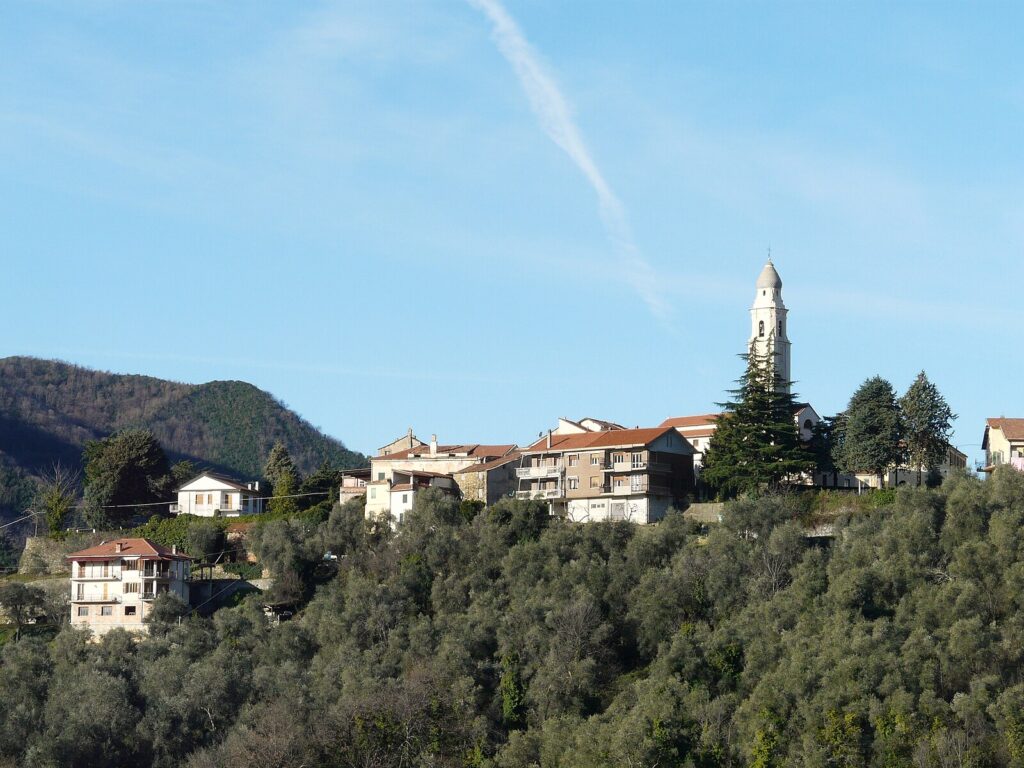
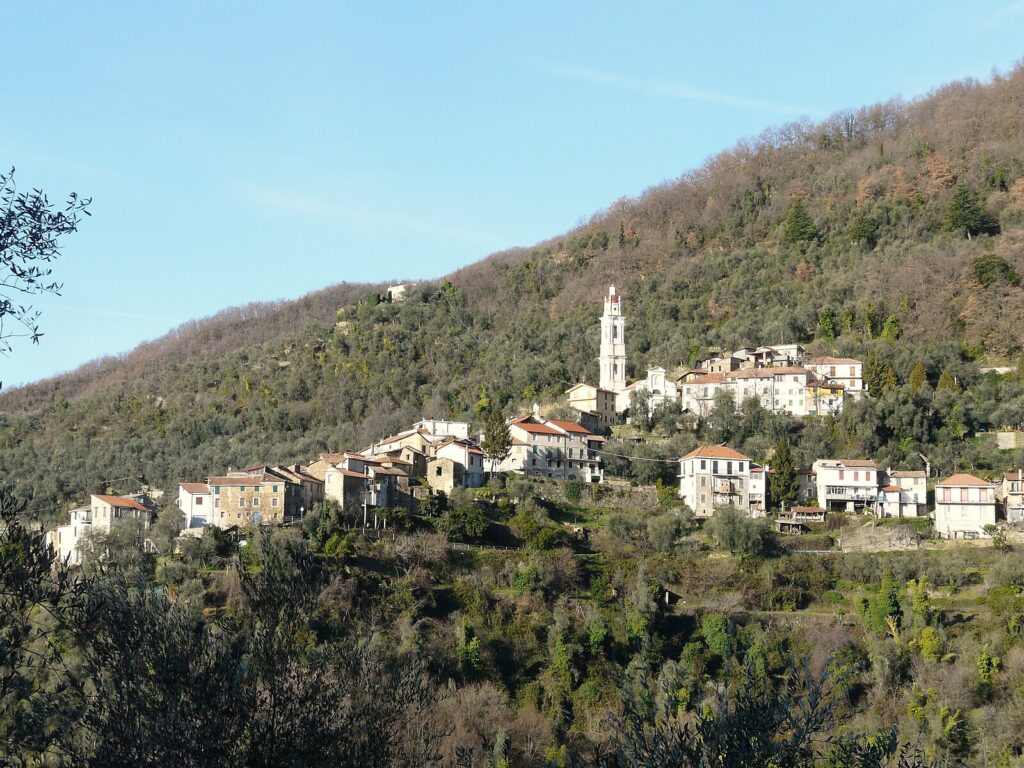
The Lerrone valley runs between ridges of the Ligurian Apennine at roughly 300 m (984 ft) above sea level, and the houses of Casanova Lerrone follow the contour of the slope with the deliberate logic of settlements built before roads mattered more than water sources. Ten municipalities share a boundary with this comune — Borghetto d’Arroscia, Cesio, Garlenda, Onzo, Ortovero, Ranzo, Stellanello, Testico, Vessalico, and Villanova d’Albenga — forming a dense web of hilltop communities across the Province of Savona.
The territory reads like a cross-section of inland Liguria: olive groves on the lower slopes, scrub woodland above, and the persistent sound of the Lerrone stream below the settlement.
Visitors researching what to see in Casanova Lerrone will find a compact comune of 752 inhabitants positioned 80 km (50 mi) southwest of Genoa and 45 km (28 mi) southwest of Savona. The village offers direct access to the network of rural paths connecting the Lerrone and Arroscia valleys, along with a set of local churches and historic rural architecture that define inland western Liguria. Casanova Lerrone, Liguria, Italy sits at a crossroads of minor roads linking the coastal strip near Albenga to the higher Apennine terrain — a geographic position that shaped its history and still defines how visitors approach it today.
History of Casanova Lerrone
The name Casanova derives from the Latin casa nova, meaning “new house” or “new settlement,” a toponym found across northern Italy wherever medieval communities expanded beyond an existing nucleus. The second element, Lerrone, identifies the watercourse that gives the valley its name and anchors the village geographically within the broader network of Ligurian inland settlements. In the Ligurian dialect, the village is known as Casanêuva, a phonetic compression that reflects the regional linguistic shift from standard Italian vowel patterns. This dual naming convention — official Italian alongside the local Ligurian form — is common across the Province of Savona and signals the persistence of a pre-Italian linguistic identity.
Throughout the medieval period, the Lerrone valley formed part of the contested interior territory between the Republic of Genoa and various feudal lords who controlled the Ligurian hinterland.
The Province of Savona, in which Casanova Lerrone sits, was historically a zone of commercial and military passage between the coast and the Piedmontese plain. Settlements at this altitude functioned as relay points for the movement of goods — olive oil, wool, and salt among them — along routes that predated the modern road network entirely. The positioning of Casanova Lerrone among ten bordering municipalities reflects the density of medieval settlement in this part of Liguria, where arable valley floors supported clusters of villages within a few kilometres of one another.
Under the administrative reorganisation that followed Italian unification in the nineteenth century, Casanova Lerrone was confirmed as an autonomous comune within the Province of Savona, a status it retains today. The population of 752 inhabitants places it firmly among the smaller comuni of inland Liguria, a category that has faced demographic pressure over the twentieth century as residents relocated toward the coastal strip.
The municipality continues to border communities such as Villanova d’Albenga to the south and Borghetto d’Arroscia to the north, a geographic arrangement that positions it as a natural midpoint between the coastal plain around Albenga and the higher Apennine terrain associated with the Arroscia valley. Further along the Ligurian coast, the medieval village of Dolceacqua in the Province of Imperia illustrates how feudal control and river valley geography similarly structured settlement patterns across western Liguria during the same period.
What to see in Casanova Lerrone, Liguria: top attractions
The Parish Church of Casanova Lerrone
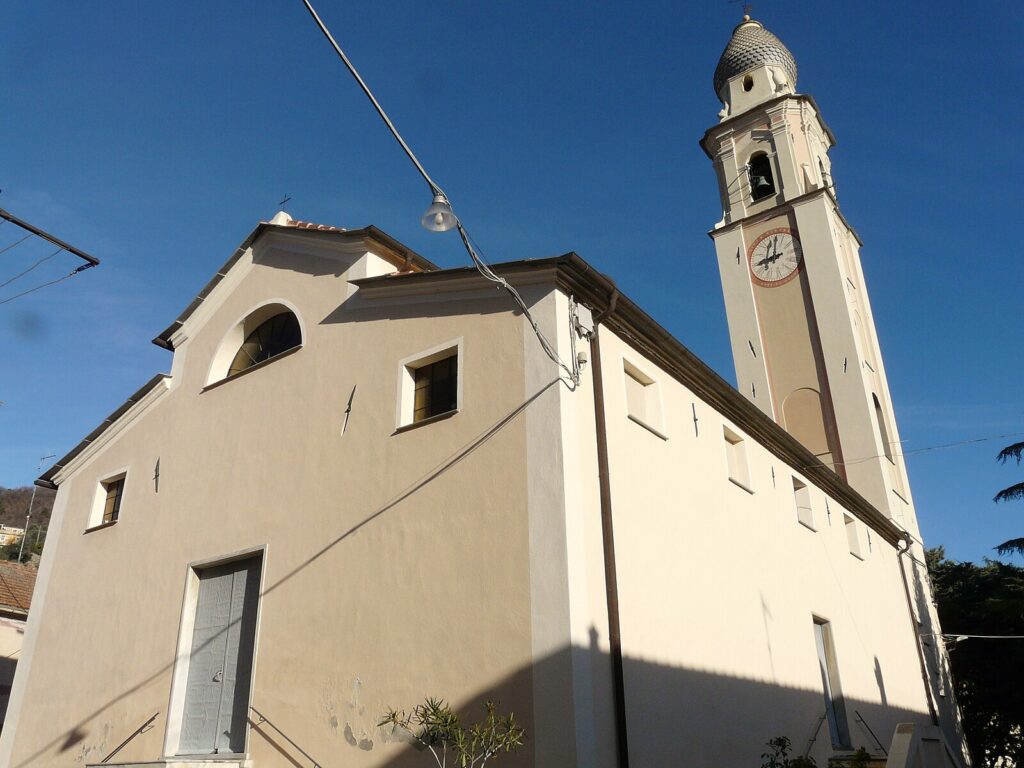
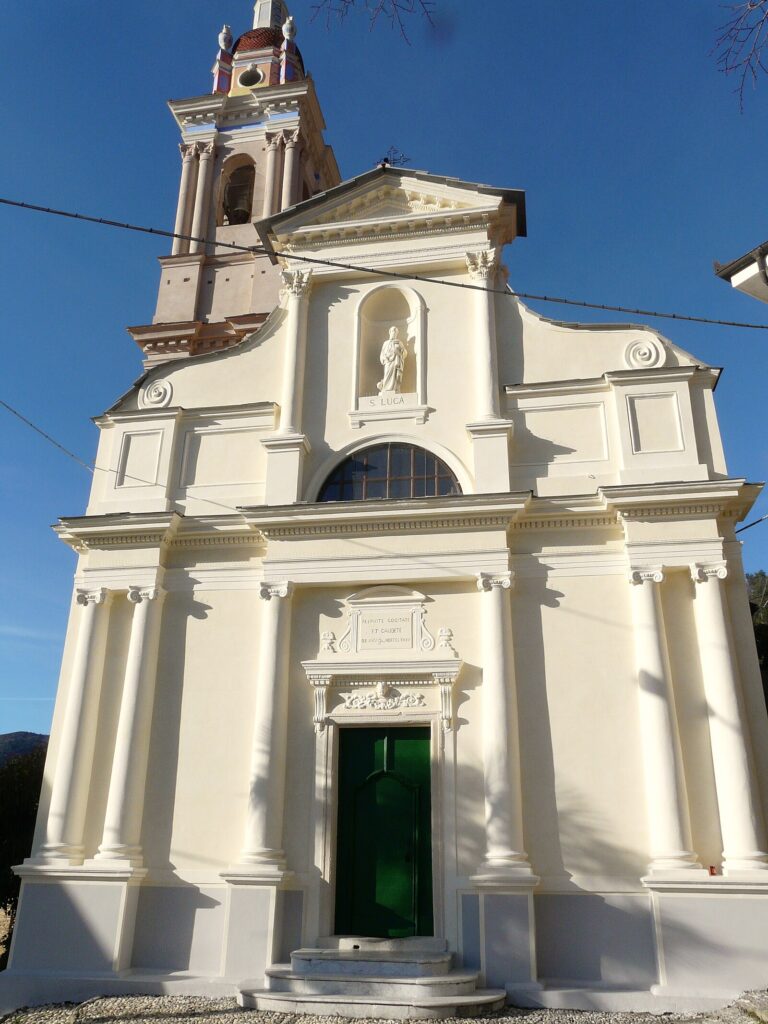
The parish church stands as the primary religious and architectural reference point within the village, built in the local stone typical of Savona province construction and oriented to dominate the main inhabited nucleus. Like most churches in inland western Liguria, it accumulated its current form across several building phases between the medieval period and the eighteenth century, with the facade and bell tower reflecting the regional Baroque influence that reached even small rural communities through the patronage of Genoese merchant families.
Inside, the nave proportions follow the single-aisle layout standard in mountain parish architecture, where structural simplicity was a practical response to both limited resources and small congregations. It is worth arriving at midday to observe how the bell tower marks the hour against the valley backdrop — a daily rhythm the village has kept for centuries.
The Rural Landscape of the Lerrone Valley
The Lerrone valley floor, visible from the upper parts of the village at a vertical drop of roughly 80 m (262 ft) from the highest residential terraces, presents a layered agricultural landscape of olive groves and dry-stone terrace walls that date in their current form to post-medieval farming intensification. The terraces — locally called fasce, the characteristic strip fields of Ligurian hillside agriculture — represent a form of land engineering that redistributed soil across slopes too steep for conventional ploughing.
Walking the paths between the village and the valley floor takes approximately 20 to 30 minutes and gives a direct reading of how the settlement relates to its productive hinterland. The olive groves are most visually active between October and December, when the harvest is underway and the nets are spread below the trees.
The Network of Border Paths Connecting the Ten Municipalities
Casanova Lerrone shares its perimeter with ten neighbouring municipalities — Borghetto d’Arroscia, Cesio, Garlenda, Onzo, Ortovero, Ranzo, Stellanello, Testico, Vessalico, and Villanova d’Albenga — and the inter-municipal footpaths that trace these boundaries constitute a documented hiking network crossing terrain between 200 m and 700 m (656 ft and 2,297 ft) in elevation.
The path toward Tesstico to the north gains approximately 400 m (1,312 ft) in elevation over a distance of around 8 km (5 mi), passing through Mediterranean scrub and chestnut woodland. These routes were primary communication links before the construction of provincial roads, and their condition reflects continued maintenance by the local municipalities. Spring, between April and June, offers the most reliable combination of firm ground, moderate temperature, and visible flora along these paths.
The Village Architecture of the Historic Nucleus
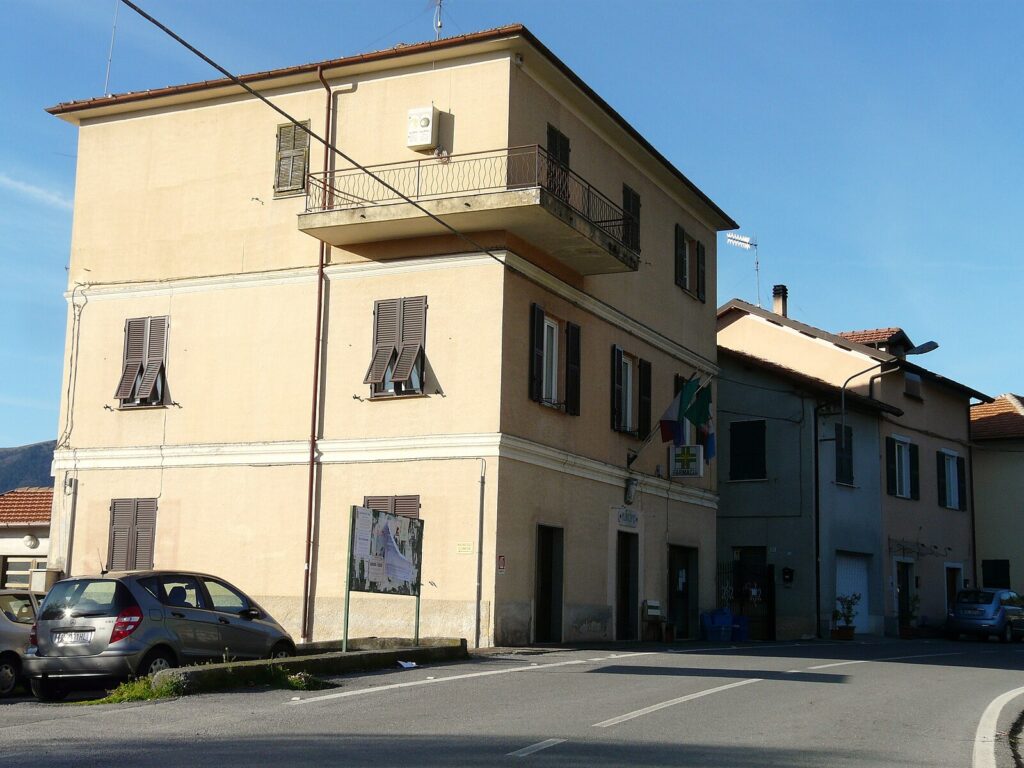
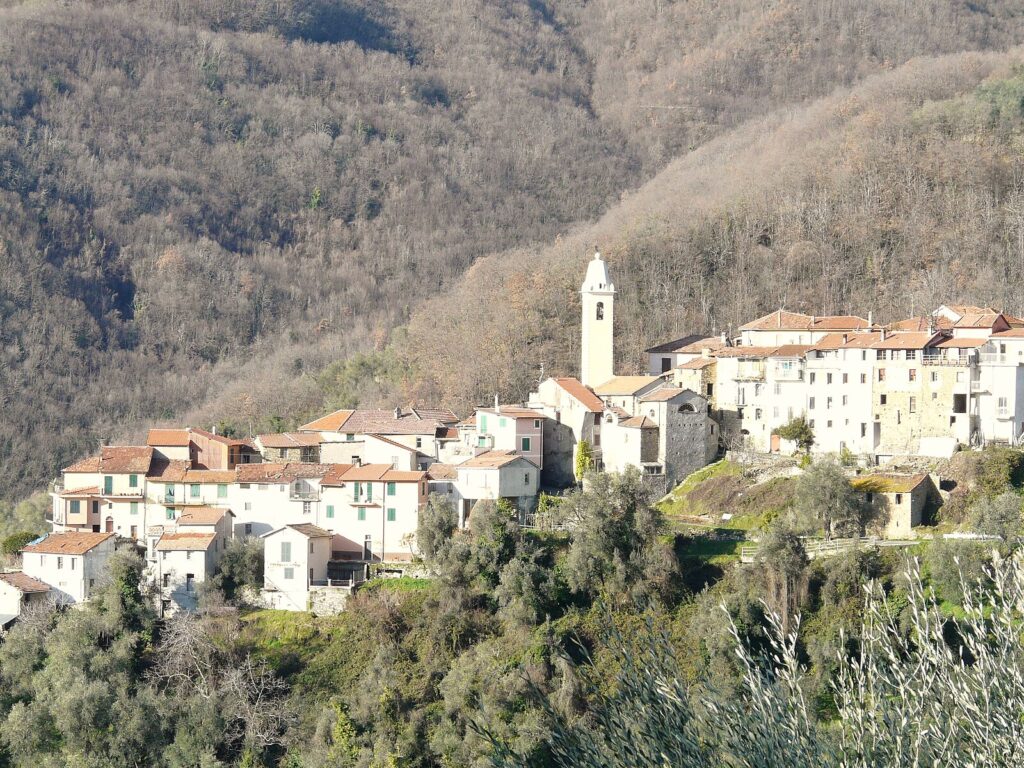
The built fabric of Casanova Lerrone concentrates in a compact nucleus of narrow lanes and attached stone houses, a morphology shared by nearly all settlements in the Province of Savona above 200 m (656 ft). The external walls are built from the local grey limestone, with window surrounds and corner quoins in a slightly darker worked stone that creates a visible tonal contrast on the older facades. Doorways in the upper part of the village retain iron ring-pulls and recessed thresholds worn smooth by use, details that indicate continuous residential occupation rather than seasonal abandonment. Walking the main lane from the lower access road to the church takes under ten minutes, which is enough time to register the complete architectural sequence of the settlement.
The Viewpoint Over the Arroscia and Lerrone Valleys
From the highest accessible point of the village, the line of sight extends across both the Lerrone drainage basin to the east and, on clear days, toward the Arroscia valley to the north where the municipality of Borghetto d’Arroscia sits at approximately 155 m (509 ft) in elevation.
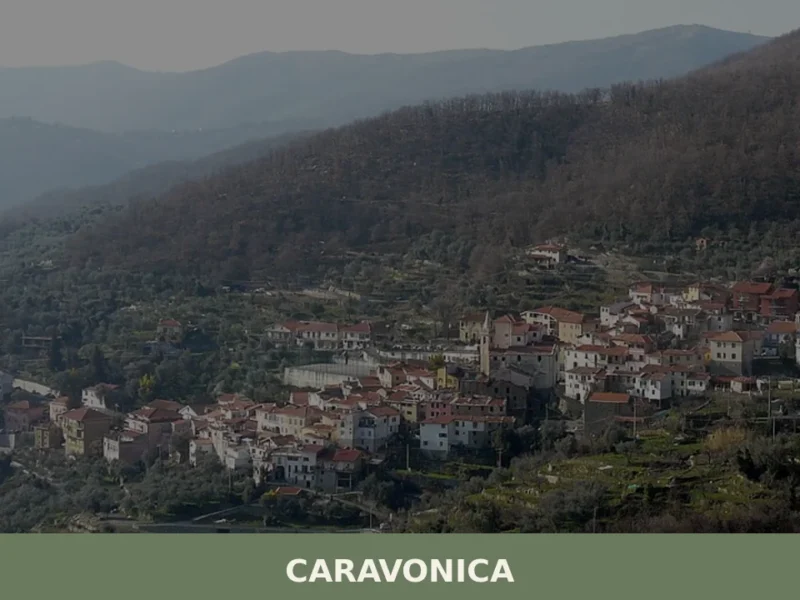
The visual range on a clear winter morning, when atmospheric moisture is low, can reach toward the coastal plain near Albenga, approximately 20 km (12.4 mi) to the south. This elevated position explains the original siting logic of the settlement: visibility and defensibility over a territory crossed by two valley systems. The view is most unobstructed in November and February, before spring vegetation closes the sightlines through the intervening woodland. Visitors interested in the broader valley geography can also consider the village of Caravonica, which occupies a comparable elevated position in the neighbouring Arroscia system.
Local food and typical products of Casanova Lerrone
The food culture of the Lerrone valley belongs to the inland Ligurian tradition, which diverges sharply from the coastal cuisine of Savona and Genoa. Proximity to the sea is a distant factor here: the cooking is built around what the hillside terrain produces — olives, chestnuts, dried legumes, and the pork from pigs kept on small farms. This is not a tourist food economy but a domestic one, and the dishes that circulate in the valley reflect what families grew, preserved, and ate through the winter months without access to fresh coastal ingredients. The altitude and the position within the Apennine foothills also connect the area gastronomically to Piedmont, introducing meat-based preparations not commonly found on the Ligurian coast.
The most characteristic preparations of the area centre on olive oil pressed from the local olives, which grow on terraced slopes up to approximately 400 m (1,312 ft) elevation.
Focaccia al formaggio, a layered flatbread filled with fresh cheese and baked directly on stone, appears at local gatherings in a version that uses the valley’s own oil rather than the lighter coastal variety, producing a denser crust with a more pronounced fat character. Coniglio alla ligure, rabbit braised with olives, pine nuts, rosemary, and white wine, represents the most complete expression of inland Ligurian cooking: every ingredient is local, the technique is slow, and the result carries the slight bitterness of the olive alongside the aromatic resin of the rosemary. Panissa, a firm polenta made from chickpea flour sliced and pan-fried in olive oil, is common as a street food and a domestic staple across the Province of Savona.
The Liguria region produces several certified products under European designation that circulate through markets in the Province of Savona, though the specific municipal certification data for Casanova Lerrone is not confirmed in the available sources. The broader area around the Arroscia and Lerrone valleys is associated with the cultivation of the Taggiasca olive, a small, dark-skinned variety with a mild, slightly sweet oil yield that commands recognition across northern Italian markets.
The chestnuts harvested from woodland above the village are used locally to make castagnaccio, a dense unleavened cake made from chestnut flour, olive oil, pine nuts, rosemary, and raisins — a preparation that requires no added sugar because the chestnut flour carries its own natural sweetness when properly dried and milled.
The autumn months, from October through November, concentrate the most direct food-related activity in the valley: olive harvest on the fasce terraces and chestnut gathering in the woods above 400 m (1,312 ft). Local markets in the nearby centre of Albenga, approximately 18 km (11.2 mi) south of Casanova Lerrone, stock the full range of valley products including pressed oils, dried legumes, and preserved meats. For those who prefer to buy directly from producers, the provincial secondary roads connecting Casanova Lerrone to Stellanello and Testico pass several farm operations that operate informal direct sales during the harvest season.
Festivals, events and traditions of Casanova Lerrone
The religious calendar of Casanova Lerrone follows the pattern common to small comuni in the Province of Savona, centred on the feast day of the parish patron saint.
The precise date of the patron saint festival is not confirmed in the available sources, but in this part of inland Liguria such celebrations typically combine a solemn Mass with a procession through the village lanes, followed by a communal meal organised by the local proloco — the volunteer civic association that manages most public events in Italian villages of this size. Fireworks over the valley and the presence of itinerant food stalls selling fried focaccia and local wine mark the evening portion of these events across the Savona hinterland.
The autumn harvest period generates informal community activity that, while not formalised as a sagra (a traditional local food festival) in every year, draws residents and some visitors into collective olive and chestnut picking on the terraced hillsides surrounding the village. This seasonal rhythm has remained consistent across the agricultural communities of the Lerrone valley and forms the most reliable annual event visible to outside observers. Visitors arriving in October can expect to encounter active harvesting on the fasce terraces and occasional roadside sales of freshly pressed oil, which carries a distinctly grassy, slightly peppery character in the first weeks after milling before it mellows through the winter storage period.
When to visit Casanova Lerrone, Italy and how to get there
The best time to visit Casanova Lerrone falls between late April and early June, and again in September and October.
Spring brings mild temperatures — typically between 14°C and 22°C (57°F and 72°F) — and visible vegetation on the valley terraces without the heat that affects inland Ligurian terrain in July and August, when temperatures above 32°C (90°F) make midday walking uncomfortable. Autumn combines the harvest activity described above with cooler and often clearer atmospheric conditions that extend visibility from the village viewpoints. Winter visits are feasible but the secondary roads connecting the village to the provincial network can become hazardous after frost, and several local services operate on reduced hours between December and February.
Reaching Casanova Lerrone by car is the most direct option. From the A10 motorway (Genoa to Ventimiglia), take the Albenga exit and follow the SP1 provincial road northward into the Lerrone valley, a distance of approximately 18 km (11.2 mi) from the motorway exit. The drive from Genoa takes around 1 hour and 20 minutes under normal traffic conditions, covering 80 km (50 mi). From Savona the distance is 45 km (28 mi), with a journey time of approximately 55 minutes via the A10 and SP1. The nearest operational train station is Albenga station on the Genoa-Ventimiglia coastal line, served by regional trains.
From Albenga station, a car or taxi is required to complete the remaining 18 km (11.2 mi) to the village, as no scheduled bus service connecting the station directly to Casanova Lerrone is confirmed in the available sources. The nearest major airport is Genoa Cristoforo Colombo Airport, approximately 90 km (56 mi) northeast, with a road transfer time of around 1 hour 30 minutes. For those arriving from Milan, the distance is approximately 190 km (118 mi) via the A26 and A10 motorways, making Casanova Lerrone accessible as a day trip from the Lombard capital. International visitors should carry euro cash, as card payment infrastructure in smaller villages and rural shops across inland Liguria is not consistently available, and English is spoken rarely outside the main coastal tourist centres.
Travellers who choose Genoa as their base — the regional capital sits 80 km (50 mi) northeast — can reach Casanova Lerrone and return within a single day while also exploring the city of Genova itself, which offers a markedly different urban counterpoint to the inland valley landscape of the Savona hinterland.
The combination of coastal city and Apennine village within the same day is a practical itinerary used by visitors based in Liguria for several nights.
Visitors extending their trip eastward along the Ligurian Apennine may find the village of Calice al Cornoviglio in the Province of La Spezia a useful further reference point, as it occupies a structurally similar position in the inland Ligurian hill system and illustrates the consistency of rural settlement patterns across the region’s mountain spine.
Frequently asked questions about Casanova Lerrone
What is the best time to visit Casanova Lerrone?
Spring (April to June) is ideal for hiking the inter-municipal paths, when ground conditions are firm, temperatures moderate, and wildflowers visible along the trails. November and February offer the clearest panoramic views over the Lerrone and Arroscia valleys, as low atmospheric moisture and sparse vegetation open long sightlines toward the coastal plain near Albenga. October to December is the best period to witness the olive harvest, when nets are spread under the trees on the terraced slopes and the agricultural landscape is at its most active.
What are the historical origins of Casanova Lerrone?
The name Casanova derives from the Latin casa nova, meaning 'new house' or 'new settlement', a toponym widespread across northern Italy marking medieval expansion beyond an existing nucleus. The qualifier Lerrone identifies the local watercourse and valley. In the Ligurian dialect the village is called Casanêuva. During the medieval period the Lerrone valley was contested territory between the Republic of Genoa and feudal lords controlling the Ligurian hinterland. After Italian unification in the nineteenth century, Casanova Lerrone was confirmed as an autonomous comune within the Province of Savona, a status it retains today.
What to see in Casanova Lerrone? Main monuments and landmarks
The parish church is the primary architectural landmark, built in local grey limestone and shaped across several phases from the medieval period through the eighteenth century, with Baroque influence visible on the facade and bell tower. The compact historic nucleus of narrow lanes and stone houses, with worn thresholds and iron ring-pulls on older doorways, can be walked in under ten minutes. The terraced olive groves below the village — the characteristic Ligurian fasce — and the viewpoint over the Lerrone and Arroscia valleys from the upper part of the settlement complete the main sights.
What are the main natural or scenic attractions of Casanova Lerrone?
The inter-municipal footpath network connecting Casanova Lerrone to its ten neighbouring municipalities crosses terrain between 200 m and 700 m elevation, passing through Mediterranean scrub and chestnut woodland. The route toward Testico to the north gains approximately 400 m over roughly 8 km. The Lerrone valley floor, reached in 20 to 30 minutes on foot from the village, displays layered dry-stone terrace walls and olive groves. The elevated village position also provides open sightlines toward both the Lerrone and Arroscia drainage basins, with views reaching the coastal plain near Albenga on clear days.
Where to take the best photos in Casanova Lerrone?
The highest accessible point of the village offers the widest panoramic view, taking in the Lerrone valley to the east and the Arroscia valley to the north, with the coastal plain near Albenga visible on clear winter mornings. November and February provide the most unobstructed sightlines before spring vegetation closes the woodland views. The terraced olive groves below the settlement, particularly between October and December when harvest nets are spread under the trees, offer a strongly characteristic Ligurian agricultural scene. The parish church bell tower photographed against the valley backdrop is best framed at midday.
What can you do in Casanova Lerrone? Activities and experiences
The principal activity is hiking the documented footpath network linking Casanova Lerrone to its ten bordering municipalities, with routes ranging from valley-floor walks of 20 to 30 minutes to longer hill climbs gaining 400 m over 8 km toward Testico. The olive harvest season from October to December offers direct observation of traditional Ligurian hillside agriculture on the terraced fasce below the village. Exploring the historic stone nucleus on foot takes under ten minutes but rewards close attention to architectural detail. The valley also connects northward toward the higher Arroscia terrain for extended multi-village itineraries.
Who is Casanova Lerrone suitable for? Families, couples, hikers, solo travelers?
Casanova Lerrone suits hikers and walkers seeking authentic inland Ligurian terrain away from coastal crowds, with a documented network of inter-municipal paths at varying difficulty levels. Couples and slow-travel visitors drawn to historic stone villages, agricultural landscapes, and wide valley panoramas will find the setting rewarding. The compact, walkable historic nucleus and the accessible valley-floor paths make it manageable for families with older children. It appeals less to visitors seeking resort-style amenities or nightlife, and more to those interested in rural architecture, olive culture, and the quieter geography of the Province of Savona interior.
What to eat in Casanova Lerrone? Local products and specialties
The food culture belongs to the inland Ligurian tradition built around hillside production rather than coastal ingredients. Local olive oil, pressed from olives grown on terraced slopes up to 400 m elevation, is the defining product and differs from lighter coastal varieties in density and flavour. Focaccia al formaggio, a layered flatbread filled with fresh cheese and baked on stone, is prepared here using local oil. Chestnuts, dried legumes, and pork from small farms feature in winter preparations. The proximity to the Piedmontese border introduces meat-based dishes not common on the Ligurian coast, reflecting the valley's position in the Apennine foothills.
📷 Photo Gallery — Casanova Lerrone
Nearby Villages near Casanova Lerrone
In Liguria More villages to discover
Calizzano
 Mountain
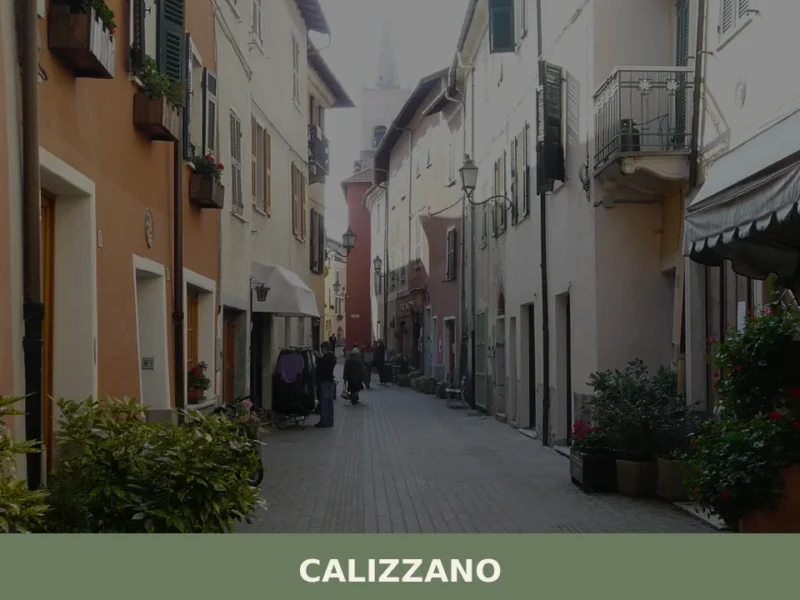
What to see in Calizzano, Liguria, Italy: explore the upper Bormida Valley at 70 km from Genoa. Discover Monte Spinarda, local food and festivals. Read the guide.
La Spezia
 Sea
Sea
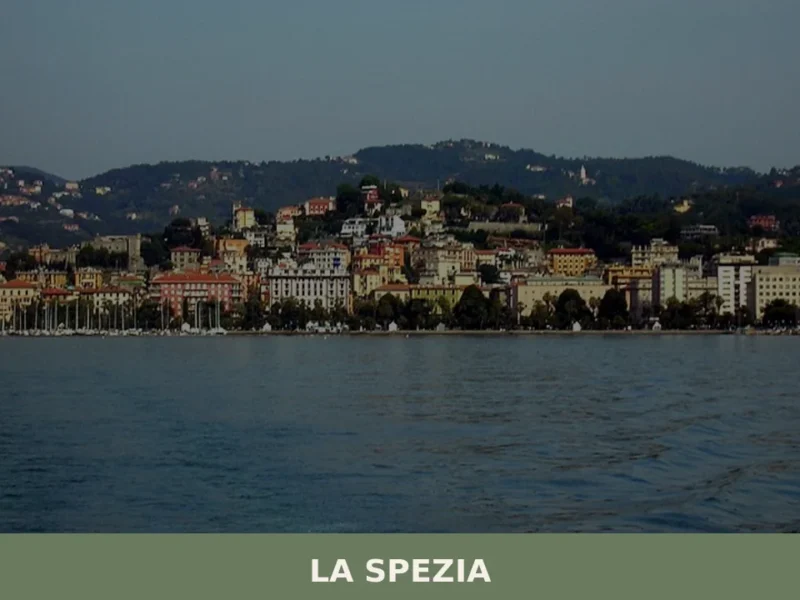
What to see in La Spezia, Italy: explore the Castle of San Giorgio, 10 museums, the Palio del Golfo and Cinque Terre links. Discover La Spezia's top highlights.
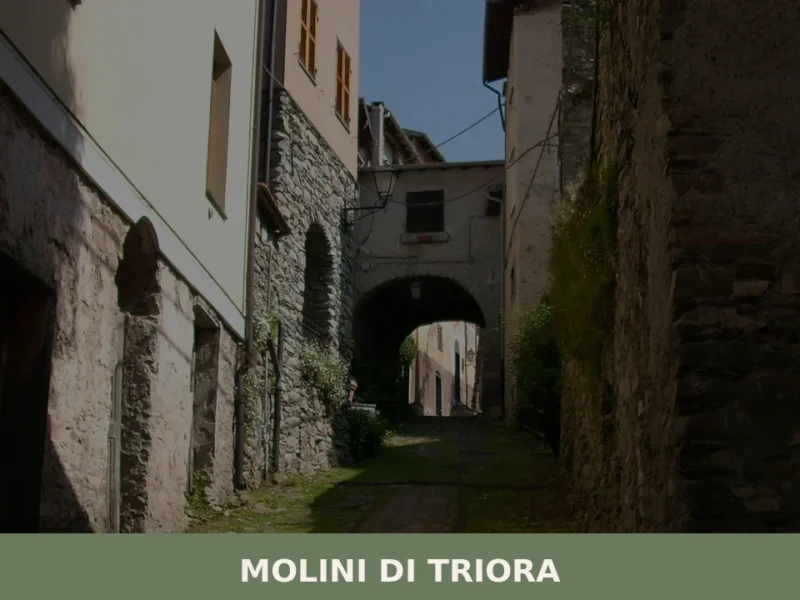
Molini di Triora
Hills
What to see in Molini di Triora, Italy: a village at 460 m in Liguria. Discover top attractions, local food, festivals and how to get there. Read the guide.
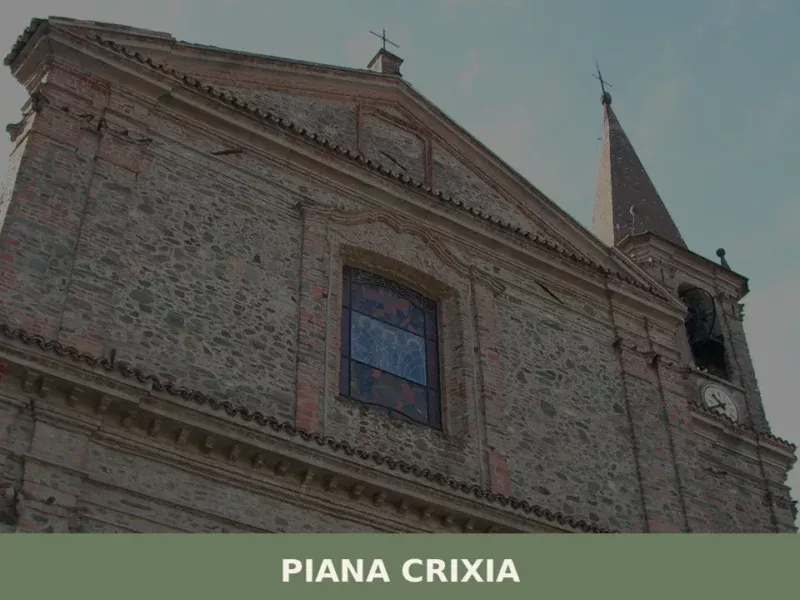
Piana Crixia
Mountain
what to see in piana crixia, Italy: Explore this Savona comune (843 inhabitants) and its international ties. Discover Ligurian character and natural surroundings.
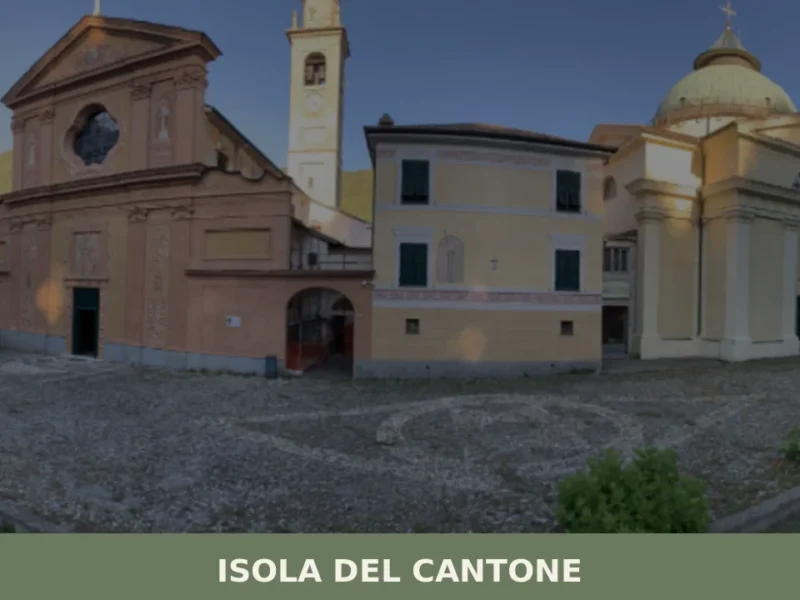
Isola del Cantone
Hills
what to see in isola del cantone (Genoa). Discover the Church of Saints Stephen and Innocent and the Old Bridge. Explore this village of 1385 inhabitants.
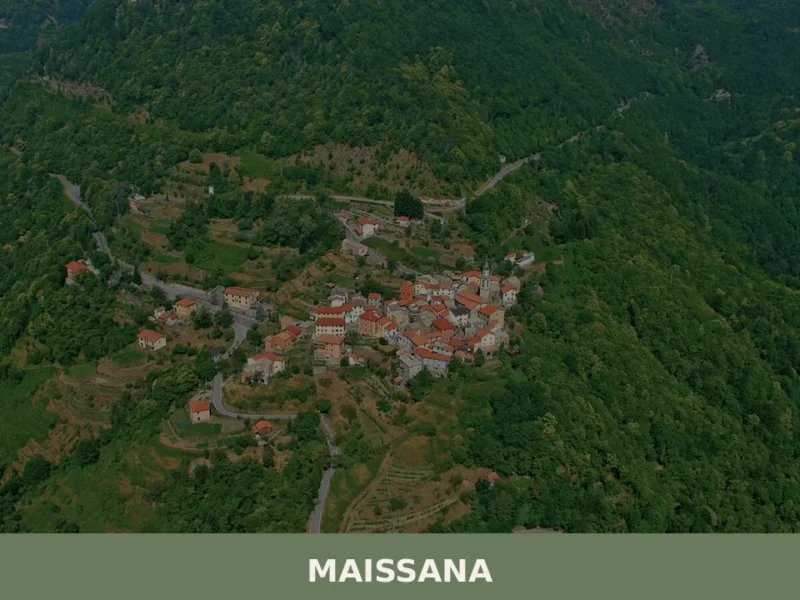
Maissana
Mountain
What to see in Maissana, Italy: 644 inhabitants, 50 km from Genoa. Discover top attractions, local food, festivals and how to get there. Explore now.
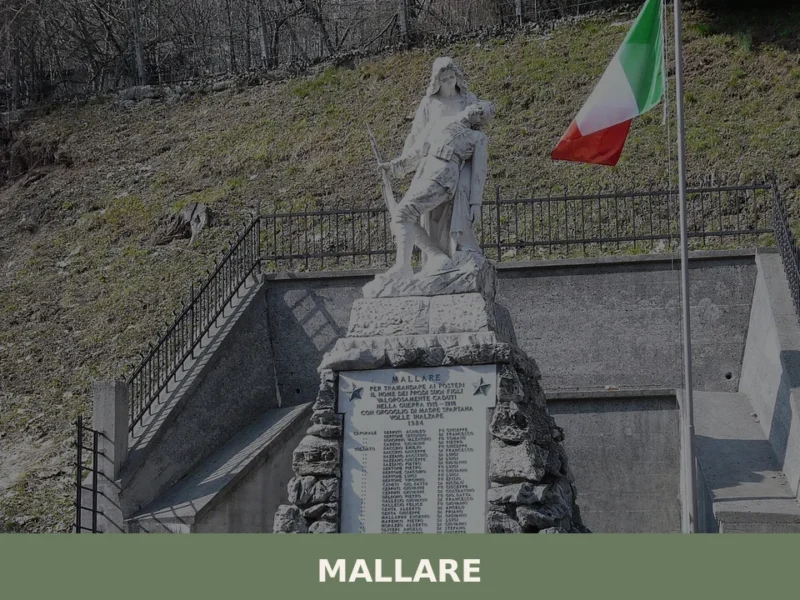
Mallare
Mountain
What to see in Mallare, Liguria, Italy: explore 5 attractions, local food traditions, and festivals in this 1,193-inhabitant village near Savona. Discover it now.
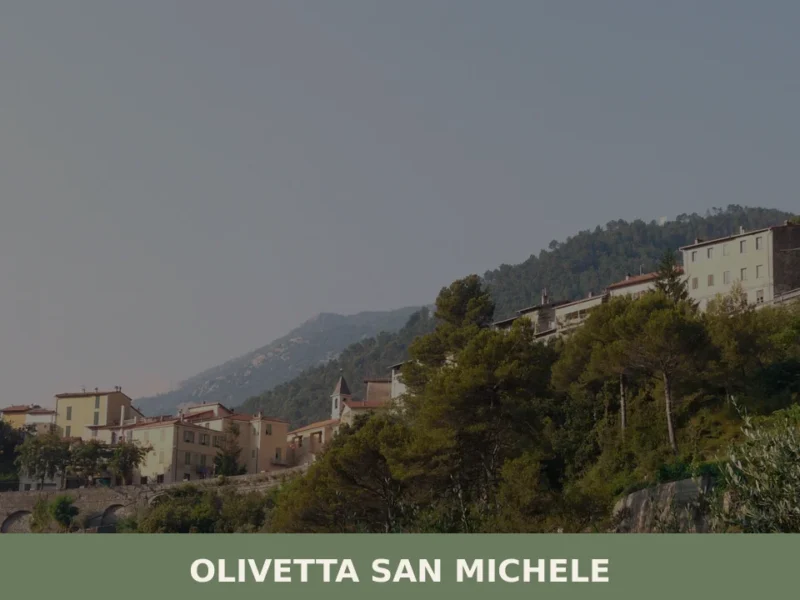
Olivetta San Michele
Mountain
What to see in Olivetta San Michele? Discover 5 unique aspects of this Ligurian village, between history and nature. Read the full guide and plan your visit!
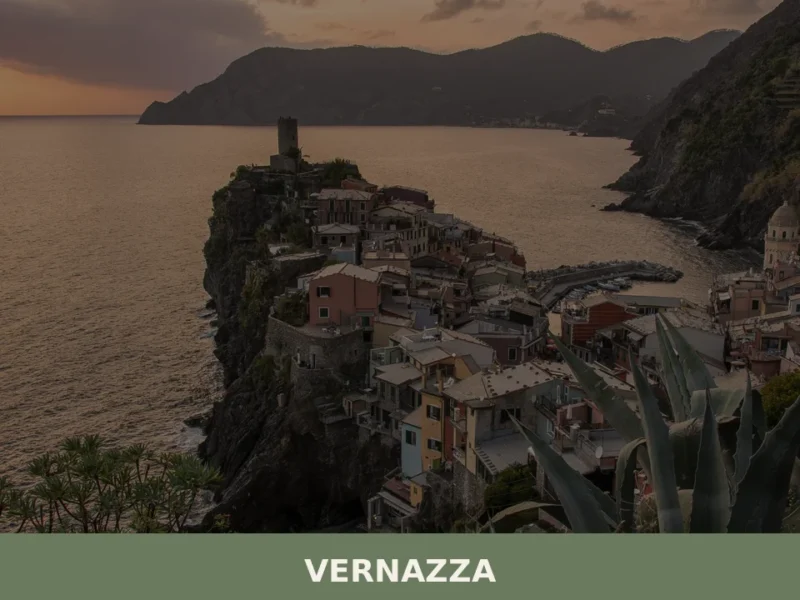
Vernazza
Sea
What to see in Vernazza, Liguria, Italy: Doria Castle, Santa Margherita Church and the only natural port of Cinque Terre. Explore a village of 899 inhabitants. Discover now.
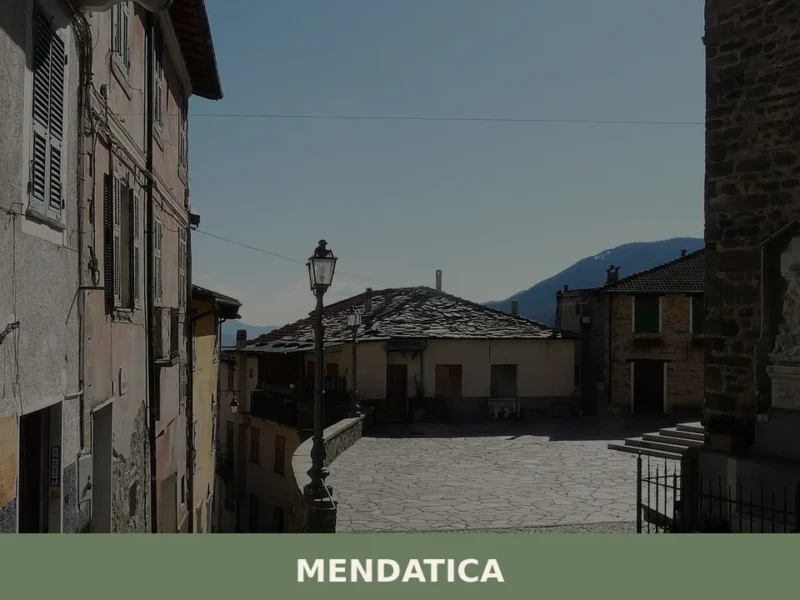
Mendatica
Mountain
What to see in Mendatica, Liguria, Italy: 190 inhabitants, mountain village 100 km from Genoa. Discover Colle San Bernardo, Alpi Liguri Park and local cuisine.

🏡 Know Casanova Lerrone better than we do?
If you’re a local or have been there, your knowledge matters: add what’s missing or fix a detail on this page.