


Campello sul Clitunno
 Hills
Hills
What to see in Campello sul Clitunno, Umbria, Italy: a UNESCO temple, medieval castle, and springs producing 1,500 l/s. Discover the complete travel guide.
Discover Campello sul Clitunno
The water surfaces through fissures in the riverbed and fans into a small lake, clear enough to reveal each outlet on the limestone floor. The springs of the Clitunno have been producing between 1,300 and 1,500 liters per second for recorded history, their flow altered only once — by a major earthquake in AD 440. Virgil noted that oxen bathing in the river emerged whiter.
Pliny the Younger described villas, baths, and sacred shrines along its banks.
Lord Byron and Giosuè Carducci both made the journey here, and a marble marker with a bas-relief by Ugo Ojetti records a visit made in 1910.
Deciding what to see in Campello sul Clitunno is easier than it might appear: the municipality at 290 m (951 ft) above sea level, 45 km (28 mi) southeast of Perugia, concentrates a UNESCO World Heritage monument, a 10th-century fortified hilltop settlement, a 16th-century sanctuary with frescoes and altarwork by Valadier, and a river landscape documented by classical literature. With 2,520 inhabitants spread across ten localities, Campello sul Clitunno, Umbria, Italy offers a density of historical material unusual for a municipality of its size. Visitors find the sites compact and connected by a short road corridor running between Foligno and Spoleto.
History of Campello sul Clitunno
The name itself records a migration. A Burgundian noble named Rovero of Champeaux arrived in central Italy with Guy, Duke of Spoleto, in the 9th century, built a fortress on a hill near the Clitunno springs, and received formal investiture from the Duke of Spoleto, later confirmed by Lambert in 891. The settlement took the name Campello from the French toponym Champeaux, rendered into Italian by the family that held lordship over the site.
Rovero was succeeded by Tancredi, and the dynasty that descended from them became the Counts of Campello, whose name the municipality still carries. The hilltop foundation now known as Campello Alto dates the beginning of organised settlement to the mid-10th century.
The medieval centuries were marked by conflict with Spoleto and shifting allegiances between imperial and papal factions.
In 1241 the local lords aligned with the Empire and secured imperial recognition of their control over the territory. The mid-14th century brought a violent rupture: Pietro Pianciani of Spoleto attacked and burned the castle, captured the count, and occupied the site with mercenary forces. The inhabitants responded by establishing a communal government in 1341.
Count Paolo di Campello later retook the castle, and the family continued to govern within the legal framework of Spoleto for the remainder of the medieval period. Local statutes were formally issued in 1569 under Count Cintio Campello and approved by Spoleto the following year. The Campello family itself produced remarkable figures across those centuries, including Francesco di Campello, beatified after his death in 1348, and several members who held the office of Senator of Rome.
Modern administrative history ran through several discontinuities. During the late 18th century the territory was absorbed into the district of Trevi under the Roman Republic, and in 1809 it was incorporated into the French imperial system within the Department of Trasimeno, with local administration assigned to a mayor and council drawn from principal taxpayers.
Restored as a municipality under papal rule in 1817, the town was annexed to the Kingdom of Italy in 1860 and adopted the name Campello sul Clitunno in 1863.
The population was recorded at 1,472 in 1890. A financial crisis in 1899 brought a royal commissioner, and between 1927 and 1930 the municipality was suppressed and administered by Spoleto before being formally restored. In November 2006, four maintenance workers were killed by explosions at a local olive oil facility, triggering a fire and the precautionary evacuation of around 500 residents.
What to see in Campello sul Clitunno, Umbria: top attractions
Temple of Clitumnus
The squared limestone blocks of the Temple of Clitumnus stand close to the Clitunno springs, their carved decorations largely original rather than repurposed from Roman monuments — a feature that distinguishes this building from most structures of the Lombard period. Scholars have proposed two competing dates: either the 4th or early 5th century, or a period between the 7th and 9th centuries.
What is certain is that the building incorporates architectural elements associated with earlier pagan shrines near the river sources described by Pliny the Younger.
The temple is part of the Longobards in Italy: Places of Power UNESCO World Heritage Site, a designation shared with other Lombard-period structures across the Italian peninsula. Stand close enough and the frieze detail becomes visible without optical aid; the building’s scale is domestic rather than monumental, which makes the quality of its carving more legible at ground level.
Fonti del Clitunno
The springs emerge from fissures in the rock through multiple outlets visible on the lakebed, forming a body of water whose flow has been measured at approximately 1,300 to 1,500 liters per second — among the highest outputs of any spring in Umbria. Classical writers recorded the site’s sacred character and the navigability of the Clitunno River as far as Rome through the Tiber.
The area hosted festivals known as the Sacra Clitumnalia, dedicated to the god Clitumnus, whose cult was rooted in the riverine landscape.
A major earthquake in AD 440 dispersed many of the water channels, altering the hydrology permanently. The marble marker with a bas-relief by Ugo Ojetti, commemorating a visit made in 1910, remains on site. The springs are situated at some distance from the main settlement and are most easily reached by road along the valley floor.
Campello Alto
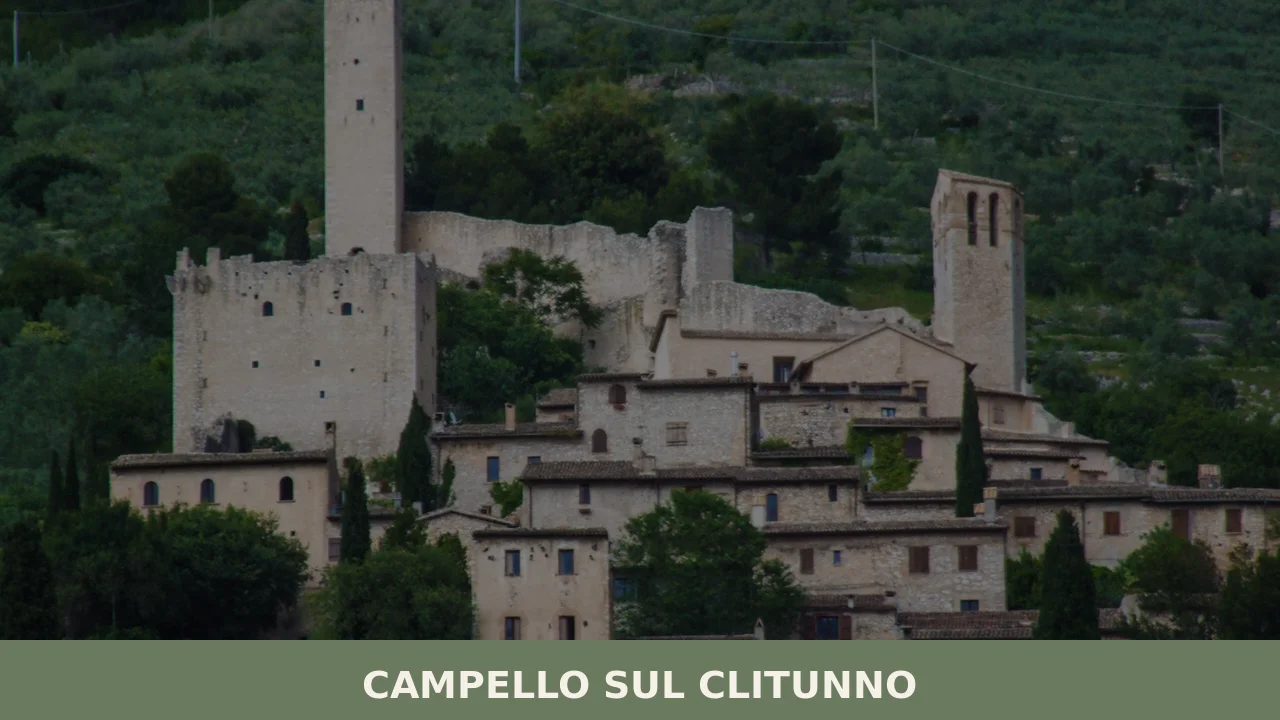
The fortified settlement on the summit of the hill above the Spoleto valley preserves its medieval spatial logic intact: the castle core, tower houses close to the perimeter walls, and agricultural terraces descend the slope in a sequence that has not been substantially altered since the 14th century.
The castle was built in the 11th century by the Burgundian baron Rovero di Champeaux, the same figure from whom the Counts of Campello derived their name.
The single entrance gate retains its defensive structures, and beside the Church of San Donato — of Romanesque origin, later modified in the Baroque period — stands a public building that formed part of the communal administration. Inside the church, 15th-century votive frescoes have been identified. It is worth climbing up to Campello Alto in the morning, when the light from the east reaches the stonework of the towers directly and the Spoleto valley is visible without haze.
Sanctuary of the Madonna Bianca
The stone portal at the center of the sanctuary’s façade was carved in 1521 by master Cione di Taddeo da Como, a detail that anchors the building’s construction history to a specific documented hand. The church was erected in 1516, originally called Madonna del Soccorso, later renamed Madonna della Misericordia, and eventually Madonna Bianca to distinguish it from two other local Marian sanctuaries known as La Bruna and La Rossa.
Inside the apse, a large fresco by Fabio Angelucci da Mevale dated around 1574 depicts the Coronation of the Virgin by God the Father and Christ, surrounded by figures from both Testaments.
The side altars were designed in 1797 by the architect Giuseppe Valadier, who introduced Neoclassical elements into the interior while retaining Renaissance features. The bell tower was added in 1617. Paintings by Lo Spagna depicting the Annunciation and Nativity, originally on the altar sides, were later detached and are now preserved in the sacristy.
Castle of Pissignano
The triangular layout of Pissignano castle reads clearly from the approach road: a tall tower at the apex, a pentagonal tower below it that once served as the bell tower of the parish church, and rows of houses arranged on descending terraces that preserve their medieval proportions. The fortress was built between the 11th and 12th centuries when a Benedictine community enclosed a small settlement with defensive walls.
In July 1155 the castle hosted Emperor Frederick Barbarossa, a documented fact that places Pissignano in the wider political geography of the imperial campaigns in Italy.
In 1213 it was transferred to the city of Spoleto in exchange for military assistance against Trevi, and later became a fief of the Sansi family. By 1571 Pissignano had become a papal postal station. French troops devastated the settlement in June 1799. Since 1860 it has been a frazione — a constituent locality — of the municipality of Campello sul Clitunno.
Local food and typical products of Campello sul Clitunno
The agricultural economy of the Clitunno valley has centered on olive oil for at least two centuries of recorded production. In the 19th century the territory operated eight olive mills, a number that indicates industrial-scale output relative to the population, which stood at 1,472 in 1890.
The terrain between the valley floor and the hillside settlements supports olive cultivation at an altitude that produces oils with a low-yield, high-polyphenol character typical of central Umbrian production.
The connection between the land and the olive is not incidental: when the population of Campello Alto moved from the lower church of San Cipriano to the hilltop settlement of Santa Maria di Campello during the conflicts of the 13th and 14th centuries, olive cultivation was among the documented reasons for choosing the new site.
Beyond olive oil, the local table draws from the watercourses that define the landscape. The Clitunno springs feed rivers whose cold, clear water supports populations of trout and crayfish, both documented components of local gastronomy. Trout from the Clitunno area is typically prepared simply — grilled or baked with local olive oil, herbs, and white wine — methods that allow the texture of river-caught fish to remain the dominant element of the dish.
Crayfish appear in preparations closer to the tradition of central Italian river cooking, often in broth or combined with pasta.
The territory also produces grapes, whose cultivation is recorded alongside olives and oil as part of the local agricultural output.
No formally certified PDO or PGI products are specifically attributed to Campello sul Clitunno in the available data, but the olive oil produced in this part of the Province of Perugia falls within the broader tradition of Umbrian extra-virgin olive oil, recognized for its production standards across the region. For those interested in sourcing local products directly, the olive mills operating in the area represent the most direct point of contact with the production chain, particularly in the autumn harvest period from October through November, when freshly pressed oil — known locally as olio nuovo, the first-pressed oil of the season — is available.
Festivals, events and traditions of Campello sul Clitunno
The feast of San Luigi Gonzaga, the patron saint of Campello sul Clitunno, falls on 21 June each year. The date coincides with the summer solstice period, and the celebration follows the pattern of central Italian patronal festivals: a religious procession through the settlement, a mass in the parish church, and communal gathering in the public spaces of the village. San Donato is venerated as a secondary patron saint, with his feast celebrated on 7 August.
That date, in the height of the Italian summer, draws residents back to the village and marks one of the more active periods of the local calendar.
The religious calendar of Campello sul Clitunno is structured around its two parishes, San Donato and Santa Maria, both equipped with organs that have historically played a role in feast-day liturgy.
The territory also maintains the Convento Eremo Francescano, a Franciscan hermitage listed among the localities of the municipality. Across the summer months the combination of patronal feasts, the mild climate of the Umbrian valley, and the accessibility of the Clitunno springs makes the period from June through August the most active in terms of local events and visitor presence.
When to visit Campello sul Clitunno, Italy and how to get there
The best time to visit Umbria in general, and Campello sul Clitunno specifically, falls in two windows: late spring from mid-April through June, and early autumn from September through October. In spring the valley is green, the Clitunno springs run at full flow, and temperatures in the 290 m (951 ft) valley remain comfortable for walking between sites.
Autumn brings the olive harvest, which runs from October into November, making it the most appropriate season for those interested in local oil production. The summer months are warm and busy; July and August see higher visitor numbers along the Foligno-Spoleto corridor. Winter is quiet and some facilities operate on reduced hours, but the monuments themselves remain accessible.
Campello sul Clitunno sits along the SS3 Flaminia road, which connects Foligno to Spoleto.
Arriving by car from Rome, take the A1 motorway north to the Orte exit, then follow the SS204 toward Spoleto and continue on the SS3 north — a total distance of approximately 140 km (87 mi) from central Rome, with a journey time of roughly 90 minutes in normal traffic. From Perugia, the distance is 45 km (28 mi) southeast, making it a practical day trip from that city. The nearest train station is Campello-Scheggino, served by Trenitalia on the Foligno-Spoleto line; regional trains connect the valley to Foligno and Spoleto with regular frequency.
The nearest international airport is Perugia San Francesco d’Assisi Airport, approximately 55 km (34 mi) northwest. For those arriving from Florence, the distance is approximately 180 km (112 mi), manageable as a day trip by car or with a train connection through Foligno. International visitors should note that English is not widely spoken in smaller shops and local facilities; carrying euro cash is practical, as not all establishments accept cards.
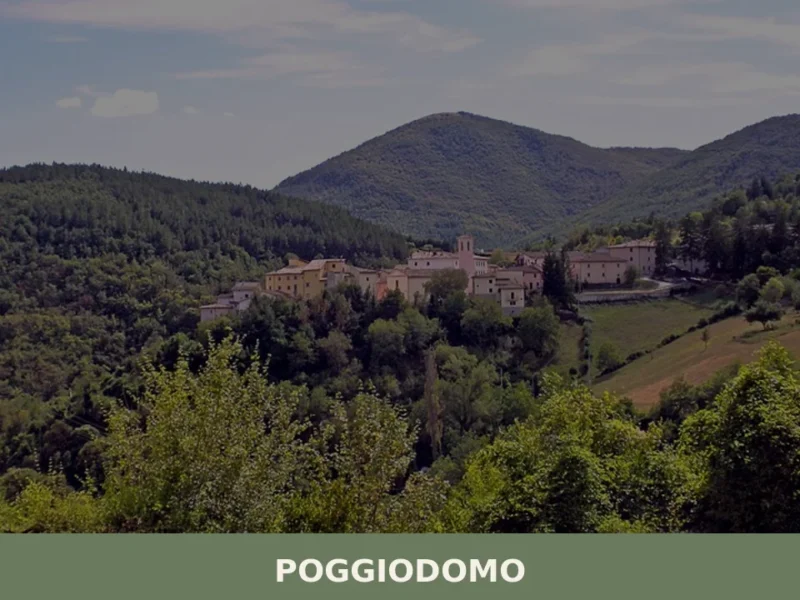
Visitors exploring the Valnerina and the hills north of Spoleto can extend their itinerary to include Poggiodomo, a small fortified settlement that shares the same pattern of medieval hilltop consolidation found throughout the Province of Perugia. To the northwest, Montone offers a comparable example of a walled Umbrian commune with a documented medieval administrative history. Both are reachable as extensions of a circuit based in Campello sul Clitunno, Umbria, Italy, and together they give a fuller picture of how the region’s municipalities developed between the 10th and 15th centuries.
Frequently asked questions about Campello sul Clitunno
What is the best time to visit Campello sul Clitunno?
Spring (April–June) and early autumn (September–October) offer mild temperatures ideal for exploring the Clitunno springs, Campello Alto, and the valley road connecting the sites. Summer brings the feast of patron saint San Luigi Gonzaga on 21 June, a local celebration worth planning around. July and August are warmer but the valley remains green thanks to the river. Winter visits are quiet and uncrowded; the medieval stonework of Campello Alto and Pissignano reads particularly well in low-angle winter light.
What are the historical origins of Campello sul Clitunno?
The municipality's name derives from a Burgundian noble, Rovero of Champeaux, who arrived in central Italy with Guy, Duke of Spoleto in the 9th century and built a hilltop fortress near the Clitunno springs. His investiture was confirmed by Lambert in 891, and the settlement took the Italian rendering of his French toponym, Champeaux. His descendants became the Counts of Campello. The hilltop core of Campello Alto dates organised settlement to the mid-10th century. The town was formally named Campello sul Clitunno in 1863, after annexation to the Kingdom of Italy in 1860.
What to see in Campello sul Clitunno? Main monuments and landmarks
The four principal sites lie along a compact road corridor between Foligno and Spoleto. The Temple of Clitumnus, a UNESCO World Heritage monument (part of Longobards in Italy: Places of Power), stands near the Clitunno springs with largely original Lombard-period carved decoration. The springs themselves (Fonti del Clitunno) form a clear limestone lake. Campello Alto is a fully preserved 10th-century fortified hilltop settlement with the Romanesque Church of San Donato and 15th-century frescoes. The Sanctuary of the Madonna Bianca (1516) contains a 1574 apse fresco and Neoclassical altars by Giuseppe Valadier (1797). The Castle of Pissignano, built in the 11th–12th century, hosted Emperor Frederick Barbarossa in 1155.
What are the main natural or scenic attractions of Campello sul Clitunno?
The Fonti del Clitunno are the defining natural attraction: the springs emerge from fissures in the limestone riverbed at a documented flow of 1,300–1,500 liters per second, forming a transparent lake whose outlets are visible on the floor. The Clitunno valley between Foligno and Spoleto provides continuous river landscape documented since antiquity by Virgil and Pliny the Younger. The hillside terrain supporting olive cultivation rises from the valley floor toward the fortified settlements, offering layered views across the Spoleto valley from Campello Alto.
Where to take the best photos in Campello sul Clitunno?
Three locations offer particularly strong photographic subjects. The Fonti del Clitunno are best photographed in early morning, when the water surface reflects surrounding vegetation and the limestone lakebed is clearly visible. Campello Alto rewards morning visits when eastern light falls directly on the medieval tower stonework and the Spoleto valley below is free of haze. The Temple of Clitumnus, given its domestic scale, allows close framing of original Lombard-period frieze carving without telephoto equipment. The approach road to Pissignano offers a clear view of the castle's triangular layout and terraced houses descending the slope.
Are there museums, churches or historic buildings to visit in Campello sul Clitunno?
The Temple of Clitumnus is a UNESCO-listed monument accessible near the Clitunno springs; its carved limestone decoration is largely original. The Church of San Donato in Campello Alto is Romanesque in origin, later modified in the Baroque period, and contains identified 15th-century votive frescoes. The Sanctuary of the Madonna Bianca (built 1516) houses a documented 1574 fresco by Fabio Angelucci da Mevale, side altars by Giuseppe Valadier (1797), and detached paintings by Lo Spagna now preserved in the sacristy. The Castle of Pissignano retains its medieval tower and pentagonal bell-tower structure. For current opening hours, contact the Campello sul Clitunno municipality or local Pro Loco.
What can you do in Campello sul Clitunno? Activities and experiences
Visitors can walk the valley road linking the Clitunno springs, the UNESCO temple, and the sanctuary within a short distance. Climbing to Campello Alto offers direct engagement with a fully intact medieval hilltop settlement. The Clitunno valley has supported olive cultivation for at least two centuries of recorded production, and local oil can be sought from producers in the area. The site of the Sacra Clitumnalia, ancient riverside festivals dedicated to the god Clitumnus, adds a layer of classical historical itinerary for those tracing the literary references of Virgil and Pliny the Younger across the landscape.
Who is Campello sul Clitunno suitable for? Families, couples, hikers, solo travelers?
Campello sul Clitunno suits visitors with an interest in classical history and early medieval architecture: the UNESCO temple, the literary landscape of the Clitunno springs, and the intact hilltop settlement of Campello Alto reward unhurried, informed exploration. Couples and solo travelers who appreciate compact, uncrowded historical sites will find the density of material exceptional for a municipality of 2,520 inhabitants. Families with older children interested in history will find the sites legible and close together. The terrain between valley floor and hilltop settlements involves some climbing; the main spring and temple sites are flat and easily accessible.
What to eat in Campello sul Clitunno? Local products and specialties
Olive oil is the defining local product. The Clitunno valley operated eight olive mills in the 19th century, and the hillside terrain between valley floor and fortified settlements produces oils with a high-polyphenol character typical of central Umbrian production — consistent with the broader Umbria DOP designation. The agricultural economy of the area has centered on olive cultivation for at least two centuries of documented production. Wider Umbrian staples available in the valley corridor include black truffle, lentils from Castelluccio (IGP), and cured meats associated with the Norcia tradition to the east.
Nearby Villages near Campello sul Clitunno
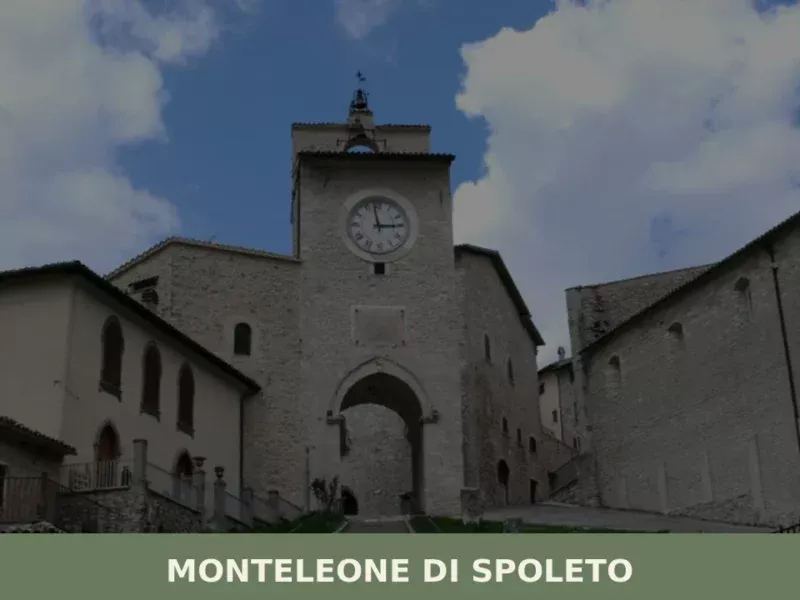
In Umbria More villages to discover
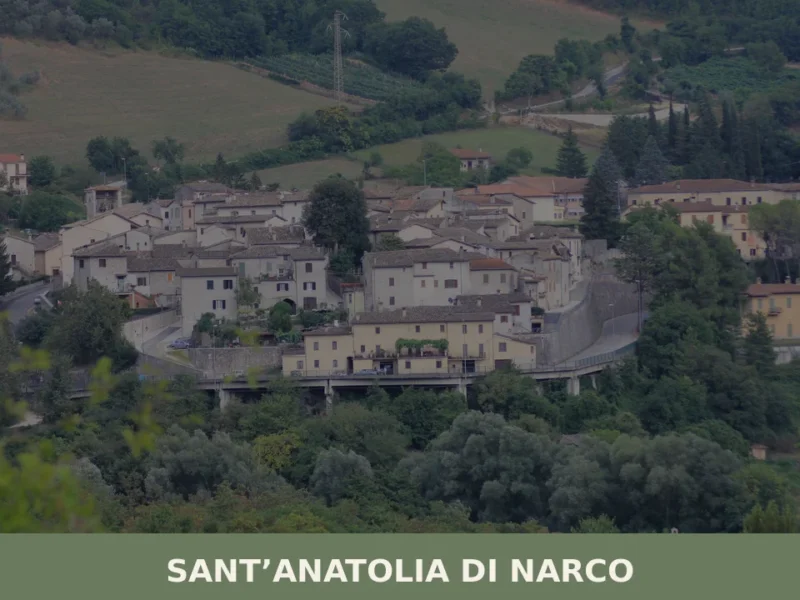
Sant’Anatolia di Narco
 Plains
In 1213, a document from the Abbey of San Felice recorded for the first time the castrum of Sant’Anatolia, a fortified settlement on the left bank of the River Nera in the southern Valnerina. Today the municipality has 555 inhabitants spread between the main village and a handful of hamlets scattered across the wooded slopes […]
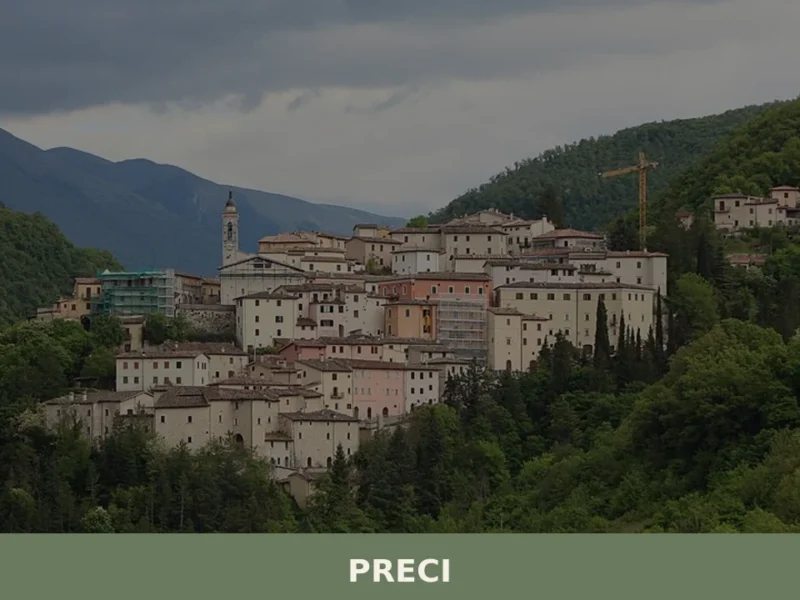
Preci
Hills
With a recorded population of 681 inhabitants, Preci stands at an elevation of 596 metres above sea level in the heart of Umbria, a region often referred to as Italy’s ‘green heart’. This small village, historically shaped by its monastic tradition and a renowned surgical school (see English Wikipedia), offers a distinct window into a […]
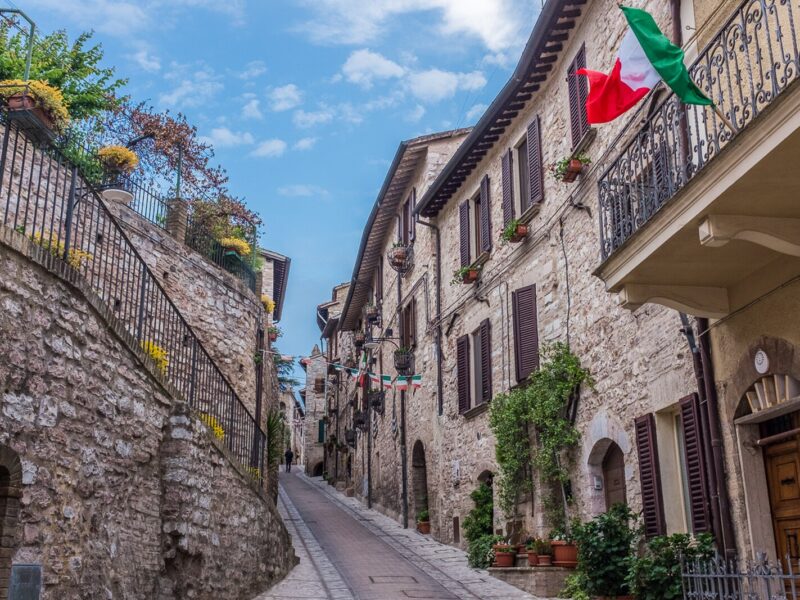
Spello
 Sea
Sea
What to see in Spello, Umbria, Italy: Roman gates, mosaic villa, medieval walls at 314 m. Discover top attractions, local food and how to get there.
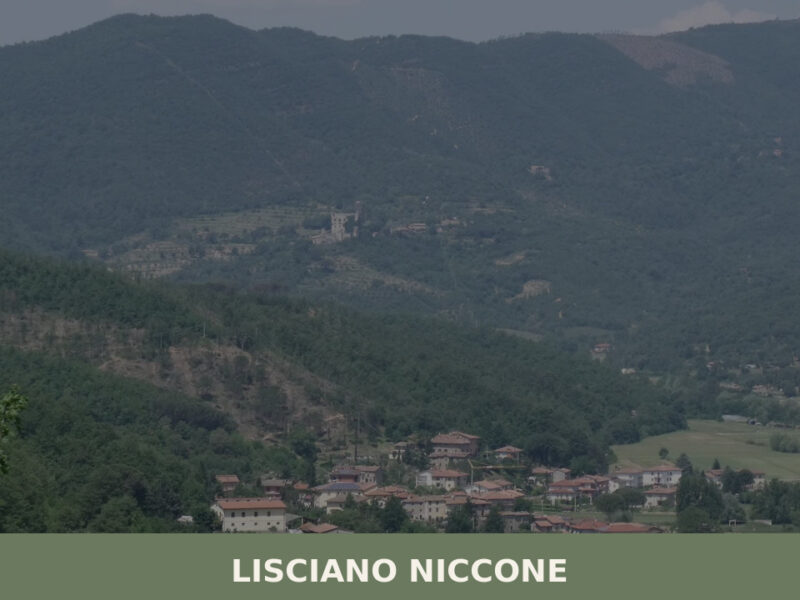
Lisciano Niccone
Hills
A 601-inhabitant village on the Umbria-Tuscany border. Discover what to see in Lisciano Niccone: its medieval core, valley trails, and traditional food.
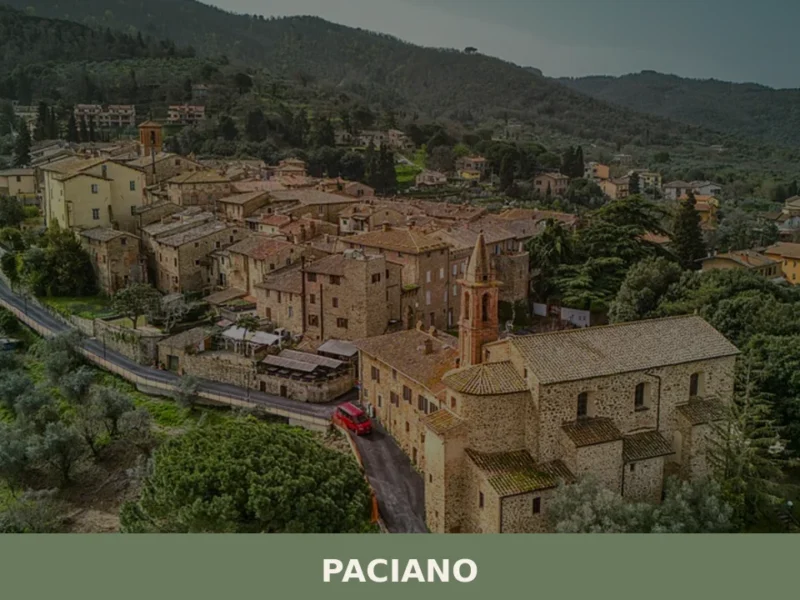
Paciano
Hills
As the early morning mist begins to lift from the rolling hills, a faint scent of woodsmoke and damp earth hangs in the air. The first rays of sunlight strike the ancient stone of Paciano, illuminating a quiet street where a lone figure sweeps the flagstones outside a modest doorway. Here, life unfolds with a […]
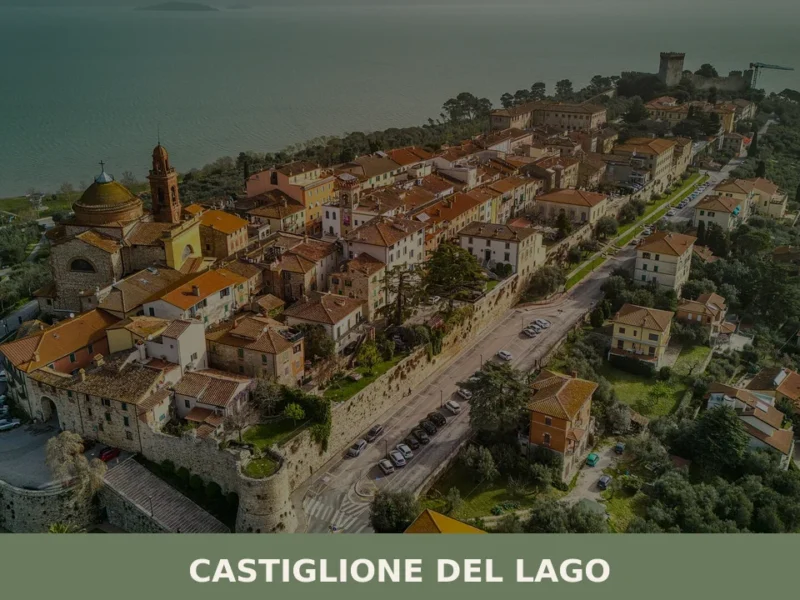
Castiglione del Lago
Hills
 Lake
Lake
What to see in Castiglione del Lago, Umbria, Italy: explore a fortress, a frescoed palace, and Lake Trasimeno from 304 m altitude. Discover top things to do.
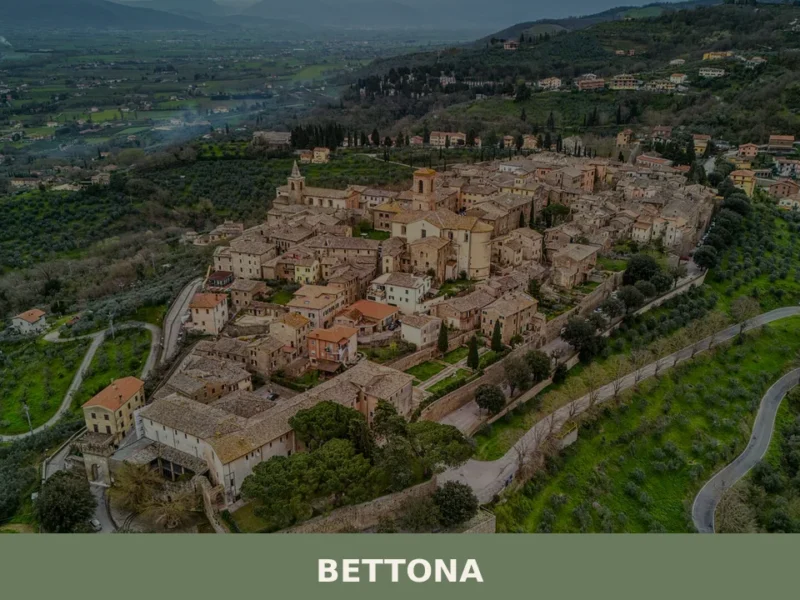
Bettona
Hills
What to see in Bettona, Umbria, Italy: Etruscan walls, Perugino paintings and a Pinacoteca at 353 m altitude. Discover top attractions and how to get there.
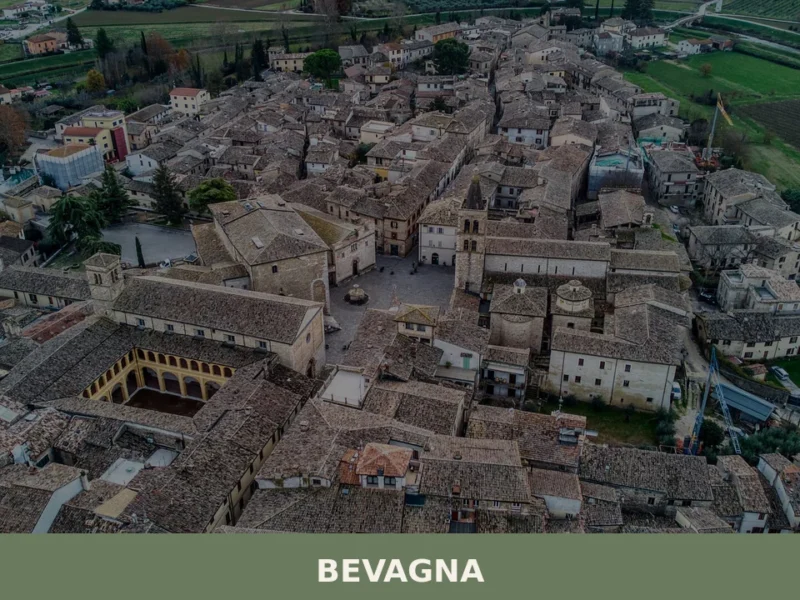
Bevagna
Hills
What to see in Bevagna, Umbria, Italy: explore 5 key attractions, Romanesque churches, Roman ruins, and local food. Population 5,130. Discover the full guide.
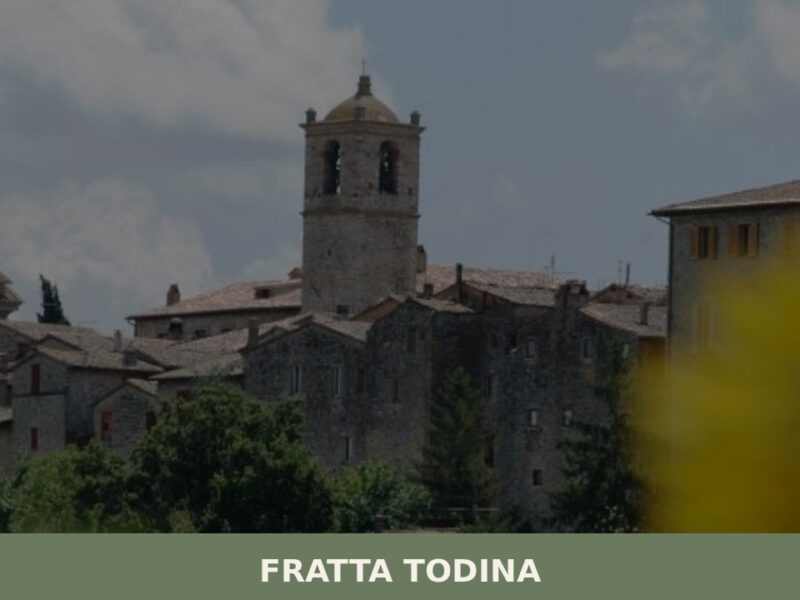
Fratta Todina
Hills
Morning light falls across a line of stone façades, turning the tufa walls the colour of raw honey. A church bell marks the hour from somewhere above the rooftops, its sound carrying across the Tiber valley below. Fratta Todina sits on a low hill in the province of Perugia, home to just 1,817 residents — […]
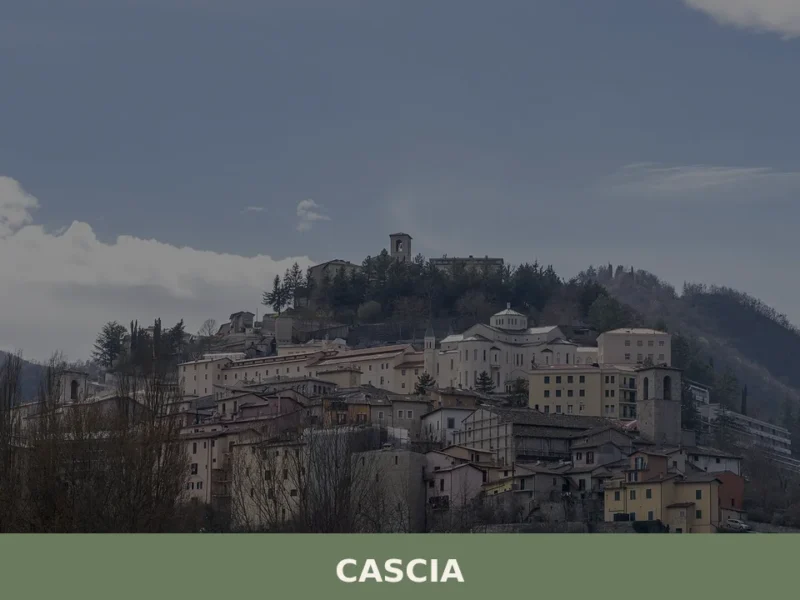
Cascia
 Mountain
What to see in Cascia, Umbria, Italy: explore the Basilica of Santa Rita, medieval churches, and local truffles at 653 m altitude. Discover the full travel guide.


🏡 Know Campello sul Clitunno better than we do?
If you’re a local or have been there, your knowledge matters: add what’s missing or fix a detail on this page.