


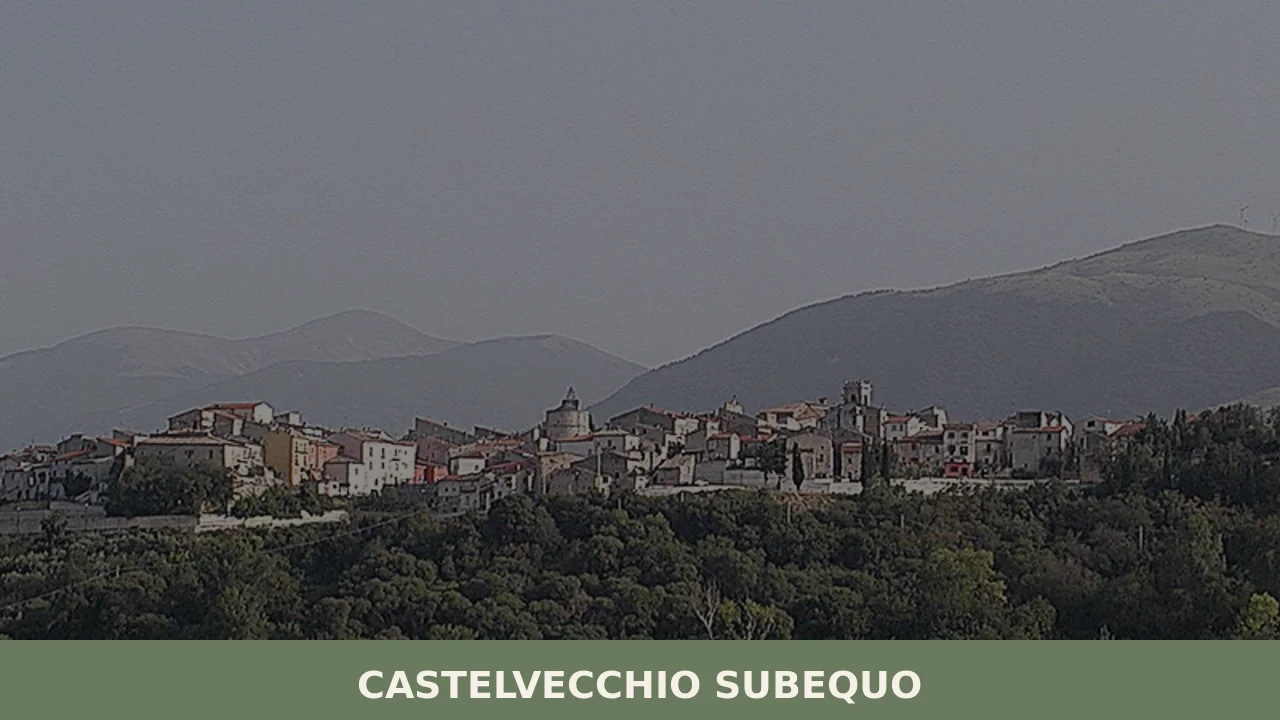
Castelvecchio Subequo
The convent of San Francesco in Castelvecchio Subequo preserves a cycle of fourteenth-century frescoes attributed to painters of the Giottesque school, among the few surviving examples in the central Apennine area. This fact alone is enough to justify a detour from the nearby A25 motorway towards a town of 832 inhabitants, at 490 metres above […]
Discover Castelvecchio Subequo
The convent of San Francesco in Castelvecchio Subequo preserves a cycle of fourteenth-century frescoes attributed to painters of the Giottesque school, among the few surviving examples in the central Apennine area. This fact alone is enough to justify a detour from the nearby A25 motorway towards a town of 832 inhabitants, at 490 metres above sea level, in the Subequana basin of the province of L’Aquila. Asking what to see in Castelvecchio Subequo means engaging with a layered history that begins with the Peligni, passes through Imperial Rome and arrives at thirteenth-century Franciscan settlement, all compressed within an urban perimeter that can be walked in half an hour.
History and origins of Castelvecchio Subequo
The place name preserves two layers of information: “Castelvecchio” points to a fortification predating the current medieval layout, while “Subequo” derives from Superaequum, the Roman municipium of the Peligni that stood in the same area. Superaequum is documented by Pliny the Elder in the Naturalis Historia and by epigraphic inscriptions found across the territory. The Roman city housed an amphitheatre and thermal structures, whose remains still emerge in the fields surrounding the inhabited centre. With the fall of the Empire, the settlement contracted towards the high ground where the early medieval castrum was built.
In the thirteenth century, the Franciscan presence left a decisive mark on the village. The convent was founded, according to tradition, just a few years after the death of Francis of Assisi, and became a centre for spreading the order across the Marsica and the Peligna Valley. Between the fourteenth and fifteenth centuries, the conventual complex was enriched with the frescoes that today constitute the main reason for art-historical interest. The village followed the feudal fortunes of the Kingdom of Naples: it passed under the control of the Counts of Celano, then the Piccolomini, maintaining a rural and agro-pastoral character that is still legible in the urban fabric.
A demographic figure clarifies the trajectory of the twentieth century: in the 1951 census, the municipality had over 2,000 residents. Today it counts 832. Emigration towards Rome, industrialised Lazio and abroad halved the population in seventy years, yet left intact a built heritage of local limestone that forms the compact fabric of the historic centre.
What to see in Castelvecchio Subequo: 5 key attractions
1. Convent and church of San Francesco
Founded in the thirteenth century, the complex preserves fourteenth-century Giottesque frescoes in the chapel of Beato Oddone — figures with fields of lapis lazuli blue and cinnabar red still legible seven centuries after they were painted. The fifteenth-century cloister features paired stone columns with capitals carved in vegetal motifs. The church also houses a polyptych on panel and wooden furnishings datable between the fifteenth and sixteenth centuries.
2. Remains of the Roman amphitheatre of Superaequum
The remains of the small amphitheatre of Superaequum are visible in the archaeological area below the inhabited centre. The elliptical structure, partially buried, has been the subject of excavation campaigns that yielded fragments of inscriptions and ceramic material, confirming the public function of the building within the Peligni municipium between the first century BC and the first century AD.
3. Church of San Giovanni Battista
Dedicated to the patron saint of the village, St John the Baptist, celebrated on 24 June, the parish church has a façade of squared stone blocks and a single-nave interior with Baroque side altars. The portal retains late-medieval decorative elements. Inside, there are seventeenth-century canvases and a processional statue of the patron saint carried through the streets during the June feast.
4. Medieval historic centre
The old nucleus preserves the layout of the castrum, with narrow parallel streets, covered passageways, stone staircases and doorways with lintels dated between the fourteenth and seventeenth centuries. The walls are of local limestone, with regular corner quoins. Some buildings display walled-up mullioned windows and weathered noble coats of arms. The altitude of 490 metres provides a view over the Subequana basin and the ridges of the Sirente massif.
5. Historic fountains and the Subequana basin landscape
The municipal territory includes stone fountains from the Bourbon era, rural watering troughs and mule-track routes that once connected the village to mid-altitude pastures. The Subequana basin — a tectonic depression between the Sirente massif and Monte Urano — offers accessible trails towards grasslands and woods of Turkey oak and downy oak, with moderate elevation gains suited to half-day hikes.
Traditional cuisine and local products
The cooking of Castelvecchio Subequo belongs to the agro-pastoral tradition of the Subequana Valley and the Peligna basin. The signature dish is sagne e fagioli — wide strips of fresh pasta made with flour and water, cooked in the bean broth, often using the “a pisello” variety common in the L’Aquila area, dressed with a soffritto of garlic, extra virgin olive oil and dried chilli. Arrosticini, skewers of mutton cut into small cubes and grilled over a fornacella, appear at every festival and family table. The proximity to the Navelli Plain makes Zafferano dell’Aquila DOP readily available, used in the preparation of risottos and local desserts. Among dairy products, pecorino d’Abruzzo and fresh sheep’s milk ricotta, made from whey at the small dairies of the valley, are common finds. Mortadella di Campotosto IGP, a pork salume with an ovoid shape and a core of lardello, features on the cutting boards of trattorias in the area.
Among desserts, ferratelle (crisp waffles cooked between two engraved iron plates) are made with eggs, sugar, oil and anise; in the local variation, cooked grape must is sometimes added. Soft chocolate torrone from the L’Aquila tradition and confetti di Sulmona — produced in the nearby Ovidian city — round out the dessert repertoire. On the wine front, the territory falls within the area of Montepulciano d’Abruzzo DOC and Trebbiano d’Abruzzo DOC. Extra virgin olive oil from the Dritta and Gentile cultivars of the L’Aquila area, pressed at valley mills, accompanies legume soups, bruschette and cooked vegetables. The lenticchia di Santo Stefano di Sessanio, a Slow Food presidium grown just a few kilometres away, frequently appears in winter soups served in the village’s restaurants and private homes. During the patron saint’s feast on 24 June, tasting stalls are set up with local products and grilled dishes.
When to visit Castelvecchio Subequo: the best time
24 June, the feast of St John the Baptist, is the date when the village reaches its peak social intensity: procession, bonfires, music and food stalls draw back emigrants and visitors alike. Spring — from mid-April to the end of May — brings mild temperatures (12–20 °C at this altitude) and the flowering of the Subequana basin, with stretches of red sainfoin and broom along the field margins. Summer is warm but breezy, with highs that rarely exceed 30 °C thanks to the altitude; evenings remain cool, worth knowing for anyone staying overnight.
Autumn, between October and November, coincides with the saffron harvest on the nearby Navelli Plain and with the olive milling: two agricultural activities that can be visited on request. Winter is harsh, with snowfall possible between December and February, and the village empties out; those seeking silence and winter light on the Sirente mountains may find a rare set of conditions in those months, but it is advisable to check the availability of dining and accommodation services before departure. The municipal website publishes updates on events and accessibility.
How to reach Castelvecchio Subequo
By car, from the A25 Roma–Pescara motorway, take the Cocullo or Pratola Peligna–Sulmona exit and continue on regional road 261 towards the Subequana basin. From Rome the distance is approximately 130 km (one hour and forty minutes); from Pescara approximately 95 km (one hour and fifteen minutes); from L’Aquila approximately 55 km (fifty minutes). The nearest railway station is Raiano–Castelvecchio Subequo, on the Rome–Sulmona–Pescara line, served by regional trains; from the station forecourt the centre is about 6 km away, reachable by taxi or on-demand transport. The nearest airport is Pescara–Abruzzo (90 km); the main Rome Fiumicino (170 km) and Rome Ciampino (145 km) airports offer more extensive domestic and international connections. The village is entirely walkable; car parking is available in the areas on the edge of the historic centre.
What to see in Castelvecchio Subequo and in nearby villages of Abruzzo
Visitors to the Subequana basin can extend their itinerary towards the foothill belt of the Maiella and the Adriatic side. Fara Filiorum Petri, in the province of Chieti, is known for the Farchie — enormous bundles of reeds set alight on 16 January in honour of Sant’Antonio Abate, a ritual documented at least since the eighteenth century. The link between fire and popular devotion is shared by several Abruzzese towns, but in Fara the scale of the event — flames several metres high in the village square — has no equivalent in the region.
Moving towards the coast, Atri, in the province of Teramo, offers a different register: the cathedral of Santa Maria Assunta with its fresco cycle by Andrea De Litio (fifteenth century) and the landscape of clay badlands in the Nature Reserve make it a second pole of art-historical and geological interest. From Castelvecchio Subequo, Atri is about an hour and a half by car via the A25 and the A14: two villages distant in geography and altitude, linked by the presence of painted cycles that document the circulation of art in late-medieval Abruzzo.
Getting there
Via Roma, 67024 Castelvecchio Subequo (AQ)
Nearby Villages near Castelvecchio Subequo
In Abruzzo More villages to discover
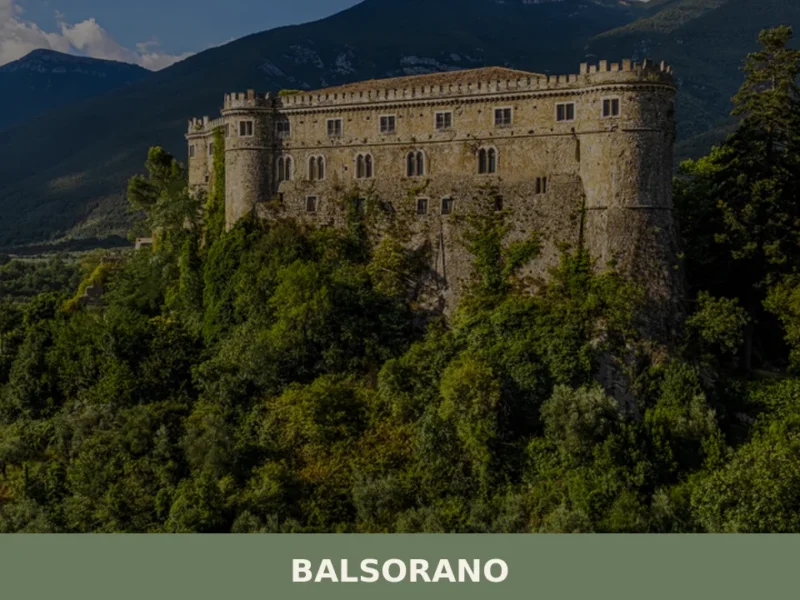
Balsorano
The Val Roveto divides southern Abruzzo from Lazio along a fault line that has determined earthquakes, migrations and feudal borders for over seven centuries. Balsorano occupies the valley floor and the hillside at 340 metres above sea level, with its 3,617 inhabitants spread between the upper historic centre — Balsorano Vecchio — and the modern […]
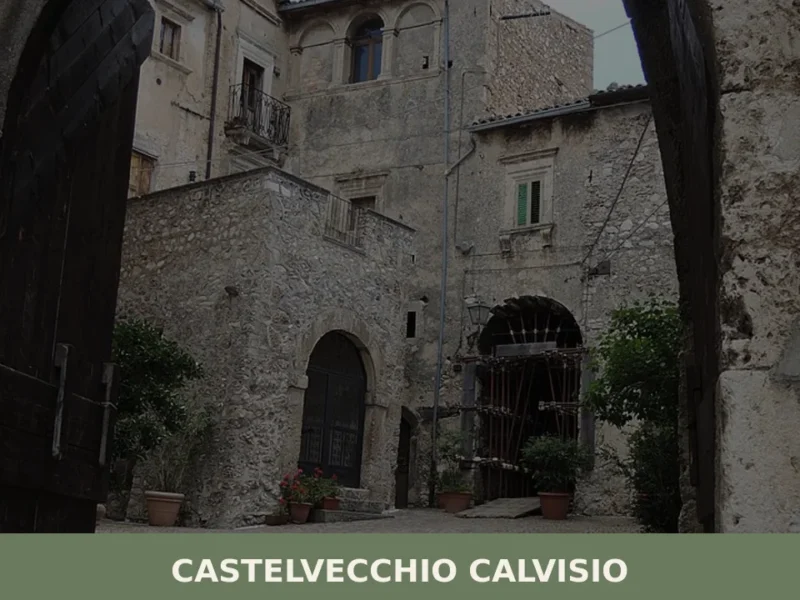
Castelvecchio Calvisio
At 1045 meters above sea level, in the L’Aquila hinterland, stands Castelvecchio Calvisio, a village that retains the structure of an ancient *castrum* medieval. With a population of 118 inhabitants, the historic center develops on a rocky ridge, overlooking the basin below. Its elevated position and stone architecture offer an insight into Abruzzo’s fortifications. For […]
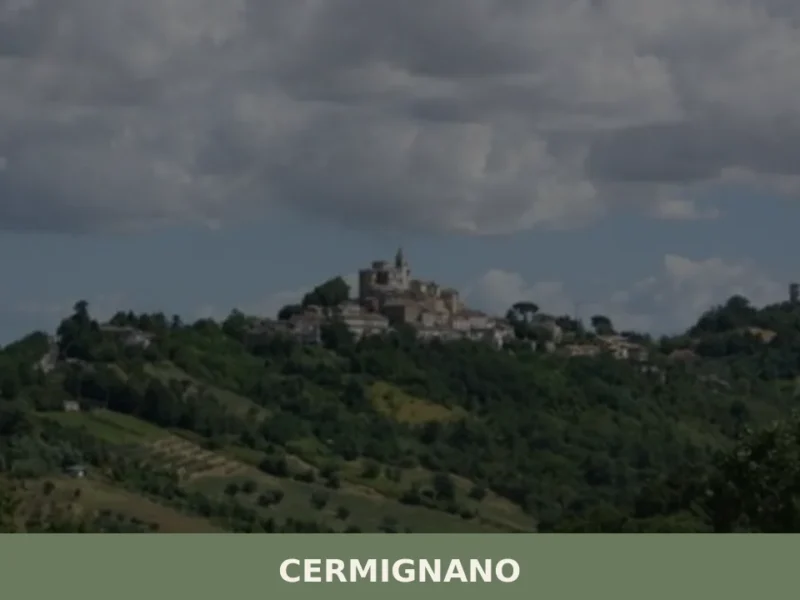
Cermignano
With its 1,440 inhabitants, Cermignano stands at 563 meters above sea level, offering a view of the Vomano valley and the foothills of Gran Sasso. This town in the province of Teramo, whose patron saint is Saint Sylvester, appears as a hillside settlement that retains traces of its historical development. For those wondering what to […]





📝 Incorrect information or updates?
Help us keep the Castelvecchio Subequo page accurate and up to date.