


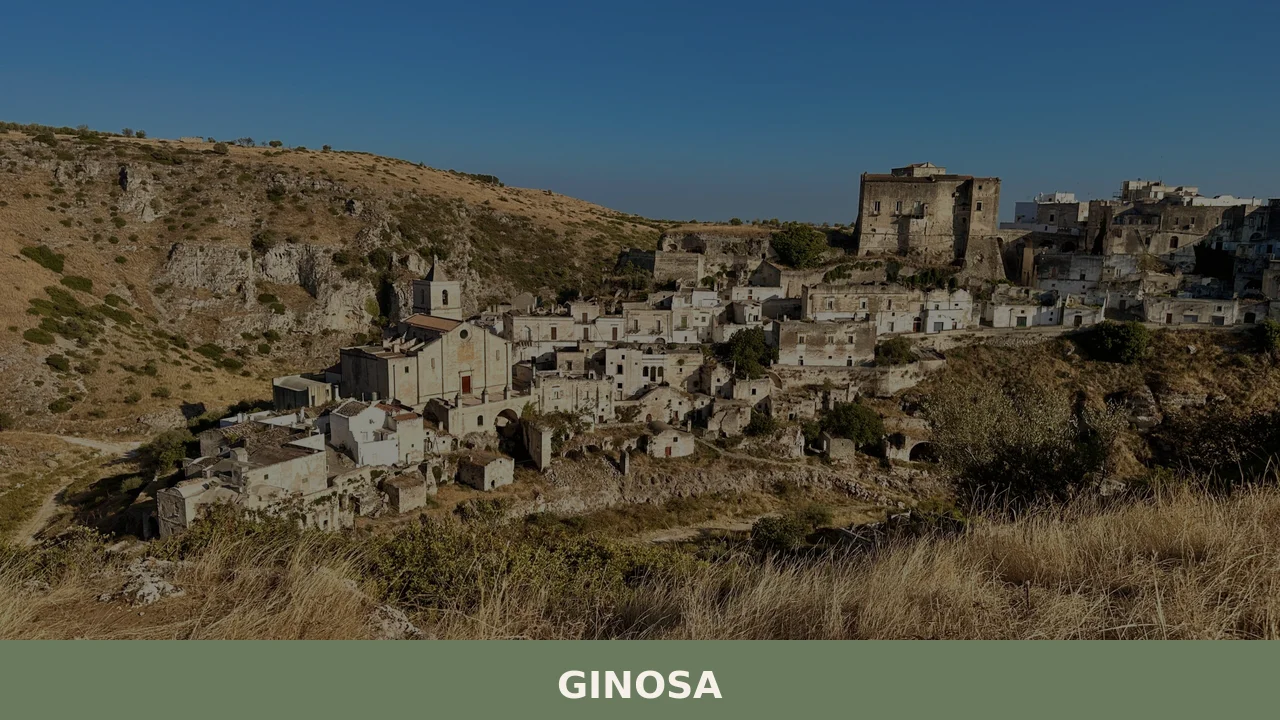
Ginosa
 Sea
Sea
Discover what to see in Ginosa, Puglia: the dramatic gravina, rupestrian churches, castle, cathedral and Ionian coast. Practical travel guide with tips.
Discover Ginosa
At 240 metres above sea level on the southern slopes of the Murgia Tarantina, Ginosa is a comune of around 21,700 inhabitants in the province of Taranto, Puglia. The town occupies the first terrace of this limestone plateau, a position that gave it both defensive advantage and agricultural reach across the Ionian hinterland. Deciding what to see in Ginosa means engaging with two distinct geographies: an old town carved into and above a dramatic ravine, and a coastline some 30 kilometres to the south, at Marina di Ginosa. Between these two poles, the territory contains a density of historical and natural interest that rewards close attention.
History of Ginosa
The name Ginosa derives from the Latin Genusia, itself connected to the ancient Peucetian settlement that occupied this ridge long before Roman consolidation of the region. The Peucetians, one of the indigenous Italic peoples of pre-Roman Puglia, left traces in the surrounding territory that confirm occupation during the first millennium BC. By the time Rome extended its road network through the Tarantino, the settlement had been absorbed into the broader colonial administrative framework, its strategic elevation on the Murgian escarpment making it a natural relay point between the coastal lowlands and the interior plateau.
During the early medieval period, Ginosa became associated with the complex network of Byzantine-influenced settlements that characterised this part of southern Italy. The ravine — locally called la gravina — became a refuge. Rock-cut cave dwellings and rupestrian churches were excavated directly into the tufa walls of the gorge, a practice documented across the Murgia and the Basilicata border, where communities sought both shelter and sacred space in the living rock. This rupestrian culture, which produced painted chapels and inhabited cave complexes, gives Ginosa one of its most archaeologically significant features. The town subsequently passed through Norman and then Swabian control in the twelfth and thirteenth centuries, when southern Italy was reorganised under feudal structures introduced by the Hauteville dynasty and consolidated under Frederick II of Hohenstaufen.
In the Aragonese and later Spanish viceregal periods, Ginosa functioned as a feudal holding passing between baronial families, a pattern common across the Terra d’Otranto and the Tarantino. The town’s administrative identity was formalised within the Kingdom of Naples and later the Kingdom of the Two Sicilies before Italian unification in 1861 incorporated it into the unified state. In the twentieth century, land reclamation projects along the Ionian coastal strip transformed the agricultural economy, eventually making the coastal frazione of Marina di Ginosa a significant summer destination. Ginosa is today an administrative comune within the province of Taranto, and was formerly part of the Comunità Montana della Murgia Tarantina, the mountain community body that coordinated the upland municipalities of this area.
What to see in Ginosa: 5 must-visit attractions
La Gravina di Ginosa
The ravine that bisects the territory is a canyon cut by water into the Murgian limestone over geological time. Its tufa walls, reaching considerable depth, contain excavated cave dwellings and rupestrian chapels used from the early medieval period onward. Walking the path along its rim, visitors look directly into a layered cross-section of human habitation — cave openings, carved niches, and the remains of fresco decoration in some chambers.
The Rupestrian Churches
Cut directly into the rock faces of the gravina, these cave churches belong to the broader tradition of rupestrian worship documented across the Murgia Tarantina and neighbouring Basilicata. Several retain traces of Byzantine-style fresco painting, including depictions of saints and devotional figures rendered in the flat, hieratic manner characteristic of southern Italian rupestrian art between the ninth and thirteenth centuries.
The Historic Centre and Castello
Ginosa’s old town develops along the ridge above the ravine. At its highest point stands the castello, a fortified structure whose current form reflects medieval and later modifications typical of Aragonese-period defensive architecture in the Tarantino. The castle’s position commands sightlines across the Ionian plain below, explaining its retention as a strategic point through successive phases of feudal control.
The Cathedral of Santa Maria Assunta
The main parish church dedicated to the Assumption of the Virgin stands in the historic centre and represents the principal ecclesiastical monument of the town. Its architectural fabric incorporates elements from different construction phases, with the façade and interior reflecting the overlapping influences — Romanesque structural logic, Baroque decorative elaboration — common to churches of the Tarantino that were modified repeatedly between the medieval and early modern periods.
Marina di Ginosa
The coastal frazione some 30 kilometres south of the hilltop town sits on the Ionian shore, where the landscape flattens into dune systems and pineta — planted pine forest — backed by the sea. The beach here is characterised by fine sand and shallow entry, and the coastal strip was developed progressively through the mid-to-late twentieth century as part of the broader land reclamation and settlement of the Ionian coastline. For visitors exploring inland Puglia, it provides a practical point of connection between the interior plateau and the Ionian coast.
Local food and typical products
The agricultural territory of Ginosa produces olive oil and wine within the broader Tarantino and Apulian production systems. Taranto province sits within areas covered by Apulian DOP olive oil designations, and the olive groves of the Murgia foothills contribute to this output. The table of this part of Puglia follows the patterns of the cucina povera tradition: legumes cooked long and slow, handmade pasta formats such as orecchiette and cavatelli, bitter greens including cicoria and cime di rapa, and lamb or pork preparations tied to the pastoral economy of the Murgia. The Regione Puglia maintains registers of traditional agri-food products that include many of these locally produced items.
On the coast, Marina di Ginosa naturally tilts the diet toward the sea. Ionian seafood — sea urchin eaten raw with bread, mussels farmed in the waters around Taranto, grilled fish — features prominently in the summer months when the coast fills with visitors. The taranta mussels of Taranto, cultivated in the Mar Piccolo and the wider gulf, are among the most documented local seafood products of the province, with a production tradition extending back centuries. For travellers covering this territory by car, a meal that begins with orecchiette al ragù in the hill town and ends with a seafood plate at the coast represents the most direct way to read the geography on a plate.
Best time to visit Ginosa
The old town and the gravina are best explored between April and June, and again in September and October. In these months, temperatures on the Murgian terrace are moderate — typically between 15°C and 26°C — and the light at the canyon rim is clear without the intensity that July and August bring. The rock churches and cave dwellings are also more accessible and less affected by heat concentration in the tufa gorge during the cooler shoulder months. The Comune di Ginosa publishes information on local feast days and civic events, including the celebrations tied to the feast of the patron saint, which follow the Apulian calendar of summer religious observances and bring music, processions and market activity into the historic streets.
Marina di Ginosa operates on a different seasonal logic: July and August are high season on the Ionian coast, with beach facilities open and the coastal settlement at its most active. Visitors who want to combine the hill town with the coast should plan accordingly — the interior in spring or autumn, the shore in summer — or accept that a midsummer visit to Ginosa itself will be hot and relatively quiet in the old town while the coast is at full volume. Winter is mild by northern European standards but quiet, with limited services outside the main residential areas.
How to get to Ginosa
Ginosa sits in the southern Murgian foothills at the intersection of several regional routes. The practical access points are as follows:
- By car from Taranto: Approximately 40 kilometres west of Taranto via the SS7 (Via Appia) or connecting roads through the Murgian foothills. Journey time is roughly 45 minutes depending on traffic.
- By car from Bari: Around 90 kilometres to the northwest via the A14 motorway to Taranto, then westward on provincial roads. Allow approximately 1 hour 15 minutes.
- By car from Matera (Basilicata): Ginosa lies close to the Puglia–Basilicata border. Matera is approximately 45 kilometres to the northwest, making Ginosa a logical stop on any circuit linking the two regions.
- By train: The nearest significant rail hub is Taranto, served by Trenitalia on the Bari–Taranto and Reggio Calabria–Taranto lines. Onward connection to Ginosa requires a car or local bus service.
- Nearest airport: Brindisi Airport (Aeroporto del Salento) is the closest major gateway, approximately 80 kilometres to the east. Bari Karol Wojtyła Airport is approximately 100 kilometres to the north. Car hire at either airport provides the most flexible access.
Where to stay in Ginosa
Accommodation in the Ginosa territory divides between two distinct bases: the hilltop historic centre and the coastal strip at Marina di Ginosa. Staying in the old town itself puts you within walking distance of the gravina and the rupestrian churches, and the options here tend toward B&Bs, small guesthouses and private apartment rentals in historic buildings. This is the right choice for anyone whose primary interest is the archaeology and the old town architecture. The pace is quieter, and evenings in the centro storico follow the rhythm of a working Apulian town rather than a resort.
Marina di Ginosa offers a broader range of coastal accommodation — holiday apartments, small hotels and camping facilities oriented toward the summer beach season. Agriturismo properties in the agricultural land between the hill and the coast represent a practical middle ground, particularly for families or groups with cars who want flexibility. The Puglia official tourism portal maintains a searchable database of registered accommodation across the province, which is the most reliable starting point for verified options.
More villages to discover in Puglia
The Puglia that lies beyond the well-documented Baroque cities rewards lateral exploration. The Salento peninsula to the southeast contains Giurdignano, a small settlement in the province of Lecce whose territory holds one of the densest concentrations of megalithic monuments in the region — dolmens and menhirs distributed across the surrounding countryside in numbers that have led archaeologists to call the area the “garden of megaliths.” Further north along the Adriatic coast, the Gargano promontory contains Ischitella, a hill village above the Lago di Varano that offers a completely different register: forest, freshwater lagoon and an agricultural economy tied to the Gargano National Park.
For travellers building a circuit through inland Puglia, the limestone cave systems of Castellana Grotte in the Bari province provide a compelling geological counterpart to Ginosa’s open ravine — here the dramatic topography is underground, in a cave complex extending for over three kilometres and containing formations that have been documented and visited since their modern discovery in 1938. In the Foggia province, the agricultural plateau of the Tavoliere produces a different landscape entirely: Castelluccio dei Sauri sits among the cereal fields of this broad plain, a point of reference for understanding the working agricultural geography of northern Puglia that contrasts directly with the rocky, ravine-cut terrain of the Murgian south.
Frequently asked questions about Ginosa
What is the best time to visit Ginosa?
The ideal time to visit Ginosa depends on your interests. For exploring the historic centre, the Gravina, and its rupestrian churches, spring (April-June) and early autumn (September-October) offer moderate temperatures, typically between 15°C and 26°C, making outdoor activities comfortable. If your focus is on beach relaxation at Marina di Ginosa, the high season in July and August is perfect, with all coastal facilities fully operational. A notable cultural event is the patron saint feast of Maria SS.ma del Rosario, celebrated on the first Sunday of October, preceded by festivities for SS. Medici, bringing vibrant processions and market activity to the historic streets.
What to see in Ginosa? Main monuments and landmarks
Ginosa offers a unique blend of natural and historical sights. Key attractions include the dramatic Gravina di Ginosa, a canyon housing ancient cave dwellings and rupestrian churches with traces of Byzantine frescoes. The historic centre, perched above the ravine, features the medieval Castello, offering panoramic views, and the stately Cathedral of Santa Maria Assunta, showcasing Romanesque and Baroque architectural elements. Approximately 30 kilometres south, Marina di Ginosa provides beautiful fine sand beaches and pine forests along the Ionian coast. For specific opening hours of the Castello or access details for certain rupestrian churches, local inquiry upon arrival is recommended.
What are the main natural or scenic attractions of Ginosa?
Ginosa's primary natural attraction is the awe-inspiring Gravina di Ginosa, a deep limestone canyon carved over millennia. Its rugged walls are dotted with ancient cave dwellings and rock-cut chapels, offering a dramatic landscape for exploration and photography. To the south, Marina di Ginosa provides a contrasting natural setting with its extensive fine sandy beaches, shallow Ionian waters, and characteristic dune systems backed by planted pine forests (pineta), perfect for seaside leisure and nature walks along the coast.
Where to take the best photos in Ginosa?
For breathtaking photos, head to the rim of the Gravina di Ginosa, where you can capture the dramatic canyon landscape, the intricate cave dwellings, and the layered history carved into the rock. The historic centre, particularly around the Castello, offers panoramic vistas of the Ionian plain. In Marina di Ginosa, the wide sandy beaches at sunset, the tranquil dune systems, and the characteristic pine forests provide excellent opportunities for coastal photography. These locations offer diverse backdrops, from rugged geological formations to serene seascapes.
Are there museums, churches or historic buildings to visit in Ginosa?
Yes, Ginosa is rich in historic and religious architecture. Visitors can explore the Rupestrian Churches, ancient cave chapels carved into the Gravina's tufa walls, some retaining Byzantine-style frescoes. The town's main ecclesiastical monument is the Cathedral of Santa Maria Assunta in the historic centre, featuring a blend of Romanesque and Baroque influences and generally open for worship. Dominating the historic skyline is the medieval Castello, a fortified structure reflecting Aragonese defensive architecture. While no specific museums are mentioned, these sites offer deep historical and cultural insights into Ginosa's past.
What can you do in Ginosa? Activities and experiences
Ginosa offers a diverse range of activities. Explore the Gravina by walking its rim, delving into its ancient cave dwellings and rupestrian churches. Wander through the historic centre to admire the Castello and Cathedral. For beach lovers, Marina di Ginosa provides swimming, sunbathing, and watersports on its fine sandy shores. Food enthusiasts can indulge in the local cuisine, from traditional 'cucina povera' dishes like orecchiette and local lamb in the hill town, to fresh Ionian seafood and Taranto mussels at the coast. Don't miss the patron saint festivities in early October for a cultural immersion.
Who is Ginosa suitable for? Families, couples, hikers, solo travelers?
Ginosa caters to a variety of visitors. Families will appreciate Marina di Ginosa's shallow, sandy beaches and relaxed coastal atmosphere during summer. History and culture enthusiasts, as well as solo travelers, will be captivated by the ancient Gravina, rupestrian churches, and the historic centre's castle and cathedral. Hikers and nature lovers can explore the canyon's paths and the coastal pine forests. Couples seeking a blend of cultural exploration and seaside relaxation will find Ginosa appealing, especially those interested in authentic Apulian food and traditions.
What to eat in Ginosa? Local products and specialties
Ginosa's cuisine reflects its dual geography. From the Murgian hinterland, savor high-quality olive oil and local wines. Traditional 'cucina povera' dishes include handmade pasta like orecchiette and cavatelli, often served with rich lamb or pork ragù, or bitter greens such as cicoria and cime di rapa. On the coast, Marina di Ginosa specializes in fresh Ionian seafood. Don't miss raw sea urchin, grilled fish, and the renowned mussels from Taranto's Mar Piccolo. A meal transitioning from inland pasta to coastal seafood offers a true taste of the territory.
📷 Photo Gallery — Ginosa
Nearby Villages near Ginosa
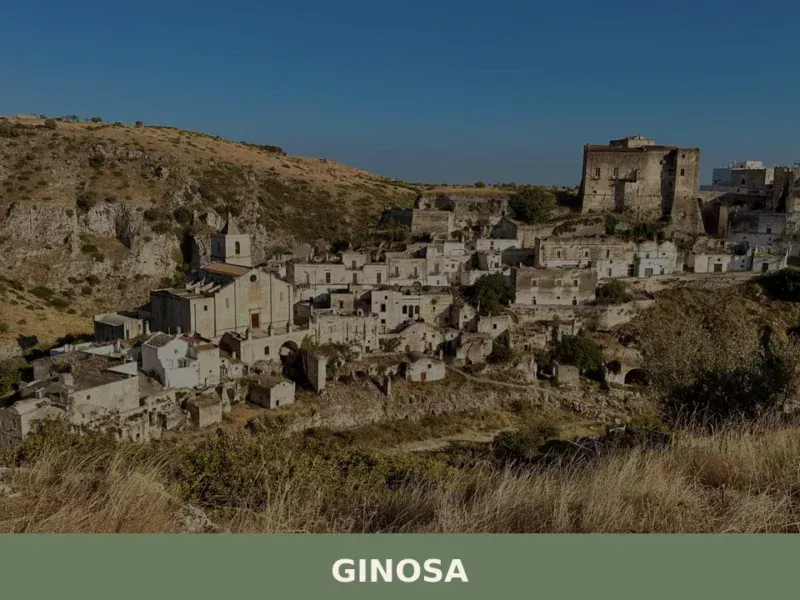


In Apulia More villages to discover
Manfredonia
Sea
A port city founded by King Manfred on the Gargano coast, Manfredonia holds a medieval castle, pre-Roman carved stele, and one of Puglia's oldest carnivals.

Cagnano Varano
Sea
6,579 residents live between a brackish lagoon and the Gargano hills. Stone lanes, patron saints Michele and Cataldo, and a shoreline unlike anywhere else in Foggia province.
Lucera
 Hills
Hills
Discover Lucera, a historic hilltop city in Puglia where Roman ruins, a Saracen past, and Angevin grandeur converge amid the sun-drenched Tavoliere plain.
Monopoli
Sea
From the promontory where the Castle of Charles V stands, the view sweeps across the Adriatic, a horizon of waters that have shaped Monopoli’s identity for centuries. This port city, whose name evokes the idea of a “unique city,” reveals itself through its architecture, which tells of historical layers, from Messapian walls to Spanish fortifications. […]
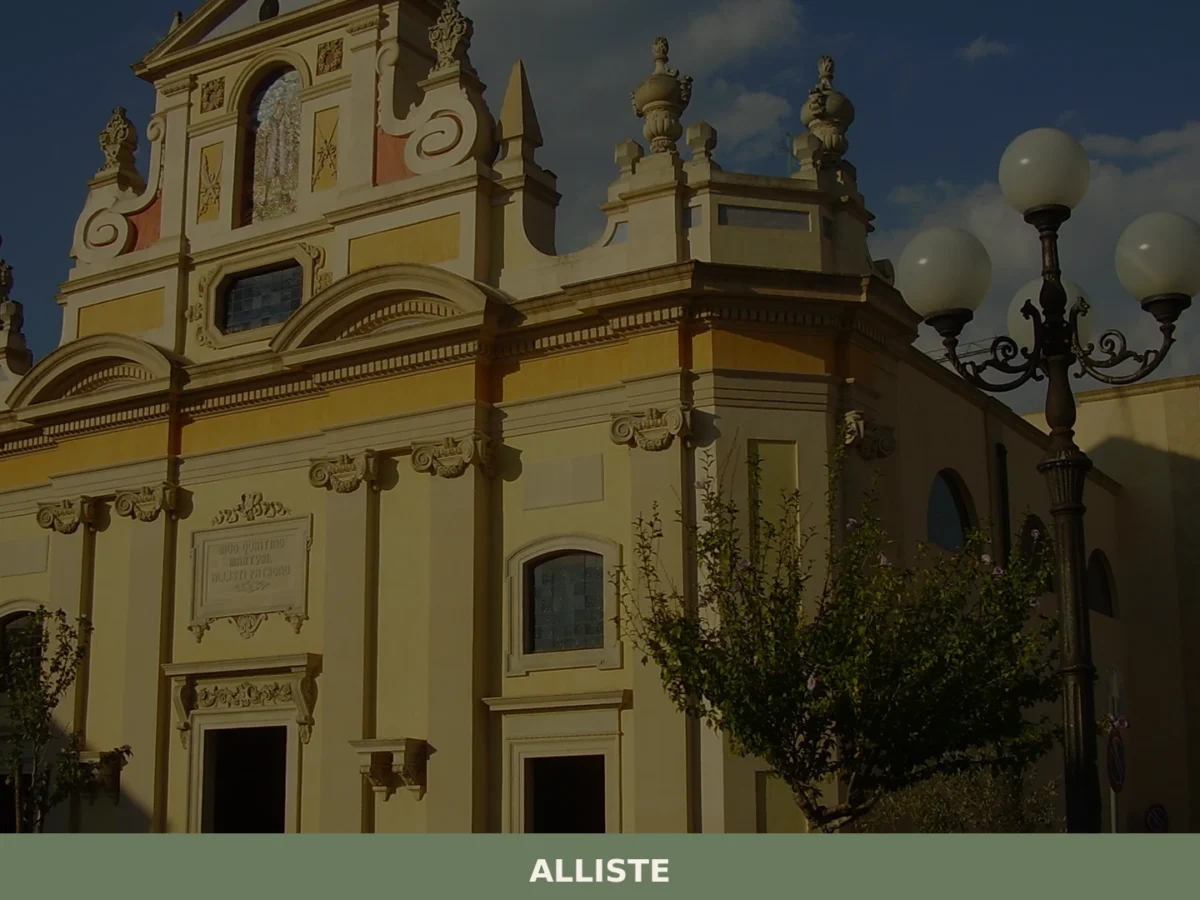
Alliste
Sea
what to see ad Alliste: scopri il 6.481 abitanti. Visita chiese e masserie, assapora la cuisine salentina per un viaggio autentico.
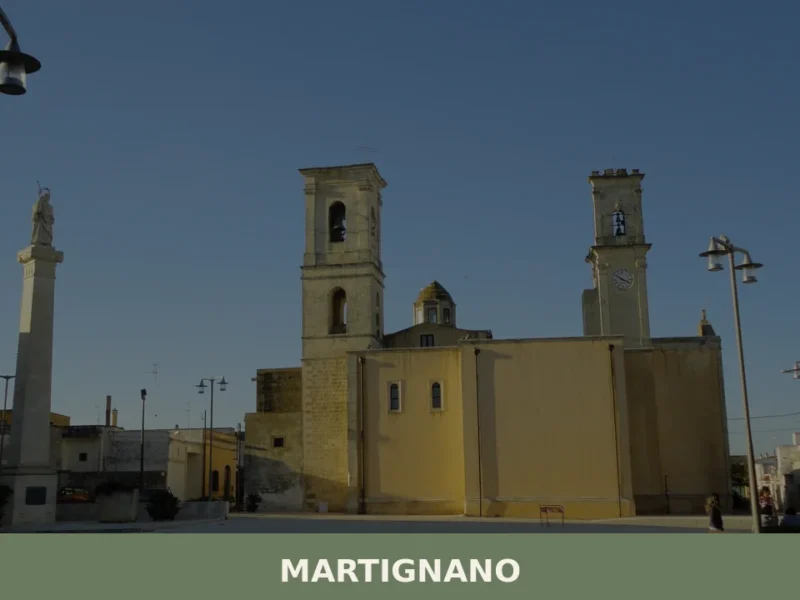
Martignano
 Plains
What to see in Martignano: from medieval churches to the main square, discover the 5 top attractions of this Griko village. Plan your visit with this guide.
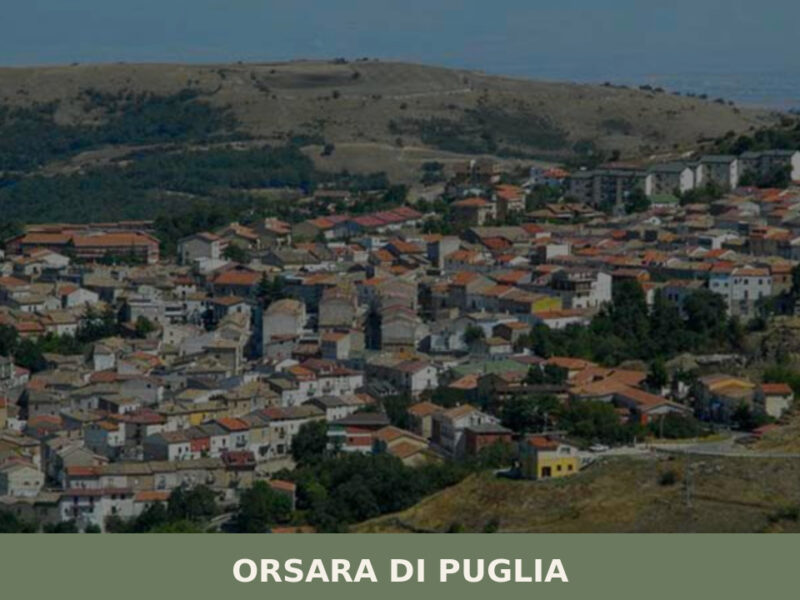
Orsara di Puglia
 Mountain
A mountain village of 2,507 people in the Foggia province, Orsara di Puglia holds sacred grottoes, medieval stonework, and one of southern Italy's most distinctive culinary traditions.
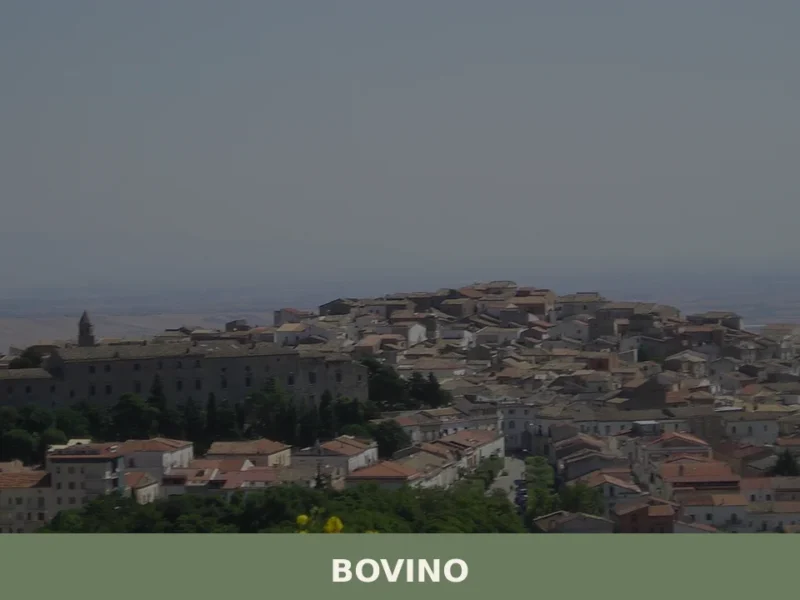
Bovino
Mountain
What to See in Bovino: discover 5 must-see attractions and savor the taste of Acquasale. Visit the historic village and the magnificent Ducal Castle.
San Paolo di Civitate
Plains
A ridge-top village above the Tavoliere plain in Foggia province, San Paolo di Civitate holds Roman ruins, Norman battlefield history, and an unhurried agricultural life.
San Pietro Vernotico
Sea
What to see in San Pietro Vernotico, Italy? Discover its 14th-century Torre Quadrata and the historic Chiesa Matrice. Explore this village, 36 m above sea level, for its rich past.


🏡 Know Ginosa better than we do?
If you’re a local or have been there, your knowledge matters: add what’s missing or fix a detail on this page.