


Perano
 Plains
What to see in Perano? Discover the complete guide to the 3 unmissable attractions of this Abruzzo village. Plan your visit now!
Discover Perano
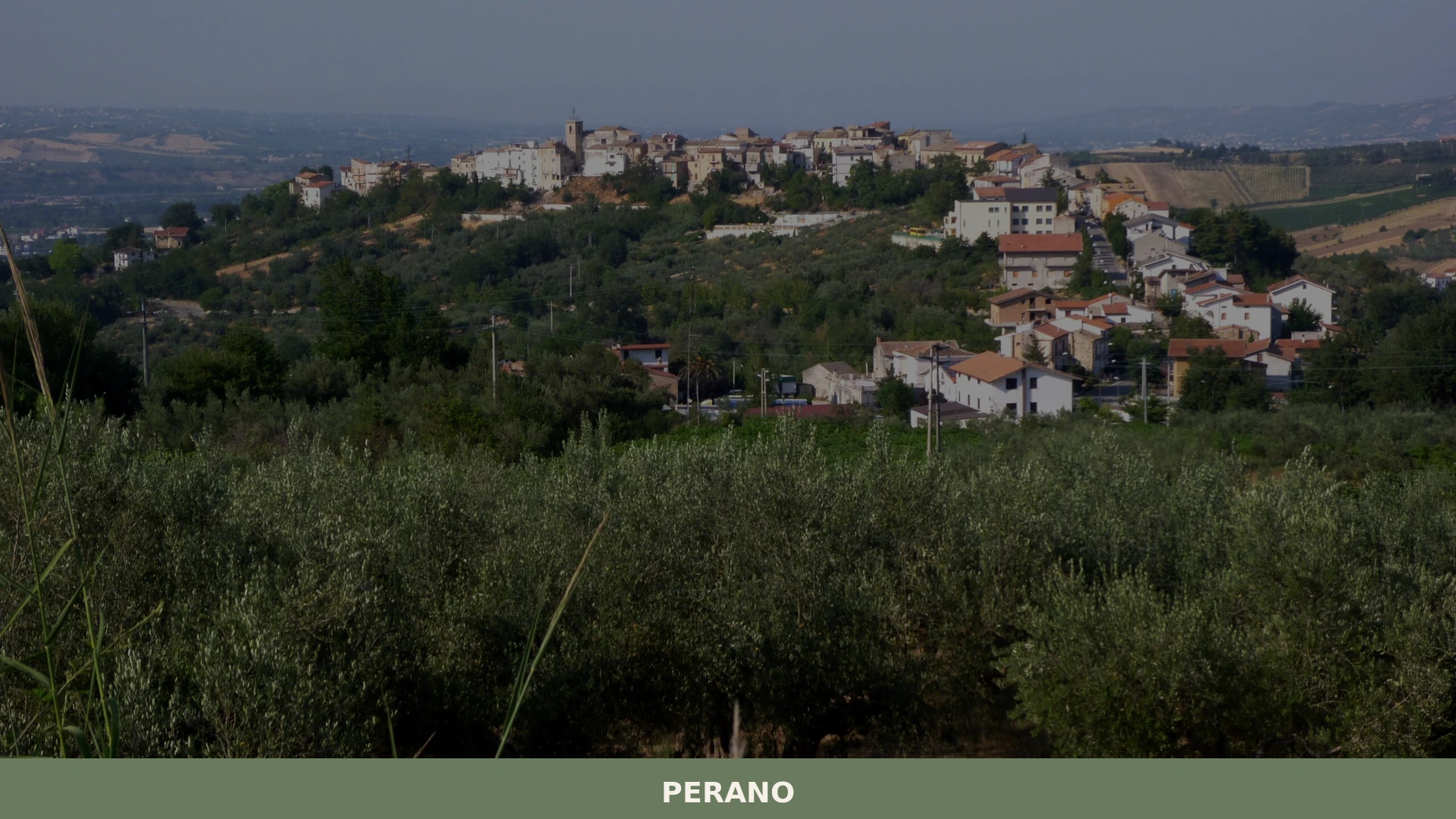
With its 1,504 inhabitants, Perano stands as a fixed point in the Frentano landscape, a village that rises 256 meters above sea level in the province of Chieti.
Its streets preserve the memory of centuries, sketching a profile that stands out against the backdrop of the Abruzzese hills.
The stone architecture and quiet squares reflect a daily life marked by ancient rhythms, inviting visitors to discover an authenticity preserved over time.
Those wondering what to see in Perano will find an itinerary that embraces local history and culture, with at least three primary points of interest worthy of attention.
The streets of the historic center lead to the discovery of the church dedicated to the patron saint and to architectures that recount the evolution of the territory.
Visitors can dedicate themselves to exploring the religious and civil heritage, grasping the essence of this corner of Abruzzo.
History and origins of Perano
The precise origins of the village of Perano are not detailed in the available historical sources, which primarily identify it as an Italian municipality in the province of Chieti, Abruzzo. Its existence as an administrative entity with a population of 1,504 inhabitants nevertheless testifies to a continuous settlement that has developed over the centuries, albeit without specific foundation dates or documented pivotal events outlining its historical path.
The geographical position of the village, at 256 meters a.s.l., suggests a history linked to the defense and control of the surrounding territory, a common characteristic of many hilly settlements in the region.
The lack of specific documentation on Perano’s historical events in the provided sources does not allow for a detailed evolutionary path to be traced from its foundation to the modern age.
It can be inferred that, like many other Abruzzese villages, Perano has experienced periods of different dominations, influenced by the great regional and state powers that have succeeded one another over the centuries.
The life of the community likely developed around agriculture and local traditions, maintaining a close link with the territory and its resources.
The village, although without specific historical attestations in the sources, is an integral part of the cultural and geographical fabric of Abruzzo, a region rich in history and traditions. Its belonging to the province of Chieti places it in a territorial context that has seen the flourishing of ancient civilizations and the persistence of resilient communities.
The presence of a patron saint, Saint Philip Neri, whose feast is celebrated every May 26, indicates a deep root in faith and community life, elements that have contributed to shaping the identity of the place over time.
What to see in Perano: main attractions
The Church of San Filippo Neri
The Church of San Filippo Neri represents the heart of Perano’s spiritual life, a building that stands as a landmark for the community.
Its facade, typical of local religious architecture, features elements of stone and plaster that reflect the simplicity and structural solidity of Abruzzese tradition.
The entrance portal, often surmounted by a lunette or a small rose window, invites the faithful and visitors to cross the threshold, discovering an interior where an atmosphere of contemplation pervades the spaces.
Inside, the church typically develops with a central nave, flanked by side chapels housing minor altars and sacred artworks.
The walls are often decorated with frescoes or canvases depicting episodes from the life of Christ, the Madonna, or the saints, among whom the figure of San Filippo Neri, the patron saint of the village, naturally stands out.
The main altar, the focal point of the liturgy, is often made of marble or carved wood, drawing attention towards the presbytery and the apse, where the revered statue or image of the saint is located.
This place of worship is not just a building, but a true testament to local devotion and history, a meeting point for celebrations and traditions passed down from generation to generation. The church, although not having a specific foundation date documented in sources, is an integral part of Perano’s cultural heritage.
Visitors to this place can observe firsthand the care with which it is preserved and its importance for the life of the town, especially on the occasion of the patron saint’s feast day on May 26.
The Historic Center of Perano
Perano’s historic center unfolds through a network of streets and small squares, where traditional local stone architecture tells the story of the village.
Walking through these streets, one can observe the typical materials of Abruzzese buildings, such as limestone or sandstone, often exposed or plastered, which gives the structures a robust and authentic appearance.
The narrow, winding alleys, sometimes uphill, follow the natural contours of the land, adapting to the hilly morphology and creating evocative and unexpected views.
The houses, often built one against the other, feature framed windows and stone portals, some of which may date back to past eras, even without specific dating provided by sources.
Every corner of the historic center suggests a community life that has unfolded for centuries in these spaces, amidst artisan workshops and daily encounters. The small squares, sometimes irregular, serve as gathering points, surrounded by buildings that maintain the original character of the village, preserving an atmosphere of tranquility and tradition.
Exploring the historic center offers visitors the opportunity to immerse themselves in Perano’s identity, observing the architectural details and urban layout that reflect the village’s evolution.
It is an experience that goes beyond a simple monument visit, offering a direct perception of local life and culture.
Walking these streets allows one to appreciate the preservation of an urban fabric that has maintained its characteristics over time, a fundamental aspect for those wishing to discover what to see in Perano.
Panoramic Views and the Surrounding Landscape
Perano, with its altitude of 256 meters above sea level, offers various opportunities to enjoy sweeping views of the surrounding landscape, typical of the Abruzzese Frentane hills.
From the highest points of the village, one’s gaze can sweep across a mosaic of cultivated fields, olive groves, and vineyards that stretch as far as the eye can see, outlining a horizon dotted with other small settlements and Mediterranean vegetation.
The particular conformation of the territory creates a succession of gentle hills and valleys, offering landscapes that change with the seasons, from the intense green of spring to the warm colors of autumn.
These panoramic views are not only a pleasure for the eyes but also a way to understand the relationship between the village and its natural environment.
The landscape is the result of a centuries-old interaction between man and land, where agriculture has shaped the territory, creating a visual and productive balance. The presence of woods and uncontaminated natural areas contributes to the ecological richness of the area, providing a habitat for various animal and plant species.
The often clear air allows one to admire distant details, making the experience even more engaging.
Those seeking a moment of tranquility and contact with nature will find in Perano’s views an opportunity to appreciate the discreet beauty of the Abruzzese landscape. These observation points are ideal for taking photographs or simply for a contemplative break, far from the frantic pace of modern life.
The surrounding countryside invites walks and
what to see in PeranoTypical Cuisine and Products of Perano
Available sources do not specify certified typical products or exclusive dishes of Perano’s culinary tradition. However, the village is part of the broader Abruzzese gastronomic context, a region known for its robust cuisine tied to agricultural and livestock products. The local tradition is likely based on simple and genuine ingredients, the result of agriculture and pastoralism that have characterized the area’s economy for centuries.
Preparations often reflect the need to make the best use of available resources, with recipes that enhance authentic flavors.
Considering Perano’s location in the province of Chieti, the cuisine of this area is distinguished by the use of local raw ingredients.
Homemade pasta, such as *sagne* or *maccheroni alla chitarra*, is often dressed with rich sauces based on lamb or pork, or with seasonal vegetables.
Among baked goods, homemade bread, baked in wood-fired ovens, is a fundamental element of the table. Traditional desserts, often linked to festivities, are made with almonds, honey, and *mosto cotto* (cooked grape must), reflecting the ingenuity and simplicity of peasant pastry-making.
Although specific data on *sagre* (food festivals) or markets in Perano are not available, it is common in Abruzzo to find events dedicated to local flavors, especially in the summer and autumn months. These events offer the opportunity to taste regional specialties and purchase artisanal products directly from producers.
To appreciate Abruzzese cuisine, visitors can turn to the restaurants and *trattorie* in the area, where dishes honoring the gastronomic tradition of the territory are offered.
Festivals, Events, and Traditions of Perano
Life in Perano is marked by traditions rooted in the history and devotion of its community.
The culminating moment of the annual calendar is the patron saint’s feast in honor of Saint Philip Neri, celebrated every year on May 26th.
This day is an occasion of great participation for the inhabitants, who gather to honor their patron saint through religious rites and moments of civil celebration. The celebrations usually include a solemn procession that winds through the village streets, during which the saint’s statue is carried on the shoulders of the faithful, accompanied by songs and prayers.
The streets are decorated for the festivities, creating an atmosphere of joy and sharing.
In addition to the religious aspects, the patron saint’s feast of Saint Philip Neri is often enriched with civil events that enliven the village. Band concerts, musical performances, and cultural initiatives contribute to creating a festive atmosphere that engages residents and visitors. The evening traditionally concludes with fireworks displays, which illuminate the sky above Perano, offering a striking finale to the festivities. These occasions represent a unique opportunity for visitors to experience the authenticity of local traditions and interact with the community, discovering the warmth and hospitality of Perano’s inhabitants.
When to visit Perano and how to get there
The best time to visit Perano extends from spring to early autumn, particularly in May, June, and September.
Spring offers mild temperatures and lush nature, ideal for walks in the historic center and surrounding countryside, as well as the opportunity to participate in the patron saint’s festival on May 26th.
Summer, although warmer, allows visitors to fully enjoy outdoor evenings and any summer events, while September offers pleasant weather and the changing colors of the pre-autumnal landscape, perfect for excursions and tastings. Winter is quieter, suitable for those seeking peace and tranquility, but with fewer activities and services.
To reach Perano, located in the province of Chieti, several transport options can be considered.
Those arriving by car can take the A14 Adriatica motorway, exiting at the Val di Sangro toll booth, from which Perano is about 15-20 kilometers away. The provincial road leading to the village is well-signposted. For those who prefer the train, the nearest railway station is Fossacesia-Torino di Sangro, on the Adriatic line.
From there, it is possible to continue with local bus services or taxis.
The reference airport is Abruzzo International Airport in Pescara (Pescara Abruzzo Airport), which is about 50 kilometers away, connected via shuttle services or car rental. For detailed information on schedules and connections, it is always advisable to consult the official website of the Municipality of Perano.
Below is a summary table for the main distances:
| Starting Point | Distance | Estimated Time |
|---|---|---|
| Pescara (Airport) | Approx. 50 km | 45-50 minutes |
| A14 Val di Sangro Toll Booth | Approx. 15 km | 15-20 minutes |
| Fossacesia-Torino di Sangro Station | Approx.
15 km |
15-20 minutes |
Those visiting Perano can extend their itinerary to discover other Abruzzese villages that offer similar views and traditions.
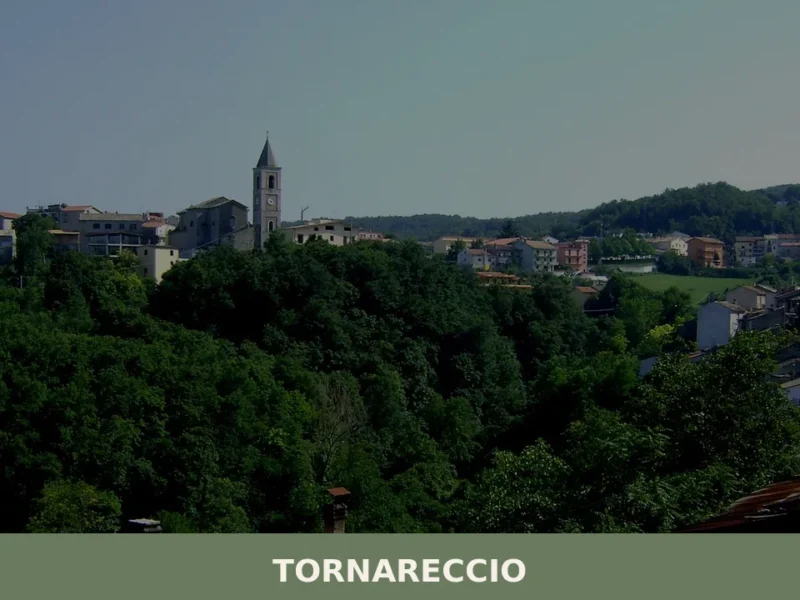
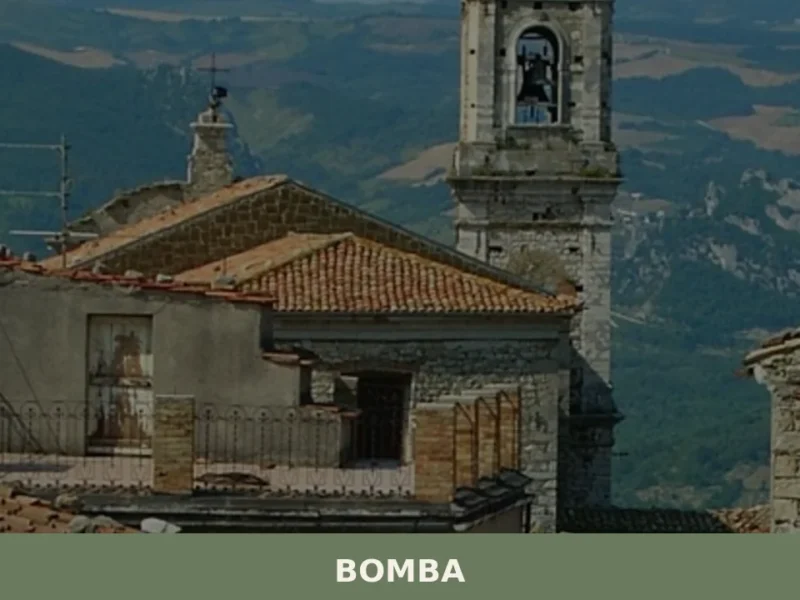
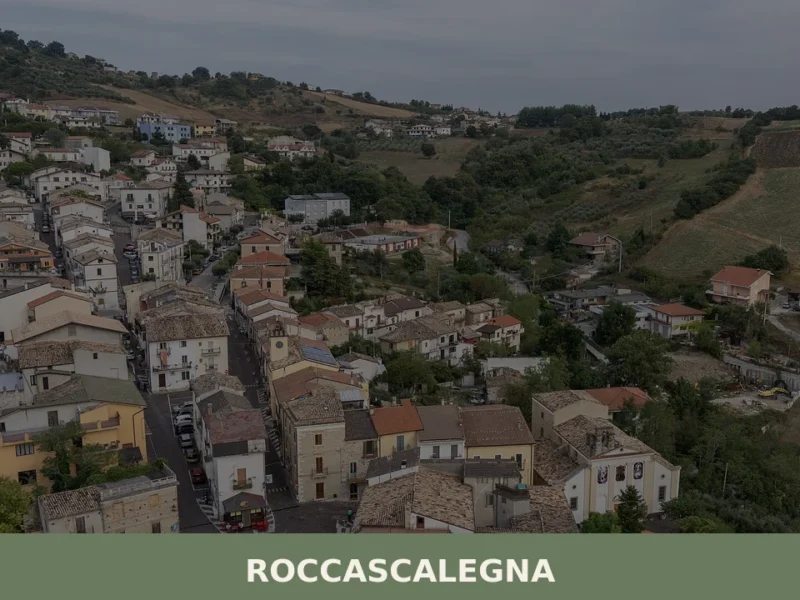
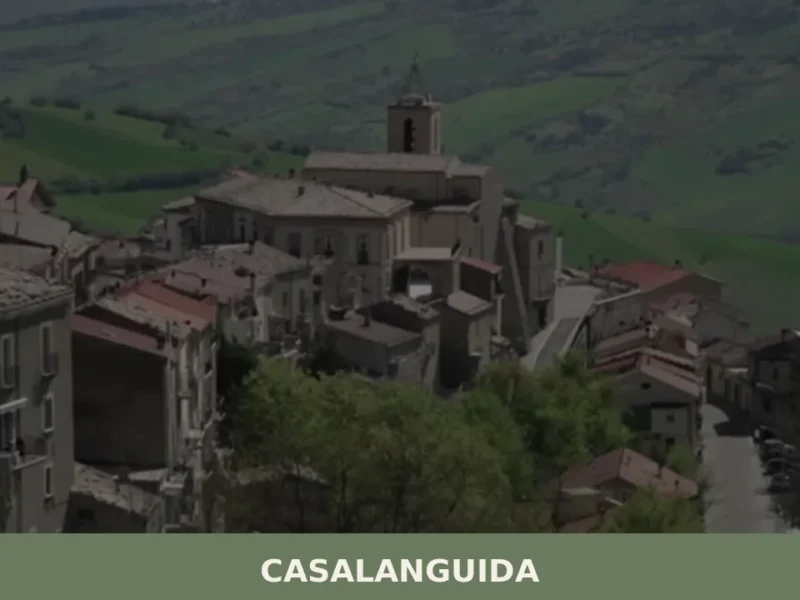
A few kilometers away is Rapino, known for its historical evidence and mountain landscape.
Continuing inland, one can reach Roccaspinalveti, another village that preserves an authentic atmosphere and striking panoramas. Vacri, with its cultural richness, also represents an interesting stop for those wishing to deepen their knowledge of the Chieti area.
Nearby Villages near Perano
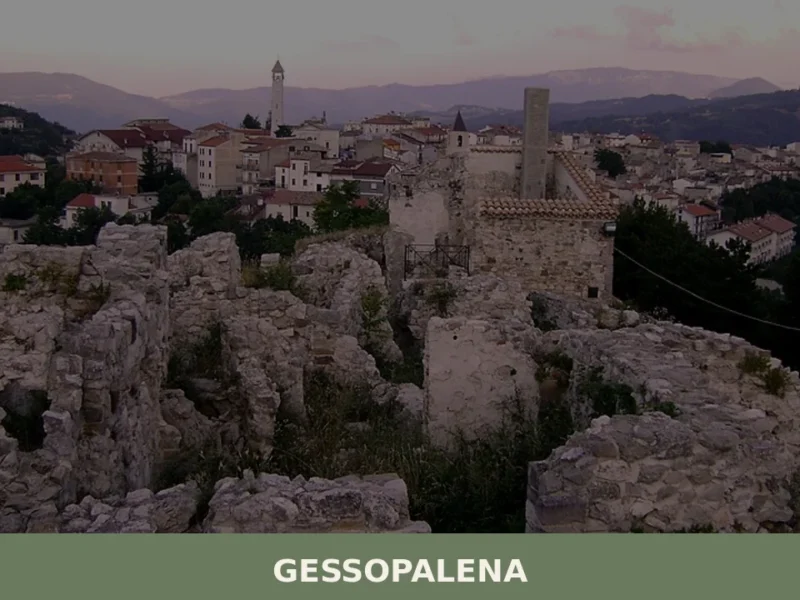
In Abruzzo More villages to discover
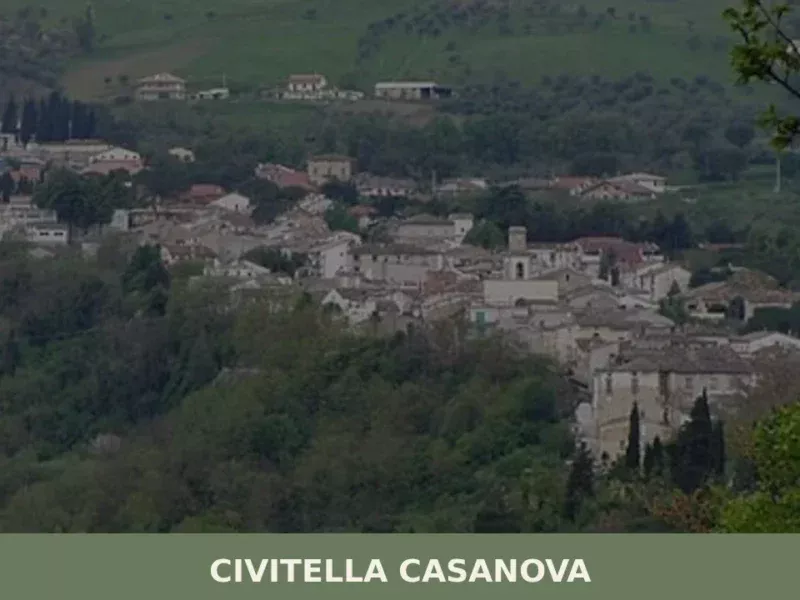
Civitella Casanova
 Hills
Hills
At 400 meters above sea level, in the hilly heart of the province of Pescara, lies Civitella Casanova. This village, whose historical presence is attested since Roman times, offers a territorial context where geology and human activity have shaped a distinctive landscape. For those wondering about what to see in civitella casanova, the journey through […]
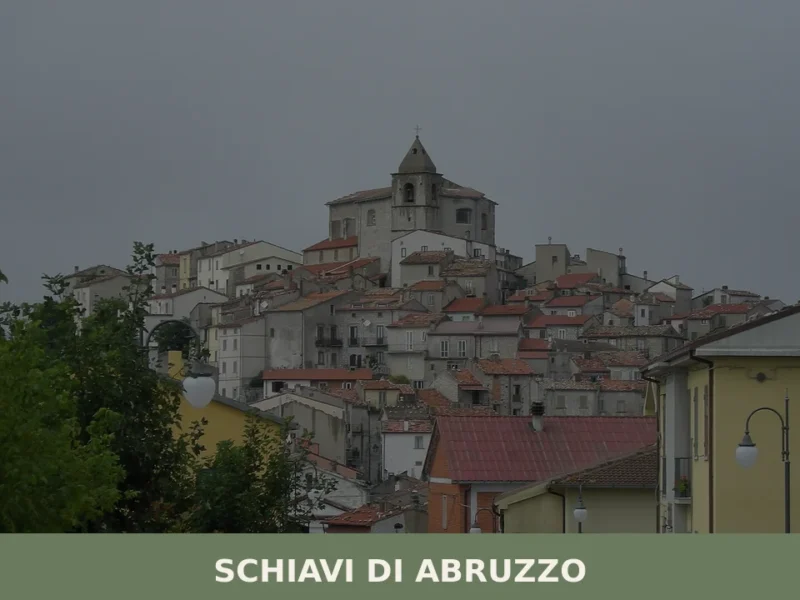
Schiavi di Abruzzo
 Mountain
What to see in Schiavi di Abruzzo, Italy: Italic temples from 3 BC, a hilltop at 1,170 m, and a local dialect. Discover the complete travel guide for Abruzzo.
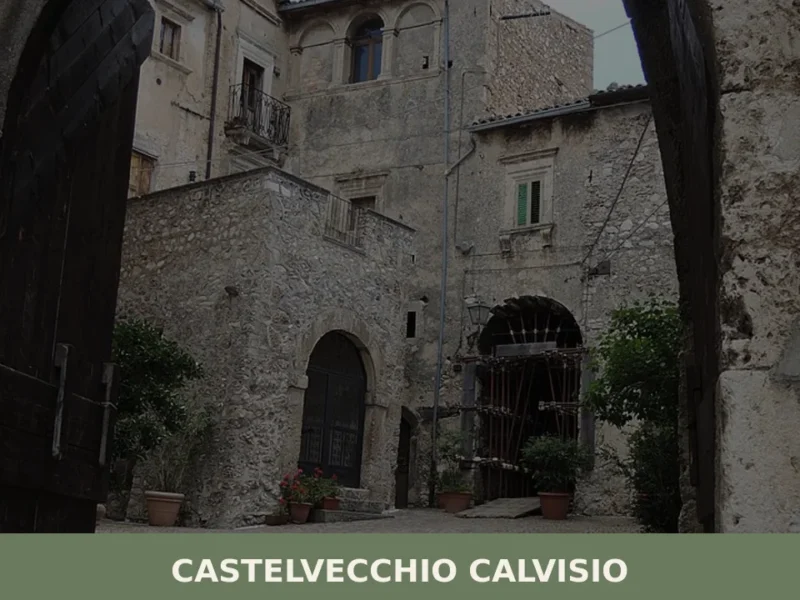
Castelvecchio Calvisio
Mountain
At 1045 meters above sea level, in the L’Aquila hinterland, stands Castelvecchio Calvisio, a village that retains the structure of an ancient *castrum* medieval. With a population of 118 inhabitants, the historic center develops on a rocky ridge, overlooking the basin below. Its elevated position and stone architecture offer an insight into Abruzzo’s fortifications. For […]
Palmoli
Mountain
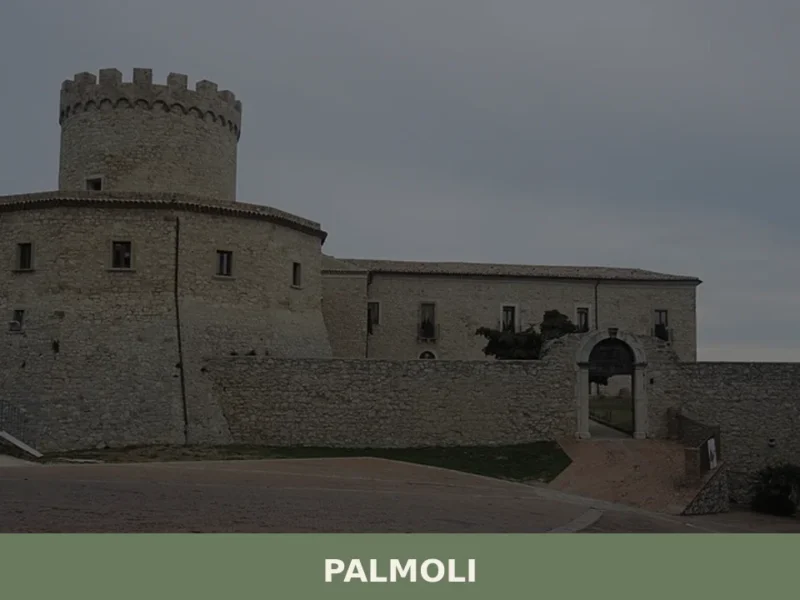
What to see in Palmoli: explore the village at 727 meters above sea level. Discover the Marchesale Castle and the Church of San Valentino. Plan your visit today!
Navelli
Mountain
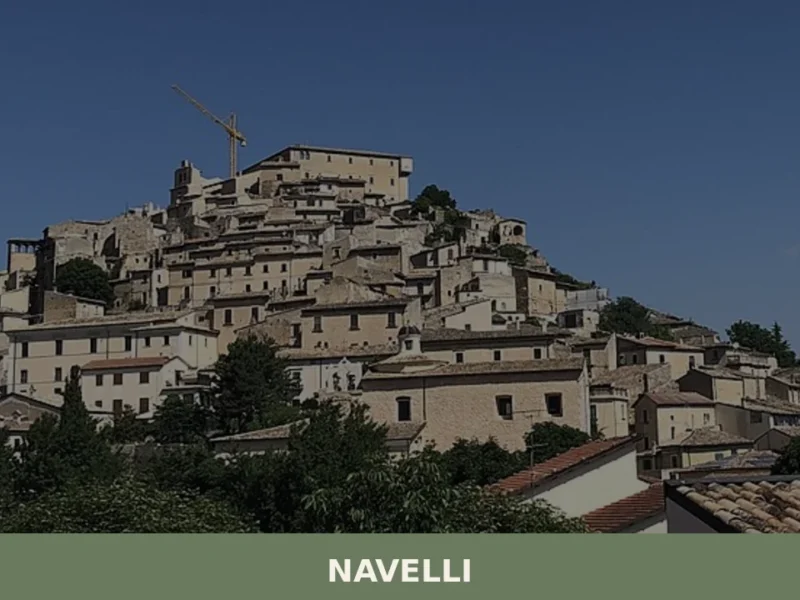
Navelli has a current population of 537 and occupies a plateau at 760 metres above sea level on the homonymous highland, in the province of L’Aquila. Saffron cultivation in this area has been documented since at least the 13th century, when the spice became a trade commodity destined for the markets of Milan, Venice and […]
Giuliano Teatino
Hills
Giuliano Teatino is a small village in Abruzzo, in the province of Chieti. Discover its origins, monuments and how to visit: a practical guide to plan your trip.
Gamberale
Mountain
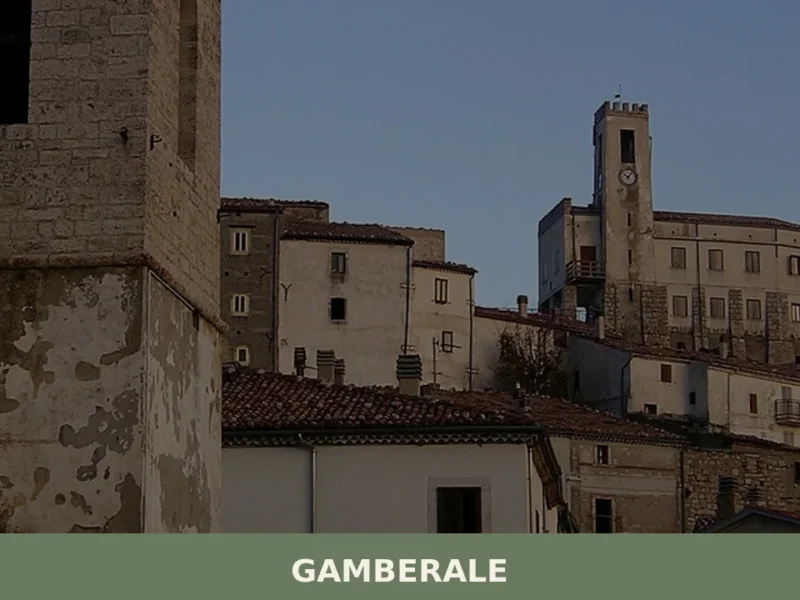
At 1,343 metres above sea level, along the eastern ridge of the Majella mountains where the slopes descend towards the Sangro valleys, 277 residents keep alive a settlement that the catasto onciario of the Kingdom of Naples already recorded in the eighteenth century as a community of shepherds and charcoal burners. Visitors arriving in Gamberale […]
Civitella Alfedena
 Lake
Mountain
Lake
Mountain
At 1123 metres above sea level, on the southern slopes of the Abruzzo, Lazio and Molise National Park, Civitella Alfedena is home to just 285 residents — fewer than a single apartment block in Rome — spread along an urban core that retains its medieval defensive layout, complete with stone portals and covered passageways. Asking […]
Collelongo
Mountain
At 915 metres above sea level, in the innermost stretch of the Valle Roveto, Collelongo has 1,108 inhabitants and a position that keeps it close to the Apennine ridges of the province of L’Aquila. In this article History and origins of Collelongo What to See in Collelongo: Main Attractions Traditional cuisine and products of Collelongo […]
Castel Castagna
Hills
At 452 metres above sea level, on the eastern slope of the Gran Sasso, the municipality of Castel Castagna today counts 429 inhabitants spread between the main settlement and the hamlets scattered along the cultivated hillsides of the province of Teramo. Anyone wondering what to see in Castel Castagna will find answers in a territory […]





🏡 Know Perano better than we do?
If you’re a local or have been there, your knowledge matters: add what’s missing or fix a detail on this page.