


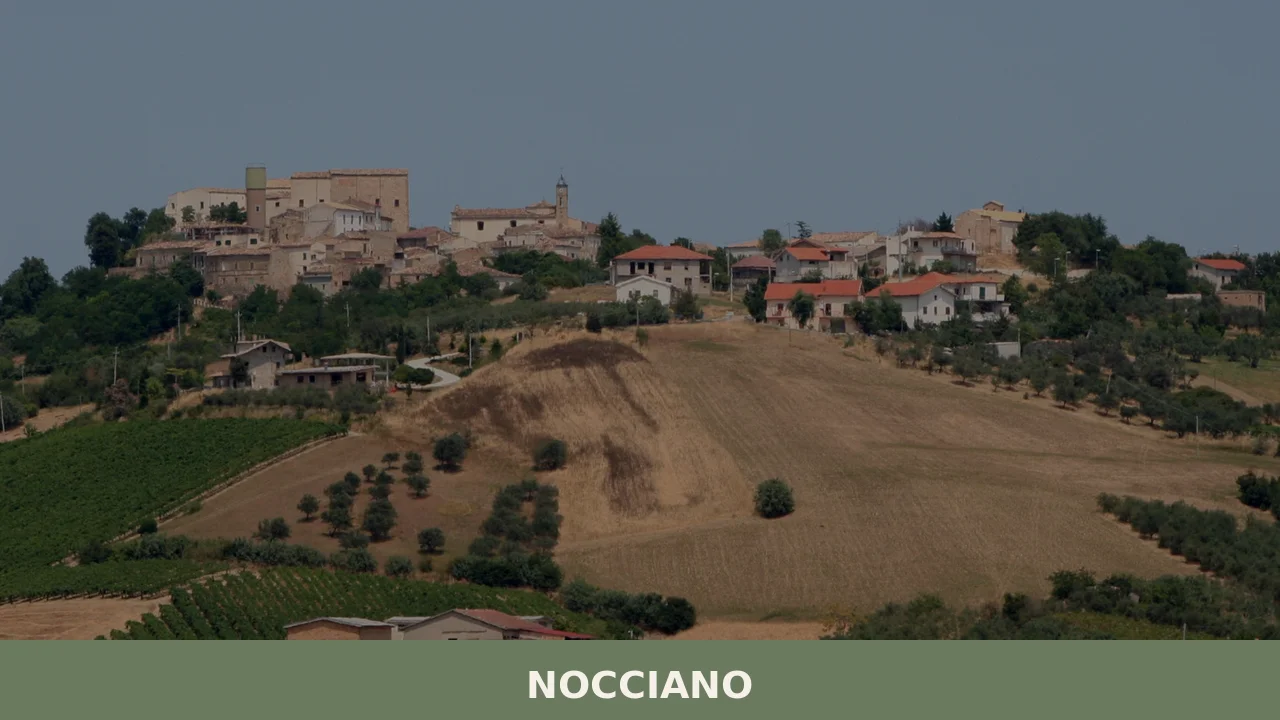
Nocciano
 Hills
Hills
What to see in Nocciano? Discover the 5 must-see attractions of this historic village in Abruzzo, from the Castle to the old town. Plan your visit!
Discover Nocciano
The hills that separate the Pescara valley from the Pescara hinterland rise in terraces, each one marked by olive groves and dry-stone walls that withstand the autumn rains.
Nocciano occupies one of these terraces: a compact cluster of limestone houses that looks towards the coast without ever descending to the sea.
One thousand eight hundred and forty-five inhabitants, streets that narrow towards the centre, and a tower that still serves as a point of reference for those arriving from the state road below.
Those wondering what to see in Nocciano will find a concrete answer already within the village perimeter: the medieval castle with its original defensive structure, the main church with its local religious architecture, and a natural viewpoint over the Pescara hills that allows, on clear days, the Adriatic coastline to be made out in the distance.
A municipality in the province of Pescara in Abruzzo, Nocciano is easily reached from the A25 motorway and represents a quality stop for those travelling along the hill ridge between Pescara and Chieti.
History and origins of Nocciano
The earliest documented traces of the settlement date back to the medieval period, when control of the hilltops in the province of Pescara represented a decisive military and administrative advantage.
The name Nocciano is linked by local tradition to the Latin term for the walnut tree, a species once widespread in this part of hilly Abruzzo and still present on the farmsteads of the municipal territory.
The geographical position of the village, on a rise dominating the valley below, reflects a settlement logic common to many medieval Abruzzese centres: visibility, defensibility, and control of the communication routes connecting the Adriatic coast to the mountain hinterland.
During the late Middle Ages, Nocciano entered the orbit of the feudal systems that structured the Abruzzese territory, with alternating local lordships and dependencies on larger centres of power.
The construction of the castle, of which structural elements are still legible today, dates back to this period of feudal territorial organisation.
The village’s history followed the general trajectory of Angevin and Aragonese Abruzzo, with the tensions between local power and royal control that characterised the thirteenth, fourteenth and fifteenth centuries throughout the region. Those wishing to compare this type of historical evolution with another context in inland Abruzzo may look towards Lettopalena, which shares with Nocciano its medieval character and the hill settlement logic typical of the Pescara-Chieti hinterland.
The modern era brought Nocciano the administrative changes of the Kingdom of Naples and later the Kingdom of the Two Sicilies, through to the Unification of Italy in 1861, when the municipality was incorporated into the province of Chieti before passing, in the territorial reorganisation of the twentieth century, to the province of Pescara.
This shift in provincial affiliation did not alter the physical structure of the village, which retained its historic layout concentrated around the castle and the main square.
The population, which in the second half of the nineteenth century had experienced the migratory phenomena that emptied many Abruzzese municipalities, stabilised in recent decades around its current figures, with the village preserving its residential and agricultural functions.
What to See in Nocciano: Main Attractions
The Medieval Castle
The perimeter walls of Nocciano’s castle display local limestone masonry laid in regular courses, with clear traces of the successive consolidation works carried out over time.
The structure occupies the highest point of the village, and its position is no coincidence: from here, the visual control extends over a stretch of territory covering a large part of the Pescara hill area, from the Pescara valley towards the eastern foothills of the Maiella.
The original layout dates back to the medieval period, placeable between the 12th and 13th centuries, when the need for military oversight determined the choice of sites for defensive constructions throughout inland Abruzzo.
As you approach the walls, you can notice the corner blocks of squared stone that distinguish the older construction phases from later interventions. A walk around the external perimeter allows you to read the layering of building works that have accumulated over seven centuries.
The Church of San Nicola
The village’s main church features a local stone façade with a portal retaining decorative elements datable between the late Middle Ages and the early modern period.
The single-nave interior reflects the typology of medium-sized rural Abruzzo churches, where structural simplicity is accompanied by devotional elements accumulated over the centuries.
The dedication to San Nicola places Nocciano within a horizon of cults widespread throughout the Adriatic South, where veneration for this saint is rooted in the cultural influence of Norman Puglia and the exchanges along the Adriatic coast.
Inside, it is worth observing the sculptural and pictorial works that document local patronage between the 16th and 18th centuries. The church is the focal point of the municipality’s religious life and the reference point for celebrations tied to the annual liturgical calendar.
The Historic Centre and the Belvedere
The urban fabric of Nocciano’s historic centre develops over a contained area, with a system of alleyways and small squares that follows the profile of the hill ridge.
The limestone houses, with their upper floors jutting out over the narrow streets, display a building typology common to the inland hills of Abruzzo, where the need to save buildable land and seek protection from the elements guided construction choices for centuries.
The natural belvedere that opens on the eastern side of the village allows the eye to take in a panorama that includes the Pescara valley, the foothills, and, on days of optimal visibility, the Adriatic coast some 25 kilometres away as the crow flies.
This vantage point is accessible on foot by walking the perimeter of the village in about twenty minutes. The best time for this walk is early morning, when the raking light enhances the profiles of the hill crests.
The Olive Landscape and the Hill Farmsteads
The municipal territory of Nocciano extends over an area that includes ancient olive groves, vineyards and arable land arranged according to the classic Abruzzo hillside plot pattern.
The oldest olive trees, with their gnarled trunks exceeding one metre in circumference, bear witness to continuous cultivation dating back at least to the early modern period.
The agricultural landscape around the village can be explored along farm tracks connecting the built-up centre to the scattered farmsteads, with modest elevation changes that make these routes accessible even to those with no hiking experience.
The municipality’s altitudinal range, hovering around 250–300 metres above sea level, ensures climatic conditions favourable to the cultivation of olives and vines, with mild winters compared to the mountainous hinterland. Those visiting Nocciano in autumn can directly observe the olive harvest, which still involves many of the village’s families today.
The Municipal Garden and Public Spaces
Nocciano’s main public space is organised around the central square and the municipal garden, a green area equipped with amenities that occupies a panoramic position within the village fabric.
The current layout of the garden dates back to 20th-century regeneration works, which provided the municipality with a gathering area featuring tall trees and benches facing the hill landscape.
The main square, paved in stone materials, retains the function as the centre of civic life that it has maintained for centuries: here, seasonal events, periodic markets and public celebrations tied to the municipal calendar take place.
The town hall overlooks this space, making the continuity between its historic administrative function and its present-day one clearly legible. For those exploring what to see in Nocciano, this ensemble of public spaces offers the most immediate reading of the scale and character of the village.
Typical cuisine and products of Nocciano
The cuisine of the Nocciano area belongs to the gastronomic tradition of the Pescara hill zone, where the influences of the pastoral inland tradition meet those of the Adriatic coastal plain.
This intermediate geographical position is reflected in the local traditional dishes, which combine meats from hill farms with vegetables grown in the irrigated fields of the valley and legumes cultivated on the drier slopes.
The agricultural production of the municipal territory, centred on olive oil and wine grapes, provides the basic raw materials for a cuisine that favours a few quality ingredients prepared using slow cooking techniques.
Among the dishes most deeply rooted in local tradition, pasta alla chitarra holds a central place: this format, obtained by pressing egg and flour dough through a frame strung with parallel metal wires that give it its name, is widespread throughout the province of Pescara and serves as the base for a wide variety of condiments, from lamb sauce to seasonal vegetables.
Sagne e fagioli, wide fresh pasta paired with borlotti beans stewed with garlic and rosemary, belongs to the category of cucina di recupero dishes that made up the daily meal of peasant families. Pecora alla callara, a prolonged slow cooking of mutton in copper pots with local aromatic herbs, is a direct legacy of the transhumance culture that crossed these territories for centuries.
The extra virgin olive oil produced in the Nocciano area and in the neighbouring municipalities of the province of Pescara represents a defining element of local gastronomy, although no specific certifications restricted solely to the municipality of Nocciano appear in the certified productions database.
Likewise, the hillside wine production of the area contributes to the local table with white and red wines obtained from traditional Abruzzo varieties.
Those looking for regionally certified products can turn to the guidance of the active protection consortia in Abruzzo, checking the availability of products at the wineries and producers of the municipal territory.
The autumn season, between October and November, is when the Nocciano area best expresses its agricultural vocation: the olive harvest, winemaking on the farmsteads and the availability of porcini mushrooms from the hill woodlands converge to offer a range of flavours that directly reflects the cycle of the seasons.
The municipality’s periodic markets and events tied to the agricultural calendar represent the most direct opportunities to come into contact with local producers and purchase what the village’s land yields.
A similar gastronomic itinerary, centred on the Abruzzo hill tradition, can also be found in Carpineto Sinello, where rural cuisine retains the same peasant character of the Pescara-Chieti hinterland.
Festivals, events and traditions of Nocciano
The patron saint festival of Nocciano is dedicated to San Nicola, the saint to whom the village’s main church is dedicated. The celebrations are concentrated around 6 December, the date on which the Catholic Church commemorates the Bishop of Myra, with religious services in the patron church, a procession through the streets of the historic centre and moments of civic gathering that involve the community of 1,845 inhabitants.
The procession follows the route of the historic village, passing through the main public spaces and pausing at the points of greatest devotional significance for the local community.
This type of celebration, deeply rooted in the religious tradition of the Abruzzo hill country, maintains its central place in the municipality’s annual calendar.
The municipality’s summer calendar includes events tied to the territory’s agricultural productions and local folk traditions, with gatherings concentrated between June and August when the presence of visitors and Abruzzo emigrants returning to the village for their summer holidays ensures a wider audience.
The food festivals linked to the typical products of the season represent occasions for interaction between the resident community and occasional visitors, with food stalls offering dishes from the local tradition.
For up-to-date information on the annual events programme, the most reliable reference is the official website of the Municipality of Nocciano, where the events calendar is updated season by season.
When to Visit Nocciano and How to Get There
Spring, between April and June, offers the best conditions for exploring Nocciano: temperatures stay between 15 and 22 degrees, the hilly landscape displays its vegetation at peak chromatic expression, and the afternoon light enhances the architectural profiles of the historic centre. Autumn, from September to November, is the second recommended period, especially for those who want to combine a visit to the village with a direct experience of the agricultural calendar.
Summer concentrates local events but also brings the highest temperatures, with peaks exceeding 35 degrees during the central hours of the day.
Winter is the period of least footfall, but it guarantees maximum visibility over the landscape when the vegetation is bare.
If you arrive by car, the most direct route starts from the A25 Pescara-Rome motorway, exiting at Pescara Ovest, from which Nocciano is about 15 kilometres away, reachable in twenty minutes via the provincial road that climbs through the hilly belt.
The nearest railway station is Pescara Centrale, connected to the national rail network, from which the village can be reached by car in approximately 25 minutes. Those arriving by plane will land at Pescara’s Abruzzo International Airport, about 20 kilometres from Nocciano, with direct connections to the main Italian and European cities.
Visitors exploring what to see in Nocciano can include it in a broader itinerary that also encompasses Tortoreto, on the Abruzzo Adriatic coast, reachable in about an hour by car along the A14 from Pescara Nord.
| Departure Point | Distance | Estimated Time |
|---|---|---|
| Pescara (A25 Pescara Ovest exit) | approx. 15 km | 20 minutes by car |
| Pescara Abruzzo Airport | approx.
20 km |
25 minutes by car |
| Chieti | approx. 22 km | 30 minutes by car |
| L’Aquila | approx. 85 km | 70 minutes by car via A25 |
Those planning a more extended itinerary through inland Abruzzo may consider a stop at Castiglione Messer Marino, in the Alto Vastese area, which shares with Nocciano the medieval character of its historic centre and its position atop a dominant hillside, while belonging to a significantly different altitudinal range and landscape context. For updated regional public transport timetables, the reference is the Trenitalia portal, where you can check connections between Pescara Centrale and the destinations along your route.
Frequently asked questions about Nocciano
What is the best time to visit Nocciano?
Spring and autumn offer ideal temperatures for exploring the historic centre, olive groves, and enjoying the belvedere. Autumn is particularly special for observing the olive harvest, a deeply rooted local tradition. Summer, especially around August 10th, provides a vibrant atmosphere for the Feast of San Lorenzo, the patron saint, with local celebrations and events in the main square. The village's mild winters, thanks to its moderate altitude, also allow for pleasant visits, especially for those seeking tranquility and a less crowded experience away from the summer peak.
What are the historical origins of Nocciano?
Nocciano's documented origins trace back to the medieval period, when its hilltop position offered strategic military and administrative advantages. The name itself is traditionally linked to the Latin term for the walnut tree, once abundant here. The village developed within feudal systems, and the construction of its castle dates to this era. Over centuries, Nocciano experienced the administrative shifts of various kingdoms, eventually joining the province of Pescara in the 20th century, while preserving its characteristic historic layout and agricultural character.
What to see in Nocciano? Main monuments and landmarks
In Nocciano, explore the **Medieval Castle**, a 12th-13th century fortress positioned at the village's highest point, offering commanding views and showcasing its original defensive structure. Visit the **Church of San Nicola**, the main church, featuring a local stone façade and valuable sculptural and pictorial works from the 16th to 18th centuries. Wander through the charming **Historic Centre** with its narrow alleyways and limestone houses, leading to a stunning **natural Belvedere**. From here, you can admire panoramic vistas of the Pescara valley and, on clear days, the Adriatic coast. The **Municipal Garden** also provides a pleasant public space.
What are the main natural or scenic attractions of Nocciano?
Nocciano boasts a captivating natural setting. The primary scenic attraction is the **natural Belvedere**, located on the eastern side of the village, which provides breathtaking panoramic views stretching across the Pescara valley, the surrounding foothills, and the distant Adriatic coastline on days with optimal visibility. Beyond the village perimeter, the municipal territory is characterized by an extensive **Olive Landscape**. This area is dotted with ancient olive groves, vineyards, and traditional hill farmsteads, all arranged according to the classic Abruzzo hillside plot pattern, ideal for gentle exploration along accessible farm tracks.
Where to take the best photos in Nocciano?
For the most striking photographs in Nocciano, head to the **natural Belvedere** on the eastern side of the village, especially in the early morning. The raking light at dawn beautifully enhances the profiles of the hill crests, the Pescara valley, and the distant Adriatic coast. The imposing **Medieval Castle** also offers excellent photo opportunities, both for its architectural details and the panoramic vistas from its walls. Capture the atmospheric charm of the **Historic Centre's** narrow streets, limestone houses, and the iconic tower. The **Municipal Garden** provides another panoramic viewpoint for scenic shots.
Are there museums, churches or historic buildings to visit in Nocciano?
Yes, Nocciano offers several historic buildings and a significant church. The most prominent is the **Medieval Castle**, dating from the 12th-13th centuries, whose structural elements and perimeter walls are still visible and offer a glimpse into its defensive past. The **Church of San Nicola**, the main religious edifice, features a local stone façade with decorative elements from the late Middle Ages and early modern period, housing sculptural and pictorial works from the 16th to 18th centuries. The entire **Historic Centre** itself, with its traditional limestone houses and alleyways, functions as an open-air historical architectural experience.
What can you do in Nocciano? Activities and experiences
In Nocciano, you can immerse yourself in cultural and natural experiences. Explore the **Medieval Castle** and the **Church of San Nicola**, then wander through the charming **Historic Centre** to reach the **Belvedere** for spectacular panoramic views. Take leisurely walks or gentle hikes along the **farm tracks** that wind through the surrounding olive groves and vineyards, routes accessible to all. If visiting in autumn, you might observe the traditional **olive harvest**. Participate in **local events and celebrations** held in the main square, such as the Feast of San Lorenzo on August 10th, and indulge in the authentic **local cuisine**.
Who is Nocciano suitable for? Families, couples, hikers, solo travelers?
Nocciano is ideal for travelers seeking an authentic, tranquil, and culturally rich Abruzzese experience. It particularly appeals to **couples** and **solo travelers** who appreciate history, picturesque views, and the unhurried pace of village life. **Families** will enjoy exploring the medieval castle and the historic centre, complemented by accessible walks through the surrounding olive groves. It's a perfect destination for **cultural tourists** interested in medieval architecture and local traditions, and **food and wine enthusiasts** eager to discover regional specialties like olive oil and traditional dishes. Its gentle landscape caters to casual walkers rather than strenuous hikers.
What to eat in Nocciano? Local products and specialties
The cuisine of Nocciano is rooted in the gastronomic tradition of the Pescara hill zone, characterized by fresh, quality ingredients. Key local products include excellent **extra virgin olive oil** and **wine grapes** from the surrounding cultivated terraces. Traditional dishes to savor are **Pasta alla chitarra**, typically served with rich lamb sauce or seasonal vegetables, and **Sagne e fagioli**, a hearty fresh pasta dish prepared with borlotti beans, garlic, and rosemary. Don't miss **Pecora alla callara**, a slow-cooked mutton specialty prepared in copper pots with local aromatic herbs, a direct legacy of the region's pastoral history.
📷 Photo Gallery — Nocciano
Getting there
Largo Madonna del Piano, 65010 Nocciano (PE)
Nearby Villages near Nocciano
In Abruzzo More villages to discover
Castelguidone
 Mountain
Castelguidone has 294 inhabitants and occupies a ridge at 775 metres above sea level in the upper Trigno valley, on the border between Abruzzo and Molise. The place name, documented in Angevin records from the 13th century, points to a fortified settlement linked to a feudal lord named Guidone. Anyone looking for what to see […]
Cugnoli
Hills
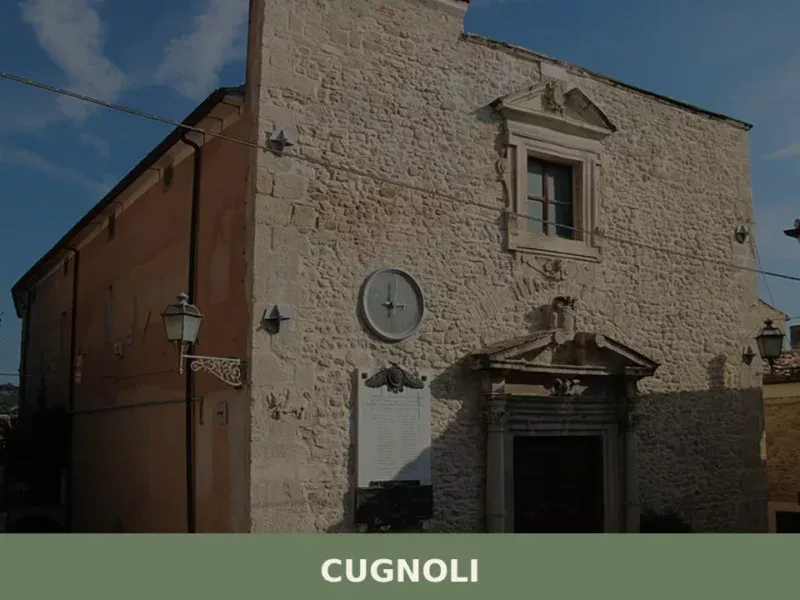
At 331 meters above sea level, in the heart of the province of Pescara, lies Cugnoli, a settlement of 1,336 residents known for its hilly location. The village, whose history dates back to Roman times, as suggested by the etymology of its name (probably from Cunula, meaning small cradle or basin), offers a direct experience […]
Pennadomo
Hills
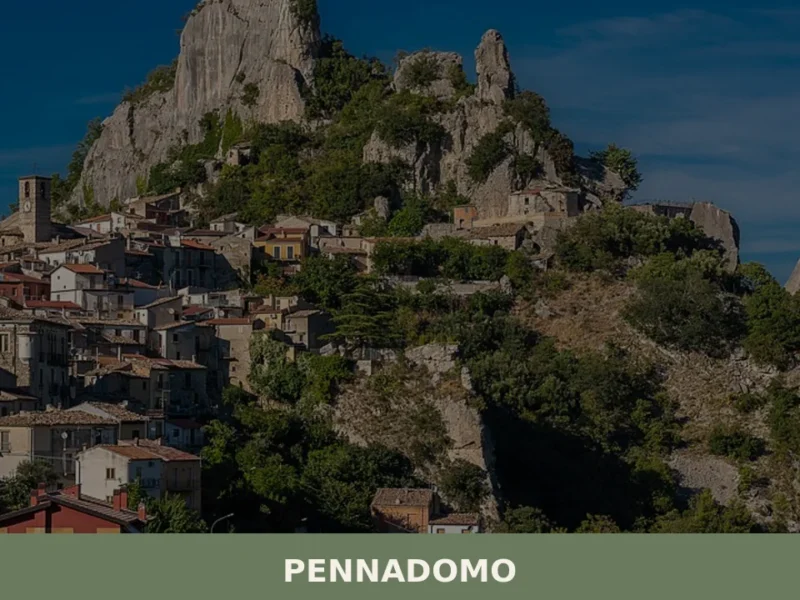
What to see in Pennadomo, Italy: 5 attractions at 460 m in Chieti province. Discover the feast of San Lorenzo, local food traditions and how to get there.
Rocca di Botte
Mountain
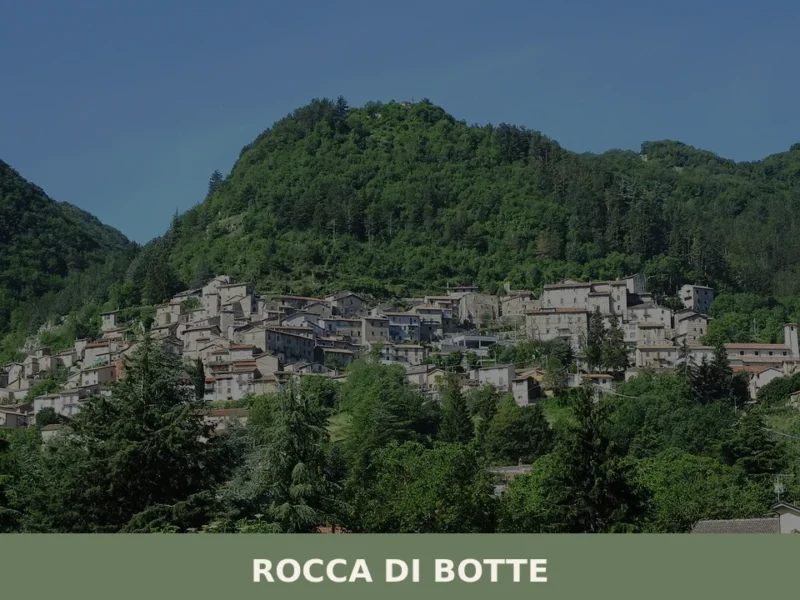
What to see in Rocca di Botte, Abruzzo, Italy: explore 5 top attractions, medieval history dating to the 12th century, and local food traditions. Discover it now.
Scontrone
Mountain
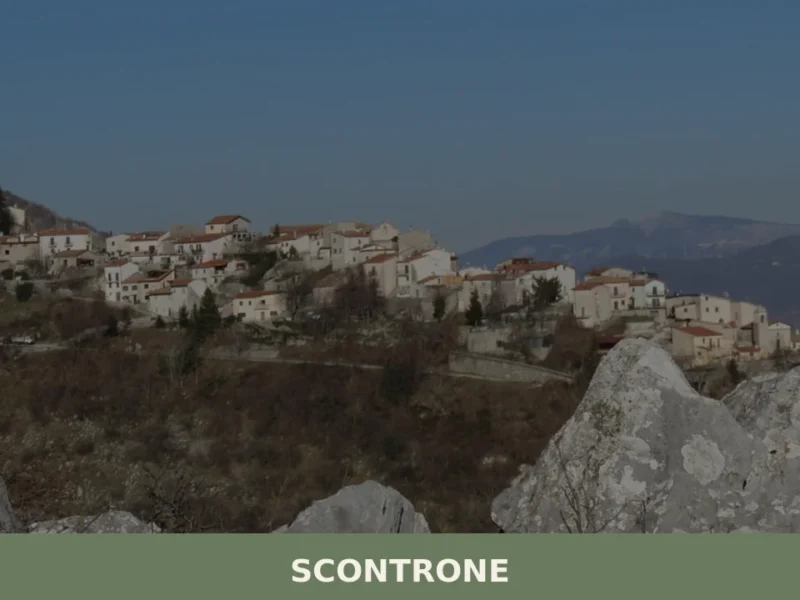
What to See in Scontrone: explore the 5 top attractions in this Abruzzo village, featuring history and nature. Read the guide and plan your visit!
Palombaro
Hills
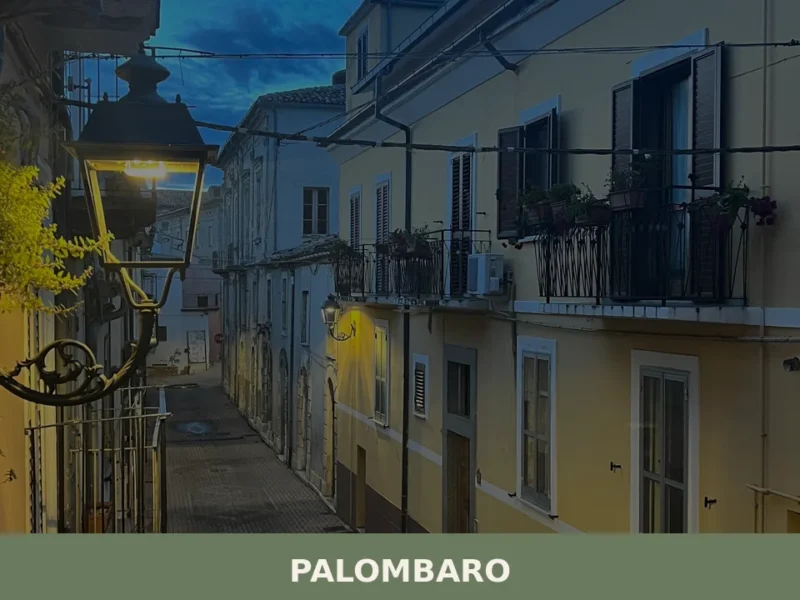
What to see in Palombaro: 5 attractions in this village at 536 m above sea level in the province of Chieti. Discover the historic centre, the medieval tower and the Madonna della Libera festival.
Canzano
Hills
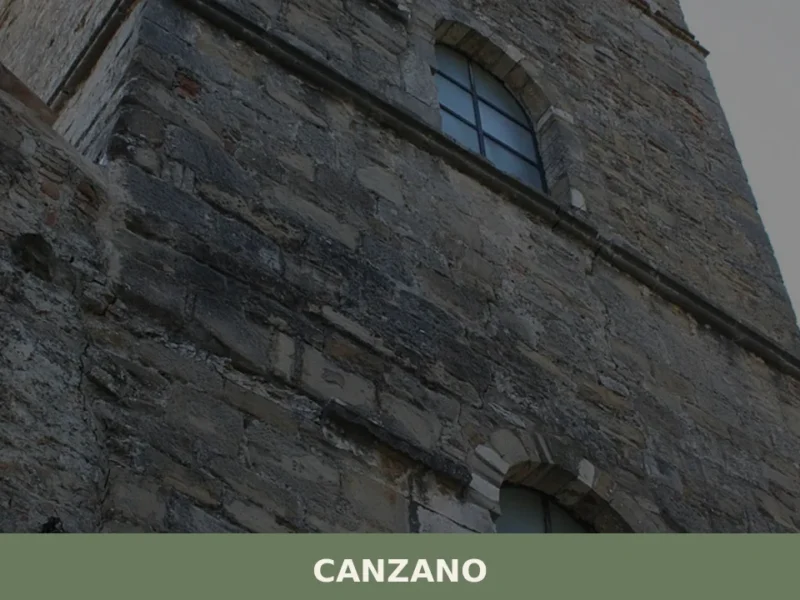
Canzano has 1,786 inhabitants and stands at 448 metres above sea level on a hill in the province of Teramo, along the foothill belt separating the Vomano valley from the first Apennine ridges. Anyone wondering what to see in Canzano will find an urban core where the fortified medieval layout coexists with a precise and […]
Celano
Mountain
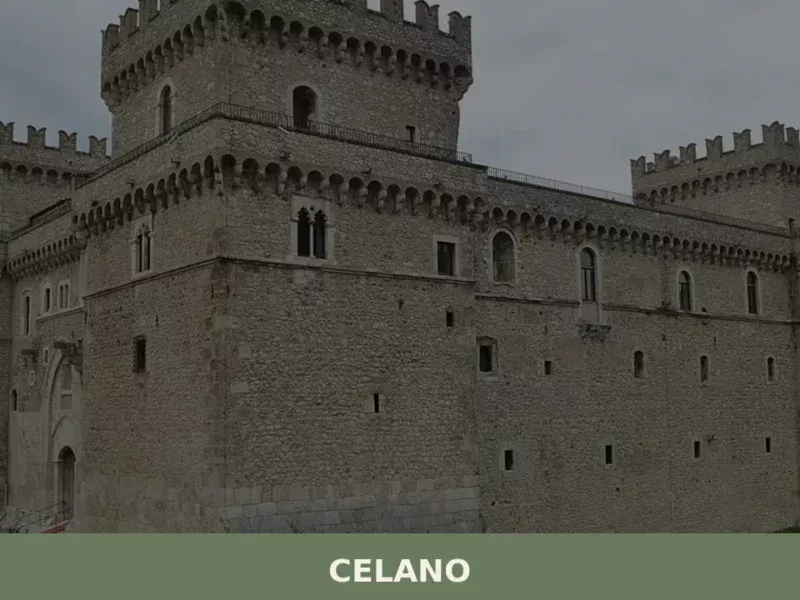
The Castello Piccolomini in Celano, with its four corner towers and curtain wall enclosing a perimeter of over one hundred metres, commands the Fucino plain from an altitude of 840 metres. Anyone wondering what to see in Celano will find an unequivocal starting point here: a fortress that has endured six centuries of history, earthquakes […]
Caramanico Terme
Mountain
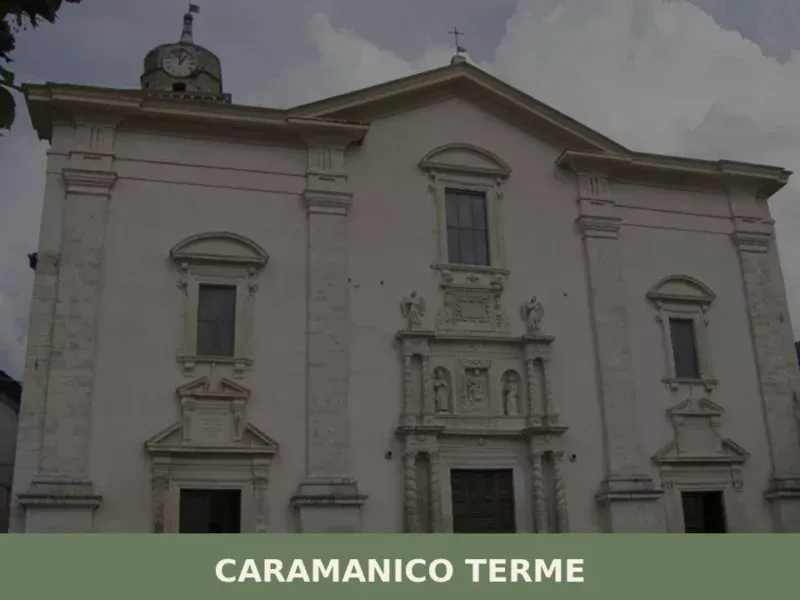
The sulphurous waters of Caramanico have been documented since the 16th century, when the earliest medical treatises recorded their therapeutic properties. Today the village has 1,779 inhabitants and sits at 600 metres above sea level in the Orfento valley, a canyon carved into the eastern side of the Majella massif, in the province of Pescara. […]
Avezzano
 Lake
Mountain
Lake
Mountain
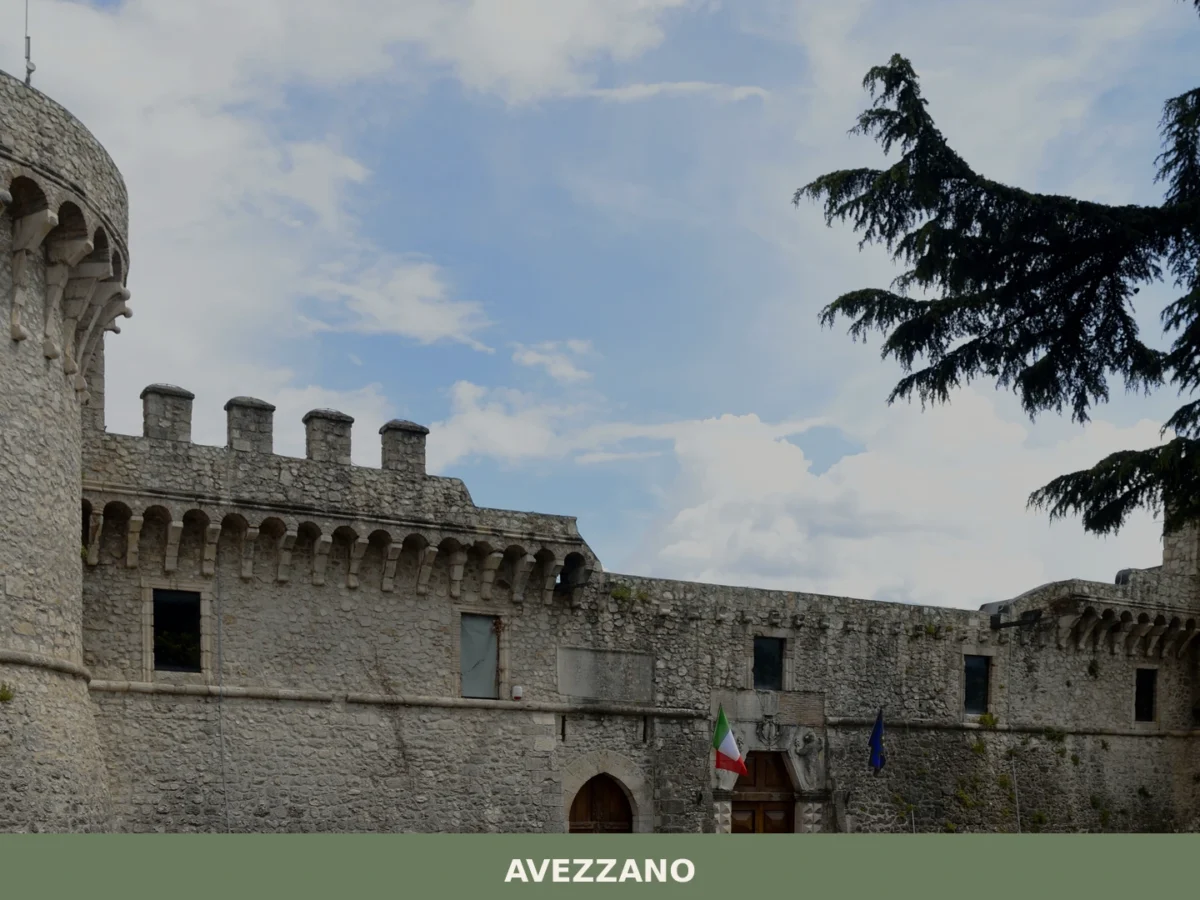
What to see in Avezzano, Italy: explore the Orsini-Colonna Castle, Roman villa, and Fucino PGI potato. 100 km from Rome. Discover Abruzzo's Marsica hub.






🏡 Know Nocciano better than we do?
If you’re a local or have been there, your knowledge matters: add what’s missing or fix a detail on this page.