


Sommacampagna
 Plains
Sommacampagna offers 3 DOC wine appellations and two landmark Risorgimento battle sites on the Custoza morainic hills, just 12 km from Verona.
Sommacampagna Veneto: History, Wine, and Risorgimento Battlefields
Crossed swords on a coat of arms, Stone Age pilings pulled from ancient marshland, and a hillside that once watched armies clash in the name of Italian independence — this commune in the province of Verona carries a weight of history that its quiet streets do not immediately betray. The morainic hills roll gently toward Lake Garda to the west, their slopes planted with vines that yield one of Veneto’s most respected white wines, while Roman foundations lie beneath medieval churches and Attila’s shadow still lingers in local legend.
Sommacampagna Veneto draws two distinct kinds of visitor: those who follow the wine routes of the Custoza DOC zone through the hillside fraction of Custoza, and those who come to read the Risorgimento landscape where two decisive battles of Italian unification were fought in 1848 and 1866. Situated only 12 kilometres from Verona, this comune of around 14,500 people sits at 121 metres above sea level, between the southern moraine and the northern edge of the Po Plain.
History and Origins of Sommacampagna
The name itself points backward through time. In the Roman period the settlement was recorded as Summa Campanea — a reference, most likely, to its position at the top of an open field or plain. That Roman presence left tangible marks: artefacts from the imperial era are still visible near the ancient pieve of Sant’Andrea and the church of San Pietro, both of which are believed to stand on ground that once held pagan temples. Even older material has emerged from the locality of Palù, near the fraction of Custoza, where archaeologists recovered Stone Age remains and the timber stakes of pile-dwelling structures, evidence that this morainic landscape attracted settlement long before Rome extended its roads into the Veneto.
The medieval centre grew up around the pieve of Sant’Andrea before gradually extending toward Verona, climbing the hill now occupied by the small church of San Rocco and its bell tower. It is during this period that the name Sommacampagna consolidated into its current form in Veronese dialect — Somacanpanja — a phonetic echo of its Latin ancestor. Local chronicles preserve a more dramatic episode as well: the passage of Attila, king of the Huns, through the Veronese valley. According to the historical compendium Historie e fatti de’ Veronesi, Sommacampagna functioned as a strategic point in the Hunnic leader’s movements, and local tradition insists that a portion of his legendary treasure remains hidden somewhere in the surrounding valleys. Whether fact or folklore, the story reflects how deeply the territory was embedded in the conflicts that reshaped late-antique Italy.
The nineteenth century brought the events that define Sommacampagna’s modern identity most powerfully. The fraction of Custoza became the stage for two engagements during the wars of the Risorgimento: the first in 1848 during the initial Italian war of independence, fought in particular in the Staffalo valley, and the second in 1866 during the third war. Both battles are commemorated on the municipal coat of arms, where two crossed swords speak directly to this heritage. The arms were formally recognised on 11 September 1931, and the blue gonfalon was granted by royal decree on 9 April 1931. After the Second World War, the commune underwent rapid industrial development that shifted its economic and urban centre of gravity eastward toward the A4 motorway junction, drawing in working-class migrants during the 1960s and 1970s and transforming what had been a predominantly agricultural community into an industrial one. Subsequent decades brought deliberate efforts to rehabilitate the historic hilltop core, including the Monte Molin residential development designed to repopulate the old centre.
What to See in Sommacampagna: Top Attractions
Pieve di Sant’Andrea al Cimitero
This ancient parish church is one of the oldest sacred buildings in the commune, and it stands on ground with an exceptionally long history of religious use. Roman artefacts found nearby suggest that a pagan temple occupied the site before Christianity arrived. The structure visible today retains features from its medieval phase, and it sits at the historic gravitational centre from which the medieval village originally expanded. The church is dedicated to Sant’Andrea, the commune’s patron saint, whose feast connects the religious and civic life of Sommacampagna in a direct and still-celebrated way. Visitors interested in early Christian architecture in the Veronese hinterland will find this a rewarding stop, particularly for the layers of history compressed into a single modest building.
Ossario di Custoza
Rising above the vineyards on the Custoza hill, the Ossario di Custoza is a nineteenth-century monument built to contain the remains of soldiers who fell during the 1848 and 1866 battles. Its position on the morainic ridge is deliberate: from here the terrain over which those engagements were fought spreads out visibly, making the landscape itself part of the memorial experience. The building functions both as a place of commemoration and as an interpretive point for the Risorgimento history of the region. Anyone travelling between Erbè and the Garda hills will find this a logical and genuinely moving detour. The surrounding area is also connected to the broader Museo diffuso del Risorgimento, a distributed network of sites across the morainic zone.
Chiesa della Madonna del Monte
Dating to the twelfth century, this hilltop sanctuary stands as one of the older religious structures in the municipal territory. The church draws both devout visitors and those simply seeking the elevated views across the Po Plain that its position provides. Every August the site becomes the focus of the Festa della Madonna, when the sanctuary fills with worshippers and the surrounding area hosts outdoor celebrations connected to the Villa Venier estate nearby. The combination of medieval sacred architecture and a living annual tradition makes this church something more than a monument: it remains a working part of community life rather than a relic preserved behind glass.
Casa del Tamburino Sardo
This nineteenth-century building carries a name that links it directly to the Risorgimento battles fought on Custoza’s hills. The Tamburino Sardo — the Sardinian drummer boy — is a figure associated with the romantically charged narrative of Italian unification, and the building connected to his memory occupies a place in the local heritage landscape alongside the Ossario. For visitors following the full arc of the 1848 and 1866 battle sites across the morainic zone, this is a complementary stop that adds a human-scale, personal dimension to what the Ossario commemorates at a collective level. The building sits within reach of Palù, another locality in the area with its own significant historical layers.
Historic Villas of Sommacampagna
The commune preserves a notable collection of historic residential architecture spanning several centuries. Cà Zenobia dates to the twelfth century, while Villa Fiocco, Villa Masi, and Villa della Vecchia all belong to the sixteenth century. The seventeenth century produced Villa Ottolini, and the eighteenth brought Villa Venier — known as La Bassa — along with Villa Livio and Villa Bocca Trezza, the latter now also called Mille e una Rosa. Villa Decima rounds out the sequence in the nineteenth century. Villa Venier merits particular attention: in October 2019 one of its wings was converted into the Caffè Venier, a literary café set within the estate’s central park, giving visitors a genuinely atmospheric setting in which to pause. Taken together, these villas map the wealth and aesthetic ambitions of the Veronese landed classes across eight centuries.
Food and Local Products of Sommacampagna Veneto
Wine is the most visible thread running through the agricultural identity of this part of the Veronese hills. The fraction of Custoza lends its name to the Bianco di Custoza, a white wine produced on the morainic slopes and protected under DOC designation. The terrain here — the same glacially formed landscape that shaped the battle sites — creates a microclimate and soil structure suited to white grape cultivation, and the annual Festa del Vino Bianco di Custoza, held in mid-June, brings producers and enthusiasts together for a competition to determine the year’s outstanding producer. Two additional DOC appellations cover the municipal territory: Bardolino and Garda, extending the wine geography westward toward the lake shore. Visitors with a serious interest in Veronese viticulture will find that Sommacampagna and its surrounding communes — including those accessible from Affi to the north — form a coherent wine itinerary in their own right.
Beyond wine, the local agricultural economy has specialised in peach cultivation, kiwi fruit, and above all the Broccoletto di Custoza, a variety of broccoli that has become so embedded in local culture that it anchors its own winter festival. The Festa del Broccoletto takes place in the first week of January, when the harvest of this cool-weather vegetable is celebrated with communal meals and market stalls. The timing is deliberate: the broccoletto reaches its best quality in the cold months, and the festival draws visitors who might otherwise pass through the region only in summer. The product is hyperlocal — tied specifically to the Custoza microclimate — and finding it on restaurant menus in Sommacampagna during the season is straightforward.
The commune’s hospitality infrastructure skews toward agriturismi and bed-and-breakfast establishments rather than large hotels, which suits the agricultural character of the place well. Restaurants in the area serve the standard Veronese repertoire — bigoli, risotto, grilled meats — alongside the DOC wines produced a short distance from the table. The Antica Fiera di Sommacampagna, held on the Monday after the last Sunday of August, incorporates food stands and a pomological exhibition alongside its agricultural machinery market and cycling races, giving visitors a concentrated view of what the local economy actually produces. For those based further away, San Mauro di Saline offers another vantage point into Veronese rural food culture worth combining with a visit here.
When to Visit Sommacampagna and How to Get There
The calendar of events shapes the experience significantly depending on the month. January brings the Broccoletto festival; May hosts the Maratona del Custoza running and walking race on the second Sunday of the month, along with two elite cycling races organised from Caselle. June offers the wine festival in Custoza. August concentrates several events: the Sagra di San Luigi in Caselle on the first weekend, the Madonna festival at the hilltop sanctuary, and the Antica Fiera at the end of the month. Carnival season introduces the commune’s own mask, Messer Gidino, a figure specific to local tradition. If you want to combine the cultural calendar with comfortable weather for walking the morainic hills and visiting the outdoor battle-site monuments, late spring and early autumn offer the best conditions — warm enough to walk the Custoza ridge comfortably, cool enough to appreciate the wine cellars afterward.
Getting to Sommacampagna is straightforward from multiple directions. The commune has its own exit on the A4 Milan-Venice motorway, and the nearest junction on the A22 Brenner motorway is Verona Nord. If you arrive by car from Verona, the drive takes around fifteen to twenty minutes from the city centre. Train travellers will find Verona well connected on the main Milan-Venice line; from there, local transport or a hire car covers the remaining distance. The Valerio Catullo international airport sits directly on the municipal boundary between Sommacampagna and Villafranca di Verona — between the fractions of Caselle and Dossobuono — making this one of the few Italian comuni where international arrivals can, in principle, walk off a plane and into the municipality itself.
| Departure | Distance | Time |
|---|---|---|
| Verona city centre | 12 km | 15-20 min by car |
| Lake Garda (Peschiera) | approx. 20 km | 25 min by car |
| Valerio Catullo Airport | on municipal boundary | under 10 min by car |
| Milan | approx. 155 km via A4 | 1 h 30 min by car |
| Venice | approx. 120 km via A4 | 1 h 15 min by car |
Accommodation in the commune runs to agriturismi and small B&B establishments, which tend to book up during the August festival period and the June wine events. Visitors planning around those dates should reserve well in advance. For a fuller base with more hotel options, Verona remains the obvious choice — close enough for day trips in either direction, and itself a city worth the additional time.
Frequently asked questions about Sommacampagna
Come si raggiunge Sommacampagna in auto o con i mezzi pubblici?
In auto, Sommacampagna si raggiunge dall'autostrada A4 Milano-Venezia, uscita Sommacampagna-Sona, a circa 12 km da Verona. La stazione ferroviaria più vicina è Verona Porta Nuova, collegata al centro da autobus di linea gestiti da ATV Verona. Chi arriva in aereo può utilizzare l'Aeroporto Valerio Catullo di Verona-Villafranca, distante pochi chilometri dalla frazione di Custoza.
Quando si festeggia il patrono Sant'Andrea a Sommacampagna?
La festa del patrono Sant'Andrea si celebra il 30 novembre, giorno dedicato a questo apostolo nel calendario liturgico cattolico. Come in molti comuni veneti, i festeggiamenti includono tradizionalmente funzioni religiose nella chiesa parrocchiale e momenti di aggregazione locale. Essendo a fine autunno, la ricorrenza coincide con il periodo della vendemmia conclusa e delle prime produzioni olearie della zona moреnica gardesana.
Esistono percorsi ciclabili o escursionistici nei dintorni di Sommacampagna?
Il territorio di Sommacampagna è attraversato da percorsi cicloturistici che collegano le colline moreniche del Garda, inseriti nella rete della Strada del Vino Custoza e Garda. Le colline intorno a Custoza offrono itinerari panoramici tra vigneti e siti risorgimentali. La zona è inclusa nei circuiti ciclistici provinciali della Provincia di Verona, adatti a biciclette da strada e e-bike grazie ai dislivelli contenuti.
Quanto tempo serve per visitare Sommacampagna e dove si parcheggia?
Una visita completa al centro storico di Sommacampagna e alla frazione di Custoza richiede circa mezza giornata. Aggiungendo la visita all'Ossario di Custoza, monumento risorgimentale di rilievo nazionale, si consiglia di pianificare una giornata intera. Sono disponibili parcheggi pubblici gratuiti nel centro del paese. Chi visita Custoza trova parcheggio nelle vicinanze dell'Ossario, facilmente raggiungibile anche a piedi dal borgo.
Ci sono agriturismi o strutture ricettive a Sommacampagna e dintorni?
Il territorio di Sommacampagna e la frazione di Custoza ospitano diverse strutture agrituristiche legate alla produzione del Custoza DOC e del Bardolino, con possibilità di degustazione e pernottamento. La vicinanza con il Lago di Garda, raggiungibile in meno di 20 minuti, amplia notevolmente l'offerta ricettiva con hotel, B&B e resort. Per un soggiorno in loco si consiglia di consultare il portale ufficiale del turismo della Provincia di Verona o piattaforme come Agriturismo.it.
In Veneto More villages to discover
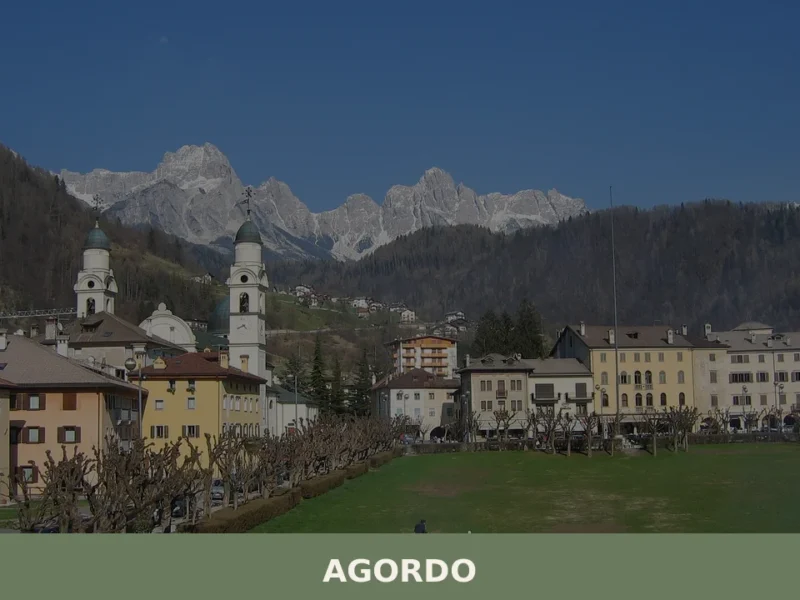
Agordo
 Mountain
Discover what to see in Agordo, Veneto: the Valle Imperina mine, the 1867 Mining School, Ladin culture, and the Cordevole valley in the Belluno Dolomites.
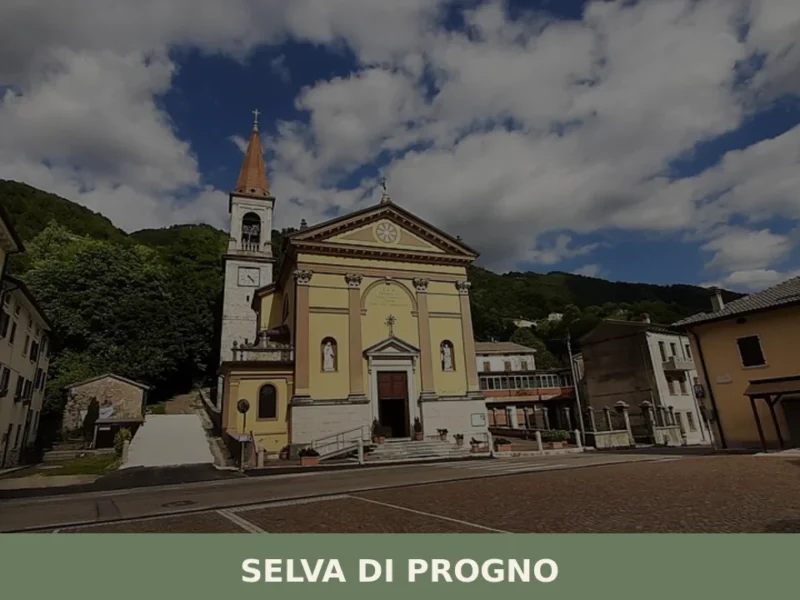
Selva di Progno
 Hills
Hills
At 570 metres above sea level, where the Val d’Illasi narrows and gives way to the eastern Lessinia plateau, Selva di Progno has 923 inhabitants spread between the main settlement and the scattered hamlets on the surrounding slopes. The municipality belongs to the Comunità Montana della Lessinia and preserves in its place names and local […]
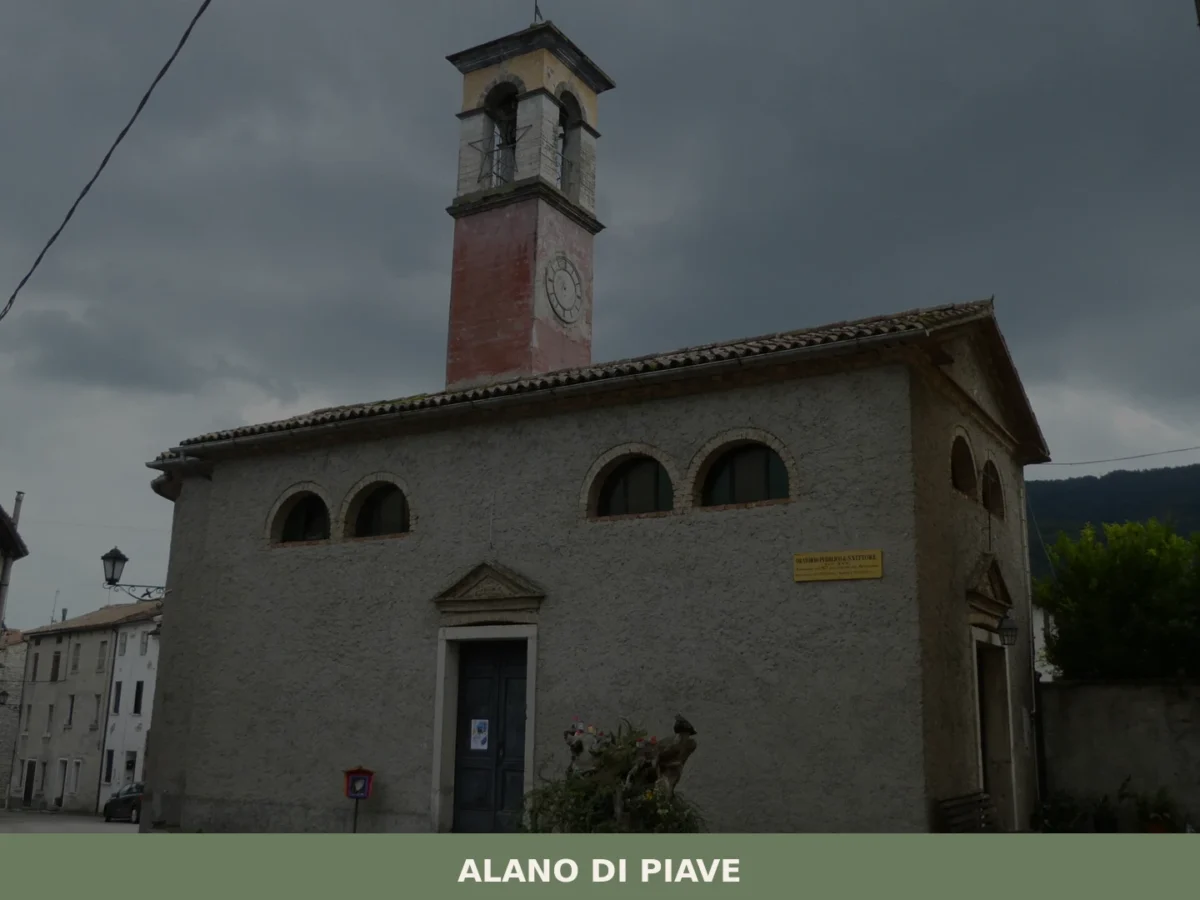
Alano di Piave
Mountain
What to see in Alano di Piave? Explore the 5 main attractions of this Venetian village, blending history and nature. Your complete guide to not miss a thing. Plan your visit!
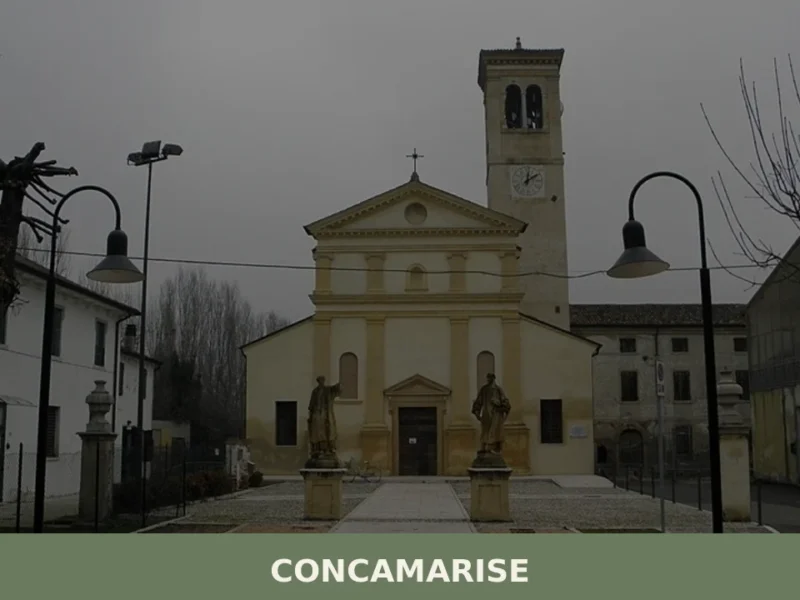
Concamarise
Plains
Concamarise, a municipality in Verona province with 1,053 inhabitants, rises only 21 meters above sea level, located in the Bassa Veronese, an area known for its long-standing agricultural tradition and complex hydrographic network. Its very name suggests a connection with water: “Conca” refers to a territorial depression, while “Marise” is likely linked to the marshy […]
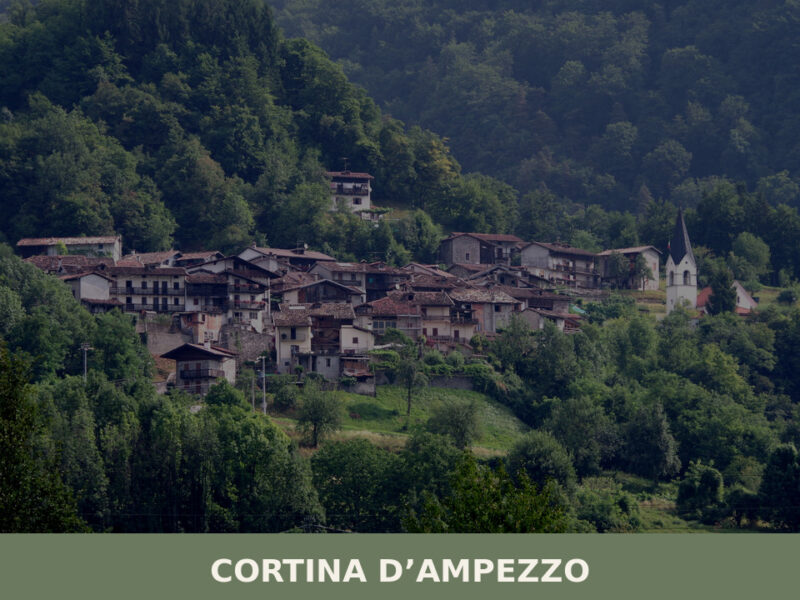
Cortina d’Ampezzo
Mountain
A complete guide to what to see in Cortina d'Ampezzo — from Dolomite peaks and WWI tunnels to Ladin cuisine and centuries-old communal traditions.
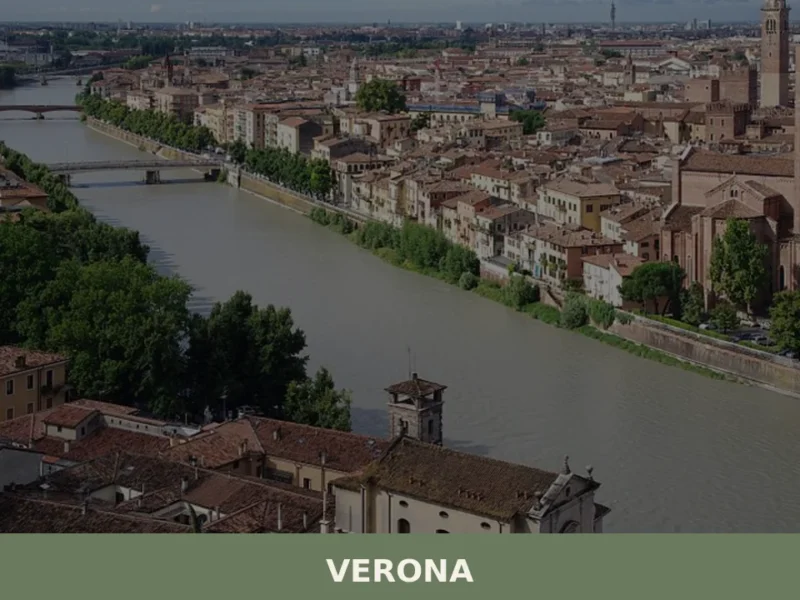
Verona
Plains
What to see in Verona, a UNESCO city of 255,000 people. Explore the Roman Arena, Juliet's House, San Zeno Basilica and local dishes like bollito and pearà. Plan your visit now.
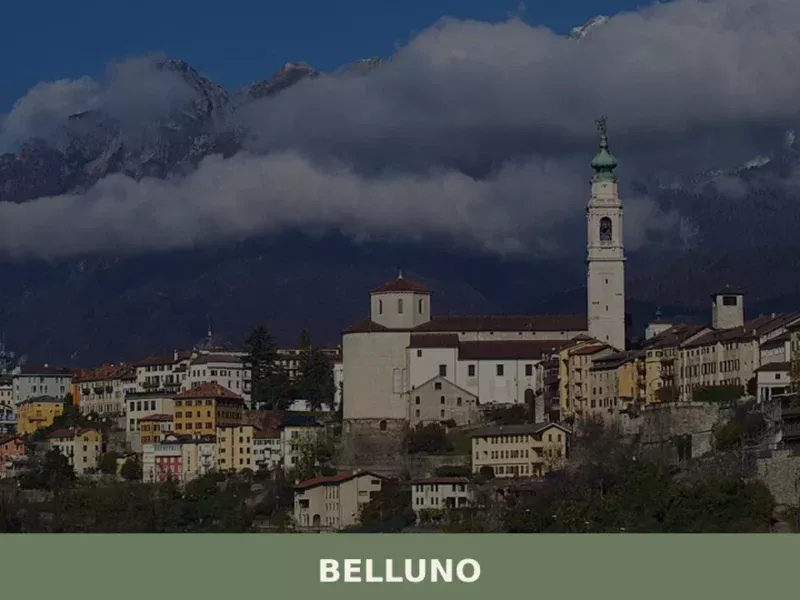
Belluno
Hills
What to see in Belluno: a city at 389m with Venetian palaces, a Baroque bell tower and Alpine views. Plan your visit with this complete guide. Includes food and travel tips.
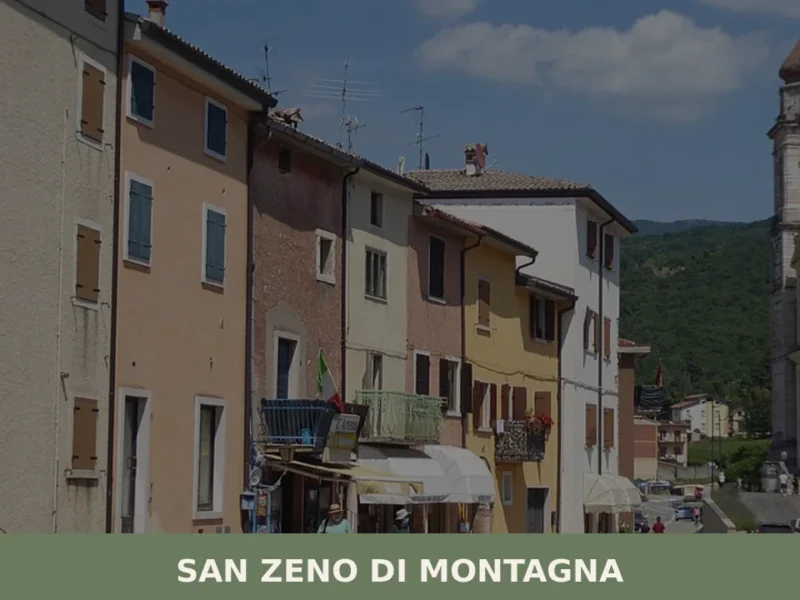
San Zeno di Montagna
Mountain
At 680 metres above sea level, on the eastern slope of Monte Baldo, San Zeno di Montagna has 1,376 inhabitants spread across a constellation of contrade — Lumini, Castello, Villanova, Ca’ Montagna — each retaining its own architectural and topographic identity. The municipal territory extends from 300 to 2,200 metres in altitude, a range that […]
Venezia
 Sea
Sea
With its 259,263 inhabitants, Venice stands out as one of the most significant centers in Veneto, presenting an altitude of 256 meters above sea level. This city, included in the Hill Villages category according to the classification provided, offers an invaluable historical, artistic, and cultural heritage. In this article History and Origins of Venice What […]
Vicenza
Plains
Village of Vicenza: Explore 1 architectural masterpiece, the Olympic Theatre, and taste traditional baccalà. Plan your Italy trip now!
🏡 Know Sommacampagna better than we do?
If you’re a local or have been there, your knowledge matters: add what’s missing or fix a detail on this page.