


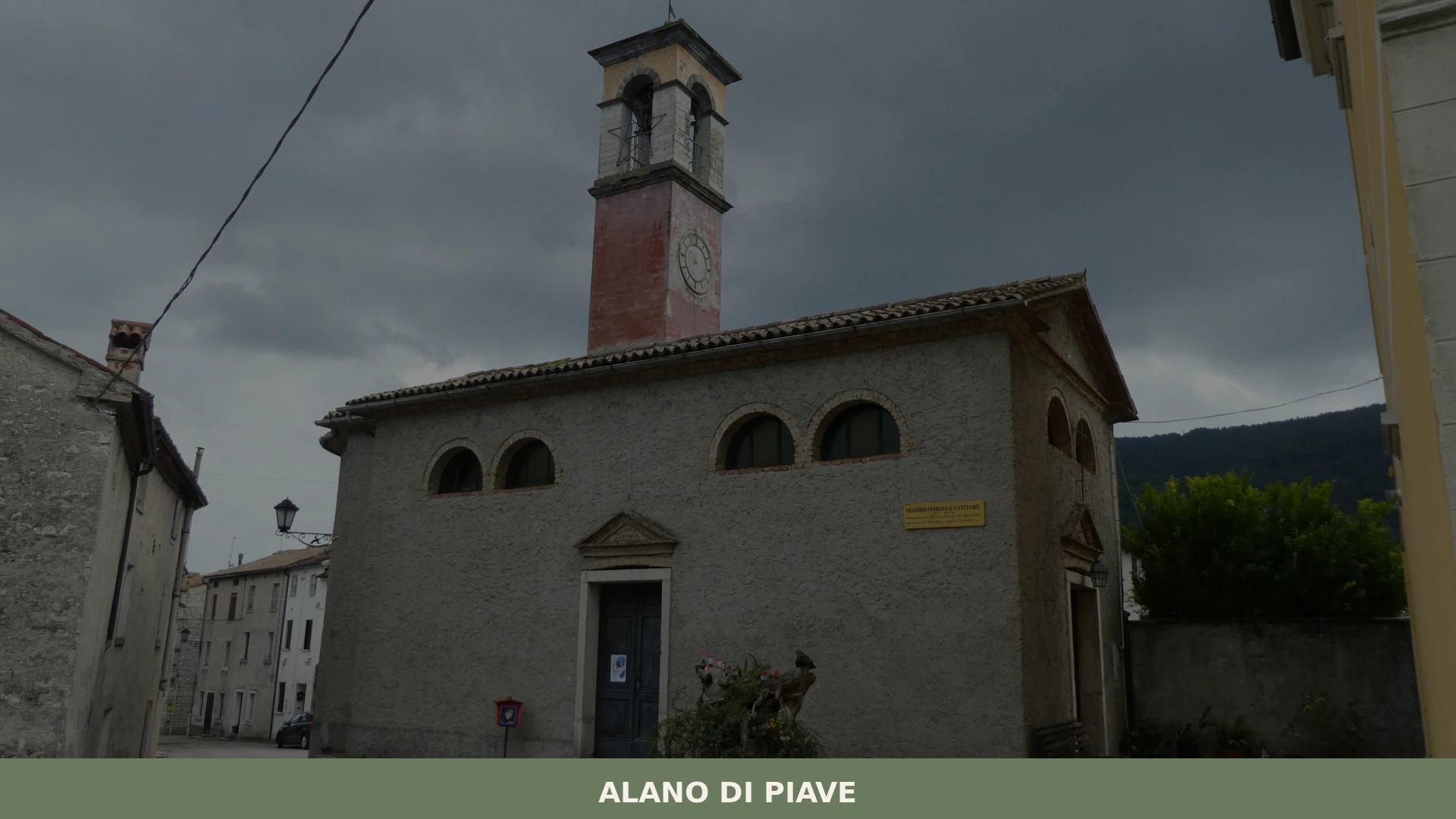
Alano di Piave
 Mountain
What to see in Alano di Piave? Explore the 5 main attractions of this Venetian village, blending history and nature. Your complete guide to not miss a thing. Plan your visit!
Discover Alano di Piave
The Piave River runs less than a kilometre from the lower edge of the settlement, and during the First World War both Austrian and Italian artillery left their mark on walls that had stood since the 14th century.
The fortress of Castelnuovo, a stronghold controlling both road and river routes, drew competing armies through this valley for generations before the guns of 1914–1918 rendered large sections of the built fabric unrecognisable.
The bell tower of the parish church was rebuilt after the conflict, and the reconstruction tells you more about the place than any surviving original structure could.
Deciding what to see in Alano di Piave is easier once you understand the village’s scale: a municipality of 2,665 residents spread across 36.4 square kilometres (14.1 sq mi) in the province of Belluno, Veneto, Italy, roughly 60 km (37 mi) northwest of Venice and 35 km (22 mi) southwest of Belluno. Visitors to Alano di Piave find a working agricultural and craft community where the eyewear and chandelier industries now share ground with sheep farming and vine cultivation.
The Alano di Piave highlights include a restored Baroque parish church, the hamlet of Fener on the Piave, and direct rail access on the Calalzo–Padua line.
History of Alano di Piave
The earliest documented reference to Alano dates to the 8th century, making it one of the older recorded settlements in the Belluno province. Two competing explanations exist for the name. One connects it to the Alans, a nomadic people who moved south from Northern Europe during the late Roman period. The other links the toponym to the area’s long involvement in wool processing, an industry that shaped the local economy for several centuries and persisted well into the early modern era.
From the 10th and 11th centuries onward, written records become more frequent, though the maps of the period are inconsistent, reflecting the instability of territorial control. Governance of Alano and its surrounding lands shifted repeatedly between the lords of Feltre and Treviso.
The population endured prolonged military conflict that reached a peak during the War of the League of Cambrai in the early 16th century, when fighting centred on the fortress of Castelnuovo — a 14th-century stronghold that commanded the valley’s main road and river crossings.
Control of that position changed hands multiple times before a durable settlement was reached. The difficult terrain, which limited arable farming, directed the inhabitants toward sheep raising, wool and iron working, and lime production. Trade along the Piave River supported the growth of Fener, the lower hamlet, as a modest commercial node within the wider Feltrina economy. The provincial capital of Belluno, 35 km (22 mi) to the northeast, served as the administrative and market centre for this entire corridor of the pre-Alpine foothills.
The three centuries of relative stability that followed the early 16th century ended abruptly with the First World War. Alano found itself inside a designated neutral zone, yet both Austrian and Italian artillery caused extensive damage to the built environment. The aftermath accelerated an emigration trend that had already begun in the 19th century, sending residents to destinations across Europe and the Americas. The Second World War brought further destruction and a renewed emigration wave, with Belgium, Germany, and France as the primary destinations.
On 22 January 2024, Alano di Piave formally merged with the neighbouring municipality of Quero Vas to create the new municipality of Setteville, closing a chapter of independent civic administration that had endured for centuries.
What to see in Alano di Piave, Veneto: top attractions
Parish Church of Sant’Antonio Abate
The façade of Sant’Antonio Abate gives little indication of the upheaval the building has absorbed.
The current structure is the product of a reconstruction carried out between 1760 and 1778, consecrated in 1792, with the bell tower added in the second half of the 19th century. The church was severely damaged during the First World War and promptly restored. Inside the presbytery, a large canvas attributed to an anonymous Venetian painter from the second half of the 18th century depicts a Madonna con Bambino in gloria e santi — Madonna and Child in glory with saints.
To the right of the high altar stands a carved and painted wooden angel, the work of an unidentified artist from the first half of the 20th century. The first chapel on the left holds a statue of Saint Anthony of Padua with the infant Jesus, sculpted by Gabriele Brunelli in the second half of the 17th century. The church belongs to the vicariate of Quero-Valdobbiadene within the diocese of Padua, a territorial arrangement that underlines the historical ties between this valley and the Treviso lowlands to the south.
The Church of San Pietro and Its Medieval Origins
Before Sant’Antonio Abate assumed its current central role, the principal place of worship in Alano was the church of San Pietro, recorded in the papal tithe register of 1297 as a dependency of the parish church of Quero. That single administrative entry establishes a documented ecclesiastical presence in the settlement of more than seven centuries.
The pastoral visitation of 1535 records the formal transfer of the Blessed Sacrament and the baptismal font to Sant’Antonio Abate, reflecting a deliberate decision to shift the gravitational centre of parish life to a more accessible location within the built-up area.
San Pietro’s earlier status as the primary church is a fact that reframes the architectural narrative of the village: what visitors see today is not the original arrangement but the result of a conscious 16th-century reorganisation. For those researching the ecclesiastical history of the Belluno valleys, this transition — from a hilltop dependency to a centrally placed parish — mirrors a broader pattern found across the Veneto pre-Alps.
Fortress of Castelnuovo
The site of the Castelnuovo fortress sits above the valley at a position that controlled both the road running north toward Feltre and the Piave River corridor below. Built in the 14th century, the stronghold became the focal point of the War of the League of Cambrai in the early 16th century, when competing territorial powers fought repeatedly for its possession.
The physical remains are modest compared to the historical weight the site carries, but the elevated vantage point over the valley and the river is itself the reason for visiting.
Standing here, the logic of centuries of conflict becomes immediately legible: the river narrows, the road bends, and any force controlling this ground controlled movement through the entire valley. The site is accessible on foot from the village centre, and the walk up rewards visitors with an unobstructed view of the Piave’s course through the foothills.
The Hamlet of Fener and the Piave River
Fener sits at the lower edge of the municipality, where the terrain flattens toward the Piave, approximately 60 km (37 mi) northwest of Venice along the river’s upper reaches.
During the centuries when road transport was unreliable and seasonal, the Piave served as a commercial artery, and Fener developed as the trading point where goods moved between the mountain interior and the Venetian plain.
The hamlet earned a degree of contemporary notoriety when a local resident of Fener became a consistent presence on the southern lane of regional road 348, to the point of being mapped on Google Maps as a tourist attraction — a detail that speaks to the scale of community life here. The riverside environment supports the agricultural activity that still occupies part of the local population: cereal crops, forage plants, and orchards extend across the flatter ground between the hamlet and the water.
The Feltrina State Road (SS 348) Corridor
The Strada Statale 348 Feltrina — the Feltrina state road — runs directly through Alano, linking the Venetian plain at Montebelluna to Feltre and the upper Belluno valley. The road’s alignment follows one of the oldest transit routes through the pre-Alpine foothills, the same corridor that made Castelnuovo strategically valuable in the medieval period and that channelled wartime movement in both 1914–1918 and 1939–1945.
For visitors arriving by car, the road itself is a geographic orientation tool: the shift from flat vineyards south of the Piave to steeper, forested slopes north of the river happens within a few kilometres.
The state road also connects Alano to the neighbouring municipality of Quero Vas, now merged into Setteville, and continues north toward , 35 km (22 mi) away, passing through a sequence of small valley communities that share the same agricultural and craft economy as Alano.
Local food and typical products of Alano di Piave
The food culture of Alano di Piave grew out of the same constraints that shaped its economy: difficult terrain, limited flat land, and a population that historically depended on livestock rather than intensive grain farming. Sheep, goats, cattle, and pigs are all still raised within the municipality, and the cultivation of vines, cereals, vegetables, and fodder continues on the valley floor and lower slopes.
The proximity to the Piave and the connections to both the Belluno mountain zone and the Treviso wine country to the south mean that the local table draws from two distinct gastronomic traditions — the mountain interior and the Venetian foothills.
From the mountain tradition, the kitchen makes consistent use of the dairy and meat products that livestock farming produces.
Slow-cooked preparations based on pork, lamb, and goat reflect the historic scarcity of fuel and the need to use every part of the animal. Polenta — ground maize cooked slowly in a copper pot until it reaches a firm, sliceable consistency — appears as the base for braised meats and stewed vegetables, a combination typical across the entire Belluno province.
Fagioli con le cotiche, a dish of dried beans simmered with pork rind, is common in this zone of the Veneto foothills: the beans absorb the fat from the rind over a long cooking time, producing a dense, unctuous result that reflects the frugal logic of the pre-Alpine kitchen. From the southern influence, pasta e fagioli prepared with local beans and home-cured lard appears on tables in a version thicker than the Venetian plain variant, closer to a solid porridge than a soup.
The wine tradition of the wider area is anchored by the Valdobbiadene production zone immediately to the south, where the Prosecco Superiore di Conegliano Valdobbiadene DOCG designation applies. While Alano itself falls outside the strict production boundary of that appellation, the vines cultivated within the municipality supply local consumption and small-scale production.
The area also raises horses, a detail recorded in the municipal agricultural data, which points to a working rural economy rather than one oriented exclusively toward tourism or export.
Craft production in the carpentry and woodworking sectors has expanded in recent decades, and wooden objects — furniture, turned items, hand tools — are available from local workshops.
For visitors seeking local produce, the weekly markets of the wider Feltrina zone and the periodic sagre — traditional food-centred village festivals — of the Belluno foothills offer the most direct access to seasonal vegetables, cured meats, and dairy from the valley farms. The autumn season, when grape harvests conclude and the first cold prompts the start of pig-curing, is the most active period for food-related events in this part of Veneto.
Festivals, events and traditions of Alano di Piave
The parish of Alano di Piave is dedicated to Sant’Antonio Abate, Saint Anthony the Abbot, whose feast day falls on 17 January.
This date marks the principal religious event in the village calendar, observed with a church service and the traditional blessing of animals — a rite that retains practical significance in a community where cattle, goats, sheep, and horses are still part of the working agricultural economy. The blessing connects the liturgical calendar directly to the livestock-centred livelihood that has defined the valley since at least the early modern period.
The diocese of Padua, to which the parish belongs through the vicariate of Quero-Valdobbiadene, organises pastoral visits and diocesan events that periodically bring larger gatherings to the area.
The village’s integration into the new municipality of Setteville, formalised on 22 January 2024, will likely give rise to new civic commemorations over the coming years. The autumn period, consistent with the wider Veneto foothills tradition, sees informal food events tied to the grape harvest and the start of the cold-season curing cycle, though no fixed annual event with a confirmed name and date is recorded in the available sources for Alano specifically.
When to visit Alano di Piave, Italy and how to get there
The best time to visit the Belluno foothills zone, which includes Alano di Piave, falls in the period between late April and early June, and again from September through October.
Spring brings consistent temperatures in the range of 15–20°C (59–68°F) at valley level, with the surrounding slopes still green from snowmelt. The autumn window combines mild temperatures with the harvest activity that gives the local food economy its most visible expression. Summer in the Piave valley can be warm and busy on the main road corridor, while winter, though cold, keeps the village at a working pace rather than a tourist one. International visitors searching for the best time to visit Veneto’s inland mountain fringe will find the shoulder seasons consistently more rewarding than the peak of August.
Alano di Piave is served by the Alano-Fener-Valdobbiadene station on the Trenitalia Calalzo–Padua railway line.
Padua, the southern terminus, is a major rail hub with connections to Venice (25 minutes by high-speed regional service), making a day trip from Venice to Alano entirely feasible: Venice to Padua by fast train, then a regional service north through the foothills. The total journey from Venice Santa Lucia station runs approximately 2 hours depending on connections. By car, the A27 motorway (Venezia–Belluno) provides the most direct route from Venice; exit at Treviso Nord or Vittorio Veneto Sud and continue north on the SS 348 Feltrina toward Alano.
The distance from Venice by road is approximately 70 km (43 mi), and the drive takes around 1 hour under normal traffic conditions. From Belluno, 35 km (22 mi) to the north, the SS 348 south covers the distance in under 30 minutes. International visitors arriving at Venice Marco Polo Airport, located approximately 75 km (47 mi) south, can connect by bus to Mestre or Venice Santa Lucia and then take the train. English is not widely spoken in smaller shops and agricultural businesses in the village; carrying cash in euros is practical, as card acceptance is limited outside the main commercial establishments.
Where to stay near Alano di Piave
Accommodation options within Alano di Piave are limited by design. The village has one hotel, three restaurants, and a holiday home that originally functioned as a cultural centre and now hosts artists and elderly residents. Visitors who prefer a wider range of lodging will find more options in Feltre, 20 km (12 mi) to the north, or in the Valdobbiadene wine zone to the south. Those planning a day trip from Venice or a short stay in the Belluno foothills should book accommodation in advance during the September–October harvest season, when demand across the wider area increases.
The village’s restaurants provide the most direct access to the local food economy for visitors staying elsewhere in the province.
Visitors to Alano di Piave can extend their stay into the surrounding Veneto mountain territory.
The village of Selva di Progno, in the Lessinia plateau to the west, shares the same pre-Alpine agricultural character and offers a contrasting landscape of limestone karst and beech forest. Further south, Erbezzo in the Lessinia Natural Regional Park represents another point of reference for visitors building a wider Veneto itinerary across the foothills zone.
📷 Photo Gallery — Alano di Piave

Nearby Villages near Alano di Piave
In Veneto More villages to discover
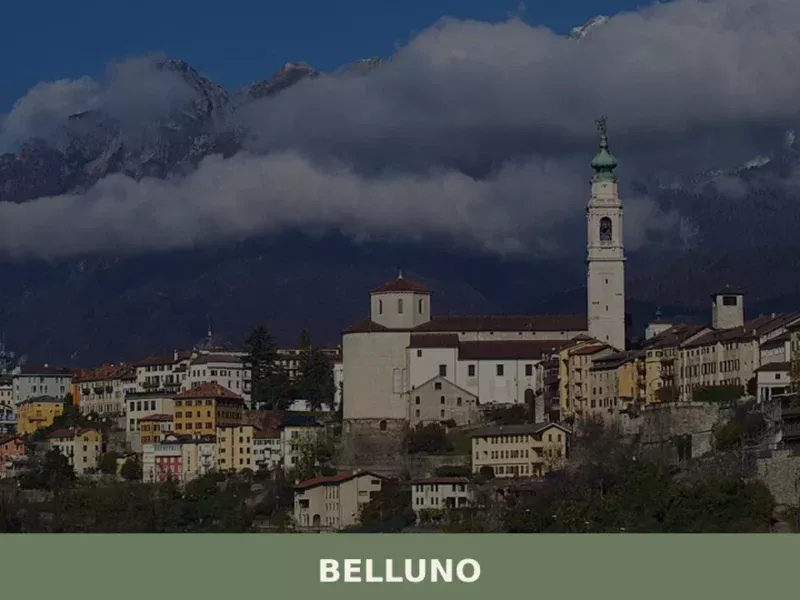
Belluno
 Hills
Hills
What to see in Belluno: a city at 389m with Venetian palaces, a Baroque bell tower and Alpine views. Plan your visit with this complete guide. Includes food and travel tips.
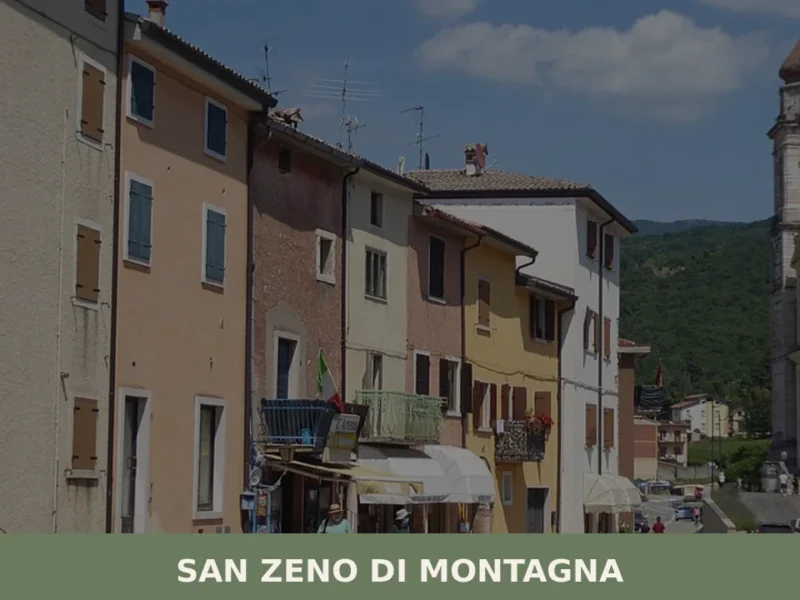
San Zeno di Montagna
Mountain
At 680 metres above sea level, on the eastern slope of Monte Baldo, San Zeno di Montagna has 1,376 inhabitants spread across a constellation of contrade — Lumini, Castello, Villanova, Ca’ Montagna — each retaining its own architectural and topographic identity. The municipal territory extends from 300 to 2,200 metres in altitude, a range that […]
Vicenza
 Plains
Village of Vicenza: Explore 1 architectural masterpiece, the Olympic Theatre, and taste traditional baccalà. Plan your Italy trip now!
Erbè
Plains
Erbè has 1,838 inhabitants and occupies a stretch of the Veronese plain north of the Tione dei Monti river, along the road connecting Verona to Mantua. The municipal territory, almost entirely flat and crossed by a dense network of irrigation canals, was progressively reclaimed starting in the 15th century under the administration of the Republic […]
Brentino Belluno
Plains
At 137 metres above sea level, where the Adige Valley narrows between Monte Baldo and the Lessini Mountains, Brentino Belluno is a municipality of 1,363 inhabitants created in 1929 through the administrative merger of two distinct settlements: Brentino, on the left bank of the Adige, and Belluno Veronese, clinging to the eastern slope of Monte […]
Roveredo di Guà
Plains
Roveredo di Guà has 1,542 inhabitants and covers an area of just 8 square kilometres on the lower Veronese plain, 16 metres above sea level, along the course of the Guà canal — a branch of the Adige river system that has determined the shape and economy of this territory. Understanding what to see in […]
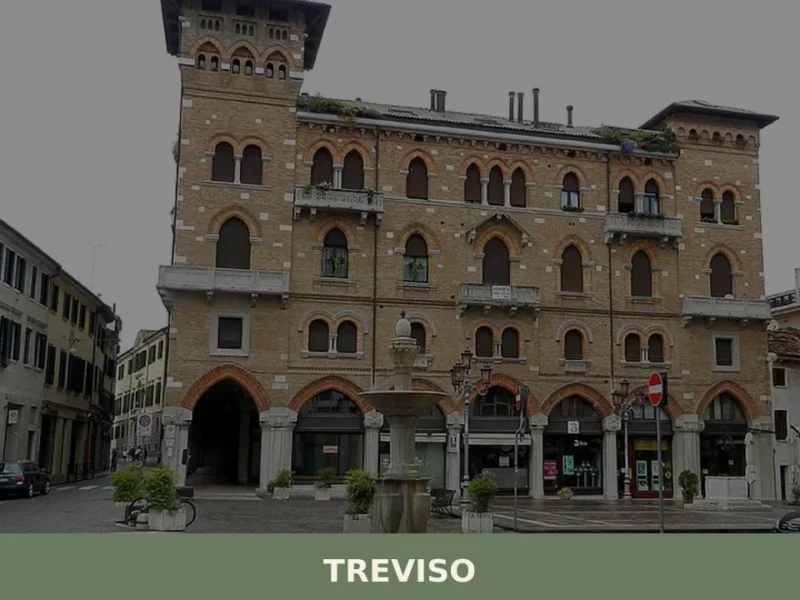
Treviso
Plains
A medieval city of 85,000 enclosed by water-fed walls, Treviso shaped Venetian trade and still guards its own identity through art, architecture and civic pride.
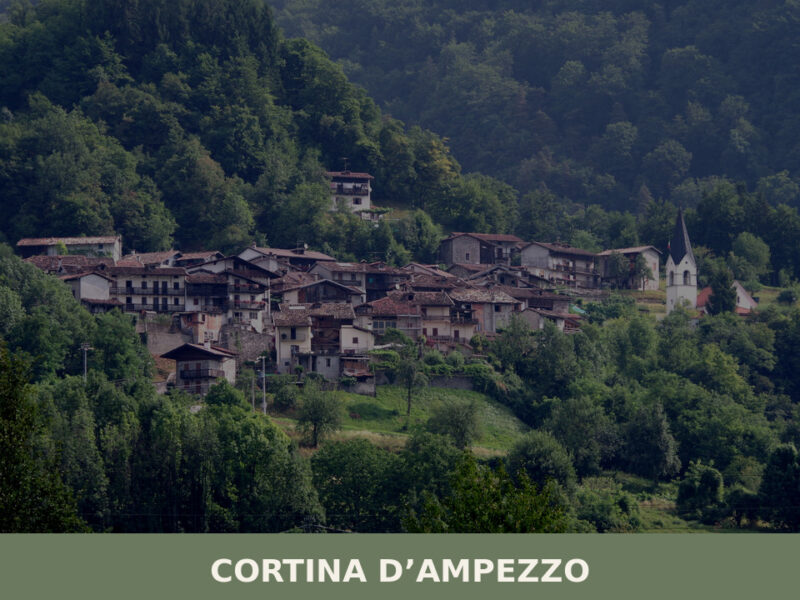
Cortina d’Ampezzo
Mountain
A complete guide to what to see in Cortina d'Ampezzo — from Dolomite peaks and WWI tunnels to Ladin cuisine and centuries-old communal traditions.
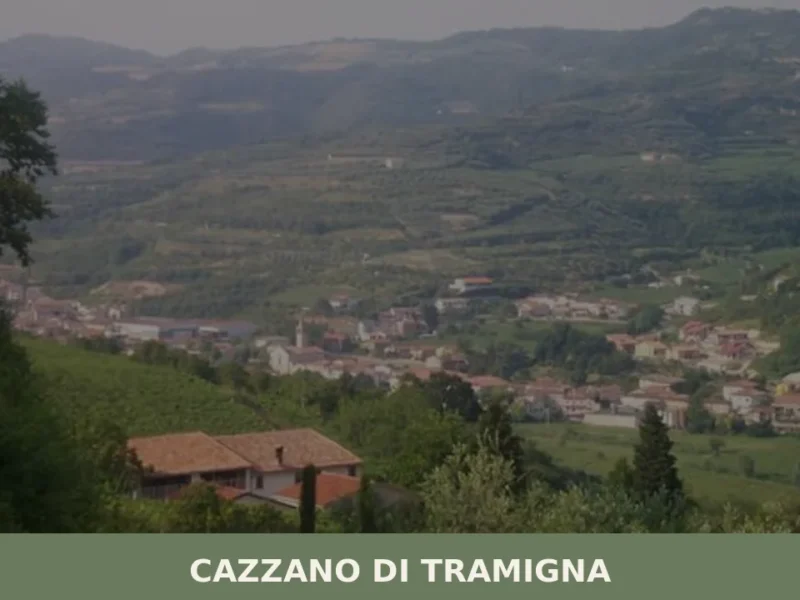
Cazzano di Tramigna
Plains
Cazzano di Tramigna has a population of 1,502 and occupies a basin at 100 metres above sea level in the Val Tramigna, a side valley that opens to the east of the Valpolicella area near Verona. The Tramigna stream — from which the village takes part of its name — crosses the municipal territory before […]
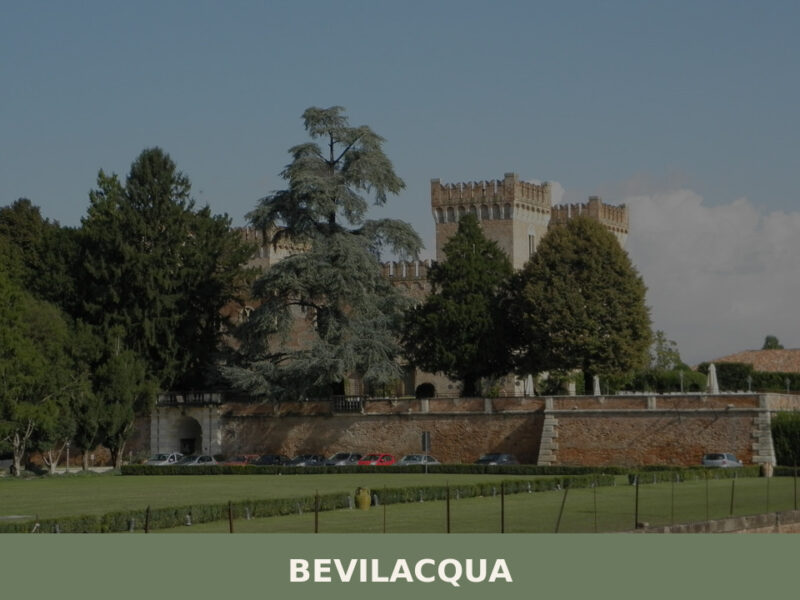
Bevilacqua
Mountain
A castle rising over the Fratta River, fewer than 1,800 inhabitants, and the quiet agricultural heart of the Veronese plain. Here's what to see in Bevilacqua.




🏡 Know Alano di Piave better than we do?
If you’re a local or have been there, your knowledge matters: add what’s missing or fix a detail on this page.