


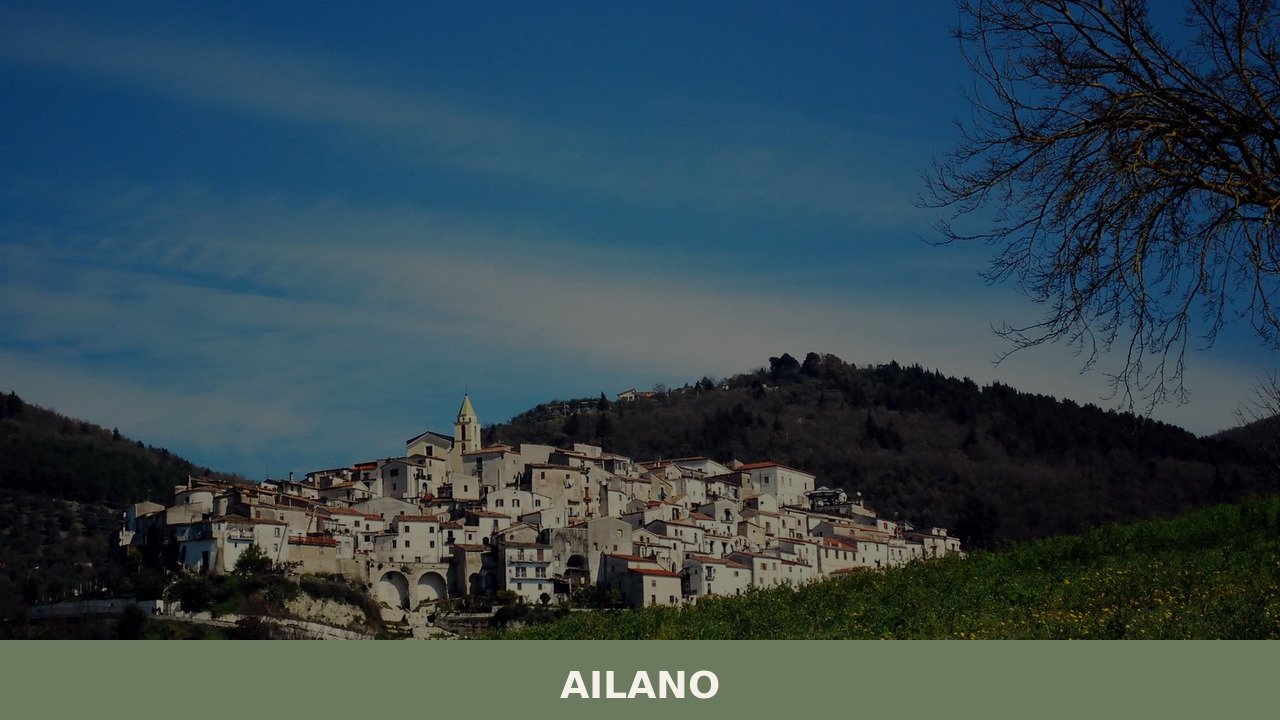
Ailano
A complete guide to what to see in Ailano, a village of 1,198 inhabitants in the Caserta province of Campania, with its medieval centre, parish churches, and Volturno valley views.
Discover Ailano
Morning light falls across a cluster of stone rooftops at 260 metres above sea level, and the air carries the low hum of a tractor working a hillside olive grove. In the bar on the main road, a man stirs his caffè without looking up. Ailano — population 1,198, province of Caserta — is a settlement that measures its days by seasons, not schedules. For those exploring what to see in Ailano, the rewards are quiet and specific: layers of history pressed into limestone, parish walls that predate the region’s written records, and a landscape that stretches toward the Matese massif with no interruption.
History of Ailano
The origins of Ailano reach back into the pre-Roman period, when the upper Volturno valley served as a transit corridor between the Samnite highlands and the lowland settlements of Campania. The village’s name has been linked by local historians to the Latin personal name Aelianus, suggesting that the site may have functioned as a Roman-era agricultural estate — a fundus — before coalescing into a nucleated settlement during the early medieval centuries. Documentary evidence places Ailano within the orbit of the Lombard principality of Capua, one of the key political structures of southern Italy between the 9th and 11th centuries.
During the Norman and later Angevin periods, the village was integrated into the feudal system that governed much of the province of Caserta. Like many communities in the upper Caserta hinterland, Ailano passed through the hands of successive noble families who controlled its modest agricultural output — primarily grain, olives, and livestock. The feudal era left its mark in the form of fortified structures and parish churches, built to serve small populations scattered across the hills.
By the 18th and 19th centuries, Ailano had become a quiet node in the Bourbon Kingdom of the Two Sicilies. The unification of Italy in 1861 brought administrative changes but little economic transformation. Emigration — first to the Americas, then to northern Italy and northern Europe — steadily reduced the population over the course of the 20th century, a pattern visible across much of inland Campania. What remains today is a village whose built fabric reflects centuries of slow accretion rather than any single moment of grandeur.
What to see in Ailano: 5 must-visit attractions
1. Chiesa di San Giovanni Battista
The parish church of San Giovanni Battista anchors the village’s historical centre. Its stone façade, reworked over several centuries, incorporates elements from earlier medieval construction. Inside, modest devotional art and carved stone details document the religious life of a small agricultural community. The building’s proportions are intimate — built for a congregation that could be counted, not estimated.
2. The historic centre (Centro Storico)
Ailano’s older streets follow the contour of the hillside in tight, irregular patterns typical of medieval settlement in the upper Caserta province. Narrow alleys open without warning onto small piazzas. Doorways are framed in local limestone, and many houses retain exterior stone staircases — a vernacular architectural element common to this part of Campania. The fabric is lived-in, not museified.
3. Ruins of the feudal fortification
Remnants of Ailano’s medieval fortified structure survive at the upper edge of the settlement. While not a fully intact castle, the remaining walls and foundation lines trace the outline of a defensive position that once oversaw the surrounding valley. These ruins speak to Ailano’s role within the feudal network of the Norman and Angevin periods, when even small villages required fortification.
4. The Volturno valley landscape
From several vantage points around the village, the terrain opens toward the valley of the Volturno, Campania’s longest river. The agricultural terraces descending from Ailano’s elevation illustrate centuries of land management. To the north, the Matese mountains form a wall of limestone ridges. This is not decorative scenery — it is a working landscape, shaped by the same hands that built the village.
5. Rural chapels and wayside shrines
Scattered along the paths and minor roads radiating from Ailano are small chapels and roadside edicole — votive shrines set into walls or mounted on stone pillars. These structures, some dating to the 17th and 18th centuries, mark boundaries, crossroads, and sites of local devotion. They are among the most telling features of religious life in rural Campania, where faith was mapped directly onto the terrain.
Local food and typical products
The kitchen of Ailano belongs to the broader culinary tradition of inland Caserta — hearty, seasonal, and built around a limited set of high-quality ingredients. Olive oil from local groves is the primary cooking fat. Homemade pasta shapes, including cavatelli and lagane, are dressed with slow-cooked ragù or simply with sautéed wild greens and garlic. Pork, prepared in every conceivable form — sausages, cured cuts, and roasted joints — remains central to the winter diet. Chestnuts from the surrounding hills appear in soups, sweets, and as flour for dense, fragrant bread.
The wider province contributes notable DOP and IGP products, including Mozzarella di Bufala Campana DOP from the lowland farms to the south and extra-virgin olive oil from the Matese foothills. Local agriturismi and small trattorias — the kind without websites but with handwritten menus — offer the most reliable access to these flavours. Visitors should also look for locally produced honey, dried legumes, and preserved vegetables, all of which reflect the self-sufficient agricultural economy that sustained the village for centuries.
Best time to visit Ailano
Spring and early autumn offer the most comfortable conditions. From April through June, the hillsides are green and the temperatures at 260 metres elevation are moderate — warm days, cool evenings. September and October bring the olive harvest and a quieter, amber-toned light that suits the stone architecture. Summer can be hot in the Volturno valley, though Ailano’s slight elevation provides some relief compared to the lowland towns.
Village festivals, typically tied to the feast day of the patron saint and harvest cycles, concentrate in the summer months and early autumn. These are not events staged for outsiders; they are community occasions, with processions, outdoor cooking, and music that fills the piazza for a single evening. Checking with the Comune di Ailano or the Campania regional tourism board for current event dates is advisable, as schedules can shift from year to year.
How to get to Ailano
Ailano sits in the northern interior of Campania, well away from the main coastal transport corridors. By car, the most direct route from Naples (approximately 80 km) follows the A1 motorway north toward Caianello, then branches inland along provincial roads through the upper Volturno valley. The drive takes roughly 90 minutes, depending on traffic around the Caserta interchange.
- By car from Rome: approximately 180 km via the A1 motorway, exiting at Caianello. Allow around two hours.
- By train: the nearest rail station with regular service is at Vairano-Caianello, on the Rome–Naples line. From there, local buses or a taxi cover the remaining 15–20 km to Ailano.
- Nearest airport: Naples International Airport (Capodichino), approximately 90 km to the south.
Public transport connections within this part of the province are limited. A rental car is strongly recommended for visitors planning to explore Ailano and the surrounding hill villages at their own pace.
More villages to discover in Campania
The territory around Ailano belongs to a constellation of small settlements that share a common geography and history but each retain distinct character. A few kilometres away, the village of Pratella offers its own layers of medieval architecture and a position that commands wide views across the Matese foothills. Its parish churches and agricultural rhythms echo those of Ailano, but the streetscape has a slightly different grain — the product of different feudal hands shaping the same raw materials.
Further into the province, Gioia Sannitica preserves traces of Samnite and medieval occupation in a setting that rises more steeply into the highlands. Together, these villages form a circuit that rewards slow travel — a day or two spent moving between them reveals more about inland Campania than any single site could. The landscape between them is not empty space to be crossed; it is the connective tissue that gives each village its meaning.
Nearby Villages near Ailano
In Campania More villages to discover
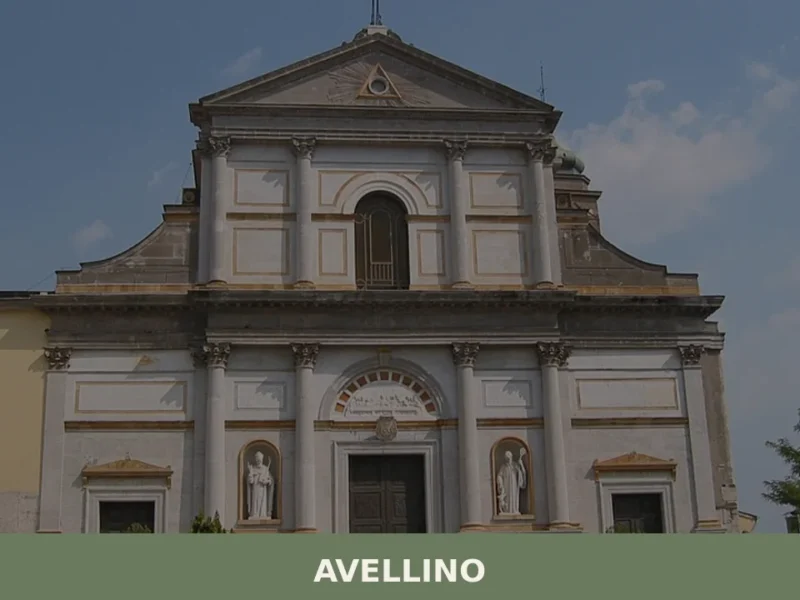
Avellino
Uncover the charm of the village of Avellino in Campania, Italy. Explore its rich history, local traditions, and stunning landscapes. Plan your visit to this Italian gem!
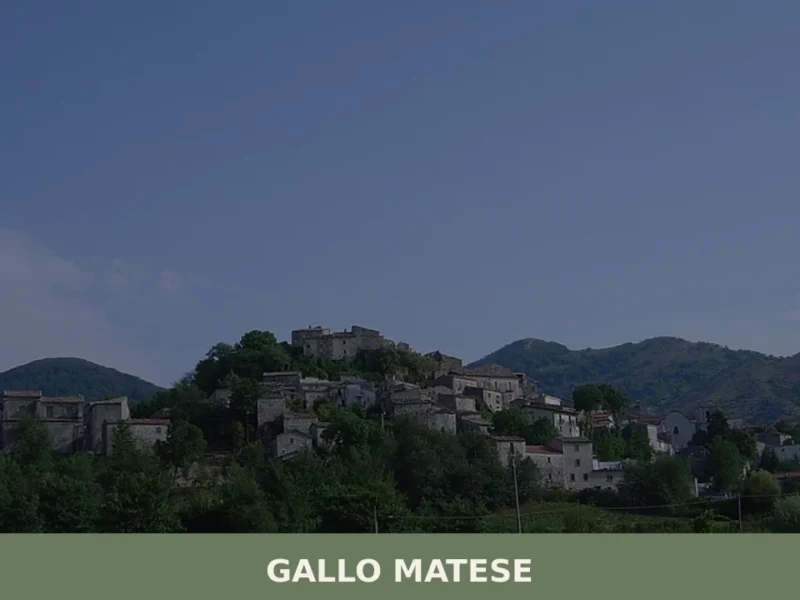
Gallo Matese
With its 625 inhabitants and an altitude of 875 meters above sea level, Gallo Matese ranks as one of the highest centers in the province of Caserta, Campania. Its geographical position, in the heart of the Matese mountain range, determines its identity and structure. The village, whose presence has been documented for centuries, developed in […]
Camigliano
Morning light flattens across the plain north of Caserta, and Camigliano emerges low and unhurried — a grid of stone and plaster houses, church bells marking the quarter-hour to no one in particular. With fewer than two thousand residents, this is a settlement shaped more by agriculture than spectacle. Yet for those asking what to […]




📝 Incorrect information or updates?
Help us keep the Ailano page accurate and up to date.