


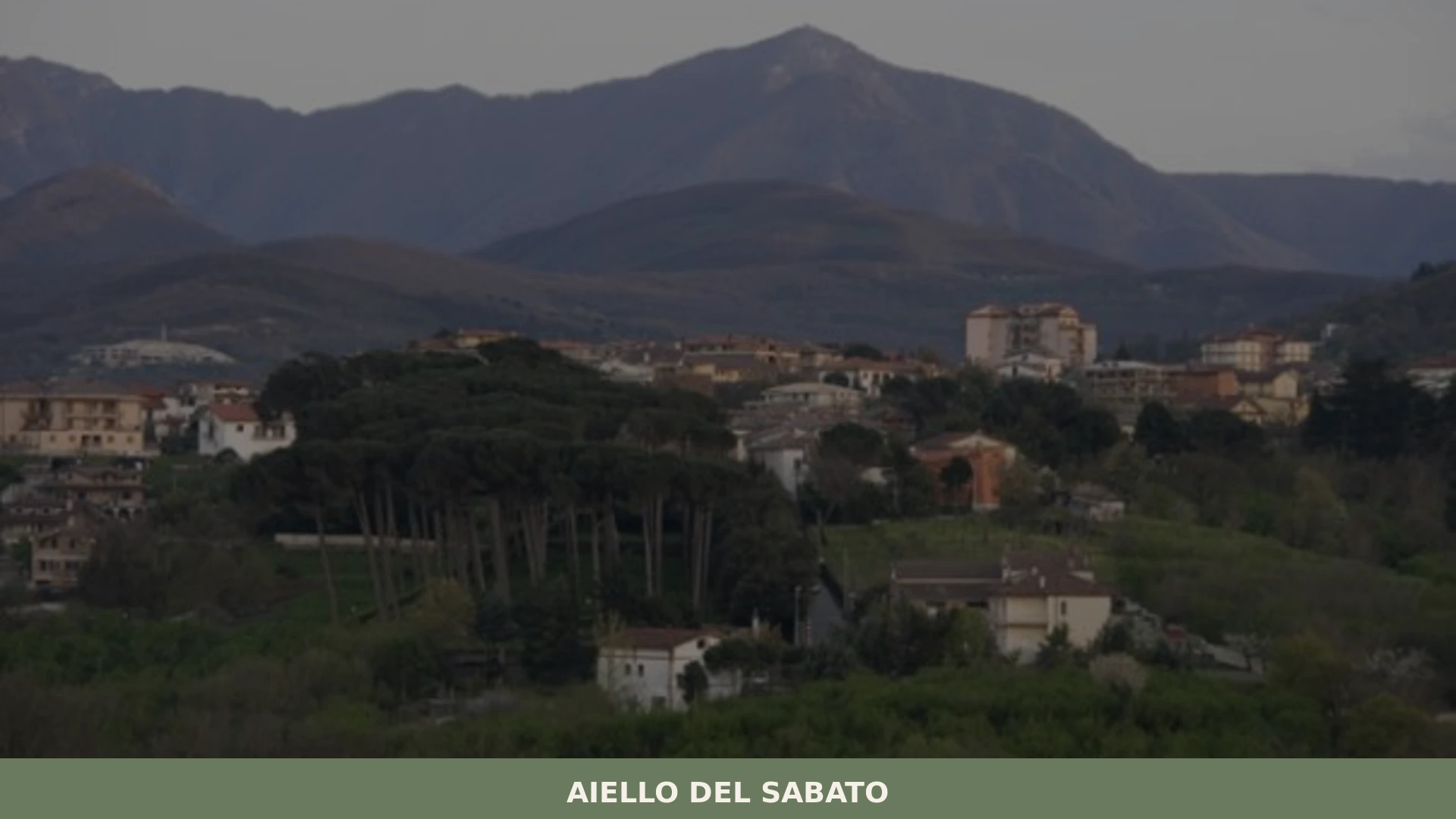
Aiello del Sabato
 Hills
Hills
What to see in Aiello del Sabato, Italy? Discover this village at 425 m (1,394 ft) altitude. Explore its historic core and learn about its Roman past. Read our guide.
Discover Aiello del Sabato
At an elevation of 425 m (1,394 ft) above sea level, the village of Aiello del Sabato stands on a hill overlooking the valley carved by the Sabato river. This location in Italy’s Campania region has witnessed human presence dating back to ancient times. The river, a tributary of the Calore Irpino, lends part of its name to the settlement.
The earliest documentation of Aiello del Sabato dates back to 1045 AD, anchoring its history within the medieval period.
For those wondering what to see in Aiello del Sabato, this village of approximately 4,000 inhabitants offers a concise yet compelling experience.
Visitors can explore the historic core, where traces of its medieval past are evident, and delve into the archaeological potential hinting at Roman and even Palaeolithic presence. The Aiello del Sabato highlights include its foundational history and the scenic views afforded by its hilltop position, providing a clear answer to those seeking an authentic Italian village experience.
History of Aiello del Sabato
The name Aiello del Sabato provides immediate insight into its geographical and historical identity. Derived from the Latin term agellus, meaning “field” or “small plot of land,” it signifies the agricultural character of the area. The second part of the name, “del Sabato,” directly references the Sabato river, a significant waterway in the region that flows as a tributary into the larger Calore Irpino.
This linguistic heritage anchors the village firmly within its natural surroundings and hints at a long-standing relationship between its inhabitants and the fertile lands.
Archaeological excavations conducted in the vicinity of Aiello del Sabato have yielded evidence of human activity stretching back to remarkably early periods.
While definitive proof for continuous settlement is still being explored, indications suggest a presence as early as the Palaeolithic Age. More concretely, the Roman era is well-attested, with findings confirming that the area was inhabited and likely cultivated during this powerful imperial period. These discoveries establish the deep historical roots of the locality, predating its formal documentation by millennia and forming an intriguing aspect of what to see in Aiello del Sabato.
The official written record of Aiello del Sabato first appears in documents from 1045 AD, marking its entry into the documented history of the medieval period. This initial mention places the village within a complex network of feudal territories and developing communes that characterized southern Italy during the 11th century. The act of documentation often signified a village’s growing importance, perhaps due to its agricultural output, strategic position, or integration into a larger administrative structure.
This era would have seen the construction of foundational elements that still define the village’s layout today, evolving from its earlier, less formal settlements.
During the medieval centuries, Aiello del Sabato would have experienced the ebb and flow of regional powers, including Norman, Swabian, and Angevin rule, common to much of Campania.
Its strategic position on a hill, at 425 m (1,394 ft) a.s.l., likely afforded some degree of defense, making it a valuable asset for local lords. Villages like Benevento, a historically significant center not far away, would have exerted influence, shaping the administrative and cultural landscape of smaller communities such as Aiello del Sabato.
This period was crucial in establishing the village’s identity and its place within the wider southern Italian context.
While detailed records for every subsequent century are not readily available, the continued existence and growth of Aiello del Sabato, reaching a population of approximately 4,000 inhabitants today, speak to its resilience. The agricultural traditions hinted at by its name likely sustained its community through various historical shifts, including periods of economic change and social restructuring.
Its identity as a hill village in the province of Avellino, Campania, Italy, remains a constant thread through its long history, informing much of what to see in Aiello del Sabato today.
What to see in Aiello del Sabato, Campania: top attractions
Exploring what to see in Aiello del Sabato reveals a village where history and natural beauty intertwine, offering visitors a glimpse into its long past. The topography of the area, combined with centuries of human presence, has shaped a series of points of interest. From ancient foundations to the heart of its community life, the village presents distinct areas worth exploring.
Each location provides a unique perspective on Aiello del Sabato’s evolution, inviting visitors to connect with its rich heritage.
The Historic Core of Aiello del Sabato
The winding alleyways and stone structures of Aiello del Sabato’s historic core offer a tangible link to its documented past. Walking through this area, visitors encounter architectural elements that evoke the village’s medieval origins, first recorded in 1045 AD. The buildings, often constructed from local materials, reflect centuries of adaptation and community life. This central part of the village, at 425 m (1,394 ft) a.s.l., provides a quiet atmosphere for contemplation and is a key part of what to see in Aiello del Sabato.
Look for older doorways and small courtyards that hint at the lives lived within these ancient confines.
Views of the Sabato River Valley
From several vantage points within Aiello del Sabato, the landscape unfolds into sweeping views of the Sabato River Valley. The river, a key geographical feature that gave the village its name, carves a green path through the hills of Campania. These panoramas offer a sense of the region’s agricultural richness and natural beauty. Observing the valley below, which lies significantly lower than the village’s 425 m (1,394 ft) altitude, provides perspective on the strategic importance of hilltop settlements.
The best time to appreciate these vistas is on a clear day, particularly during spring or autumn.
Archaeological Zones and Early Settlements
While not always visible as grand ruins, the archaeological zones around Aiello del Sabato hint at a profound human history. Evidence suggests a presence from the Roman era and potentially even the Palaeolithic Age, making the surrounding fields and gentle slopes areas of significant historical interest. These sites, often requiring careful exploration, represent layers of civilization that have shaped the region for millennia, and form an intriguing aspect of what to see in Aiello del Sabato. Visitors interested in uncovering the deeper past can seek out designated areas or local information, understanding that much of this history is embedded beneath the surface.
The continuity of human settlement for thousands of years is a defining characteristic of this area.
The Parish Church of San Sebastiano and San Fabiano
At the heart of Aiello del Sabato’s community life stands the parish church, dedicated to the village’s patron saints, San Sebastiano and San Fabiano. While specific architectural details are not widely documented, such a church is typically a central point for local gatherings and religious observances. The structure serves as a spiritual anchor for the approximately 4,000 inhabitants. Its presence underscores the enduring traditions of the village, especially during the annual feast day on January 20th.
Visitors can observe its exterior and understand its role as a focal point for community faith and celebrations.
The Hilltop Panorama
The overarching feature of Aiello del Sabato is its hilltop location, offering expansive panoramas across the Irpinia landscape. From various points, visitors can survey the surrounding countryside, characterized by rolling hills and scattered settlements. This elevated position, at 425 m (1,394 ft) a.s.l., provides a natural advantage for observation and offers a tranquil setting. The views extend beyond the immediate Sabato river valley, encompassing a wider area of the Avellino province, a prime example of what to see in Aiello del Sabato for natural beauty.
It is worth climbing to higher points within the village to fully appreciate the scale of the landscape, particularly at sunrise or sunset for dramatic light.
Local food and typical products of Aiello del Sabato
The gastronomic tradition around Aiello del Sabato, deeply rooted in the broader culinary heritage of Campania, reflects its agricultural setting and historical influences.
This region of southern Italy is renowned for its fertile volcanic soils, abundant sunshine, and proximity to both mountains and sea, though Aiello itself is a hill village. The local diet historically relied on fresh, seasonal produce, often cultivated in small fields (agellus) as suggested by the village’s Latin name origin. This emphasis on fresh, simple ingredients forms the backbone of the area’s food culture, characterized by robust flavors and traditional preparation methods passed down through generations.
While specific dishes unique solely to Aiello del Sabato are not documented, the village shares in the rich culinary landscape of Irpinia, the historical region within the province of Avellino. Common preparations include hearty pasta dishes, often featuring local vegetables or legumes, and slow-cooked meats. For instance, one might find a rustic pasta with chickpeas (pasta e ceci) or a robust ragù made with pork or lamb. Many dishes utilize locally sourced olive oil, garlic, and chili pepper, typical of southern Italian cooking.
These meals are often prepared using traditional techniques that highlight the quality of the primary ingredients, reflecting a deep respect for the land and its bounty.
Although no specific certified products are attributed exclusively to Aiello del Sabato in the provided sources, the wider Campania region boasts numerous protected designations that influence local gastronomy.
For example, the region is famous for Mozzarella di Bufala Campana (DOP), a fresh cheese made from buffalo milk, and various types of high-quality olive oil. The area also produces excellent wines, such as Taurasi (DOCG) from the Irpinia hills, known for its robust character. These regional specialties contribute to the overall culinary identity that visitors can experience, even if not produced directly within the village boundaries. The focus on quality ingredients remains paramount.
Visitors looking to experience local flavors can often find fresh produce at regional markets in larger towns nearby, offering a chance to sample ingredients typical of the Avellino province. While specific food fairs or markets in Aiello del Sabato itself are not documented, similar villages across Campania frequently host seasonal sagre, traditional local food festivals, celebrating particular harvests or products. These events, usually held from late spring through autumn, provide opportunities to taste regional dishes and experience local community life, offering an additional dimension to what to see in Aiello del Sabato and its surrounding region.
Checking local listings upon arrival can reveal any such seasonal culinary celebrations in the wider area.
Festivals, events and traditions of Aiello del Sabato
The spiritual and cultural calendar of Aiello del Sabato revolves significantly around the celebration of its patron saints, San Sebastiano and San Fabiano.
Their feast day is observed annually on January 20th, a tradition deeply embedded in the life of the village’s approximately 4,000 inhabitants. This mid-winter observance is not merely a religious ceremony but a profound expression of community identity and historical continuity. Preparations for the day typically involve various religious rites, communal prayers, and the decoration of the parish church, serving as a focal point for the collective devotion.
On January 20th, the feast day usually includes a solemn procession, where effigies of San Sebastiano and San Fabiano are carried through the village streets, often accompanied by local bands and followed by the faithful. This public display of reverence is a powerful experience, drawing together families and visitors, and is an integral part of what to see in Aiello del Sabato, offering a unique opportunity to witness local customs and community spirit.
While other specific festivals or traditions unique to Aiello del Sabato are not detailed in historical records, the patron saint feast embodies the enduring cultural practices common to many Italian villages.
When to visit Aiello del Sabato, Italy and how to get there
Determining the best time to visit Campania, and consequently Aiello del Sabato, largely depends on desired activities and climate preferences.
Spring (April to June) and early autumn (September to October) are often considered ideal, offering pleasant temperatures and lush landscapes. These periods avoid the intense heat of July and August, which can reach over 30°C (86°F), and the cooler, sometimes rainy, winter months. During spring, the countryside is vibrant with new growth, while autumn brings harvest festivals and comfortable weather for exploring the village’s historic areas. For those interested in what to see in Aiello del Sabato, these shoulder seasons provide optimal conditions for walking and sightseeing.
Aiello del Sabato, being a hill village at 425 m (1,394 ft) a.s.l., features some uneven terrain and inclines within its historic core, which visitors should consider.
While generally accessible, comfortable footwear is advisable for exploring. For those planning a day trip from nearest major city hubs, the village is conveniently located. Rome is approximately 260 km (161.5 mi) away, a drive of about 2.5 to 3 hours. From Naples, it’s roughly 60 km (37.3 mi), taking about an hour by car. The village is also about 50 km (31.1 mi) from Salerno and 30 km (18.6 mi) from , both offering train connections and other attractions.
To reach Aiello del Sabato, Italy, by car, take the A16 Napoli-Canosa motorway, exiting at Avellino Est or Avellino Ovest, then follow local signs for approximately 8-10 km (5-6.2 mi) to the village.
The nearest major train station is Avellino, which connects to regional lines, though direct high-speed links are often via Salerno or Naples.
The closest international airport is Naples International Airport (NAP), about 60-70 km (37.3-43.5 mi) away, serving numerous European destinations. For official information on the village, you can visit the Aiello del Sabato Municipality website. International visitors should note that English may be limited in smaller local establishments, and carrying some Euros cash is often useful for convenience.
Beyond what to see in Aiello del Sabato, visitors exploring the wider Campania region might consider extending their trip to other nearby communities. The region offers a variety of experiences, from coastal towns to inland villages. For instance, the village of Camigliano, also located in Campania, shares some of the regional historical context and rural charm, providing another perspective on the diverse landscapes and traditions of southern Italy.
📷 Photo Gallery — Aiello del Sabato
Nearby Villages near Aiello del Sabato
In Campania More villages to discover

Torre Annunziata
 Sea
Sea
Nearly 40,000 residents live above the UNESCO-listed ruins of ancient Oplontis. Torre Annunziata offers archaeology, industrial heritage and a black-sand shoreline on the Gulf of Naples.
Valle Agricola
 Mountain
Valle Agricola, a municipality of 960 inhabitants in the province of Caserta, rises to 691 meters above sea level, representing a mountain settlement within the Matese Massif. Its geographical position, between peaks and valleys, has for centuries determined the social and economic dynamics of the place, oriented towards livestock farming and subsistence agriculture. For those […]
Tora e Piccilli
Hills
What to see in Tora e Piccilli, Italy: discover this Caserta comune at 343 m altitude. Explore its hilly landscape and small-town character. Read our complete guide.
Liberi
Hills
Liberi, a small village in Campania in the province of Caserta: discover its history, monuments and how to plan your visit. Plan your itinerary today.
San Potito Sannitico
Hills
Discover San Potito Sannitico, a hidden gem in Campania, Italy. Explore its rich history, stunning landscapes, local traditions, and authentic Italian charm.
Castel Campagnano
 Plains
Standing at fifty-eight metres above sea level along the left bank of the Volturno, Castel Campagnano has a current population of 1,458, spread between the historic centre and the hamlets scattered across the alluvial plain. The municipality, in the province of Caserta, retains an urban layout that still follows the plan of the fortified medieval […]
Giano Vetusto
Hills
What to see in Giano Vetusto: Church of Sant'Antonio, historic centre, agricultural landscape, local cuisine and how to reach this hillside village near Caserta.

Castellammare di Stabia
Sea
Castellammare di Stabia offers over 2,800 years of layered history, from buried Roman villas to Bourbon royal palaces, all framed by the Gulf of Naples.
Conca della Campania
Hills
At 420 metres above sea level, on the hilly ridge separating the Volturno valley from the Lazio side, Conca della Campania today has 1,154 inhabitants spread between the main settlement and the hamlets scattered along the ridgelines. The municipal territory falls within the province of Caserta, on the border with Molise and Lazio, a frontier […]
Ruviano
Plains
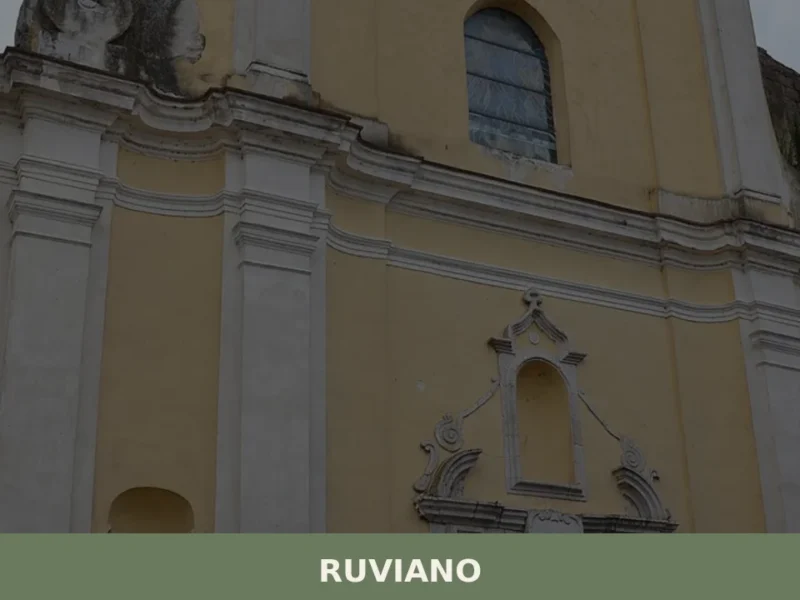
What to see in Ruviano, Italy: Explore this comune at 80 m altitude, known for its patron feast and agricultural views. Discover Ruviano, Campania.



🏡 Know Aiello del Sabato better than we do?
If you’re a local or have been there, your knowledge matters: add what’s missing or fix a detail on this page.