


Ariccia
 Hills
Hills
What to see in Ariccia: from Palazzo Chigi to the monumental bridge, discover the 5 top attractions. Plan your visit with this complete travel guide.
Discover Ariccia
The bridge at the northern entrance to Ariccia carries the Via Appia over a deep wooded valley — the same valley that Pope Pius IX ordered bridged in 1854 to ease access from Rome.
Retreating German forces destroyed that structure during World War II; it was rebuilt in 1947, collapsed suddenly in 1967, and rebuilt again.
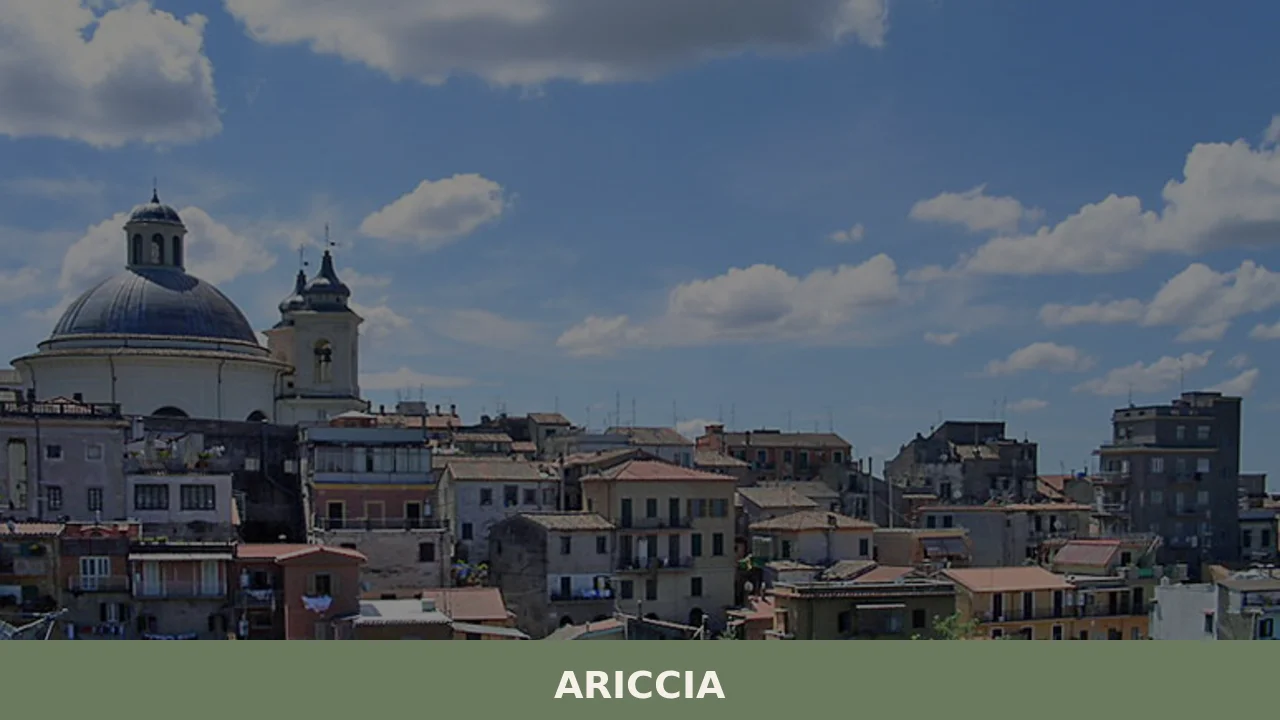
What greets visitors on the far side is an unbroken Baroque square designed by Gian Lorenzo Bernini, with the circular drum of Santa Maria Assunta rising opposite the restored facade of Palazzo Savelli Chigi.
Deciding what to see in Ariccia is straightforward because the town’s core monuments stand within a few hundred metres of one another, yet the history behind them spans nearly three thousand years.
With 18,199 inhabitants and a position 25 km (16 mi) southeast of Rome inside the Parco Regionale dei Castelli Romani, Ariccia, Lazio, Italy offers a combination of Roman archaeology, seventeenth-century architecture, and one of the most documented food traditions in the Alban Hills.
Visitors to Ariccia find Bernini’s piazza, a film-location palace, a venerated sanctuary 2 km (1.2 mi) outside the centre, and the roasting pits where whole pigs turn over wild fennel and herbs.
History of Ariccia
Archaeological finds confirm a settlement on this volcanic spur as early as the eighth and ninth centuries BC, making Ariccia one of the oldest cities of ancient Latium. Ancient legend connects the town’s Latin name, Aricia, to Aricia, wife of Hippolytus — the Roman forest deity associated with the sacred groves nearby.
A vague reference by Gaius Julius Solinus attributes the original foundation to Archilocus Siculus, a figure of the Sicels, though the ruins themselves are the more concrete evidence.
From the late sixth century BC until 338 BC the city stood as the central and leading member of the Latin League, a position that made it a direct political rival of early Republican Rome.
In 508 BC, Lars Porsena, king of Clusium and at the time one of Etruria’s most powerful rulers, dispatched part of his army under his son Aruns to attack Aricia after concluding a separate peace with Rome.
The Aricians called on the Latin League and on the Greek city of Cumae for reinforcements. According to Livy, the Cumaeans allowed the Clusian troops to advance, then struck from the rear, destroying the invading force. In 495 BC the site saw further conflict, this time between Aricia and the Aurunci, a battle Rome won.
The Romans finally absorbed Aricia definitively in 338 BC under Caius Maenius, granting it the status of civitas sine suffragio — a city without voting rights in Roman assemblies — before full civic rights followed.
The town then became the first major posting station on the Via Appia heading south from Rome, a logistical function that generated consistent commercial activity. Martial wrote of its leeks; Pliny described a distinct variety of Arician cabbages. Augustus himself had family ties to Aricia through his maternal line, a connection his enemies, including Mark Antony, weaponised as an insult.
Because of its location near the coast and its accumulated wealth, Ariccia was sacked repeatedly after the fall of the Western Roman Empire — by Goths, Vandals, and finally by the Saracens, who razed it in 827. Survivors rebuilt on the ancient acropolis. By 990 the Castrum Ariciensis belonged to Guido, count of Tusculum, and the site passed between the Papal States and the Earls of Tusculum over the following centuries before Pope Honorius III of the Savelli family reclaimed it for the Roman Church in 1223.
Around 1400 the territory came under the Monastery of Sant’Anastasio alle Tre Fontane, then briefly reverted to the Savelli before being sold to the Abbey of Grottaferrata.
Pope Sixtus IV returned it to the Savelli, who drained the volcanic Lake of Vallericcia to the west.
The decisive transformation came in 1661 when the Chigi family acquired the town. The Chigi Pope Alexander VII spent long periods in Ariccia and commissioned Gian Lorenzo Bernini to redesign the central square, the church, and the city gates — works that define the town’s appearance to this day. Among those who stayed at the Locanda Martorelli, the hotel facing the palace on the Piazza di Corte, were J.M.W. Turner, Corot, Henrik Ibsen, Gogol, and Hans Christian Andersen, all pausing between Rome and Naples during the era of the Grand Tour.
Ibsen completed his verse play Brand here in 1865.
What to see in Ariccia, Lazio: top attractions
Palazzo Savelli Chigi
The palace occupies the entire southern side of Bernini’s square, its long pale facade punctuated by a regular sequence of windows that open onto the wooded Parco Chigi below. Built by Prince Augusto Chigi in 1740 on the foundations of an earlier Savelli structure, its perfectly restored rooms served as the primary location for Luchino Visconti’s film The Leopard and for numerous other historical productions.
The building also houses the Chigi family archives and today hosts temporary exhibitions and public concerts.
Auburn University operates its Joseph S. Bruno Auburn Abroad in Italy programme here year-round, which means the palace functions as a working academic campus as well as a cultural venue. Visit on a weekday morning to walk through the exhibition rooms before the scheduled events begin.
Santa Maria Assunta
Bernini’s church stands directly across the square from the palace, its circular drum — modelled on his earlier work restoring the Pantheon in Rome — rising above a porticoed entrance.
Construction dates to the 1660s, when Alexander VII commissioned Bernini to give Ariccia a monumental ecclesiastical counterpart to the palace. Inside, the apse carries a notable fresco attributed to Borgognone. The geometric rigour of the exterior, where the drum sits on a low cylindrical drum visible even from the road below, is best read by standing at the far end of the piazza and looking across the full width of the space Bernini designed.
The church remains in active liturgical use.
The Bridge and the Parco Chigi
The viaduct at the northern entry to Ariccia spans the wooded valley that once separated the town from Rome along the Via Appia.
First ordered by Pope Pius IX in 1854 and rebuilt twice — after World War II in 1947 and again after its sudden collapse in 1967 — the bridge now carries the modern road at a height that makes the extent of the Parco Chigi visible below.
The park, a dense mixed woodland that once prevented direct road access to the town, covers the valley floor. Walking down into it from the bridge access points takes roughly twenty minutes and the canopy provides significant shade, which makes this route particularly practical between June and August, when temperatures in the Alban Hills regularly exceed 30°C (86°F).
Sanctuary of the Madonna di Galloro
Two kilometres (1.2 mi) outside the town centre along a tree-lined road, the Sanctuary of the Madonna di Galloro has a facade designed by Bernini — one of four documented interventions he made in Ariccia. The building serves as the terminus of a religious procession held each year on 8 December, known locally as the “Procession of the Lady,” in which a young woman is asked to lead the march from the town to the sanctuary.
The interior preserves votive offerings accumulated over centuries of pilgrimage.
For those arriving from Rome, the sanctuary is reachable on foot from the main piazza in under thirty minutes on a gently descending road, making it one of the more accessible sites on any visit to Ariccia.
Archaeological Area: Via Appia Antica and Temple Remains
Sections of the original Via Appia Antica survive in the territory surrounding Ariccia, along with the documented remains of the Villa of the Emperor Vitellius and ancient temple foundations on Monte Cavo and in the Lake Nemi basin.
The sanctuary of Diana Aricina — also called Diana Nemorensis — was located within the territory that then included Lake Nemi, presided over by the Rex Nemorensis, the so-called King of the Wood whose ritual role James George Frazer analysed in The Golden Bough. The association of this territory with the goddess Diana and the god Virbius made it one of the most significant religious sites in pre-Roman Latium.
Much of the sculpture excavated here has been redistributed to museum collections internationally, meaning that statues of Augustus or Diana labelled “Ariccia” can be found in institutions well outside Lazio.
The archaeological surface remains themselves are visible in and around the Nemi basin, roughly 5 km (3.1 mi) from the town centre.
Local food and typical products of Ariccia
Ariccia sits in the Alban Hills, a volcanic upland that has supplied Rome’s markets with wine, vegetables, and pork for at least two millennia. Martial recorded the quality of Arician leeks in verse; Pliny singled out a distinct variety of Arician cabbages. The town’s elevation and its proximity to Rome — close enough for a day’s cart journey but far enough for a fresher climate — made it a natural provisioning stop on the Via Appia, a function that shaped its food economy from the Republican era onward.
That logistical role never entirely disappeared; today the town draws visitors specifically for its pork tradition in volumes that the local municipality actively promotes.
The central product is porchetta di Ariccia, a whole pig slow-roasted with wild fennel, rosemary, garlic, and black pepper inside a wood-fired oven.
The technique requires the animal to be deboned before roasting, the cavity filled with the herb mixture, then rolled and trussed before several hours in the oven. The result is a crust of crackling over lean white meat with a pronounced fennel and garlic note.
It is sliced to order and served in bread — typically a round rosetta or a length of filone — at the numerous porchettari, specialised pork shops, that line the streets around the main square.
The porchetta of Ariccia has been known since historical times as the town’s defining food product, and the local wine tradition, also documented since Roman times, accompanies it in the form of white Castelli Romani wines drawn from the volcanic soils of the surrounding hills.
No EU protected designation (PDO or PGI) appears in the available data specifically for Ariccia’s porchetta, though porchetta as a broader product category holds IGP (Indicazione Geografica Protetta) status in parts of central Italy.
The Ariccia version is documented and promoted through municipal and regional channels as a local speciality.
For visitors wanting to try it outside the immediate town centre, the product circulates at markets across the Castelli Romani, including in towns such as Castelnuovo di Farfa, where traditional food markets draw producers from across Lazio.
The main local food event tied to porchetta takes place in late summer, typically in August or September, when the surrounding Castelli Romani area hosts a series of sagre — traditional food festivals centred on a single local product.
The Ariccia porchetta festival draws visitors from Rome and the wider metropolitan area over a weekend of open-air tastings, live music, and street vendors. Exact annual dates shift year to year; checking the municipality’s official calendar before travelling is advisable.
Festivals, events and traditions of Ariccia
The most consistently documented annual event is the “Procession of the Lady,” held on 8 December each year, in which a young woman is chosen to lead a procession from the town centre to the Sanctuary of the Madonna di Galloro, 2 km (1.2 mi) outside the walls.
The procession follows a route with documented continuity over multiple generations and concludes with a religious ceremony at the sanctuary. The date corresponds to the Catholic feast of the Immaculate Conception, a public holiday throughout Italy, which means the road between the town and the sanctuary sees significantly higher foot traffic than on ordinary days.
Ariccia also has a documented tradition of hosting spiritual retreats of national significance.
In February 2015, the Roman Curia held its yearly Lenten spiritual exercises at the Casa Divin Maestro in Ariccia, running from 16:00 on the First Sunday of Lent, 22 February, to the morning of Friday, 27 February.
The 2015 retreat was led by Carmelite Father Bruno Secondin, on the theme drawn from the readings of the Prophet Elijah.
During the retreat period, all papal audiences were suspended. This type of gathering has recurred at Ariccia over many years, reflecting the town’s function as a place of withdrawal from Rome, a role Horace noted in his Satires when he wrote of being welcomed at a reasonable inn in Aricia after escaping the capital.
When to visit Ariccia, Italy and how to get there
The Alban Hills position Ariccia at an elevation that keeps summer temperatures several degrees lower than Rome. The town sits within the , where the mixed woodland moderates heat and provides walkable green cover even in July and August.
That said, late spring — April through early June — and early autumn — September and October — offer the most consistent conditions for moving between outdoor archaeological sites and the town’s interior monuments without the pressure of summer crowds, which increase sharply on weekends given the town’s proximity to Rome.
Winter visits work well for the architecture and the food, though the sanctuary procession on 8 December draws large numbers and advance planning is useful for that specific date.
Ariccia is 25 km (16 mi) southeast of Rome, making it a practical day trip from the capital. By car, take the Via Appia Nuova (SS7) from Rome directly into the Castelli Romani, exiting toward Ariccia after passing through Albano Laziale; the drive from central Rome takes approximately 40 minutes outside peak traffic hours.
The nearest train station is in Albano Laziale, approximately 2 km (1.2 mi) from Ariccia’s main piazza, with direct services to Roma Termini operated by Trenitalia. COTRAL regional buses connect Ariccia directly to Rome and to surrounding Castelli Romani towns on regular schedules throughout the day.
For those arriving by air, Rome Fiumicino (Leonardo da Vinci International Airport) is approximately 55 km (34 mi) from Ariccia; Ciampino Airport is approximately 20 km (12.4 mi) away and is the closer option.
From either airport, the most direct route combines a train to Rome Termini with an onward train to Albano Laziale. International visitors should note that English is not widely spoken in smaller shops and the porchetta counters around the market area; carrying euros in cash is practical, as card payment is not universal at street-level food vendors.
Travellers based in Rome planning what to see in Ariccia as part of a wider Lazio itinerary can reasonably combine the visit with other Castelli Romani towns.
The territory borders Albano Laziale, Castel Gandolfo, Genzano di Roma, and Marino Laziale, all reachable within 15 km (9.3 mi).
Those extending their Lazio circuit further north may consider a stop at Celleno, a volcanic-plateau village in northern Lazio that shares the region’s pattern of hilltop settlement and ancient origins, or the smaller comune of Ascrea, set in the Rieti hills and accessible as a further detour for those with a rental car.
Closer to the capital, Frosinone anchors the southern Lazio plain and offers a different geographical perspective on the region for visitors building a multi-day Lazio route beyond the Castelli Romani.
Understanding what to see in Ariccia is easier once the geography is fixed: the monuments are concentrated in a compact central area served by the COTRAL bus network, the food is available daily at street level, and the day-trip logistics from Rome require no advance booking beyond checking the Trenitalia timetable for Albano Laziale departures.
Frequently asked questions about Ariccia
What is the best time to visit Ariccia?
Spring (April–May) and autumn (September–October) offer the most comfortable temperatures at 412 m altitude, with mild days ideal for walking between monuments and exploring the Parco Chigi. Summer is viable — the wooded valley below the bridge provides shade even when temperatures exceed 30°C — but July and August can be crowded with Romans escaping the city heat. Winter visits are quieter; the feast of patron saint Sant'Apollonia falls on 9 February, adding a local event to an off-season trip. Avoid driving on summer Sunday afternoons, when the Via Appia Nuova backs up heavily.
What are the historical origins of Ariccia?
Archaeological evidence places settlement on this volcanic spur as early as the eighth–ninth centuries BC, making Ariccia one of the oldest cities of ancient Latium. From the late sixth century until 338 BC it led the Latin League as its most prominent member, rivalling early Republican Rome. Absorbed by Rome under Caius Maenius in 338 BC with civitas sine suffragio status, it became the first major stopping post on the Via Appia. Sacked by Goths, Vandals, and Saracens (827 AD), it passed between the Papal States and local counts before the Chigi family purchased it in 1661, commissioning Bernini to redesign the town centre.
What to see in Ariccia? Main monuments and landmarks
The compact Baroque core is walkable in a morning. Bernini's Piazza di Corte anchors everything: Palazzo Savelli Chigi occupies the southern side (home to exhibitions, Auburn University's Italy programme, and Visconti film locations), while the circular Santa Maria Assunta church faces it directly across the square. Two kilometres south, the Sanctuary of the Madonna di Galloro has a Bernini-designed facade and centuries of votive offerings inside. The rebuilt viaduct over the wooded valley and the Parco Chigi below complete the visit. Sections of the original Via Appia Antica survive in the surrounding territory.
What are the main natural or scenic attractions of Ariccia?
Ariccia sits within the Parco Regionale dei Castelli Romani, a protected volcanic upland 25 km southeast of Rome. The Parco Chigi — a dense mixed woodland filling the valley below the famous viaduct — is accessible on foot from the bridge in roughly twenty minutes and offers significant shade in summer. The broader Castelli Romani park connects to Lake Nemi (approximately 5 km away), where the basin of the ancient sanctuary of Diana Nemorensis is visible. The volcanic landscape, beech and chestnut woods, and panoramic hillside position make the area a practical green escape from Rome.
Where to take the best photos in Ariccia?
The most photographed view is from the northern approach road: the multi-arched viaduct framed by woodland, best captured in early morning light before traffic builds. From the bridge itself, looking down into the Parco Chigi canopy gives a striking vertical shot. Inside town, standing at the far end of Piazza di Corte captures Bernini's full spatial composition — the circular Santa Maria Assunta drum aligned with the palace facade — in a single frame. The tree-lined road descending toward the Sanctuary of the Madonna di Galloro also rewards photographers, especially in autumn colour.
Are there museums, churches or historic buildings to visit in Ariccia?
Palazzo Savelli Chigi hosts temporary exhibitions and public concerts in its restored period rooms; Auburn University's academic programme runs year-round from the same building. The church of Santa Maria Assunta — Bernini's circular drum modelled on the Pantheon — remains open for liturgical use and can be visited. The Sanctuary of the Madonna di Galloro, 2 km from the centre, preserves an interior rich with votive offerings from centuries of pilgrimage. For precise opening hours and exhibition schedules, check the Comune di Ariccia website or the Parco Regionale dei Castelli Romani visitor information before travelling.
What can you do in Ariccia? Activities and experiences
The primary activities are architectural sightseeing, food and wine, and woodland walking. Bernini's monuments are all within a few hundred metres of each other. The Parco Chigi offers shaded trails accessible from the bridge. Ariccia's most famous activity is the porchetta lunch: the town's roasting tradition is documented back centuries and dozens of trattorias and market stalls serve the Castelli Romani's signature dish. A 30-minute downhill walk leads to the Sanctuary of the Madonna di Galloro. The annual 8 December procession to the sanctuary is a documented local event worth timing a visit around.
Who is Ariccia suitable for? Families, couples, hikers, solo travelers?
Ariccia suits a wide range of visitors. Couples and culture travellers appreciate the intact Baroque piazza, the Grand Tour atmosphere, and the palace exhibitions. Families find the Parco Chigi woodland walks manageable for children, and the porchetta tradition makes lunch easy and affordable. History enthusiasts and archaeology fans will value the Via Appia Antica remains and the connections to the sanctuary of Diana Nemorensis. Solo travellers can cover the entire centre on foot in half a day and combine Ariccia with neighbouring Castelli Romani towns — Nemi, Albano Laziale, Castel Gandolfo — in a single day trip from Rome.
What to eat in Ariccia? Local products and specialties
Ariccia is the recognised home of porchetta di Ariccia IGP — whole pig slow-roasted with wild fennel, garlic, rosemary, and black pepper, then sliced for sandwiches or served at table. The IGP designation protects this specific preparation. The broader Castelli Romani area produces DOC white wines (Colli Albani, Castelli Romani DOC) that accompany the pork. Historically, Pliny documented a distinct variety of Arician cabbages and Martial praised the local leeks — evidence of a market-garden tradition tied to the volcanic soil that continues today in local produce sold at weekly markets.
Nearby Villages near Ariccia

In Lazio More villages to discover
Poggio Bustone
 Mountain
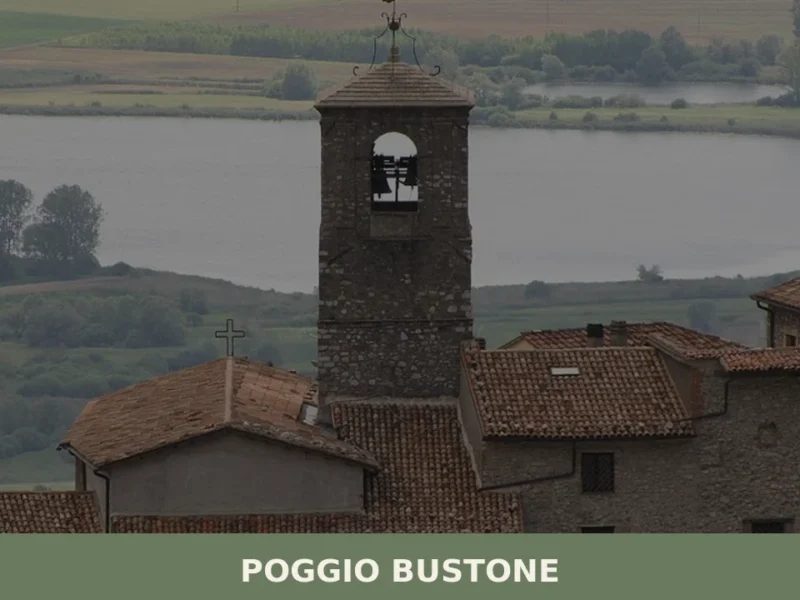
What to see in Poggio Bustone, Italy: a village at 751 m with Franciscan chapels, a Gothic arch, and Lucio Battisti's birthplace. Discover the complete guide.
Amaseno
Hills
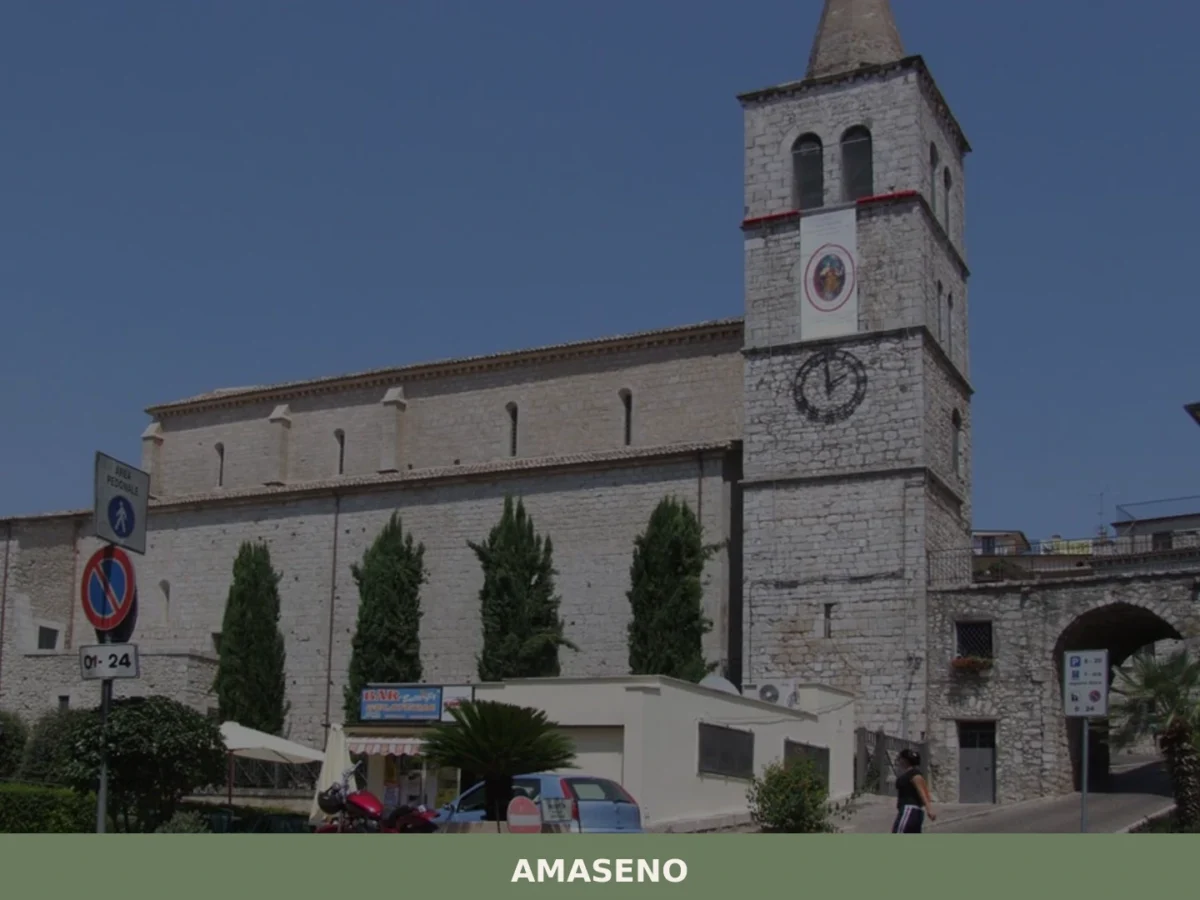
What to see in Amaseno: visit the 5 top attractions in this Lazio village, from the Madonna Sanctuary to Palazzo Caetani. Discover the complete guide.
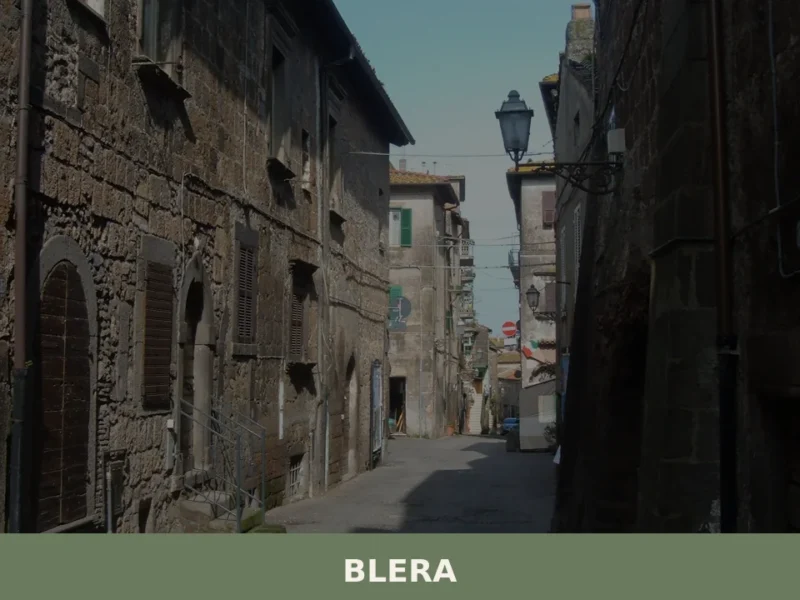
Blera
Hills
What to see in Blera, Lazio, Italy: Etruscan rock tombs, Via Clodia bridges, and a town at 270 m altitude. Explore history, food, and travel tips. Discover now.
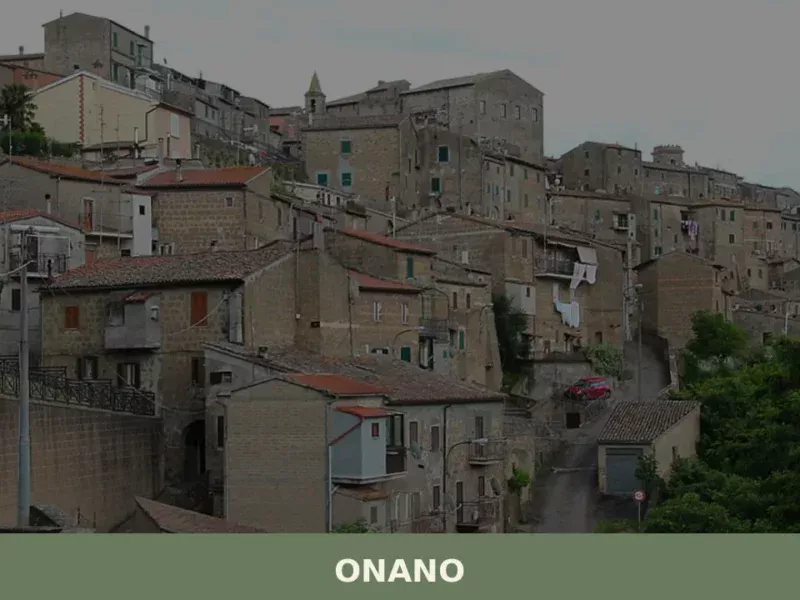
Onano
Hills
Onano has 898 inhabitants and sits at 485 metres above sea level on the southern slopes of Lake Bolsena, in the province of Viterbo. The municipal territory, stretching across lentil fields and oak groves, borders both Umbria and Tuscany — a point of triple regional convergence that has shaped the town’s economic and linguistic history. […]
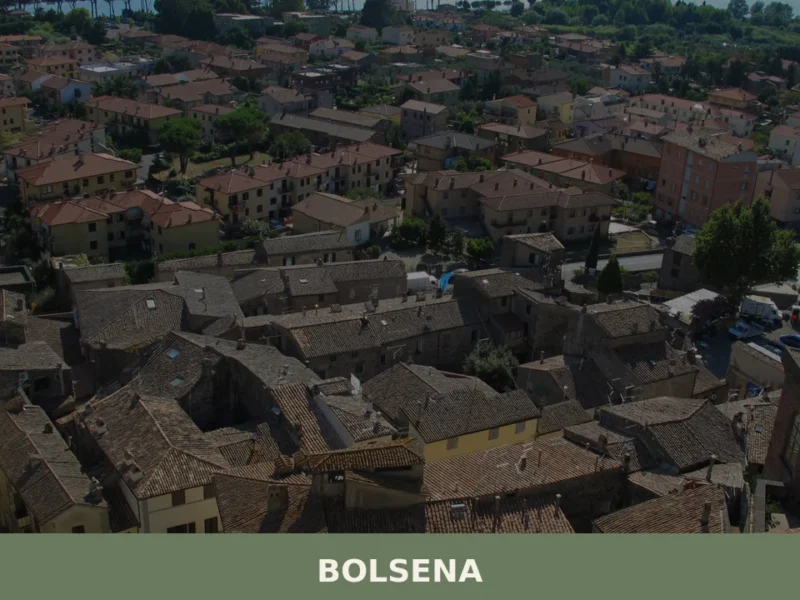
Bolsena
Hills
 Lake
Lake
What to see in Bolsena, Lazio, Italy: the 1263 Eucharistic Miracle, Basilica of Santa Cristina, Lake Bolsena at 350 m. Discover history, food and how to get there.
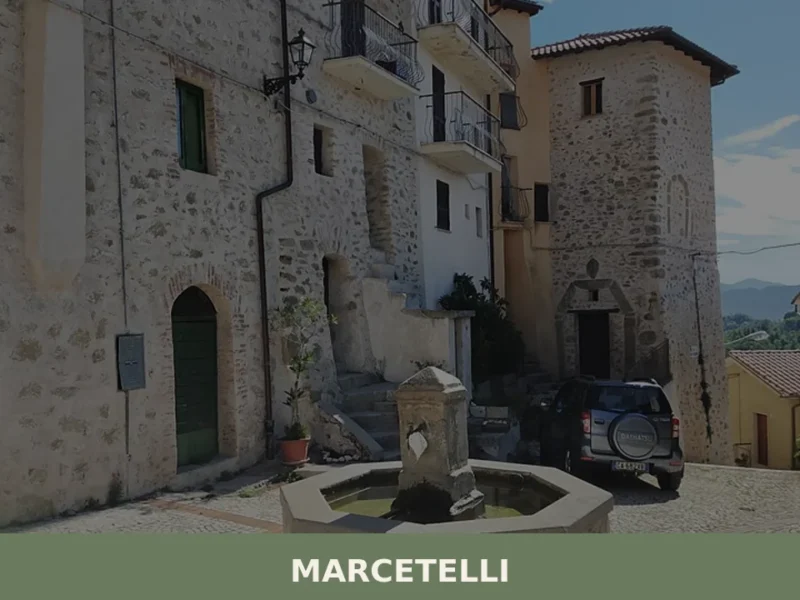
Marcetelli
Lake
Mountain
What to see in Marcetelli, a village at 930m in Rieti province with 82 residents. Explore Lago del Salto, the Church of San Venanzio and PAT-certified Guanciale amatriciano. Plan your visit now.

Ausonia
Hills
What to see in Ausonia, Lazio, Italy: discover a 15th-century sanctuary, an 11th-century castle, and medieval frescoes. Explore the full travel guide now.
Tessennano
Hills
In the heart of Viterbo’s Tuscia region, 302 meters above sea level, lies Tessennano, a settlement with 284 residents. Its hillside location, distant from major thoroughfares, has defined its profile through the centuries. For those wondering what to see in Tessennano, the village presents a historical layering perceptible in its architecture. The settlement develops around […]
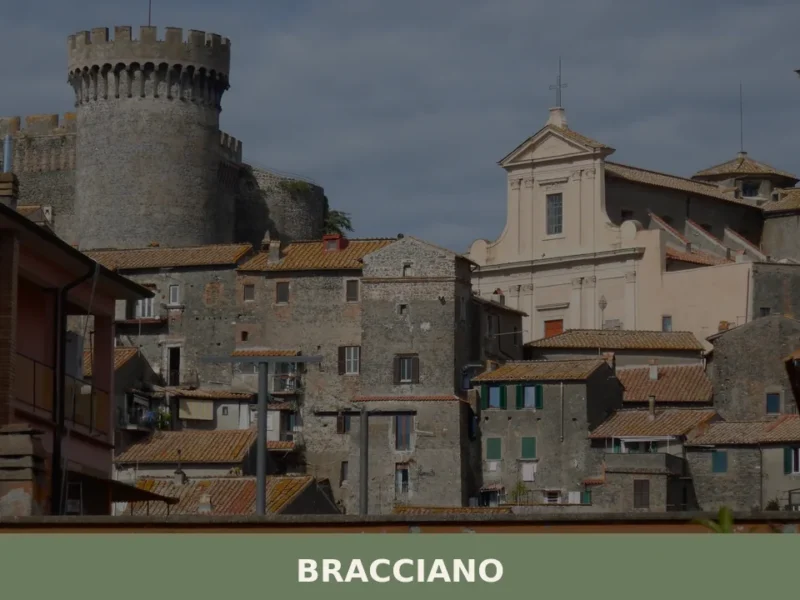
Bracciano
Hills
Lake
What to see in Bracciano, Italy: Discover its medieval castle and volcanic lake. Located 30 km (19 mi) from Rome, explore this Lazio village for a memorable day trip.
Gradoli
Hills
Lake
What to see in Gradoli, Italy: Discover the historic Farnese Palace and the Museum of Garments in this village at 470 m. Explore its medieval past and unique cultural events.
🏡 Know Ariccia better than we do?
If you’re a local or have been there, your knowledge matters: add what’s missing or fix a detail on this page.