


Barga
 Hills
Hills
what to see a Barga, village toscano a 410 m s.l.m.: Duomo di San Cristoforo, Teatro dei Differenti, cuisine della Garfagnana. guide pratica con consigli su quando andare e how to get there.
Discover Barga
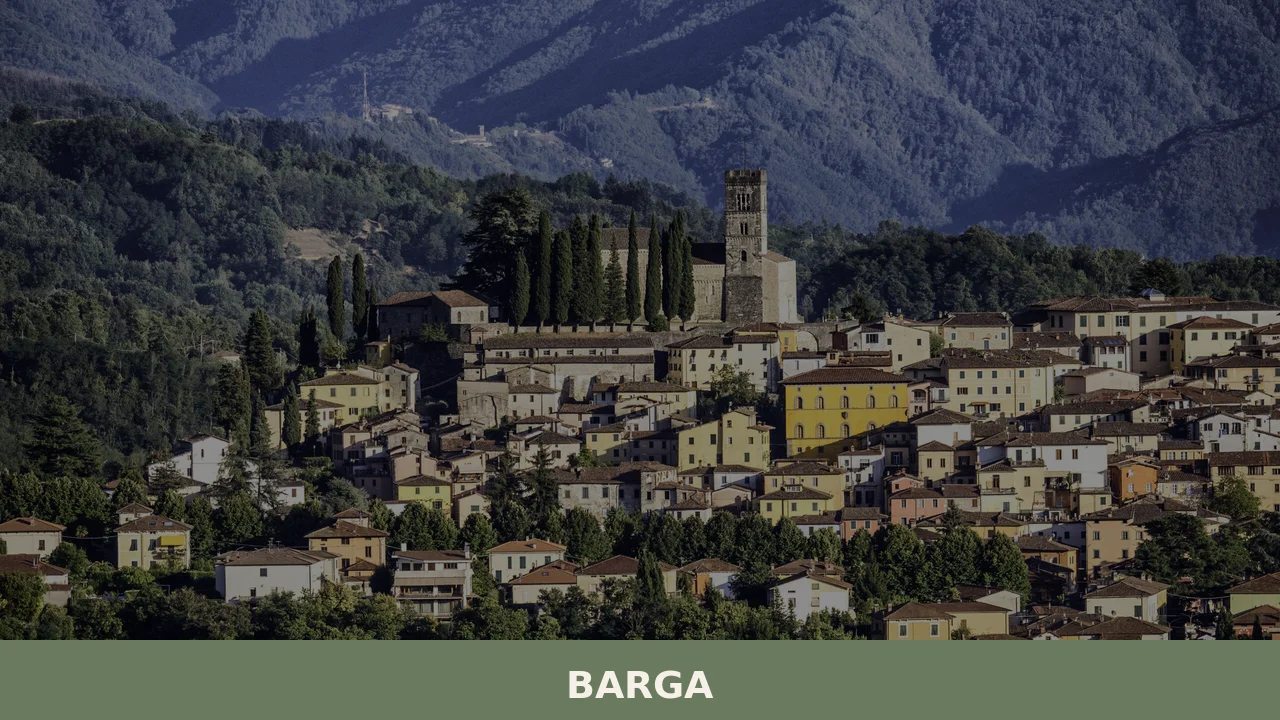
Four hundred and ten metres above sea level, a ridge that separates the Serchio valley from the deeper Garfagnana, and an urban skyline dominated by the Cathedral of San Cristoforo, its façade of pale alberese stone visible from the opposite slopes of the valley.
Barga has 10,146 inhabitants spread between the compact historic centre and the hamlets scattered across the surrounding hillsides.
It lies in the province of Lucca, and the village’s geographical position places it on a spur commanding the valley floor without quite belonging to it: the plain lies below, but the village looks elsewhere, toward the chestnut woods and the ridges of the Apuan Alps.
What to see in Barga is a question that finds a concrete answer already within the perimeter of the medieval walls: the Romanesque cathedral, the Teatro dei Differenti, the Palazzo Pretorio with its tower and arcaded loggia, the Civic Museum, and the streets of the historic centre that climb in steps toward the highest point of the hill.
Visitors to Barga find a well-preserved architectural ensemble, a gastronomic tradition rooted in the Garfagnana, and a calendar of events revolving around the feast of San Cristoforo, the village’s patron saint, celebrated on 25 July. All the main attractions can be reached on foot in under twenty minutes.
History and Origins of Barga
The earliest documentary records of Barga date back to the eighth century, when the village appears in the registers of the Diocese of Lucca as an already established settlement.
The name most likely derives from medieval Latin, though the precise etymology remains debated among scholars: some hypotheses link it to Lombard terms connected to the shape of the terrain, others to pre-Roman roots.
What is certain is that by the tenth century Barga was already a centre of considerable administrative importance in the Garfagnana area, with a community organised around the parish church that preceded the current cathedral.
In 1341, Barga came under Florentine control, following a lengthy period during which the village had shifted between the influence of Lucca, the Visconti, and various local lords.
Florentine rule lasted until the Unification of Italy and left significant traces in the village’s urban layout and institutions.
The Palazzo Pretorio, with its loggia and the Medici coat of arms, is one of the most legible signs of that political era.
Florence treated Barga with a degree of consideration relative to other centres in the Garfagnana, granting it statutes and privileges that guaranteed a measure of administrative autonomy for centuries.
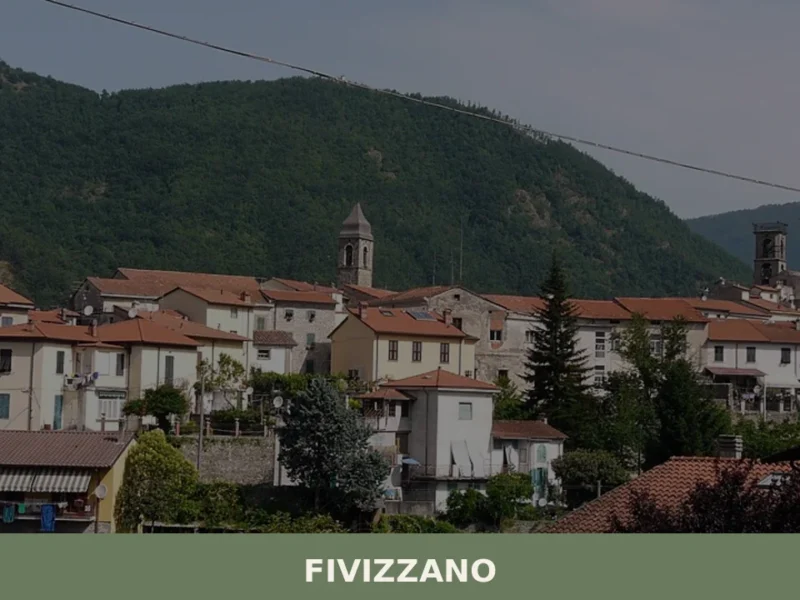
Those exploring villages in this area may compare this history with that of Fivizzano, which instead experienced a long period of Este rule before entering the Savoy orbit.
Between the nineteenth century and the early twentieth century, Barga experienced an intense wave of emigration to Scotland, particularly to Glasgow and the industrial towns of the Clyde.
The community of Barghigiani emigrants in Scotland grew so numerous and well established that it created lasting cultural ties between the two places, and even today the relationship between Barga and Scotland forms an integral part of local identity.
Many families returned with savings that contributed to the local economy, and this transalpine circulation left traces in the local vocabulary, in family surnames, and in certain customs still recognisable today.
The twentieth century also brought to Barga the marks of two world wars, but the medieval historic centre remained substantially intact in its structure.
What to see in Barga: main attractions
Cathedral of San Cristoforo
The light alberese stone façade of the Cathedral of San Cristoforo is the visual landmark of the entire village.
Built between the 10th and 14th centuries on a pre-existing early Christian structure, the Cathedral occupies the top of the hill and overlooks a paved square from which the view extends across the entire Serchio valley.
The interior preserves one of the most significant works of medieval Garfagnana art: the large carved marble pulpit, dateable to the 12th–13th century, with figurative panels depicting Gospel scenes with an unusually sculptural quality for the period.
On the counter-façade stands a large wooden statue of Saint Christopher, patron of the village, of considerable size, probably dating back to the 15th century.
The bell tower, attached to the south side of the church, rises more than thirty metres and marks the hours with bronze bells that are still in working order. It is advisable to climb up to the square in the morning hours, when the light strikes the façade directly and the colours of the stone appear at their sharpest.
Teatro dei Differenti
The Teatro dei Differenti is one of the best-preserved historic theatres in northern Tuscany, with a traditional floor plan and stacked painted wooden boxes dating back to the original 18th-century structure.
Founded in 1688 by the eponymous Barghigian cultural academy, the theatre was rebuilt and enlarged during the 18th century until it took on its current form, with a capacity of around three hundred seats.
The interior decoration retains the original painted colours, with a frescoed ceiling covering the entire vault of the hall.
The theatre is still active: it hosts drama seasons, opera performances and the Opera Barga festival, which brings high-quality lyric productions to a stage with exceptional acoustics given the size of the hall.
For timetables, tickets and the current season’s programme, it is best to check directly on the official website of the Municipality of Barga, where up-to-date information is published.
Palazzo Pretorio
The Palazzo Pretorio stands at the central point of the old village, overlooking the main square with a three-arched porticoed loggia that served as the seat of public justice during the Middle Ages.
The current building dates largely from the 14th and 15th centuries, a period during which Barga was already under Florentine control.
Numerous stone and glazed terracotta coats of arms are embedded in the façade, including those of the Florentine podestas who took turns administering the village: an open-air heraldic archive that makes it possible to read, almost in full, the succession of Medici governors.
The tower rising above the palace is one of the most recognisable elements of Barga’s urban skyline, with a clock facing the square.
Inside, the Civic Museum is housed, collecting archaeological finds, historical documents and everyday objects from the Garfagnana territory.
Civic Museum of Barga
The Civic Museum, housed within the rooms of the Palazzo Pretorio, organises its collections along a route spanning a chronological arc from prehistory to the modern age.
The most significant sections concern the medieval period and the material recovered from excavations carried out in the municipal territory, with ceramics, coins and tools that document the daily life of the Barghigian community before and after Florentine rule.
One section is dedicated to emigration to Scotland, with photographs, letters and personal objects that reconstruct the history of Barghigian families in Glasgow and the cities of western Scotland between the late 19th and early 20th centuries.
This part of the museum is particularly useful for understanding the cultural distinctiveness of Barga within the broader context of Tuscan villages: few centres of this size have such a precisely documented connection with a community of emigrants abroad.
Opening hours are subject to seasonal variations: check the municipality’s website before your visit.
The walls and the medieval walkway
Barga’s perimeter wall preserves significant stretches of medieval fortifications, with several towers still intact that allow the original defensive structure of the village to be read.
The external walkway along the walls, which can be followed on foot for almost the entire western side of the hill, offers a direct view over the Serchio valley at around 410 metres above sea level and, on clear days, over the peaks of the Apuan Alps to the west and the Tuscan-Emilian Apennines to the east.
The walls were built and reinforced in multiple phases between the 12th and 16th centuries, with documented interventions during the period of Florentine rule.
Some sections display different construction techniques, with courses of local stone alternating with more recent restoration areas, easily distinguishable by the colour of the mortar. The external path is accessible without restrictions dur
Traditional cuisine and products of Barga
The cuisine of Barga belongs to the gastronomic tradition of the Garfagnana, a historically poor geographical area where the domestic economy was long based on minor cereals, legumes, chestnuts and pigs raised semi-wild in the woods.
The relative isolation of the area, cut off from the main communication routes of Tuscany until the 19th century, helped preserve ancient culinary practices and keep alive ingredients that had elsewhere been abandoned with agricultural modernisation.
Spelt, mountain beans and chestnut flour are the three pillars around which local gastronomy still revolves today.
Among the dishes most deeply rooted in Barga’s tradition, spelt soup holds a central place: the spelt is cooked for a long time with dried borlotti beans, garlic, rosemary and pork lard, in a ratio that varies from family to family but always involves prolonged cooking over a low flame.
Spelt polenta, denser and darker than its maize counterpart, is served with wild boar sauce or with aged local cheeses.
Biroldo is a traditional Garfagnana cured meat prepared from the less noble parts of the pig — head, rind, blood — flavoured with spices and cooked in broth: the result is a compact, strongly flavoured salume, eaten sliced on unsalted bread, the so-called Tuscan pane sciocco, typical of the entire region.
Torta di erbi, a savoury tart filled with wild field herbs, eggs and fresh cheese, is another dish of peasant origin that survives in the restaurants and trattorias of the historic centre.
As regards certified products, the available database does not record any DOP, IGP or PAT certifications specifically attributed to the municipal territory of Barga.
The Garfagnana as a whole is, however, a recognised area for the production of Farro della Garfagnana, protected by IGP status, and of Fagiolo di Sorana IGP, whose production zone extends into the neighbouring valleys.
To purchase local products directly from producers, the village’s weekly market and the food shops of the historic centre remain the most reliable points of reference.
Festivals linked to gastronomic tradition are concentrated in the summer and autumn months: September and October are the periods in which the hamlets of the municipality organise celebrations dedicated to chestnuts and spelt, with tastings and direct sales.
The chestnut season, in particular, animates the woods around Barga between October and November, when the harvest still involves some local families using traditional methods.
Festivals, events and traditions of Barga
The liturgical and civic calendar of Barga revolves around the figure of Saint Christopher, patron of the village, whose feast is celebrated on 25 July.
The occasion includes a solemn mass in the Duomo, followed by a procession through the streets of the historic centre with the wooden statue of the saint carried on shoulders.
Tradition has it that the feast is accompanied by music, evening fireworks and moments of public conviviality in the main square.
The date falls in the height of summer, when the village is also frequented by tourists, which gives the celebration both a community-oriented and an open character.
On the cultural front, Barga is known for the Opera Barga festival, a summer lyric event that brings internationally acclaimed opera productions to the Teatro dei Differenti.
The festival has a documented history dating back to the 1960s and has helped make Barga recognisable on the circuit of Tuscan music festivals.
In addition to opera, the village hosts jazz, theatre and literary events during the summer months, with performances that use the spaces of the historic centre as a natural stage.
The tradition of ties with Scotland is also reflected in a number of cultural initiatives dedicated to Anglo-Saxon music and literature, which find in Barga a historically receptive audience for well-defined historical reasons.
When to Visit Barga and How to Get There
The best time to visit Barga is late spring, between May and June, and early autumn, between September and October.
During these months the climate is mild, the chestnut woods provide a particularly vivid chromatic backdrop, and the village attracts visitors without the crowding typical of July and August. Summer remains a valid choice for those who wish to coincide with the opera festival or the patron saint feast on 25 July.
Winter is quiet and the historic centre empties of tourists, allowing for a more peaceful visit, although some services and facilities reduce their opening hours.
Those arriving by car from the Tuscan coast or from Lucca travel along the SS12 della Garfagnana, following the Serchio valley: from Lucca the route is approximately 40 km, with a journey time of about 50 minutes.
From Florence, you can take the A11 motorway to Lucca and then continue along the SS12.
The nearest railway station to the village is Barga-Gallicano, on the Lucca-Aulla line, served by regional trains: from the station to the historic centre there are approximately 3 km, covered by car or local bus service, the timetable of which is worth checking before departure.
The nearest airport is Pisa, about 80 km away, reachable in approximately one hour and twenty minutes by car.
Those coming from northern Italy may also consider Bologna airport, about 140 km away via motorway.
| Departure point | Distance | Estimated time |
|---|---|---|
| Lucca | approximately 40 km | approximately 50 minutes |
| Pisa Airport | approximately 80 km | approximately 1 hour 20 minutes |
| Florence | approximately 100 km | approximately 1 hour 30 minutes |
| Bologna | approximately 140 km | approximately 1 hour 45 minutes |
Those exploring what to see in Barga can extend their journey northward along the Garfagnana branch of the Via Francigena, as far as Pontremoli, which shares with Barga its position in an Apennine valley floor and a clearly legible medieval historic centre.
In the opposite direction, towards the coast, Aulla represents a key road and historical junction for those travelling through Lunigiana, connecting the Garfagnana to the Tyrrhenian Sea.
Where to Stay in Barga
Barga’s accommodation offer includes a number of small establishments concentrated in the historic centre and the surrounding hamlets: bed and breakfasts, guesthouses and agriturismos in the vicinity of the village are the most common options.
The summer festival and cultural events make it advisable to book well in advance during July and August.
For an up-to-date overview of available facilities, the and the main online booking portals list verified options with real-time availability.
Frequently asked questions about Barga
What is the best time to visit Barga?
Late spring (May–June) and early autumn (September–October) offer mild temperatures, clear skies and uncrowded streets — ideal for walking the medieval centre and the valley viewpoints. Summer brings the most events: the feast of San Cristoforo on 25 July is the village's main celebration, with processions and festivities in the historic centre. July also coincides with Opera Barga at the Teatro dei Differenti. Winter is quiet but atmospheric, with chestnut-based festivals in the surrounding Garfagnana and the cathedral free of crowds.
What are the historical origins of Barga?
Barga appears in the registers of the Diocese of Lucca as early as the eighth century, making it one of the oldest documented settlements in the Garfagnana. By the tenth century it was already an administrative centre. After shifting between Lucca, the Visconti and local lords, Barga passed under Florentine control in 1341, a dominion that lasted until Italian Unification. Florence granted the village notable autonomy, visible today in the Palazzo Pretorio's Medici coats of arms. In the 19th–20th centuries, a major emigration wave connected Barga closely with Scotland, especially Glasgow.
What to see in Barga? Main monuments and landmarks
The Cathedral of San Cristoforo crowns the hilltop with its pale alberese stone façade and houses a remarkable 12th–13th century carved marble pulpit and a large 15th-century wooden statue of the patron saint. Below it, the Palazzo Pretorio offers an open-air heraldic archive of Florentine governors and contains the Civic Museum (check seasonal hours on the municipality's website). The Teatro dei Differenti (1688) is one of northern Tuscany's best-preserved historic theatres. The medieval walls with intact towers can be walked along the western side of the hill with panoramic valley views.
What are the main natural or scenic attractions of Barga?
Barga sits at 410 metres on a spur separating the Serchio valley from the Garfagnana, surrounded by chestnut woods and facing the Apuan Alps to the west and the Tuscan-Emilian Apennines to the east. The walkway along the medieval walls on the western side of the hill provides a documented panoramic route above the valley floor. The broader Garfagnana territory, accessible from Barga, includes the Orecchiella Nature Reserve and the Apuan Alps Regional Park, both offering marked CAI trails for hiking at varying levels of difficulty.
Where to take the best photos in Barga?
The square in front of the Cathedral of San Cristoforo is the prime vantage point: at 410 metres, it frames the entire Serchio valley and, on clear days, the Apuan Alps. The article specifically recommends morning light, when the pale alberese stone façade is at its sharpest. The external walkway along the western medieval walls offers a second elevated perspective over the valley. From the main square below, the Palazzo Pretorio's loggia and tower compose a classic medieval streetscape. The view from the opposite valley slopes, looking back at the cathedral skyline, is another well-known angle.
Are there museums, churches or historic buildings to visit in Barga?
The Civic Museum inside the Palazzo Pretorio covers prehistory to the modern era, with a notable section dedicated to Barghigian emigration to Scotland featuring photographs, letters and personal objects from Glasgow families. The Cathedral of San Cristoforo (10th–14th century) contains a sculptural Romanesque pulpit and bronze bells still in use. The Teatro dei Differenti (founded 1688) retains its original painted wooden boxes and frescoed ceiling and hosts an active theatre and opera season. Opening hours for the museum vary seasonally; verify current times on the official Municipality of Barga website before visiting.
What can you do in Barga? Activities and experiences
The compact historic centre can be explored entirely on foot in under twenty minutes, covering the cathedral, Palazzo Pretorio, theatre and medieval walls. The Teatro dei Differenti hosts drama, opera and the Opera Barga festival in summer — tickets and schedules are available on the municipality's website. The feast of San Cristoforo on 25 July offers a traditional village festival experience. Gastronomic tourism is well supported, with local restaurants serving Garfagnana specialities such as spelt soup and biroldo. The surrounding hills and chestnut woods provide walking routes connecting Barga to the broader Garfagnana valley landscape.
Who is Barga suitable for? Families, couples, hikers, solo travelers?
Barga suits a wide range of visitors. Couples and cultural travellers will find the intact medieval centre, Romanesque cathedral and historic theatre rewarding for a one- to two-day stay. Families with older children can explore the walls, the Civic Museum's emigration section and the hilltop square without significant accessibility challenges. Solo travellers interested in Italian hill-town heritage will appreciate the well-preserved urban fabric and manageable scale. Hikers use Barga as a base for the Garfagnana and Apuan Alps. The Scotland connection gives the village a distinctive cultural identity that appeals to those tracing Italian emigration history.
What to eat in Barga? Local products and specialties
Barga's cuisine belongs to the Garfagnana tradition, centred on spelt (farro della Garfagnana IGP), mountain beans and chestnut flour. Spelt soup — slow-cooked with dried borlotti beans, garlic, rosemary and pork lard — is the most rooted local dish. Spelt polenta is served with wild boar sauce or aged local cheeses. Biroldo is a traditional Garfagnana cured meat made with pork offcuts and spices, specific to this area. Chestnut flour appears in several preparations including necci (thin chestnut crêpes). These ingredients reflect centuries of upland agricultural self-sufficiency largely unchanged by modern food industrialisation.
Nearby Villages near Barga
 Mountain
In Tuscany More villages to discover
Tresana
 Plains
Standing at 112 metres above sea level, in the valley floor where the Osca stream flows into the River Magra, Tresana is a scattered municipality in the province of Massa and Carrara, made up of over thirty hamlets spread between the plain and the surrounding hills. With a population of 2,071, it is one of […]
Barberino Val d’Elsa
Hills
The 14th-century walls still enclose the historic centre of Barberino Val d’Elsa within an almost intact perimeter, with two town gates that filter access to the village just as they did six centuries ago. In this article History and origins of Barberino Val d’Elsa What to see in Barberino Val d’Elsa: main attractions Traditional Cuisine […]
Siena
Hills
What to see in Siena: UNESCO centre at 322 m, population 52,883. Explore Piazza del Campo, the Cathedral, the Palio, and local foods like panforte and pici. Plan your visit.

Vicchio
Hills
A Florentine village of 8,000 souls in the Mugello Valley, Vicchio gave the world two painters who transformed Italian art. Medieval towers, sacred art museums and Etruscan archaeology define its landscape.
Fosdinovo
Hills
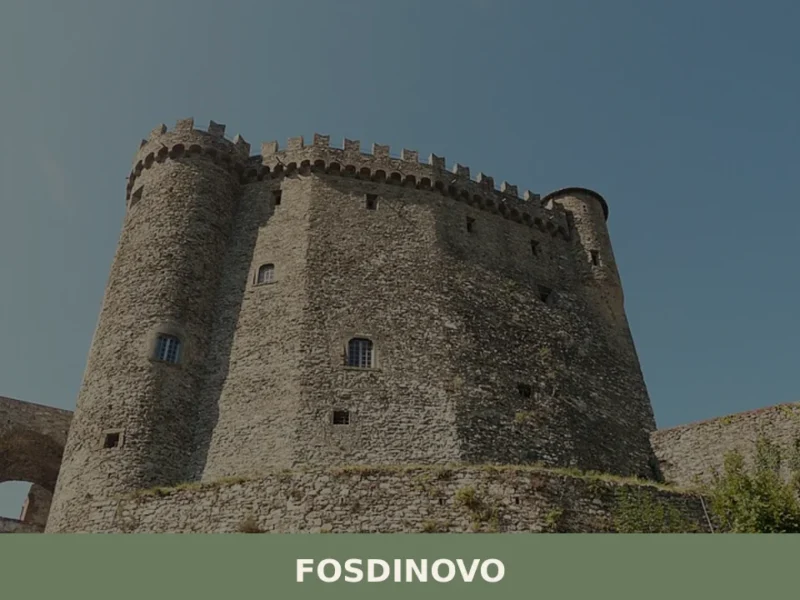
The Malaspina Castle of Fosdinovo has dominated the ridge separating the Val di Magra from the Apuan coast for over seven hundred years, with its four circular towers and a sentry walkway that can still be traversed. At 500 metres above sea level, this town in the province of Massa and Carrara has 4,982 inhabitants […]
Grosseto
 Sea
Sea
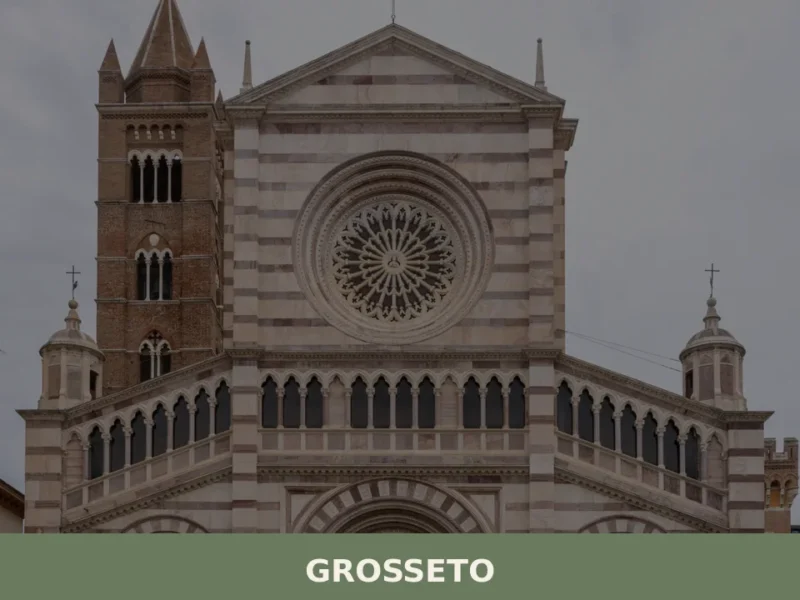
What to see in Grosseto: Medici walls, San Lorenzo Cathedral and the Maremma Natural Park in a city of 79,216 inhabitants. Plan your visit with our complete guide.
Pitigliano
Sea
What to see in Pitigliano, Italy: a tufa-rock town 80 km from Grosseto with a 1598 synagogue, Etruscan cuts, and Orsini Fortress. Discover the complete guide.
Castiglione di Garfagnana
Hills
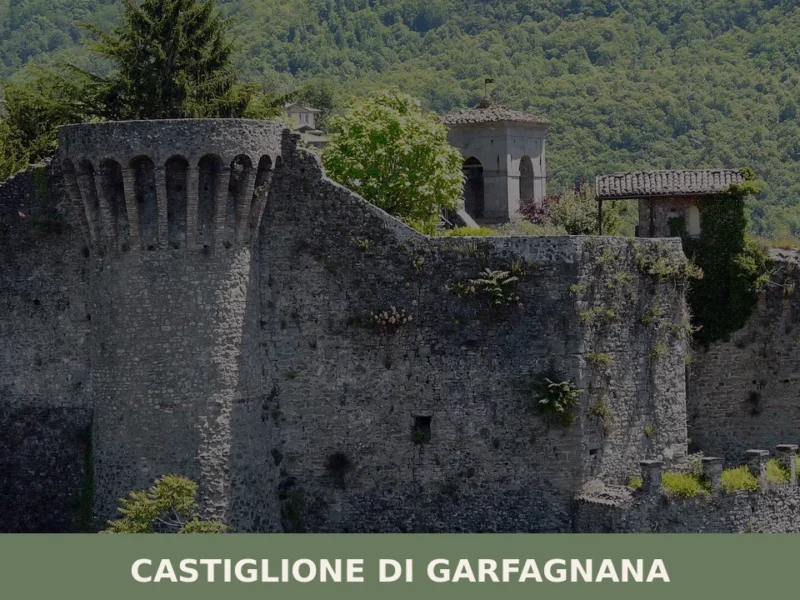
What to see in Castiglione di Garfagnana, Italy: medieval walls, a 13th-century bridge, and the Rocca fortress at 545 m. Discover the full travel guide.
Cerreto Guidi
Plains
A low plain spreads west of Florence, and at 30 kilometres (19 mi) from the city the land rises just enough — to 123 metres (404 feet) above sea level — for a cluster of terracotta rooftops to stand out against the Tuscan sky. The municipality borders Empoli, Fucecchio, Vinci, and Lamporecchio, placing it at […]
Campi Bisenzio
Plains
What to see in Campi Bisenzio, Italy: 43,580 inhabitants, 10 km from Florence. Discover the birthplace of the internal combustion engine, Renaissance art and more.
🏡 Know Barga better than we do?
If you’re a local or have been there, your knowledge matters: add what’s missing or fix a detail on this page.