


Canino
 Hills
Hills
What to see in Canino: from historic monuments to traditional cuisine. Discover the main attractions and how to get to this village in Lazio.
Discover Canino
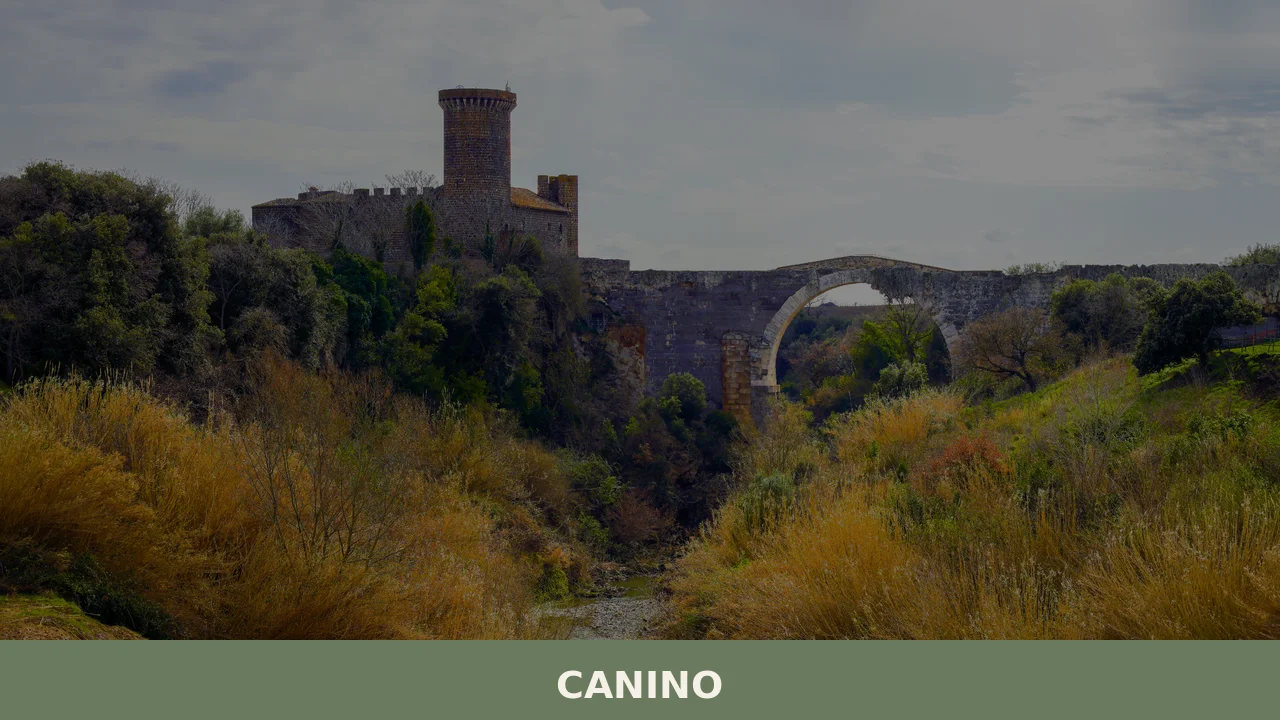
Olive groves run in rows across the low hills between Canino and the volcanic plateau of Maremma Laziale, their trunks thick and grey, belonging to a variety — the Canina — that has been cultivated in this corner of northern Lazio for generations.
Fifteen kilometres (9 mi) to the east lies Valentano; 44 kilometres (27 mi) to the southeast stands Viterbo.
The land between is quiet farmland interrupted by tufa outcrops and, on clear days, the distant profile of Monte Amiata across the Tuscan border.
Deciding what to see in Canino is easier once you understand the town’s three distinct layers: Etruscan prehistory at the nearby site of Vulci, Renaissance history tied to the Farnese family, and the Napoleonic episode that brought Lucien Bonaparte here as lord of the territory.
The town counts 5,275 inhabitants and sits inside what was once a territory of strategic importance between Rome and the Tyrrhenian coast.
Visitors to Canino find an intact centro storico (historic town centre), a collegiate church with a significant burial, and agricultural land producing one of Lazio’s few DOP-certified olive oils.
History of Canino
The territory around Canino was part of the broader Etruscan cultural zone long before Roman expansion reorganised the landscape of central Italy. The ancient city of Vulci, whose ruins lie close to present-day Canino, was one of the twelve major cities of the Etruscan confederation and reached its peak between the seventh and fifth centuries BCE. Excavations at Vulci have recovered painted ceramics, bronze objects, and monumental tombs that confirm the site’s role as a major centre of production and trade during the pre-Roman period.
The proximity of Canino to Vulci means that the modern town sits directly above layers of Etruscan occupation.
During the medieval and Renaissance periods, the territory passed into the control of the Farnese family, one of the most influential dynastic houses of central Italy.
The future Pope Paul III — born Alessandro Farnese — was born in Canino in 1468.
His family held extensive landholdings across the area now corresponding to northern Lazio, and the nearby destroyed city of Castro served as the capital of the short-lived Duchy of Castro, a Farnese fief that was razed to the ground in 1649 by papal forces following a prolonged conflict with Rome. The physical erasure of Castro left Canino as one of the surviving settlements in a territory that had otherwise been depopulated and restructured.
The most recent chapter of Canino’s documented history belongs to the Napoleonic era. Lucien Bonaparte, brother of Napoleon I, was granted the title of Prince of Canino in the early nineteenth century and made the town his residence.
His presence transformed the local cultural landscape: Lucien funded archaeological excavations at Vulci that brought significant finds to European markets and established the Bonaparte name in the annals of Italian archaeology.
He died and was buried in Canino, inside the town’s collegiate church, where his tomb remains today.
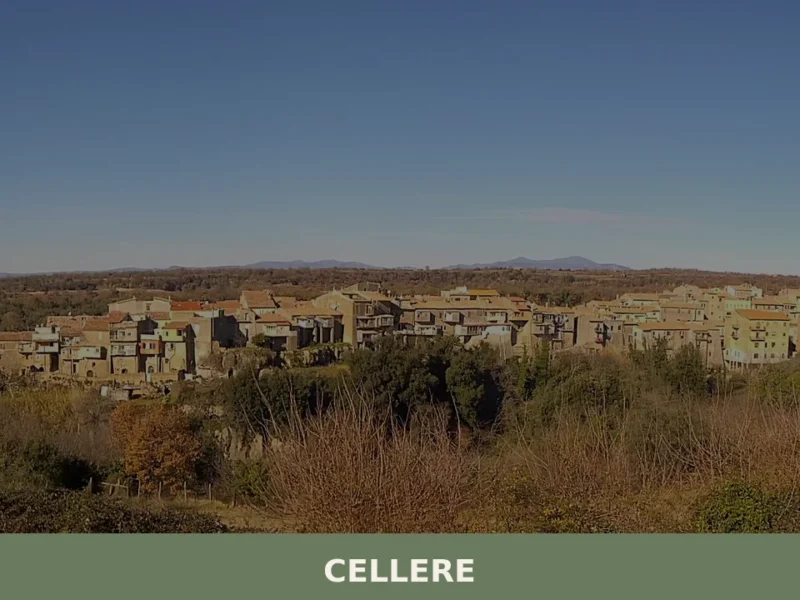
The village of Cellere, a few kilometres to the north in the same Tuscia area, shares this Farnese-era territorial history and offers comparable medieval architecture for those tracing the region’s feudal geography.
What to see in Canino, Lazio: top attractions
Collegiata di San Giovanni Battista
The collegiate church of San Giovanni Battista stands at the centre of Canino’s historic district, its facade built from the local pale stone that characterises most of the town’s older structures. Inside, the most significant element for any visitor is the tomb of Lucien Bonaparte, who died in the nineteenth century and was interred here following his years as Prince of Canino.
The interior preserves funerary monuments and religious artwork accumulated over several centuries of patronage.
When visiting, allow time to examine the nave and lateral chapels, where the quality of the decorative work reflects the resources available to a town that had both Farnese and Bonaparte connections.
Archaeological Site of Vulci
The ruins of Vulci lie just outside the administrative boundary of Canino and are reachable by road in under 15 minutes from the town centre.
At its height, Vulci extended across several square kilometres and supported a population engaged in metallurgy, pottery production, and long-distance trade across the Mediterranean. The site today includes visible tomb structures, the remains of city walls, and a medieval bridge — the Ponte dell’Abbadia — spanning the Fiora river, which has been adapted from an Etruscan original. The National Archaeological Museum housed within the Abbadia castle contains artefacts recovered from local excavations, including material from the campaigns funded by Lucien Bonaparte himself in the early 1800s.
Visitors should wear sturdy footwear, as the path between the museum and the open excavation area crosses uneven terrain.
The Selva del Lamone Nature Reserve
The hills that surround Canino reach toward the Selva del Lamone, a protected natural area covering a lava field produced by ancient volcanic activity.
The reserve preserves a dense mixed-oak forest growing directly over basalt flows, a landscape type rare in Lazio and recognisable by the irregular black rock visible at the forest floor between the root systems of holm oak and downy oak. Walking trails cross the reserve at varying levels of difficulty; the terrain drops and rises with the underlying lava morphology, making some sections physically demanding.
The reserve is most accessible between April and October, when paths are clear and daylight hours allow for a complete circuit.
For those interested in the regional volcanic landscape, the nearby Capodimonte on Lake Bolsena offers a complementary perspective on the same geological history.
The Ruins of Castro
The destroyed city of Castro, a Farnese capital razed in 1649, lies within the territory historically connected to Canino and is reachable by road.
Nothing remains standing above ground level: the papal demolition was systematic, reducing a functioning city to foundations and rubble that were subsequently covered by vegetation.
What the site offers today is an archaeological read of an early modern urban plan — street grids, building footprints, and cistern structures visible at ground level during low-vegetation seasons, particularly in late winter and early spring. Several research excavations have been conducted here in recent decades, and the contrast between the documented grandeur of Castro under Farnese rule and its current condition makes the site worth the detour for anyone researching the history of the Papal States.
The Olive Groves of the Canina Variety
The agricultural landscape immediately surrounding the town constitutes a documented cultural and productive asset.
The Canina olive variety, from which the local olio extravergine di oliva (extra virgin olive oil) takes its name, has received DOP certification under European Commission Regulation CE n. 1263/96. The trees visible along the roads between Canino and the surrounding farms are often old-growth specimens with divided trunks, producing a low-yield oil with marked polyphenol content.
The harvest takes place in autumn, typically between October and November, and during that period local frantoi (olive presses) operate continuously.
Visiting in autumn means encountering the working side of the local economy directly.
Local food and typical products of Canino
The food culture of Canino belongs to the broader tradition of northern Lazio’s inland Maremma, a zone where the diet has historically depended on legumes, game, cured pork, and bread made from local grain varieties.
The proximity to the Tyrrhenian coast, roughly 40 kilometres (25 mi) to the west, has historically introduced preserved fish products into the local diet, while the agricultural hinterland supplies vegetables, pulses, and the olive oil that now defines the area’s commercial identity.
Among the dishes most closely associated with the local kitchen, acquacotta — a peasant broth built on stale bread, wild vegetables, and a poached egg — represents the most documented preparation of the Maremma tradition.
The name translates literally as “cooked water,” and the technique involves layering dried bread in a bowl and ladling hot vegetable broth over it until the bread absorbs the liquid and collapses.
A variation common in this area incorporates local mushrooms gathered from the Selva del Lamone.
Fagioli con le cotiche, a slow-cooked preparation of borlotti beans with pork rind, appears regularly at local tables in cooler months and reflects the tradition of using every part of the pig in a culture where winter preservation was essential.
The most commercially significant certified product is the Olio Extravergine di Oliva DOP Canino (DOP, EU Regulation CE n. 1263/96), produced exclusively from the Canina olive variety grown in the territory. The oil presents a green-gold colour when freshly pressed, with a pronounced bitter finish and low acidity.
It is used raw as a condiment on bruschetta, bean soups, and grilled vegetables, and its production is concentrated in the municipalities of Canino and the surrounding communes of the Viterbo province.
The autumn harvest period is the most direct time to purchase the oil from local producers.
Several farms in the Canino area sell directly from the press during October and November, and the town’s weekly market provides an additional point of access for visitors seeking local produce. Carrying cash is advisable at smaller producers and market stalls, as card readers are not universally available in rural settings.
Festivals, events and traditions of Canino
The patron saint of Canino is San Giovanni Battista, to whom the town’s collegiate church is dedicated.
The feast day of San Giovanni Battista falls on 24 June, placing the main civic and religious celebration at the start of summer. The festival traditionally includes a solemn Mass in the collegiate church, a procession through the town’s central streets, and public gatherings in the main square.
June in this part of Lazio brings warm, dry weather with temperatures averaging between 25 and 30 degrees Celsius (77-86°F), making outdoor celebrations viable throughout the day and into the evening.
The olive oil production cycle generates its own informal set of local gatherings in autumn.
While a formally structured sagra (a traditional local food festival) dedicated to the DOP oil is not documented in the available sources with a fixed annual date, the period between October and November sees increased activity at local farms, cooperative presses, and the town market.
Visitors arriving during this window encounter the working rhythm of the local agricultural calendar directly, with freshly pressed oil available for tasting at source.
When to visit Canino, Italy and how to get there
The best time to visit Canino, Italy is late spring (April to June) or early autumn (September to November).
In spring, the olive groves are in flower, the Selva del Lamone reserve is fully accessible, and temperatures remain moderate — typically between 18 and 24 degrees Celsius (64-75°F). Autumn brings the olive harvest, cooler air, and the opportunity to see the frantoio in operation. The summer months of July and August are warm and dry, with temperatures occasionally exceeding 35°C (95°F) inland, which can make extended outdoor visits to Vulci or the Selva del Lamone uncomfortable during midday hours.
Winter is viable for the Castro ruins and the town itself but limits access to some rural paths.
Canino sits 44 kilometres (27 mi) northwest of Viterbo and approximately 120 kilometres (75 mi) north of Rome, making it a realistic day trip from the capital for those travelling by car.
From Rome, the most direct route follows the A1 motorway northward to the Orte exit, then continues west on the SS Cassia and connecting provincial roads toward Canino — a journey of roughly one hour and forty minutes under normal traffic conditions. If you arrive by car from Viterbo, the SP Canino-Valentano connects the two centres in under thirty minutes. The nearest railway station with regular connections is Viterbo, served by Trenitalia from Rome’s Ostiense station; from Viterbo, reaching Canino requires a local bus or taxi, as no direct rail connection exists.
The nearest international airport is Rome Fiumicino (Leonardo da Vinci), located approximately 130 kilometres (81 mi) to the south.
International visitors should note that English is not widely spoken in smaller shops and rural businesses, and carrying euros in cash is practical for markets, farm sales, and smaller establishments. Those travelling through the region can also consider a stop at Labro in Rieti province, another compact Lazio comune that rewards a detour for travellers with time to explore beyond the main routes.
Visitors extending their stay in the Viterbo area will find that what to see in Canino connects logically with a wider circuit through northern Lazio.
The nearby Etruscan sites, the Lake Bolsena shoreline to the east, and the medieval hill towns of Tuscia can be combined into a two or three-day itinerary based in any of the larger centres of the province. Those curious about the Farnese territorial history can also visit Frosinone in southern Lazio to understand the broader reach of papal and dynastic power across the region’s different provinces.
Frequently asked questions about Canino
What is the best time to visit Canino?
Spring (April–May) and autumn (October–November) are the best seasons. Spring brings mild temperatures ideal for exploring Vulci and the Selva del Lamone trails, while autumn coincides with the olive harvest (October–November), when local frantoi press the DOP Canina oil and farms sell directly from the press. The feast of the patron saint Sant'Andrea Apostolo falls on 30 November, marking the end of the agricultural calendar and offering a glimpse of local tradition. Summer is warm but manageable at 229 m altitude. Winter is quiet, though late February is ideal for reading the ruins of Castro before vegetation covers the foundations.
What are the historical origins of Canino?
Canino's territory was part of the Etruscan world, dominated by the nearby city of Vulci, one of the twelve cities of the Etruscan confederation and a major centre of trade and metallurgy between the 7th and 5th centuries BCE. In the Renaissance, the Farnese family controlled the area; Pope Paul III was born here in 1468. After the papal destruction of the neighbouring Farnese capital Castro in 1649, Canino became the primary surviving settlement in the territory. In the early 19th century, Lucien Bonaparte — Napoleon's brother — was granted the title of Prince of Canino and funded important archaeological excavations at Vulci.
What to see in Canino? Main monuments and landmarks
The Collegiata di San Giovanni Battista in the historic centre contains the tomb of Lucien Bonaparte and centuries of Farnese- and Bonaparte-era patronage. Just outside town (under 15 minutes by road), the archaeological site of Vulci includes Etruscan tombs, city walls, the medieval Ponte dell'Abbadia over the Fiora river, and the National Archaeological Museum inside the Abbadia castle. The ruins of Castro, the razed Farnese capital, are reachable by road and best visited in late winter when low vegetation exposes street grids and building footprints. The surrounding olive groves of the Canina variety are themselves a recognised landscape.
What are the main natural or scenic attractions near Canino?
The Selva del Lamone Nature Reserve, a short drive from Canino, protects a rare lava-field forest of holm oak and downy oak growing over ancient basalt flows. Walking trails cross the reserve at varying difficulty levels; the best access is between April and October. The volcanic plateau of Maremma Laziale surrounds the town, offering open farmland punctuated by tufa outcrops. On clear days, Monte Amiata is visible across the Tuscan border. Lake Bolsena and Capodimonte, sharing the same volcanic geology, are within easy reach for a complementary excursion.
Are there museums or historic buildings to visit in Canino?
The National Archaeological Museum at Vulci, housed inside the Abbadia castle adjacent to the Etruscan site, displays ceramics, bronzes, and funerary objects from local excavations including those funded by Lucien Bonaparte in the early 1800s. The Collegiata di San Giovanni Battista in the town centre preserves the Bonaparte tomb, funerary monuments, and religious artwork spanning several centuries. For current opening hours and admission fees, check directly with the Parco Naturalistico Archeologico di Vulci, as hours vary seasonally.
What can you do in Canino? Activities and experiences
Canino offers a concentrated mix of archaeology, food and nature. Visitors can tour the Etruscan ruins and museum at Vulci, walk trails through the Selva del Lamone lava forest, and visit the razed site of Castro for a rare early-modern archaeological landscape. During October and November, attending an olive harvest or purchasing freshly pressed DOP Canino oil directly from a local frantoio is a practical and immersive experience. The weekly market in town provides access to local produce. The feast of Sant'Andrea Apostolo on 30 November offers a seasonal local event to plan around.
Who is Canino suitable for? Families, couples, hikers, solo travelers?
Canino suits culturally curious travellers — history enthusiasts will find layers spanning Etruscan, Renaissance, and Napoleonic periods in a compact area. Hikers and nature lovers benefit from the Selva del Lamone trails and volcanic landscape. Food and olive oil tourism is well-supported, especially in autumn. Couples seeking a quiet, uncommercialised hill town in northern Lazio will find the intact centro storico and surrounding farmland appealing. Families with older children can engage meaningfully with the Vulci archaeological site. It is less suited to visitors expecting resort amenities or busy nightlife.
What to eat and drink in Canino? Local products and specialties
The defining product is Olio Extravergine di Oliva DOP Canino (EU Regulation CE n. 1263/96), pressed from the indigenous Canina olive variety: green-gold in colour, markedly bitter, with low acidity. It is used raw on bruschetta and bean soups. Traditional dishes reflect the Maremma peasant kitchen: acquacotta, a broth of stale bread, wild vegetables, and poached egg — sometimes enriched with Selva del Lamone mushrooms — and fagioli con le cotiche, slow-cooked borlotti beans with pork rind. Autumn is the best time to buy oil directly from local producers; bring cash for smaller farms and market stalls.
Nearby Villages near Canino
In Lazio More villages to discover
Capranica
Hills
Capranica, a Lazio village between history and nature: discover what to see, how to get there and the top places to visit. Plan your trip with this guide.
Bracciano
Hills
 Lake
Lake
What to see in Bracciano, Italy: Discover its medieval castle and volcanic lake. Located 30 km (19 mi) from Rome, explore this Lazio village for a memorable day trip.
Acuto
 Mountain
What to see in Acuto, Lazio, Italy: explore a hilltop village at 680 m with the birthplace of a Catholic founder and Monti Ernici views. Discover it all here.

Terracina
 Sea
Sea
44,000 residents, one ancient temple on a cliff, and centuries of Roman, medieval and papal history waiting along the Tyrrhenian coast.
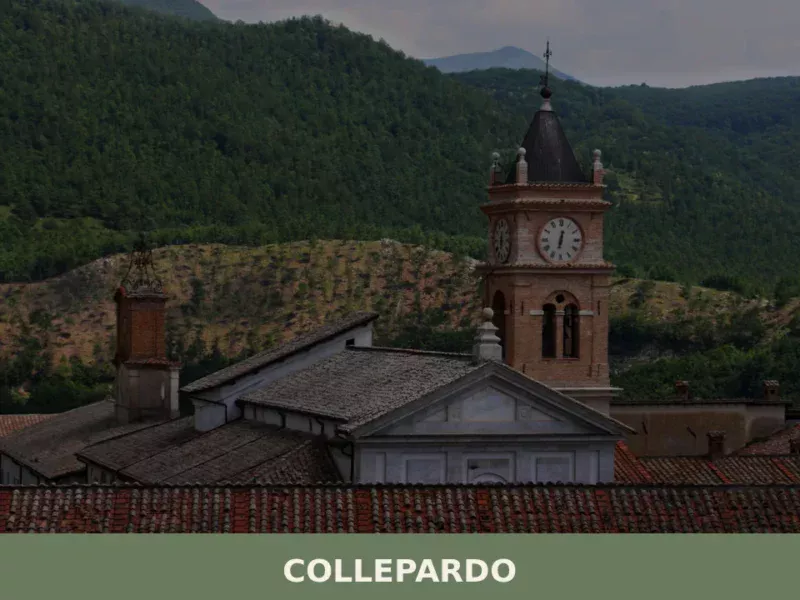
Collepardo
Hills
The karst stone beneath the Monti Ernici does not announce itself gradually. It opens without warning into vertical drops and hollow chambers, some sealed by centuries of slow dissolution, others wide enough to swallow the sound of a person speaking. In this article History of Collepardo What to see in Collepardo, Lazio: top attractions Local […]
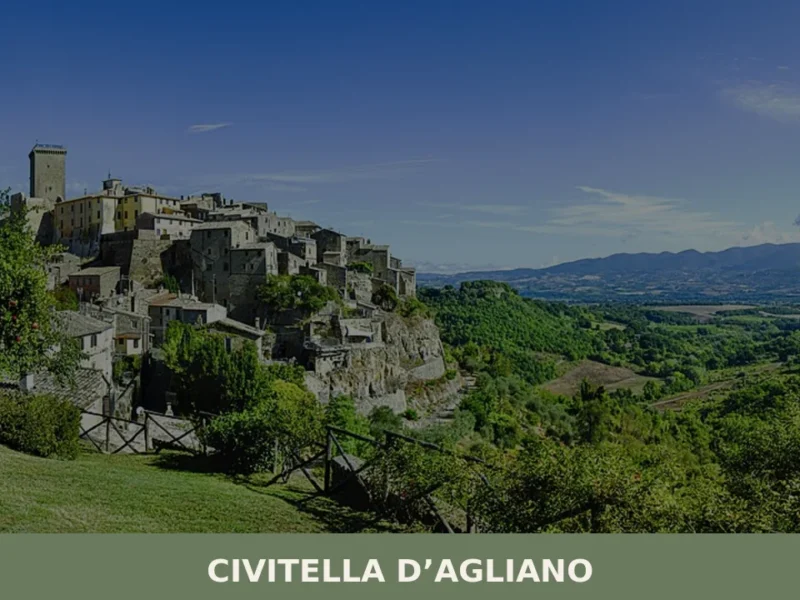
Civitella d’Agliano
Hills
What to See in Civitella d'Agliano: Tower, Castle, Festival. Discover the historic attractions of the village! Experience culture and flavors.
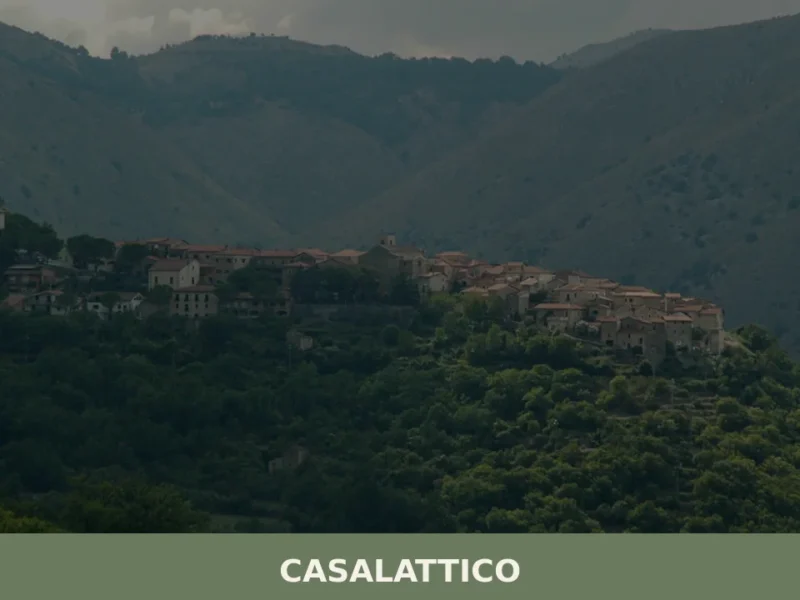
Casalattico
Hills
What to see in Casalattico, Lazio, Italy: a village at 420 m with a Norman tower, a Benedictine monastery from 780 AD and an Irish festival. Discover it now.
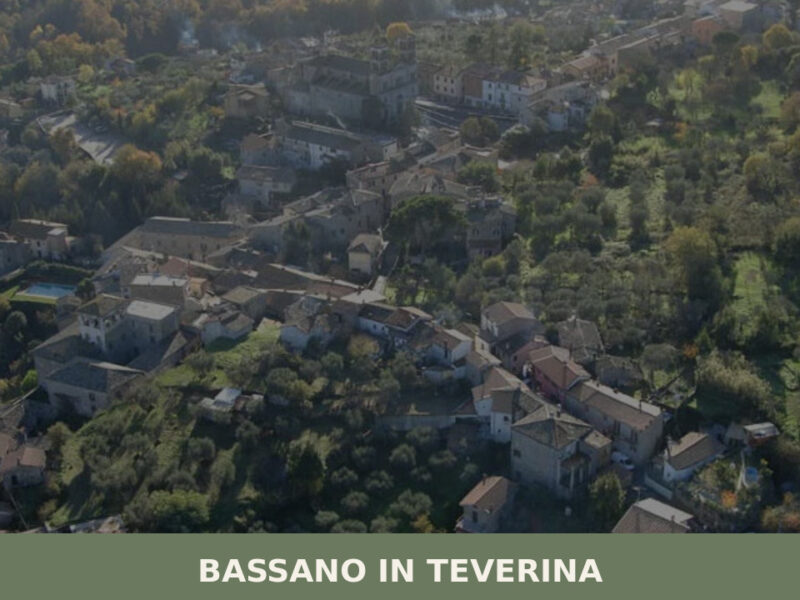
Bassano in Teverina
Hills
Standing at 304 metres above sea level, with a population of 1,260, Bassano in Teverina occupies a tuff plateau overlooking the Tiber valley in the province of Viterbo. The village owes the second part of its name to the river that flows just a few kilometres to the east — a geographical reference that distinguishes […]
Carbognano
Hills
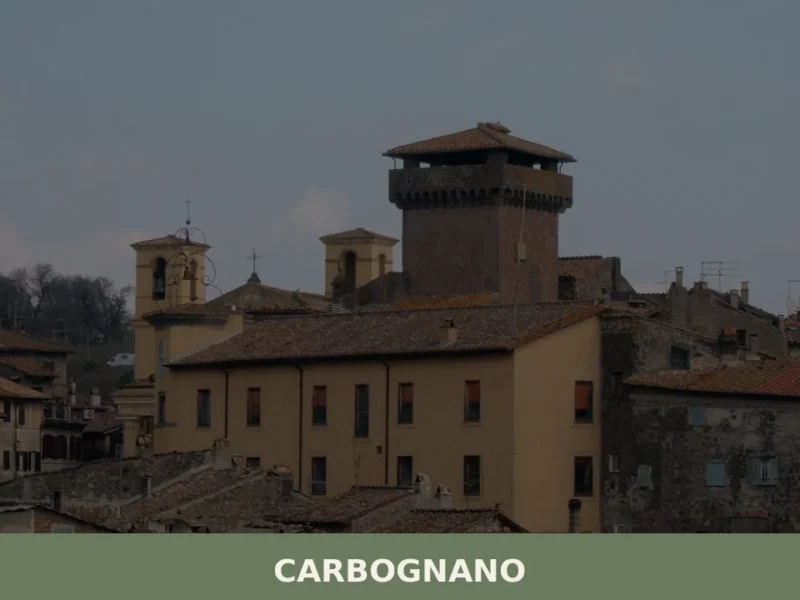
What to see in Carbognano, Italy: a hilltop village at 394 m, 50 km from Rome. Explore its churches, local food, and festivals. Discover Viterbo province.
Proceno
Hills
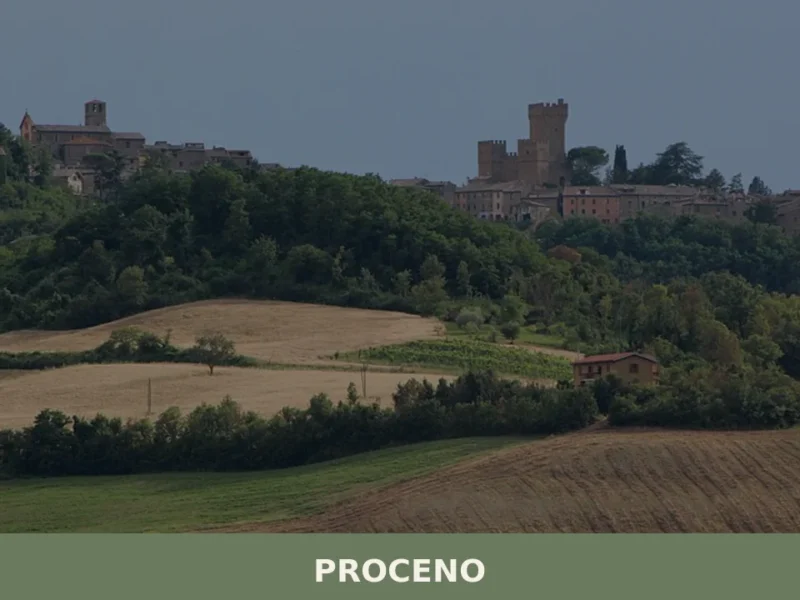
A 418 meters above sea level, in northern Lazio, the village of Proceno developed around a Fortress documented as early as the 12th century. This architectural element, central to the settlement’s development, still defines the structure of the historic center today. With a population of 519 inhabitants, Proceno is part of the Viterbo Tuscia region, […]


🏡 Know Canino better than we do?
If you’re a local or have been there, your knowledge matters: add what’s missing or fix a detail on this page.