


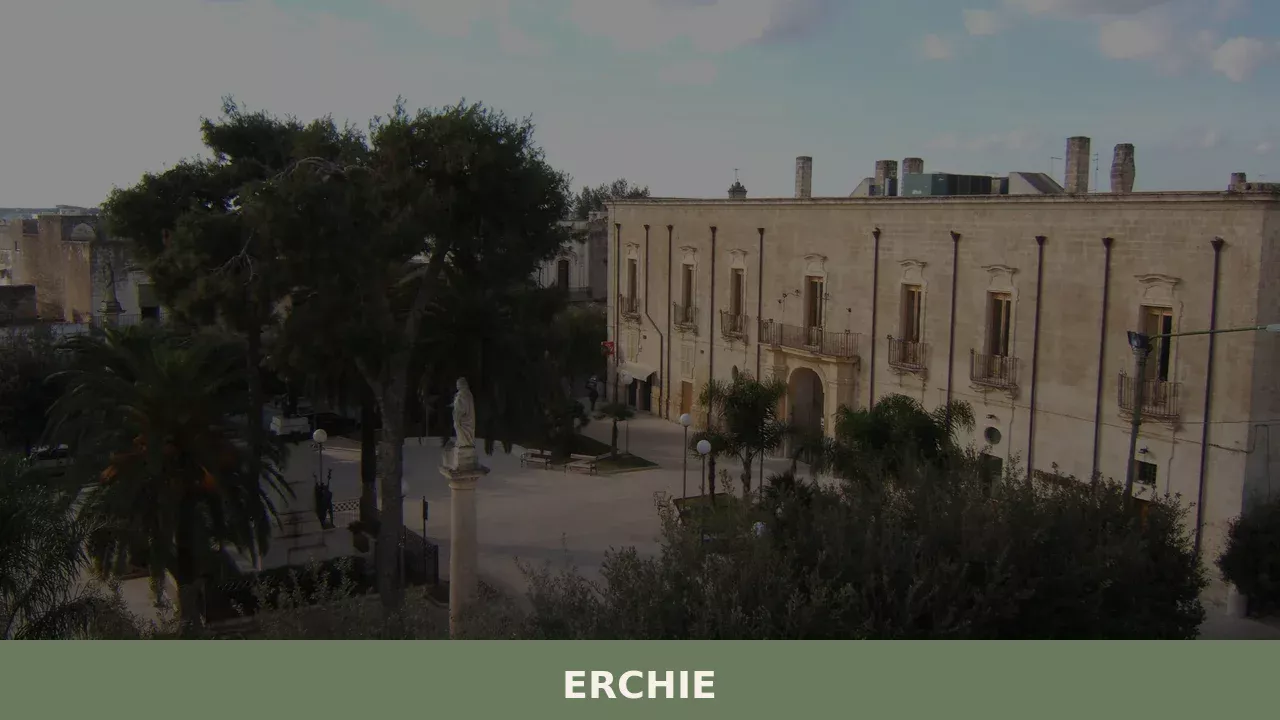
Erchie
 Plains
Discover what to see in Erchie, Puglia u2014 a village at the crossroads of three provinces, with Baroque churches, masserie, and authentic Salento cuisine.
Discover Erchie
Erchie sits at the administrative junction of three provinces — Brindisi, Taranto, and Lecce — making it one of the few municipalities in Puglia to occupy what geographers describe as a true tripoint of the Salento subregion. With a population of around 8,000 residents, it belongs to the province of Brindisi while speaking a dialect that blends Leccese inflections with a strong Brindisian base. For anyone researching what to see in Erchie, that triple-border position is not a bureaucratic footnote — it is the key to understanding the town’s cultural layering, its architecture, and the way its people have absorbed and synthesised three distinct provincial identities over centuries.
History of Erchie
The name Erchie is believed to derive from the Greek word Ercles or Herakles — Hercules — pointing toward a pre-Roman, Messapian or early Greek colonial presence in this part of the central Salento plain. The Messapians, an Iapygian people who inhabited the heel of Italy before Roman conquest, left their mark across this territory in the form of settlement patterns and place names, and Erchie fits squarely into that linguistic archaeology. The plain on which the town stands was extensively cultivated in antiquity, and the presence of ancient ceramic fragments in the surrounding countryside has long attracted the attention of regional archaeologists.
During the medieval period, Erchie passed through the hands of the Norman and later Angevin and Aragonese feudal systems that reorganised much of southern Italy’s territorial governance from the eleventh century onward. Like many settlements in the Salento, it was administered as a feudal holding, its agricultural output — principally grain and olives — forming the economic backbone of the local lord’s revenues. The town’s position at the crossroads of three provincial territories made it a point of periodic administrative contention, as boundaries were redrawn and jurisdictions shifted under successive southern Italian dynasties, from the Kingdom of Naples through to the Bourbon period.
In the post-Unification period after 1861, Erchie was consolidated within the province of Brindisi as the modern Italian administrative map took shape. The late nineteenth and early twentieth centuries brought the pressures of rural emigration common to the entire Mezzogiorno, as agricultural labourers left for northern Italy, Argentina, and the United States. Despite this demographic pressure, the town retained its agricultural character, with olive cultivation and cereal farming remaining central to the local economy well into the twentieth century. The dialect spoken in Erchie today — a Salentino variant with pronounced Brindisian features — is a direct linguistic record of that long history of overlapping cultural and administrative influences.
What to see in Erchie: 5 must-visit attractions
1. The Mother Church (Chiesa Madre)
Erchie’s principal place of worship dominates the central piazza and follows the Baroque architectural vocabulary common to the Salento’s ecclesiastical building programme of the seventeenth and eighteenth centuries. The façade, in local limestone, features the stratified decorative work typical of Pugliese Baroque, and the interior preserves altarpieces and devotional panels accumulated across several centuries of parish life.
2. The Historic Town Centre
The old centre of Erchie is built in the compact, inward-facing plan characteristic of Salentine settlements that developed under the threat of coastal raids between the fifteenth and sixteenth centuries. The street grid reflects this defensive logic: narrow vicoli connecting to small courtyards, with the residential fabric built in the pale golden limestone quarried locally across the Brindisi and Lecce provinces.
3. The Rural Masserie of the Surrounding Plain
The agricultural plain around Erchie is dotted with masserie — the large fortified farmsteads that served as the organisational units of Pugliese latifondo agriculture from the medieval period onward. Several examples within the municipality retain their original tower structures and enclosure walls, offering direct evidence of how olive and cereal production was managed and defended in this part of the Salento.
4. The Tripoint Territory
The precise zone where the boundaries of Brindisi, Taranto, and Lecce converge falls within Erchie’s municipality. For those interested in historical administrative geography, this meeting point — where three distinct provincial cultures, dialects, and building traditions have coexisted — is a concrete, mappable feature of the landscape rather than an abstraction.
5. Local Feast Days and Civic Celebrations
The liturgical calendar structures public life in Erchie as it does across the Salento. The feast of the patron saint draws the community into the piazza for processions, music, and the temporary market structures that have accompanied southern Italian civic religion since at least the Bourbon period. The dates and specific patron dedication should be verified with the official municipality of Erchie before visiting.
Local food and typical products
Erchie sits within the broader Salento food culture, where the cooking is built on a small number of ingredients used with considerable precision: durum wheat, dried legumes, wild greens, and above all olive oil. The ciceri e tria — a dish of chickpeas with a mixture of boiled and fried pasta strips — is one of the defining preparations of the Leccese and central Salentine kitchen, and appears on local tables here as it has for generations. Fave e cicoria, a purée of dried broad beans served alongside bitter wild chicory, is another preparation that reflects the cucina povera logic of the region: maximum nutrition and flavour from ingredients that the land produces reliably. The olive oil of this zone falls within the broader Pugliese DOP framework, with the regional agricultural authority maintaining documentation on the province’s certified production.
For those eating in the area, the most reliable options are the family-run trattorie and agriturismo establishments in and around Erchie, where the menu tends to follow what is seasonal rather than what is printed on a laminated card. Bread made from local durum wheat, taralli seasoned with fennel seeds or black pepper, and the range of preserved vegetables — sun-dried tomatoes, pickled wild fennel, oil-preserved aubergines — give any table here a specific regional identity. The official Puglia tourism board maintains a directory of certified local food producers and agriturismo operations across the province of Brindisi that can help visitors plan meals in advance.
Best time to visit Erchie
The Salento climate follows a Mediterranean pattern: dry, hot summers with temperatures regularly reaching 35°C between July and August, and mild winters with most rainfall concentrated between November and February. For anyone focused on what to see in Erchie in terms of architecture, agriculture, and daily life, the shoulder months of April, May, September, and October offer the most practical conditions — the light is clear, the heat is manageable for walking the town centre, and the olive harvest in October brings the surrounding countryside to its annual point of maximum activity. The summer months draw visitors to the Ionian and Adriatic coasts that lie within reach of Erchie, which means accommodation in the area fills quickly from late June onward.
The town’s patron saint feast, typically held in summer, is the most significant annual civic event and worth timing a visit around if the specific date aligns with travel plans. Markets and local fairs tied to the agricultural calendar — particularly around the olive and grape harvests — offer a more grounded sense of how the rural economy still functions in this part of the central Salento. Visitors arriving in winter will find a quieter town, lower accommodation prices, and a kitchen that shifts toward heavier legume-based dishes.
How to get to Erchie
Erchie is located in the central Salento, in the province of Brindisi, roughly equidistant from three provincial capitals. The most practical access points are as follows:
- By air: Brindisi’s Papola Casale Airport (BDS) is the nearest commercial airport, approximately 30–35 kilometres north of Erchie. It handles domestic routes and a number of European low-cost carriers, particularly in summer. Lecce Airport (not currently operational for commercial flights) and Taranto-Grottaglie are alternatives worth checking for charter services.
- By car: From Brindisi, take the SS7 or provincial roads south toward Oria, then follow signs for Erchie — the drive takes approximately 35–40 minutes. From Taranto, the route runs east along the SS7ter or via Manduria; from Lecce, approach from the north via Copertino or Guagnano. The town sits at a genuine road junction between the three provinces.
- By train: The nearest railway stations with regular Trenitalia services are at Brindisi and Lecce, both on the main Adriatic line. From either station, onward travel to Erchie requires a local bus or hire car, as the town does not sit directly on a main rail line. The Ferrovie del Sud Est regional rail network covers parts of the Salento and may offer connections depending on the route.
- By bus: Regional bus services operated by local companies connect Erchie to Brindisi, Taranto, and Lecce, though schedules can be infrequent on weekends and public holidays. Checking timetables locally or through the provincial transport authority before travel is advisable.
Where to stay in Erchie
Accommodation options in Erchie itself are limited compared to the larger centres of Brindisi or Lecce, but the surrounding area offers a range of agriturismo properties set within the olive groves and agricultural land of the central Salento plain. These working farm guesthouses typically offer rooms with access to a pool, serve meals made from their own produce, and provide a base from which both the town and the surrounding countryside can be explored by car. B&B accommodation within the town centre does exist, generally operated by local families on a small scale, and offers the most direct immersion in daily life in Erchie.
For those who prefer more infrastructure — restaurants, bars, and shops within walking distance — staying in one of the three provincial capitals (Brindisi, Lecce, or Taranto) and making day visits to Erchie is a practical alternative given the relatively short driving distances involved. If visiting in July or August, booking accommodation at least two months in advance is a realistic minimum, as the entire Salento region experiences heavy domestic tourism during this period. For a longer stay in the area, holiday homes rented by the week through local agencies give the most flexibility and the best value per night.
More villages to discover in Puglia
Puglia is a region of considerable geographic range, and the contrast between the Salento and the northern reaches of the region is sharp. Visitors who travel north from Erchie will eventually reach the territory of the Murge and the Adriatic coast, where towns like Molfetta, with its Romanesque waterfront cathedral, and Barletta, home to one of the largest medieval castles on the Adriatic coast, represent a very different chapter in Pugliese history. The architecture shifts from the limestone Baroque of the Salento to the rougher, more austere building traditions of the northern province of Barletta-Andria-Trani.
Further inland, the towns of the metropolitan area of Bari extend into a landscape of clay hills and cereal fields. Grumo Appula and Modugno offer a window into the urban fringe of the Barese hinterland — smaller settlements that have absorbed the pressures of proximity to a regional capital while retaining their own civic identity. Together with Erchie, they map out the breadth of what Puglia actually contains: not a single coherent landscape, but a sequence of distinct territories, each with its own dialect, building material, and agricultural logic.
Nearby Villages near Erchie
In Apulia More villages to discover
Minervino Murge
 Hills
Hills
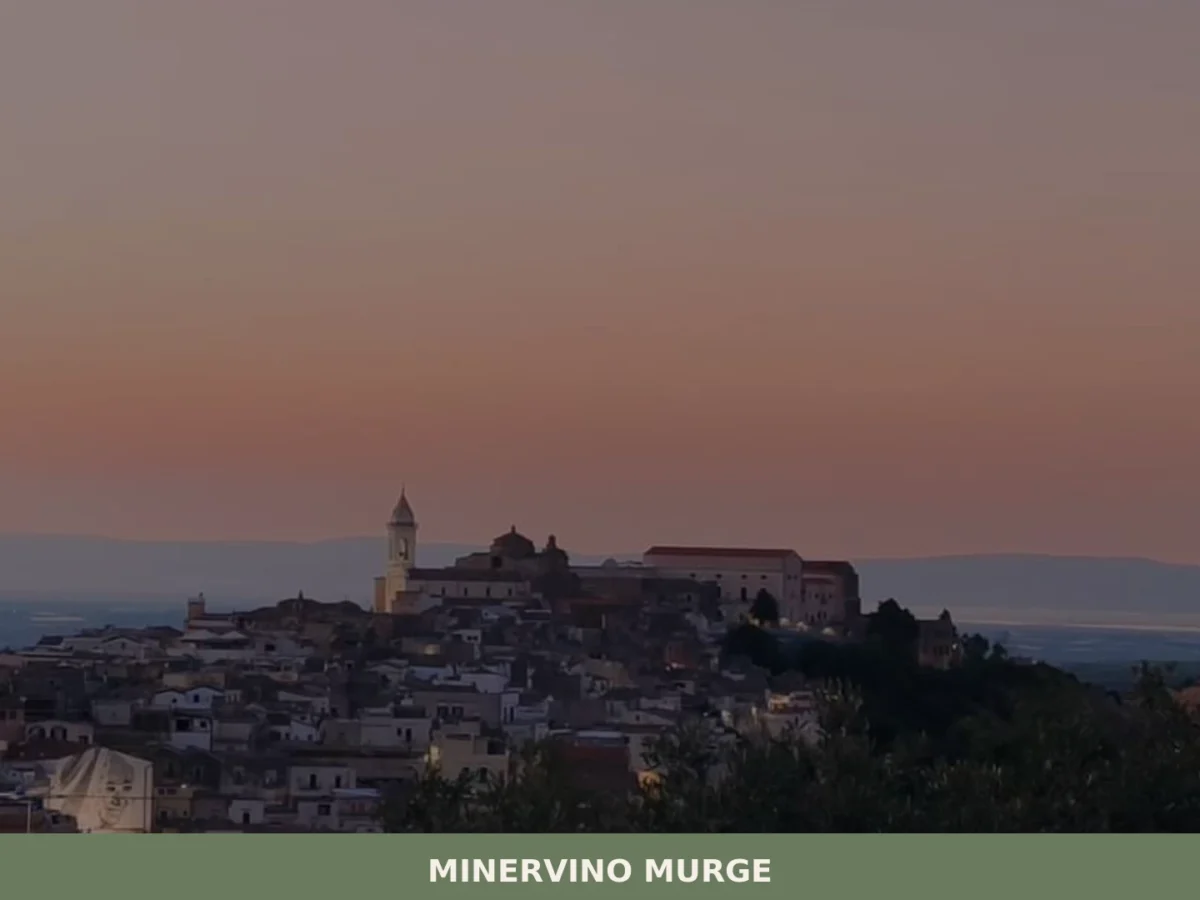
Discover what to see in Minervino Murge, Puglia: Alta Murgia national park, historic centre, drove roads, local food and practical travel tips.
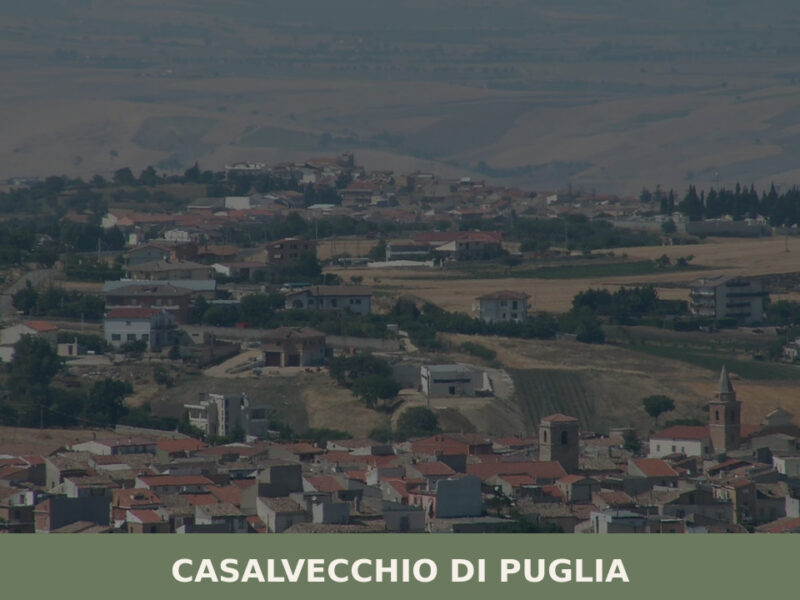
Casalvecchio di Puglia
Hills
An Arbëreshë village of 1,689 inhabitants perched at 465 metres in the Daunia hills. A guide to its historic centre, rural paths, and slow-paced southern Italian life.
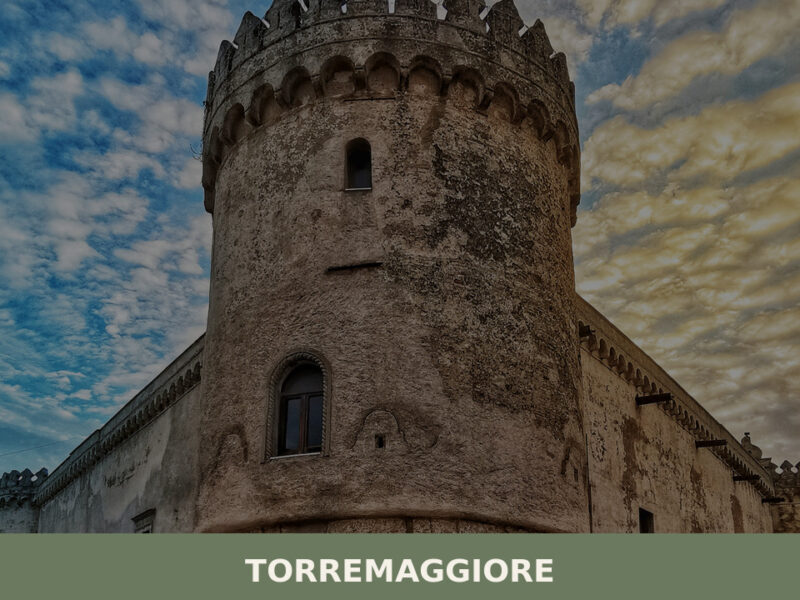
Torremaggiore
Plains
A complete guide to Torremaggiore in northern Puglia — its medieval castle, the ruins of Fiorentino, local food traditions, and practical travel information.
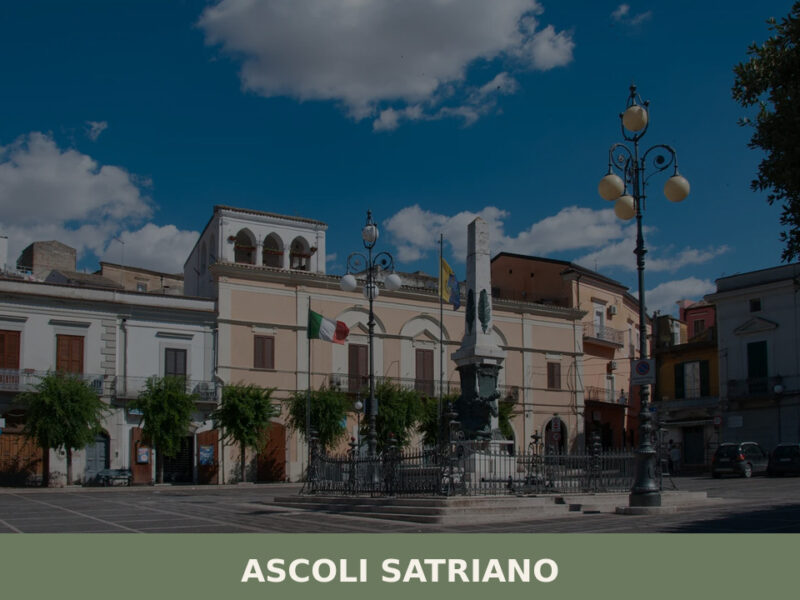
Ascoli Satriano
Hills
Discover Ascoli Satriano, an ancient hilltop village in Puglia's Daunia hills. From Roman bridges to Daunian treasures, here's your complete guide.
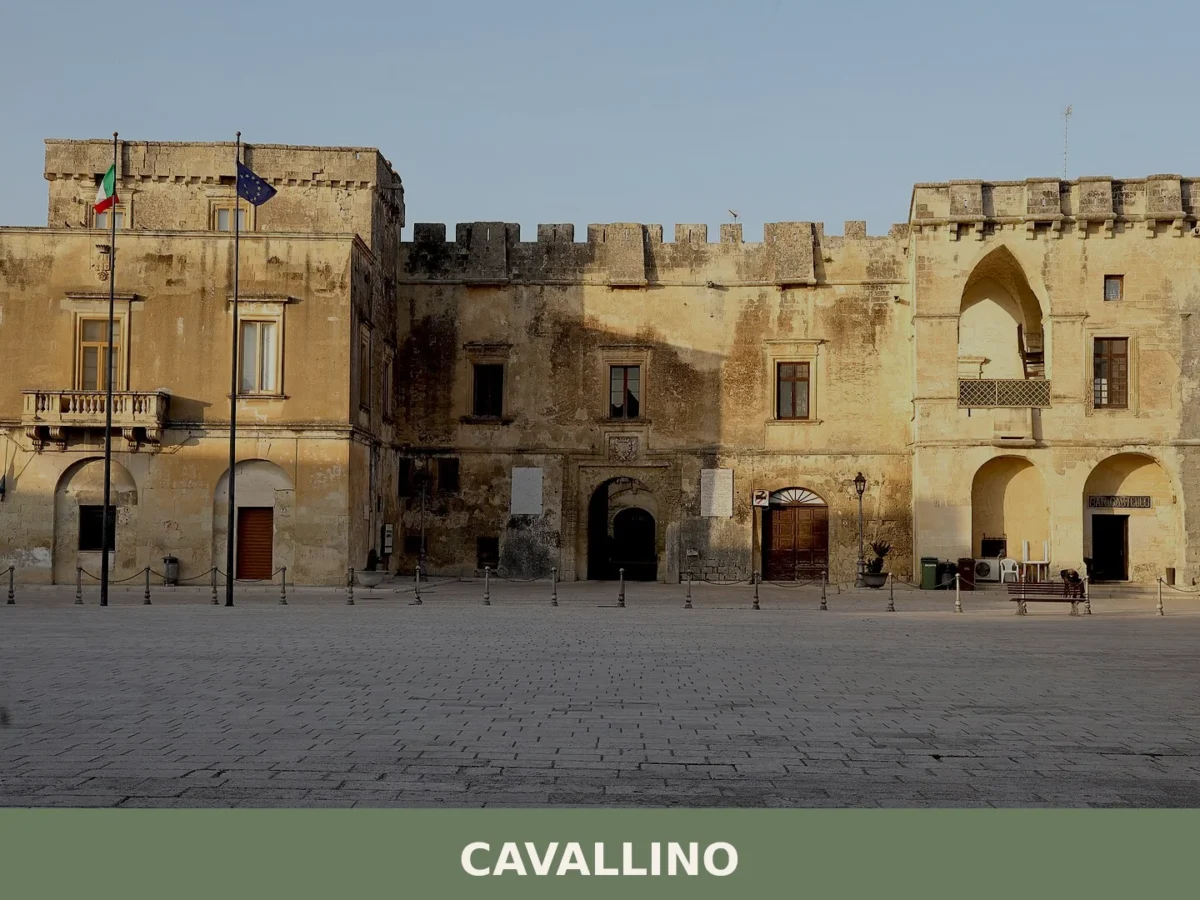
Cavallino
Plains
A village of 13,000 inhabitants where Messapic foundations meet Baroque stone. Visit the Dominican church, the feudal castle and a 1633 public well.
Molfetta
 Sea
Sea
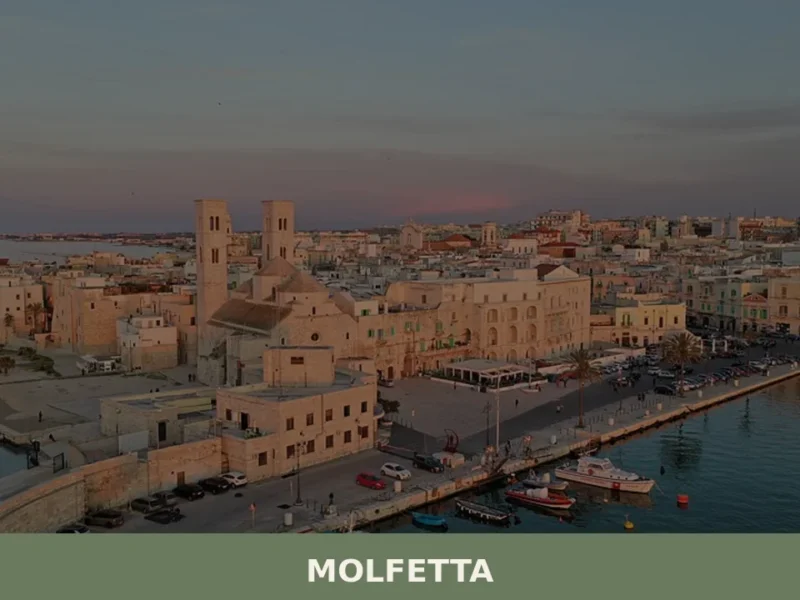
What to see in Molfetta: Adriatic port town at 15m elevation with 57,329 residents. Explore the Cathedral of San Corrado and Pulo sinkhole. Plan your visit now.
Monopoli
Sea
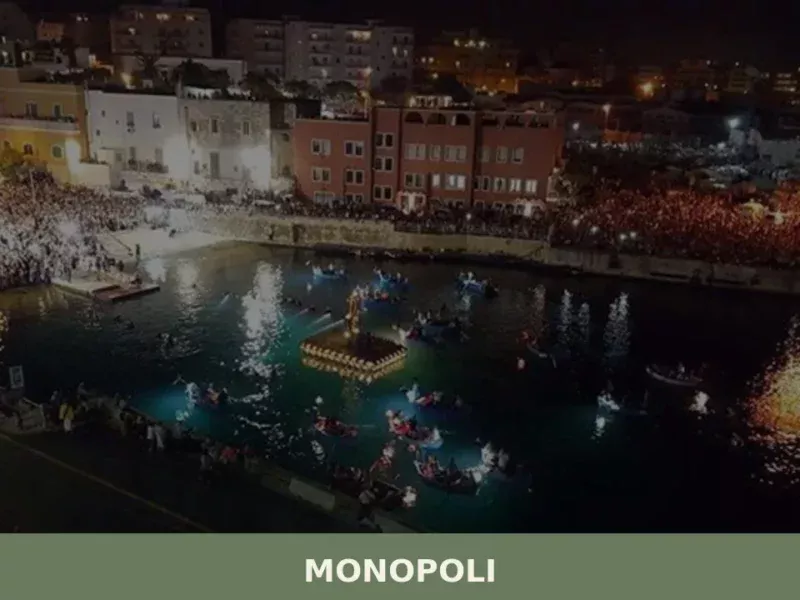
From the promontory where the Castle of Charles V stands, the view sweeps across the Adriatic, a horizon of waters that have shaped Monopoli’s identity for centuries. This port city, whose name evokes the idea of a “unique city,” reveals itself through its architecture, which tells of historical layers, from Messapian walls to Spanish fortifications. […]
Leporano
Sea
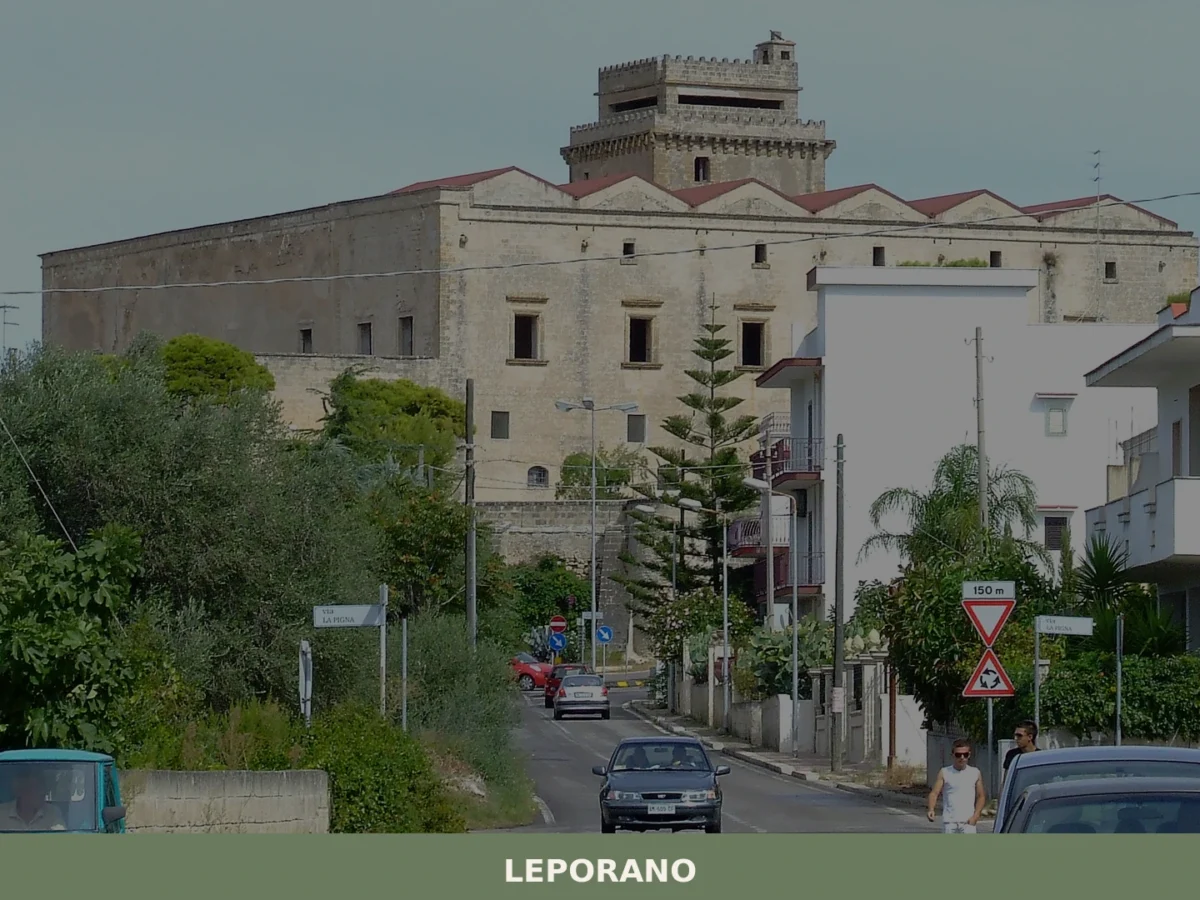
Discover what to see in Leporano, Puglia: Aragonese tower, Ionian coastline, local food and practical tips for visiting this Taranto province municipality.
Vico del Gargano
Sea
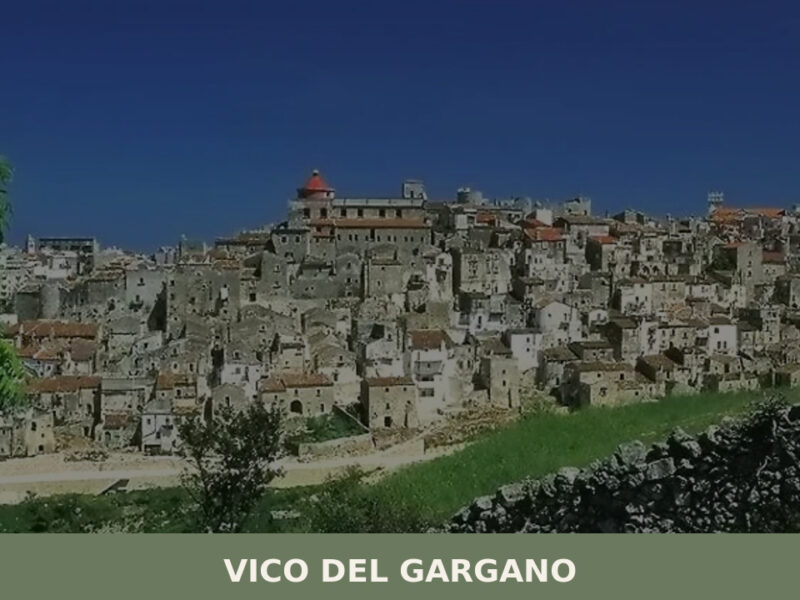
A hilltop village at 445 metres on the Gargano promontory, Vico del Gargano rewards slow exploration — medieval alleys, underground olive presses, and ancient forest at its edge.

Trani
Sea
What to see in Trani, a city at 7m altitude: Discover its iconic Cathedral and Swabian Castle. Explore the historic port and Sant'Anna Synagogue Museum.
🏡 Know Erchie better than we do?
If you’re a local or have been there, your knowledge matters: add what’s missing or fix a detail on this page.