


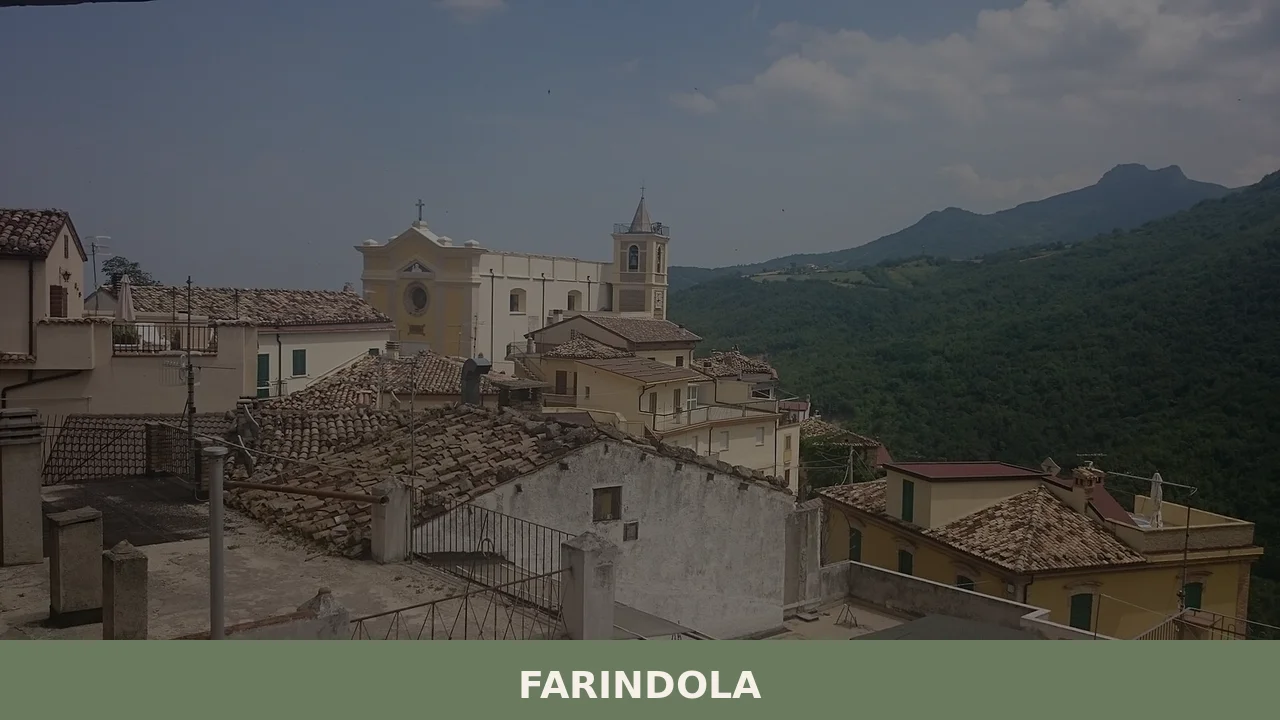
Farindola
 Mountain
What to see in Farindola, Abruzzo, Italy: explore the 28 m Vitello d’Oro falls, Gran Sasso National Park and Pecorino di Farindola. Discover 1,569 inhabitants strong.
Discover Farindola
The Vitello d’Oro waterfall drops 28 metres (92 ft) in a single curtain of water fed by the streams running off the Gran Sasso massif.
On the eastern slopes of that massif, where a continental humid climate pushes snow down to valley level in winter and keeps summers measurably cooler than the Adriatic coast below, a settlement of 1,569 people has occupied the same ridge since at least the early medieval period.
The sound of falling water reaches the road long before any signpost announces the village name.
For those planning what to see in Farindola, the answer starts with a national park, a historically significant waterfall, a cheese produced nowhere else on earth, and a medieval centre shaped by Lombard, Benedictine and Farnese influence in succession. Farindola, Abruzzo, Italy sits in the province of Pescara at an elevation that makes it a measurably different experience from the coastal resorts 40 km (24.9 mi) to the east. Visitors to Farindola find a working mountain community where the landscape and the food economy are directly connected.
History of Farindola
The name Farindola derives from the Lombard word for fara, meaning borough or settlement unit — the same etymological root shared by other Abruzzese villages such as Fara San Martino.
That origin places the formal organisation of the settlement in the early medieval period, when Lombard administrative structures reorganised the communities of the central Apennines. The Lombard presence did not, however, mark the beginning of human activity in the area. Palaeolithic findings from the surrounding territory indicate occupation thousands of years before any documented political authority took an interest in the site.
By the 11th century, the area around Farindola had become significant enough to attract Benedictine monasticism at scale.
Two major Benedictine monasteries operated in the territory during that century, contributing to the agricultural and cultural organisation of the land. The monastic presence meant literacy, Latin record-keeping, and the management of considerable landholdings.
Following that period, control of Farindola passed to the city of Penne, an important medieval centre in the Pescara hinterland, and later to the Farnese family, one of the most powerful dynastic houses in early modern Italy, whose influence extended across central Italy from Lazio to Abruzzo.
The most recent episode in the village’s documented history is also its most devastating. On 18 January 2017, an avalanche struck the Hotel Rigopiano, a resort located in the municipality of Farindola on the slopes of the Gran Sasso. The disaster, known as the Rigopiano avalanche, killed twenty-nine people and left eleven injured. The hotel had been operating in a zone where the combination of steep terrain and exceptional snowfall created conditions that proved catastrophic.
The event drew national and international attention to the municipality and remains a reference point in Italian civil protection history. The village of Castelvecchio Subequo, like Farindola, sits within the broader Abruzzese highland territory that has long contended with the seismic and meteorological risks characteristic of the central Apennines.
What to see in Farindola, Abruzzo: top attractions
Vitello d’Oro Waterfall
The waterfall known as Vitello d’Oro — Golden Calf — falls 28 metres (92 ft) in a concentrated drop fed by the drainage of the Gran Sasso massif’s eastern face.
The name is old and its exact origin is debated locally, but the physical feature is unambiguous: a single vertical plunge into a rocky basin surrounded by mixed woodland. The path to reach it from the village road covers moderate terrain and is most accessible between late spring and early autumn, when snowmelt has passed and trail conditions are stable. In winter, the fall can partially freeze, creating a different but equally specific visual effect.
The surrounding vegetation and rock formation reflect the continental humid climate that governs this side of the massif.
Gran Sasso e Monti della Laga National Park
Farindola sits entirely within the Gran Sasso e Monti della Laga National Park, one of the largest protected areas in Italy, covering approximately 150,000 hectares (370,658 acres) across three regions.
The park boundary includes the highest peak of the Apennine chain, the Corno Grande, which reaches 2,912 metres (9,554 ft). From the eastern access points near Farindola, marked trails lead into the protected zone, passing through beech forest, alpine meadow, and karst terrain. The park administration manages a network of itineraries suited to different levels of fitness, with the flatter valley paths accessible in good conditions from spring through autumn. Wildlife documented in the park includes the Apennine wolf, the Marsican brown bear in peripheral zones, the golden eagle, and the Apennine chamois.
Medieval Village Centre
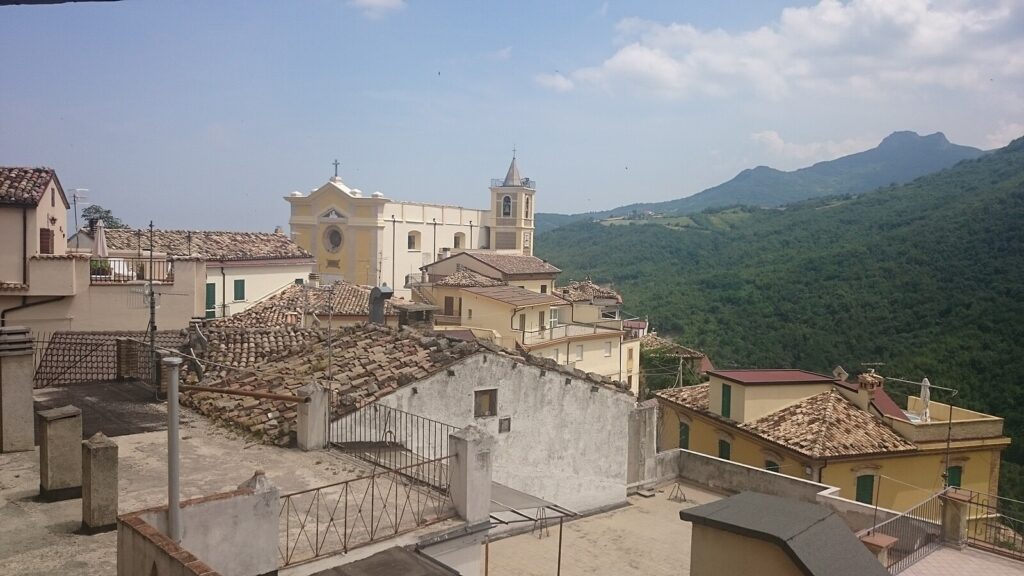
The historic nucleus of Farindola occupies a ridge position consistent with medieval defensive logic, with the oldest construction fabric concentrated along the upper lanes of the settlement. Stone buildings, many using local limestone, line narrow pedestrian corridors that follow the ridge contour rather than any regular grid.
The Lombard-derived administrative history of the village is legible in the irregular organic layout, which predates any Renaissance urban planning.
Walking the upper village takes no more than thirty to forty minutes at a measured pace, but the density of surviving medieval fabric rewards close attention. The former presence of two Benedictine monasteries in the 11th century suggests the village supported a larger institutional infrastructure than its current population of 1,569 would imply.
Hotel Rigopiano Memorial Site
The site of the former Hotel Rigopiano, located outside the village on the slopes of the Gran Sasso at an elevation significantly above the town centre, has become a place of documented historical memory following the avalanche of 18 January 2017. The event, which killed twenty-nine people, is one of the most serious avalanche disasters in recent Italian history. The site is reached by a road through the national park that is subject to seasonal closure; visitors should verify access conditions before travelling, particularly between November and April.
The location itself, at the edge of the Apennine high country, provides direct context for understanding the scale of terrain involved and the conditions that made the disaster possible.
Eastern Gran Sasso Trails Network
The trail network accessible from Farindola covers the eastern approach to the Gran Sasso massif, a sector less frequented than the western access via the L’Aquila plain and the famous cable car.
Several marked routes begin at or near the village and gain significant elevation over distances ranging from 8 km (5 mi) to over 20 km (12.4 mi). The terrain includes sections of exposed ridge walking above 2,000 m (6,562 ft), requiring appropriate equipment and experience, alongside lower-altitude forest paths suitable for less technical walkers. The best season for high-altitude itineraries runs from late June to mid-September, when snow coverage above 1,800 m (5,906 ft) is generally clear.
This side of the massif is also where what to see in Farindola extends beyond the village into one of the most geologically varied landscapes in peninsular Italy.
Local food and typical products of Farindola
The food economy of Farindola has always been shaped by altitude, climate, and pasture. The village sits at the edge of the Gran Sasso’s sheep-grazing zone, and animal husbandry — particularly sheep farming — has structured the local diet for centuries. The continental climate extends the period of high-altitude grazing while compressing the agricultural growing season, which means preserved and aged products historically dominated the local food supply. This is not incidental to the region’s culinary reputation: it is its structural cause.
The most significant product in the Farindola food tradition is Pecorino di Farindola, a sheep’s milk cheese produced exclusively in this area using a technique that distinguishes it from every other Italian pecorino: the rennet used in its production comes from pig stomach rather than lamb, a practice documented here and essentially absent elsewhere in Italian cheesemaking.
The cheese is aged for a minimum of 30 days for the fresh version and considerably longer — up to two years — for the stagionato variant.
The rind develops a dark, sometimes oiled surface in aged examples, and the paste progresses from supple and milky in young wheels to granular and sharp in the most mature. The technique is tied specifically to local pig breeds and traditional production calendars. Alongside cheese, the broader Abruzzese mountain table includes pasta alla chitarra, egg pasta cut on a wire-strung frame that produces square-sectioned spaghetti, typically dressed with lamb ragù or a sauce of local wild herbs.
Pecorino di Farindola holds a protected designation under the Presidio Slow Food classification, which identifies it as a product at risk of disappearing due to the labour-intensive nature of pig-rennet production and the declining number of producers.
The cheese is produced in a small number of farms in and around the municipality of Farindola, province of Pescara.
It is worth noting that several other Abruzzese villages in the inland Pescara province share elements of this pastoral food tradition; for instance, visitors exploring the area around Montenerodomo, further south in Abruzzo, will find comparable sheep-farming cultures embedded in the local food identity.
The best opportunity to find Pecorino di Farindola directly from producers is during the summer months, when the mountain farms are in active production and local markets in the Pescara hinterland stock the fresh version. The stagionato wheels are available year-round from producers who age their stock through the autumn and winter.
International visitors should note that producer farms in this area rarely have English-speaking staff, and transactions are typically conducted in cash.
Festivals, events and traditions of Farindola
The documented community calendar of Farindola is anchored to the agricultural and religious rhythms of the central Apennine mountain year.
The Abruzzese mountain village tradition broadly follows the Catholic liturgical calendar, with patron saint celebrations involving processions through the historic centre, the ringing of church bells, and communal gatherings that have structured local social life for generations. The specific format of these events — processions, outdoor masses, music in the main square — follows a pattern common to the province of Pescara but takes on particular character in a settlement of this size and elevation, where the entire community participates in a concentrated public space.
The Pecorino di Farindola cheese tradition also generates informal seasonal events tied to production cycles, particularly in summer when flocks return from high-altitude pasture and fresh cheese is available.
These are not formally calendared festivals in most years but rather production-linked moments when the village’s relationship with its most documented product is most visible to an outside visitor. Those researching what to see in Farindola in summer will find this period — roughly June through August — corresponds with both the most favourable hiking conditions in the national park and the most active phase of local pastoral activity.
When to visit Farindola, Italy and how to get there
The best time to visit Farindola depends on the type of activity planned.
For hiking in the Gran Sasso e Monti della Laga National Park, late June through mid-September offers the most reliable snow-free conditions on the high trails, with daytime temperatures at village level typically ranging between 18°C and 26°C (64°F and 79°F). Spring — April through early June — brings waterfall flows at their highest following snowmelt, making the Vitello d’Oro particularly active.
Winter visits are possible for experienced walkers with appropriate equipment, and the landscape above 1,500 m (4,921 ft) carries consistent snow cover from December through March. The Rigopiano avalanche of 2017 is a reminder that winter access to higher elevations requires careful planning and awareness of current conditions. For those asking about the best time to visit Abruzzo more broadly, the shoulder seasons of May and September combine manageable crowds with stable weather across both coast and mountains.
Farindola is accessible by car from Pescara, the nearest major city, in approximately 50 minutes via the SS81 road through the Pescara valley and then into the Gran Sasso foothills — a distance of roughly 45 km (28 mi). From Rome, the journey by car covers approximately 170 km (105.6 mi), making Farindola a viable day trip from the capital for those combining it with other Abruzzese stops. The nearest significant rail connection is Pescara Centrale, served by Trenitalia with direct services from Rome (approximately 2 hours on the fastest intercity services) and from other major Adriatic corridor cities.
From Pescara station, Farindola is reached by car or local bus; there is no direct rail connection to the village itself.
The nearest airport is Pescara International Airport (Aeroporto d’Abruzzo), located approximately 50 km (31 mi) from the village, with connections to several European cities. For international visitors arriving by air and planning a day trip from Pescara, renting a car at the airport is the most practical option, as public transport to the Gran Sasso foothills operates on limited schedules. English is rarely spoken in the smaller shops and farms of the area, and carrying euro cash is advisable for purchases at local producers and smaller establishments.
Those arriving by car from the north can use the A24 Rome–L’Aquila–Teramo motorway and approach the Gran Sasso from the western side before crossing to the Farindola sector, or enter via the A25 and exit toward Pescara before heading inland.
Road conditions in winter above 800 m (2,625 ft) require snow chains or winter tyres from November through April.
Visitors extending their itinerary through the Abruzzese interior might consider a stop at Lecce nei Marsi, a village in the Marsica area that also borders the national park system of central Abruzzo, or at Magliano de’ Marsi, another inland Abruzzese centre within reasonable driving range for those building a multi-day circuit through the region’s mountain communities.
Frequently asked questions about Farindola
What is the best time to visit Farindola?
The ideal time to visit Farindola depends on your interests. For hiking and exploring the Gran Sasso e Monti della Laga National Park, late June to mid-September offers clear high-altitude trails. Late spring to early autumn is best for accessing the Vitello d'Oro waterfall and flatter valley paths, with pleasant, cooler temperatures than the coast. Farindola experiences a continental humid climate, making summers refreshing. Winter brings snow, offering a different, quieter experience, though some park roads (like to Rigopiano Memorial) may close between November and April. The village celebrates its patron, Nicola di Mira, but specific festival dates are not provided.
What to see in Farindola? Main monuments and landmarks
Farindola offers a blend of historical and natural attractions. Explore the **Medieval Village Centre**, a labyrinth of stone buildings and narrow lanes reflecting its Lombard origins, perfect for a leisurely walk. Visit the **Hotel Rigopiano Memorial Site**, a place of historical memory located on the Gran Sasso slopes, though access should be verified seasonally (Nov-Apr). The village is also the gateway to the **Gran Sasso e Monti della Laga National Park**, where you can access various trails and enjoy the stunning mountain scenery. The **Vitello d'Oro Waterfall**, a 28-meter single drop, is a significant natural landmark accessible from late spring to early autumn.
What are the main natural or scenic attractions of Farindola?
Farindola is a gateway to the majestic **Gran Sasso e Monti della Laga National Park**, one of Italy's largest protected areas, offering diverse landscapes from beech forests to alpine meadows and karst terrain. Key natural features include the impressive **Vitello d'Oro Waterfall**, a 28-meter cascade accessible between late spring and early autumn. The village provides access to the **Eastern Gran Sasso Trails Network**, with routes ranging from moderate forest paths to challenging high-altitude ridge walks above 2,000 meters, ideal for experiencing the geologically varied Apennine landscape.
Where to take the best photos in Farindola?
For memorable photos, capture the unique charm of Farindola's **Medieval Village Centre**, with its ancient stone buildings and winding pedestrian lanes. The **Vitello d'Oro Waterfall** provides a dramatic backdrop, especially in winter when it can partially freeze, creating a distinct visual effect. Within the **Gran Sasso e Monti della Laga National Park**, opportunities abound: from panoramic views of the Corno Grande to the serene beauty of beech forests, alpine meadows, and the rugged karst terrain along the **Eastern Gran Sasso Trails**.
What can you do in Farindola? Activities and experiences
Farindola offers a rich array of activities focused on nature, history, and gastronomy. **Hiking** is paramount, with diverse trails in the Gran Sasso e Monti della Laga National Park, from gentle valley paths to challenging high-altitude routes. Explore the **Medieval Village Centre** on foot, discovering its ancient Lombard-influenced layout. Indulge in the local **food economy**, particularly tasting the unique Pecorino di Farindola cheese, a Presidio Slow Food product, and savoring traditional Abruzzese dishes like pasta alla chitarra with lamb ragù.
Who is Farindola suitable for? Families, couples, hikers, solo travelers?
Farindola is ideal for **hikers and nature lovers** of all levels, offering a vast network of trails in the Gran Sasso e Monti della Laga National Park. It appeals to **food enthusiasts** eager to experience authentic mountain cuisine, especially the unique Pecorino di Farindola. **History buffs** will appreciate the medieval village center and its ancient origins. **Couples and solo travelers** seeking a tranquil escape into an authentic mountain community, away from coastal crowds, will find Farindola's cooler summers and natural beauty particularly appealing.
What to eat in Farindola? Local products and specialties
The culinary highlight of Farindola is **Pecorino di Farindola**, a unique sheep's milk cheese distinguished by its use of pig rennet, making it a Presidio Slow Food product. This cheese is aged from 30 days up to two years, developing distinct flavors. Beyond the cheese, the local food tradition features **pasta alla chitarra**, an egg pasta cut into square-sectioned spaghetti, typically served with a rich **lamb ragù** or a sauce of local wild herbs. These specialties reflect Farindola's deep-rooted pastoral and mountain food economy.
📷 Photo Gallery — Farindola
Nearby Villages near Farindola
In Abruzzo More villages to discover
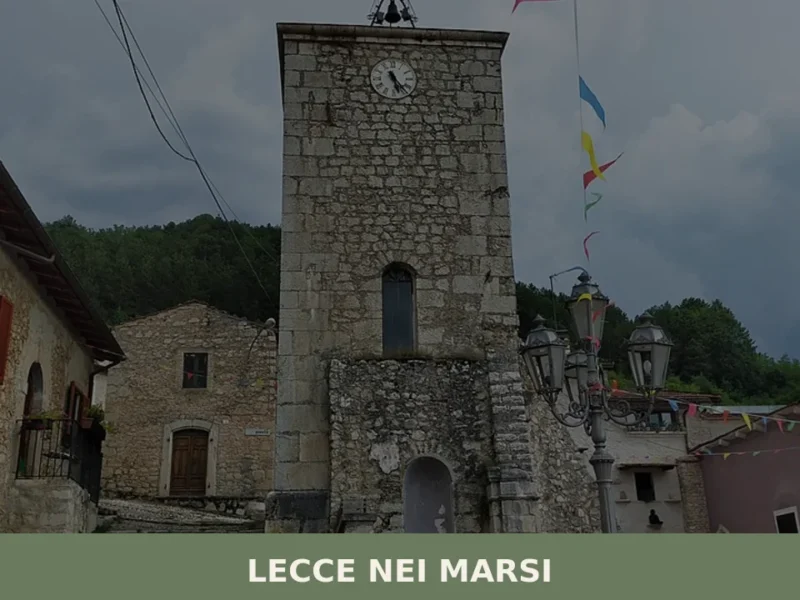
Lecce nei Marsi
Mountain
Lecce nei Marsi has 1,534 inhabitants spread between the main centre and outlying hamlets along the eastern slope of the Marsica area, at 740 metres above sea level. The municipal territory borders the Abruzzo, Lazio and Molise National Park and falls within the province of L’Aquila. Anyone looking into what to see in Lecce nei […]
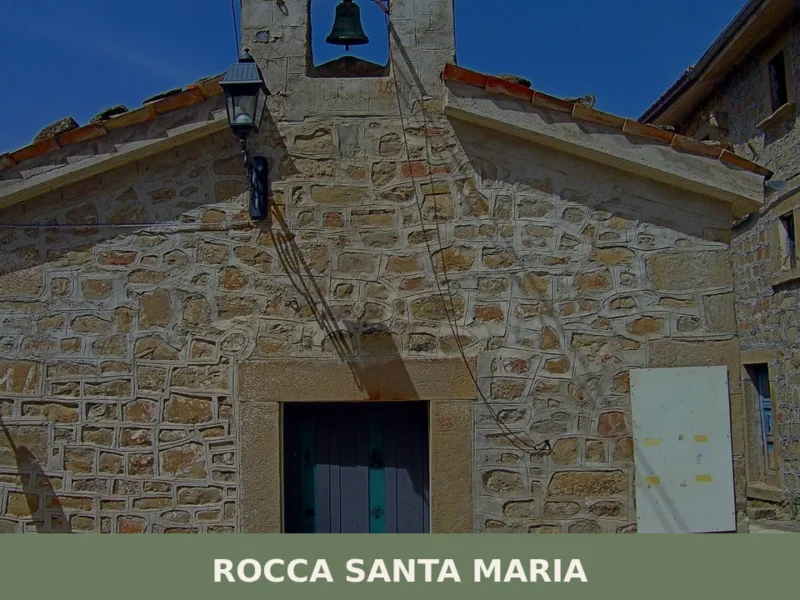
Rocca Santa Maria
Mountain
what to see in rocca santa maria, Italy. Explore a village of 560 inhabitants within Gran Sasso e Monti della Laga National Park. Discover its mountain frazioni and natural beauty.
Liscia
Mountain
What to see in Liscia: 642 residents, alt. 740 m. Discover Saint Michael's Church and arrosticini! Explore history and cuisine.
Abbateggio
 Hills
Hills
With just 359 registered inhabitants, Abbateggio is one of the least populated municipalities in the province of Pescara, situated at 450 metres above sea level on the eastern slope of the Majella. Asking what to see in Abbateggio means preparing for an itinerary that covers sacred architecture built in Majella stone, farro and olive oil […]
Gessopalena
Mountain
In 1943, retreating German troops dynamited the entire historic core of Gessopalena, reducing to rubble a settlement that for centuries had exploited the geological peculiarity of its terrain: gypsum. That whitish mineral, quarried and worked since Roman times, had given the village its name and shaped its houses, its walls, even the foundations of its […]
Celano
Mountain
The Castello Piccolomini in Celano, with its four corner towers and curtain wall enclosing a perimeter of over one hundred metres, commands the Fucino plain from an altitude of 840 metres. Anyone wondering what to see in Celano will find an unequivocal starting point here: a fortress that has endured six centuries of history, earthquakes […]
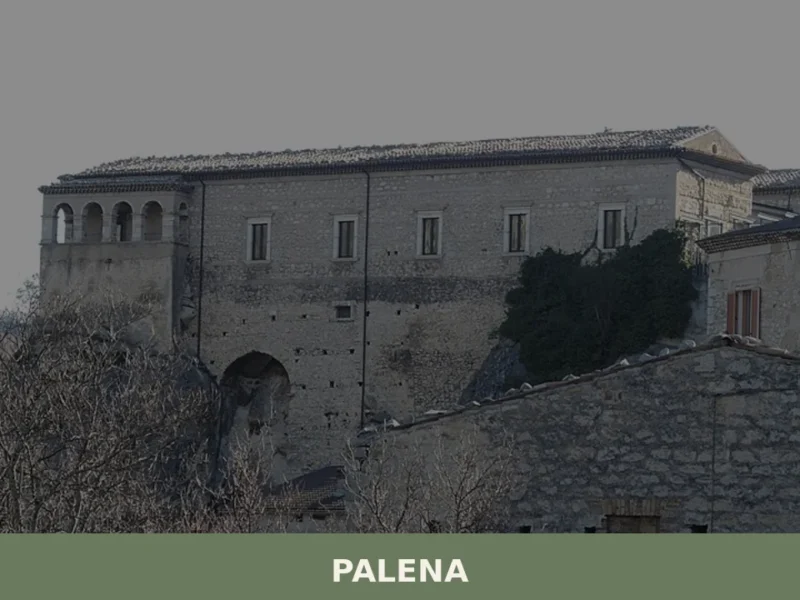
Palena
Mountain
What to See in Palena: discover 5 must-see attractions, from the Ducal Castle to the Marsican Bear Museum. Plan your visit and taste local products.
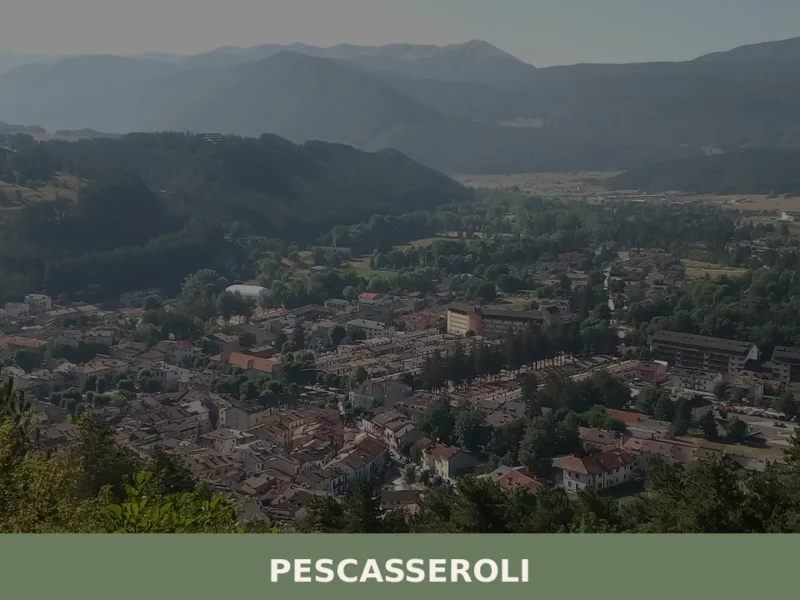
Pescasseroli
Mountain
What to see in Pescasseroli: from the Abruzzo National Park to Croce's birthplace, UNESCO beech forests, mountain cuisine and practical information for visiting the village.
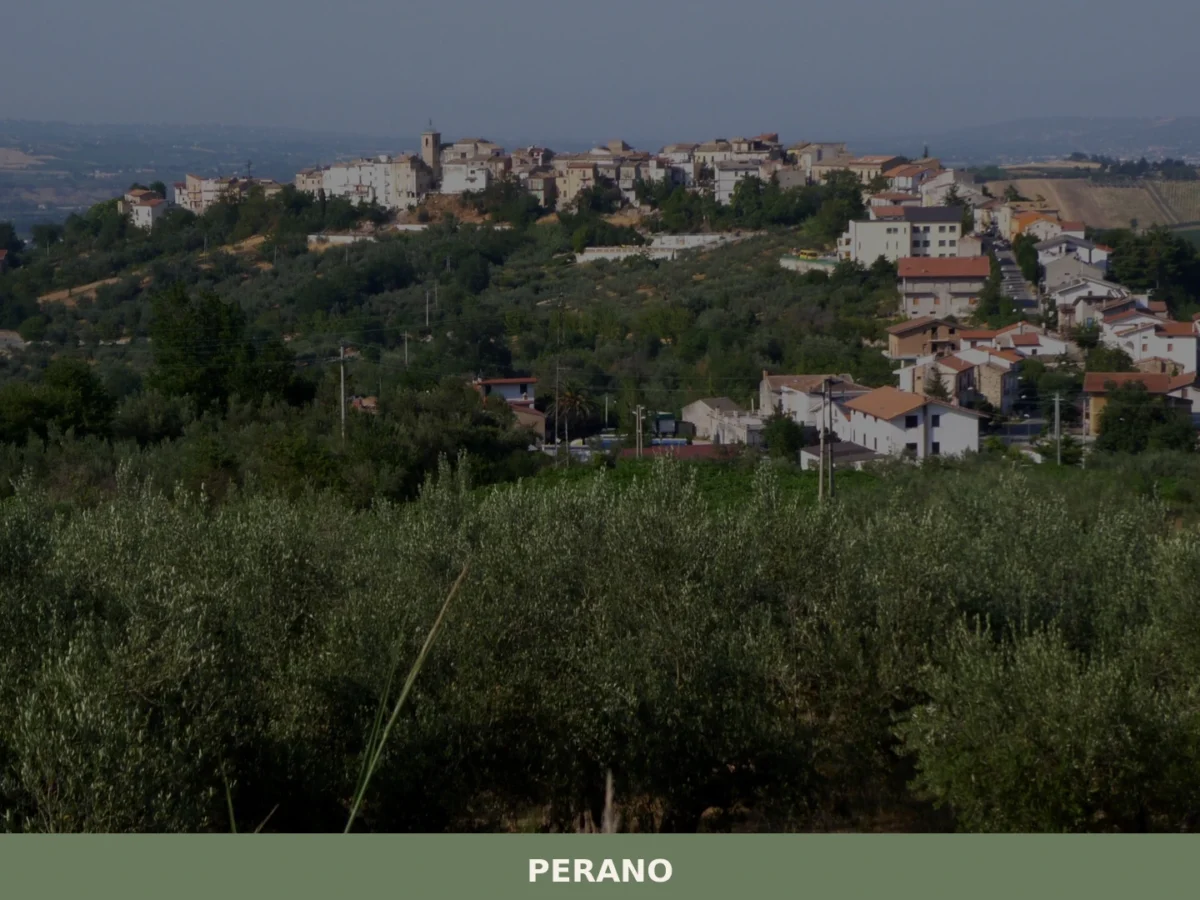
Perano
 Plains
What to see in Perano? Discover the complete guide to the 3 unmissable attractions of this Abruzzo village. Plan your visit now!
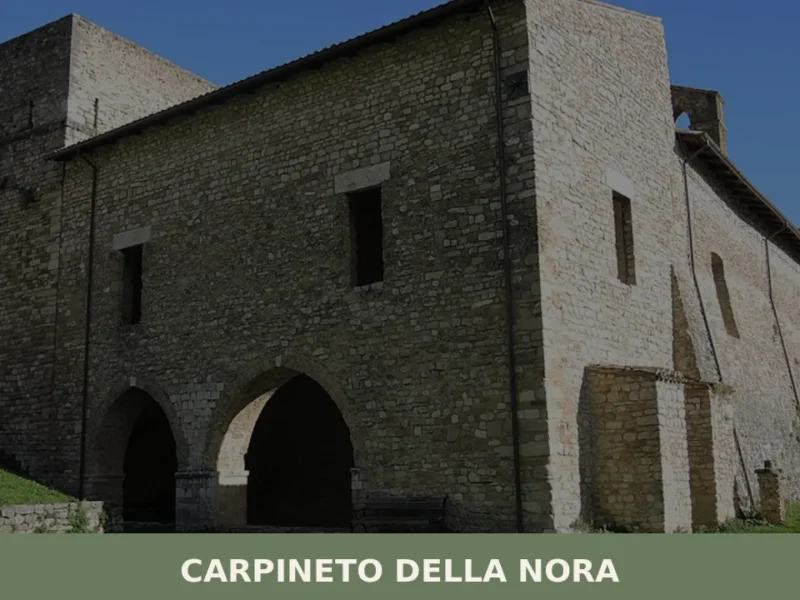
Carpineto della Nora
Hills
At 535 metres above sea level, on the ridge separating the Nora valley from the Pescara plain, Carpineto della Nora has a current population of 536 — a number that has halved since post-war censuses. Anyone looking into what to see in Carpineto della Nora will find a settlement built entirely from local stone, spread […]



🏡 Know Farindola better than we do?
If you’re a local or have been there, your knowledge matters: add what’s missing or fix a detail on this page.