


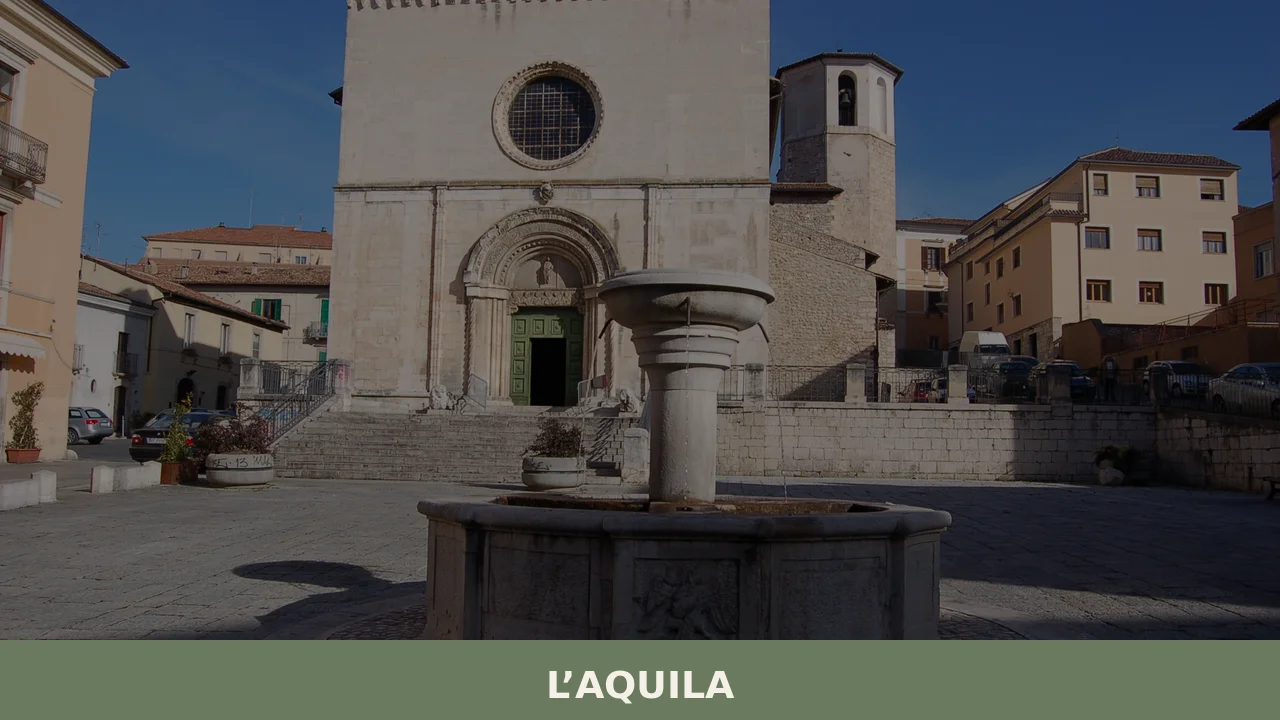
L’Aquila
 Lake
Lake
 Mountain
what to see all’Aquila: 5 attractions storiche, prodotti PAT e consigli pratici per visitare la città abruzzese a 714 m s.l.m. Pianifica il tuo itinerario.
Discover L’Aquila
History and origins of L’Aquila
Founded in 1254 at the behest of Conrad IV of Swabia, L’Aquila was born as a deliberate political project: to unite the castles and villages scattered across the Apennine plateaus of inland Abruzzo into a single walled city.
Legend has it that ninety-nine castles contributed to its construction, a number still reflected today in the Fontana delle 99 Cannelle, built in 1272 and remaining the most recognisable symbol of the city’s identity.
Each grotesque mask carved into its white and pink stone slabs represents one of the founding villages, and water has flowed uninterruptedly through those stone faces for centuries.
In the fourteenth century L’Aquila became one of the most flourishing commercial centres in southern Italy, thanks to the wool trade and saffron, cultivated on the surrounding plateaus and exported throughout Europe.
The city obtained its own municipal charter and a lively artisan activity that attracted merchants from Florence, Venice and the Low Countries. This period of prosperity left a lasting architectural imprint: basilicas, noble palaces and Romanesque-Gothic churches that still define the historic centre today.
The earthquake of 6 April 2009 marked a sharp caesura in the city’s recent history.
With a magnitude of 6.3 on the Richter scale, the tremor caused 309 fatalities and severe damage to the historic building heritage. Since then, L’Aquila has faced one of the most complex reconstruction processes ever undertaken in Italy, which has progressively restored monuments, churches and squares to public use. This journey has transformed the city into an international case study on the management of cultural heritage following a natural disaster.
Those exploring what to see in L’Aquila today move through a city that is still partly a construction site, yet with a historic centre that reclaims its legibility a little more each day.
What to see in L’Aquila: main attractions
Fontana delle 99 Cannelle
The white and pink stone slabs lining the octagonal basin of the Fontana delle 99 Cannelle still bear the marks of water that has flowed through them for over seven centuries.
Built in 1272 to a design by Tancredi da Pentima, the fountain is located in the Rivera district, in a square enclosed on three sides by medieval walls that create a unique acoustic effect: the sound of the water multiplies and fills the space.
Each of the ninety-nine sculpted masks has different features, as each one represents one of the castles that founded the city. Some faces display realistic human expressions, while others have zoomorphic or grotesque characteristics. The structure was enlarged in the 17th century with the addition of a fourth wall.
To observe the details of the masks up close, it is best to visit in the morning hours, when the raking light highlights their three-dimensionality.
Basilica di Santa Maria di Collemaggio
The façade of the Basilica di Santa Maria di Collemaggio is one of the most recognisable architectural surfaces in central Italy: slabs of white and pink stone arranged in alternating bands create a geometric pattern covering the entire front, punctuated by three portals and a large central rose window dating back to the 13th century.
Pietro da Morrone, the hermit monk who became pope under the name Celestine V in 1294, chose this church as the site of his coronation and established here the Perdonanza Celestiniana, the first documented form of jubilee in the history of the Catholic Church, predating the Roman jubilee of 1300 by one year.
The 2009 earthquake severely damaged the transept and bell tower, and the restoration works have allowed the original masonry structures to be studied in unprecedented detail.
Inside, the white marble mausoleum of Celestine V occupies the right nave and constitutes the focal point of the visit.
Castello Cinquecentesco and Museo Nazionale d’Abruzzo
The Castello Cinquecentesco of L’Aquila stands out in the urban skyline for its perfectly square plan with four corner bastions, built between 1534 and 1567 on the orders of Pedro de Toledo on behalf of the Spanish crown.
The structure was never a residential castle, but a military fortress for controlling the territory and its population: a wide and deep moat still surrounds its perimeter today.
Inside, the Museo Nazionale d’Abruzzo houses one of the most important palaeontological collections in central Italy, including the near-complete skeleton of a mammoth discovered in 1954 in Scoppito, a few kilometres from the city. The collections also include medieval sculptures, paintings from the 14th to the 18th century, and sacred goldwork.
Access is via a bridge over the moat that offers a direct view of the fortress’s brick walls.
Piazza del Duomo and the Cathedral of San Massimo
Piazza del Duomo is the urban space where L’Aquila most clearly expresses the layering of its centuries: the daily market has been held here since the Middle Ages, and the buildings that define its boundaries belong to different eras that coexist without interruption.
The Cathedral of San Massimo, dedicated to Saints Massimo and Giorgio, was rebuilt several times following historic earthquakes, and its current façade, in neoclassical style, dates back to the reconstruction works of the 19th century.
The 2009 earthquake again compromised its structure, necessitating a lengthy restoration that is still ongoing in some parts. The square also features the Town Hall and the church of the Anime Sante, with an 18th-century baroque façade that contrasts with the austerity of the cathedral.
The morning market, active every weekday, allows visitors to observe daily life in L’Aquila in a space that has maintained its original function for approximately seven hundred years.
Basilica di San Bernardino
The portal of the Basilica di San Bernardino, completed in 1527 by Cola dell’Amatrice, is considered one of the masterpieces of the Abruzzese Renaissance: three superimposed orders of Corinthian pilasters, niches with statues, and decorative reliefs cover a façade approximately twenty-two metres tall.
The church was erected in honour of Bernardino da Siena, canonised in 1450, whose remains are preserved in the mausoleum inside, a work by Silvestro dell’Aquila dating to 1505.
The octagonal dome, visible from various points in the historic centre, was built in the 18th century and reached a diameter of eighteen metres. The 2009 earthquake damaged part of the interior structure, but the façade remained substantially intact. The three-nave interior preserves frescoes, canvases, and wooden sculptures that document five centuries of artistic patronage in L’Aquila. When considering what to see in L’Aquila in terms of Renaissance architecture, this basilica stands as the most compelling point of reference.
Typical cuisine and products of L’Aquila
The cuisine of the L’Aquila area reflects the geography of a city situated at 714 metres above sea level, between open plateaus and Apennine valleys.
Sheep farming has historically dominated the rural economy, shaping a cuisine based on ovine meats and raw-milk cheeses.
The influence of the tratturi — the ancient transhumance routes that cross the interior of Abruzzo — can still be read in the recipes, in the meat preservation techniques, and in the extensive use of local spices, foremost among them chilli pepper and saffron from the L’Aquila area.
Among the dishes most deeply rooted in local tradition, pecora alla callara involves slow cooking in a copper cauldron with mountain aromatic herbs, a technique directly linked to the transhumant pastoral culture.
Scrippelle ‘mbusse, thin crêpes made from flour and egg immersed in chicken broth, represent the festive first course and can still be found in the trattorias of the historic centre.
Brodetto di pecora with tomato and peppers is, on the other hand, the quintessential everyday dish of the mountain villages of the hinterland.
L’Aquila saffron, cultivated mainly in Navelli and its surroundings, is the ingredient that sets many local preparations apart from similar recipes in neighbouring regions: its use in risottos, meats and desserts has been documented for at least five centuries in written sources.
Among the certified products found in the area, Caciofiore aquilano (PAT) — municipalities: L’Aquila, Navelli, Caporciano — is a fresh cheese obtained by coagulating sheep’s milk with vegetable rennet derived from wild thistle, a technique dating back to the Roman cheesemaking tradition, which gives the product a soft texture and a slightly bitter flavour.
Arrosticini (PAT) — municipalities: Pescara, Chieti, Teramo, L’Aquila — are skewers of ovine meat cut into regular cubes and cooked over a narrow, elongated grill called a “furnacella”; the meat used is almost exclusively castrato or adult sheep, never lamb.
Caciocavallo abruzzese (PAT) — municipalities: L’Aquila, Chieti, Pescara, Teramo — is an aged stretched-curd cheese produced in pear-shaped forms weighing one or two kilograms, hung to mature in pairs tied with string.
Centerba (PAT) — municipalities: Tocco da Casauria, Pescara, Chieti — is an herbal liqueur obtained by macerating over one hundred alpine and Apennine herbs in pure alcohol, with an alcohol content exceeding 70 degrees; it has historically been produced in the Majella area but is widespread throughout the entire region.
The month of October concentrates some of the most attended gastronomic events in the province: festivals dedicated to saffron are held in Navelli and Caporciano, with local producers’ markets and demonstrations of stigma harvesting.
In the city of L’Aquila, the weekly Wednesday market in Piazza d’Armi regularly hosts stalls selling locally produced cheeses and cured meats.
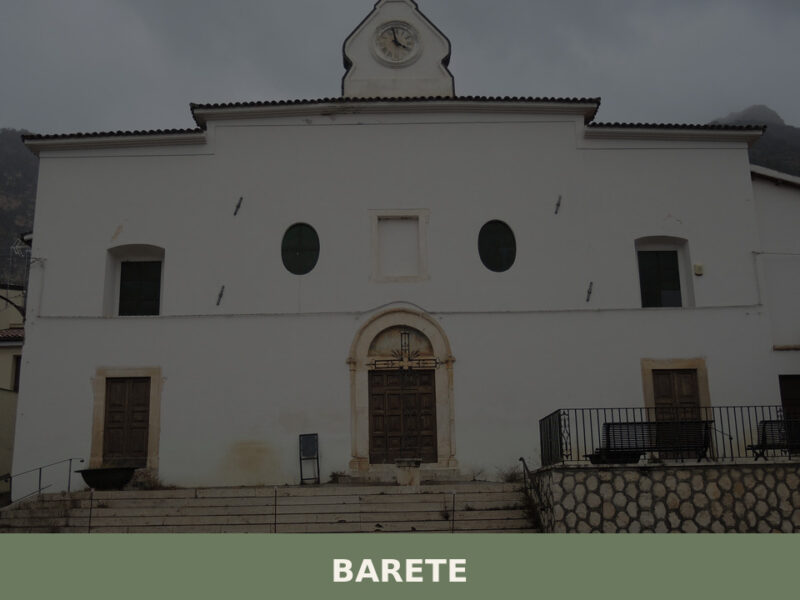
Those seeking dairy products from the L’Aquila area can also look towards the small village of Barete, a few kilometres north-west of the city, where several farms continue to produce sheep’s milk cheeses using traditional methods.
Festivals, events and traditions of L’Aquila
The Perdonanza Celestiniana is the most significant historical event in L’Aquila’s calendar.
It takes place every year between 28 and 29 August, coinciding with the date on which Pope Celestine V, in 1294, issued the bull of pardon granting plenary indulgence to all the faithful who had passed through the Holy Door of the Basilica of Santa Maria di Collemaggio. The event has been listed since 2019 in the UNESCO Register of Good Safeguarding Practices for Intangible Cultural Heritage.
The heart of the event is the historical procession in medieval costume through the streets of the centre, followed by the solemn opening of the Holy Door on the evening of 28 August. In 2021, the Perdonanza was recognised by UNESCO as Intangible Cultural Heritage of Humanity.
The Feast of San Massimo, patron saint of the city, falls on 10 June with liturgical celebrations in the cathedral and throughout the historic centre.
Among the most deeply rooted traditions is also the Corsa degli Zingari, a historical equestrian competition held within the municipal territory in the form of a historical re-enactment. The month of December brings the living nativity scene to the churches and alleyways of the centre, a tradition involving the historic districts of the city with performances replicating scenes documented in local medieval paintings.
Knowing what to see in L’Aquila in August also means taking part in this layering of rites spanning seven centuries of civic and religious history.
When to Visit L’Aquila and How to Get There
The period between May and October offers the most favourable climatic conditions for what to see in L’Aquila. In spring, the historic centre can be explored without excessive crowds, and temperatures, which rarely exceed 25 degrees during the summer months, make sightseeing on foot comfortable.
August concentrates tourists and residents during the Perdonanza celebrations, which means more life in the streets but also greater difficulty finding accommodation without advance booking.
Autumn, particularly September and October, is when the colours of the forests on the surrounding plateaus offer a landscape of particular interest for those travelling along the provincial roads.
Winter is cold and snowy, with temperatures frequently dropping below zero, but the historic centre maintains its commercial activity and the churches are regularly open to visitors.
If you arrive by car via the A24 Rome–L’Aquila motorway, the exit is L’Aquila Ovest or L’Aquila Est depending on your direction of travel, both less than five kilometres from the centre. From Rome the journey is approximately 120 km, with a driving time of around one and a half hours. L’Aquila railway station is connected to the regional network with direct trains from Sulmona and Rieti; for up-to-date timetables and active lines it is best to consult the Trenitalia website.
The nearest international airport is Rome Fiumicino, approximately 130 km away, reachable by car or shuttle.
Pescara Airport is around 100 km away and serves a number of domestic and European destinations. Those travelling from Anversa degli Abruzzi, a village in the Valle del Sagittario about 50 km to the south, can reach L’Aquila by taking the SS17 state road through Sulmona, a scenic journey through canyons and plateaus.
Those departing from Anversa degli Abruzzi will find this road one of the most rewarding routes through inland Abruzzo.
| Departure point | Distance | Estimated time |
|---|---|---|
| Rome (A24) | 120 km | 1 h 30 min |
| Pescara (A25 + SS17) | 100 km | 1 h 15 min |
| Sulmona (SS17) | 55 km | 50 min |
| Fiumicino Airport | 130 km | 1 h 40 min |
Where to Stay in L’Aquila
L’Aquila’s accommodation offering includes hotels in the historic centre, bed and breakfasts in the rebuilt districts, and agriturismi in the hillside hamlets of the municipality. Many establishments have gradually reopened since 2009, and their distribution still reflects the geography of the reconstruction: some areas of the centre offer accommodation in restored buildings, while the eastern outskirts are home to more recently built properties.
For updated opening times, availability and prices it is advisable to check directly on booking platforms or on the Comune di L’Aquila website.
Those who prefer a rural setting may wish to look towards the surrounding villages, such as Ari, which offers an alternative perspective on inland Abruzzo while remaining at a reasonable distance from the city.
Those visiting L’Aquila and intending to explore the surrounding territory can include Fara Filiorum Petri in their itinerary — a village east of the city renowned for the tradition of the “Farchie” — large bundles of reeds set alight in honour of Saint Anthony the Abbot every 16 January — one of the most well-documented ritual commemorations in the entire region.
Frequently asked questions about L’Aquila
What is the best time to visit L'Aquila?
Spring (April–June) and early autumn (September–October) offer the most pleasant conditions, with mild temperatures and clear mountain air at 714 metres elevation. June is particularly significant: the feast of patron saint Massimo d'Aveia is celebrated on 10 June, and 20 May marks another patronal observance. Late August brings the Perdonanza Celestiniana, the historic jubilee tied to the Basilica di Santa Maria di Collemaggio. October is ideal for food tourism, with saffron festivals in nearby Navelli and Caporciano. Summer is warm and far less crowded than coastal Abruzzo destinations.
What are the historical origins of L'Aquila?
L'Aquila was founded in 1254 at the behest of Conrad IV of Swabia as a planned city uniting ninety-nine Apennine castles and villages into a single fortified centre. By the 14th century it had become one of the most prosperous commercial hubs in southern Italy, driven by the wool trade and saffron exports to Florence, Venice and northern Europe. The city obtained its own municipal charter and attracted merchants from across the continent. The devastating earthquake of 6 April 2009 (magnitude 6.3) caused 309 deaths and triggered one of Italy's most complex heritage reconstruction processes.
What to see in L'Aquila? Main monuments and landmarks
The essential itinerary includes: the Fontana delle 99 Cannelle (1272), best visited in morning light to appreciate the sculpted masks; the Basilica di Santa Maria di Collemaggio, with its striking pink-and-white geometric façade and the mausoleum of Celestine V; the Castello Cinquecentesco (1534–1567), housing the Museo Nazionale d'Abruzzo with a near-complete mammoth skeleton; Piazza del Duomo, active with a daily morning market; and the Basilica di San Bernardino, whose Renaissance portal by Cola dell'Amatrice (1527) is among the finest in central Italy. Admission to the castle museum varies; check the museum's official site for current hours post-restoration.
What are the main natural or scenic attractions near L'Aquila?
L'Aquila sits at the gateway to the Gran Sasso e Monti della Laga National Park, one of the largest protected areas in the Apennines. The Campo Imperatore plateau, reachable by cable car from Fonte Cerreto, offers high-altitude trekking with CAI-marked trails and sweeping views across central Italy. The Calderone glacier, the southernmost glacier in Europe, lies within the Gran Sasso massif. The Navelli plain, historically significant for saffron cultivation, provides scenic walks in autumn when the crocus fields are in bloom.
Where to take the best photos in L'Aquila?
The most photogenic spots include the basin of the Fontana delle 99 Cannelle at morning, when raking light defines the carved masks; the façade of Santa Maria di Collemaggio, especially at golden hour when the pink-and-white stonework is most vivid; the bridge over the moat of the Castello Cinquecentesco, which frames the brick fortress walls; and the balconies overlooking Piazza del Duomo during the morning market. For panoramic city views, the surrounding hillsides and the Gran Sasso foothills offer elevated vantage points over the historic centre and the Apennine backdrop.
Are there museums, churches or historic buildings to visit in L'Aquila?
Yes. The Museo Nazionale d'Abruzzo, housed inside the Castello Cinquecentesco, displays palaeontological collections (including a near-complete mammoth skeleton), medieval sculptures, paintings from the 14th–18th centuries and sacred goldwork. The Basilica di Santa Maria di Collemaggio and the Basilica di San Bernardino are both actively open for visits, though some areas remain under post-2009 restoration. The Cathedral of San Massimo on Piazza del Duomo is partially restored. Opening hours and admission fees for the national museum are best confirmed via the official MiC (Italian Ministry of Culture) website, as schedules continue to evolve with ongoing restoration works.
What can you do in L'Aquila? Activities and experiences
L'Aquila offers a diverse range of activities: urban heritage walks through a historic centre progressively reclaimed after the 2009 earthquake; visits to the Museo Nazionale d'Abruzzo; trekking and mountain hiking in the Gran Sasso e Monti della Laga National Park via CAI-marked trails; cable car ascent to Campo Imperatore for high-altitude walks; food and wine experiences focused on saffron, arrosticini and local cheeses; and attendance at the Perdonanza Celestiniana in late August, a UNESCO-recognised event. Winter months attract skiers to the nearby Gran Sasso ski slopes, reachable in under an hour from the city.
Who is L'Aquila suitable for? Families, couples, hikers, solo travelers?
L'Aquila suits a wide range of visitors. History and architecture enthusiasts will find an exceptionally rich, if still partly reconstructed, medieval and Renaissance urban environment. Hikers and outdoor lovers benefit from immediate proximity to Gran Sasso trails and the Campo Imperatore plateau. Families can combine the mammoth skeleton at the national museum with accessible nature excursions. Couples seeking a less touristed, culturally layered Italian city will appreciate the authentic atmosphere of the daily market and the restored piazzas. Solo travellers interested in post-disaster urban resilience will find L'Aquila a genuinely thought-provoking destination unlike any other in Italy.
What to eat in L'Aquila? Local products and specialties
L'Aquila's table is shaped by its mountain altitude and pastoral heritage. Key specialties include: arrosticini (PAT), skewers of castrato or adult sheep grilled on a narrow furnacella; pecora alla callara, sheep slow-cooked in a copper cauldron with mountain herbs; scrippelle 'mbusse, thin crêpes served in chicken broth; and L'Aquila saffron (from nearby Navelli), used in risottos, meats and desserts for over five centuries. Among certified products: Caciofiore aquilano (PAT), a fresh sheep's-milk cheese with vegetable rennet; and Caciocavallo abruzzese (PAT), an aged stretched-curd cheese. Centerba, an intense herbal liqueur exceeding 70% alcohol, is the traditional digestif.
Nearby Villages near L’Aquila
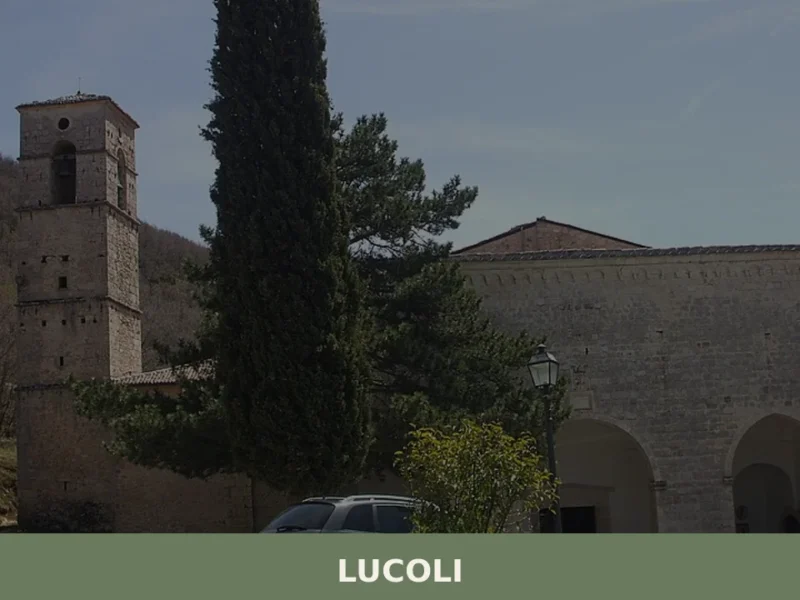
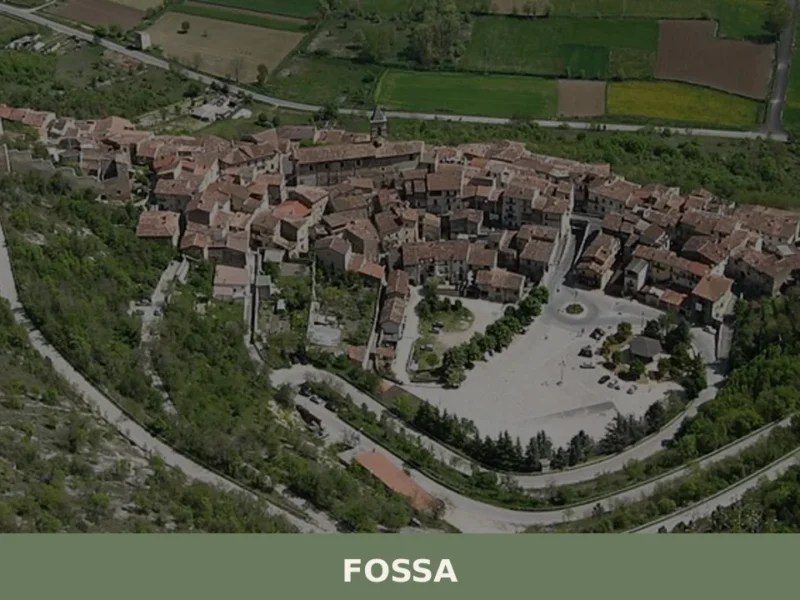
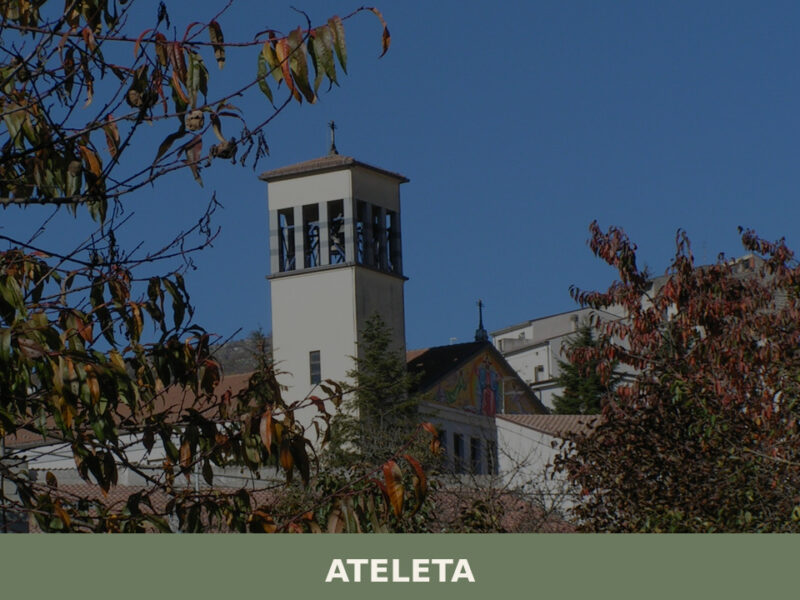
Nearby villages we are mapping:
- Capitignano Abruzzo 📍 20.4 km Coming soon
In Abruzzo More villages to discover
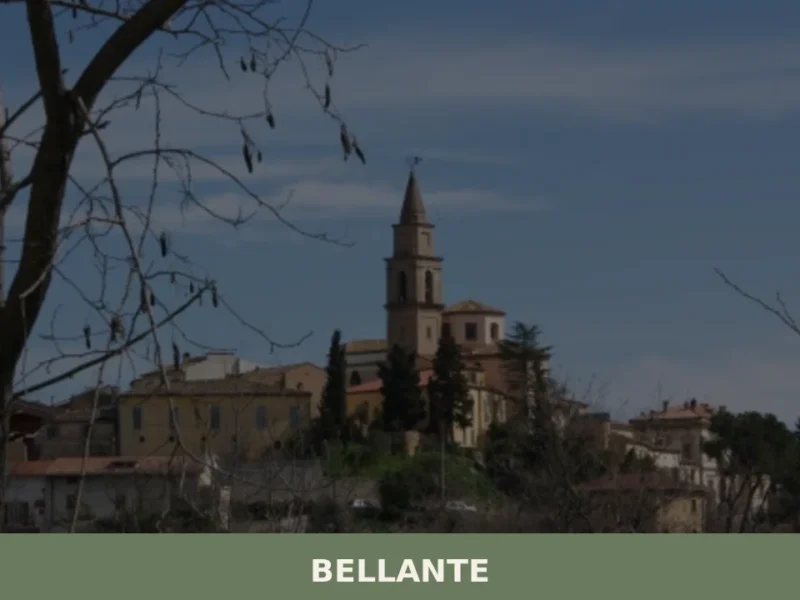
Bellante
 Hills
Hills
The road into Bellante rises through a sequence of switchbacks that open, at the last bend, onto a compact hilltop settlement in the Teramo hills of Abruzzo. Stone buildings press close against one another along the ridge, and the Torre Civica — the civic tower at the center of the old settlement — marks the […]
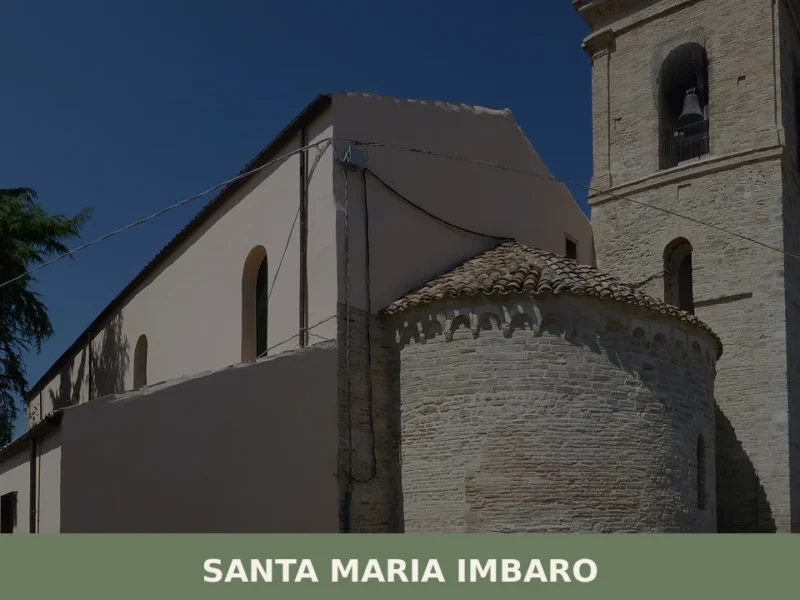
Santa Maria Imbaro
 Sea
Sea
The hill that supports Santa Maria Imbaro stands out sharply against the outline of the Chieti countryside: the low rooftops, the local stone façades and the bell tower of the parish church form a compact silhouette that can be read from the provincial road, even before turning into the village. The local dialect calls it […]
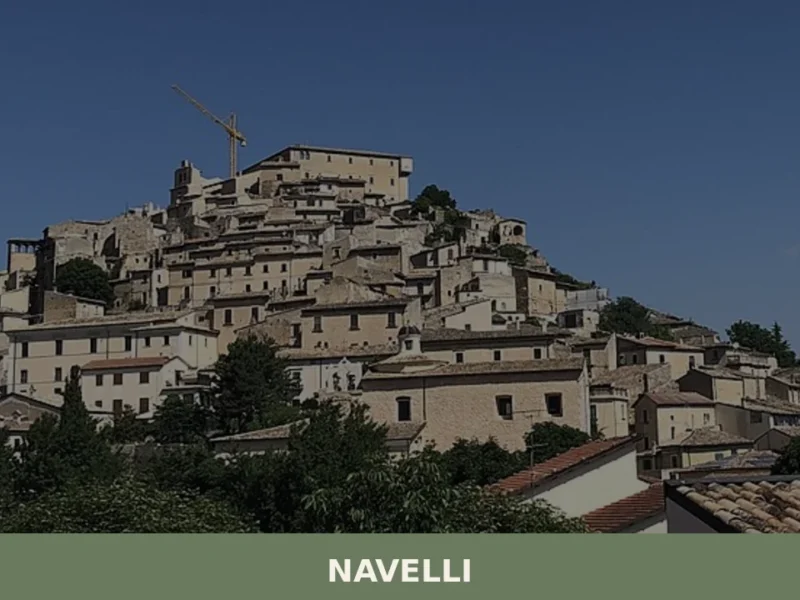
Navelli
Mountain
Navelli has a current population of 537 and occupies a plateau at 760 metres above sea level on the homonymous highland, in the province of L’Aquila. Saffron cultivation in this area has been documented since at least the 13th century, when the spice became a trade commodity destined for the markets of Milan, Venice and […]
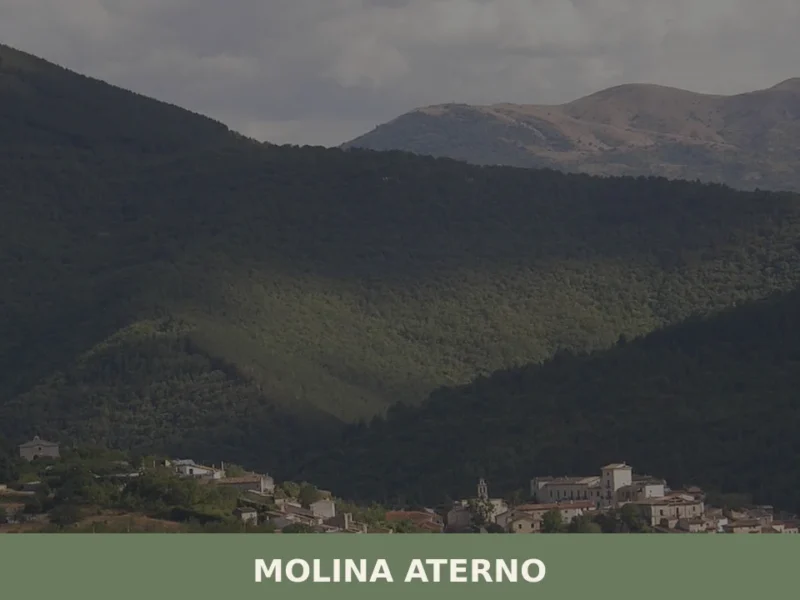
Molina Aterno
Mountain
What to see in Molina Aterno, Italy: 3 historic monuments, a 12th-century church and a baronial palace. Discover how to get there and when to visit Abruzzo.
Oricola
Mountain
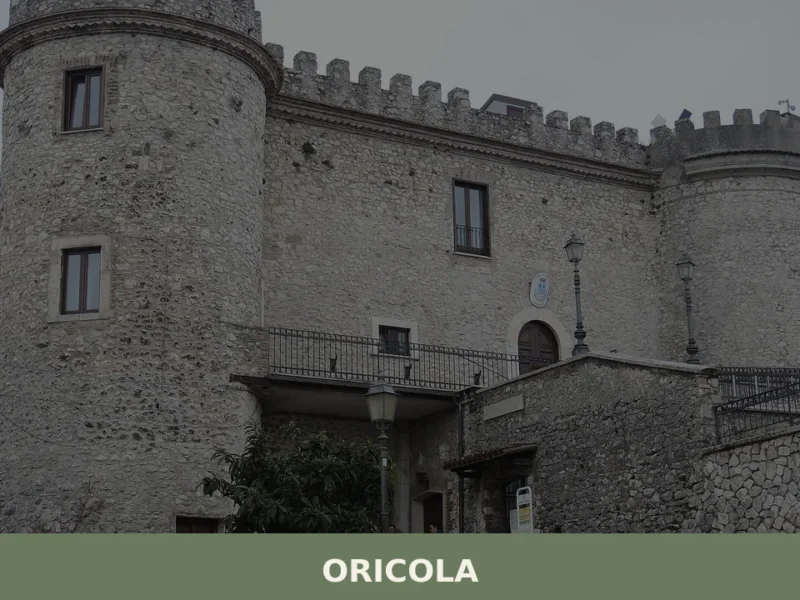
What to see in Oricola, Italy? Explore its 1,182 inhabitants, ancient Italic settlements, and a mid-15th century fortress. Discover this Abruzzo village.
Rapino
Hills
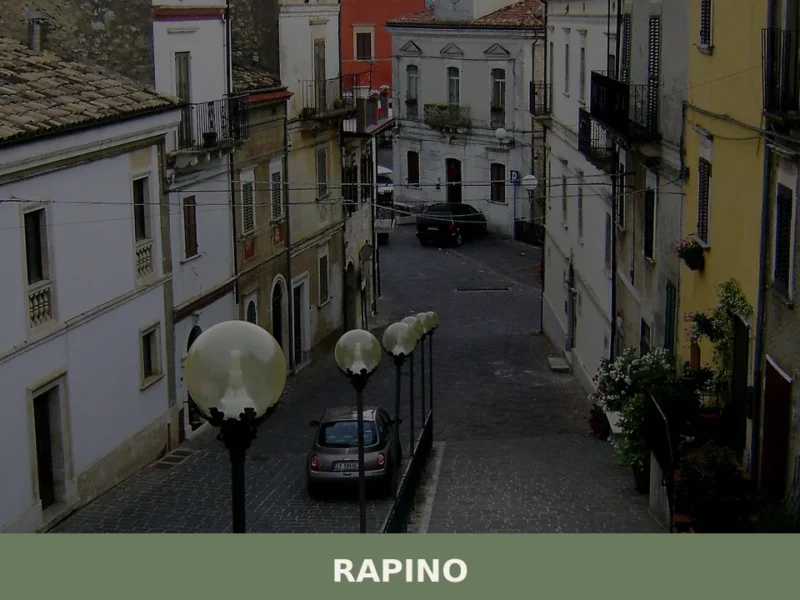
What to see in Rapino: discover the 5 top attractions in this Abruzzo village, from the castle to traditional ceramics. Plan your visit.
Rivisondoli
Mountain
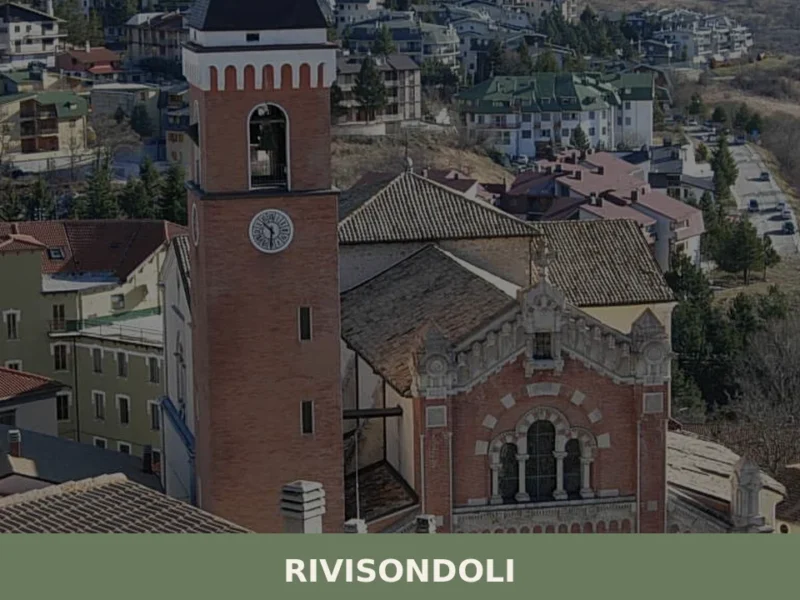
What to see in Rivisondoli, Italy: ski slopes, medieval history since 724 AD, and mountain cuisine. Explore this 684-resident Abruzzo village. Discover it now.
Campo di Giove
Mountain
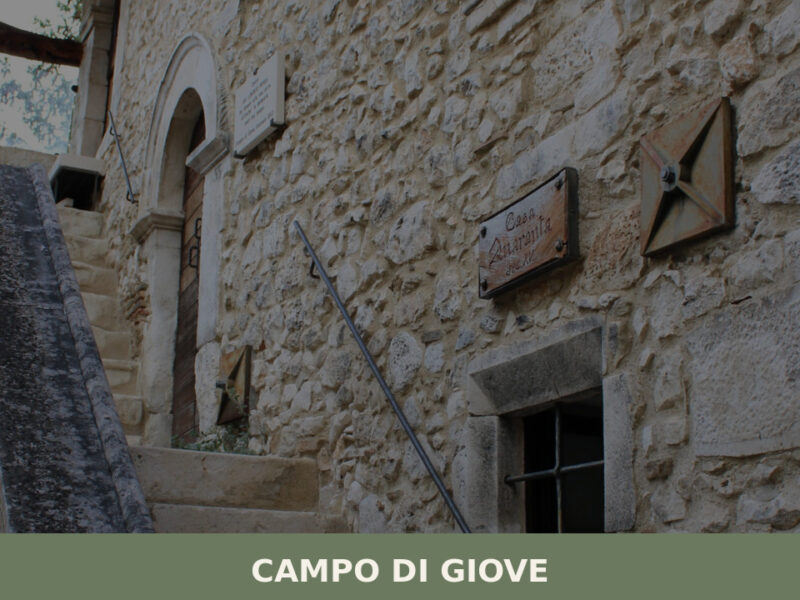
A mountain village at 1,064 metres beneath the Majella massif. Discover what to see in Campo di Giove — medieval stone houses, highland pastures, and quiet trails.
Fraine
Mountain
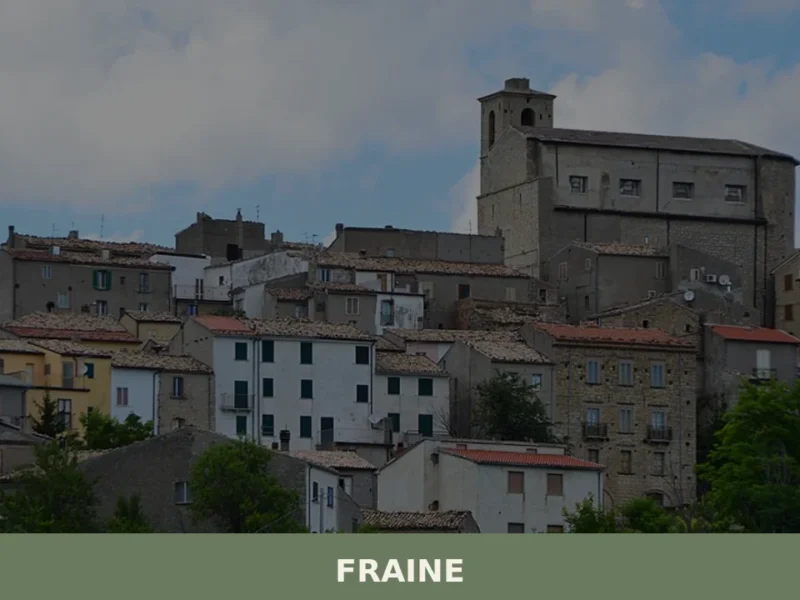
At 751 meters above sea level, in the Chieti area, lies Fraine, a municipality with a population of 261 inhabitants. This village, whose history dates back to the 10th-11th century, serves as an observation point over the Alto Vastese territory. For those wondering what to see in fraine, the town offers a journey through the […]
Cappadocia
Mountain
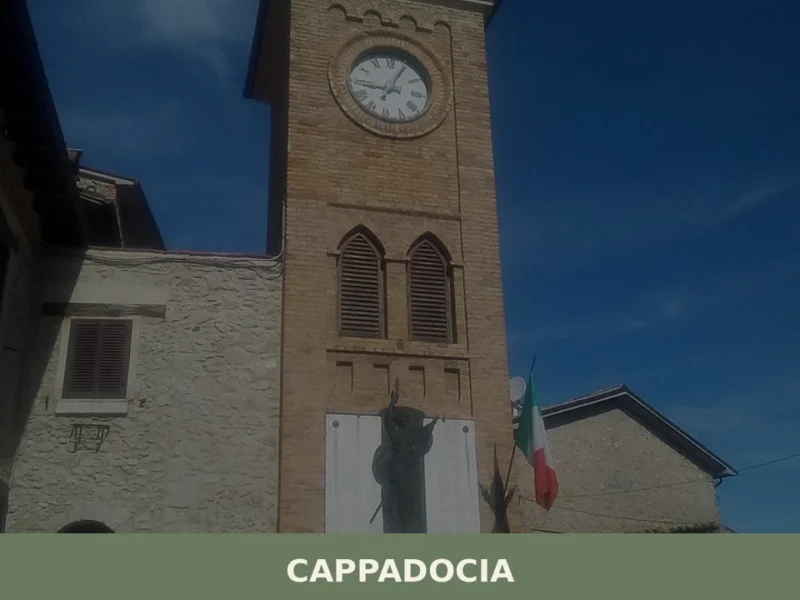
Cappadocia: discover historic churches and natural trails. Plan your visit today and experience the authenticity of this Abruzzo village.


🏡 Know L’Aquila better than we do?
If you’re a local or have been there, your knowledge matters: add what’s missing or fix a detail on this page.