


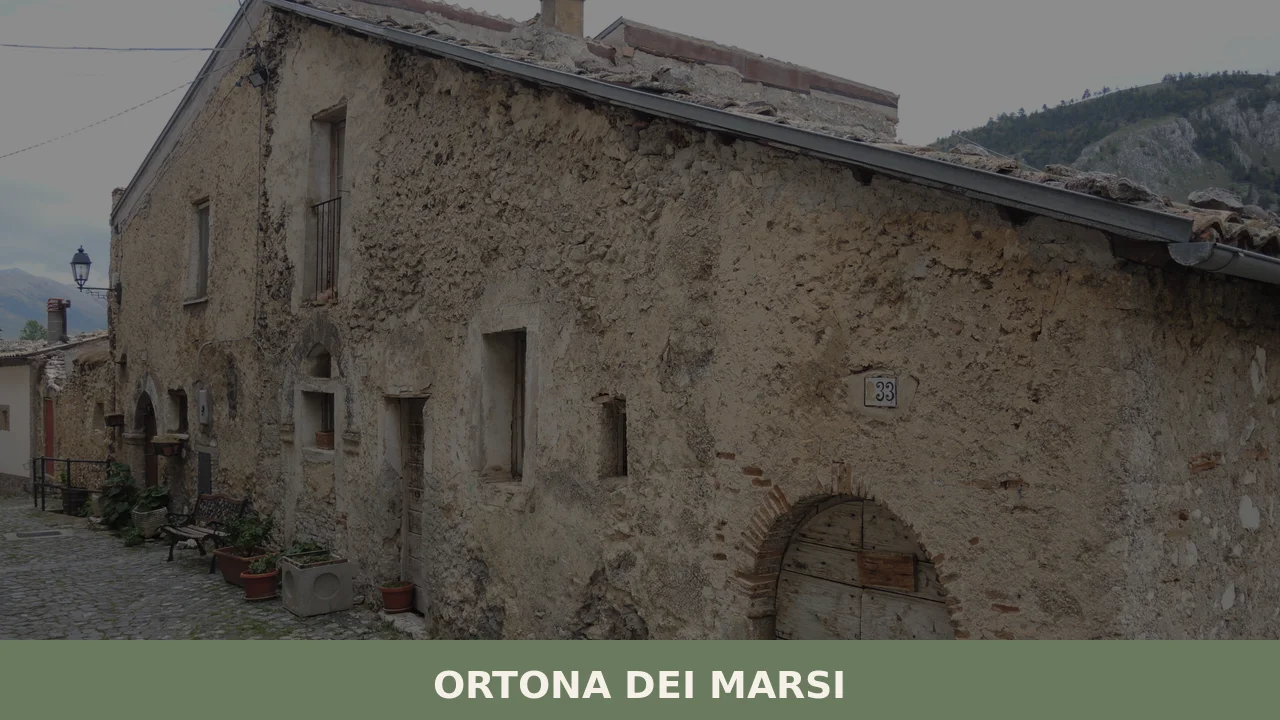
Ortona dei Marsi
 Mountain
What to see in Ortona dei Marsi, Italy: a village at 1,000 m in Abruzzo’s national park. Discover 5 key sights, local food, and how to get there.
Discover Ortona dei Marsi
A feudal tower rises from the compact stone fabric of the village, built in the thirteenth century when Ortona was drawn into the alliances of Rainaldo, count of Celano.
At 1,000 m (3,281 ft) above sea level, the surrounding mountains climb to 1,800 m (5,906 ft), forming a closed valley in the heart of Marsica.
The valley floor stays green through summer while the upper ridges hold snow well into spring, shaping the daily rhythm of a place where 567 people still live year-round.
Deciding what to see in Ortona dei Marsi is made easier by the village’s compact layout and documented heritage.
The main attractions include a collegiate church with roots in the fourteenth century, a thirteenth-century feudal tower, and several smaller churches spread across the hamlets that form the municipal territory. Visitors to Ortona dei Marsi find a settlement fully enclosed within the National Park of Abruzzo, Lazio and Molise, giving any visit an immediate natural dimension alongside the historical one.
The focus keyword “what to see in Ortona dei Marsi” resolves clearly here: five specific sights, documented facts, and practical orientation.
History of Ortona dei Marsi
The territory of Ortona dei Marsi reaches back to a pre-Roman past tied to the ancient Marsic city of Milonia (also recorded as Milionia), whose megalithic stones and fortification remains are located between the hamlets of Rivoli and Cesoli.
From this same territory came Quintus Poppaedius Silo, the military leader who commanded the Marsic forces during the Social War of 91–87 BC. That conflict was fought specifically to obtain Roman citizenship rights for the Italic peoples, and Silo’s role placed this valley at the centre of one of the most consequential confrontations in the history of the Roman Republic.
The medieval record of Ortona dei Marsi is anchored in two documents dating from the eighteenth century that reference four churches existing in an earlier period.
The original village grew around the Church of Sant’Onofrio, and by that time the settlement had been drawn into the political network of Rainaldo, count of Celano.
In the fifteenth century, Giampaolo Cantelmo was appointed count of Ortona and Carrito dei Marsi, consolidating feudal authority over the area.
A century later, in the sixteenth century, the bishop of Pescina elevated the Church of San Giovanni Battista to a collegiate church, a formal recognition that raised its ecclesiastical standing within the diocese. Villages sharing a similar pattern of medieval feudal history and Apennine geography, such as Barete in the L’Aquila province, offer useful comparative context for travellers exploring this corridor of central Abruzzo.
The modern period brought repeated disruption. Serious natural disasters in the eighteenth century pushed many inhabitants to relocate around Rome. Then, on 13 January 1915, the catastrophic Avezzano earthquake struck the Marsica plain with devastating force, and Ortona dei Marsi sustained severe structural damage.
The twentieth century was defined above all by emigration.
Residents moved to major Italian cities, but a substantial wave crossed the Atlantic, first as seasonal workers seeking employment in warmer months and returning to Italy in winter, then as permanent settlers.
Before the American immigration laws were tightened — through the Emergency Immigration Act of 1921, the Johnson Quota Act, and the Immigration Act of 1924 — many Ortona dei Marsi families had settled in the Greater Boston area, with concentrations in the North End of Boston, Haverhill, Brockton, Revere, Quincy, and Pittsfield, Massachusetts. Other families moved to Argentina and Brazil.
What to see in Ortona dei Marsi, Abruzzo: top attractions
Church of San Giovanni Battista
The Church of San Giovanni Battista is the most formally significant religious building in Ortona dei Marsi, elevated to a collegiate church by the bishop of Pescina in the sixteenth century. The original structure probably dates from the fourteenth century, making it one of the oldest documented buildings in the commune.
Its collegiate status meant it held a chapter of canons, a distinction that set it apart from the other parish churches in the valley.
It is worth spending time examining the exterior stonework, which reflects construction techniques typical of the Marsica area in the late medieval period. The church stands within the main village nucleus at 1,000 m (3,281 ft) and is accessible on foot from the central part of the settlement.
Church of Sant’Onofrio
The Church of Sant’Onofrio carries particular urban significance because the original village of Ortona dei Marsi grew around it.
That makes it not simply a place of worship but the physical seed of the settlement itself, a fact confirmed in documents dating from the eighteenth century that describe the earliest village layout.
Its position within the historic core reflects the medieval pattern of Marsican villages, where the church and the surrounding dwellings formed a single defensive and social unit tied to the local feudal count. Visiting the church gives a direct sense of how the settlement was organised before the disruptions of the eighteenth and early twentieth centuries reshaped the population.
Morning light falls across its façade from the east, making that the most rewarding time of day to observe the exterior masonry.
The Feudal Tower
The feudal tower of Ortona dei Marsi was built in the thirteenth century, predating the Cantelmo comital appointment of the fifteenth century and the Ottoman-era church elevations. It stands as the oldest dated structure within the commune, constructed during the period when Ortona was still embedded in the political orbit of the Celano county.
The tower’s stonework is consistent with defensive military construction common to the Marsica in that period.
From its position it overlooks the valley, providing a clear sightline across the municipal territory toward the surrounding peaks, which reach 1,800 m (5,906 ft). Visitors who climb to the tower’s base gain the most complete view of how the village sits within its topographic bowl.
The structure is accessible from the historic centre without specialised equipment.
Churches of the Hamlets: Carrito, Cesoli, and Aschi Alto
The municipal territory of Ortona dei Marsi encompasses several hamlets, each with its own documented church: Carrito, Cesoli, and Aschi Alto are the three specifically recorded in historical sources alongside the main village churches.
Cesoli and Rivoli are also the locations where the megalithic remains and fortification stones of the ancient Marsic city of Milonia have been identified, which means a visit to these hamlets combines medieval ecclesiastical architecture with Iron Age and pre-Roman archaeology.
The hamlets sit within the boundaries of the , so the roads connecting them pass through protected landscape. Reaching Carrito or Cesoli by car takes under ten minutes from the main village and adds a measurable layer of historical depth to any itinerary focused on what to see in Ortona dei Marsi.
Church of Sant’Antonio Abate
The Church of Sant’Antonio Abate completes the group of documented sacred buildings within the main nucleus of Ortona dei Marsi.
Sant’Antonio Abate — Saint Anthony the Abbot — was venerated widely across the Apennine communities of central Italy, particularly by farming and pastoral households, and his cult was established in Marsica well before the modern period.
The church’s dedication places it in a recognisable tradition of rural devotion that structured the calendar and the social life of mountain villages.
Its stone fabric, like the other buildings of the historic centre, sits at 1,000 m (3,281 ft) and is subject to the sharp winter temperatures that characterise this altitude in the Abruzzo interior. For visitors interested in the relationship between religious geography and rural economy, the Sant’Antonio Abate dedication itself is a primary source worth noting.
Local food and typical products of Ortona dei Marsi
The gastronomy of Ortona dei Marsi belongs to the broader tradition of the Marsica, a sub-region of the L’Aquila province shaped by altitude, pastoral activity, and the agricultural calendar of an interior Apennine valley.
At 1,000 m (3,281 ft), cultivation is limited by a short growing season, and the diet historically revolved around legumes, cereals grown on the lower terraces, sheep products, and preserved meats.
The eighteenth-century population movements and the twentieth-century emigration to the United States and Latin America did not erase local foodways; if anything, the relative isolation of the valley preserved techniques that disappeared earlier in the lowlands.
Lamb and mutton remain the protein base of the local table, prepared simply — roasted over embers or braised with local herbs — in a manner consistent with the pastoral economy of the Marsica.
Pasta alla pecorara, a pasta dish dressed with sheep’s milk cheese and local cured meats, represents the kind of preparation found across the mountain villages of the L’Aquila hinterland.
Polenta made from locally milled grain was a staple through the winter months and is still served in the area’s mountain communities.
Sagne e fagioli, a wide flat pasta with borlotti beans, is one of the most documented preparations of the L’Aquila Apennines, using dried beans stored from the autumn harvest and pasta made from durum wheat flour without egg. These dishes share a logic of preservation and slow cooking suited to the altitude and the long winters.
The Marsica sits within Abruzzo, a region with several products holding protected designation status at European level, though no specific certified product is formally attributed to Ortona dei Marsi alone in the available sources.
The broader Abruzzo territory produces Pecorino di Farindola, a raw-milk sheep’s cheese with PDO status, and Zafferano dell’Aquila (saffron from the L’Aquila plateau), a DOP product cultivated on the Navelli plain roughly 30 km (18.6 mi) to the northeast of Ortona dei Marsi.
The Mortadella di Campotosto, a small pork salume with IGP recognition produced in the Gran Sasso area of the same province, rounds out the regional charcuterie landscape.
These products reach the local market and inform the flavour profile of the area’s cooking even where production does not originate in Ortona itself.
The mountain farming calendar in Abruzzo places its food markets and sagre (traditional local food festivals tied to a single product or dish) primarily in late summer and autumn, when harvests and slaughter season align.
Travellers visiting in August or September are most likely to encounter local food events in the Marsica sub-region, though specific sagre dates for Ortona dei Marsi require direct verification with the municipal office, as programming changes annually.
Festivals, events and traditions of Ortona dei Marsi
The religious calendar of Ortona dei Marsi is structured around the dedications of its documented churches.
The feast of San Giovanni Battista (Saint John the Baptist), celebrated on 24 June, is the most significant liturgical event tied to the collegiate church, the most formally ranked sacred building in the village.
In Marsican communities, feast days of this kind traditionally include a solemn Mass, a procession through the village streets with the statue of the saint, and an evening gathering in the central square. The feast of Sant’Antonio Abate, observed on 17 January, falls in deep winter at this altitude and carries a pastoral character consistent with the saint’s association with farm animals and rural households.
The feast of Sant’Onofrio, celebrated on 12 June, connects directly to the oldest documented church in Ortona dei Marsi, the building around which the original village formed.
These three feast days — 12 June, 24 June, and 17 January — represent the verified anchors of the village’s annual ritual calendar. Summer feast days in Marsican villages typically draw back residents who have moved to cities or abroad, a pattern especially relevant for Ortona given the scale of its documented emigration to the United States and Latin America in the twentieth century.
The reunion character of the summer feasts makes late June a period of elevated local activity.
When to visit Ortona dei Marsi, Italy and how to get there
The best time to visit Ortona dei Marsi depends on what kind of experience a traveller is seeking.
The village sits at 1,000 m (3,281 ft) and the surrounding peaks reach 1,800 m (5,906 ft), which means winters are cold and snowy, typically from December through March. Late spring — from mid-May through June — brings the most stable walking conditions on the paths through the national park, with wildflowers across the valley floor and the mountain ridges still carrying patches of snow.
The feast days of Sant’Onofrio (12 June) and San Giovanni Battista (24 June) add cultural content to a late-June visit.
July and August are the driest and warmest months, with average daytime temperatures well below those of coastal Abruzzo, making the village a practical base for those who want to explore the national park during high summer without heat. For those travelling specifically to experience Abruzzo’s best conditions across culture, climate, and natural landscape, late May to late June represents the most consistent window.
Ortona dei Marsi, Abruzzo, Italy lies approximately 90 km (56 mi) east of Rome via the A24 motorway, which connects the capital to L’Aquila and the Abruzzo interior. Drivers should exit at Pescina (Colli di Montebove exit on the A25, after branching from the A24 at L’Aquila) and follow the SS83 Marsicana toward the Fucino basin and then north into the Giovenco valley.
Total driving time from Rome is approximately 1 hour 30 minutes under normal conditions, making Ortona dei Marsi reachable as a day trip from the Italian capital.
The nearest railway station is Avezzano, approximately 25 km (15.5 mi) southwest of the village; Trenitalia operates services to Avezzano from Rome Tiburtina with a journey time of roughly 1 hour 30 minutes.
From Avezzano, the onward connection to Ortona dei Marsi requires a local bus or taxi, as no direct rail service covers the Giovenco valley. The nearest international airport is Rome Fiumicino (Leonardo da Vinci), approximately 130 km (80.8 mi) by road.
International visitors should note that English may be limited in smaller local shops and bars; carrying Euro cash is practical, as card payment infrastructure in mountain villages of this size can be inconsistent.
For travellers organising a longer circuit through the L’Aquila province, the village of Castilenti in the Teramo province of Abruzzo sits on the Adriatic-facing slopes of the Apennines and provides a contrasting lowland landscape within the same region.
Visitors covering the eastern Abruzzo coast before moving inland might also pass through Cermignano, a Teramo-province settlement that shares the agricultural character of the Abruzzo interior while sitting at a lower elevation than Ortona dei Marsi.
Both villages make logical stops on a wider Abruzzo itinerary that uses Ortona dei Marsi as the inland mountain reference point.
📷 Photo Gallery — Ortona dei Marsi
Getting there
Piazza Guglielmo Marconi, 67050 Ortona dei Marsi (AQ)
Nearby Villages near Ortona dei Marsi
In Abruzzo More villages to discover
Fallo
 Hills
Hills
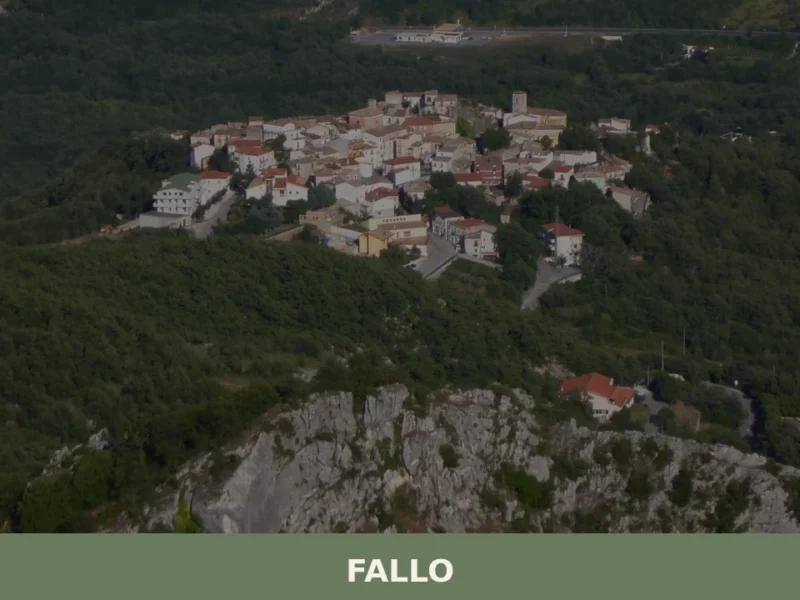
With its 134 registered inhabitants, Fallo, in the province of Chieti, is confirmed as one of Abruzzo’s least populous settlements, a fact that immediately defines its intimate scale and unique relationship with the surrounding territory. This small urban cluster, situated on a rocky spur overlooking the Sangro valley, offers a genuine glimpse into Abruzzese mountain […]
Fontecchio
Mountain
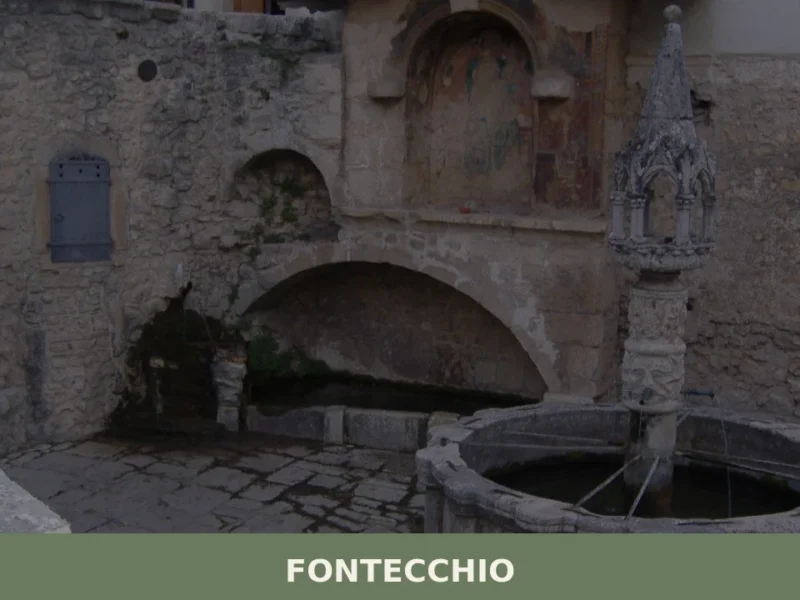
The fourteenth-century fountain with a fourteen-spouted stone basin, dated 1355, still marks the centre of Fontecchio’s main square — a village of 291 inhabitants at 668 metres above sea level in the middle Aterno Valley, province of L’Aquila. Anyone wondering what to see in Fontecchio should start right here, at this hydraulic structure that has […]
Corvara
Mountain
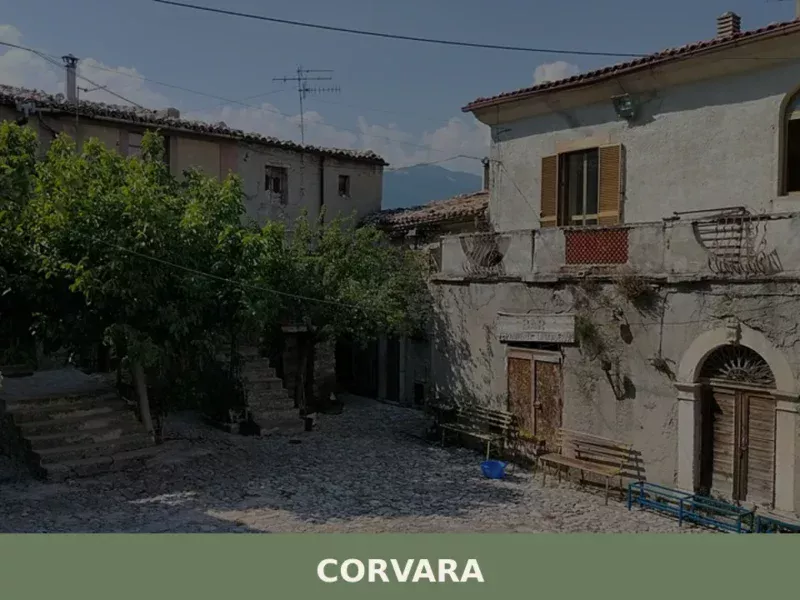
Corvara, a municipality of 210 inhabitants in the province of Pescara, is located 625 meters above sea level in the Pescara valley. Its territory, documented as early as the medieval period, shows traces of settlements dating back to the Neolithic, highlighting a continuous habitation linked to its strategic position. For those wondering what to see […]
Roccamorice
Mountain
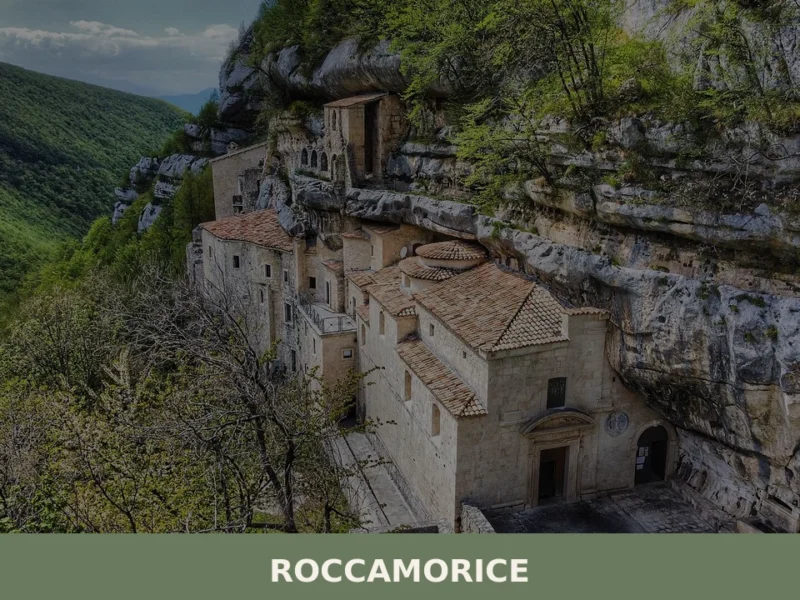
What to see in Roccamorice, Italy: discover rock-cut hermitages, the Majella National Park, and unique river-carved landscapes. Explore Abruzzo.
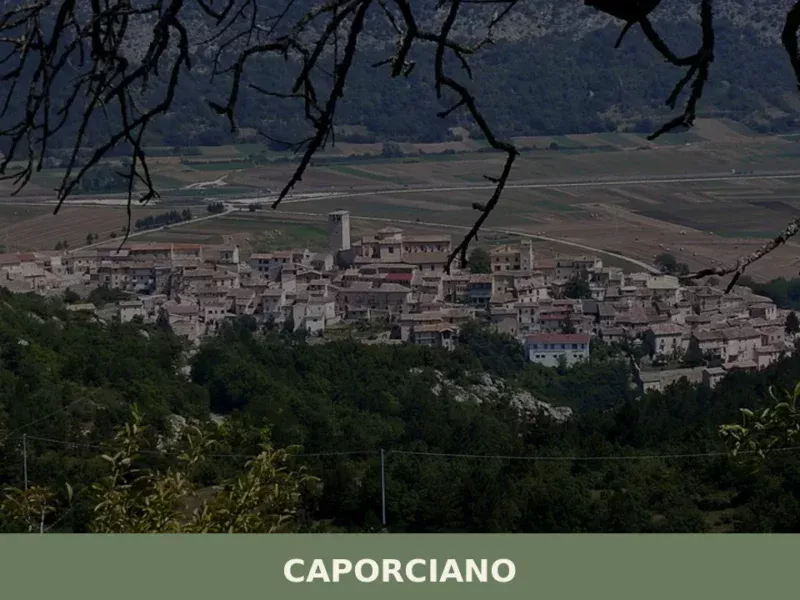
Caporciano
Mountain
Caporciano, a small village near L'Aquila between history and nature: discover what to see, how to get there and the top places to visit. Plan your trip.
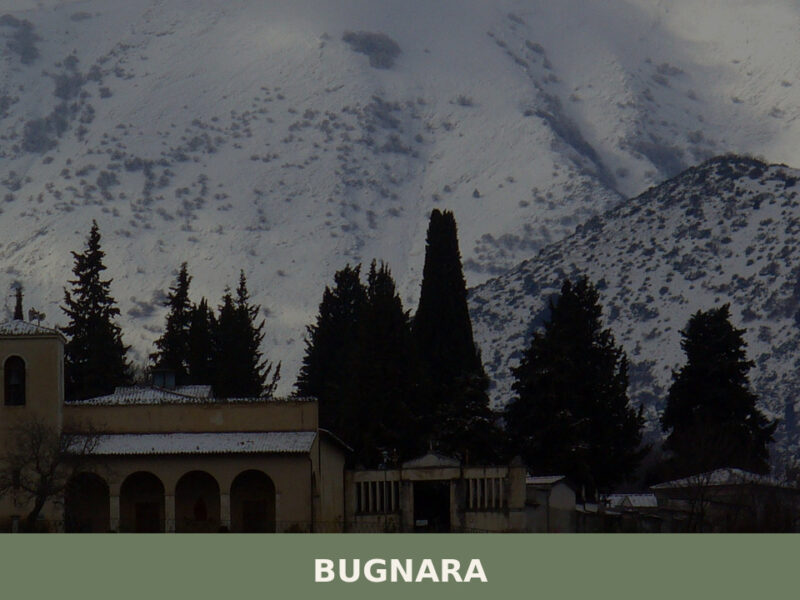
Bugnara
Hills
Morning light falls across the Sagittario valley in long, amber strokes, catching the limestone walls of a settlement that has watched over this corridor of central Abruzzo for the better part of a millennium. Bells from a church tower mark the hour, their sound flattening against the surrounding slopes before fading. The streets are narrow, […]
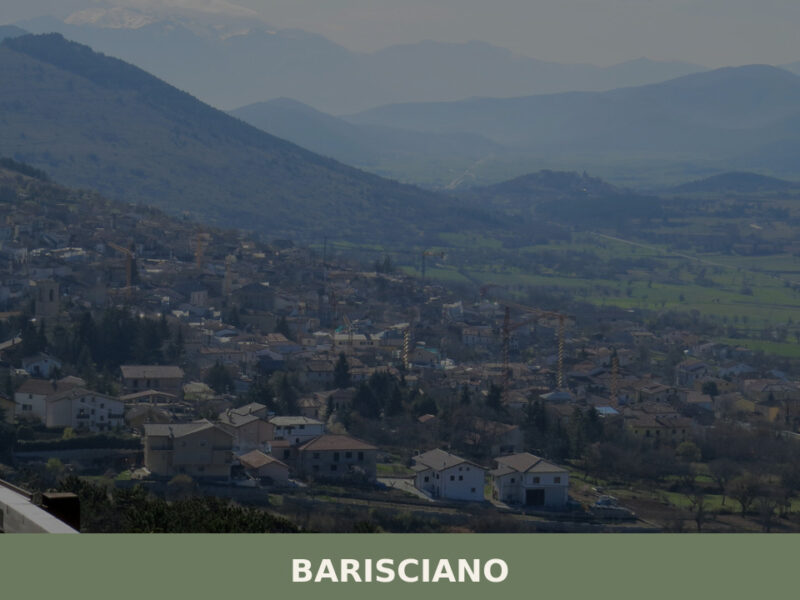
Barisciano
Mountain
A high-altitude village on the Piana di Navelli, Barisciano holds Roman ruins, Franciscan cloisters, and centuries of Abruzzo history written in stone.
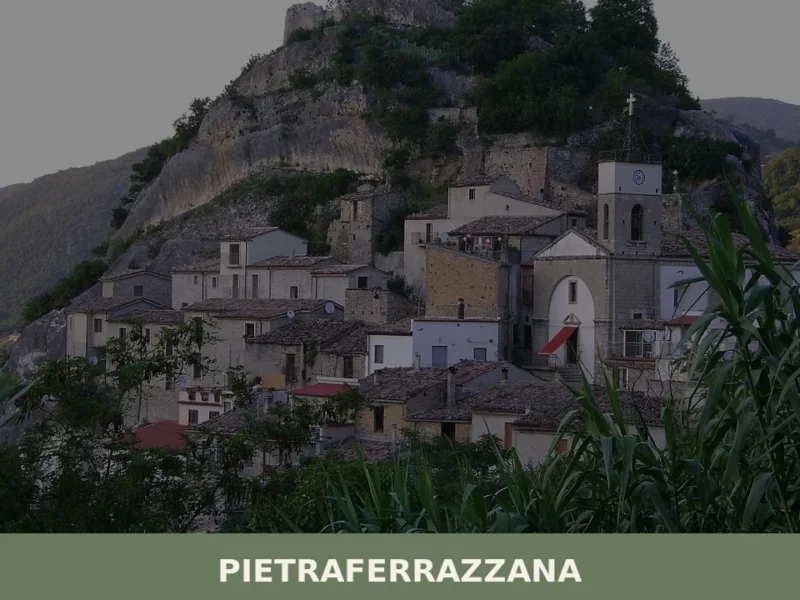
Pietraferrazzana
Hills
The rock that gives the village its name is no metaphor: Pietraferrazzana literally grew up against a stone cliff, and the profile of the village changes depending on where you stand along the Sangro valley floor. In this article History and Origins of Pietraferrazzana What to See in Pietraferrazzana: Main Attractions Traditional Cuisine and Products […]
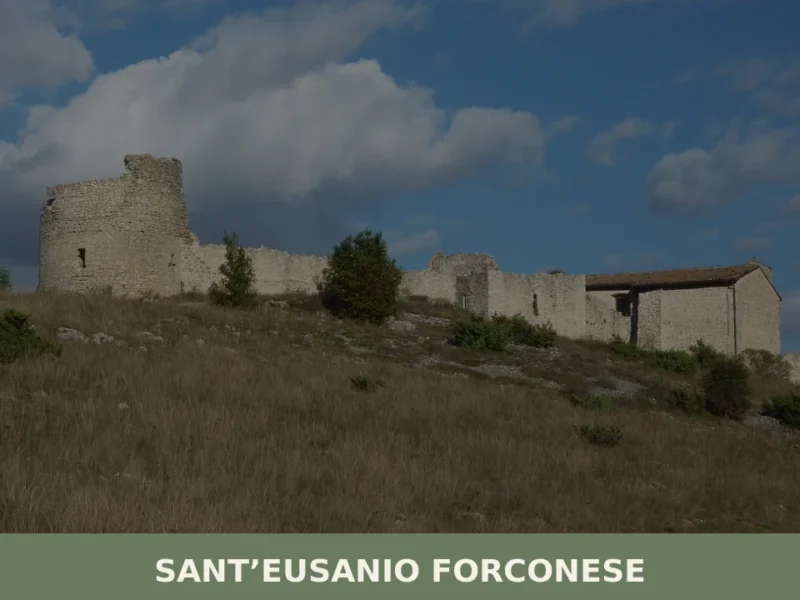
Sant’Eusanio Forconese
Mountain
What to see in Sant’Eusanio Forconese? Explore 5 main attractions of this Abruzzo village, from the Castle to panoramic views. Plan your visit with our guide!
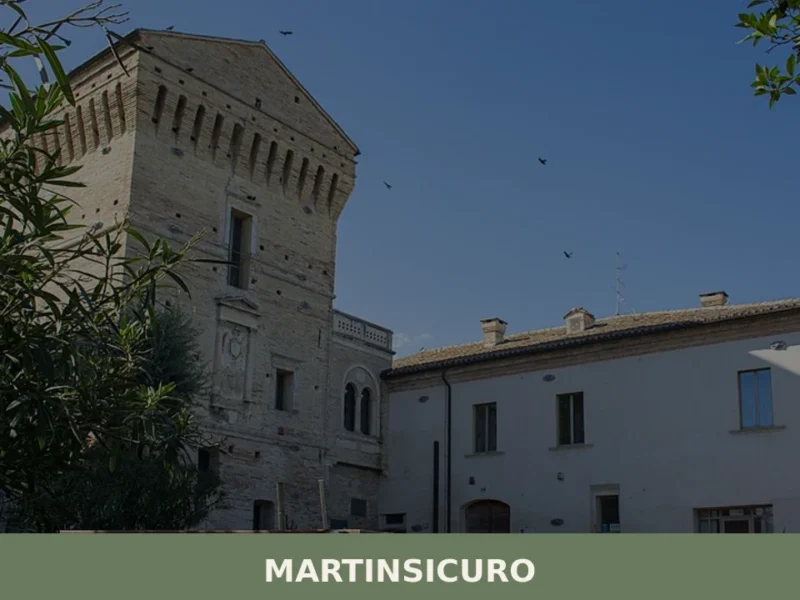
Martinsicuro
 Sea
Sea
Martinsicuro, located 2 meters above sea level in the province of Teramo, has a population of 16,270 inhabitants. Its development is directly linked to the Adriatic coast and the presence of the Tronto river mouth. For those wondering what to see in Martinsicuro, the core interest lies in its identity as a seaside town that […]

🏡 Know Ortona dei Marsi better than we do?
If you’re a local or have been there, your knowledge matters: add what’s missing or fix a detail on this page.