
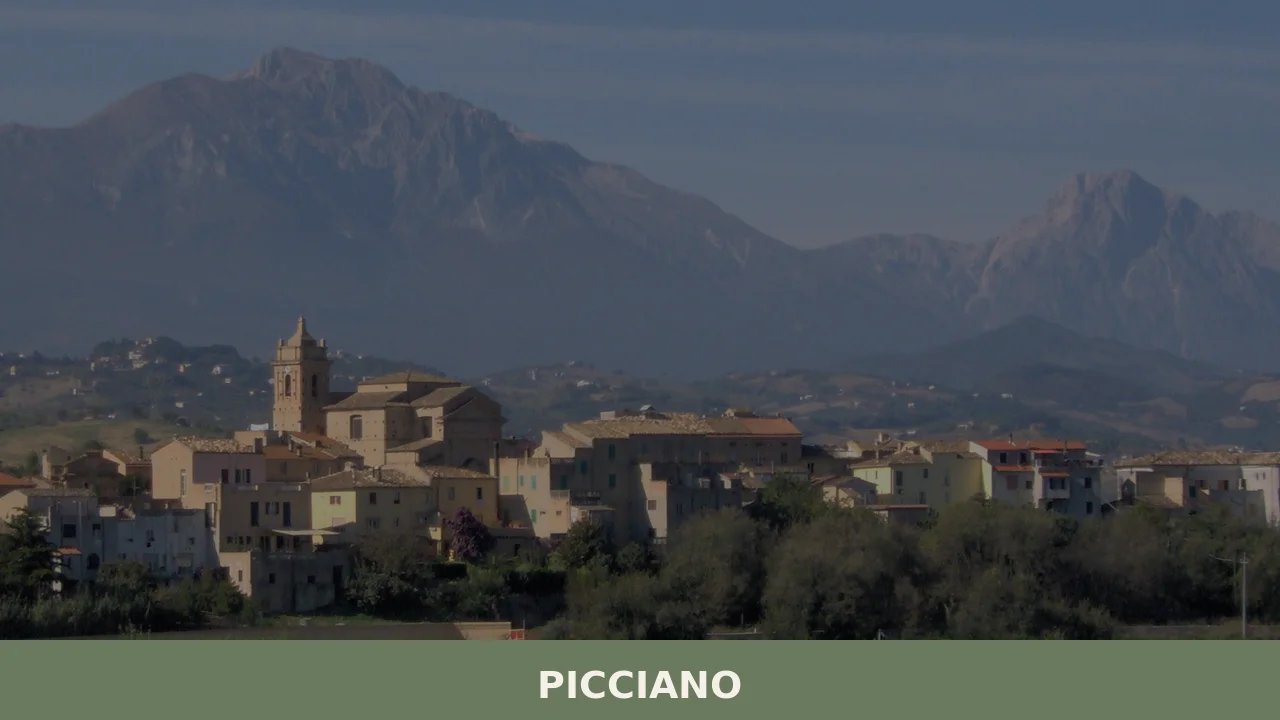
 Pianura
What to see in Picciano, Italy: Discover the historical village of Picciano (population 1,398). Explore its early medieval origins and panoramic Abruzzo views.
In the year 1049, a historical document known as the Charta Offersionis recorded an event that marked the earliest known mention of Picciano.
This charter detailed the donation of fields and buildings by Bernardo, Earl of Penne, for the establishment of a Benedictine abbey amidst Picciano’s undulating hills.
This precise historical reference establishes Picciano’s documented presence over a millennium ago, rooting its identity deeply in the medieval landscape of Abruzzo.
For those wondering what to see in Picciano, this village, with a population of 1,398 recorded in 2006, offers insights into its early medieval past and the tranquil Abruzzo countryside. Visitors can explore the historical significance of the Benedictine abbey’s site, dating back to 1049, and appreciate the wider regional landscape.
The Picciano highlights include its documented history and the serene environment of the Pescara province.
The documented history of Picciano, a village and comune in the Province of Pescara, within the Abruzzo region of Italy, traces its origins back to the year 1049. It was in this pivotal year that Bernardo, the Earl of Penne, formally donated lands and structures through the Charta Offersionis to facilitate the construction of a Benedictine abbey amidst Picciano’s undulating hills.
This act represents the initial verifiable record of a settlement bearing the name Picciano, providing a crucial historical anchor for its existence and marking it as a significant locale in the early medieval period.
The etymology of the name “Picciano” is subject to various legends, with one of the more plausible theories suggesting a connection to shepherds who were devoted to the Goddess Pithia.
Historical documents, such as the Charta Convenientiae, reveal alternative spellings like “Piczano,” further suggesting the name’s roots firmly lie in the Early Middle Ages. These early linguistic forms help to situate the village’s nomenclature within a specific historical epoch, moving beyond speculative assertions of Roman origins and cementing its medieval identity.
The establishment of a Benedictine abbey in 1049 would have significantly shaped the early development of Picciano, likely drawing people to its vicinity for spiritual and economic reasons. Benedictine monasticism played a crucial role in the social and agricultural organization of medieval Italy, often acting as centers of learning and land management.
The presence of such an institution indicates Picciano’s early importance within the regional ecclesiastical and feudal structures, underscoring the village’s long-standing place in the historical fabric of Abruzzo.
Upon entering Picciano, visitors encounter a typical Italian village structure, characterized by its compact layout and the quiet rhythms of daily life.
The local stone and building materials, shaped by centuries of use, speak to the village’s enduring presence since at least the 11th century. This community, which recorded a population of 1,398 at the end of 2006, offers a genuine glimpse into a persistent settlement within the Pescara province. Exploring the village core allows one to observe the architectural evolution that has occurred over its extensive history, providing a tangible connection to its past.
The spiritual and historical heart of early Picciano lies in the hills where Bernardo, Earl of Penne, designated land for a Benedictine abbey in 1049.
While specific remains of the abbey are not detailed in the available records, its historical presence underscores the village’s deep ecclesiastical roots and its importance over a thousand years ago. This site represents a significant landmark in Picciano’s past, symbolizing the profound influence of monastic orders on medieval settlements. Visitors can contemplate the historical weight of this location, imagining the monastic life that once unfolded here, connecting directly to the village’s earliest documented origins.
As with many villages established on elevated ground in Italy, Picciano likely affords extensive panoramic views of the surrounding Abruzzo landscape.
The village’s position in the Pescara province suggests vistas that sweep across valleys and hills, characteristic of the region’s geography. These natural vantage points would have historically served defensive purposes, offering clear sightlines over potential approaches and the fertile lands below. From various points within the village, visitors can observe the agricultural patterns, distant towns, and the natural contours of the terrain, gaining a broader understanding of Picciano’s geographical context within the region.
Beyond the immediate confines of the village, the landscape immediately surrounding Picciano is defined by the natural beauty of the Abruzzo region.
This area, characterized by rolling hills and fertile valleys, has sustained communities like Picciano for centuries through agriculture and pastoralism. The natural environment is an integral part of what to see in Picciano, offering opportunities for gentle exploration and appreciation of the rural Italian setting. The fields and natural features around the village are the same ones that supported the initial Benedictine settlement in 1049, maintaining a continuity with the village’s earliest documented history.
The profound historical narrative of Picciano, beginning with its mention in 1049, permeates the very atmosphere of the village.
While grand ancient structures may not be immediately evident, the enduring presence of a community for over a millennium is a testament to its historical significance. The earliest records, such as the Charta Offersionis and the Charta Convenientiae, provide concrete evidence of its early medieval past. Understanding these historical layers is crucial for appreciating the village’s identity, connecting its present to its origins in the Early Middle Ages, and truly grasping what to see in Picciano beyond its surface.
While specific culinary traditions unique to Picciano are not detailed in historical records, the village’s location in the Abruzzo region places it within a rich gastronomic landscape.
Abruzzese cuisine is traditionally hearty and deeply connected to its mountainous and coastal geography, emphasizing fresh, seasonal ingredients. This regional approach to food has sustained communities like Picciano for centuries, reflecting a history of self-sufficiency and respect for local produce. The historical context of a Benedictine abbey in 1049 suggests that early diets would have been simple, reliant on agricultural yields and local resources, a tradition that continues to influence the wider culinary identity of the Pescara province and beyond.
Abruzzo’s culinary identity is characterized by dishes that are robust and flavorful, often featuring lamb, pasta, and legumes.
Common preparations include Arrosticini, skewers of lamb meat traditionally grilled over charcoal, a staple across the region. Another prominent dish is Maccheroni alla Chitarra, a fresh egg pasta cut with a special tool resembling guitar strings, typically served with a rich ragù of pork, beef, or lamb.
Understanding the local food traditions is an integral part of experiencing what to see in Picciano and its surrounding Abruzzo region, offering a taste of authentic regional life.
Specific certified products (DOP, IGP, STG) directly associated with the village of Picciano are not documented in the provided sources. However, the broader Abruzzo region boasts several recognized products that contribute to its gastronomic reputation. These include various types of olive oil, such as the Colline Teatine DOP, produced from local olive varieties across several municipalities including Chieti and Pescara.
Robust red wines like Montepulciano d’Abruzzo and Trebbiano d’Abruzzo are also significant. While not exclusive to Picciano, these regional products are indicative of the quality and tradition upheld in the area, often found in local markets or eateries.
Detailed information regarding specific festivals, annual events, or unique traditions held within Picciano itself is not provided in the available sources.
However, many Italian villages, like Castelgrande, share common cultural practices that often revolve around religious holidays and agricultural cycles. These typically include celebrations honoring patron saints, local harvest festivals, or historical commemorations, providing a communal focal point throughout the year.
The absence of specific data for Picciano means visitors should inquire locally or consult regional tourism boards for any contemporary events.
In the broader Abruzzo region, it is common to find patron saint festivals that feature religious processions, often accompanied by local bands, traditional food stalls, and sometimes fireworks. Additionally, many communities host a sagra, a traditional local food festival dedicated to a specific seasonal product or dish.
While the exact dates and nature of any such events in Picciano are not documented, visitors exploring the area might encounter similar expressions of local culture in nearby communities, reflecting a shared heritage across the Pescara province.
Determining the best time to visit Picciano, Italy, largely depends on a visitor’s preferences for climate and activities. The Abruzzo region generally experiences warm, sunny summers and cooler winters, with spring and autumn offering milder temperatures. For those interested in exploring the historical sites and the surrounding natural landscape, the months of May, June, September, and early October are often ideal. During these periods, the weather is pleasant for walking and outdoor activities, and the natural beauty of the Pescara province is in full display, making it excellent for appreciating what to see in Picciano.
Summer months, particularly July and August, can be warm, but also coincide with many local festivals in the wider region, though specific events for Picciano are not detailed.
Winter offers a quieter experience, with the possibility of snow at higher altitudes in Abruzzo, but Picciano itself is unlikely to be inaccessible. The terrain around Picciano, typical of an Italian hilltop village, may involve some inclines, but is generally navigable for most visitors.
For international visitors, it is worth noting that English may be limited in smaller shops and carrying some Euros cash can be useful for local purchases.
Accessing Picciano, a village in the Province of Pescara, Abruzzo, Italy, typically involves a combination of air, rail, and road travel for international visitors. The nearest major airport is Abruzzo Airport (PSR), located near Pescara. From the airport, Picciano is accessible by car, generally within a 20-30 minute drive, covering a distance of approximately 20-25 km (12.4-15.5 mi) depending on the exact route. For those traveling by train, the main railway station in Pescara offers connections to major Italian cities.
From Pescara Centrale, visitors can rent a car or take a local bus service to reach Picciano. Driving is often the most convenient way to explore the Abruzzo region and its smaller villages, including those like Cerignola in the broader southern Italian context. If arriving by car from Rome, the journey typically takes around 2 hours via the A24/A25 motorways, covering a distance of approximately 180 km (112 mi).
Corso Vittorio Emanuele III, 65010 Picciano (PE)
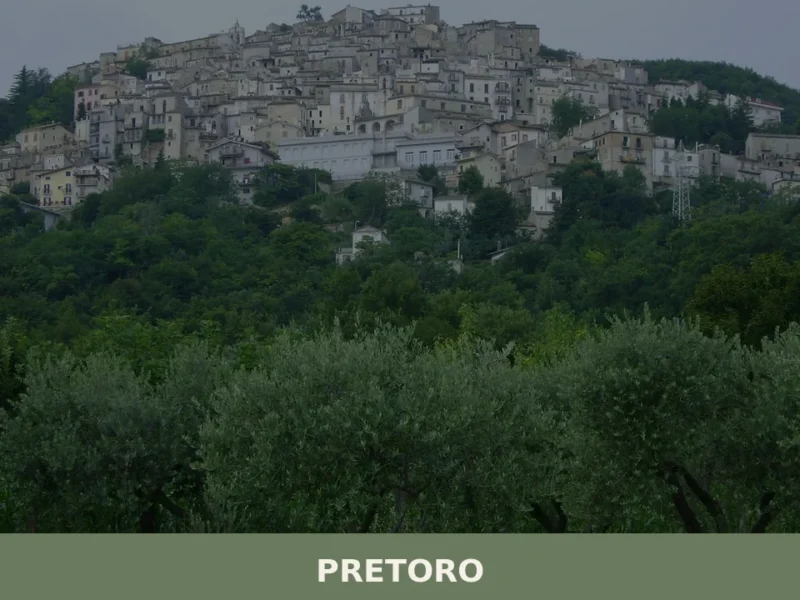
 Mountain
What to see in Pretoro, Abruzzo, Italy: explore a 13th-century sanctuary, a 16th-century Pietà, and Majella National Park. Population 985. Discover it now.
 Plains
At 272 metres above sea level, along the valley of the Fino torrent, Castilenti has a current population of 1,346 and occupies a stretch of hilly terrain in the province of Teramo where olive cultivation marks the landscape with orderly rows of trees and still-active oil mills. Anyone wondering what to see in Castilenti will […]
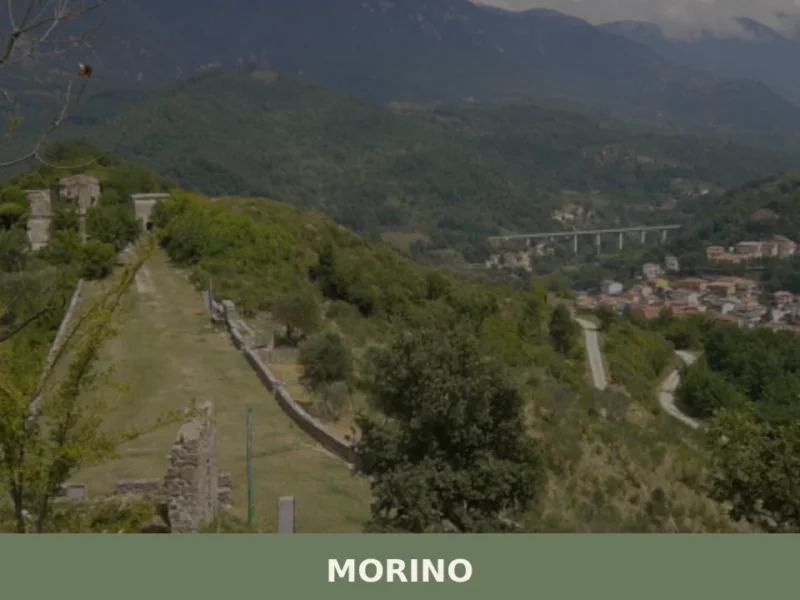
 Hills
Hills
What to see in Morino, Abruzzo, Italy: explore the Hermitage of Santa Maria del Cauto, the Roveto Valley, and 1,477 inhabitants' traditions. Discover it now.
📝 Incorrect information or updates?
Help us keep the Picciano page accurate and up to date.