


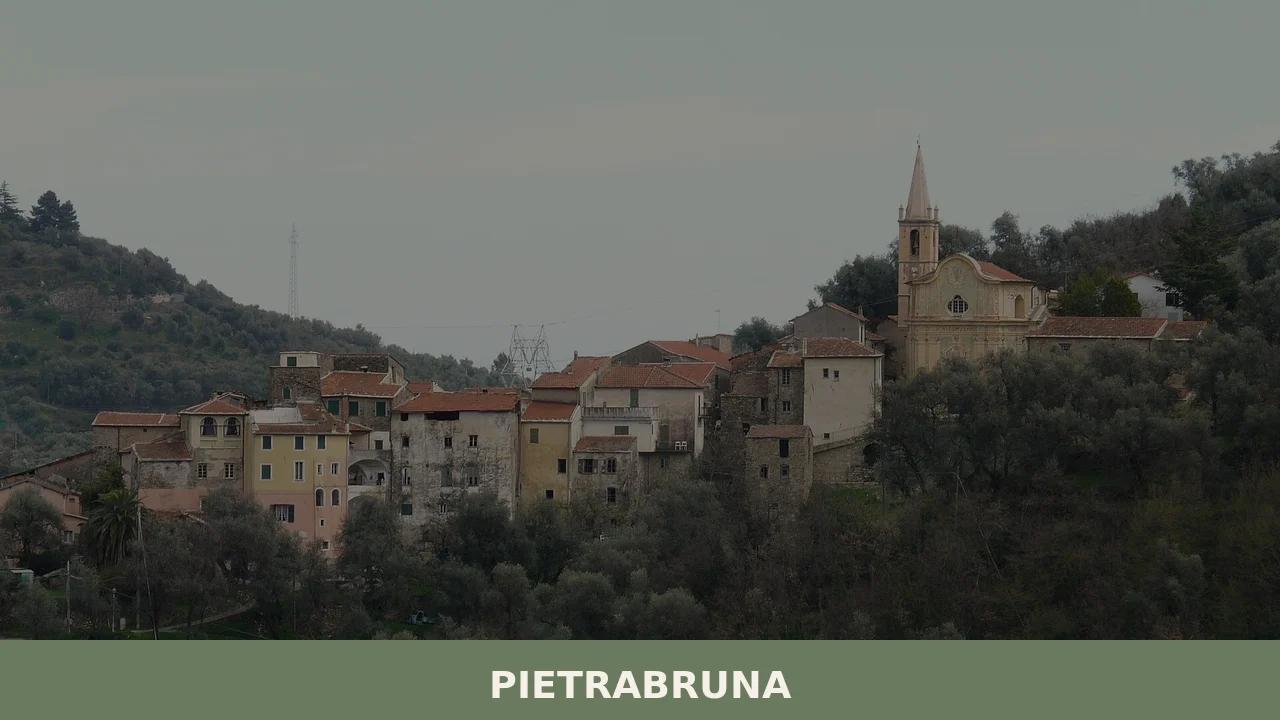
Pietrabruna
 Sea
Sea
What to see in Pietrabruna, Italy: 546 inhabitants, 100 km from Genoa. Discover medieval architecture, Ligurian olive oil and local festivals. Full travel guide.
Discover Pietrabruna
The stone that gives this village its name — pietra bruna, brown stone — runs visibly through the walls of the oldest buildings in the upper quarter, where the lanes narrow to little more than shoulder width and the light arrives only at midday.
Pietrabruna sits in the Province of Imperia on roughly 9.9 square kilometres (3.8 sq mi) of Ligurian upland, its borders meeting six separate municipalities: Castellaro, Cipressa, Civezza, Dolcedo, Pompeiana, and Taggia.
The population recorded in the 2004 municipal register stood at 568, and current estimates place it around 546 inhabitants.
Knowing what to see in Pietrabruna requires understanding that this is a compact hill settlement about 100 kilometres (62 mi) southwest of Genoa and only 11 kilometres (7 mi) west of Imperia, positioned between the Ligurian coast and the first ridge of the Maritime Alps. Visitors to Pietrabruna find a well-preserved historic centre built in characteristic dark local stone, a parish church documented over several centuries, and access to a network of mule tracks connecting the surrounding olive groves.
The village registers as one of several Ligurian inland communes that have maintained their original medieval street plan largely intact.
History of Pietrabruna
The Ligurian dialect forms of the name — Priabruna or Prebuna — preserve the two-element structure that defines the settlement: pria, stone, and bruna, dark or brown, a direct reference to the grey-brown limestone that outcrops across the hillside and was used as the primary building material. This naming convention is consistent with dozens of Ligurian inland communes that took their identities from local geology rather than from patron saints or feudal lords, suggesting the toponym predates systematic ecclesiastical record-keeping in the region. The specificity of the reference — dark stone rather than simply stone — points to an awareness of local material difference that would only matter to communities already working those slopes intensively.
The territory of Pietrabruna falls within the broader historical zone of the Contado di Ventimiglia and later within the administrative sphere of the Republic of Genoa, which exercised control over most of the Ligurian hinterland from the medieval period onward.
Communities in this part of the Province of Imperia — then known as the County of Oneglia — passed through several overlapping jurisdictions, including the Del Carretto marquisate and the Doria family holdings, before the consolidation of Genoese authority in the fifteenth and sixteenth centuries.
Neighbouring villages such as Diano Arentino, which shares the same inland Imperia context and a comparable pattern of settlement along terraced hillsides, went through analogous cycles of feudal fragmentation and Genoese integration during this same period.
By the nineteenth century, the unification of Italy brought Pietrabruna into the administrative structure of the Kingdom of Sardinia and then the Kingdom of Italy as a recognised comune, the smallest unit of Italian local government. The olive economy that had defined the landscape for centuries — the terraced groves on the slopes below the village represent generations of manual labour in building and maintaining dry-stone retaining walls — continued to anchor the local population even as emigration reduced the number of permanent residents across the twentieth century.
The area of 9.9 square kilometres (3.8 sq mi) is relatively compact for a Ligurian hill commune, which partly explains the density and coherence of the surviving built fabric in the historic centre.
What to see in Pietrabruna, Liguria: top attractions
The Historic Centre and Its Medieval Street Plan
The oldest part of Pietrabruna is organised around a spine of narrow lanes running roughly along the contour of the hill, with secondary alleys branching perpendicular to the slope.
The dark local limestone used in the walls has a visibly stratified texture, and the bonding mortar in the oldest sections dates the construction technique to medieval practice rather than later renovation. Walking the upper quarter takes no more than twenty minutes at a leisurely pace, but the compression of the street plan — walls close enough to touch on both sides in the narrowest passages — reveals how efficiently a hilltop community of a few hundred inhabitants organised its collective space.
Arrive in the morning before 10:00 when the light enters the eastern-facing lanes at a low angle and makes the stone grain most legible.
The Parish Church of Pietrabruna
The parish church forms the principal religious and architectural reference point of the village, as it does in virtually every Ligurian hill commune of comparable size. Its fabric represents successive interventions over several centuries, with the current structure incorporating elements that belong to different building campaigns visible in the handling of the stonework at the junctions.
The interior holds the liturgical furnishings typical of a rural Ligurian parish — wooden choir elements, votive paintings, and altarpieces in a style consistent with regional workshops active between the seventeenth and nineteenth centuries. The façade faces onto the small square that functions as the main gathering point for the village; the square itself measures only a few hundred square metres but serves as the effective centre of community life during festivals and Sunday morning.
The Views Toward the Coast and the Province of Imperia
From the upper perimeter of the historic centre, the land drops toward the coast at Imperia, 11 kilometres (7 mi) to the east, and on clear days the Ligurian Sea is directly visible as a distinct blue line beyond the last olive-covered ridge.
The elevation of the village — several hundred metres above sea level — places it above the coastal humidity that affects the lower Riviera towns while keeping it close enough to benefit from the mild Mediterranean climate that allows olive cultivation at this latitude.
This positioning made Pietrabruna a productive agricultural territory rather than a strategic fortification; there is no major castle or defensive tower precisely because the village’s value was always in its land rather than in controlling a pass or road. The best viewing point is the northern edge of the village where the building fabric ends and the open hillside begins.
The Surrounding Olive Grove Landscape
The terraced olive groves that cover the slopes below the village are among the most durable physical records of how the population organised land use over many generations.
Each terrace — locally called a fasce — is held by a dry-stone retaining wall built without mortar, and maintaining these structures requires continuous labour that the farming families of Pietrabruna have provided for several centuries. The olives grown here belong to the Taggiasca variety, named after the neighbouring town of Taggia, which sits on Pietrabruna’s eastern border.
This variety produces a small, dark olive with a relatively low bitterness, harvested between November and February, and it forms the basis of the Riviera Ligure DOP extra-virgin olive oil certified across this zone. Walking the fasce in autumn, when the nets are laid under the trees for harvest, gives a direct view of a production cycle that has not changed substantially in its manual stages for centuries.
Border Routes Connecting to Neighbouring Communes
Pietrabruna borders six municipalities — Castellaro, Cipressa, Civezza, Dolcedo, Pompeiana, and Taggia — and several historical mule tracks connect the village to these neighbours across the ridges.
The route toward Dolcedo is particularly well documented as a former commercial path used to move oil, wine, and agricultural produce between the hill communes and the coastal markets at Porto Maurizio, now part of Imperia. Dolcedo itself retains a series of medieval bridges over the Prino river that mark the lower end of this route.
For those planning a day trip from Imperia, combining a visit to what to see in Pietrabruna with a walk down to Dolcedo and back covers roughly 8 kilometres (5 mi) in total and descends approximately 300 metres (984 ft) before returning.
Local food and typical products of Pietrabruna
The food tradition of Pietrabruna belongs to the inland variant of Ligurian cuisine, which differs from the coastal version in its heavier use of dried legumes, preserved vegetables, and foraged herbs rather than fresh fish.
The terrain — steep, terraced, requiring intensive manual work — shaped a diet built around caloric density and long shelf life: dried pasta with walnut or olive-based sauces, focaccia baked in wood-fired ovens, and vegetable preparations using whatever the terraced garden plots produced through the season. Olive oil is the structural fat in every preparation, used with a directness that reflects both the abundance of local production and the absence of competing fats in an inland agricultural economy.
The most specific local preparations centre on a few core ingredients. Pasta con le noci — pasta dressed with a sauce of crushed walnuts, garlic, marjoram, and olive oil — is a documented Ligurian inland dish that appears in its simplest form in villages like Pietrabruna, where walnuts grew on the cooler north-facing slopes above the olive line.
Torta di verdure, a savoury tart of local greens — typically chard, borage, or a mix of foraged field herbs — bound with eggs and prescinseua (a fresh curd cheese specific to Liguria) inside a thin oil-pastry shell, is another preparation recorded across the hinterland of Imperia.
Focaccia al formaggio, when it appears here, uses a filling of soft local cheese pressed between two very thin layers of unleavened dough, baked at high temperature until blistered.
The most significant certified product connected to Pietrabruna and its immediate territory is the Olio extravergine di oliva Riviera Ligure DOP (PDO), produced from Taggiasca olives grown across the western Ligurian Riviera.
This designation covers olive oil produced in a zone that includes Taggia, one of Pietrabruna’s bordering municipalities, and extends across the Province of Imperia.
The oil is characterised by its low acidity, its pale golden-green colour, and a flavour profile that combines a mild fruitiness with a faint bitterness at the finish — qualities that result from the specific genetic characteristics of the Taggiasca olive and the manual harvesting method that avoids bruising the fruit. The Taggiasca olive is also sold in brine or under oil as a table olive, and both formats are available at small producers across the Imperia hinterland.
The olive harvest season between November and February is when local producers are most accessible to visitors. Several small farms on the terraces below the village operate press facilities that may be visited during this period, and purchasing oil directly from the producer — still a common practice in the Imperia hinterland — ensures access to freshly pressed oil before it has been stored through the summer.
Village shops in this area typically stock local oil alongside the small Taggiasca olives in brine; these are the two most specific food products a visitor can bring back from time spent in this part of Liguria.
Festivals, events and traditions of Pietrabruna
Like most Ligurian hill communes in the Province of Imperia, Pietrabruna marks the calendar of the Catholic liturgical year with a series of local celebrations tied to its patron saint and to the agricultural seasons.
The parish festival — the festa patronale — is the principal annual event, bringing together the permanent population and returned emigrants for a period of collective observance that typically includes a solemn Mass, a procession through the historic centre carrying the statue of the patron saint, and an evening of shared food and music in the village square. The specific date of the patron feast follows the liturgical calendar of the parish church and falls in summer when the weather is reliable and the largest number of seasonal visitors and returning families can participate.
The olive harvest in autumn, while not formalised as a public festival, functions as a collective social event in which multiple families work adjacent terraces in sequence, sharing labour and meals over the weeks of picking.
This informal cooperative structure — documented across the Ligurian olive-growing hinterland for several centuries — creates a distinct social rhythm in October, November, and into December that shapes how the village operates during those months. Visitors arriving in late autumn will find the village more actively populated than in the quieter winter months, with oil presses in operation and the smell of freshly pressed oil noticeable near the production facilities on the lower terraces.
When to visit Pietrabruna, Italy and how to get there
The best period to visit Pietrabruna, Liguria, Italy is late spring — specifically May and June — when the temperature in the inland hills sits between 18°C and 24°C (64°F–75°F), the olive groves are in flower, and the summer coastal crowds have not yet pushed traffic onto the inland roads.
September is a strong secondary option: the harvest preparations begin on the higher terraces, the light is sharp and low, and the sea remains visible and intensely blue on clear days from the upper village.
Summer itself — July and August — brings heat above 30°C (86°F) to the inland valleys and significant tourist pressure on the coastal towns, which flows partially into the hinterland; those who prefer fewer other visitors will find May, June, or September more manageable.
Reaching Pietrabruna by road from Imperia takes approximately 20 minutes by car, covering the 11 kilometres (7 mi) via the SP route that climbs from the coast into the hills. From Genoa — 100 kilometres (62 mi) to the northeast — the A10 motorway runs along the Ligurian coast; the most practical exit is Imperia Est or Imperia Ovest, from which the inland road to Pietrabruna branches north.
For those travelling by rail, the nearest station is Imperia Porto Maurizio, served by Trenitalia regional services along the Genoa–Ventimiglia coastal line; from the station, a taxi or local bus covers the remaining distance to the village.
The nearest international airport is Nice Côte d’Azur in France, approximately 80 kilometres (50 mi) to the west, with a drive of roughly 1 hour 15 minutes under normal conditions; Genoa Cristoforo Colombo Airport is approximately 120 kilometres (75 mi) to the northeast. International visitors should carry euros in cash, as smaller shops and local producers in the Imperia hinterland frequently do not accept card payments, and English is not widely spoken outside the main coastal towns.
A practical day trip from Imperia can incorporate what to see in Pietrabruna alongside a stop in one of the bordering communes.
The town of Taggia, on Pietrabruna’s eastern border, holds a significant Dominican convent with documented Renaissance works and a well-preserved medieval centre of its own.
Further along the Ligurian coast to the east, visitors exploring the wider region may want to consider villages in other parts of Liguria’s interior; Borghetto di Vara, in the eastern Ligurian inland, represents a comparable hill-settlement typology in a different river valley context, useful for those combining western and eastern Ligurian itineraries across a longer trip.
Travellers coming from further afield can reach Imperia from Milan in approximately 2 hours 30 minutes by car via the A26 and A10 motorways, covering roughly 230 kilometres (143 mi). From Turin — around 200 kilometres (124 mi) — the journey takes approximately 2 hours via the A6 and A10.
These distances place Pietrabruna within realistic range for a day trip from either Piedmontese city, though an overnight stay in the Imperia area allows a more thorough exploration of the inland territory.
Visitors to Pietrabruna who want to extend their itinerary through Liguria’s inland communes will find useful context in the experience of Fontanigorda, a village in the Ligurian Apennines north of Genoa that illustrates a different ecological zone within the same region — higher elevation, cooler temperatures, and a timber-based building tradition rather than the stone and olive landscape of the Imperia hinterland.
For those approaching from the eastern Ligurian valleys, Mezzanego sits in the Fontanabuona valley and offers a point of comparison for understanding how Ligurian inland communities of similar population scale organised themselves in a forested rather than terraced agricultural context.
Frequently asked questions about Pietrabruna
What is the best time to visit Pietrabruna?
Late spring (May–June) and early autumn (September–October) are the ideal seasons. Temperatures at 400 metres are mild, the terraced olive groves are lush, and the coastal haze that affects lower Riviera towns is largely absent. The feast of the patron saint San Matteo falls on 21 September, making late September a particularly atmospheric time to visit, when the village holds its traditional religious celebrations. November to February is olive harvest season — nets spread under the Taggiasca trees — offering a rare view of an unbroken agricultural cycle still performed largely by hand.
What are the historical origins of Pietrabruna?
The toponym derives from the Ligurian dialect forms Priabruna or Prebuna, meaning 'dark stone', a direct reference to the grey-brown limestone quarried and built with across the hillside. This naming from local geology rather than from a patron saint or feudal lord suggests the settlement predates systematic ecclesiastical records. Historically the territory fell within the Contado di Ventimiglia and later the County of Oneglia, passing through the Del Carretto marquisate and Doria family control before Genoese consolidation in the fifteenth and sixteenth centuries.
What to see in Pietrabruna? Main monuments and landmarks
The medieval historic centre is the primary attraction: a compact network of lanes cut from dark local limestone, narrow enough in places to touch both walls simultaneously. The article recommends arriving before 10:00 when low morning light makes the stone grain most legible. The parish church anchors the small central square — the social heart of the village — and contains wooden choir elements, votive paintings, and altarpieces from regional workshops of the seventeenth to nineteenth centuries. The northern edge of the village offers the clearest open viewpoint toward the Ligurian Sea.
What are the main natural or scenic attractions of Pietrabruna?
The terraced olive grove landscape — locally called fasce — covers the slopes below the village and represents centuries of dry-stone retaining wall construction. From the upper perimeter of the historic centre, on clear days the Ligurian Sea is visible as a distinct blue line 11 kilometres to the east above the final olive-covered ridge. A documented historical mule track links Pietrabruna to Dolcedo, descending roughly 300 metres to the medieval bridges over the Prino river — a round trip of approximately 8 kilometres that traces a former commercial oil and wine route.
Where to take the best photos in Pietrabruna?
Two spots stand out. First, the narrow upper lanes of the medieval quarter before 10:00, when morning light enters the east-facing passages at a low angle, highlighting the stratified texture of the dark limestone walls — distances between walls are sometimes shoulder-width, creating naturally framed compositions. Second, the northern edge of the village where the built fabric gives way to open hillside: on clear days this viewpoint frames the terraced olive groves in the foreground with the Ligurian Sea visible beyond the last ridge toward Imperia.
What can you do in Pietrabruna? Activities and experiences
Walking is the principal activity. The medieval street plan can be explored on foot in under twenty minutes, while the mule track to Dolcedo offers a structured half-day hike of roughly 8 kilometres with 300 metres of descent, ending at a series of medieval bridges over the Prino river. In autumn (November–February) visitors can observe the Taggiasca olive harvest directly on the fasce terraces. The village also serves as a quiet base for day trips to neighbouring communes — Taggia, Dolcedo, and Cipressa — each reachable via documented border routes.
Who is Pietrabruna suitable for? Families, couples, hikers, solo travelers?
Pietrabruna suits travellers who actively prefer quiet over resort infrastructure. Hikers benefit from the mule-track network connecting six neighbouring communes and the well-documented route to Dolcedo. Couples and slow-travel enthusiasts will find the compact medieval centre and sea-view terrace genuinely rewarding without crowds. Photography enthusiasts have strong material in the stone-lane light conditions and harvest-season landscapes. Families with young children should note the village's small size — there is no beach, no theme attraction, and the lanes are stepped — making it better as a half-day excursion than a multi-day base.
What to eat in Pietrabruna? Local products and specialties
The local food tradition belongs to the inland variant of Ligurian cuisine. Key specialties include pasta con le noci — pasta dressed with crushed walnuts, garlic, marjoram, and local olive oil — and torta di verdure, a savoury tart of chard, borage, or foraged greens bound with eggs and prescinseua (a Ligurian fresh curd cheese) in an oil-pastry shell. The foundational product is Taggiasca extra-virgin olive oil, certified under the Riviera Ligure DOP designation, produced from small dark olives harvested by hand on the terraced slopes below the village between November and February.
Getting there
Viale J. F. Kennedy, 18010 Pietrabruna (IM)
Nearby Villages near Pietrabruna
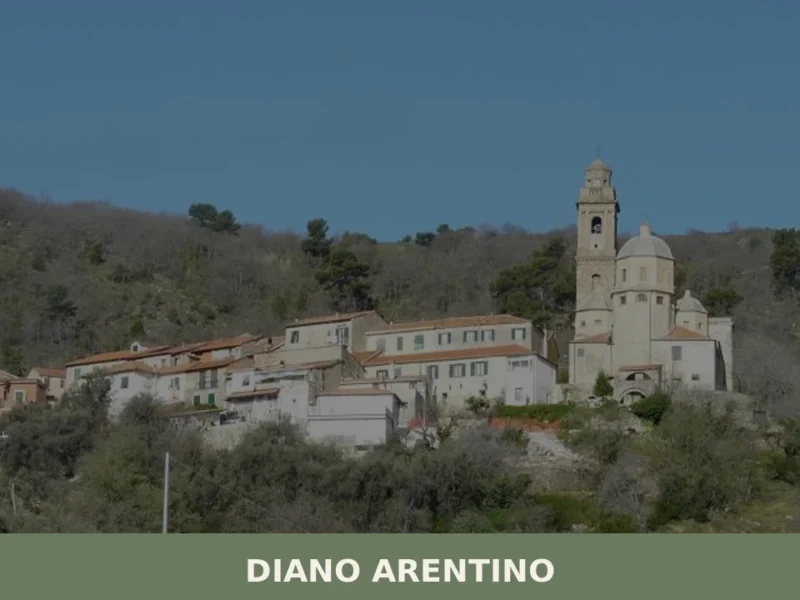
In Liguria More villages to discover
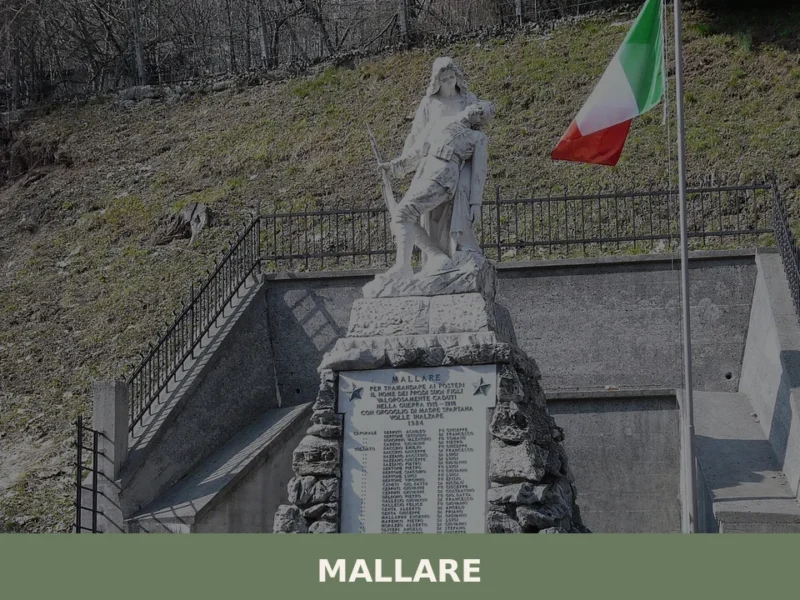
Mallare
 Mountain
What to see in Mallare, Liguria, Italy: explore 5 attractions, local food traditions, and festivals in this 1,193-inhabitant village near Savona. Discover it now.
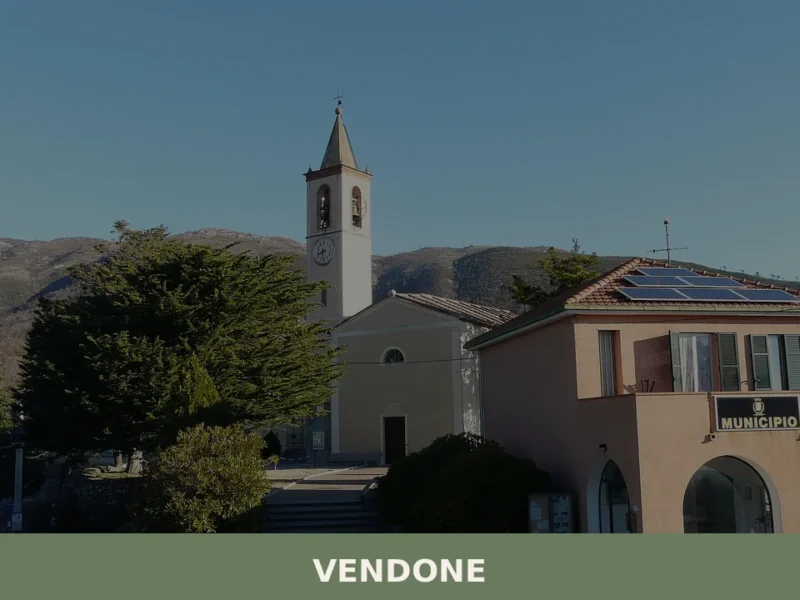
Vendone
 Hills
Hills
What to see in Vendone, Liguria, Italy: 5 attractions, local food, festivals and how to get there. 401 inhabitants, 80 km from Genoa. Discover it now.
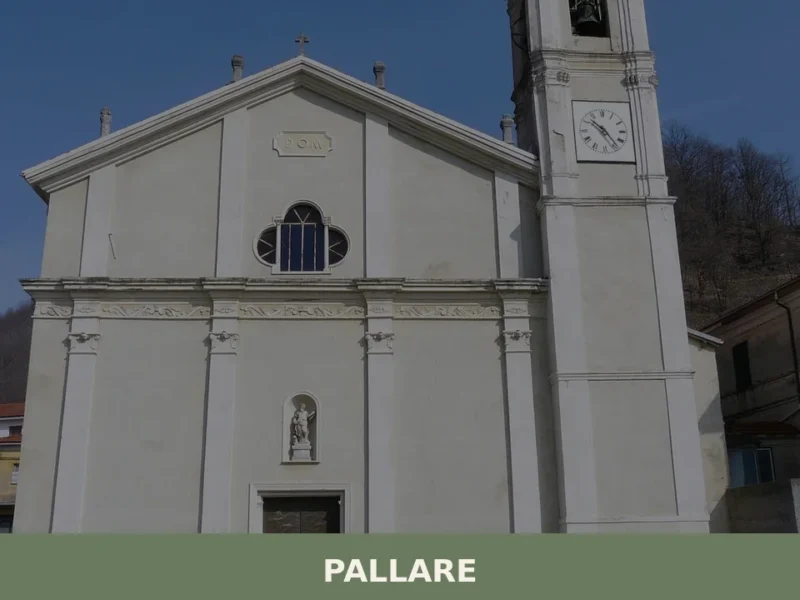
Pallare
Mountain
what to see in pallare: Explore this Ligurian comune, 15 km from Savona, Italy. Discover its geographical context and accessibility. Read our guide.
Bergeggi
Sea
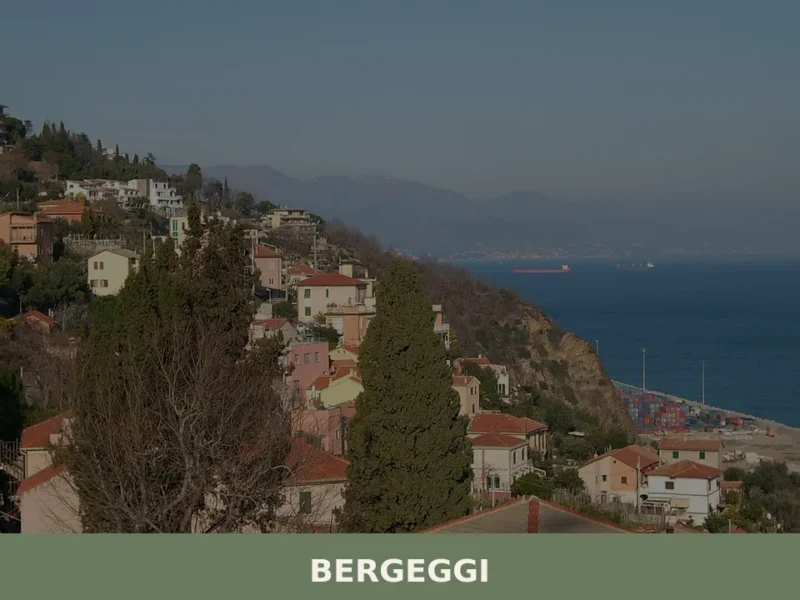
The limestone bluffs that drop into the Ligurian Sea west of Savona do not ease the traveller in gently. The coastline here is direct: rock, water, and the smell of salt on warm stone. Bergeggi sits at roughly 10 km (6.2 mi) from Savona, at a point where the Via Aurelia, the ancient Roman road […]
Montebruno
Mountain
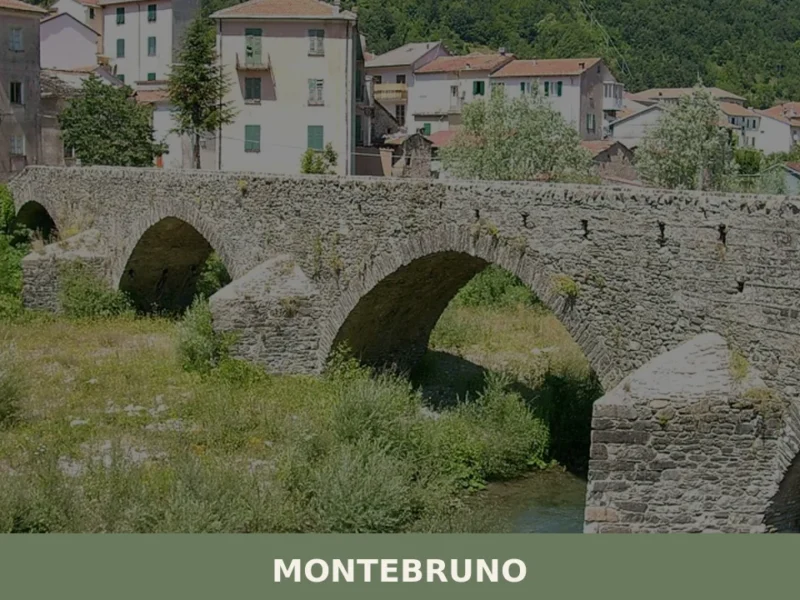
What to see in Montebruno, Italy: a mountain village at 655 m (2,149 ft) near Genoa. Discover the Marian sanctuary, Antola park trails and the 8 September feast.
Ceriana: A Ligurian Hill Village Guide
Hills
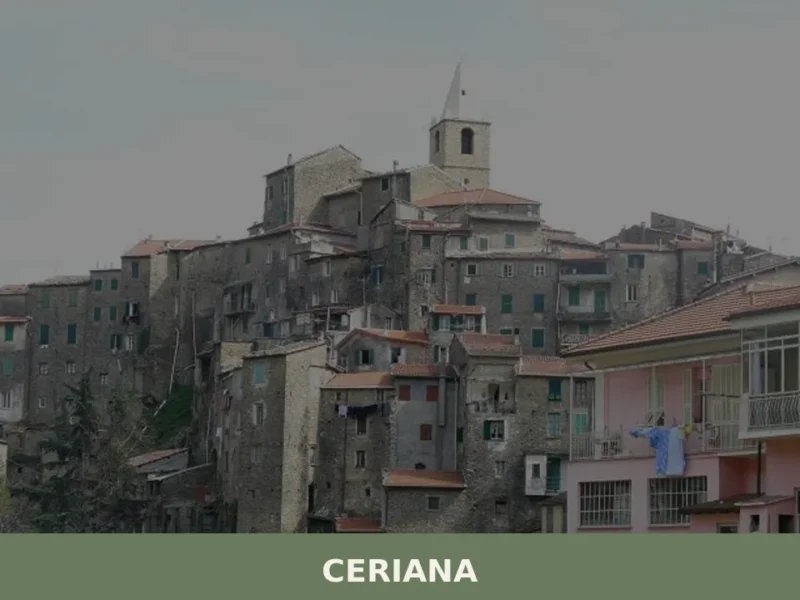
What to see in Ceriana, Italy: Explore this Ligurian village at 369 m (1,211 ft) altitude. Discover historical sites and lively festivals. Read our guide.
Armo
Hills
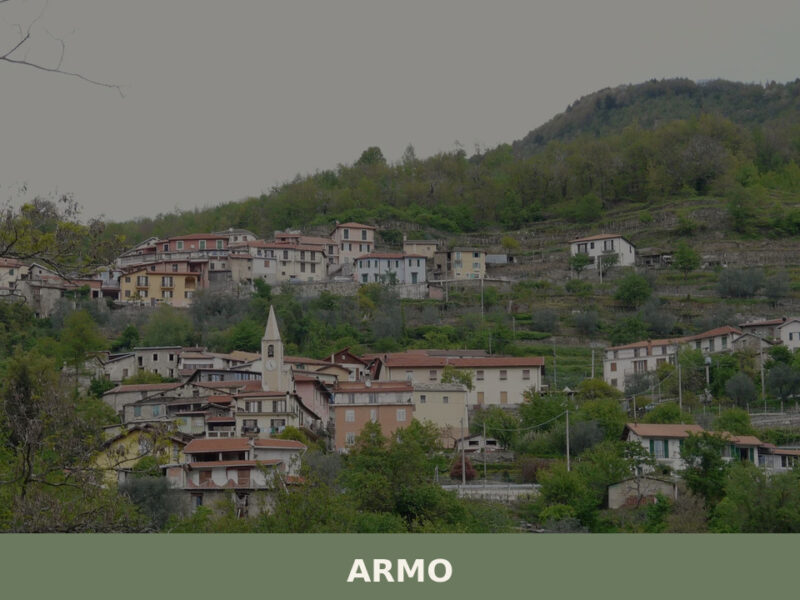
Armo, a village of 120 inhabitants above the Petrace valley in Calabria, rewards visitors with stone lanes, ancient olive terraces, and Aspromonte trails.
Coreglia Ligure
 Plains
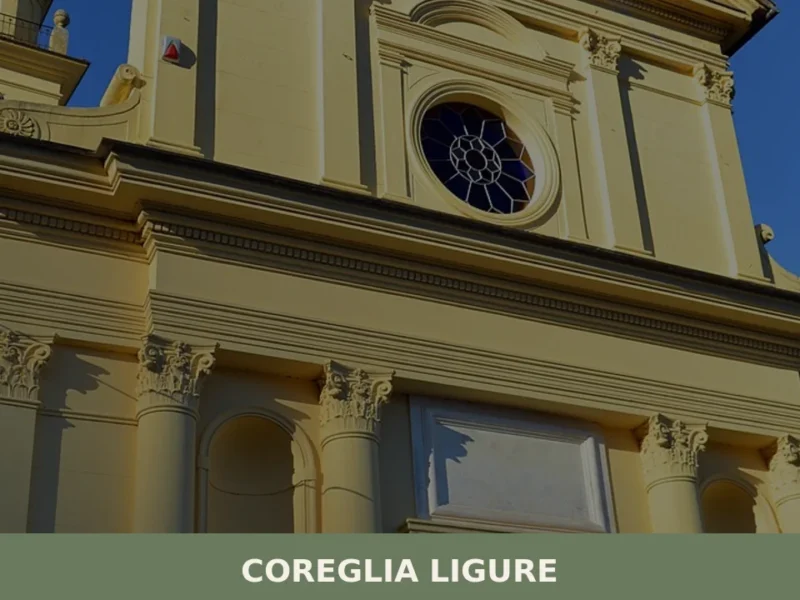
Coreglia Ligure, a comune of just 257 inhabitants in the province of Genova, sits at 65 metres above sea level on the eastern slope of the Fontanabuona valley — one of the most densely settled inland corridors of the Ligurian Apennines. The village’s economy historically revolved around slate extraction and olive cultivation, two activities that […]
Mioglia
Mountain
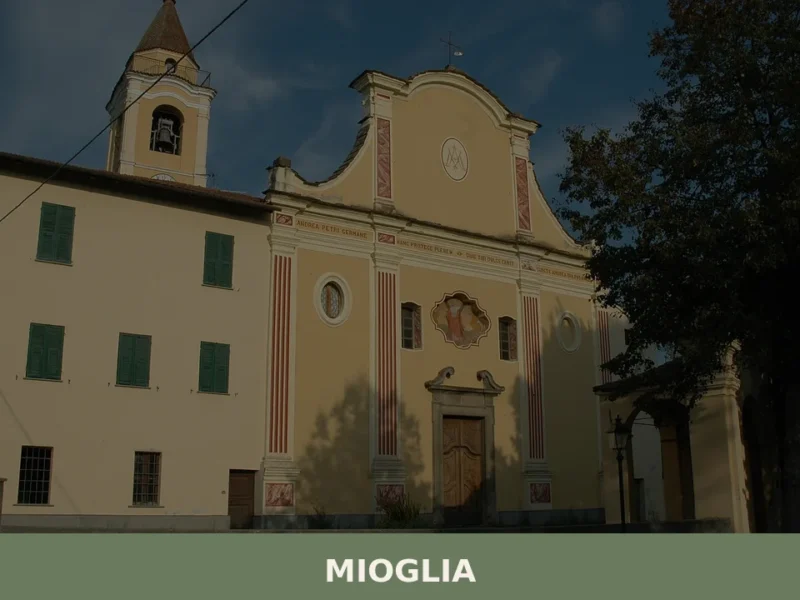
What to see in Mioglia, Italy: a village of 538 inhabitants 40 km from Genoa. Discover top attractions, local food, festivals and how to get there.
Montegrosso Pian Latte
Mountain
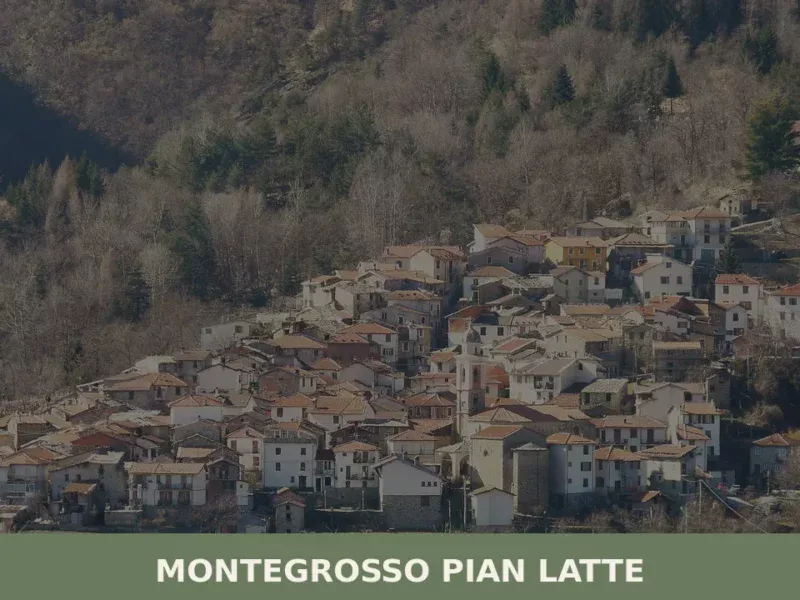
What to see in Montegrosso Pian Latte, Italy? Discover this Ligurian village of 132 residents, explore its frazione Case Fascei, and the Alpi Liguri Park. Read our guide.


🏡 Know Pietrabruna better than we do?
If you’re a local or have been there, your knowledge matters: add what’s missing or fix a detail on this page.