


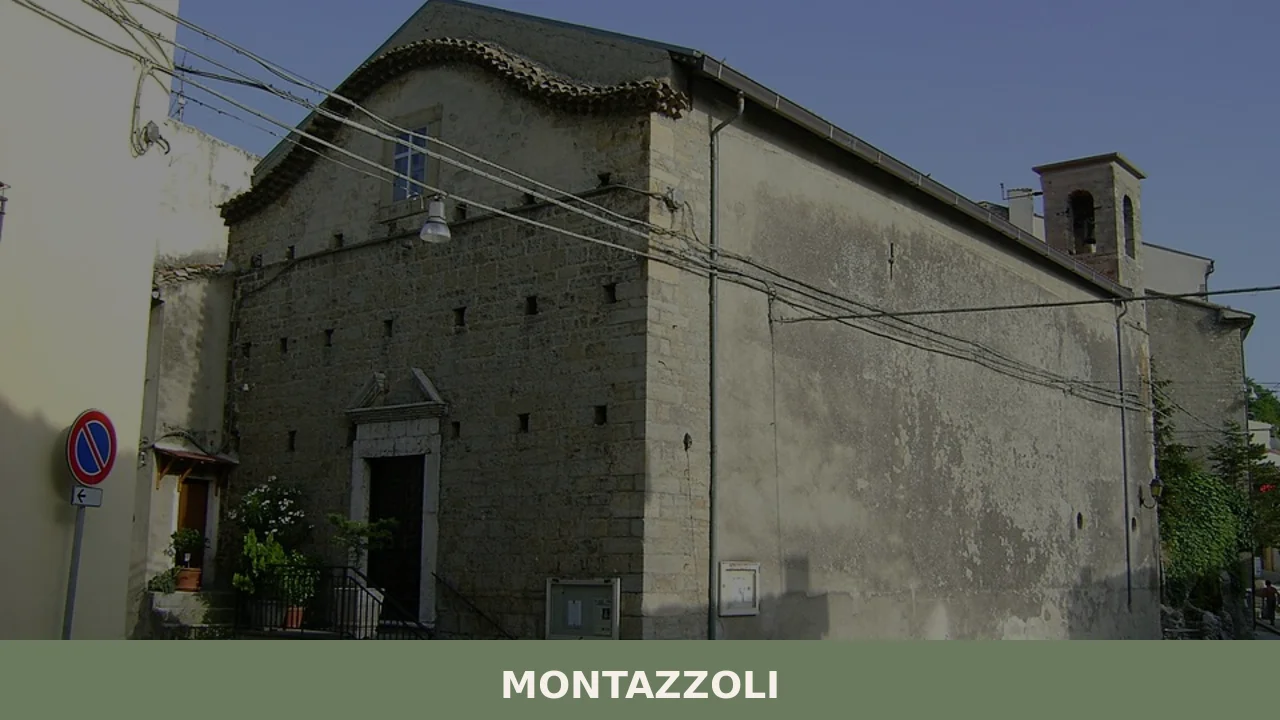
Montazzoli
 Mountain
From the heights of the Chieti area, at 850 meters above sea level, the panorama of Montazzoli unfolds, an Abruzzese village with 836 inhabitants in the province of Chieti. Its stone houses cluster around an ancient fortress, bearing witness to centuries of history and mountain life. In this article History and origins of Montazzoli What […]
Discover Montazzoli
From the heights of the Chieti area, at 850 meters above sea level, the panorama of Montazzoli unfolds, an Abruzzese village with 836 inhabitants in the province of Chieti. Its stone houses cluster around an ancient fortress, bearing witness to centuries of history and mountain life.
Here, time seems to be marked by the rhythms of nature and local traditions, offering visitors an authentic experience in a tranquil setting.
For those wondering what to see in Montazzoli, the village offers an itinerary ranging from historic architecture to suggestive natural paths.
Among the most relevant attractions are the Ducal Castle and the Church of San Nicola di Bari, focal points of a well-preserved historic center. Visitors to Montazzoli will find a heritage that fully meets the expectations of those seeking an immersion in Abruzzo’s culture and landscape.
History and origins of Montazzoli
The roots of Montazzoli delve into a distant past, with the first records suggesting the village’s name derives from “Mons Aziolus” or “Monte Azzarolo”, perhaps linked to the presence of hawthorns or the name of an ancient family. Its strategic position, elevated and dominating the Sangro valley, suggests a defensive function from the earliest times.
The first fortified structures, although not clearly documented in detail, may have originated as early as the Lombard era, consolidating in subsequent centuries as an outpost for territorial control.
The village experienced its most significant development during the feudal period, passing under the control of various powerful noble families.
Among these, the Caracciolo and subsequently the d’Avalos families exerted their influence over the territory, contributing to its architectural and social configuration. The Ducal Castle, the original core of the town, underwent modifications and enlargements over the centuries, reflecting the defensive and representative needs of the lordships that succeeded one another there. This period of domination left a profound imprint on Montazzoli’s urban structure, still visible today in its streets and buildings.
During the 19th century, like many other towns in inland Abruzzo, Montazzoli faced challenges related to the social and economic changes of the era, while maintaining its strong mountain identity. Life in the village continued to revolve around agriculture and pastoralism, activities that shaped the local landscape and traditions.
The history of Montazzoli, though not rich in dramatic events, is a chronicle of resilience and continuity, a story of how a community managed to preserve its connection to the land and its origins, in a context similar to that of Poggiofiorito, also a guardian of a significant past in the province of Chieti.
What to see in Montazzoli: main attractions
Ducal Castle
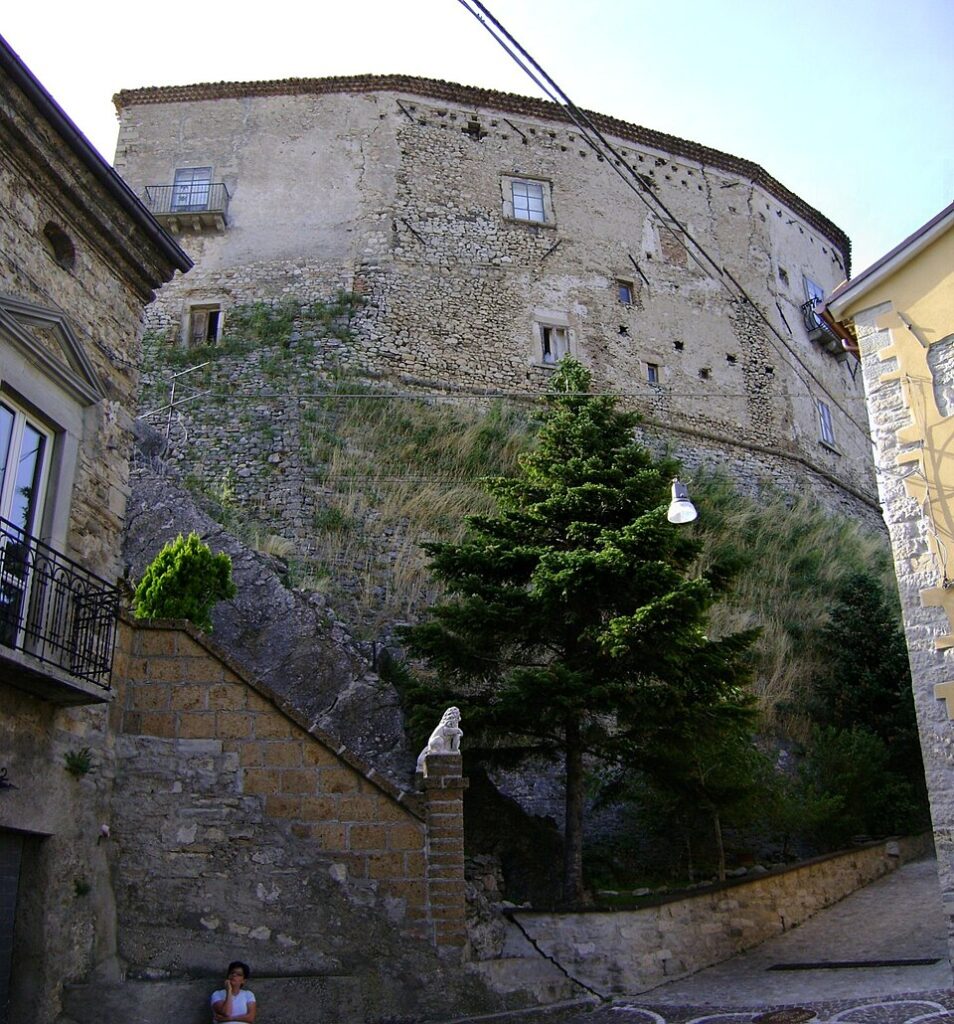
The Ducal Castle stands as Montazzoli’s most majestic symbol, dominating the inhabited center with its imposing mass. Its origins probably lie between the 11th and 12th centuries, as evidence of the need to defend the territory from incursions and to control communication routes. The structure, although having undergone alterations over the centuries, still retains its rectangular layout and corner towers that characterize its profile.
Over the centuries, the castle played a crucial role in the defense of the Sangro valley, serving as a stronghold for the various noble families who succeeded one another in the dominion of the fiefdom.
Although today it is largely privately owned and not always accessible inside, its external walls and panoramic position offer a clear view of its historical importance.
A walk around the fortress allows one to appreciate its architecture and solid construction in local stone, which has withstood the passage of time.
Observing the Ducal Castle from the outside reveals the stratification of eras, with elements ranging from medieval to Renaissance. Its presence is a visual landmark for the entire village and the valley below. For visitors interested in military architecture and local history, the castle represents a fundamental stop to understand the evolution of Montazzoli and the role it played in controlling the territory.
Mother Church of San Nicola di Bari
The Mother Church of San Nicola di Bari is Montazzoli’s main place of worship, dedicated to the village’s patron saint.
Its current conformation dates predominantly to the 18th century, the result of reconstructions and enlargements on older foundations, attesting to its centuries-old history.
The stone façade, often sober yet elegant, is distinguished by its classic-style portal and the robust bell tower that rises beside it, visible from much of the town.
The interior of the church features a single nave, typical of religious constructions of the period, and houses various sacred artworks, including wooden altars and votive paintings that recount the community’s devotion. The decorations and furnishings reflect Baroque and Neoclassical styles, albeit with a local interpretation.
The light filtering through the windows illuminates the spaces, creating an atmosphere of contemplation and spirituality.
During the patron saint’s feast day, which falls on June 4th, the church becomes the heart of the celebrations, hosting processions and solemn rites that involve the entire population. Visiting the Church of San Nicola allows one not only to appreciate its architectural and artistic value but also to perceive the deep faith and traditions that animate life in Montazzoli.
It is an essential point of reference for anyone wanting to understand what to see in Montazzoli and its culture.
Church of Santa Maria Maddalena
In the oldest part of the village, you’ll find the Church of Santa Maria Maddalena, a religious structure of more modest dimensions compared to the Mother Church, but no less significant for local history. Its architecture, simpler and more linear, suggests a perhaps more archaic origin or a purpose for local worship.
Its exposed stone walls and small bell-gable define a discreet and charming profile, in harmony with the historic center’s context.
This minor church is often linked to legends or specific moments in the community’s life, serving as a point of reference for residents of the surrounding districts. Although detailed information about its foundation or artworks is less abundant than for the main church, its presence helps define Montazzoli’s urban layout and spiritual richness.
Careful observation of its façade can reveal interesting construction details, such as ancient windows or portals.
The Church of Santa Maria Maddalena is an example of the widespread presence of the sacred in small Abruzzese towns, where every district or hamlet had its place of worship. A visit to this church offers a different insight into local religiosity and the village’s minor architecture, completing the experience for those seeking what to see in Montazzoli.
It is advisable to check its opening hours, which are often limited to specific liturgical occasions.
The Historic Center and its Alleyways
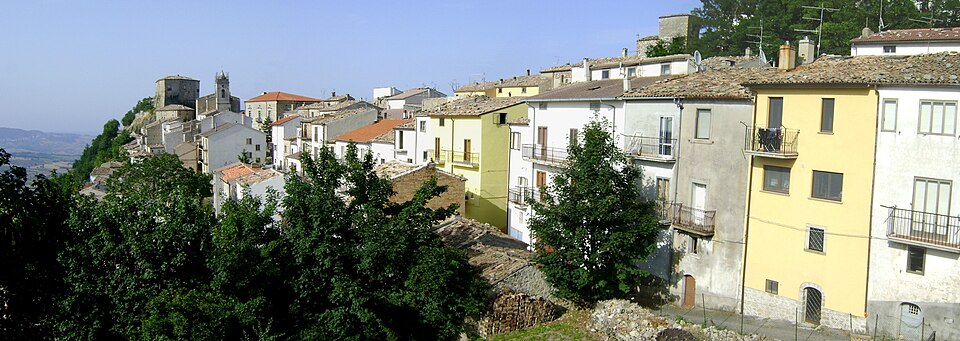
Montazzoli’s historic center unfolds in an intricate labyrinth of paved alleyways and stone staircases, winding between houses nestled against each other, creating evocative glimpses. The dwellings, built with local stone, often feature solid wooden portals and small windows overlooking internal courtyards or breathtaking panoramas.
This urban layout, typical of mountain villages, is the result of centuries of adaptation to the territory and defensive needs
Walking through the streets of the village, one can discover architectural details such as stone arches, small loggias, and flowered balconies, which tell the daily life of its inhabitants. The squares, though modest in size, serve as meeting and gathering points, surrounded by historic buildings that maintain their original character intact.
The atmosphere is that of a place where time moves at a different pace, far from the frenzy of modern cities.
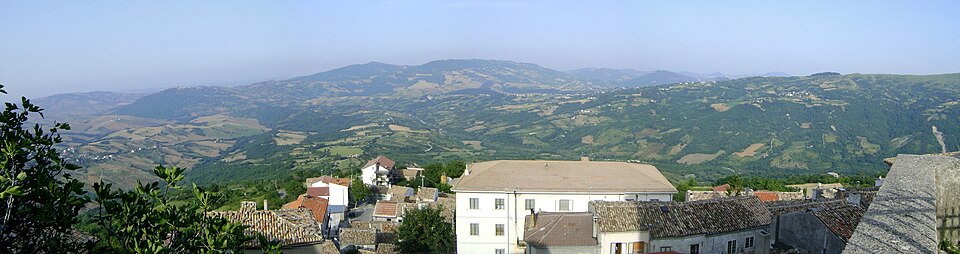
Numerous panoramic viewpoints open suddenly between the houses, offering spectacular views of the Sangro valley and the surrounding mountains. These natural overlooks allow one to appreciate the beauty of the Abruzzo landscape and Montazzoli’s strategic position.
Exploring the historic center is an experience that allows one to fully immerse themselves in local history and traditions, revealing the authentic heart of what to see in Montazzoli.
The Mountain Landscape and Trails
Montazzoli, with its 850 m a.s.l., is nestled in a mountain setting that offers numerous opportunities for nature and hiking enthusiasts. The trails that branch off from the village lead through beech and oak forests, revealing flora and fauna typical of the Abruzzo Apennines. The fresh, clean air, along with the silence interrupted only by the sounds of nature, makes these paths ideal for rejuvenation and enjoying moments of tranquility.
Excursions around Montazzoli allow one to reach panoramic viewpoints from which to admire the expanse of the Maiella and Gran Sasso in the distance, offering scenes of rare beauty.
The geological conformation of the territory, with its exposed rocks and deep valleys, is an open book on the natural history of the region. Along the paths, one can encounter small springs or ancient sheepfolds, testimonies to a pastoral economy that characterized these mountains for centuries.
For those seeking outdoor activities, the trails offer routes of varying difficulty, suitable for both relaxing walks and more challenging treks.
It is advisable to bring appropriate clothing and inquire with local authorities or the Montazzoli Municipality website about trail conditions. The surrounding mountain landscape is an essential component of the visiting experience, further enriching Montazzoli’s offering for those seeking an authentic connection with nature, in an environment that recalls the wild beauty of Anversa degli Abruzzi, another mountain gem of Abruzzo.
Typical Cuisine and Products of Montazzoli
Montazzoli’s cuisine reflects the deep gastronomic traditions of mountainous Abruzzo, characterized by the simplicity of ingredients and the robustness of flavors. This tradition is influenced by the availability of local products, such as sheep meat, cereals, and seasonal vegetables, which have always formed the basis of peasant nutrition.
The preparation of dishes follows recipes handed down from generation to generation, which enhance the authentic taste of the raw ingredients.
Among the dishes to savor, first courses based on homemade pasta hold a place of honor.
One often finds sagne a pezze, pasta cut into irregular diamond shapes, seasoned with meat or vegetable sauces, and maccheroni alla chitarra, an egg pasta with a square cross-section, traditionally accompanied by lamb or pork ragù. There are also legume soups, such as lentils and beans, which represent genuine and nutritious comfort food, particularly appreciated in the colder months.
As for main courses, lamb is a protagonist in many preparations, such as grilled lamb or the more famous arrosticino, skewers of sheep meat cooked over coals, a symbol of Abruzzese gastronomy. Local cured meats and cheeses, although not having specific certifications for the Montazzoli area, are the result of ancient artisanal practices and careful selection of raw ingredients.
Among the desserts, ferratelle, thin waffles prepared with special irons, and sweet taralli, flavored with lemon or anise, delicately conclude the meal.
The culinary tradition is similar to what can also be found in Farindola, where sheep farming and agriculture strongly influence local flavors.
Currently, there are no certified products (DOP, IGP, PAT) specific to the municipality of Montazzoli in the database. The valorization of local cuisine takes place through the rediscovery of ancient recipes and the promotion of food and wine events that celebrate the flavors of the territory.
It is advisable to inquire with local restaurants to learn about the traditional dishes on offer and the availability of zero-kilometer products, which may vary depending on the season and agricultural production.
Festivals, Events, and Traditions of Montazzoli
Life in Montazzoli is marked by traditions and celebrations rooted in the history and devotion of the community.
The most significant event in the local calendar is the Patron Saint’s Festival of San Nicola, held annually on June 4th. This day is dedicated to the village’s patron saint, Saint Nicholas of Bari, and sees the active participation of all residents, many of whom return to Montazzoli specifically for the occasion.
The celebrations include solemn religious rites, with masses and processions carrying the Saint’s statue through the village streets, accompanied by the musical band and the faithful. The festival is also a moment of social gathering, with civil events that may include concerts, folk shows, and, at times, fireworks that illuminate the mountain sky. Although specific fixed-date food festivals are not documented, it is common for stands to be set up during the patron saint’s festival where local specialties can be tasted, thus promoting the area’s food and wine culture.
When to visit Montazzoli and how to get there
The best time to visit Montazzoli extends from late spring to early autumn, typically from May to September.
During these months, the mountain climate is mild and pleasant, with sunny days that make walks in the historic center and hikes on the surrounding trails ideal. Spring blooms and autumn colors offer natural scenery of great beauty, while summer allows full enjoyment of outdoor activities and local festivals. Winter months, although charming with snow, can make travel and access to some trails more difficult.
To reach Montazzoli, the most convenient way is by car.
Those coming from the north or south can take the A14 (Adriatica) motorway to the Val di Sangro exit, then continue on State Road 652 and subsequently on provincial roads towards the village. The distance from the motorway exit is approximately 30-40 km. For those who prefer the train, the nearest railway stations are on the Adriatic line, such as Lanciano or Fossacesia-Torino di Sangro, from which it is necessary to continue by public bus service or taxi.
The closest airport is Abruzzo Airport in Pescara, located about 80 km away, with an estimated travel time of about an hour and a half by car.
For detailed travel planning, it is advisable to consult public transport timetables and road conditions, especially in case of bad weather. The official website of the can provide useful information on any variations or additional services.
Those wishing to extend their itinerary can consider a visit to Villa Celiera, another Abruzzese village a short distance away, known for its natural setting.
| Starting Point | Distance | Estimated Time |
|---|---|---|
| Pescara (Abruzzo Airport) | 80 km | 1h 30 min |
| A14 Val di Sangro Exit | 35 km | 45 min |
| Lanciano (Train Station) | 45 km | 1h 10 min |
Where to stay in Montazzoli
In Montazzoli and its immediate surroundings, accommodation options are geared towards solutions that enhance rural hospitality and contact with nature.
You can find agriturismos that offer not only lodging but also the chance to taste typical products and experience country life. These establishments often provide renovated rooms or small apartments, maintaining the charm of the original stone buildings.
For those seeking an alternative, there are also some B&Bs and holiday homes, managed by private individuals, which guarantee a more intimate and personalized welcome. It is advisable to book in advance, especially during peak season or local events, given the limited accommodation available in the village. For updated information on availability and contact details of establishments, you can consult the Municipality’s website or major tourist portals listing options in the Montazzoli area.
Frequently asked questions about Montazzoli
How can I reach Montazzoli by public transportation?
Montazzoli can be reached by train via the Vasto-San Salvo station, which is one hour away by car. From the station, you may need to arrange for a taxi or rental car to reach the village. Check the latest schedules on transport portals to plan your visit.
Is Montazzoli suitable for a day trip, and how much time should I allocate for a visit?
Montazzoli can be a nice day trip destination, offering a blend of historical sites and natural beauty. Allocate around 4-6 hours to explore the main attractions like Montazzoli Castle, Church of San Nicola, and the Ethnographic Museum, along with a leisurely walk on the nature trail.
📷 Photo Gallery — Montazzoli
Nearby Villages near Montazzoli
In Abruzzo More villages to discover
Castilenti
 Hills
Hills
At 272 metres above sea level, along the valley of the Fino torrent, Castilenti has a current population of 1,346 and occupies a stretch of hilly terrain in the province of Teramo where olive cultivation marks the landscape with orderly rows of trees and still-active oil mills. Anyone wondering what to see in Castilenti will […]
Roccamorice
Mountain
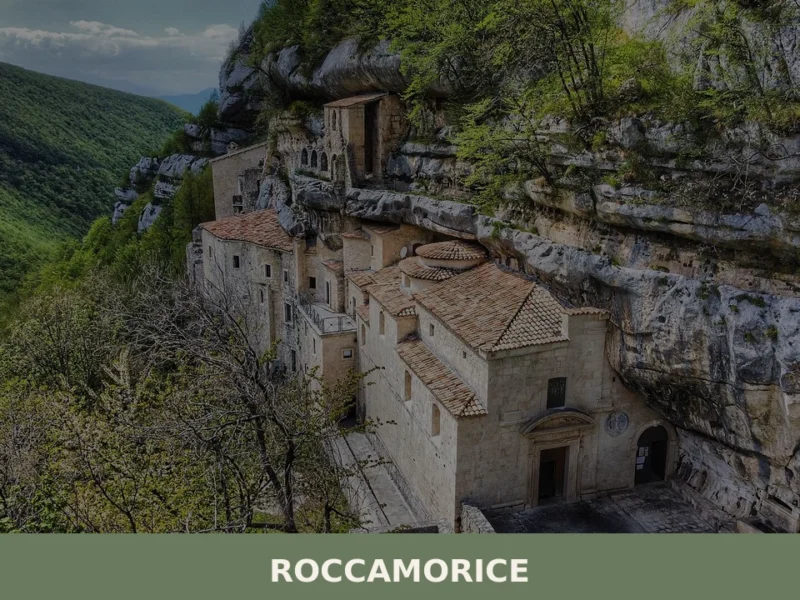
What to see in Roccamorice, Italy: discover rock-cut hermitages, the Majella National Park, and unique river-carved landscapes. Explore Abruzzo.
Fossa
Mountain
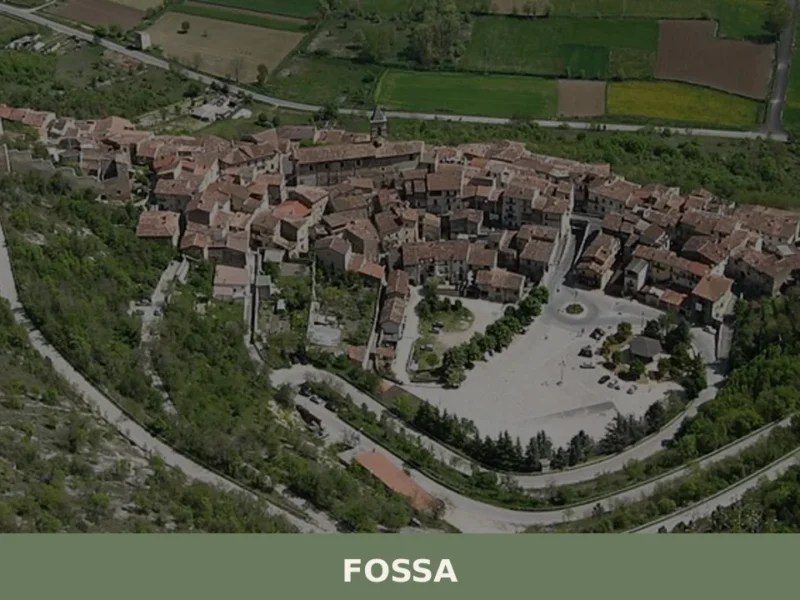
The Vestine necropolis of Fossa, unearthed in 1992 along the state road 17, revealed over six hundred tombs dating from the 9th to the 1st century BC — a discovery that rewrote our understanding of pre-Roman central Italy. Anyone wondering what to see in Fossa will find a solid starting point here: a village of […]
Bisenti
Hills
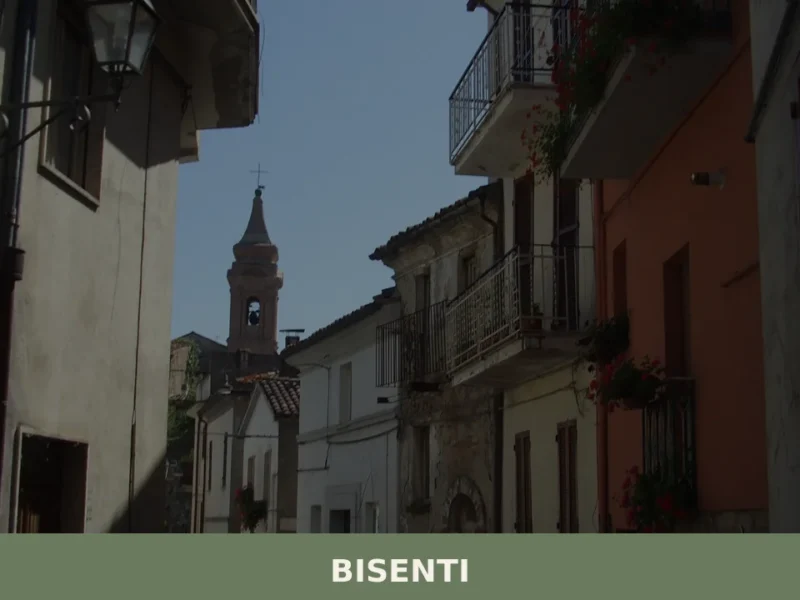
What to see in Bisenti, Abruzzo, Italy: explore the church of Santa Maria degli Angeli, the House of Pilate legend, and a village of 2,030 inhabitants. Discover it now.
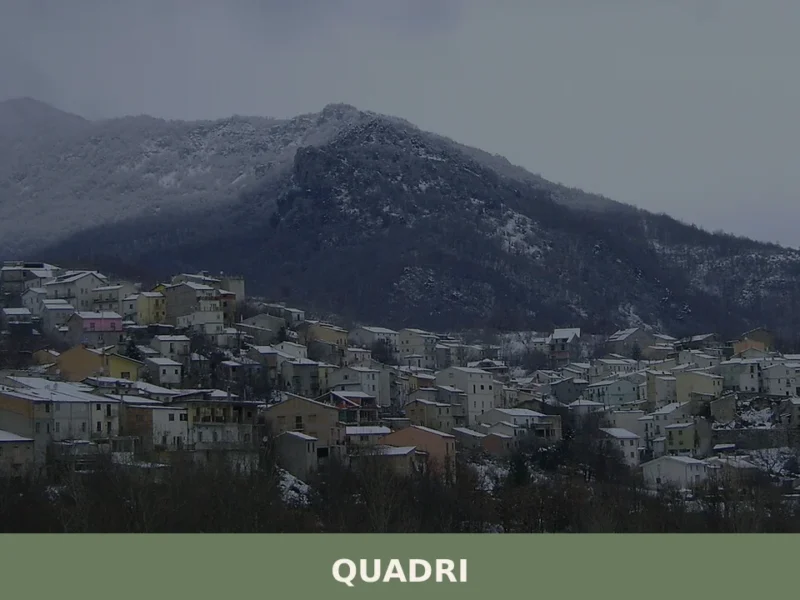
Quadri
Mountain
The limestone of the alleyways climbs straight up toward the ridge, and from up there the valley opens onto slopes where beech forests give way to pastures. Quadri belongs to the province of Chieti, in the heart of inland Abruzzo, at an altitude that isolates the village from the main transit routes and keeps it […]
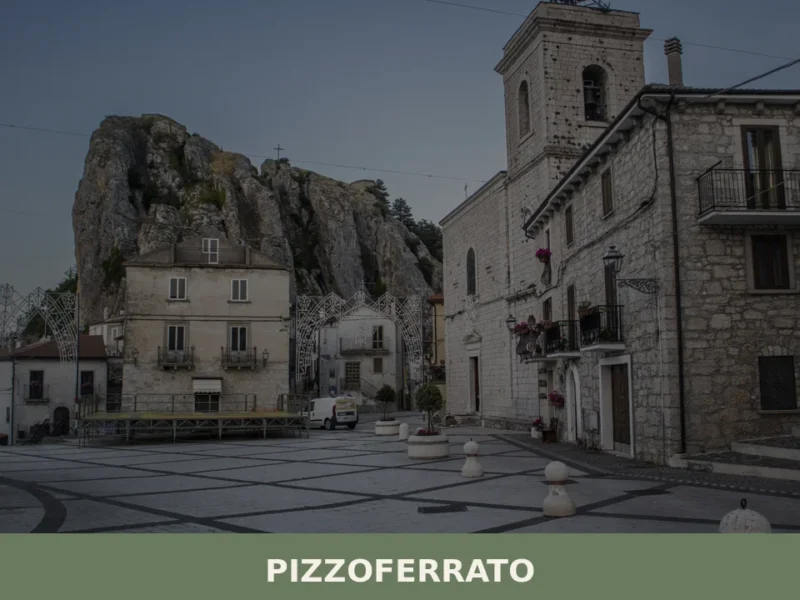
Pizzoferrato
Mountain
What to see in Pizzoferrato, Italy? Explore this mountain village at 1251 m (4104 ft) altitude. Discover ancient churches and Majella National Park. Read our guide!
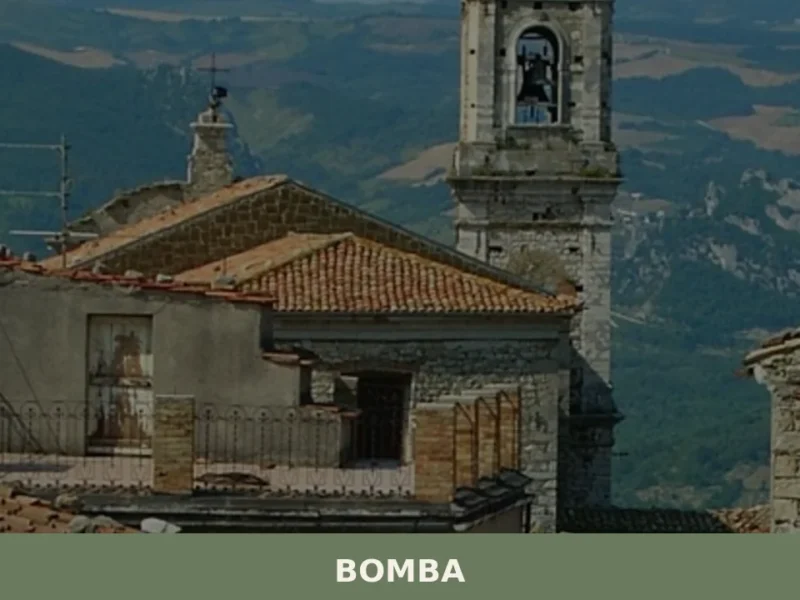
Bomba
Hills
The artificial lake that bears its name, created in 1958 by damming the River Sangro, redefined the geography and economy of Bomba, a municipality of 719 inhabitants in the province of Chieti, at 424 metres above sea level. The reservoir occupies the valley below and today represents one of the key points of interest for […]
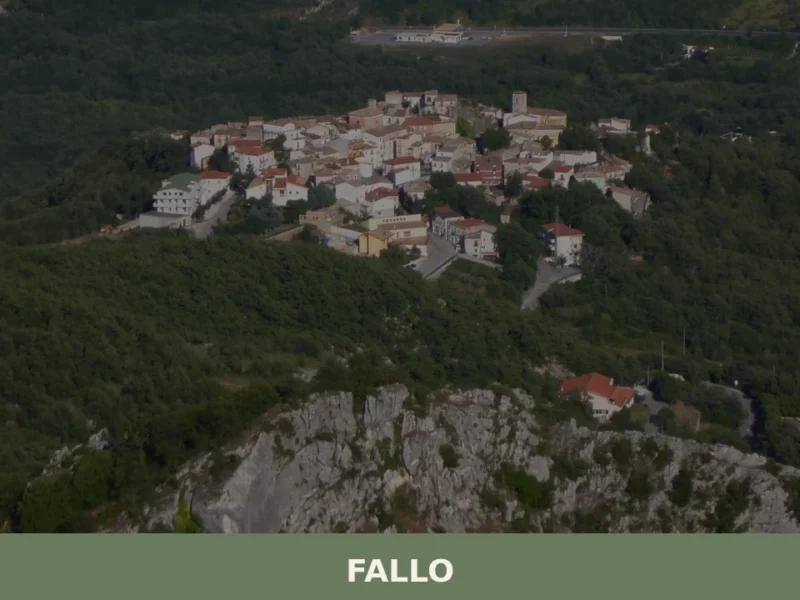
Fallo
Hills
With its 134 registered inhabitants, Fallo, in the province of Chieti, is confirmed as one of Abruzzo’s least populous settlements, a fact that immediately defines its intimate scale and unique relationship with the surrounding territory. This small urban cluster, situated on a rocky spur overlooking the Sangro valley, offers a genuine glimpse into Abruzzese mountain […]
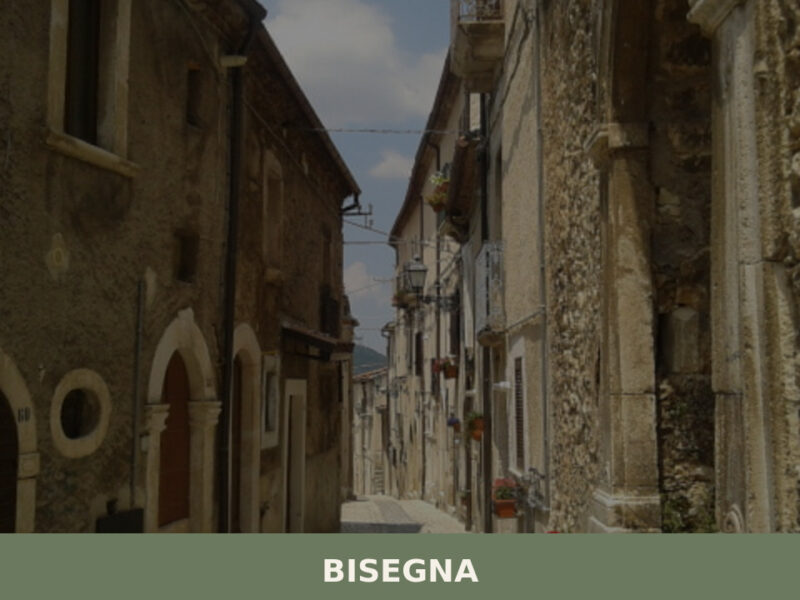
Bisegna
Mountain
A mountain village of 217 inhabitants at 1,210 metres in Abruzzo's national park. Discover what to see in Bisegna: stone lanes, frescoes, and highland trails.
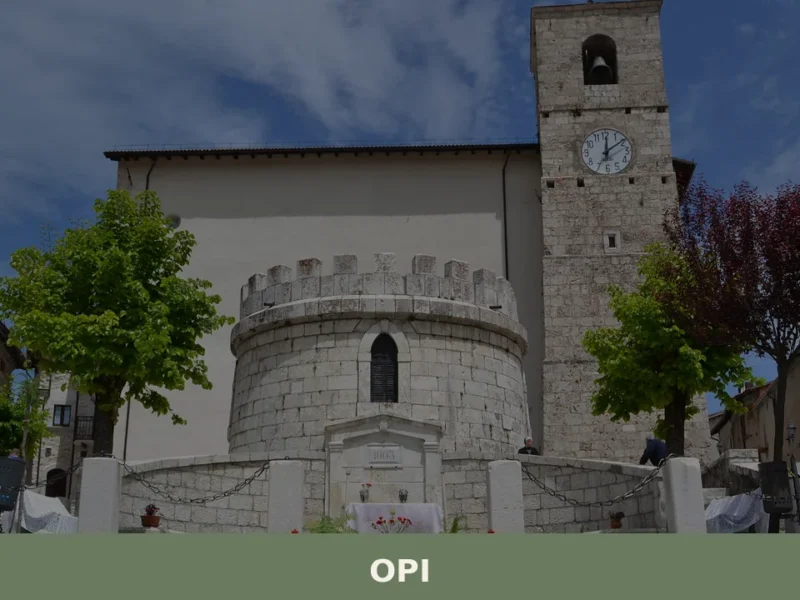
Opi
Mountain
What to see in Opi, Abruzzo, Italy: explore 3 historic monuments, the National Park of Abruzzo, and the Val Fondillo Necropolis. Discover how to get there.




🏡 Know Montazzoli better than we do?
If you’re a local or have been there, your knowledge matters: add what’s missing or fix a detail on this page.