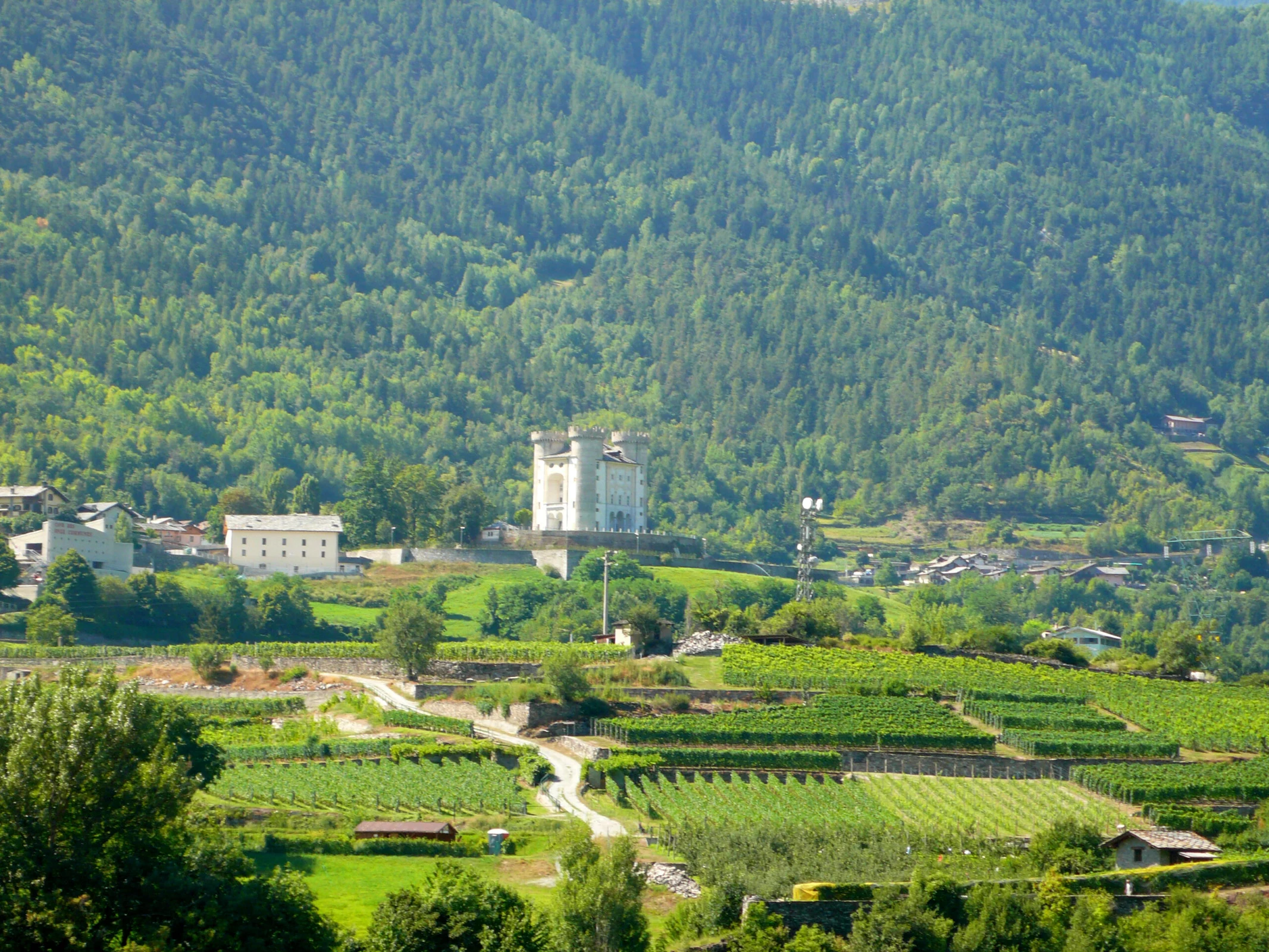
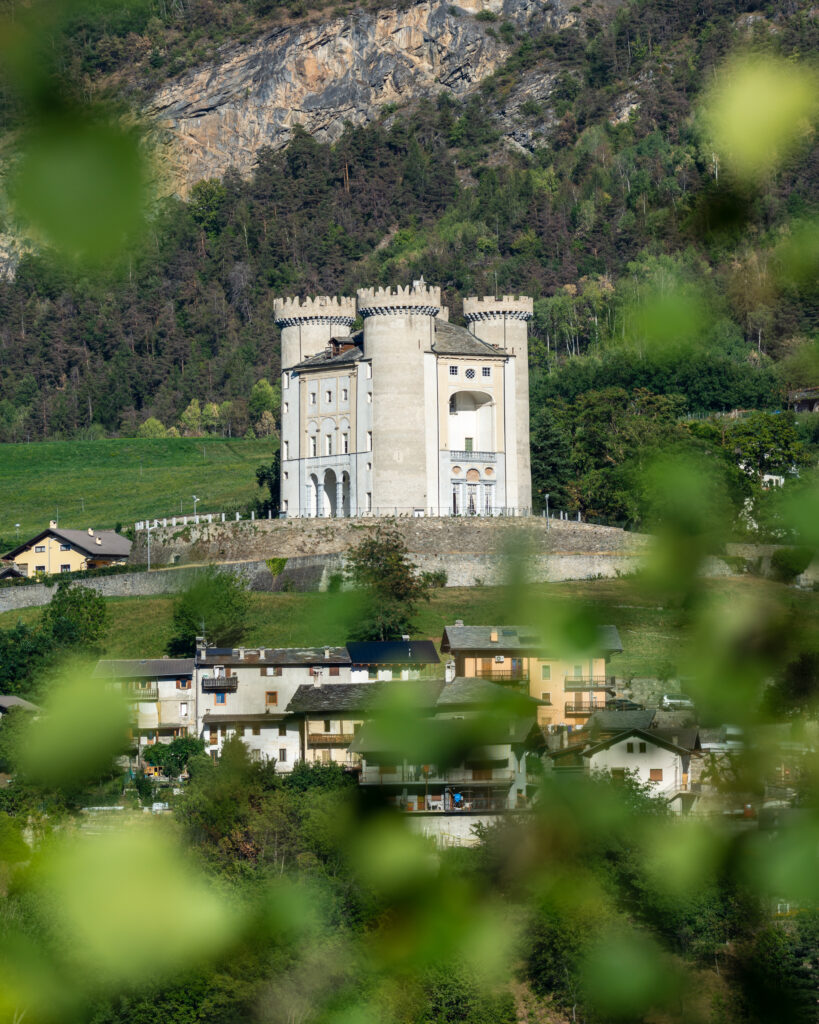
Four round towers crowned with battlements, rising above the vines of the Aosta Valley like sentinels of stone — the castello di Aymavilles is one of the most visually arresting medieval fortresses in the entire Alpine arc. Few visitors to northwestern Italy realize that this 13th-century castle, transformed into an elegant noble residence during the Baroque era, conceals centuries of dynastic power, architectural evolution, and breathtaking mountain scenery within its walls.
If you are planning a journey through the Valle d’Aosta, this landmark deserves a place at the very top of your itinerary.
The Castello di Aymavilles: History, Architecture, and Noble Legacy
The origins of the castello di Aymavilles date back to the thirteenth century, when a defensive tower was erected on a rocky promontory overlooking the Cogne valley. The strategic position was no accident: whoever controlled this hill controlled the movement of people and goods between the main Aosta Valley corridor and the side valleys leading toward the Gran Paradiso massif.
The fortress passed through the hands of several powerful feudal families before coming into the possession of the Counts of Challant, one of the most influential dynasties in medieval Aosta Valley history. Under their stewardship, the original defensive structure was progressively enlarged and refined. The four cylindrical towers that today define the castle’s unmistakable silhouette were added during the 14th and 15th centuries, transforming the building from a purely military stronghold into a noble seat of regional power.
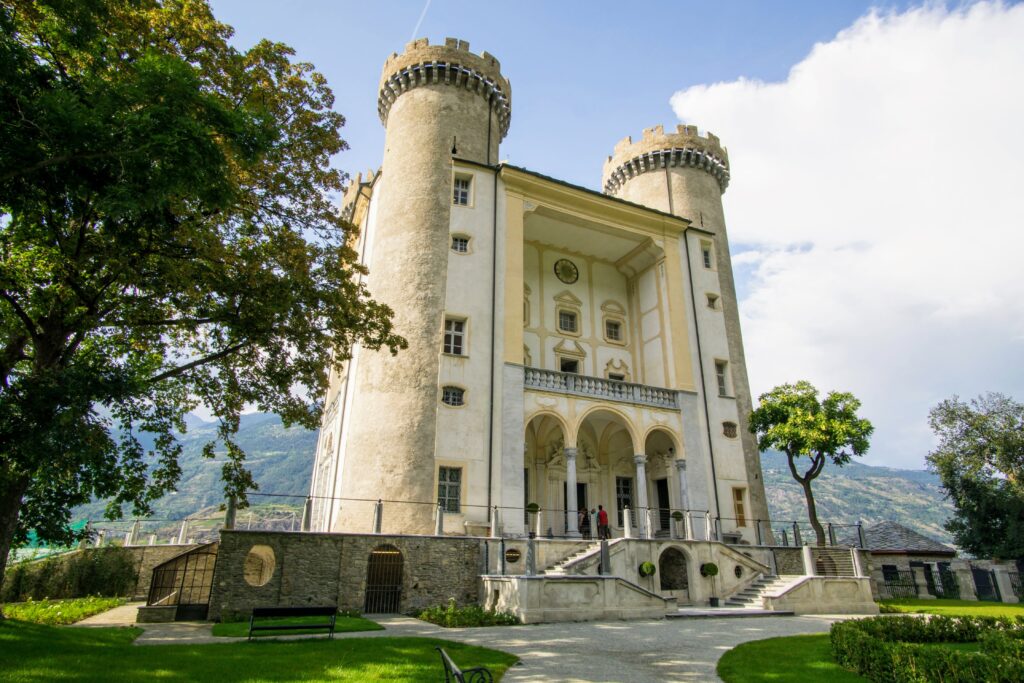
The most dramatic transformation came in the late 17th century, when the castle was remodeled in Baroque style.
The architects replaced austere medieval openings with large mullioned windows, softened the interior spaces, and redesigned the surrounding gardens in the formal Italian manner. The result was a fascinating architectural hybrid: a military exterior wrapped around a refined aristocratic interior — a metaphor, perhaps, for the social transformation of the valley’s ruling class during the early modern period.
The Castello di Aymavilles is one of only a handful of medieval fortresses in the Aosta Valley to have survived largely intact through both the Napoleonic era and the industrial 20th century. Its four towers are so iconic that the castle appears on regional tourism materials and has been used as a backdrop for film and television productions set in medieval Italy.
After centuries of private ownership, the castle was acquired by the Regione Autonoma Valle d’Aosta in the 1990s and underwent an extensive restoration programme that lasted over two decades.
The painstaking work recovered original frescoes, reinforced the medieval masonry, and restored the Baroque garden to something approaching its 17th-century appearance. The castle reopened to the public as a museum and cultural venue, finally allowing visitors to step inside a building that had been closed to the public for generations.
What to See Inside: Room by Room Through the Aymavilles Fortress
Exploring the interior of the Aymavilles fortress is like reading a palimpsest — layer upon layer of different historical periods, each leaving its mark on the stones. The ground floor preserves the heaviest medieval fabric: thick walls, vaulted ceilings, and the original defensive arrangements that speak directly to the castle’s martial origins.
Moving upward through the building, visitors encounter the noble apartments that were created or refurbished during the Baroque transformation.
Several rooms retain fragments of their original fresco decoration, including hunting scenes, heraldic motifs, and allegorical figures typical of 17th-century aristocratic iconography. The quality of some of these painted surfaces is remarkably high, suggesting that the Counts of Challant spared no expense in advertising their cultural sophistication.
Among the highlights of any visit, look out for:
- The main ceremonial hall, whose proportions and decorative scheme reflect the Baroque desire for theatrical grandeur
- The chapel, a small but beautifully preserved private oratory with original altar furnishings
- The tower rooms, which offer dizzying views over the valley and give a visceral sense of the castle’s original defensive purpose
- The kitchens and service areas, which document the logistics of running a major noble household
- Temporary exhibition spaces, which regularly host shows dedicated to Valdostan art, archaeology, and natural heritage
The surrounding park and gardens are not to be missed.
The formal Italian garden, laid out on terraces below the castle walls, frames views of the valley that stretch toward the Gran Paradiso and the Mont Blanc massif on clear days. In spring and early autumn, when the light is soft and the crowds thin, this is one of the most romantic spots in the entire region.
The Castello di Aymavilles is located in the village centre of Aymavilles, approximately 10 km west of Aosta city. Opening hours vary by season; the castle is typically open from spring through autumn, with guided tours available in Italian, French, and English. Admission fees apply; concessions are available for children, students, and EU citizens over 65. For up-to-date opening times, ticket prices, and event programmes, consult the official regional heritage portal: Regione Autonoma Valle d’Aosta.
Aymavilles Village: The Medieval Borgo Surrounding the Castle
No visit to the castle is complete without taking time to explore the village itself.
Aymavilles is one of the most charming borghi in the Aosta Valley, a compact settlement of stone houses, narrow lanes, and ancient churches that clusters around the foot of the castle hill like a medieval stage set. Walking through the village before or after your castle visit adds an essential layer of context: you begin to understand how the fortress and the community it governed once formed a single, interdependent organism.
The parish church of Sant’Ilario is well worth a stop, preserving Romanesque structural elements beneath later additions. The local caves — traditional Valdostan wine cellars carved into the hillside — hint at the agricultural vocation that has always underpinned life in this valley.
The surrounding vineyards, classified under the Valle d’Aosta DOC appellation, produce wines from indigenous grape varieties including Petite Arvine, Fumin, and Cornalin that reward a visit to any local winery or enoteca.
The village sits at the confluence of the main valley and the Valsavarenche road, making it a natural base for excursions into the Gran Paradiso National Park — Italy’s oldest national park and one of the finest wildlife sanctuaries in the Alps. Ibex, chamois, golden eagles, and bearded vultures are regularly spotted in the higher elevations above the village.
Exploring the Surrounding Area: Nearby Medieval Villages Worth Visiting
The Aosta Valley rewards slow, exploratory travel, and the villages surrounding Aymavilles offer a rich palette of landscapes, histories, and local traditions. If you have more than a day to spare, consider extending your itinerary to include some of these remarkable destinations.
Arvier lies just a few kilometres to the west, perched on a terrace above the Dora Baltea river. This small village is famous as the home of Enfer d’Arvier, one of the most celebrated red wines of the Aosta Valley, produced from Petit Rouge grapes grown on dramatically steep terraced vineyards.
The medieval village core, with its tower house and ancient walls, makes for an atmospheric afternoon wander.
To the east, Brissogne occupies a hillside position above the valley floor with commanding views toward Aosta and the surrounding peaks. The village preserves a fine example of a maison forte — a fortified manor house — that illustrates the transition between purely military architecture and the comfortable rural residence of the minor nobility. The surrounding agricultural landscape, with its traditional remues (seasonal transhumance routes), adds a living cultural dimension to any visit.
Further afield, Challand-Saint-Anselme offers another perspective on the valley’s medieval heritage. Situated in the lower Val d’Ayas, the village is overlooked by its own ruined castle and surrounded by a landscape of chestnut forests and alpine meadows.
The local traditions — including distinctive Valdostan crafts and a lively calendar of festivals — make it a rewarding destination for those interested in living folk culture rather than mere historic monuments.
Practical Guide: How to Reach Aymavilles and Plan Your Visit
Getting to Aymavilles is straightforward whether you are arriving by car, public transport, or bicycle — the latter option increasingly popular among the many cyclists who explore the Aosta Valley’s growing network of cycle paths.
By car: From the A5 motorway, exit at Aosta Ovest and follow the SS26 westward for approximately 8 km. The castle is clearly signposted from the village centre, and parking is available nearby.
By bus: Regular SAVDA bus services connect Aosta city centre with Aymavilles several times daily, with the journey taking approximately 20 minutes.
The bus stop is a short walk from the castle entrance.
By bicycle: The Via Francigena cycle route and the Aosta Valley cycle path pass close to the village, making Aymavilles an excellent stop on a multi-day cycling itinerary along the Dora Baltea valley.
The best times to visit are late spring (May–June) and early autumn (September–October), when temperatures are mild, the mountain light is at its most photogenic, and tourist numbers are lower than in the peak summer season. The castle’s gardens are at their most spectacular when the surrounding vines begin to turn gold in October.
For those planning an extended stay, Aymavilles and its neighbours offer a range of accommodation from traditional agriturismo farmhouses to comfortable hotels and holiday apartments.
The proximity to Aosta — with its Roman amphitheatre, triumphal arch, and extensive archaeological museum — means that the village makes an ideal base for exploring the wider region without sacrificing comfort.
The Aosta Valley is the smallest and least populated region in Italy, yet it contains more castles per square kilometre than virtually any other area in the country. Over 70 fortresses and tower houses dot the valley — a legacy of the region’s strategic importance as the gateway between Italy and the Alpine passes leading to France and Switzerland.
Photography, Events, and Cultural Activities at the Aymavilles Castle
The photographic potential of the castello di Aymavilles is extraordinary, and the site has become a favourite subject among travel photographers and Instagram creators exploring the Valle d’Aosta.
The classic establishing shot — four round towers reflected against a sky streaked with alpenglow, vineyards glowing gold in the foreground — is best captured in the late afternoon from the path that descends from the village toward the valley floor.
Throughout the year, the castle and its grounds serve as a venue for a varied programme of cultural events:
- Medieval re-enactment festivals, typically held in summer, which bring the castle’s courtyard to life with jousting, archery, and period crafts demonstrations
- Classical and folk music concerts staged in the gardens on summer evenings
- Wine and gastronomy events celebrating the DOC Valle d’Aosta appellation
- Guided thematic tours focused on specific aspects of the castle’s history, architecture, or garden design
- Educational programmes for schools and families, linked to the regional curriculum on Valdostan history and natural heritage
For the most current events programme, it is advisable to check the official calendar maintained by LoveVDA — Valle d’Aosta Tourism, which lists all major cultural happenings across the region with booking information and practical details.
Frequently Asked Questions
Is the Castello di Aymavilles open to visitors throughout the year?
The castle follows a seasonal opening schedule, typically welcoming visitors from spring through early autumn. Winter openings are limited and generally restricted to guided group visits or special events. Always verify current hours on the regional heritage portal before planning your visit, as schedules can change year to year.
How long does a visit to the Castello di Aymavilles take?
A self-guided tour of the interior rooms and gardens takes approximately 1.5 to 2 hours.
If you add time for exploring the village of Aymavilles itself, enjoying lunch at a local restaurant, and taking photographs of the surrounding landscape, allow at least a half day for a fully satisfying experience.
Can I combine a visit to the castle with a walk in the Gran Paradiso National Park?
Absolutely — this combination is one of the most popular ways to spend a day in the area. The park’s visitor centre in Cogne is approximately 30 minutes by car from Aymavilles, and several well-marked trails begin directly from nearby valley villages. The contrast between medieval architecture in the morning and pristine alpine wilderness in the afternoon is one of the distinctive pleasures of travelling in this part of Italy.
Are there restaurants and places to eat near the Castello di Aymavilles?
The village of Aymavilles and the surrounding area offer several good options, from traditional osterie serving Valdostan specialities such as carbonade, fonduta, and cured meats, to more contemporary restaurants with valley views. For a wider choice, the city of Aosta — just 10 km away — provides everything from quick street food near the Roman monuments to fine dining establishments with extensive regional wine lists.
Standing beneath the four towers of the castello di Aymavilles as the late afternoon sun turns the stone to amber, it is hard not to feel a deep sense of privilege — the privilege of encountering a place where the full weight of medieval history, Baroque elegance, and Alpine grandeur converges in a single, unforgettable image.
Whether you are a history enthusiast, an architecture lover, a wine aficionado, or simply a traveller in search of beauty, this extraordinary monument will exceed every expectation. Plan your visit, take the slow road through the vineyards, and let the valley work its ancient magic on you.
Four round towers crowned with battlements, rising above the vines of the Aosta Valley like sentinels of stone — the castello di Aymavilles is one of the most visually arresting medieval fortresses in the entire Alpine arc. Few visitors to northwestern Italy realize that this 13th-century castle, transformed into an elegant noble residence during the Baroque era, conceals centuries of dynastic power, architectural evolution, and breathtaking mountain scenery within its walls.
If you are planning a journey through the Valle d’Aosta, this landmark deserves a place at the very top of your itinerary.
The Castello di Aymavilles: History, Architecture, and Noble Legacy
The origins of the castello di Aymavilles date back to the thirteenth century, when a defensive tower was erected on a rocky promontory overlooking the Cogne valley. The strategic position was no accident: whoever controlled this hill controlled the movement of people and goods between the main Aosta Valley corridor and the side valleys leading toward the Gran Paradiso massif.
The fortress passed through the hands of several powerful feudal families before coming into the possession of the Counts of Challant, one of the most influential dynasties in medieval Aosta Valley history. Under their stewardship, the original defensive structure was progressively enlarged and refined. The four cylindrical towers that today define the castle’s unmistakable silhouette were added during the 14th and 15th centuries, transforming the building from a purely military stronghold into a noble seat of regional power.
The most dramatic transformation came in the late 17th century, when the castle was remodeled in Baroque style.
The architects replaced austere medieval openings with large mullioned windows, softened the interior spaces, and redesigned the surrounding gardens in the formal Italian manner. The result was a fascinating architectural hybrid: a military exterior wrapped around a refined aristocratic interior — a metaphor, perhaps, for the social transformation of the valley’s ruling class during the early modern period.
The Castello di Aymavilles is one of only a handful of medieval fortresses in the Aosta Valley to have survived largely intact through both the Napoleonic era and the industrial 20th century. Its four towers are so iconic that the castle appears on regional tourism materials and has been used as a backdrop for film and television productions set in medieval Italy.
After centuries of private ownership, the castle was acquired by the Regione Autonoma Valle d’Aosta in the 1990s and underwent an extensive restoration programme that lasted over two decades.
The painstaking work recovered original frescoes, reinforced the medieval masonry, and restored the Baroque garden to something approaching its 17th-century appearance. The castle reopened to the public as a museum and cultural venue, finally allowing visitors to step inside a building that had been closed to the public for generations.
What to See Inside: Room by Room Through the Aymavilles Fortress
Exploring the interior of the Aymavilles fortress is like reading a palimpsest — layer upon layer of different historical periods, each leaving its mark on the stones. The ground floor preserves the heaviest medieval fabric: thick walls, vaulted ceilings, and the original defensive arrangements that speak directly to the castle’s martial origins.
Moving upward through the building, visitors encounter the noble apartments that were created or refurbished during the Baroque transformation.
Several rooms retain fragments of their original fresco decoration, including hunting scenes, heraldic motifs, and allegorical figures typical of 17th-century aristocratic iconography. The quality of some of these painted surfaces is remarkably high, suggesting that the Counts of Challant spared no expense in advertising their cultural sophistication.
Among the highlights of any visit, look out for:
- The main ceremonial hall, whose proportions and decorative scheme reflect the Baroque desire for theatrical grandeur
- The chapel, a small but beautifully preserved private oratory with original altar furnishings
- The tower rooms, which offer dizzying views over the valley and give a visceral sense of the castle’s original defensive purpose
- The kitchens and service areas, which document the logistics of running a major noble household
- Temporary exhibition spaces, which regularly host shows dedicated to Valdostan art, archaeology, and natural heritage
The surrounding park and gardens are not to be missed.
The formal Italian garden, laid out on terraces below the castle walls, frames views of the valley that stretch toward the Gran Paradiso and the Mont Blanc massif on clear days. In spring and early autumn, when the light is soft and the crowds thin, this is one of the most romantic spots in the entire region.
The Castello di Aymavilles is located in the village centre of Aymavilles, approximately 10 km west of Aosta city. Opening hours vary by season; the castle is typically open from spring through autumn, with guided tours available in Italian, French, and English. Admission fees apply; concessions are available for children, students, and EU citizens over 65. For up-to-date opening times, ticket prices, and event programmes, consult the official regional heritage portal: Regione Autonoma Valle d’Aosta.
Aymavilles Village: The Medieval Borgo Surrounding the Castle
No visit to the castle is complete without taking time to explore the village itself.
Aymavilles is one of the most charming borghi in the Aosta Valley, a compact settlement of stone houses, narrow lanes, and ancient churches that clusters around the foot of the castle hill like a medieval stage set. Walking through the village before or after your castle visit adds an essential layer of context: you begin to understand how the fortress and the community it governed once formed a single, interdependent organism.
The parish church of Sant’Ilario is well worth a stop, preserving Romanesque structural elements beneath later additions. The local caves — traditional Valdostan wine cellars carved into the hillside — hint at the agricultural vocation that has always underpinned life in this valley.
The surrounding vineyards, classified under the Valle d’Aosta DOC appellation, produce wines from indigenous grape varieties including Petite Arvine, Fumin, and Cornalin that reward a visit to any local winery or enoteca.
The village sits at the confluence of the main valley and the Valsavarenche road, making it a natural base for excursions into the Gran Paradiso National Park — Italy’s oldest national park and one of the finest wildlife sanctuaries in the Alps. Ibex, chamois, golden eagles, and bearded vultures are regularly spotted in the higher elevations above the village.
Exploring the Surrounding Area: Nearby Medieval Villages Worth Visiting
The Aosta Valley rewards slow, exploratory travel, and the villages surrounding Aymavilles offer a rich palette of landscapes, histories, and local traditions. If you have more than a day to spare, consider extending your itinerary to include some of these remarkable destinations.
Arvier lies just a few kilometres to the west, perched on a terrace above the Dora Baltea river. This small village is famous as the home of Enfer d’Arvier, one of the most celebrated red wines of the Aosta Valley, produced from Petit Rouge grapes grown on dramatically steep terraced vineyards.
The medieval village core, with its tower house and ancient walls, makes for an atmospheric afternoon wander.
To the east, Brissogne occupies a hillside position above the valley floor with commanding views toward Aosta and the surrounding peaks. The village preserves a fine example of a maison forte — a fortified manor house — that illustrates the transition between purely military architecture and the comfortable rural residence of the minor nobility. The surrounding agricultural landscape, with its traditional remues (seasonal transhumance routes), adds a living cultural dimension to any visit.
Further afield, Challand-Saint-Anselme offers another perspective on the valley’s medieval heritage. Situated in the lower Val d’Ayas, the village is overlooked by its own ruined castle and surrounded by a landscape of chestnut forests and alpine meadows.
The local traditions — including distinctive Valdostan crafts and a lively calendar of festivals — make it a rewarding destination for those interested in living folk culture rather than mere historic monuments.
Practical Guide: How to Reach Aymavilles and Plan Your Visit
Getting to Aymavilles is straightforward whether you are arriving by car, public transport, or bicycle — the latter option increasingly popular among the many cyclists who explore the Aosta Valley’s growing network of cycle paths.
By car: From the A5 motorway, exit at Aosta Ovest and follow the SS26 westward for approximately 8 km. The castle is clearly signposted from the village centre, and parking is available nearby.
By bus: Regular SAVDA bus services connect Aosta city centre with Aymavilles several times daily, with the journey taking approximately 20 minutes.
The bus stop is a short walk from the castle entrance.
By bicycle: The Via Francigena cycle route and the Aosta Valley cycle path pass close to the village, making Aymavilles an excellent stop on a multi-day cycling itinerary along the Dora Baltea valley.
The best times to visit are late spring (May–June) and early autumn (September–October), when temperatures are mild, the mountain light is at its most photogenic, and tourist numbers are lower than in the peak summer season. The castle’s gardens are at their most spectacular when the surrounding vines begin to turn gold in October.
For those planning an extended stay, Aymavilles and its neighbours offer a range of accommodation from traditional agriturismo farmhouses to comfortable hotels and holiday apartments.
The proximity to Aosta — with its Roman amphitheatre, triumphal arch, and extensive archaeological museum — means that the village makes an ideal base for exploring the wider region without sacrificing comfort.
The Aosta Valley is the smallest and least populated region in Italy, yet it contains more castles per square kilometre than virtually any other area in the country. Over 70 fortresses and tower houses dot the valley — a legacy of the region’s strategic importance as the gateway between Italy and the Alpine passes leading to France and Switzerland.
Photography, Events, and Cultural Activities at the Aymavilles Castle
The photographic potential of the castello di Aymavilles is extraordinary, and the site has become a favourite subject among travel photographers and Instagram creators exploring the Valle d’Aosta.
The classic establishing shot — four round towers reflected against a sky streaked with alpenglow, vineyards glowing gold in the foreground — is best captured in the late afternoon from the path that descends from the village toward the valley floor.
Throughout the year, the castle and its grounds serve as a venue for a varied programme of cultural events:
- Medieval re-enactment festivals, typically held in summer, which bring the castle’s courtyard to life with jousting, archery, and period crafts demonstrations
- Classical and folk music concerts staged in the gardens on summer evenings
- Wine and gastronomy events celebrating the DOC Valle d’Aosta appellation
- Guided thematic tours focused on specific aspects of the castle’s history, architecture, or garden design
- Educational programmes for schools and families, linked to the regional curriculum on Valdostan history and natural heritage
For the most current events programme, it is advisable to check the official calendar maintained by LoveVDA — Valle d’Aosta Tourism, which lists all major cultural happenings across the region with booking information and practical details.
Frequently Asked Questions
Is the Castello di Aymavilles open to visitors throughout the year?
The castle follows a seasonal opening schedule, typically welcoming visitors from spring through early autumn. Winter openings are limited and generally restricted to guided group visits or special events. Always verify current hours on the regional heritage portal before planning your visit, as schedules can change year to year.
How long does a visit to the Castello di Aymavilles take?
A self-guided tour of the interior rooms and gardens takes approximately 1.5 to 2 hours.
If you add time for exploring the village of Aymavilles itself, enjoying lunch at a local restaurant, and taking photographs of the surrounding landscape, allow at least a half day for a fully satisfying experience.
Can I combine a visit to the castle with a walk in the Gran Paradiso National Park?
Absolutely — this combination is one of the most popular ways to spend a day in the area. The park’s visitor centre in Cogne is approximately 30 minutes by car from Aymavilles, and several well-marked trails begin directly from nearby valley villages. The contrast between medieval architecture in the morning and pristine alpine wilderness in the afternoon is one of the distinctive pleasures of travelling in this part of Italy.
Are there restaurants and places to eat near the Castello di Aymavilles?
The village of Aymavilles and the surrounding area offer several good options, from traditional osterie serving Valdostan specialities such as carbonade, fonduta, and cured meats, to more contemporary restaurants with valley views. For a wider choice, the city of Aosta — just 10 km away — provides everything from quick street food near the Roman monuments to fine dining establishments with extensive regional wine lists.
Standing beneath the four towers of the castello di Aymavilles as the late afternoon sun turns the stone to amber, it is hard not to feel a deep sense of privilege — the privilege of encountering a place where the full weight of medieval history, Baroque elegance, and Alpine grandeur converges in a single, unforgettable image.
Whether you are a history enthusiast, an architecture lover, a wine aficionado, or simply a traveller in search of beauty, this extraordinary monument will exceed every expectation. Plan your visit, take the slow road through the vineyards, and let the valley work its ancient magic on you.
Four round towers crowned with battlements, rising above the vines of the Aosta Valley like sentinels of stone — the castello di Aymavilles is one of the most visually arresting medieval fortresses in the entire Alpine arc. Few visitors to northwestern Italy realize that this 13th-century castle, transformed into an elegant noble residence during the Baroque era, conceals centuries of dynastic power, architectural evolution, and breathtaking mountain scenery within its walls.
If you are planning a journey through the Valle d’Aosta, this landmark deserves a place at the very top of your itinerary.
The Castello di Aymavilles: History, Architecture, and Noble Legacy
The origins of the castello di Aymavilles date back to the thirteenth century, when a defensive tower was erected on a rocky promontory overlooking the Cogne valley. The strategic position was no accident: whoever controlled this hill controlled the movement of people and goods between the main Aosta Valley corridor and the side valleys leading toward the Gran Paradiso massif.
The fortress passed through the hands of several powerful feudal families before coming into the possession of the Counts of Challant, one of the most influential dynasties in medieval Aosta Valley history. Under their stewardship, the original defensive structure was progressively enlarged and refined. The four cylindrical towers that today define the castle’s unmistakable silhouette were added during the 14th and 15th centuries, transforming the building from a purely military stronghold into a noble seat of regional power.
The most dramatic transformation came in the late 17th century, when the castle was remodeled in Baroque style.
The architects replaced austere medieval openings with large mullioned windows, softened the interior spaces, and redesigned the surrounding gardens in the formal Italian manner. The result was a fascinating architectural hybrid: a military exterior wrapped around a refined aristocratic interior — a metaphor, perhaps, for the social transformation of the valley’s ruling class during the early modern period.
The Castello di Aymavilles is one of only a handful of medieval fortresses in the Aosta Valley to have survived largely intact through both the Napoleonic era and the industrial 20th century. Its four towers are so iconic that the castle appears on regional tourism materials and has been used as a backdrop for film and television productions set in medieval Italy.
After centuries of private ownership, the castle was acquired by the Regione Autonoma Valle d’Aosta in the 1990s and underwent an extensive restoration programme that lasted over two decades.
The painstaking work recovered original frescoes, reinforced the medieval masonry, and restored the Baroque garden to something approaching its 17th-century appearance. The castle reopened to the public as a museum and cultural venue, finally allowing visitors to step inside a building that had been closed to the public for generations.
What to See Inside: Room by Room Through the Aymavilles Fortress
Exploring the interior of the Aymavilles fortress is like reading a palimpsest — layer upon layer of different historical periods, each leaving its mark on the stones. The ground floor preserves the heaviest medieval fabric: thick walls, vaulted ceilings, and the original defensive arrangements that speak directly to the castle’s martial origins.
Moving upward through the building, visitors encounter the noble apartments that were created or refurbished during the Baroque transformation.
Several rooms retain fragments of their original fresco decoration, including hunting scenes, heraldic motifs, and allegorical figures typical of 17th-century aristocratic iconography. The quality of some of these painted surfaces is remarkably high, suggesting that the Counts of Challant spared no expense in advertising their cultural sophistication.
Among the highlights of any visit, look out for:
- The main ceremonial hall, whose proportions and decorative scheme reflect the Baroque desire for theatrical grandeur
- The chapel, a small but beautifully preserved private oratory with original altar furnishings
- The tower rooms, which offer dizzying views over the valley and give a visceral sense of the castle’s original defensive purpose
- The kitchens and service areas, which document the logistics of running a major noble household
- Temporary exhibition spaces, which regularly host shows dedicated to Valdostan art, archaeology, and natural heritage
The surrounding park and gardens are not to be missed.
The formal Italian garden, laid out on terraces below the castle walls, frames views of the valley that stretch toward the Gran Paradiso and the Mont Blanc massif on clear days. In spring and early autumn, when the light is soft and the crowds thin, this is one of the most romantic spots in the entire region.
The Castello di Aymavilles is located in the village centre of Aymavilles, approximately 10 km west of Aosta city. Opening hours vary by season; the castle is typically open from spring through autumn, with guided tours available in Italian, French, and English. Admission fees apply; concessions are available for children, students, and EU citizens over 65. For up-to-date opening times, ticket prices, and event programmes, consult the official regional heritage portal: Regione Autonoma Valle d’Aosta.
Aymavilles Village: The Medieval Borgo Surrounding the Castle
No visit to the castle is complete without taking time to explore the village itself.
Aymavilles is one of the most charming borghi in the Aosta Valley, a compact settlement of stone houses, narrow lanes, and ancient churches that clusters around the foot of the castle hill like a medieval stage set. Walking through the village before or after your castle visit adds an essential layer of context: you begin to understand how the fortress and the community it governed once formed a single, interdependent organism.
The parish church of Sant’Ilario is well worth a stop, preserving Romanesque structural elements beneath later additions. The local caves — traditional Valdostan wine cellars carved into the hillside — hint at the agricultural vocation that has always underpinned life in this valley.
The surrounding vineyards, classified under the Valle d’Aosta DOC appellation, produce wines from indigenous grape varieties including Petite Arvine, Fumin, and Cornalin that reward a visit to any local winery or enoteca.
The village sits at the confluence of the main valley and the Valsavarenche road, making it a natural base for excursions into the Gran Paradiso National Park — Italy’s oldest national park and one of the finest wildlife sanctuaries in the Alps. Ibex, chamois, golden eagles, and bearded vultures are regularly spotted in the higher elevations above the village.
Exploring the Surrounding Area: Nearby Medieval Villages Worth Visiting
The Aosta Valley rewards slow, exploratory travel, and the villages surrounding Aymavilles offer a rich palette of landscapes, histories, and local traditions. If you have more than a day to spare, consider extending your itinerary to include some of these remarkable destinations.
Arvier lies just a few kilometres to the west, perched on a terrace above the Dora Baltea river. This small village is famous as the home of Enfer d’Arvier, one of the most celebrated red wines of the Aosta Valley, produced from Petit Rouge grapes grown on dramatically steep terraced vineyards.
The medieval village core, with its tower house and ancient walls, makes for an atmospheric afternoon wander.
To the east, Brissogne occupies a hillside position above the valley floor with commanding views toward Aosta and the surrounding peaks. The village preserves a fine example of a maison forte — a fortified manor house — that illustrates the transition between purely military architecture and the comfortable rural residence of the minor nobility. The surrounding agricultural landscape, with its traditional remues (seasonal transhumance routes), adds a living cultural dimension to any visit.
Further afield, Challand-Saint-Anselme offers another perspective on the valley’s medieval heritage. Situated in the lower Val d’Ayas, the village is overlooked by its own ruined castle and surrounded by a landscape of chestnut forests and alpine meadows.
The local traditions — including distinctive Valdostan crafts and a lively calendar of festivals — make it a rewarding destination for those interested in living folk culture rather than mere historic monuments.
Practical Guide: How to Reach Aymavilles and Plan Your Visit
Getting to Aymavilles is straightforward whether you are arriving by car, public transport, or bicycle — the latter option increasingly popular among the many cyclists who explore the Aosta Valley’s growing network of cycle paths.
By car: From the A5 motorway, exit at Aosta Ovest and follow the SS26 westward for approximately 8 km. The castle is clearly signposted from the village centre, and parking is available nearby.
By bus: Regular SAVDA bus services connect Aosta city centre with Aymavilles several times daily, with the journey taking approximately 20 minutes.
The bus stop is a short walk from the castle entrance.
By bicycle: The Via Francigena cycle route and the Aosta Valley cycle path pass close to the village, making Aymavilles an excellent stop on a multi-day cycling itinerary along the Dora Baltea valley.
The best times to visit are late spring (May–June) and early autumn (September–October), when temperatures are mild, the mountain light is at its most photogenic, and tourist numbers are lower than in the peak summer season. The castle’s gardens are at their most spectacular when the surrounding vines begin to turn gold in October.
For those planning an extended stay, Aymavilles and its neighbours offer a range of accommodation from traditional agriturismo farmhouses to comfortable hotels and holiday apartments.
The proximity to Aosta — with its Roman amphitheatre, triumphal arch, and extensive archaeological museum — means that the village makes an ideal base for exploring the wider region without sacrificing comfort.
The Aosta Valley is the smallest and least populated region in Italy, yet it contains more castles per square kilometre than virtually any other area in the country. Over 70 fortresses and tower houses dot the valley — a legacy of the region’s strategic importance as the gateway between Italy and the Alpine passes leading to France and Switzerland.
Photography, Events, and Cultural Activities at the Aymavilles Castle
The photographic potential of the castello di Aymavilles is extraordinary, and the site has become a favourite subject among travel photographers and Instagram creators exploring the Valle d’Aosta.
The classic establishing shot — four round towers reflected against a sky streaked with alpenglow, vineyards glowing gold in the foreground — is best captured in the late afternoon from the path that descends from the village toward the valley floor.
Throughout the year, the castle and its grounds serve as a venue for a varied programme of cultural events:
- Medieval re-enactment festivals, typically held in summer, which bring the castle’s courtyard to life with jousting, archery, and period crafts demonstrations
- Classical and folk music concerts staged in the gardens on summer evenings
- Wine and gastronomy events celebrating the DOC Valle d’Aosta appellation
- Guided thematic tours focused on specific aspects of the castle’s history, architecture, or garden design
- Educational programmes for schools and families, linked to the regional curriculum on Valdostan history and natural heritage
For the most current events programme, it is advisable to check the official calendar maintained by LoveVDA — Valle d’Aosta Tourism, which lists all major cultural happenings across the region with booking information and practical details.
Frequently Asked Questions
Is the Castello di Aymavilles open to visitors throughout the year?
The castle follows a seasonal opening schedule, typically welcoming visitors from spring through early autumn. Winter openings are limited and generally restricted to guided group visits or special events. Always verify current hours on the regional heritage portal before planning your visit, as schedules can change year to year.
How long does a visit to the Castello di Aymavilles take?
A self-guided tour of the interior rooms and gardens takes approximately 1.5 to 2 hours.
If you add time for exploring the village of Aymavilles itself, enjoying lunch at a local restaurant, and taking photographs of the surrounding landscape, allow at least a half day for a fully satisfying experience.
Can I combine a visit to the castle with a walk in the Gran Paradiso National Park?
Absolutely — this combination is one of the most popular ways to spend a day in the area. The park’s visitor centre in Cogne is approximately 30 minutes by car from Aymavilles, and several well-marked trails begin directly from nearby valley villages. The contrast between medieval architecture in the morning and pristine alpine wilderness in the afternoon is one of the distinctive pleasures of travelling in this part of Italy.
Are there restaurants and places to eat near the Castello di Aymavilles?
The village of Aymavilles and the surrounding area offer several good options, from traditional osterie serving Valdostan specialities such as carbonade, fonduta, and cured meats, to more contemporary restaurants with valley views. For a wider choice, the city of Aosta — just 10 km away — provides everything from quick street food near the Roman monuments to fine dining establishments with extensive regional wine lists.
Standing beneath the four towers of the castello di Aymavilles as the late afternoon sun turns the stone to amber, it is hard not to feel a deep sense of privilege — the privilege of encountering a place where the full weight of medieval history, Baroque elegance, and Alpine grandeur converges in a single, unforgettable image.
Whether you are a history enthusiast, an architecture lover, a wine aficionado, or simply a traveller in search of beauty, this extraordinary monument will exceed every expectation. Plan your visit, take the slow road through the vineyards, and let the valley work its ancient magic on you.
Four round towers crowned with battlements, rising above the vines of the Aosta Valley like sentinels of stone — the castello di Aymavilles is one of the most visually arresting medieval fortresses in the entire Alpine arc. Few visitors to northwestern Italy realize that this 13th-century castle, transformed into an elegant noble residence during the Baroque era, conceals centuries of dynastic power, architectural evolution, and breathtaking mountain scenery within its walls.
If you are planning a journey through the Valle d’Aosta, this landmark deserves a place at the very top of your itinerary.
The Castello di Aymavilles: History, Architecture, and Noble Legacy
The origins of the castello di Aymavilles date back to the thirteenth century, when a defensive tower was erected on a rocky promontory overlooking the Cogne valley. The strategic position was no accident: whoever controlled this hill controlled the movement of people and goods between the main Aosta Valley corridor and the side valleys leading toward the Gran Paradiso massif.
The fortress passed through the hands of several powerful feudal families before coming into the possession of the Counts of Challant, one of the most influential dynasties in medieval Aosta Valley history. Under their stewardship, the original defensive structure was progressively enlarged and refined. The four cylindrical towers that today define the castle’s unmistakable silhouette were added during the 14th and 15th centuries, transforming the building from a purely military stronghold into a noble seat of regional power.
The most dramatic transformation came in the late 17th century, when the castle was remodeled in Baroque style.
The architects replaced austere medieval openings with large mullioned windows, softened the interior spaces, and redesigned the surrounding gardens in the formal Italian manner. The result was a fascinating architectural hybrid: a military exterior wrapped around a refined aristocratic interior — a metaphor, perhaps, for the social transformation of the valley’s ruling class during the early modern period.
The Castello di Aymavilles is one of only a handful of medieval fortresses in the Aosta Valley to have survived largely intact through both the Napoleonic era and the industrial 20th century. Its four towers are so iconic that the castle appears on regional tourism materials and has been used as a backdrop for film and television productions set in medieval Italy.
After centuries of private ownership, the castle was acquired by the Regione Autonoma Valle d’Aosta in the 1990s and underwent an extensive restoration programme that lasted over two decades.
The painstaking work recovered original frescoes, reinforced the medieval masonry, and restored the Baroque garden to something approaching its 17th-century appearance. The castle reopened to the public as a museum and cultural venue, finally allowing visitors to step inside a building that had been closed to the public for generations.
What to See Inside: Room by Room Through the Aymavilles Fortress
Exploring the interior of the Aymavilles fortress is like reading a palimpsest — layer upon layer of different historical periods, each leaving its mark on the stones. The ground floor preserves the heaviest medieval fabric: thick walls, vaulted ceilings, and the original defensive arrangements that speak directly to the castle’s martial origins.
Moving upward through the building, visitors encounter the noble apartments that were created or refurbished during the Baroque transformation.
Several rooms retain fragments of their original fresco decoration, including hunting scenes, heraldic motifs, and allegorical figures typical of 17th-century aristocratic iconography. The quality of some of these painted surfaces is remarkably high, suggesting that the Counts of Challant spared no expense in advertising their cultural sophistication.
Among the highlights of any visit, look out for:
- The main ceremonial hall, whose proportions and decorative scheme reflect the Baroque desire for theatrical grandeur
- The chapel, a small but beautifully preserved private oratory with original altar furnishings
- The tower rooms, which offer dizzying views over the valley and give a visceral sense of the castle’s original defensive purpose
- The kitchens and service areas, which document the logistics of running a major noble household
- Temporary exhibition spaces, which regularly host shows dedicated to Valdostan art, archaeology, and natural heritage
The surrounding park and gardens are not to be missed.
The formal Italian garden, laid out on terraces below the castle walls, frames views of the valley that stretch toward the Gran Paradiso and the Mont Blanc massif on clear days. In spring and early autumn, when the light is soft and the crowds thin, this is one of the most romantic spots in the entire region.
The Castello di Aymavilles is located in the village centre of Aymavilles, approximately 10 km west of Aosta city. Opening hours vary by season; the castle is typically open from spring through autumn, with guided tours available in Italian, French, and English. Admission fees apply; concessions are available for children, students, and EU citizens over 65. For up-to-date opening times, ticket prices, and event programmes, consult the official regional heritage portal: Regione Autonoma Valle d’Aosta.
Aymavilles Village: The Medieval Borgo Surrounding the Castle
No visit to the castle is complete without taking time to explore the village itself.
Aymavilles is one of the most charming borghi in the Aosta Valley, a compact settlement of stone houses, narrow lanes, and ancient churches that clusters around the foot of the castle hill like a medieval stage set. Walking through the village before or after your castle visit adds an essential layer of context: you begin to understand how the fortress and the community it governed once formed a single, interdependent organism.
The parish church of Sant’Ilario is well worth a stop, preserving Romanesque structural elements beneath later additions. The local caves — traditional Valdostan wine cellars carved into the hillside — hint at the agricultural vocation that has always underpinned life in this valley.
The surrounding vineyards, classified under the Valle d’Aosta DOC appellation, produce wines from indigenous grape varieties including Petite Arvine, Fumin, and Cornalin that reward a visit to any local winery or enoteca.
The village sits at the confluence of the main valley and the Valsavarenche road, making it a natural base for excursions into the Gran Paradiso National Park — Italy’s oldest national park and one of the finest wildlife sanctuaries in the Alps. Ibex, chamois, golden eagles, and bearded vultures are regularly spotted in the higher elevations above the village.
Exploring the Surrounding Area: Nearby Medieval Villages Worth Visiting
The Aosta Valley rewards slow, exploratory travel, and the villages surrounding Aymavilles offer a rich palette of landscapes, histories, and local traditions. If you have more than a day to spare, consider extending your itinerary to include some of these remarkable destinations.
Arvier lies just a few kilometres to the west, perched on a terrace above the Dora Baltea river. This small village is famous as the home of Enfer d’Arvier, one of the most celebrated red wines of the Aosta Valley, produced from Petit Rouge grapes grown on dramatically steep terraced vineyards.
The medieval village core, with its tower house and ancient walls, makes for an atmospheric afternoon wander.
To the east, Brissogne occupies a hillside position above the valley floor with commanding views toward Aosta and the surrounding peaks. The village preserves a fine example of a maison forte — a fortified manor house — that illustrates the transition between purely military architecture and the comfortable rural residence of the minor nobility. The surrounding agricultural landscape, with its traditional remues (seasonal transhumance routes), adds a living cultural dimension to any visit.
Further afield, Challand-Saint-Anselme offers another perspective on the valley’s medieval heritage. Situated in the lower Val d’Ayas, the village is overlooked by its own ruined castle and surrounded by a landscape of chestnut forests and alpine meadows.
The local traditions — including distinctive Valdostan crafts and a lively calendar of festivals — make it a rewarding destination for those interested in living folk culture rather than mere historic monuments.
Practical Guide: How to Reach Aymavilles and Plan Your Visit
Getting to Aymavilles is straightforward whether you are arriving by car, public transport, or bicycle — the latter option increasingly popular among the many cyclists who explore the Aosta Valley’s growing network of cycle paths.
By car: From the A5 motorway, exit at Aosta Ovest and follow the SS26 westward for approximately 8 km. The castle is clearly signposted from the village centre, and parking is available nearby.
By bus: Regular SAVDA bus services connect Aosta city centre with Aymavilles several times daily, with the journey taking approximately 20 minutes.
The bus stop is a short walk from the castle entrance.
By bicycle: The Via Francigena cycle route and the Aosta Valley cycle path pass close to the village, making Aymavilles an excellent stop on a multi-day cycling itinerary along the Dora Baltea valley.
The best times to visit are late spring (May–June) and early autumn (September–October), when temperatures are mild, the mountain light is at its most photogenic, and tourist numbers are lower than in the peak summer season. The castle’s gardens are at their most spectacular when the surrounding vines begin to turn gold in October.
For those planning an extended stay, Aymavilles and its neighbours offer a range of accommodation from traditional agriturismo farmhouses to comfortable hotels and holiday apartments.
The proximity to Aosta — with its Roman amphitheatre, triumphal arch, and extensive archaeological museum — means that the village makes an ideal base for exploring the wider region without sacrificing comfort.
The Aosta Valley is the smallest and least populated region in Italy, yet it contains more castles per square kilometre than virtually any other area in the country. Over 70 fortresses and tower houses dot the valley — a legacy of the region’s strategic importance as the gateway between Italy and the Alpine passes leading to France and Switzerland.
Photography, Events, and Cultural Activities at the Aymavilles Castle
The photographic potential of the castello di Aymavilles is extraordinary, and the site has become a favourite subject among travel photographers and Instagram creators exploring the Valle d’Aosta.
The classic establishing shot — four round towers reflected against a sky streaked with alpenglow, vineyards glowing gold in the foreground — is best captured in the late afternoon from the path that descends from the village toward the valley floor.
Throughout the year, the castle and its grounds serve as a venue for a varied programme of cultural events:
- Medieval re-enactment festivals, typically held in summer, which bring the castle’s courtyard to life with jousting, archery, and period crafts demonstrations
- Classical and folk music concerts staged in the gardens on summer evenings
- Wine and gastronomy events celebrating the DOC Valle d’Aosta appellation
- Guided thematic tours focused on specific aspects of the castle’s history, architecture, or garden design
- Educational programmes for schools and families, linked to the regional curriculum on Valdostan history and natural heritage
For the most current events programme, it is advisable to check the official calendar maintained by LoveVDA — Valle d’Aosta Tourism, which lists all major cultural happenings across the region with booking information and practical details.
Frequently Asked Questions
Is the Castello di Aymavilles open to visitors throughout the year?
The castle follows a seasonal opening schedule, typically welcoming visitors from spring through early autumn. Winter openings are limited and generally restricted to guided group visits or special events. Always verify current hours on the regional heritage portal before planning your visit, as schedules can change year to year.
How long does a visit to the Castello di Aymavilles take?
A self-guided tour of the interior rooms and gardens takes approximately 1.5 to 2 hours.
If you add time for exploring the village of Aymavilles itself, enjoying lunch at a local restaurant, and taking photographs of the surrounding landscape, allow at least a half day for a fully satisfying experience.
Can I combine a visit to the castle with a walk in the Gran Paradiso National Park?
Absolutely — this combination is one of the most popular ways to spend a day in the area. The park’s visitor centre in Cogne is approximately 30 minutes by car from Aymavilles, and several well-marked trails begin directly from nearby valley villages. The contrast between medieval architecture in the morning and pristine alpine wilderness in the afternoon is one of the distinctive pleasures of travelling in this part of Italy.
Are there restaurants and places to eat near the Castello di Aymavilles?
The village of Aymavilles and the surrounding area offer several good options, from traditional osterie serving Valdostan specialities such as carbonade, fonduta, and cured meats, to more contemporary restaurants with valley views. For a wider choice, the city of Aosta — just 10 km away — provides everything from quick street food near the Roman monuments to fine dining establishments with extensive regional wine lists.
Standing beneath the four towers of the castello di Aymavilles as the late afternoon sun turns the stone to amber, it is hard not to feel a deep sense of privilege — the privilege of encountering a place where the full weight of medieval history, Baroque elegance, and Alpine grandeur converges in a single, unforgettable image.
Whether you are a history enthusiast, an architecture lover, a wine aficionado, or simply a traveller in search of beauty, this extraordinary monument will exceed every expectation. Plan your visit, take the slow road through the vineyards, and let the valley work its ancient magic on you.