


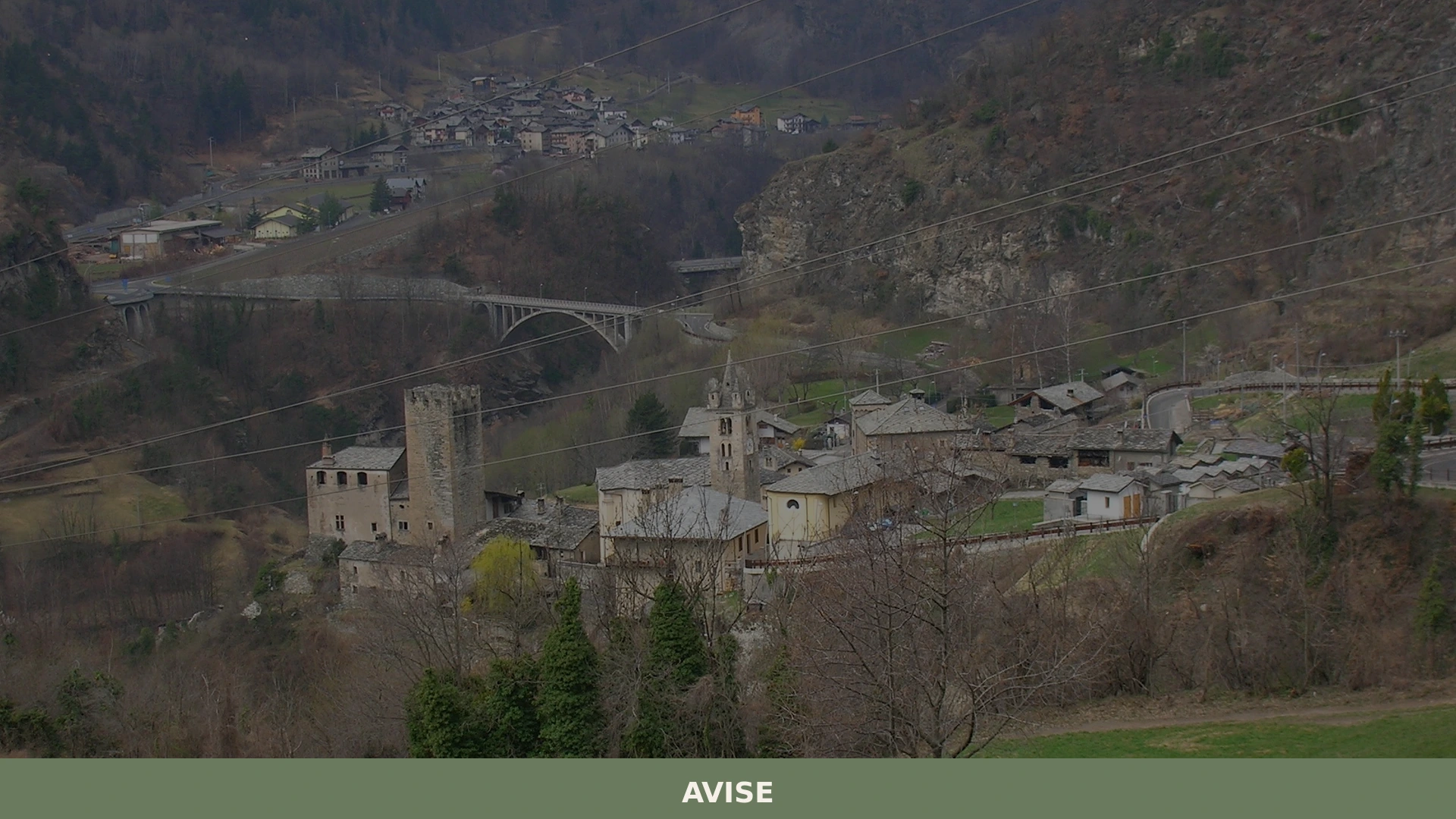

Discover what to see in Avise: a medieval castle, Romanesque church, alpine vernacular architecture and valley views in the upper Valle d’Aosta at 996 metres.
Discover Avise
At 996 metres above sea level, Avise stands in the upper Valle d’Aosta, a commune of around 296 inhabitants positioned along the road corridor that has connected the Aosta plain to the high alpine passes for over a thousand years. Knowing what to see in Avise means understanding a place defined not by resort infrastructure but by the layered evidence of medieval fortification, ecclesiastical architecture, and the particular social geography of a valley community that controlled a significant transit route between the regional capital and the western massifs.
History of Avise
The village’s name derives from the Latin Avisium, a toponym documented in medieval records that may itself reflect an even earlier pre-Roman or Roman-era settlement along this section of the Dora Baltea valley.
The strategic importance of the site was not incidental: the narrow gorge immediately downstream forced all traffic — merchants, pilgrims, soldiers — through a single chokepoint, and whoever controlled the heights above it controlled the movement of goods and people between the lower valley and the alpine interior. This geographical fact drove the entire feudal history of the commune.
The most visible expression of that feudal history is the Château d’Avise, a fortified complex whose origins trace to the thirteenth century. The structure was associated with the noble family of the same name, the lords of Avise, who held authority in this section of the valley under the broader framework of Savoyard power that dominated the Aosta region from the medieval period onward. The House of Savoy progressively consolidated control over the Valle d’Aosta from the eleventh century, and local lordships like that of Avise operated within — and sometimes in tension with — that larger political order. The castle changed hands and function across the centuries, accumulating the architectural modifications typical of a building that had to serve both military and residential purposes.
Beyond the castle, the parish church of Sant’Orso e San Teodoro gives the village a second anchor of documented history.
The cult of Sant’Orso — the early medieval hermit and deacon whose memory is still honoured at the famous Fiera di Sant’Orso in Aosta every January — was deeply embedded in the religious culture of the entire upper valley. Rural communities like Avise integrated this regional cult into their local devotional identity over many centuries. Administratively, Avise has remained a separate commune within the autonomous region of Valle d’Aosta, a special statute region whose linguistic and cultural distinctiveness — including the survival of the Franco-Provençal patois spoken locally as Oveuzo — reflects a history of relative autonomy within the Italian state.
What to see in Avise: 5 must-visit attractions
Château d’Avise
The most architecturally substantial structure in the village, this medieval fortified residence dates to the thirteenth century and is associated with the noble lords of Avise. Built from local stone on a raised position above the valley floor, its tower and residential body reflect the dual function — defensive and domestic — common to Savoyard-era alpine fortifications.
The exterior stonework and the relationship between tower, courtyard and main body remain largely legible from the road below.
Parish Church of Sant’Orso e San Teodoro
The village church is dedicated jointly to Sant’Orso, the early medieval Augustinian deacon whose cult is one of the oldest in the valley, and San Teodoro. The building incorporates construction phases from different centuries, as was standard practice in alpine parishes where the original Romanesque fabric was repeatedly enlarged or modified. The interior preserves decorative and devotional elements characteristic of rural churches in the upper Valle d’Aosta.
The Historic Village Core
The compact stone village at the centre of Avise retains the spatial logic of a medieval alpine settlement: narrow passages between buildings, covered walkways known locally as ruailles, and stone-built houses constructed to minimise heat loss during the long winter. This building typology, common across the autonomous region, is documented and studied by the Aosta Valley Regional Administration as part of the region’s vernacular architectural heritage.
The Gorge and Valley Viewpoint
The section of the Dora Baltea valley immediately below Avise narrows into a gorge whose topography made the village strategically significant for centuries.
From the higher parts of the commune, this geological constriction — carved by glacial action and river erosion through the primary rock of the alpine massif — is directly visible. The relationship between the built settlement and the natural geography it was placed to control remains one of the most instructive things to observe here.
Surrounding Hamlets and Agricultural Terracing
Like most communes in the upper Valle d’Aosta, Avise consists not only of the central village but of a constellation of smaller hamlets distributed across the slope. The dry-stone terracing built over generations to create cultivable land on the steep valley sides — used traditionally for rye, barley, and viticulture — represents a form of landscape engineering that the official Valle d’Aosta tourism authority recognises as part of the region’s rural heritage.
Local food and typical products
The food of Avise and the surrounding upper valley is the food of altitude and long winters: calorie-dense, preservable, built from what the mountain environment provides.
Fontina DOP, the semi-cooked pressed cheese produced from the milk of Valdostana cattle grazed on alpine pastures, is the defining product of the entire region and fundamental to the local diet. It appears in fonduta — the valley’s version of a melted cheese sauce served over polenta or bread — and in zuppa valdostana, a soup of layered cabbage, bread and cheese that has sustained valley populations through winters for centuries. Lard d’Arnad DOP, cured fatback from the lower valley, and Valle d’Aosta Jambon de Bosses DOP, a mountain ham from the Saint-Rhémy area, represent the preservation tradition applied to pork.
Wine production in the Valle d’Aosta, protected under the single regional DOC umbrella, includes varieties grown at some of the highest viticultural elevations in Europe. The terraced vineyards visible across the valley sides produce small quantities of Torrette, made primarily from Petit Rouge, among other native varietals. For visitors to Avise itself, the most practical approach to eating locally is to use the village as a base and travel the short distance to , where restaurants and the covered market offer the full range of regional products in a more concentrated form.
Best time to visit Avise
The upper Valle d’Aosta operates on two distinct seasonal rhythms.
Summer, from June through September, brings clear skies, temperatures that rarely exceed 25°C at valley floor level, and full accessibility to the surrounding trails and higher terrain. This is the period when the high alpine pastures are in use and the valley is at its most legible as a working mountain landscape. The light in July and August is long and horizontal in the mornings and evenings, useful for observing the stonework of the castle and the texture of the village core. Autumn, particularly October, combines residual warmth with the colour change across the deciduous woodlands on the lower slopes.
Winter brings heavy snowfall above 1,500 metres, but the valley floor and village itself remain accessible. Road conditions on the SS26 — the main valley artery — are generally maintained, though mountain driving experience is advisable. The last Sunday and Monday of January bring the Fiera di Sant’Orso to Aosta, one of the most significant alpine craft fairs in Italy, drawing artisans from across the valley: a concrete reason to be in the region in deep winter.
Spring, from April onward, is the most variable season, with snowmelt creating unpredictable conditions on higher paths before the trails consolidate in June.
How to get to Avise
Avise sits along the SS26, the state road that follows the Dora Baltea river through the Valle d’Aosta from the A5 motorway to the French border. The village is reachable from the A5 Autostrada (Turin–Mont Blanc), with the most practical exit being Aosta Ovest, approximately 15 kilometres to the east. From that exit, the SS26 runs directly through the valley toward Avise.
- From Turin: approximately 120 km via A5, around 1 hour 30 minutes under normal conditions
- From Milan: approximately 190 km via A4 then A5, around 2 hours 15 minutes
- From Aosta city centre: approximately 15–18 km west along SS26, around 20 minutes by car
- Nearest airport: Turin Caselle (TRN), approximately 130 km, around 1 hour 40 minutes
- By train: The Aosta railway station is the terminus of the regional line from Chivasso (connecting to the Turin–Milan main line). From Aosta station, local buses operated under the regional transport network serve the upper valley, though services to small communes like Avise are limited and timetable-dependent
A private vehicle remains the most practical means of reaching and exploring Avise and the surrounding hamlets. The regional public transport schedules are available through .
Where to stay in Avise
Avise itself is a small commune of under 300 residents, and dedicated tourism infrastructure within the village is correspondingly limited.
Accommodation in the village and immediate surroundings tends toward holiday apartments and agriturismo-style rentals in renovated stone buildings — the type of short-term let suited to visitors who want to use the upper valley as a base for several days rather than passing through in a single afternoon. These properties are typically found by searching the commune name through regional or national rental platforms, keeping in mind that availability is finite and advance booking during the summer months is necessary.
Visitors who prefer a wider choice of hotels, restaurants, and services will find it more practical to stay in , which offers a full range of accommodation categories from historic-centre hotels to modern guesthouses on the city periphery, and treat Avise as a day excursion or half-day drive along the valley. This approach also allows access to the broader network of upper-valley communes without the logistical constraints of limited local services.
More villages to discover in Valle d’Aosta
The Valle d’Aosta is one of Italy’s smallest regions by both area and population, and its identity is inseparable from the sequence of villages, castles, and mountain communes distributed along the Dora Baltea corridor and its lateral valleys.
Understanding Avise fully means placing it within that wider geography: the regional capital, , lies roughly 15 kilometres to the east and functions as the administrative, commercial, and cultural hub of the entire autonomous region — a Roman colony founded in 25 BC whose street grid, amphitheatre, and triumphal arch remain intact within the modern city.
Exploring the Valle d’Aosta as a territory rather than a collection of isolated stops reveals a coherent mountain civilisation built over two millennia. The upper valley beyond Avise continues toward the Great St Bernard Pass — the Roman Mons Jovis — and the French border at Mont Blanc, each section of road bringing further evidence of the same combination of geological drama, medieval fortification, and alpine agricultural life that defines what to see in Avise and the communities surrounding it. Travelling the full length of the valley, from westward through the upper communes, provides the most complete picture of how this particular corner of the Alps was built, inhabited, and defended across twenty centuries.
Frequently asked questions about Avise
What is the best time to visit Avise?
The best time to visit Avise depends on your interests. Summer (June to September) offers clear skies, pleasant temperatures, and full accessibility to surrounding trails, ideal for exploring the mountain landscape. Autumn, especially October, is beautiful for observing the changing colours of the deciduous woodlands. Winter brings a snowy charm, with the village remaining accessible, and the Fiera di Sant'Orso in Aosta (late January) provides a significant cultural event nearby. Additionally, the feast day of Avise's patron saint, San Brizio, is celebrated on November 13th, offering a glimpse into local traditions during the late autumn period.
What to see in Avise? Main monuments and landmarks
Avise offers several compelling sights reflecting its rich history and strategic location. The imposing Château d'Avise, a 13th-century fortified residence, is a must-see, its exterior stonework and structure visible from the road. The Parish Church of Sant'Orso e San Teodoro, dedicated to one of the valley's oldest cults, showcases centuries of architectural modification and devotional art. Explore the Historic Village Core with its narrow passages and traditional stone houses (ruailles). Don't miss the panoramic Gorge and Valley Viewpoint, offering insight into Avise's strategic importance, and the surrounding hamlets with their historic agricultural terracing, a testament to generations of landscape engineering. Access to these sites is generally open, though specific interior access for the castle or church may vary.
What are the main natural or scenic attractions of Avise?
Avise's natural and scenic appeal is deeply tied to its alpine setting. A key attraction is the dramatic Gorge and Valley Viewpoint, where the Dora Baltea river has carved a significant constriction, historically crucial for the village's strategic position. This geological feature, visible from higher parts of the commune, offers striking views. Additionally, the surrounding hamlets feature extensive dry-stone agricultural terracing, a remarkable example of landscape engineering that shapes the steep valley sides and is recognized as regional heritage. The area generally offers opportunities to appreciate the working mountain landscape, especially during summer when trails and higher terrain are fully accessible for scenic walks.
Where to take the best photos in Avise?
For capturing the essence of Avise, several spots offer excellent photographic opportunities. The Château d'Avise, with its imposing medieval architecture and prominent position, provides striking shots, especially from the road below which highlights its scale and stonework. The Historic Village Core, with its characteristic narrow passages (ruailles) and traditional stone houses, offers atmospheric street photography. Don't miss the panoramic views from the Gorge and Valley Viewpoint, which dramatically showcase the Dora Baltea valley's geological features. The surrounding hamlets and their intricate dry-stone agricultural terracing also present unique landscape photography subjects, particularly in the soft light of morning or evening.
Are there museums, churches or historic buildings to visit in Avise?
Yes, Avise is rich in historic buildings and a significant church. The primary historic building is the Château d'Avise, a 13th-century fortified residence that stands as a testament to the village's feudal past. While its exterior is clearly visible and impressive, specific internal visiting hours or admission details are not provided in available information. The Parish Church of Sant'Orso e San Teodoro is another key historic structure, featuring architectural phases from different centuries and preserving characteristic devotional elements. The Historic Village Core itself, with its traditional stone houses and narrow passages, functions as an open-air display of vernacular alpine architecture.
What can you do in Avise? Activities and experiences
In Avise, visitors can immerse themselves in cultural and natural exploration. Key activities include discovering the medieval fortifications of the Château d'Avise and the historic Parish Church of Sant'Orso e San Teodoro. Strolling through the Historic Village Core, with its traditional stone architecture and narrow ruailles, offers a step back in time. Nature enthusiasts can appreciate the dramatic Gorge and Valley Viewpoint and explore the surrounding hamlets with their unique agricultural terracing. During summer, the area provides full accessibility to surrounding trails for hiking and enjoying the alpine landscape. Additionally, you can sample local food products like Fontina DOP and regional wines, though for a wider culinary experience, a short trip to Aosta is recommended.
Who is Avise suitable for? Families, couples, hikers, solo travelers?
Avise is ideal for travelers seeking an authentic, tranquil mountain experience rooted in history and nature, rather than resort amenities. It particularly appeals to history enthusiasts eager to explore medieval fortifications like the Château d'Avise and ancient churches. Hikers and nature lovers will appreciate the surrounding trails, panoramic viewpoints, and unique agricultural terracing, especially during the summer months. Couples looking for a quiet, scenic retreat and solo travelers interested in cultural immersion and outdoor activities will find Avise appealing. Families who enjoy exploring historical sites and natural landscapes together, away from bustling tourist hubs, will also enjoy its charm.
What to eat in Avise? Local products and specialties
While Avise itself has limited dining options, the local cuisine reflects the broader Valle d'Aosta traditions, emphasizing calorie-dense, mountain-sourced ingredients. Must-try specialties include Fontina DOP cheese, often served in a creamy fonduta, and the hearty Zuppa Valdostana (cabbage, bread, and cheese soup). Cured meats like Lard d'Arnad DOP and Valle d'Aosta Jambon de Bosses DOP are also characteristic. The region is known for its high-altitude wines, including Torrette from native varietals. For the best culinary experience, visitors are encouraged to use Avise as a base and explore the wider range of restaurants and the covered market in nearby Aosta.
📷 Photo Gallery — Avise
Nearby Villages near Avise

In Aosta Valley More villages to discover
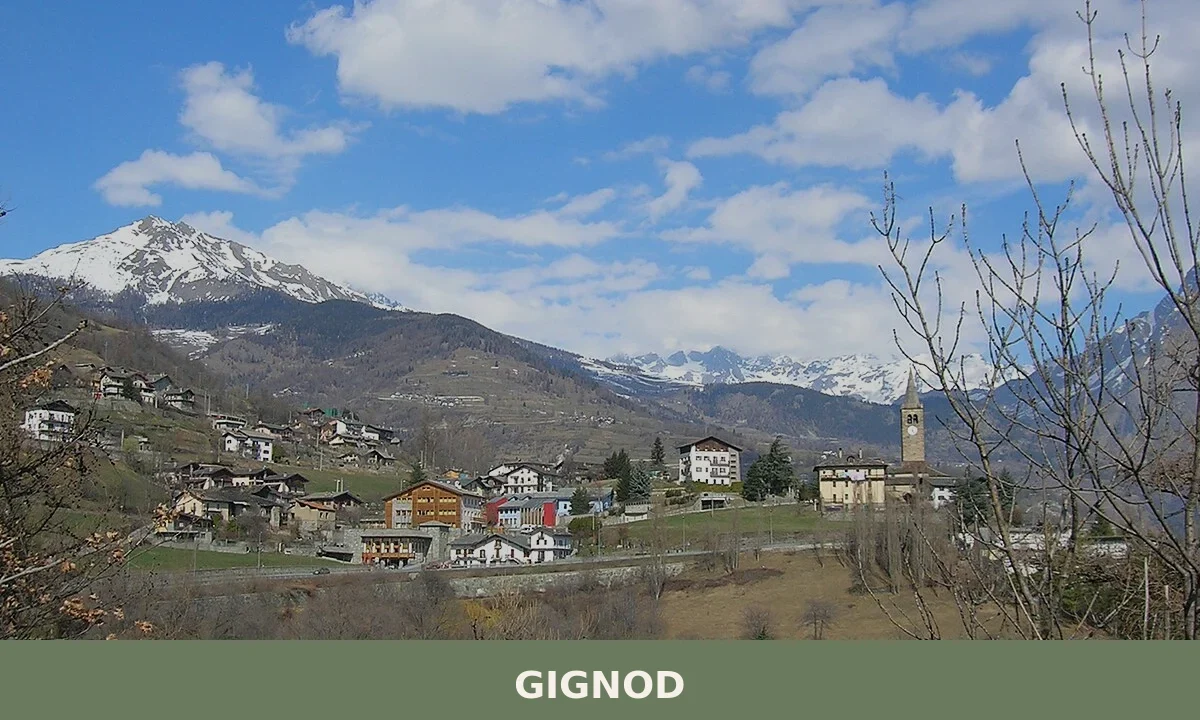
Gignod
 Mountain
Gignod is a mountain comune in the Aosta Valley, lying at 944 metres between the Valpelline and the Valle del Gran San Bernardo, with a history stretching from prehistoric settlement to a living calen
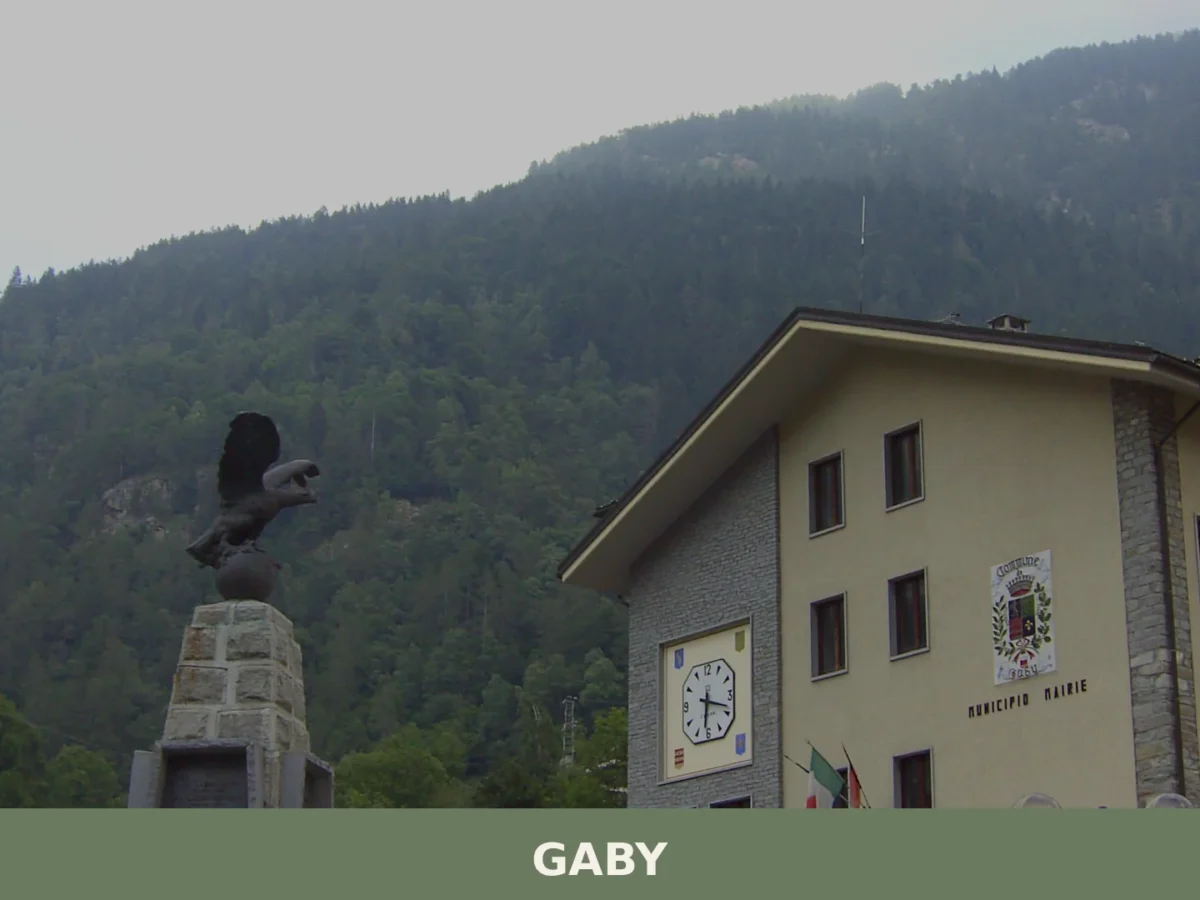
Gaby
Mountain
Gaby is a small mountain commune in the Valle d'Aosta, set at 1,050 metres in the Lys valley between Issime and Gressoney-Saint-Jean, where Walser heritage, francoprovençal culture and alpine scenery
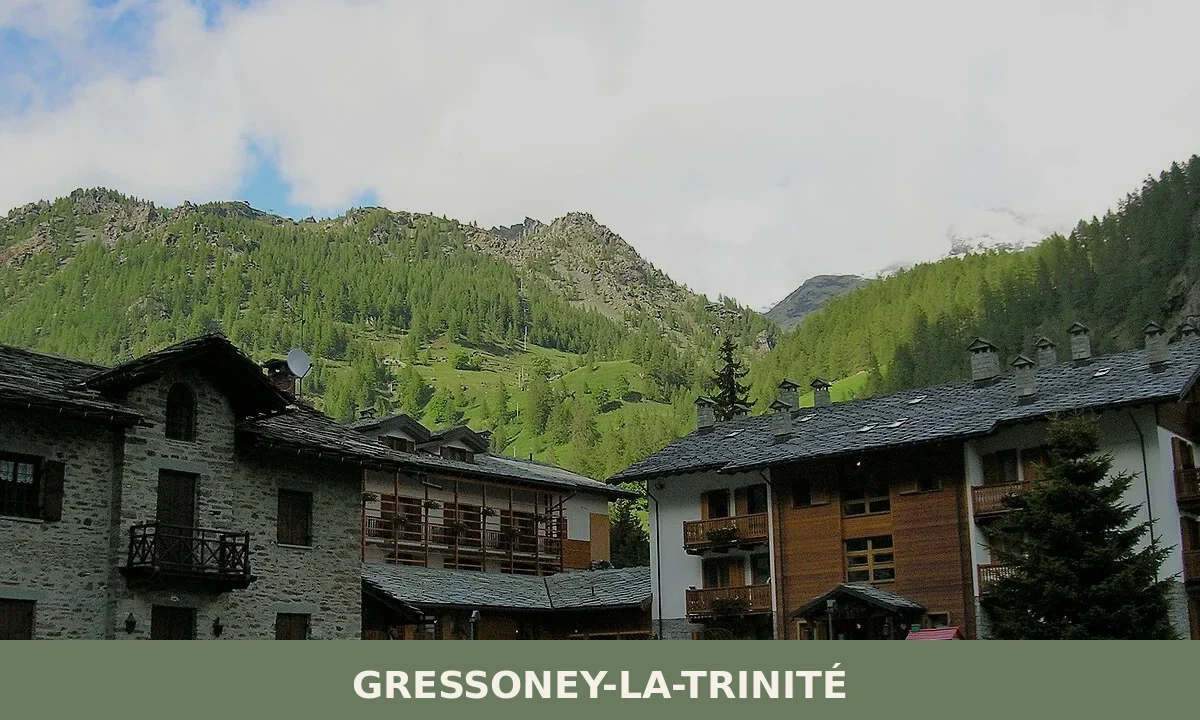
Gressoney-La-Trinité
Mountain
Gressoney-La-Trinité is a 322-inhabitant Walser commune at 1,629 metres in the Valle del Lys, Valle d'Aosta, set against the glaciers and high peaks of the Monte Rosa massif.
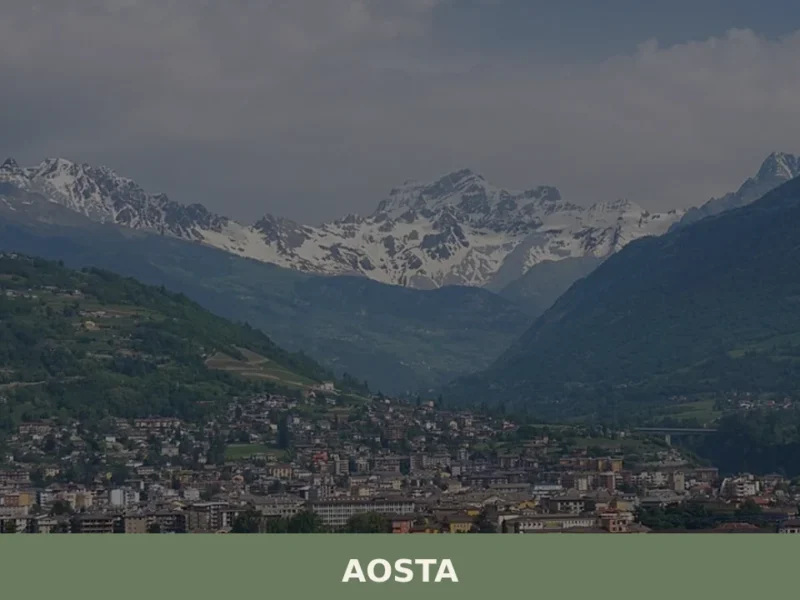
Aosta
 Hills
Hills
What to see in Aosta: Roman city at 583 m in the Aosta Valley. Arch of Augustus, Roman theatre, Fontina PDO and Fiera di Sant'Orso. Plan your visit now.
Brissogne
Mountain
What to see in Brissogne? Discover the 5 unmissable attractions of this village in Aosta Valley. From the church to the castle, plan your visit here!
Arvier
Mountain
Discover what to see in Arvier, Valle d'Aosta: medieval borough, feudal tower, Enfer d'Arvier vineyards, local food and practical travel tips.
La Thuile
Mountain
La Thuile is an Alpine municipality at 1,455 metres in the Aosta Valley, a historic mountain crossing between Italy and France with 774 residents and over 126 square kilometres of high-altitude landsc
Aymavilles
Mountain
What to see in Aymavilles, Italy: explore the Roman Pont d'Aël bridge over a 66 m gorge and Alpine trails. Discover top attractions in Valle d'Aosta.
Antey-Saint-André
Mountain
Discover what to see in Antey-Saint-Andru00e9: Alpine hamlets, local food, hiking trails and practical travel tips for this Valtournenche village in Valle d'Aosta.
Arnad
Mountain
Discover what to see in Arnad: medieval Château Vallaise, Lard d'Arnad DOP, historic irrigation channels and terraced vineyards in Italy's Aosta Valley.

🏡 Know Avise better than we do?
If you’re a local or have been there, your knowledge matters: add what’s missing or fix a detail on this page.