


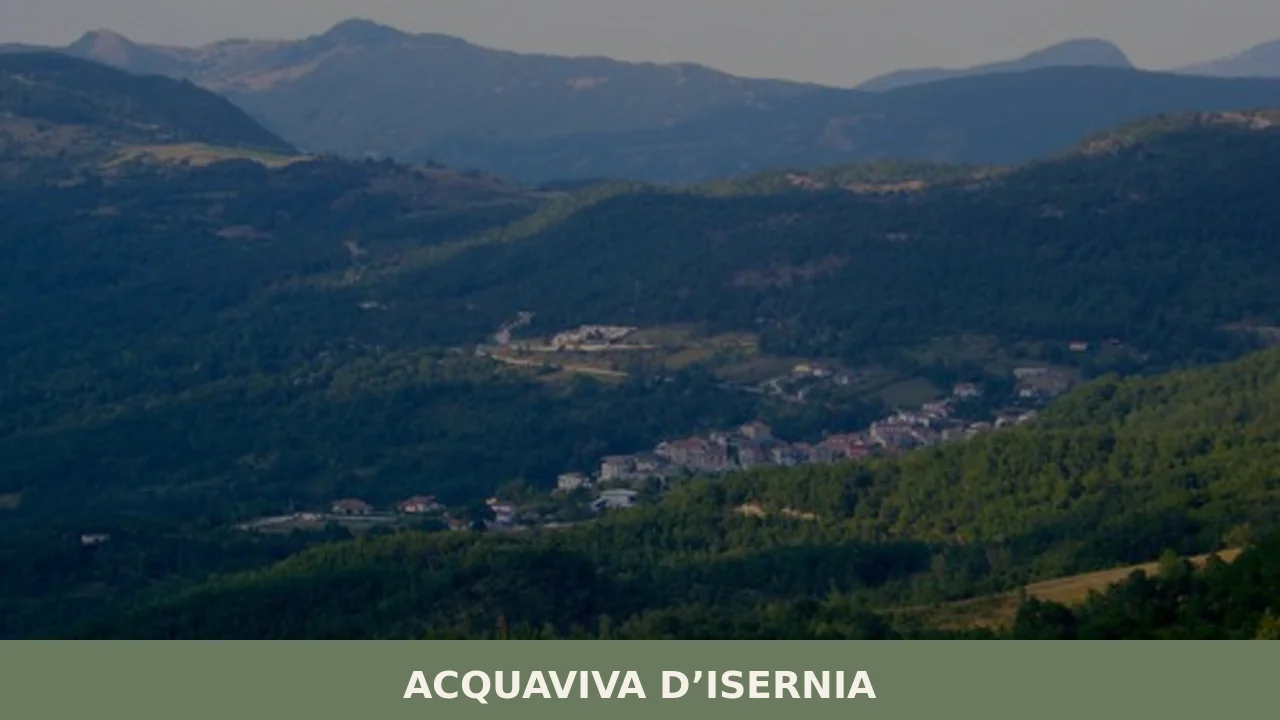
Acquaviva d’Isernia
 Mountain
Discover what to see in Acquaviva d’Isernia: history, food, best time to visit, and how to reach this small Molise village in the Isernia uplands.
Discover Acquaviva d’Isernia
Acquaviva d’Isernia is a small municipality of 344 inhabitants in the province of Isernia, sitting within the Molise Apennines at an elevation that keeps winters cold and summers measured. If you are researching what to see in Acquaviva d’Isernia, the scale of the place sets expectations immediately: this is a community where the built environment, the surrounding landscape, and the rhythms of rural life converge in a concentrated, legible way. The provincial capital, Isernia, lies within reach, making Acquaviva a practical base for exploring this corner of Molise.
History of Acquaviva d’Isernia
The name Acquaviva — literally “living water” or “running water” in Italian — points directly to the physical geography that defined the settlement’s origins. Place names of this type are among the most common in the Apennine interior, and they invariably indicate the presence of a reliable spring or watercourse that made a site viable for permanent habitation. In a region where water sources determined where communities could survive through dry summers and hard winters, the choice of this location was practical before it was anything else. The territory falls within the historical administrative orbit of the province of Isernia, a province with documented Roman and pre-Roman settlement layers across its upland municipalities.
Molise’s interior municipalities, including Acquaviva d’Isernia, passed through the layered feudal structures that characterised southern Italy from the Norman period onward. Under the Kingdom of Naples, small Apennine settlements like this one were typically assigned as fiefs to noble families, changing hands through inheritance, purchase, and political realignment over several centuries. The broader territory around Isernia has documented settlement continuity from at least the Samnite period — the Samnites were the pre-Roman Italic people who controlled this mountainous interior and whose fortified settlements, known as oppida, are found across the regional landscape. Acquaviva’s position within this province places it on ground that has been continuously inhabited, in various forms, for over two millennia.
The administrative consolidation of the Italian state after unification in 1861 formally incorporated Acquaviva d’Isernia into the Kingdom of Italy as an autonomous municipality within the province of Molise’s predecessor structure. Molise itself only became a separate autonomous region in 1963, having previously formed part of the combined region of Abruzzo e Molise. This relatively recent administrative individuation explains much about Molise’s institutional identity — it is Italy’s second smallest region by area, and its municipalities, including Acquaviva, carry a strong local identity that predates the modern regional framework by centuries.
What to see in Acquaviva d’Isernia: 5 must-visit attractions
The Parish Church
The parish church is the architectural focal point of the village, as is standard across Molise’s small municipalities. Built in stone in the vernacular ecclesiastical style of the Isernia uplands, it functions as both a place of active worship and the primary repository of the community’s accumulated sacred art, votive objects, and liturgical furnishings accumulated across several centuries of parish life.
The Village Centre and Stone Streets
The historic core of Acquaviva d’Isernia is constructed almost entirely in local stone, with narrow lanes and compact domestic architecture typical of Apennine defensive planning. The layout reflects the need to maximise shelter and minimise exposed surfaces in a high-altitude environment where winter temperatures drop significantly. Walking the centre gives a clear reading of how rural Molise was built to last.
The Surrounding Apennine Landscape
The territory around Acquaviva d’Isernia forms part of the Molise Apennines, where beech forests, open grazing land, and rocky ridgelines alternate across the hillsides. This landscape has supported transhumance — the seasonal movement of livestock between summer highland pastures and winter lowland grazing — for centuries, a practice officially recognised by UNESCO in 2019 as part of the intangible cultural heritage of the Mediterranean.
Local Water Sources
Consistent with the village’s name, natural springs remain part of the physical character of the site. Communal fountains fed by local springs are a functional and social fixture in settlements of this type across the Isernia province, serving historically as gathering points and as evidence of the hydraulic geography that originally justified the village’s foundation at this specific location.
Views Across the Isernia Valley
At Apennine altitude, the village commands open sightlines across the valley systems of the Isernia province. On clear days the visual range extends across a sequence of ridgelines characteristic of central-southern Italy’s mountain spine. This vantage point connects visually to the wider provincial territory administered from Isernia, the Roman-founded city roughly 20 kilometres to the east.
Local food and typical products
The food culture of Acquaviva d’Isernia belongs to the broader culinary tradition of the Isernia uplands, which is built on preserved meats, legumes, handmade pasta, and seasonal vegetables. Pasta formats typical to this area include sagne ‘ntorte — a twisted, hand-rolled egg pasta — and cavatelli, both of which are served with ragù based on pork or lamb. Lamb from the Molise highlands, grazed on Apennine pasture, has a distinct flavour profile directly tied to the aromatic grasses of the plateau. The region’s Regione Molise maintains records of traditional agri-food products that include several Molise-specific preparations found in villages across the Isernia province.
Cured meats — in particular sopressata, capocollo, and various pork-based insaccati — are produced at a domestic and small-artisan scale throughout this province. Pecorino cheese, made from the milk of sheep that still graze the Apennine pastures around these villages, is a staple of the local table. Visitors are best placed to encounter these products at local festivals, at the small alimentari shops that serve villages of this scale, or through agriturismo operations in the surrounding countryside. For a broader register of the territory’s food traditions, the Pro Loco of Isernia and Province provides event listings and local producer contacts.
Best time to visit Acquaviva d’Isernia
The Molise Apennines have a continental mountain climate: winters are cold, with snowfall possible from December through February, and summers are warm but rarely extreme at altitude. The most practical windows for visiting are late spring — from May through June, when the landscape is in full growth and temperatures are comfortable — and early autumn, particularly September and October, when the harvest season activates local food traditions and the light on the hillsides is consistent and clear. August, while warm, sees many small villages in this area host their principal summer festivals and sagre, which are food and culture events tied to specific local products or patron saints.
Driving in the Isernia province during winter requires preparation for road conditions, as snow and ice affect secondary mountain roads. For visitors combining Acquaviva with a wider itinerary of the province, the shoulder seasons offer the most reliable combination of accessible roads, open local businesses, and the kind of unhurried pace that a village of 344 inhabitants naturally maintains year-round.
How to get to Acquaviva d’Isernia
Acquaviva d’Isernia is reached primarily by road, as is the case for most small municipalities in the Molise Apennines. The nearest major road infrastructure is the A1 Milan–Naples motorway, accessible via the Caianello exit (toward Venafro and Isernia) or via the A24/A25 network from the Adriatic side. The provincial capital Isernia, approximately 20 kilometres east, is the practical hub for approaching the area. From Isernia, secondary provincial roads lead into the upland municipalities of the western province.
- By car from Rome: approximately 2 hours 30 minutes via the A1 to Caianello, then SS158 toward Isernia
- By car from Naples: approximately 1 hour 45 minutes via the A1 to Caianello, then north toward Isernia
- By train: Isernia has a railway station on the Campobasso–Isernia line; from Isernia station, onward travel to Acquaviva d’Isernia requires a car or local taxi
- Nearest airports: Naples Capodichino (approximately 130 km south) and Rome Fiumicino (approximately 220 km northwest) are the most convenient international entry points
There is no direct public transport connecting Acquaviva d’Isernia to Isernia on a frequent schedule. A private vehicle is the most reliable means of access, and it also enables visits to neighbouring municipalities across the province. For regional transport options, the Regione Molise official portal provides updated public transport information.
Where to stay in Acquaviva d’Isernia
A village of 344 residents does not sustain a hotel infrastructure, and visitors should not expect to find dedicated accommodation within the municipality itself. The practical base for exploring Acquaviva d’Isernia and the surrounding western Isernia province is the city of Isernia, which offers a range of hotels, B&Bs, and guesthouses at different price points. Isernia’s accommodation sector is modest by urban standards but functional, and the city’s position within the province makes it an efficient hub for day trips into the surrounding upland villages.
An alternative worth considering is agriturismo accommodation in the rural territory between Isernia and the upland municipalities. These farm-stay operations typically include meals based on local produce and offer direct access to the agricultural landscape that defines this part of Molise. Booking through regional agriturismo listings or direct contact established before arrival is the most reliable approach, as online platform coverage for this area can be incomplete. Staying locally, even at Isernia level, consistently produces a different quality of engagement with the territory than commuting from Campobasso or from outside the region.
More villages to discover in Molise
The province of Isernia and the broader Molise region contain a number of small municipalities that reward direct, unhurried visits. Ferrazzano, in the province of Campobasso, occupies a dramatically elevated position above the regional capital and retains a medieval castle — the Castello Carafa — that dominates its silhouette. Further east, Larino is one of the more historically layered small cities in Molise, with a Gothic cathedral dating to the fourteenth century and traces of the Roman municipium of Larinum, including a well-preserved amphitheatre.
In the Campobasso lowlands, Bonefro offers a different dimension of Molise’s settlement history, representing the agricultural and cultural patterns of the region’s lower terrain. Taken together, these villages and Acquaviva d’Isernia trace the variety of human settlement across a region that shifts rapidly from river valleys to high Apennine terrain within relatively short distances. Each municipality carries its own administrative history, architectural character, and food traditions — the kind of regional variation that becomes legible only when villages are visited in sequence rather than isolation.
Frequently asked questions about Acquaviva d’Isernia
What is the best time to visit Acquaviva d'Isernia?
The most practical times to visit Acquaviva d'Isernia are late spring (May-June), when the landscape is lush and temperatures are comfortable, or early autumn (September-October), offering pleasant weather and opportunities to experience local harvest traditions. While August sees many villages host their principal summer festivals and sagre, winters (December-February) are cold with possible snowfall, requiring preparation for road conditions. The village also celebrates its patron saint, Anastasio il Persiano, on January 22nd, providing a unique cultural insight, though in colder conditions.
What to see in Acquaviva d'Isernia? Main monuments and landmarks
Acquaviva d'Isernia, though small, offers several points of interest. The Parish Church is the architectural and spiritual focal point, built in vernacular stone and housing centuries of sacred art. Exploring the Village Centre reveals historic stone streets and compact domestic architecture, typical of Apennine defensive planning. The surrounding Molise Apennine Landscape, part of a UNESCO-recognised transhumance route, features beech forests and open grazing lands. You can also visit the Local Water Sources, with communal fountains reflecting the village's name, and enjoy panoramic Views Across the Isernia Valley from its elevated position. All these sites are freely accessible by walking through the village.
What are the main natural or scenic attractions of Acquaviva d'Isernia?
Acquaviva d'Isernia is deeply connected to its natural surroundings. The primary natural attraction is the Surrounding Apennine Landscape, part of the Molise Apennines, characterised by beech forests, open grazing land, and rocky ridgelines. This landscape supports transhumance, a UNESCO-recognised intangible cultural heritage. Consistent with its name, the village features Local Water Sources, including communal fountains that have historically served as gathering points. From its elevated position at 730 meters, the village also offers expansive Views Across the Isernia Valley, providing stunning photographic opportunities of the central-southern Italian mountain spine.
Where to take the best photos in Acquaviva d'Isernia?
For memorable photos in Acquaviva d'Isernia, focus on the historic Village Centre with its charming stone streets and traditional Apennine architecture, especially during the soft light of early morning or late afternoon. The elevated position of the village offers spectacular panoramic Views Across the Isernia Valley, capturing the sequence of ridgelines characteristic of Molise. Additionally, the UNESCO-recognised Surrounding Apennine Landscape, with its diverse terrain of beech forests and open pastures, provides excellent opportunities for nature photography. Don't forget to capture the picturesque communal fountains, reflecting the village's historical connection to natural springs.
Are there museums, churches or historic buildings to visit in Acquaviva d'Isernia?
In Acquaviva d'Isernia, the main historic building to visit is the Parish Church. It serves as the architectural focal point of the village, showcasing the vernacular ecclesiastical style of the Isernia uplands and housing the community's sacred art and liturgical furnishings. While there are no dedicated museums, the entire Village Centre functions as an immersive historic experience, with its narrow lanes and compact domestic architecture built almost entirely in local stone. Visitors can explore these areas freely, with the church typically open during religious services or by special request for visits.
What can you do in Acquaviva d'Isernia? Activities and experiences
In Acquaviva d'Isernia, visitors can immerse themselves in the authentic rhythms of rural Molise. Key activities include leisurely walks through the historic Village Centre, exploring its stone streets and traditional architecture. The surrounding Molise Apennines offer opportunities for gentle hikes amidst beech forests and open grazing lands, which are part of a UNESCO-recognised transhumance landscape. Engaging with the local food culture is a must: sample traditional dishes like sagne 'ntorte and cavatelli with ragù, cured meats such as sopressata, and local pecorino cheese. Attending local festivals or sagre, particularly in August, provides an authentic experience of community and culinary traditions.
Who is Acquaviva d'Isernia suitable for? Families, couples, hikers, solo travelers?
Acquaviva d'Isernia is ideal for travelers seeking an authentic, quiet escape into rural Italy, away from mainstream tourist routes. It particularly appeals to nature lovers, gentle hikers, and those interested in slow tourism and genuine local culture. Couples looking for a tranquil, romantic retreat will appreciate its unhurried pace. Solo travelers desiring an immersive experience in a traditional Apennine village will also find it rewarding. Its location also makes it a practical base for families or groups wishing to explore the wider Isernia province and its rich culinary traditions, offering a taste of Molise's authentic charm.
What to eat in Acquaviva d'Isernia? Local products and specialties
The food culture of Acquaviva d'Isernia is rooted in the traditions of the Isernia uplands. Must-try specialties include handmade pasta formats like *sagne 'ntorte* (twisted egg pasta) and *cavatelli*, typically served with rich ragù based on local pork or lamb. Lamb from the Molise highlands, grazed on Apennine pastures, offers a distinct flavour. The region is also known for its cured meats, such as *sopressata*, *capocollo*, and various pork-based *insaccati*, produced at a small-artisan scale. Don't miss the local *pecorino cheese*, made from sheep's milk. These products can be found at local *alimentari* shops, village festivals, or through *agriturismo* operations.
📷 Photo Gallery — Acquaviva d’Isernia
Getting there
Corso Umberto I, 86080 Acquaviva d'Isernia
Nearby Villages near Acquaviva d’Isernia
In Molise More villages to discover
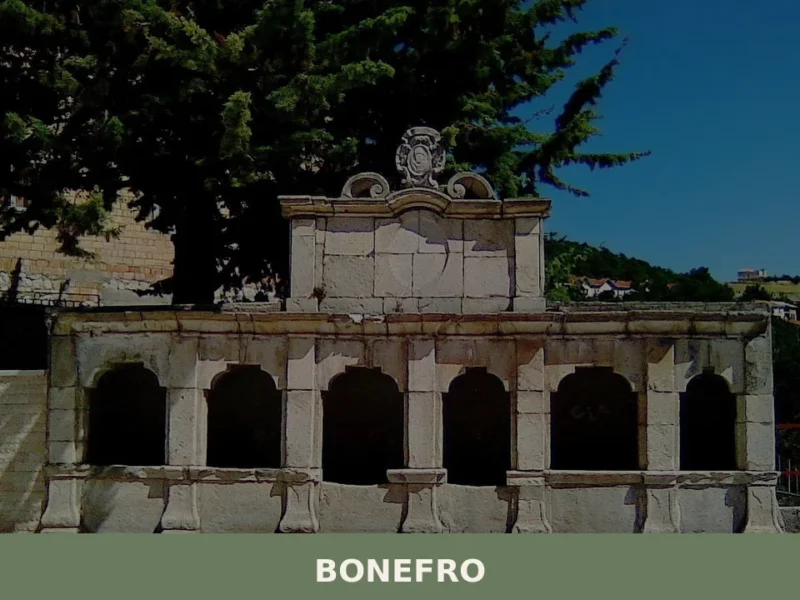
Bonefro
Mountain
A hilltop village of 1,201 inhabitants in Campobasso province, Bonefro preserves a layered historic centre, a medieval castle, and centuries-old fountains across the quiet ridges of eastern Molise.
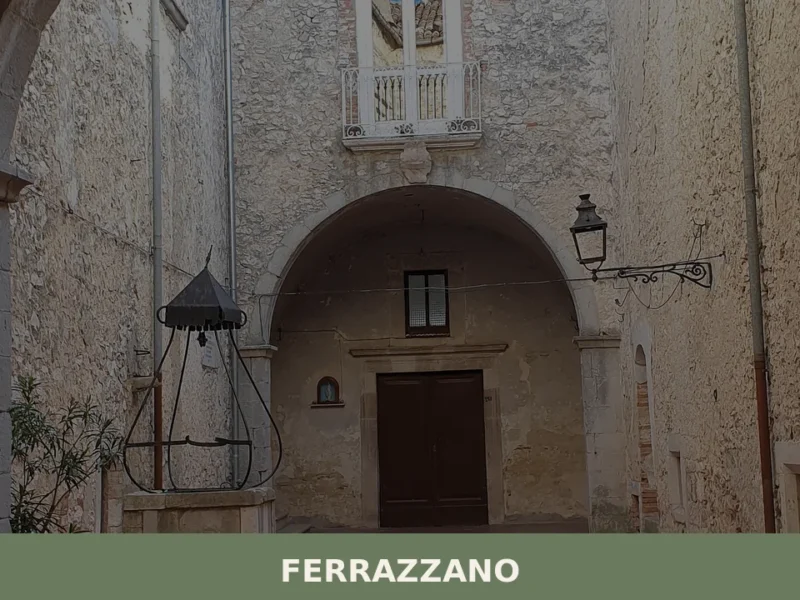
Ferrazzano
Mountain
Morning light hits the limestone walls of Ferrazzano at an angle that turns every alley into a corridor of pale gold. At 872 metres above sea level, the air carries a sharpness that the lower towns of Molise never know — a clarity that makes the distant Adriatic coast visible on days when the haze […]
Tavenna
 Hills
Hills
A complete guide to Tavenna in Molise: its medieval stone centre, parish church, panoramic hillside views, and the quiet rhythms of inland southern Italy.
Palata
Hills
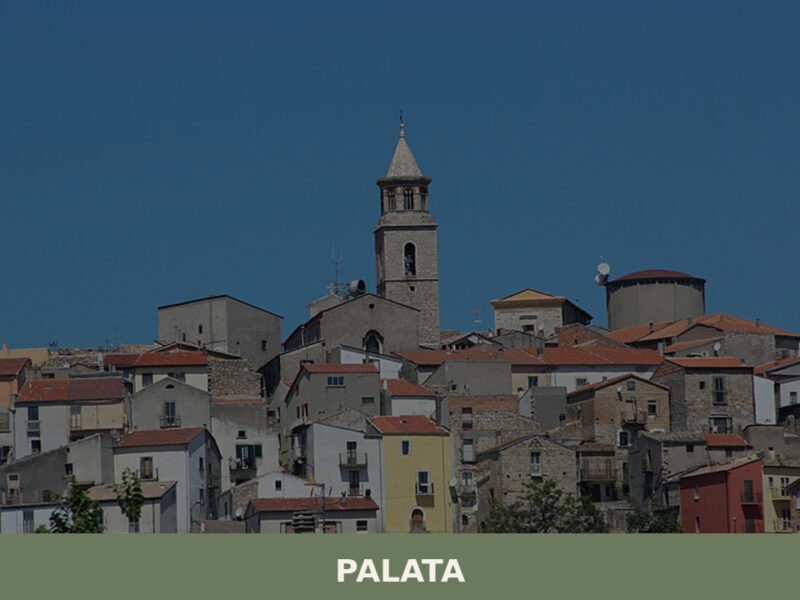
what to see in palata, Italy, a village at 520 m. Discover its historic core and the San Rocco festival. Explore Molise's authentic rural heritage.
Isernia
Hills
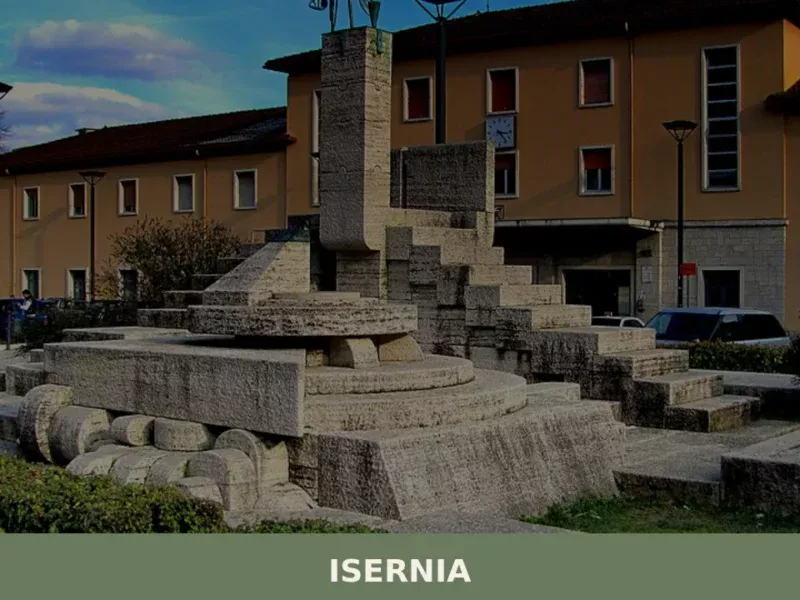
what to see in isernia, Italy, and discover 5 top attractions. Explore its Roman heritage, including the Fraterna Fountain, and find travel tips for this Molise capital.
Vinchiaturo
Mountain
Morning mist settles into the valley below as church bells mark the hour from somewhere above the rooftops. At 620 metres above sea level, the air in Vinchiaturo carries a sharpness that cuts through the warmth of Molise’s interior hills. With just over 3,300 inhabitants, this is a village where the rhythm of daily life […]
Cercemaggiore
Mountain
What to see in Cercemaggiore, Italy? Explore this mountain village at 930m (3,051 ft) altitude. Discover its historic core and panoramic views. Read our guide for your visit.
Pietracupa
Mountain
A 208-inhabitant village shaped by a massive rock outcrop in Molise's interior. Discover what to see in Pietracupa, from its grotto chapel to its silent panoramic ridgelines.
Riccia
Mountain
A hilltop village of 4,814 inhabitants in the province of Campobasso, Riccia reveals medieval streets, a Norman castle, and one of Molise's most celebrated food festivals.
Campodipietra
Hills
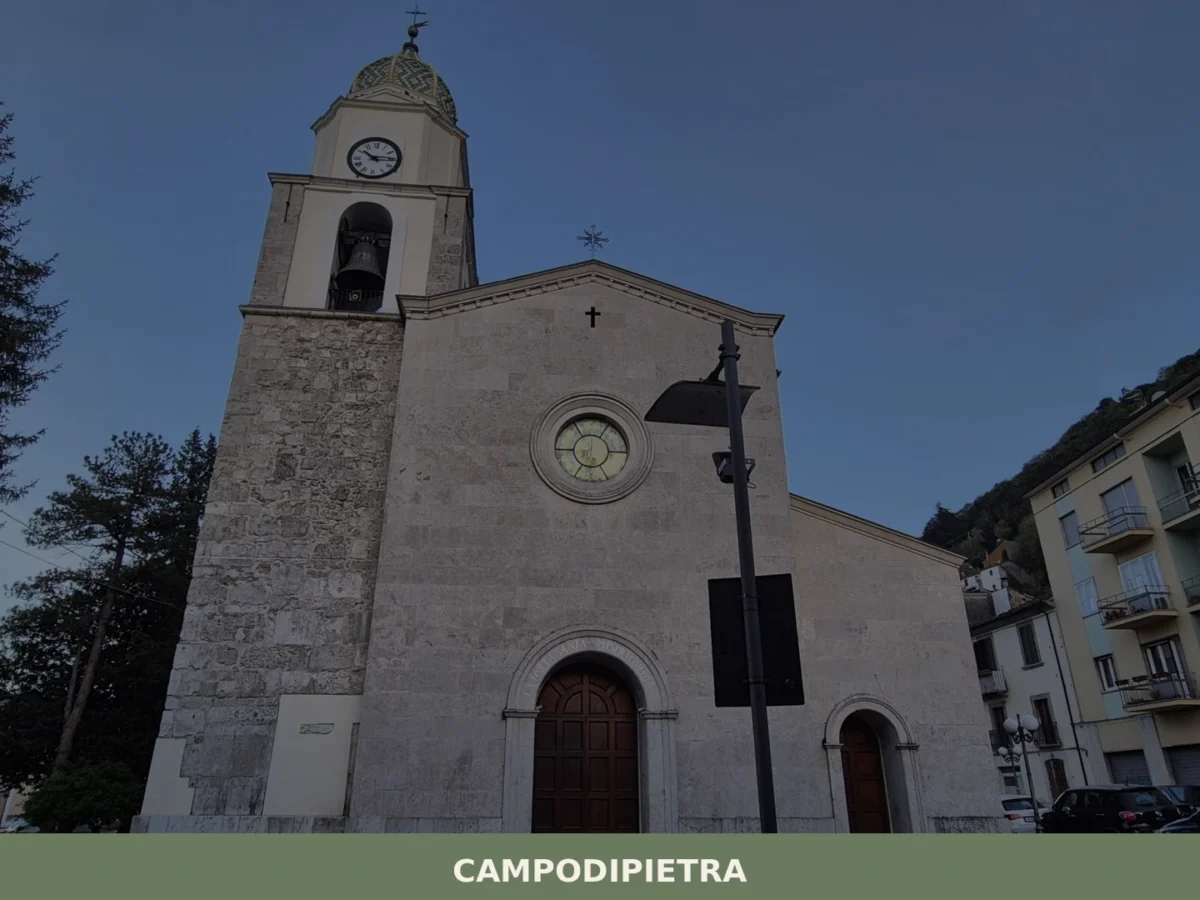
What to see in Campodipietra, Italy: 7 km from Campobasso, discover the 13th-century church of San Martino, medieval walls, and local Molise food traditions. Explore now.
🏡 Know Acquaviva d’Isernia better than we do?
If you’re a local or have been there, your knowledge matters: add what’s missing or fix a detail on this page.