


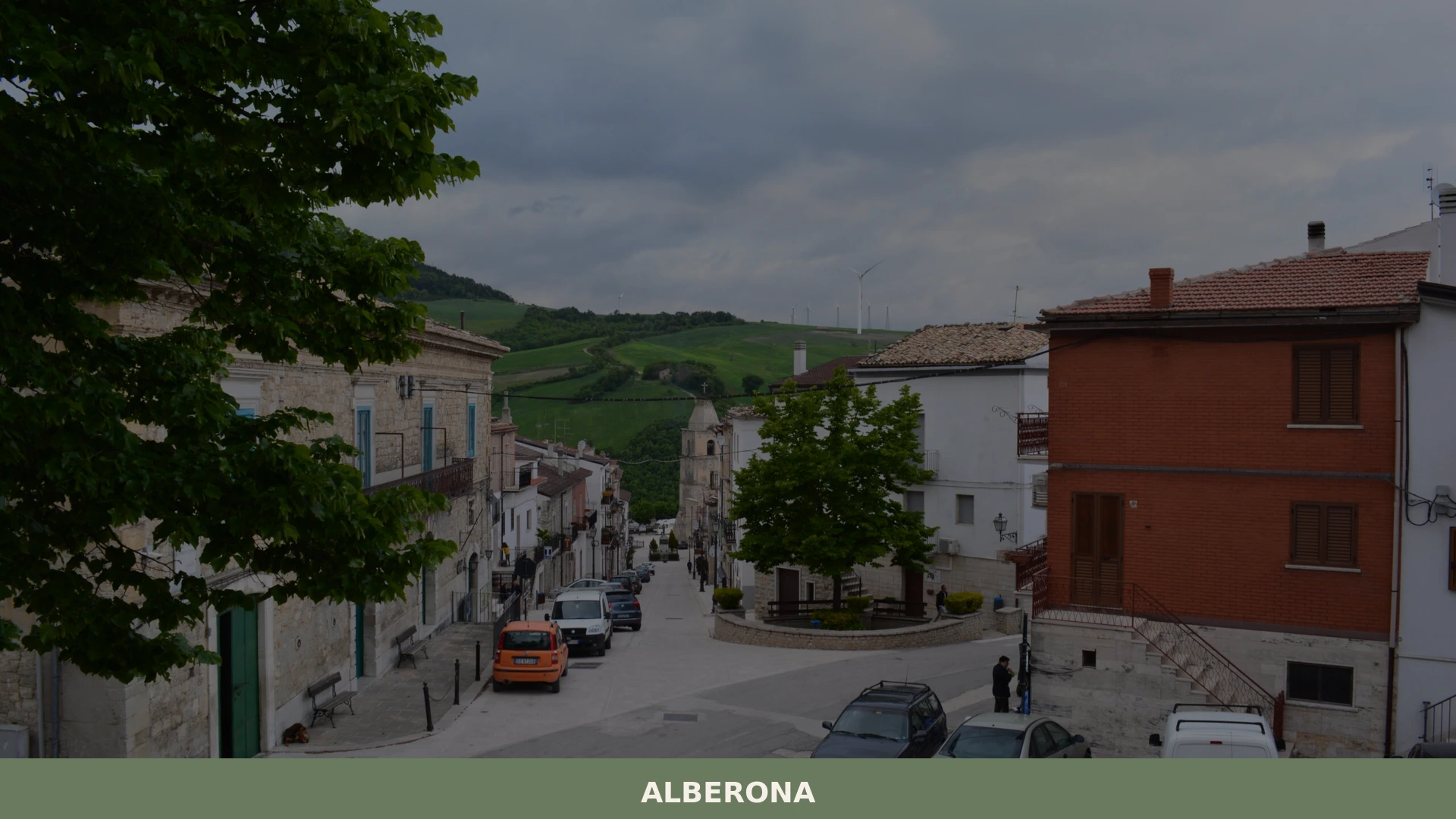
Alberona
 Mountain
What to see in Alberona, Italy? Discover this upland village at 732 m (2,303 ft) a.s.l., one of I Borghi più belli d’Italia. Explore its historic core and traditional architecture.
Discover Alberona
At 732 m (2,303 ft) above sea level, the village of Alberona rises from the Foggia province in southeast Italy, offering a distinct perspective on the Apulian landscape. This upland community stands as one of I Borghi più belli d’Italia, a recognition of its well-preserved historical and architectural heritage.
For those wondering what to see in Alberona, this village, home to 846 inhabitants, presents a coherent example of traditional Apulian highland life.
Visitors can explore its well-preserved stone architecture and the quiet lanes that define its historic center, discovering elements of daily existence that have continued for generations. The elevated position also offers clear views of the surrounding Daunia mountains, making it a destination for those seeking a different perspective of Puglia.
History of Alberona
Alberona, known in Pugliese as Areveròne, is an upland village whose history is intrinsically linked to its geographical position within the Foggia province. The designation as one of I Borghi più belli d’Italia reflects a continuity of its historical character, preserving urban structures and traditions that speak to centuries of development in the Apennine foothills.
Settlements in these mountainous areas often arose from strategic needs or agricultural pursuits, utilizing the natural defenses and resources of the terrain.
While specific founding dates or detailed historical chronicles for Alberona are not extensively documented in available sources, the village’s identity as a highland community in Apulia suggests a past shaped by pastoralism and self-sufficiency. Its evolution through various historical periods, from ancient times to the modern era, would have seen it adapt to the broader socio-political shifts affecting southern Italy. The village’s current population of 846 inhabitants indicates a community that has maintained its scale and character over time, resisting extensive modern expansion.
The historical trajectory of Alberona shares commonalities with other upland villages in the region, such as Monteleone di Puglia, another community in the Foggia province. These villages often developed around central religious structures and communal spaces, fostering a close-knit social fabric. The preservation efforts that led to Alberona’s inclusion among Italy’s most beautiful villages highlight a collective commitment to maintaining this historical and architectural integrity for future generations.
What to see in Alberona, Puglia: top attractions
The Historic Core of Alberona
Walking into the historic core of Alberona reveals a coherent ensemble of stone buildings, characterized by their robust construction and intimate scale.
This area is a primary reason for the village’s inclusion among I Borghi più belli d’Italia, reflecting a dedication to preserving its architectural heritage. Visitors can observe the specific local stone, often a warm, earthy hue, used in the construction of houses and public buildings, which contributes to the area’s visual unity. The narrow streets and small squares invite exploration, offering a tangible sense of the village’s past.
Views from Alberona’s Upland Position
From its elevated position at 732 m (2,303 ft) above sea level, Alberona provides sweeping panoramic views of the surrounding Daunia mountains and, on clear days, the distant plains of Puglia. The natural landscape becomes an integral part of the visitor’s experience, showcasing the rugged beauty of this less-explored part of the region. Specific vantage points along the village’s perimeter allow for contemplation of the vastness of the Apulian interior, a stark contrast to the coastal vistas often associated with Puglia.
Early mornings or late afternoons often offer the best light for photography and appreciation of the expansive scenery.
Church of San Giovanni Battista
The parish church, dedicated to San Giovanni Battista, the patron saint of Alberona, stands as a central element within the village’s urban fabric. While specific architectural details are not extensively provided in sources, its dedication confirms its historical and spiritual significance to the community. Visitors can approach the church to observe its façade, which typically reflects local building traditions and the materials available in the area, likely local stone. This sacred building has historically served as a focal point for community life, celebrating religious festivals and daily spiritual practices.
Traditional Alberonese Architecture
The residential buildings throughout Alberona showcase traditional Apulian highland architecture, characterized by simplicity, functionality, and the use of local materials. Observing the details of these structures — from the carved stone portals to the sturdy wooden doors and the specific arrangement of windows — offers insight into historical building techniques. With a population of 846 inhabitants, the village maintains a compact layout where houses often share walls, creating a dense and cohesive architectural landscape.
A stroll through the quieter lanes allows for appreciation of these vernacular elements, which contribute significantly to the village’s identity.
The Village Squares and Gathering Places
Like many Italian villages, Alberona features several squares or open spaces that historically served as focal points for social and commercial activity. These paved areas, often adorned with benches or a central fountain, are where daily life unfolds, from morning greetings to evening gatherings. Visitors can observe the interactions between residents, which often reveal the close-knit community spirit characteristic of small upland villages. These spaces offer opportunities to pause, absorb the rhythm of local life, and understand the communal aspects that define Alberona’s identity.
Local food and typical products of Alberona
The gastronomy of Alberona, as an upland village in the Foggia province, is deeply rooted in the agricultural and pastoral traditions of the Daunia mountains and broader Puglia region. This cuisine emphasizes fresh, seasonal ingredients, often harvested from local fields or derived from traditional livestock farming. The culinary influences are shaped by both the rugged mountain environment and the fertile plains of Puglia, resulting in a robust and flavorful diet that reflects the hardiness and resourcefulness of its inhabitants.
Typical dishes found in Alberona would likely feature a combination of legumes, grains, wild herbs, and meats, particularly lamb or goat, reflecting the pastoral heritage.
One prominent example of Puglian cuisine, which would undoubtedly be found here, is Orecchiette con le cime di rapa, a pasta dish made with ear-shaped pasta and sautéed turnip greens, often with garlic and chili. Other staples include various soups made with beans and wild vegetables, rich stews, and different preparations of local cheeses. The baking tradition is also strong, with hearty breads and savory pastries.
While specific certified products exclusively from Alberona are not detailed in the provided sources, the broader Foggia province is known for several high-quality agricultural products. For instance, the area contributes to the production of excellent olive oil, and certain cheeses like Caciocavallo Podolico, made from the milk of Podolica cows, are renowned throughout the Daunia and Gargano areas. Visitors exploring the region can often find these and other artisanal products in local markets or specialty shops, providing a taste of the authentic flavors of this part of Italy.
Festivals, events and traditions of Alberona
The most significant annual event in Alberona revolves around the celebration of its patron saint, San Giovanni Battista (Saint John the Baptist), whose feast day falls on June 24th.
This religious festival is a cornerstone of the village’s cultural life, drawing both residents and visitors into a series of traditional observances. The festivities typically include solemn religious processions through the village streets, where a statue of the saint is carried, accompanied by local brass bands and devoted parishioners. The air is often filled with music, the scent of local foods, and a strong sense of community spirit.
Beyond the religious ceremonies, the patron saint festival often incorporates elements of a traditional sagra, a local food festival, where stalls offer regional delicacies and artisanal products. These events provide a chance to experience the social fabric of Alberona, witnessing age-old customs and the collective joy of celebration. While other specific annual events or traditions are not detailed in the available sources, the seasonal rhythms of an upland agricultural village naturally involve community gatherings related to harvests or specific agricultural cycles, reflecting the deep connection between the people and their land.
When to visit Alberona, Italy and how to get there
The best time to visit Alberona, Italy, and indeed much of Puglia, typically spans from late spring (April-May) to early autumn (September-October).
During these months, the weather is pleasantly mild, ideal for exploring the village on foot and enjoying the scenic views without the intense heat of mid-summer. Given Alberona’s altitude of 732 m (2,303 ft) above sea level, its summers are generally cooler than the coastal areas of Puglia, making July and August viable options for those seeking a respite from the heat, though days will still be warm. Visiting in June allows visitors to experience the vibrant festival dedicated to San Giovanni Battista.
Alberona’s upland terrain means that some streets within the village can be steep or uneven, so comfortable walking shoes are advisable. Accessibility primarily relies on road travel. If you arrive by car, the most straightforward route is via the A14 (E55) Bologna-Taranto motorway; take the Foggia exit, then continue on the SS17 road for approximately 35 km (21.7 mi) directly to Alberona. For those preferring public transport, the nearest major train station is Foggia, which is well-connected to various Italian cities via Trenitalia services.
From Foggia, local buses or taxis can complete the journey to the village.
The nearest major airport serving the region is Bari Karol Wojtyła Airport (BRI), located approximately 150 km (93 mi) southeast of Alberona. Travel from Bari Airport typically involves renting a car or taking a train to Foggia and then continuing by road. Alberona makes for a convenient day trip from Foggia, with a driving time of about 45-60 minutes. For international visitors, it is worth noting that English may be limited in smaller shops and eateries, so carrying some Euros cash and a basic Italian phrasebook can enhance the experience.
Visitors to Alberona can extend their trip to explore other communities in the Daunia mountains, such as San Marco la Catola, which is geographically close and shares a similar highland character. These nearby villages offer further insights into the distinctive cultural and architectural heritage of this part of Puglia.
Frequently asked questions about Alberona
Is Alberona part of the 'Borghi più belli d'Italia' circuit?
Yes, Alberona is officially listed among the Borghi più belli d'Italia (Most Beautiful Villages of Italy), a prestigious recognition awarded to small Italian municipalities that meet strict criteria of historical, artistic and environmental quality. This designation makes Alberona part of a national network of protected villages and helps attract visitors seeking authentic, lesser-known destinations across Italy.
Are there CAI hiking trails accessible from Alberona?
Alberona sits within the Monti della Daunia sub-Apennine area of Foggia province, a zone covered by CAI (Club Alpino Italiano) marked trails. The surrounding landscape at 732 metres offers documented trekking itineraries through beech and oak woodland typical of the Apennine ridgeline. Hikers can explore paths connecting Alberona to neighbouring Daunia villages. For official trail numbers and updated maps, consult the CAI Foggia section directly.
How long does a visit to Alberona typically take, and is it feasible as a day trip from Foggia?
Alberona is located approximately 57 km from Foggia, making it a comfortable day trip by car. The drive takes roughly one hour via provincial roads. A thorough visit to the old town, Church of San Giovanni Battista, Civic Tower and Palazzo Municipale can be completed in three to four hours, leaving time to enjoy lunch at a local trattoria before returning to Foggia or continuing toward other Monti della Daunia villages.
When is the feast day of Alberona's patron saint, San Giovanni Battista?
The patron saint of Alberona is San Giovanni Battista (Saint John the Baptist). The universal liturgical feast of San Giovanni Battista falls on 24 June, the Nativity of Saint John the Baptist, which is one of the oldest and most widely celebrated feasts in the Catholic calendar. Local celebrations in Alberona traditionally mark this date with religious ceremonies and community events, making late June a potentially lively time to visit the village.
Nearby Villages near Alberona
In Apulia More villages to discover
Rodi Garganico
 Sea
Sea
A coastal village of 3,302 inhabitants on the Gargano promontory, Rodi Garganico offers a medieval centre, IGP citrus groves, and an authentic Adriatic harbour life.
Brindisi
Sea
From the port of Brindisi, at a strategic point where the Adriatic opens towards the East, stands the Monument to the Italian Sailor, an imposing structure that since 1933 has watched over the city and its maritime routes. This city, overlooking a natural inlet that for centuries has welcomed fleets and trade, has historically been […]
Acquaviva delle Fonti
 Hills
Hills
Beneath the main square of Acquaviva delle Fonti, water still flows. This is not a figure of speech: a network of underground aquifers runs through the limestone subsoil of this town in the Murge hills near Bari, feeding cisterns and wells that for centuries determined both the wealth and the very name of the town. […]
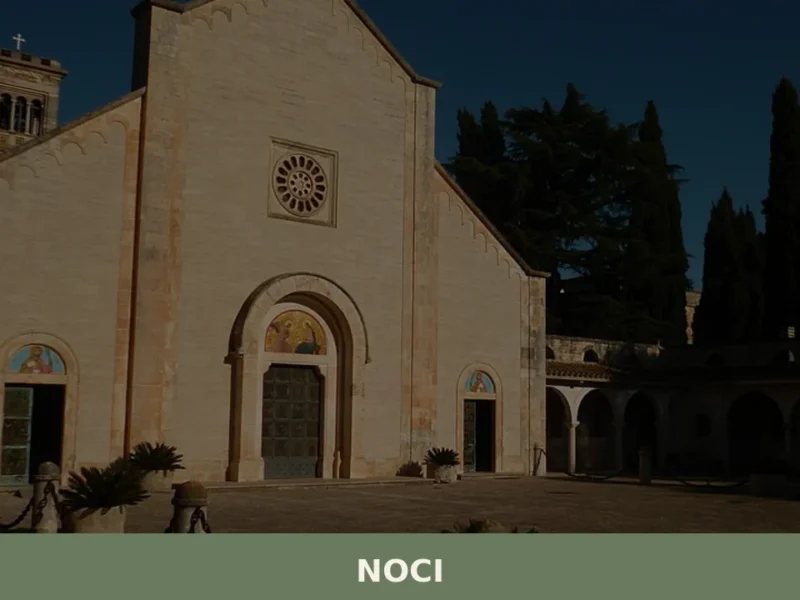
Noci
Hills
What to see in Noci, a village at 420 m on the Murge plateau. 5 attractions, medieval gnostre, Acquasale PAT, sagre and patron feasts. Plan your visit now.
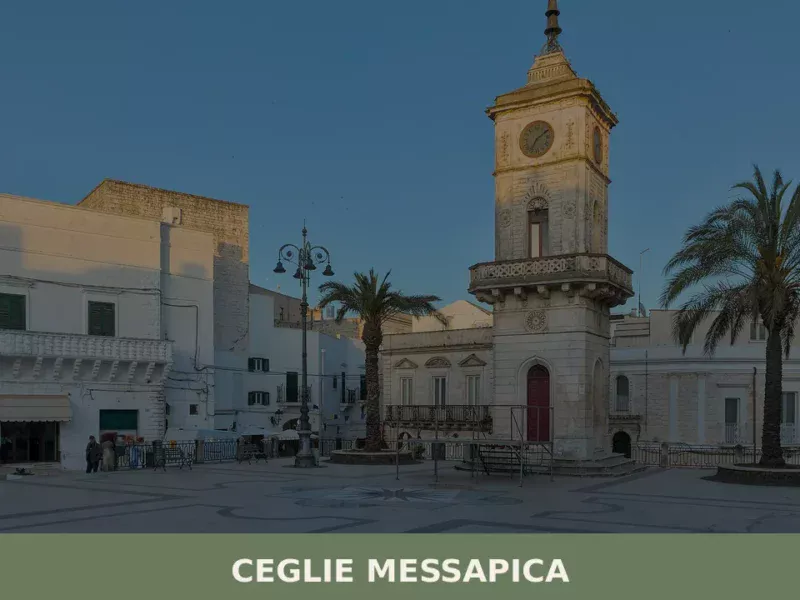
Ceglie Messapica
Sea
Discover what to see in Ceglie Messapica: the Ducal Castle, medieval chianche streets, ancient olive groves, karst caves and Puglia's finest local food.
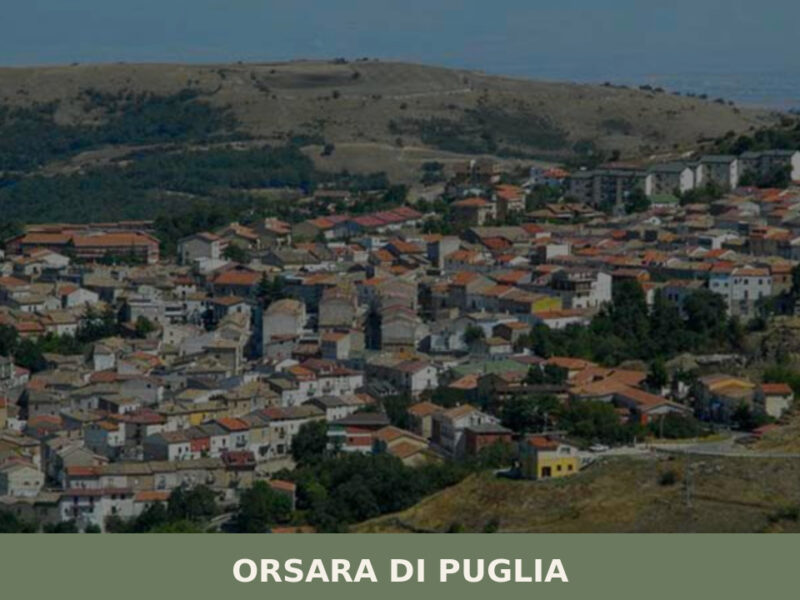
Orsara di Puglia
Mountain
A mountain village of 2,507 people in the Foggia province, Orsara di Puglia holds sacred grottoes, medieval stonework, and one of southern Italy's most distinctive culinary traditions.
Carapelle
 Plains
what to see a Carapelle: 5 attractions, prodotti PAT e festivals patronali a 62 m s.l.m. in the province of Foggia. Scopri history, cuisine e how to get there.
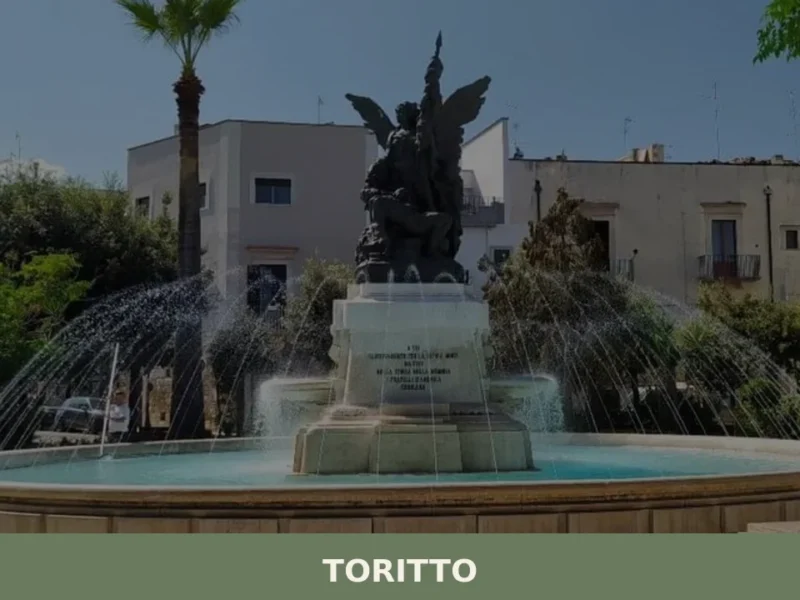
Toritto
Hills
What to see in Toritto, Italy: Explore almond groves and the Chiesa Madre at 240 m. Discover vibrant festivals and indulge in local cuisine.
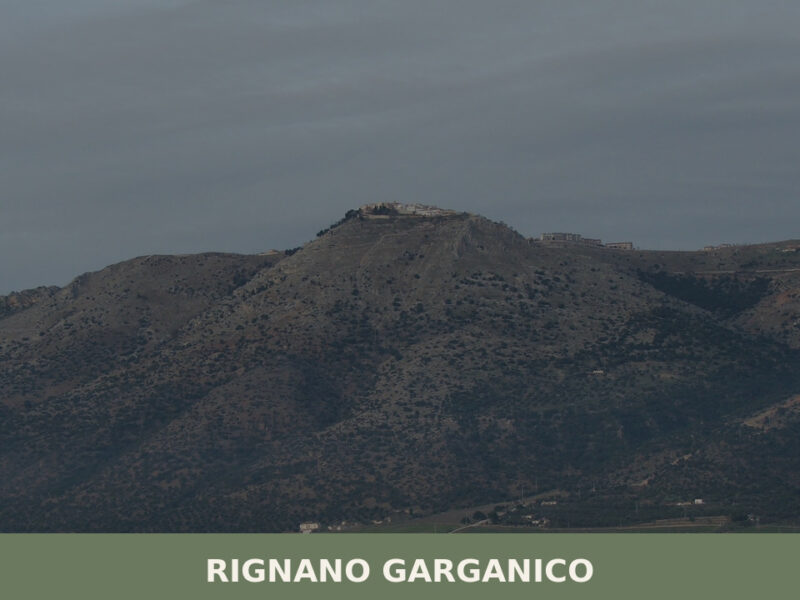
Rignano Garganico
Hills
A quiet hilltop village at 590 metres on the Gargano promontory, Rignano Garganico rewards visitors with medieval lanes, wide Tavoliere views, and the honest food traditions of inland Puglia.
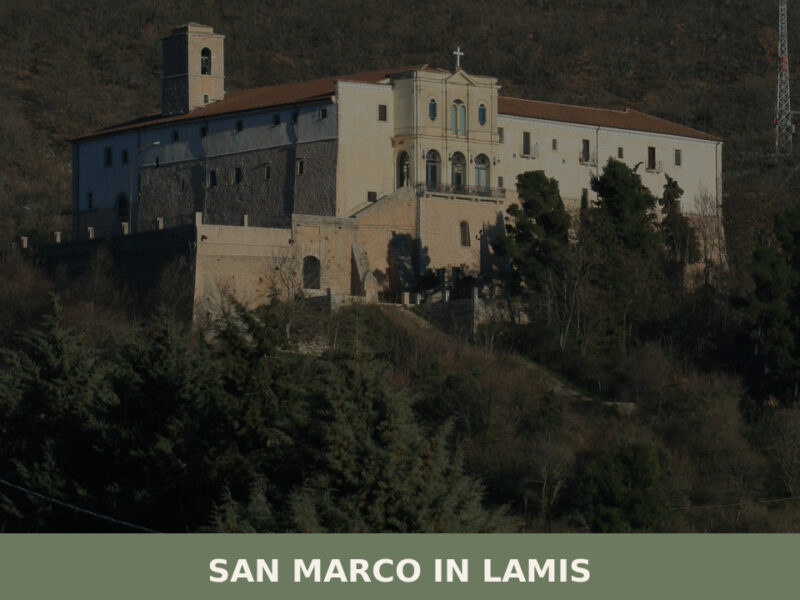
San Marco in Lamis
Hills
A highland town on the western Gargano, San Marco in Lamis holds ancient monasteries, a dramatic Good Friday fire procession, and the quiet intensity of inland Puglia.




🏡 Know Alberona better than we do?
If you’re a local or have been there, your knowledge matters: add what’s missing or fix a detail on this page.