


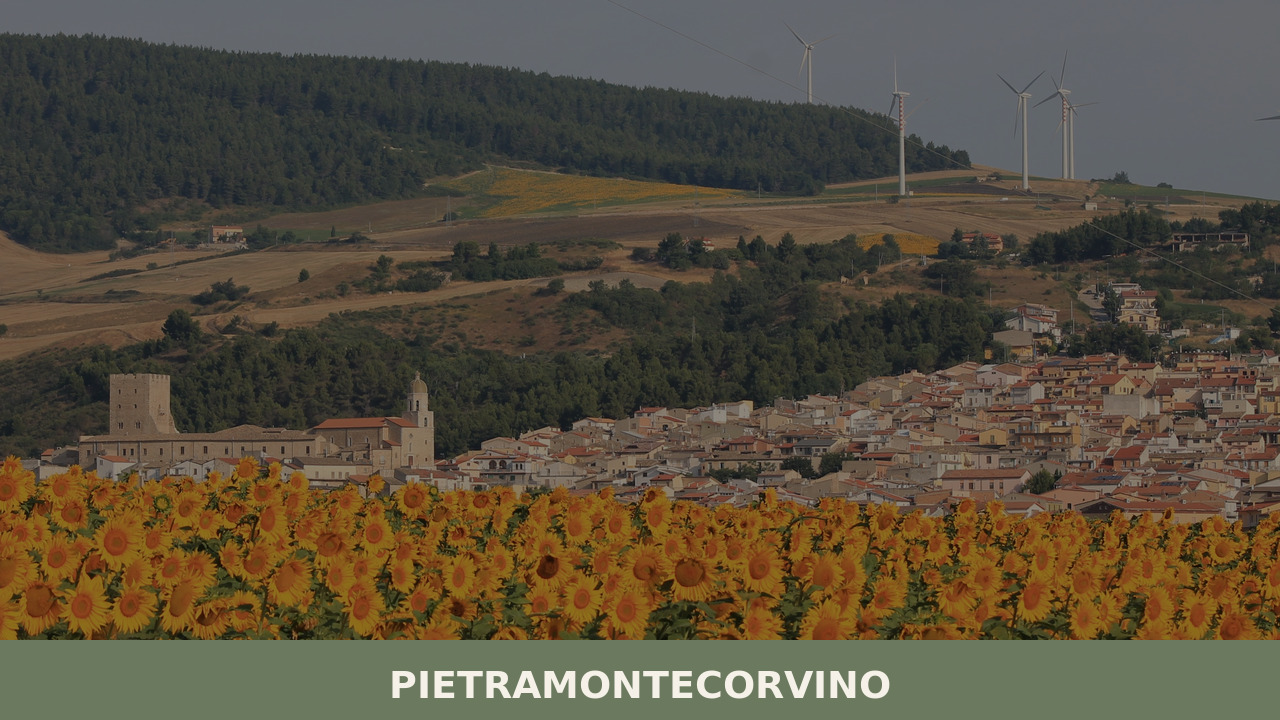
Pietramontecorvino
 Hills
Hills
A medieval hill village at 456 metres above the Tavoliere plain, Pietramontecorvino preserves a rock-carved old quarter, Norman tower, and the quiet rhythms of Daunia’s agricultural past.
Discover Pietramontecorvino
Morning light catches the limestone walls of the Terravecchia quarter before it reaches the valley floor. Roosters answer each other across tiled rooftops. An elderly man opens wooden shutters that have been repainted so many times the hinges sit in small mounds of enamel. Below, the Tavoliere plain stretches flat and pale toward the Adriatic. This is Pietramontecorvino — a village of 2,460 people at 456 metres above sea level in the province of Foggia — and the question of what to see in Pietramontecorvino begins here, in this old quarter, where the stone itself tells the story.
History of Pietramontecorvino
The name carries its own archaeology. “Pietra” refers to the rocky spur on which the original settlement was built; “Montecorvino” recalls the nearby ancient town of Montecorvino, a once-significant Norman bishopric that declined over centuries due to earthquakes and shifting populations. Refugees from Montecorvino gradually consolidated around the rocky outcrop, merging their identity with the stone that sheltered them. By the medieval period, the settlement had become a defined borgo with defensive walls, a ducal tower, and a church anchored into the living rock.
Under Norman rule in the 11th and 12th centuries, the area gained strategic importance along the routes connecting the Capitanata region to the rest of southern Italy. The village passed through Swabian, Angevin, and Aragonese hands — each leaving administrative marks if not always architectural ones. Frederick II’s reorganisation of Puglia in the 13th century placed the Capitanata’s hill towns, including Pietramontecorvino, within a network of imperial control stretching from Lucera to Foggia.
What survived the centuries most visibly is the Terravecchia, the old quarter. Its layout is distinctly medieval: narrow lanes designed for foot traffic and defense, houses built directly into and on top of the rock, and a civic geometry that follows the terrain rather than imposing a grid upon it. The village remained largely agricultural through the modern period, its population sustained by grain, olives, and sheep — the same economy that defined the Tavoliere for a thousand years.
What to see in Pietramontecorvino: 5 must-visit attractions
1. The Terravecchia (Old Quarter)
The oldest part of the village is carved into and built upon a rocky ridge. Houses share walls with the stone itself — some rooms are half-cave, half-masonry. The lanes are steep, sometimes stepped, and narrow enough that neighbours on opposite sides could pass objects through facing windows. It is not a ruin; people still live here, and laundry still hangs between the medieval walls.
2. The Norman-Swabian Tower (Torre Normanna)
A square watchtower rises above the Terravecchia, likely dating to the 12th century. Its construction is robust, functional — thick walls with small openings designed for observation and defense, not decoration. The tower anchored the village’s original fortifications and today serves as the most recognisable vertical element in the skyline when approaching from the plain below.
3. The Ducal Palace
Adjacent to the tower, the palazzo was the administrative seat for the feudal lords who governed the village across several centuries. The structure has been modified repeatedly, with Renaissance-era additions layered over medieval foundations. Its courtyard and façade show the transition from military architecture to residential display that marks many southern Italian feudal residences.
4. The Mother Church (Chiesa Madre di Santa Maria Assunta)
The principal church anchors the upper part of the village. Its Romanesque bones are visible despite later Baroque interventions — a common pattern across the Capitanata. Inside, the nave retains a sense of proportion and restraint. The church’s position, elevated and visible from multiple approaches, reflects its dual role as spiritual centre and civic landmark within the medieval settlement.
5. The Countryside and Panoramic Views
From the edges of the village, particularly near the Terravecchia, the view opens across the Tavoliere delle Puglie — the largest plain in southern Italy. On clear days the perspective extends toward the Gargano promontory to the east and the Subappennino Dauno ridgeline to the west. The surrounding landscape of wheat fields, olive groves, and scattered farmhouses has changed less than one might expect.
Local food and typical products
The cooking here is rooted in the pastoral and agricultural traditions of the Daunia hills. Bread is central — large, dense loaves made from local durum wheat, baked in wood-fired ovens, with a thick crust that stays edible for days. Orecchiette and cavatelli appear on most tables, dressed with simple vegetable sauces — turnip tops, wild chicory, or slow-cooked tomato with a scrap of dried chilli. Lamb and kid goat are prepared for feast days, often roasted with potatoes and wild herbs gathered from the surrounding slopes. Puglia’s extra-virgin olive oil — some of it carrying the Dauno DOP designation — is the foundational fat in everything.
Local cheeses include caciocavallo and scamorza, produced from the milk of cattle and sheep grazing the Subappennino pastures. In autumn, preserved vegetables — sun-dried tomatoes, marinated aubergines, pickled peppers — fill pantry shelves and appear as antipasti. Dining options in Pietramontecorvino are modest in number but tend toward family-run trattorias where the menu reflects whatever the season and the kitchen garden dictate. The wine is typically robust and red, drawn from the broader Foggia province’s vineyards.
Best time to visit Pietramontecorvino
Spring — late April through June — offers the most comfortable conditions. Temperatures at 456 metres are milder than on the Tavoliere floor, and the surrounding hillsides green up with wildflowers and new wheat. Autumn, from September into early November, is equally good: the harvest season brings activity to the countryside, the light turns golden and low, and the summer crowds (modest as they are in this part of Puglia) have gone. Summer can be hot, though the elevation provides some relief from the oppressive heat of the plain. Winter is cold and occasionally wet, with the Subappennino catching weather from the west.
The village’s patron saint festival and other local feast days — typically held in summer — bring processions, temporary food stalls, and evening gatherings in the main piazza. These events are organised for residents rather than visitors, which gives them an unperformed quality that is increasingly rare. Check with the Comune di Pietramontecorvino for specific dates, as schedules can shift from year to year.
How to get to Pietramontecorvino
Pietramontecorvino lies in the hills west of Foggia, the provincial capital. By car, the village is approximately 40 kilometres from Foggia, reachable via the SS17 and then local roads climbing into the Subappennino Dauno. From the A14 Adriatic motorway, exit at Foggia and follow signs toward Lucera, then continue northwest into the hills. The drive from Foggia takes roughly 45 minutes; from Bari, expect around two hours.
The nearest airport is Bari Karol Wojtyła (BRI), about 170 kilometres to the southeast. Foggia has a train station on the main Adriatic line, with connections to Bari, Naples, and Rome, but from Foggia to Pietramontecorvino you will need a car — public bus services exist but are infrequent and designed around school and commuter schedules rather than tourism. Renting a car in Bari or Foggia is the most practical option for reaching the hill villages of the Daunia.
More villages to discover in Puglia
Pietramontecorvino does not exist in isolation. The Subappennino Dauno is lined with small hill settlements, each shaped by the same geological and historical forces — Norman towers, medieval quarters, agricultural economies tied to wheat and sheep. Traveling northeast from Pietramontecorvino, Casalnuovo Monterotaro occupies a similar position along the ridgeline, offering its own medieval core and views over the northern Tavoliere. The two villages share a quiet, unhurried character that rewards slow exploration on foot.
Further east and down onto the plain, Cerignola presents a different scale and story — a larger agricultural town that became one of the centres of Puglia’s grain and wine production. Visiting both the hill villages and the plain towns gives a more complete picture of how geography shaped settlement in the Capitanata: the heights for defense and grazing, the lowlands for intensive cultivation. Together, they form a landscape that has operated as a single system for centuries.
Frequently asked questions about Pietramontecorvino
Quando si festeggia il patrono di Pietramontecorvino?
Pietramontecorvino celebra due feste patronali: il 16 maggio è dedicato a sant'Alberto da Montecorvino, figura legata alla storia religiosa locale, mentre il 18 agosto si festeggia la Madonna di Costantinopoli. Entrambe le ricorrenze animano il paese con processioni e momenti di aggregazione comunitaria. Per dettagli aggiornati su programmi ed eventi, è consigliabile contattare direttamente il Comune di Pietramontecorvino.
Quanto tempo serve per visitare Pietramontecorvino?
Pietramontecorvino è un borgo di circa 2.460 abitanti su un colle a 456 metri: la visita a piedi del centro storico, comprendendo la Terravecchia, la Torre Normanna, il Palazzo Ducale e la Chiesa Madre, richiede in genere 2-3 ore. Aggiungendo una sosta per pranzo in una trattoria locale e una passeggiata panoramica verso il Tavoliere, mezza giornata è il tempo minimo consigliato. È facilmente abbinabile in giornata a Lucera, distante circa 20 chilometri.
Pietramontecorvino è inclusa nel circuito dei Borghi più Belli d'Italia?
Sì, Pietramontecorvino è inserita nell'associazione dei Borghi più Belli d'Italia, riconoscimento che attesta la qualità del patrimonio storico, architettonico e paesaggistico del paese. Il borgo pugliese soddisfa i criteri selettivi del circuito, che includono la conservazione del centro storico medievale e la presenza di elementi architettonici significativi come la Torre Normanna e il quartiere della Terravecchia.
Esistono percorsi escursionistici documentati nei pressi di Pietramontecorvino?
Il territorio di Pietramontecorvino rientra nel Parco Naturale Regionale del Subappennino Dauno, che attraversa i comuni collinari della provincia di Foggia. L'area è percorsa da sentieri del Club Alpino Italiano (CAI) che collegano i borghi della Daunia attraverso boschi e pascoli. Per i tracciati numerati aggiornati e le mappe ufficiali, è consigliabile consultare la sezione CAI di Foggia o il sito del parco regionale.
Nearby Villages near Pietramontecorvino
In Apulia More villages to discover
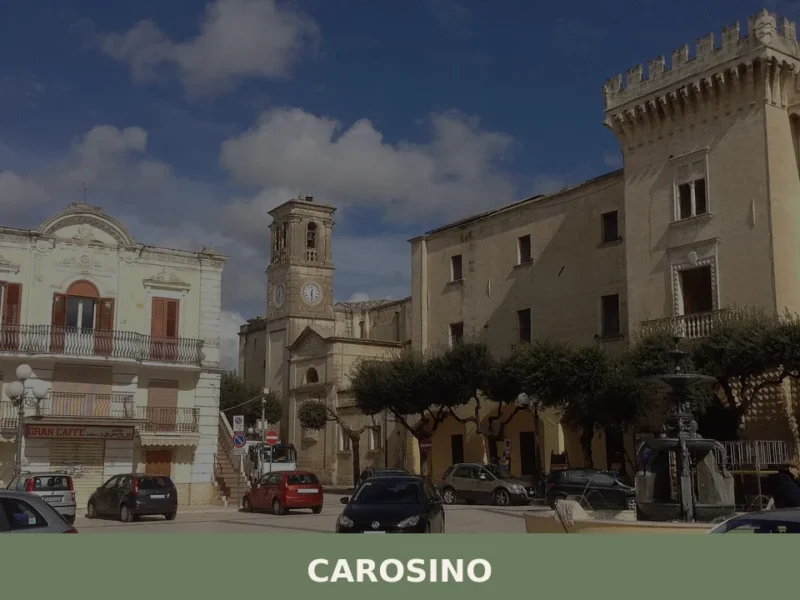
Carosino
 Plains
Carosino is a comune of 6,371 inhabitants in the province of Taranto, positioned in the Ionian arc of Puglia where the landscape flattens into olive groves and vineyards before reaching the coast. Known locally by its Salentine dialect name Carusinu, the town sits within a territorial context defined by centuries of agricultural production and the […]
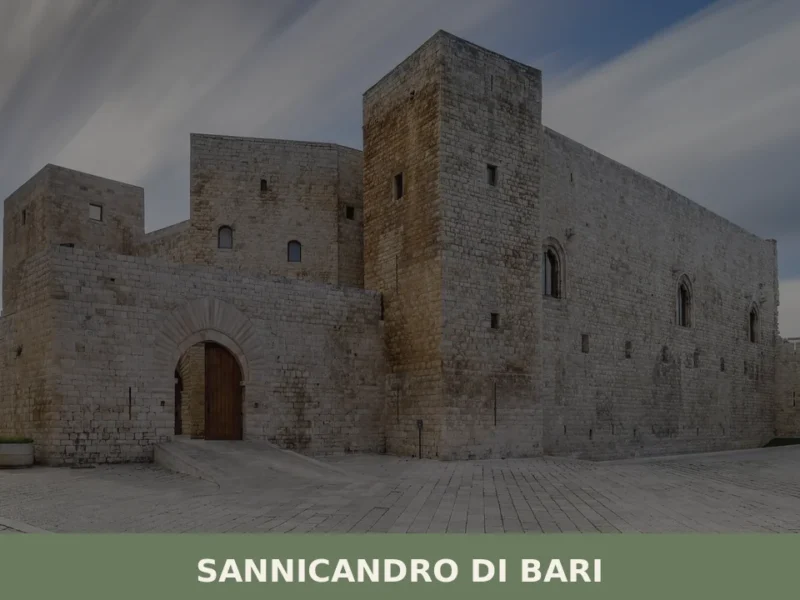
Sannicandro di Bari
Plains
What to see in Sannicandro di Bari? Discover the Norman-Swabian Castle and 4 historic churches. A complete guide to exploring the village and the Bari plain.
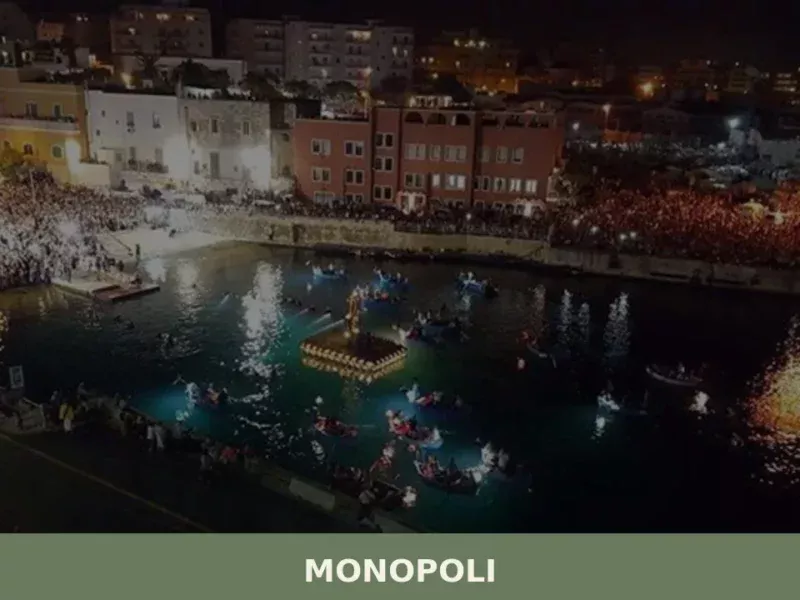
Monopoli
 Sea
Sea
From the promontory where the Castle of Charles V stands, the view sweeps across the Adriatic, a horizon of waters that have shaped Monopoli’s identity for centuries. This port city, whose name evokes the idea of a “unique city,” reveals itself through its architecture, which tells of historical layers, from Messapian walls to Spanish fortifications. […]
Rodi Garganico
Sea
A coastal village of 3,302 inhabitants on the Gargano promontory, Rodi Garganico offers a medieval centre, IGP citrus groves, and an authentic Adriatic harbour life.

Alliste
Sea
what to see ad Alliste: scopri il 6.481 abitanti. Visita chiese e masserie, assapora la cuisine salentina per un viaggio autentico.

Trani
Sea
What to see in Trani, a city at 7m altitude: Discover its iconic Cathedral and Swabian Castle. Explore the historic port and Sant'Anna Synagogue Museum.
Modugno
Plains
In 1316, King Robert of Anjou confirmed Modugno’s privilege of holding a free fair, recognising this community on the Bari plain as a commercial hub that few centres of similar size could claim. Today, first-time visitors find a compact old town, gathered around Romanesque churches and noble palaces, surrounded by the orderly expanse of olive […]
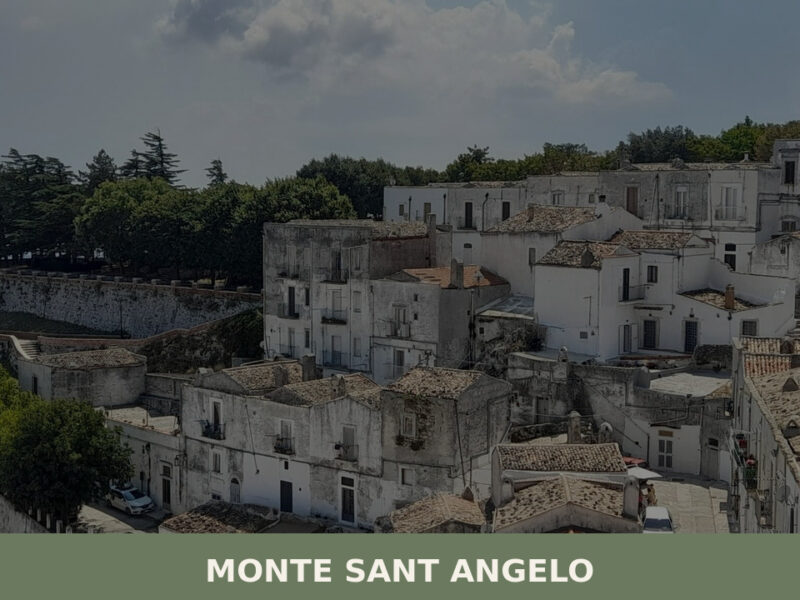
Monte Sant’Angelo
 Mountain
Discover what to see in Monte Sant'Angelo, Puglia: UNESCO sanctuary, Norman castle, Foresta Umbra and local food. Practical travel guide with tips.
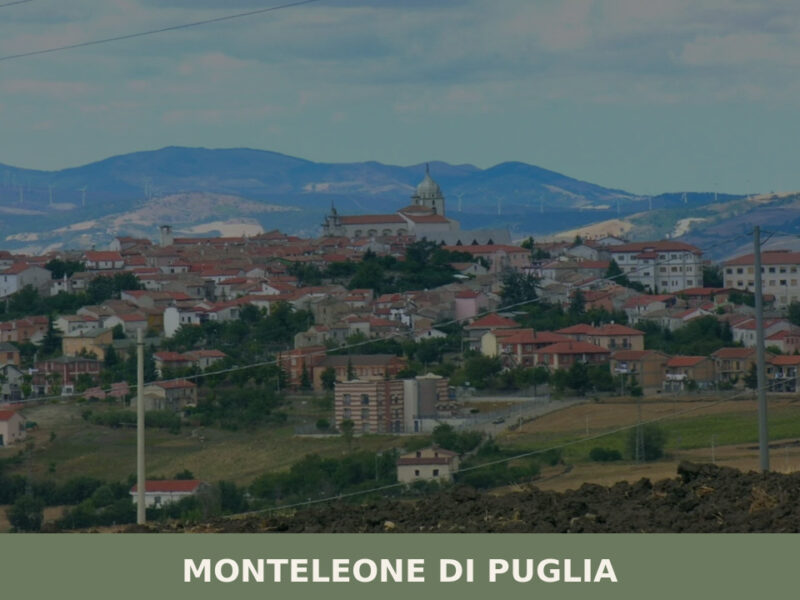
Monteleone di Puglia
Mountain
At 842 metres above sea level in the Daunian Sub-Apennines, Monteleone di Puglia is a wind-swept hilltop village of 925 inhabitants with deep medieval roots and wide-open horizons.
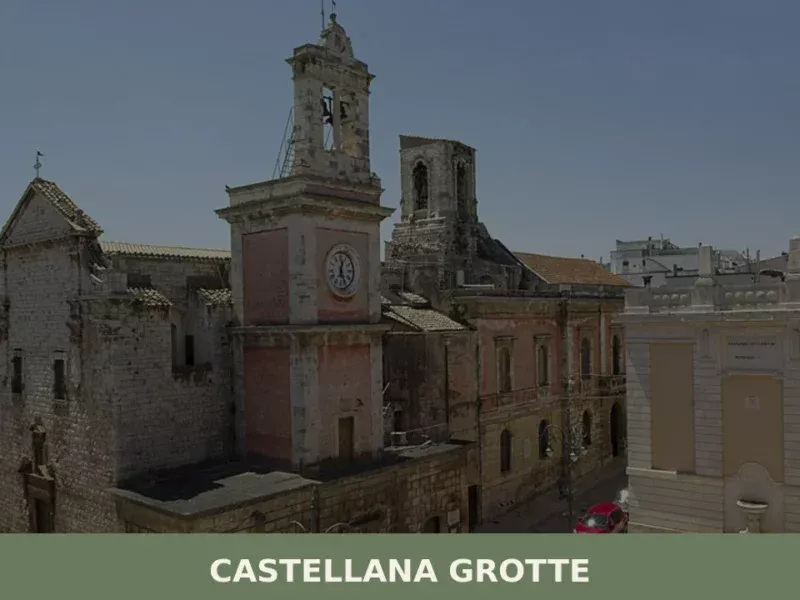
Castellana Grotte
Hills
In 1938, speleologist Franco Anelli descended for the first time into a karst chasm a few kilometres from the town centre, revealing to the world an underground system stretching over three kilometres — one of the most extensive in Europe. That discovery permanently transformed the identity of an agricultural municipality on the south-eastern Murgia, placing […]


🏡 Know Pietramontecorvino better than we do?
If you’re a local or have been there, your knowledge matters: add what’s missing or fix a detail on this page.