


Acquaviva Picena
 Sea
Sea
Discover what to see in Acquaviva Picena: medieval fortress, town walls, local food and travel tips for this hilltop village in Ascoli Piceno, Marche.
Discover Acquaviva Picena
Acquaviva Picena is a fortified hilltop village of approximately 3,576 inhabitants in the province of Ascoli Piceno, in the Marche region of central Italy. Positioned at around 360 metres above sea level, it commands a clear view across the Tronto valley toward the Adriatic coast, a geographic advantage that determined its military importance for centuries. Knowing what to see in Acquaviva Picena means understanding its layered past — a medieval fortress town whose physical form has survived largely intact, offering a rare opportunity to read the logic of medieval urban planning still embedded in stone and mortar.
History of Acquaviva Picena
The name Acquaviva derives from the Latin aqua viva — living water or running water — referring to the springs that once fed the settlement on this ridge. The suffix Picena distinguishes it from other Italian towns sharing the same root name and anchors it geographically within the historic territory of Picenum, the pre-Roman region that extended along the central Adriatic coast. This Picene identity is not merely nominal: the area was inhabited well before Roman consolidation, and archaeological evidence of the Picene culture, the Iron Age population that preceded Roman dominance in this zone, has been documented across the wider Ascoli Piceno province.
During the medieval period, Acquaviva Picena fell under the control of the Acquaviva family, the noble dynasty from which the town draws its dynastic association. The Acquaviva were among the most influential feudal lords of the Adriatic Marche, with holdings extending across several provinces. Their presence here shaped the architectural character of the settlement, particularly through the construction and reinforcement of the fortress that still defines the village’s skyline. By the late medieval period, the town had developed the compact, walled structure typical of defensive borghi in this part of the Apennine foothills — a design intended to control movement through the valley below.
Following the unification of Italy in the nineteenth century, Acquaviva Picena was incorporated into the administrative structure of the newly formed Kingdom of Italy as a comune within the province of Ascoli Piceno. This administrative continuity has preserved a relatively stable community of just over 3,500 residents — a size large enough to sustain local services and events, but small enough to have avoided the large-scale development that has altered many coastal towns nearby. The agricultural economy of the surrounding hills, based historically on cereals, olives and vines, has persisted alongside a modest rural tourism sector that draws visitors specifically interested in the area’s medieval heritage and landscape.
What to see in Acquaviva Picena: 5 must-visit attractions
The Rocca Fortress
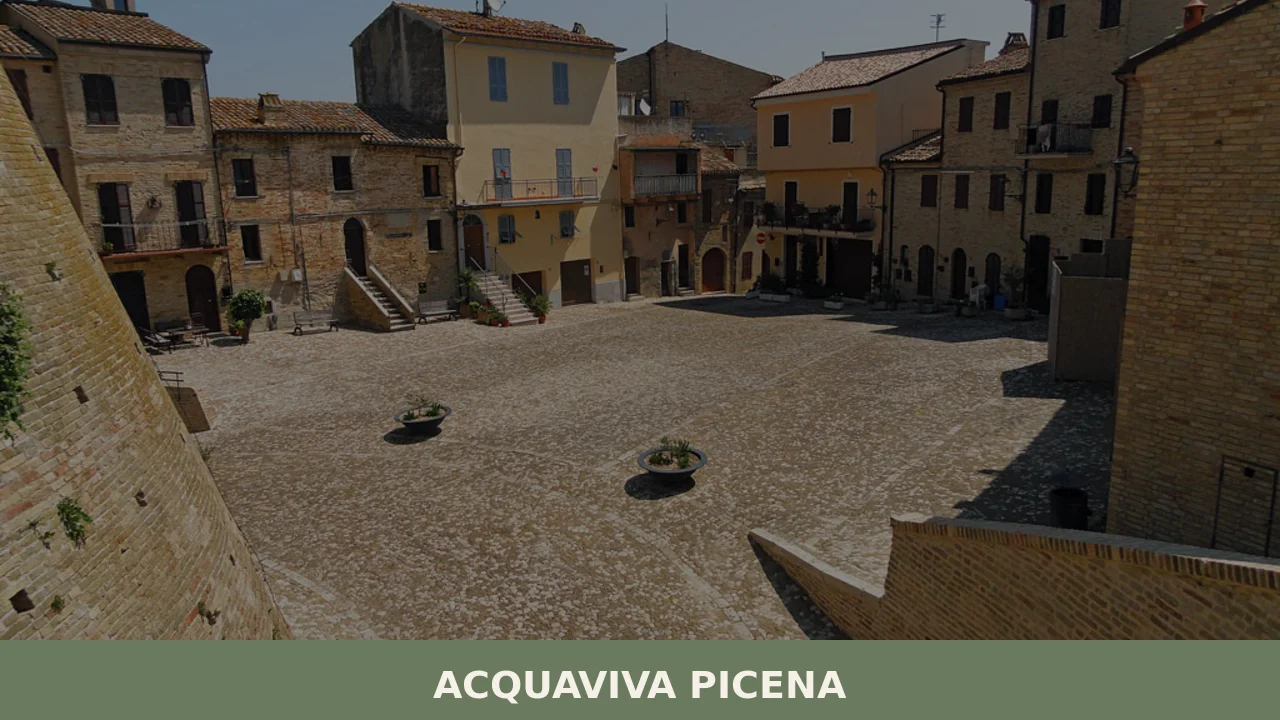
The Rocca is the architectural centrepiece of Acquaviva Picena, a medieval fortification built and expanded under the Acquaviva feudal lords. Its towers and curtain walls rise above the village’s highest point, offering an unobstructed view across the Tronto plain toward the sea. The structure preserves significant portions of its original masonry, and parts of the complex are open to visitors.
The Historic Town Walls
The circuit of medieval walls that encircles the village core remains one of the most intact examples of defensive architecture in this part of the Marche. Several original gates survive, controlling the entry points into the settlement. Walking the perimeter gives a precise sense of how the medieval town was contained and organised within its fortified boundary.
The Church of San Nicolò
The parish church of San Nicolò stands within the walled centre and represents the primary place of Catholic worship for the community. Its interior contains examples of religious art and furnishings accumulated over several centuries of continuous use. The church’s facade and its position within the urban fabric reflect the typical integration of religious architecture into the fortified hilltop town plan of the late medieval Marche.
The Panoramic Viewpoint over the Tronto Valley
From the upper reaches of Acquaviva Picena, the land drops sharply toward the Tronto river valley and the coastal strip near San Benedetto del Tronto. On clear days, the Adriatic is visible as a hard blue line on the eastern horizon, while to the west the Sibillini mountains define the skyline. This vantage point was operationally significant for centuries before it became a geographical spectacle.
The Village Centre and Medieval Street Plan
The internal layout of the village retains its medieval street pattern — narrow lanes running parallel to the contour lines, connecting at right angles to the main ridge road. The building stock along these lanes includes stone houses dating from the fourteenth to the sixteenth centuries, many still in residential use, their ground floors occasionally occupied by small workshops or wine cellars.
Local food and typical products
The food culture of Acquaviva Picena belongs to the broader culinary tradition of the Ascoli Piceno province, one of the most clearly defined gastronomic territories in the Marche. The most iconic preparation of the area is olive ascolane — large green olives of the Ascolana Tenera variety, pitted, stuffed with a seasoned meat mixture and fried in breadcrumbs. The Ascolana Tenera olive holds a Protected Designation of Origin status (DOP), and while the olive groves producing this variety are concentrated particularly around Ascoli Piceno itself, the preparation and consumption of this dish extends throughout the province. Visitors will find it served as an antipasto or street food at local festivals and in the area’s trattorie.
Pasta dishes in this part of the Marche tend toward egg-based preparations, including vincisgrassi, a rich baked pasta considered one of the region’s signature dishes, layered with ragù and béchamel. Local salumi, produced from the pigs raised on the surrounding farms, and sheep’s cheeses from the Sibillini foothills appear consistently on menus in the area. For visitors seeking to eat well in or near Acquaviva Picena, the practical approach is to look for agriturismo restaurants operating in the surrounding countryside, where produce is typically sourced from the farm itself, and reservations are advisable particularly on weekends and during summer. The official Marche regional tourism board maintains updated listings of local food producers and restaurants across the province.
Best time to visit Acquaviva Picena
The most practical months to visit Acquaviva Picena are May through June and September through October. In late spring, the surrounding agricultural land is at its most active — wheat fields green before the summer harvest, olive trees in new leaf, and the Sibillini mountains still carrying snow on their upper ridges. Temperatures in these months are moderate, typically between 15°C and 25°C, making it comfortable to walk the perimeter walls or explore the village on foot. Summer brings higher temperatures — July and August can push above 30°C — and while the village itself stays cooler than the coastal strip due to its altitude, the roads and nearby beaches of San Benedetto del Tronto become significantly busier.
The agricultural calendar and local religious festivals shape the social rhythm of the village. Harvest-related events in autumn draw both residents and visitors from nearby towns. Winter, while quieter, offers the clearest visibility across the valley and toward the coast — the landscape stripped of summer haze — though some smaller restaurants and agriturismi operate on reduced schedules between November and March. For specific event dates and current festival programming, the official municipality website is the most reliable source.
How to get to Acquaviva Picena
Acquaviva Picena sits roughly 12 kilometres north-east of Ascoli Piceno and approximately 10 kilometres inland from the Adriatic coast near San Benedetto del Tronto. Getting here by car is the most practical option for most visitors.
- By motorway: Take the A14 Adriatica motorway and exit at San Benedetto del Tronto. From there, the village is reachable in approximately 15–20 minutes by provincial road heading inland.
- By train: The nearest railway station is San Benedetto del Tronto, served by regional trains on the Adriatic coastal line connecting Ancona to Pescara. From the station, a car or taxi is required to reach Acquaviva Picena.
- By air: The most convenient airports are Pescara (Abruzzo Airport), approximately 80 kilometres to the south, and Ancona Falconara (Marche Airport), approximately 100 kilometres to the north. Both are connected to major Italian and European cities by domestic and low-cost carriers.
- From Ascoli Piceno: The provincial capital is the natural base for exploring this territory. The drive to Acquaviva Picena takes around 20 minutes on well-maintained provincial roads.
Where to stay in Acquaviva Picena
Accommodation within the village itself is limited in scale, reflecting the size of the community. Options typically include small B&Bs and rooms-to-let within the historic centre, where staying inside the walls gives direct access to the village fabric without the need for a car in the evening. The surrounding countryside offers a wider range of agriturismi — farm-based accommodation units that frequently include breakfast and, in many cases, dinner prepared from produce grown on site. These rural properties vary considerably in scale and facilities, from converted farmhouses with a handful of rooms to larger estates with swimming pools oriented toward family stays.
For visitors using Acquaviva Picena as a base for exploring the wider province — including Ascoli Piceno city, the Sibillini mountains and the coast — the village’s central position makes it a workable hub. The practical booking advice is to contact accommodation directly or through the regional tourism portal rather than relying solely on large international booking platforms, which may not list smaller local properties. Booking several weeks in advance is advisable for visits during July, August and the main autumn harvest period, when demand from Italian domestic tourists peaks.
More villages to discover in Marche
The Marche region contains a density of fortified hilltop villages that rewards extended exploration. To the north of Acquaviva Picena, in the inland Apennine foothills, the village of Borgo Pace occupies a dramatically different landscape — a narrow valley on the upper Metauro river where the mountains close in steeply. Further north, Carpegna sits at higher altitude on the edge of the Montefeltro plateau, associated with the Carpegna feudal dynasty and offering access to the Parco Naturale del Sasso Simone e Simoncello. Both villages demonstrate how varied the Marche interior is across relatively short distances.
For those interested in the quieter corners of the Marche lowlands, Isola del Piano in the province of Pesaro-Urbino represents a different register entirely — a small agricultural village on the Metauro plain associated with the organic food movement and the slow food philosophy. And for those who want to connect their rural explorations with the region’s main urban and maritime identity, the provincial capital Ancona — with its Roman arch, medieval cathedral and working port — provides essential context for understanding the Adriatic dimension of the Marche. The regional tourism authority’s dedicated travel portal offers itinerary suggestions linking several of these villages into coherent routes.
Frequently asked questions about Acquaviva Picena
What is the best time to visit Acquaviva Picena?
The ideal times to visit Acquaviva Picena are late spring (May-June) and early autumn (September-October). During these months, temperatures are moderate (15°C to 25°C), perfect for exploring the village and enjoying the scenic agricultural landscape. Summer (July-August) offers warmer weather and proximity to the Adriatic coast, though the village remains cooler than the beaches. Winter provides clear views across the valley, and the patron saint, San Nicola di Bari, is celebrated on December 6th, offering a unique local experience.
What are the historical origins of Acquaviva Picena?
Acquaviva Picena's name derives from the Latin 'aqua viva' (living water), referencing natural springs. The 'Picena' suffix links it to the ancient Picenum region, inhabited by the Picene culture before Roman times. Its strategic hilltop position made it militarily significant for centuries. During the medieval period, the powerful Acquaviva family shaped its character, constructing and reinforcing the formidable Rocca fortress, which remains the village's defining architectural feature and a testament to its layered past.
What to see in Acquaviva Picena? Main monuments and landmarks
Acquaviva Picena offers several key attractions rooted in its medieval past. The Rocca Fortress is the architectural centerpiece, with its towers and walls offering panoramic views towards the sea; portions are open to visitors. Explore the remarkably intact Historic Town Walls and original gates that define the village perimeter. Within the walled center, visit the Church of San Nicolò, the community's main place of worship. Don't miss the Panoramic Viewpoint over the Tronto Valley, where the Adriatic and Sibillini Mountains are visible. Stroll through the Village Centre and its Medieval Street Plan to experience its authentic character.
What are the main natural or scenic attractions of Acquaviva Picena?
The primary natural and scenic attraction of Acquaviva Picena is its commanding position atop a hill, offering breathtaking vistas. The Panoramic Viewpoint over the Tronto Valley provides expansive views across the Tronto river basin towards the Adriatic Sea to the east and the majestic Sibillini Mountains to the west. The surrounding agricultural landscape, with its olive groves, vineyards, and wheat fields, offers picturesque scenery that changes with the seasons, particularly vibrant in spring and autumn.
Where to take the best photos in Acquaviva Picena?
For the most striking photographs in Acquaviva Picena, head to the Rocca Fortress, which provides an unobstructed, elevated perspective over the Tronto plain and the distant Adriatic coast. The Panoramic Viewpoint over the Tronto Valley is another must-visit, capturing the dramatic drop towards the river and the defined skyline of the Sibillini mountains. Inside the village, the historic town walls and their surviving gates offer compelling architectural shots, while the narrow medieval lanes and stone houses of the village centre provide charming, atmospheric street photography opportunities.
Are there museums, churches or historic buildings to visit in Acquaviva Picena?
Yes, Acquaviva Picena boasts several significant historic sites. The Rocca Fortress, a medieval fortification, is the village's most prominent landmark, with parts of the complex open to visitors. The Church of San Nicolò, the parish church located within the walled center, contains religious art accumulated over centuries. Additionally, the remarkably intact circuit of medieval town walls, complete with original gates, constitutes a major historical attraction. The village center itself is a living museum, preserving a medieval street plan and stone houses dating from the 14th to 16th centuries.
What can you do in Acquaviva Picena? Activities and experiences
In Acquaviva Picena, visitors can immerse themselves in medieval history by exploring the Rocca Fortress, walking the historic town walls, and wandering through the well-preserved medieval street plan. Enjoy the stunning panoramic views over the Tronto Valley and towards the Adriatic Sea. A significant experience is indulging in the local food culture: taste 'olive ascolane,' rich 'vincisgrassi,' local salumi, and sheep's cheeses. Dining at one of the surrounding agriturismo restaurants offers authentic farm-to-table cuisine. Autumn also brings harvest-related events, providing a glimpse into local traditions.
Who is Acquaviva Picena suitable for? Families, couples, hikers, solo travelers?
Acquaviva Picena is ideal for travelers seeking an authentic Italian village experience rich in history and local culture. It's particularly suited for history enthusiasts, couples looking for a romantic escape, and foodies eager to explore the culinary traditions of the Marche region, especially through agriturismo dining. While not primarily a hiking destination, its medieval heritage and panoramic views appeal to those who enjoy gentle exploration on foot. Families can also find suitable rural accommodations in the surrounding countryside, often with amenities like swimming pools, combining relaxation with cultural discovery.
What to eat in Acquaviva Picena? Local products and specialties
The culinary scene in Acquaviva Picena is deeply rooted in the traditions of Ascoli Piceno province. A must-try specialty is 'olive ascolane,' large green olives of the Ascolana Tenera DOP variety, pitted, stuffed with a savory meat mixture, and fried. Another iconic dish is 'vincisgrassi,' a rich baked pasta layered with ragù and béchamel. Local menus also feature excellent 'salumi' from pigs raised on surrounding farms and delicious sheep's cheeses sourced from the nearby Sibillini foothills. Dining at local agriturismo restaurants offers a true taste of the region's farm-fresh produce.
📷 Photo Gallery — Acquaviva Picena
Nearby Villages near Acquaviva Picena

In Marche More villages to discover
Monte Cerignone
 Hills
Hills
What to see in Monte Cerignone: discover 5 must-see attractions, from Malatesta Fortress to St. Blaise Church. Plan your trip to this Marche village.
Agugliano
Sea
Discover what to see in Agugliano, a hill comune near Ancona in Marche. History, food, attractions, travel tips and where to stay.
Mercatino Conca
Hills
At 275 meters above sea level, in the province of Pesaro and Urbino, lies Mercatino Conca, a settlement with 1,033 residents. The name itself, “Mercatino” (meaning “little market”), suggests a historical commercial function, likely linked to its position in the Conca river valley, a crossroads for trade and activities since ancient times. For those wondering […]

Camerata Picena
 Mountain
Discover Camerata Picena, a charming hilltop village in Ancona province with medieval churches, scenic views, and authentic Marche countryside.
Acquasanta Terme
Mountain
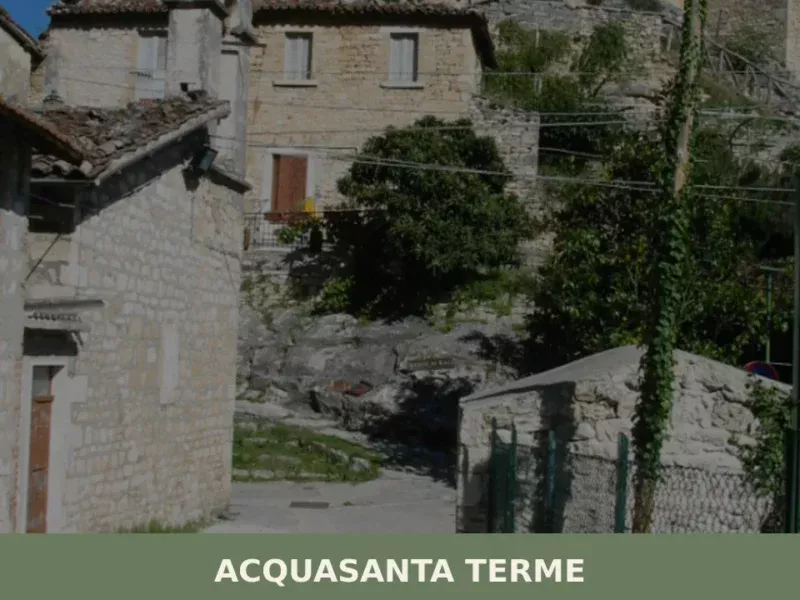
Discover what to see in Acquasanta Terme: Roman thermal baths, Tronto gorge, medieval hamlets and Apennine landscapes in Marche's Ascoli Piceno province.
Ancona
Sea
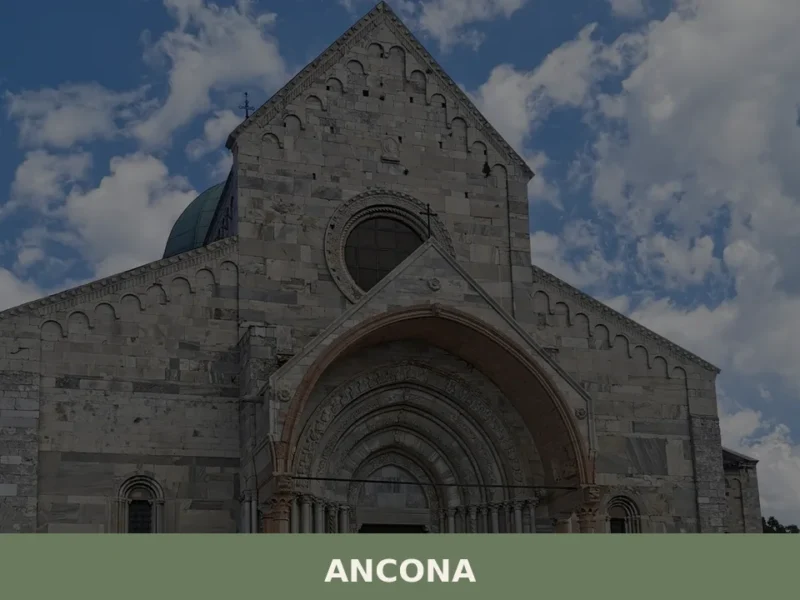
what to see in ancona, a city with 99,000 inhabitants. Discover 5 main attractions like the Duomo di San Ciriaco and Trajan's Arch. Plan your visit.
Frontino
Hills
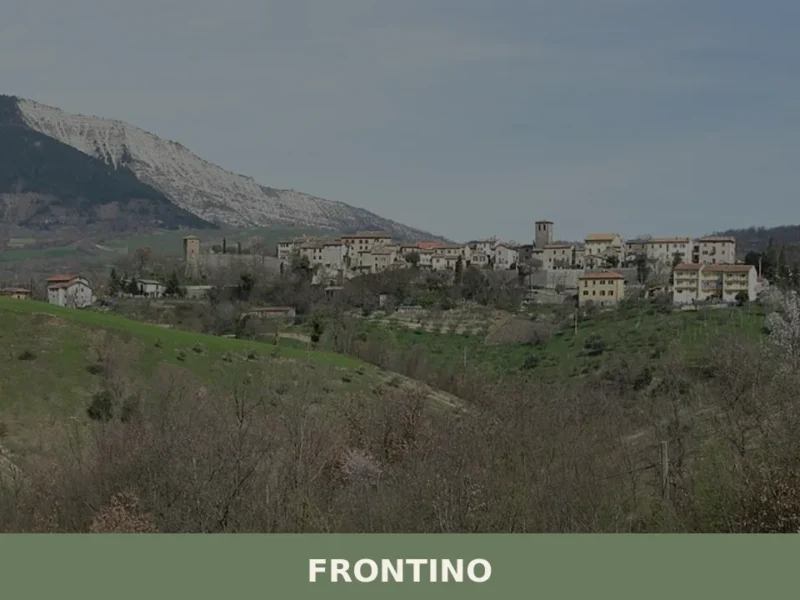
Frontino has around 300 inhabitants today, spread across a hilly area in the province of Pesaro and Urbino at 519 metres above sea level, along the eastern slope of the Apennines separating the Marche from Tuscany and Romagna. The municipality, one of the least populated in the entire region, retains a compact and legible urban […]
Ascoli Piceno
 Plains
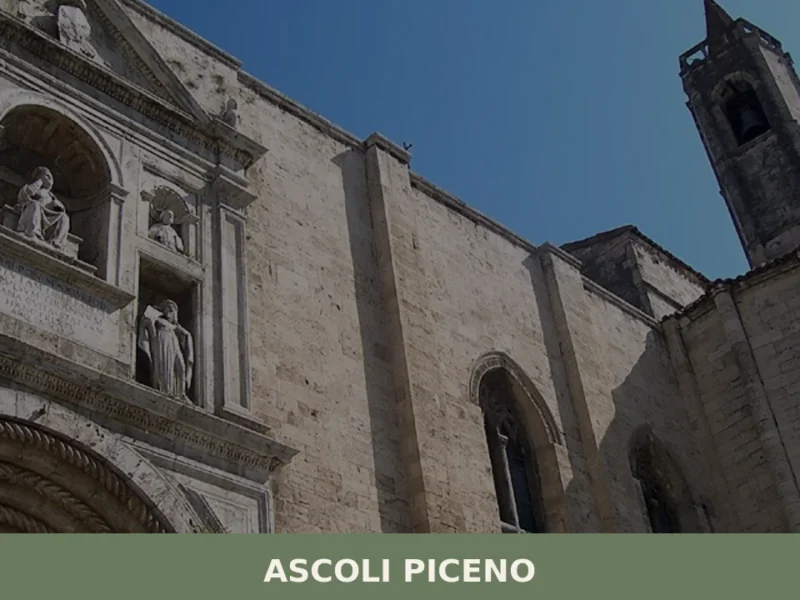
At 154 meters above sea level, in the heart of southern Marche, Ascoli Piceno rises between the waters of the Tronto river and its tributary, the Castellano, a natural crossroads that has shaped its identity over millennia. In this article History and origins of Ascoli Piceno What to see in Ascoli Piceno: main attractions Typical […]
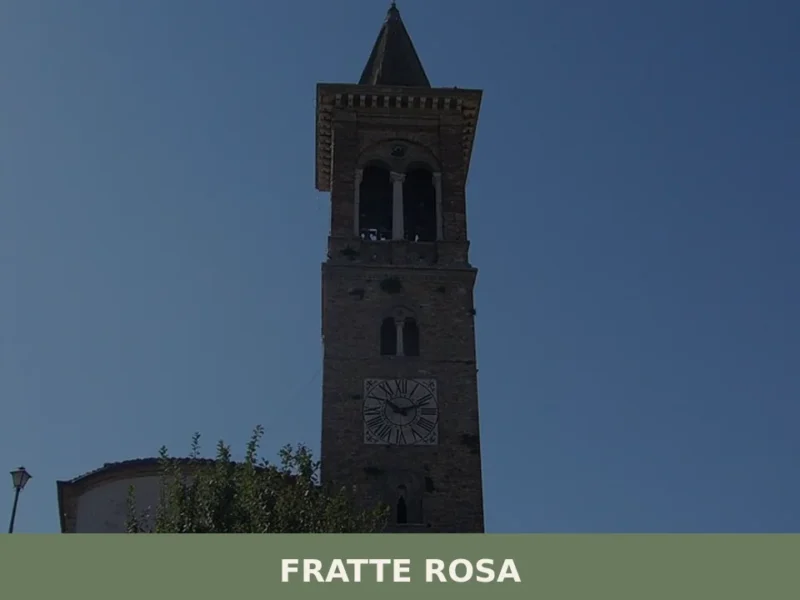
Fratte Rosa
Hills
With its 847 inhabitants and an altitude of 419 meters above sea level, Fratte Rosa is located in the province of Pesaro and Urbino, a hilly area of the Marche region. The village’s name “Rosa” is historically linked to the color of a local clay, an essential component for the practice of pottery, documented in […]
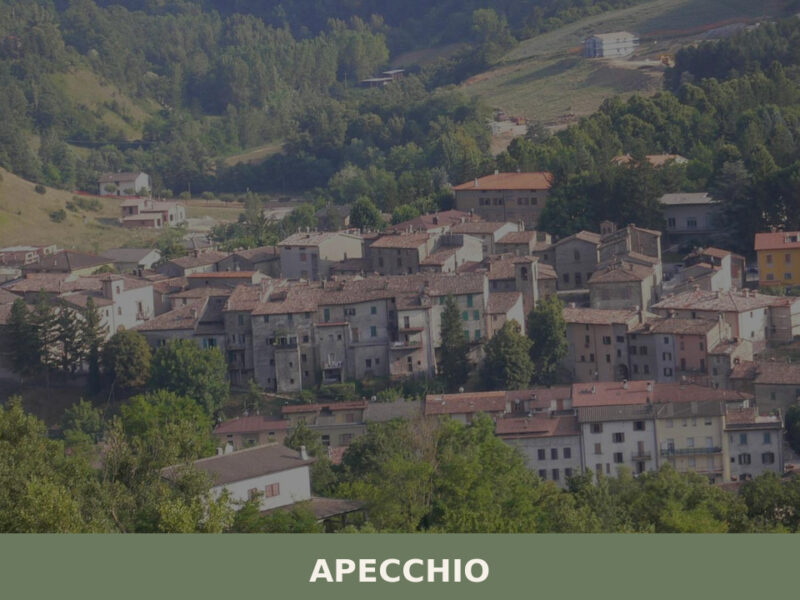
Apecchio
Hills
Morning mist lifts off the Biscubio river and the medieval bridge emerges in grey stone, its arches still carrying the weight of six centuries. A bell tower marks the hour above terracotta rooftops, and the smell of woodsmoke mixes with damp earth from the surrounding Apennine slopes. At 493 metres above sea level, this small […]





🏡 Know Acquaviva Picena better than we do?
If you’re a local or have been there, your knowledge matters: add what’s missing or fix a detail on this page.