


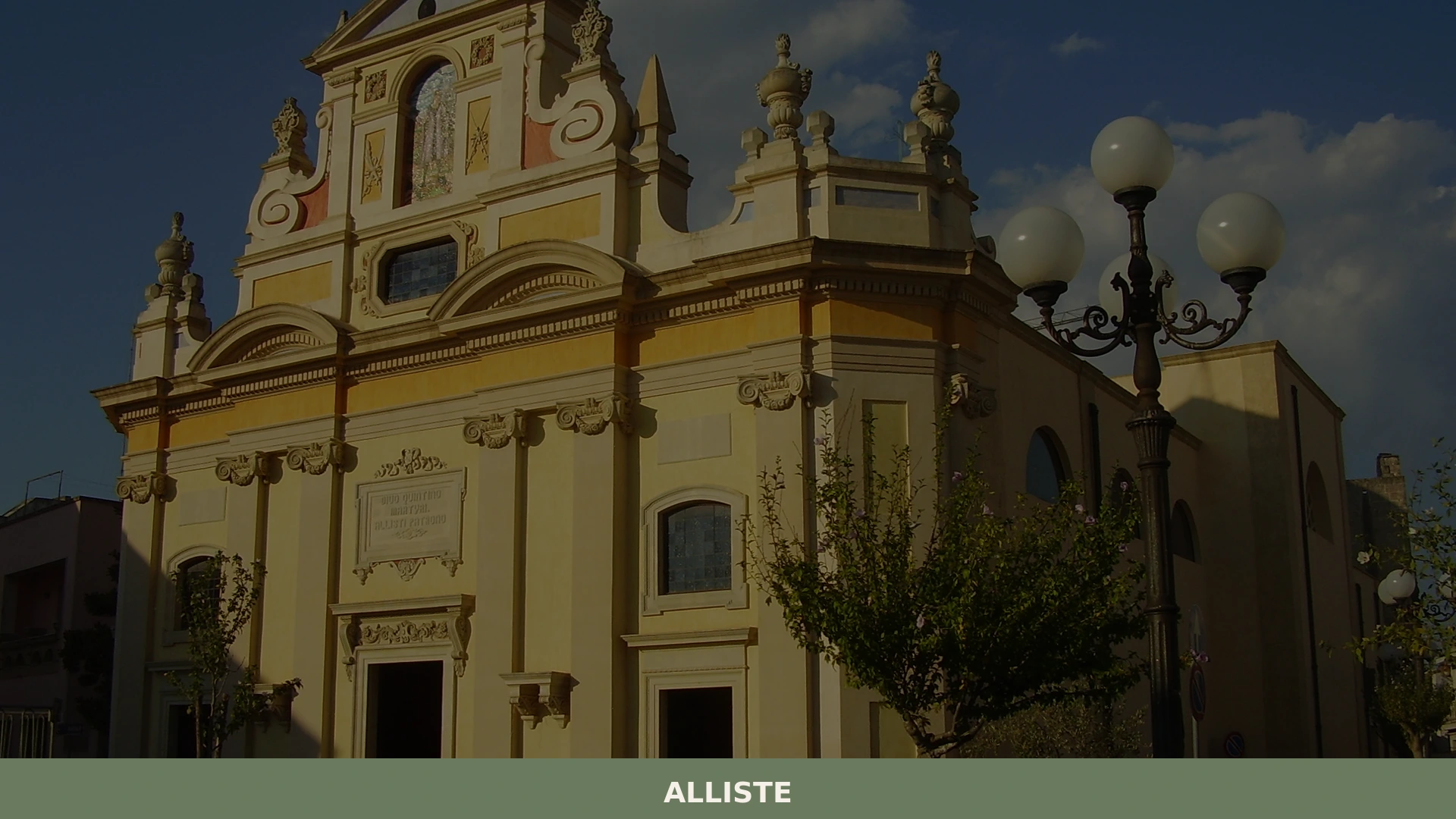
Alliste
 Sea
Sea
what to see ad Alliste: scopri il 6.481 abitanti. Visita chiese e masserie, assapora la cuisine salentina per un viaggio autentico.
Discover Alliste
At 54 meters above sea level, in the heart of Salento, the village of Alliste unfolds like a mosaic of light stone architectures, revealing its identity as an agricultural and rural center. This settlement, inhabited by 6,481 people, is deeply rooted in the tradition and landscape of the Leccese plain, where time seems to be marked by the rhythms of the land.
Its streets and buildings tell a story of simple life connected to agriculture, typical of this southern part of Puglia.
Those wondering what to see in Alliste will find a lowland village offering various discovery perspectives, from its religious and civil architectures to the extensive surrounding countryside.
The most relevant concrete attractions include its historic churches, ancient fortified masserias, and the characteristic inhabited center, which preserves the traditional urban layout.
A trip to Alliste allows you to explore a lesser-known Salento, away from the most beaten paths, but rich in authenticity and testimonies of a past linked to the land. For those seeking an authentic experience, what to see in Alliste is not limited to the village, but extends to its rich territorial context.
History and origins of Alliste
The origins of Alliste, like many centers in Salento, are rooted in a remote past, although specific documents attesting to its precise foundation are lacking. The surrounding area, characterized by a vast plain, was presumably inhabited since ancient times by Messapian populations, as evidenced by archaeological finds scattered throughout the Salento territory.
Subsequently, Romanization led to the creation of communication routes and agricultural settlements, fundamental for the economic development of the region.
During the Middle Ages, the territory of Alliste, like much of Salento, was involved in events that saw alternating Byzantine, Norman, Swabian, and Angevin dominations.
The need for defense against Saracen and Turkish incursions, particularly felt in coastal areas but with repercussions also inland, led to the fortification of inhabited centers and the construction of watchtowers and fortified masserias.
This context of fortifications is also found in other Apulian centers, such as Modugno, where historical architectures tell similar stories of defense and urban development.
The evolution of Alliste over the centuries is closely linked to its agricultural vocation, favored by the fertility of the plain. The cultivation of olive trees and vines has shaped the landscape and the local economy, contributing to the formation of a rural identity that still characterizes the village today.
Visitors to the village today can appreciate how this past has shaped the identity of the place, offering interesting insights to understand what to see in Alliste and its territory.
In the 19th century, with the Unification of Italy, Alliste consolidated its role as a reference center for agricultural activities in the area, maintaining its traditions and its distinctive cultural heritage within the context of Lower Salento.
What to see in Alliste: main attractions
The Historic Center and the Main Square
The heart of Alliste reveals itself in its historic center, an urban fabric where streets intersect among buildings made of Lecce stone, a local limestone material with light and warm tones. The main square serves as the hub of social and religious life, often dominated by the facade of the mother church and surrounded by palaces featuring architectural elements typical of Salento, such as wrought-iron balconies and sculpted portals.
The urban layout, while not presenting visible defensive walls, shows a compact configuration, developed around an original nucleus that expanded over centuries, maintaining an average building height of two or three stories, rarely exceeding 10 meters.
These public spaces, often dating back to a post-medieval urban organization, are the ideal starting point for understanding the structure and history of the village and for beginning to discover what to see in Alliste.
The Churches of the Village
The religious architectures of Alliste constitute a central element of the village’s cultural heritage, reflecting local devotion and art.
The mother church, with its often elaborate Lecce Baroque style facade, represents the main place of worship and often dates back to reconstructions or enlargements from the 17th or 18th century, built upon older previous structures. Inside, one can find polychrome marble altars, paintings, and sculptures that bear witness to the artistic evolution of the region.
Alongside the main church, the village hosts other small chapels or minor churches, scattered throughout the urban fabric or in the surrounding countryside, each with its own architectural characteristics and its own connection to the community, some of which preserve elements from the 15th century. These structures offer insights into the faith and art that have shaped Salento.
The Fortified Masserias
The agricultural landscape surrounding Alliste is dotted with fortified masserias, ancient farmhouses that combined productive and defensive functions.
These imposing constructions, often dating back to the 16th or 17th century, are built with local stone blocks and feature elements such as watchtowers, robust perimeter walls, and internal courtyards.
Originally conceived to protect crops, livestock, and inhabitants from pirate raids, the masserias are today symbols of Salento’s rural history.
Some of them still preserve traces of ancient oil mills or underground cellars, offering a glimpse into the peasant life of yesteryear. Their essential and functional architecture, with wall thicknesses that can exceed a meter, integrates perfectly into the plain, telling the story of the need for security in an exposed territory.
The Agricultural Landscape and the Centuries-Old Olive Groves
The territory of Alliste extends over a fertile plain, dominated by expanses of centuries-old olive groves that represent one of Salento’s main riches. These monumental trees, some of which boast an estimated age of hundreds of years, with trunk circumferences that can reach 5-6 meters, create a landscape of great visual and cultural impact.
Among the olive trees wind ancient dry-stone walls, built with local stones laid without mortar, which delimit properties and bear witness to centuries of peasant labor.
A walk through these fields offers the opportunity to appreciate local biodiversity and understand the importance of agriculture for the economy and identity of the village.
The sight of these majestic trees is one of the most authentic experiences for those visiting the area and wanting to understand what to see in Alliste beyond the urban center.
Proximity to the Ionian Coastline
Although Alliste is a plain village in the hinterland, its position in Lower Salento makes it strategically close to the Ionian Sea, just a few kilometers away. This allows visitors to combine the exploration of the historic center and the countryside with excursions along the Salento coast, characterized by rocky stretches and sandy coves.
The nearest seaside resorts, reachable in about 10-15 minutes by car, offer crystal-clear waters and tourist services, ideal for those seeking relaxation or water activities.
The Ionian coast in this area boasts a line of almost 20 kilometers of accessible beaches and cliffs, from Alliste’s own marinas (such as Capilungo and Posto Rosso) to those of neighboring municipalities.
This proximity to the sea enriches the tourist offering, making Alliste an interesting base for discovering both the hinterland and the coastal beauties, completing the experience of what to see in Alliste.
Typical Cuisine and Products of Alliste
The cuisine of Alliste, like that of all Salento, is deeply rooted in both farming and maritime traditions, characterized by robust flavors and genuine ingredients from the land and sea. Extra virgin olive oil, produced from the olive groves surrounding the village, is the fundamental element of every preparation.
The local gastronomy favors seasonal vegetables, legumes, grains, and fresh fish, emphasizing the simplicity and quality of the raw materials.
The influence of various historical dominations has contributed to a varied culinary heritage, where recipes are handed down from generation to generation, keeping the authenticity of the flavors alive.
Among the dishes that can be tasted in the area, homemade pasta preparations stand out, such as orecchiette seasoned with turnip greens or meat sauces, and baked macaroni.
There are also legume soups, like the classic Salento dish broad beans and chicory, and fish-based dishes, particularly bluefish, cooked stewed or grilled. Vegetables, often harvested from the garden, are featured in omelets, purees, and side dishes. The homemade bread, baked in a wood-fired oven, accompanies every meal and is often enriched with fresh tomatoes and a drizzle of oil.
A similar attention to the genuineness of products is found also in Orsara di Puglia, known for its rich enogastronomic tradition linked to local productions.
As for confectionery products, the Salento tradition offers various specialties related to holidays.
Among these, you can find almond and honey-based sweets, such as mustazzoli, and pasticciotti, filled with custard, which are iconic of the local pastry. Even though there are no specific data on festivals or weekly markets exclusively dedicated to certified products in Alliste, it is common to find the typical flavors of Salento gastronomy in the village’s trattorias and bakeries, especially during holidays or summer events that enliven the area.
Festivals, Events, and Traditions of Alliste
Life in Alliste is marked by traditions and celebrations deeply rooted in the history and faith of the community.
The patronal feast in honor of Saint Quintinus of Vermand represents the most significant event of the year, celebrated with devotion every October 31st.
During this day, the village comes alive with a solemn procession that carries the statue of the saint through the main streets, accompanied by a marching band and the participation of the faithful. The streets are festively illuminated with artistic lights, creating an evocative atmosphere that culminates in evening fireworks displays.
It is a moment of strong social gathering, reinforcing the sense of belonging and continuity of local traditions.
In addition to the celebration of the patron saint, Alliste’s calendar and that of neighboring municipalities are punctuated by other events and festivals, especially during the summer months. These occasions are dedicated to the promotion of local typical products and the rediscovery of ancient customs. There are often evenings of pizzica and Salento folk music, which attract visitors from across the region.
Although specific details on annual festivals with fixed dates for Alliste are not provided, the Salento summer is notoriously rich in cultural and gastronomic events that offer a further opportunity to discover the traditions of the area.
When to visit Alliste and how to get there
The best period to visit Alliste and Salento in general extends from late spring to early autumn. The months of May, June, and September offer a mild and pleasant climate, ideal for exploring the village and the surrounding countryside without the tourist crowds typical of high season.
For those planning a trip and wondering about what to see in Alliste, these months allow you to fully enjoy the cultural and natural attractions, with average temperatures ranging between 20°C and 28°C.
July and August, while being the hottest months with temperatures that can exceed 30°C, are perfect for those who wish to combine cultural visits with days dedicated to the sea, taking advantage of the proximity to the Ionian coast.
During autumn and winter, the village takes on a quieter atmosphere, suitable for those seeking the peace and beauty of the rural landscape.
To reach Alliste, located approximately 50 kilometers south of Lecce, several transport options can be considered. Those arriving by car from the north can take the A14 Adriatica motorway to the Bari Nord exit, then continue on the SS16 and subsequently on the SS101 towards Gallipoli, then following signs for Alliste. The nearest train station is Lecce, the terminus of the State Railways, from which local trains or buses can be taken to Alliste.
To check train timetables and plan your journey, you can visit the official Trenitalia website.
The most convenient airport to reach Salento is Brindisi Salento Airport (BDS), approximately 90 kilometers from Alliste.
From the airport, it is possible to rent a car or use shuttle and bus services to Lecce, and from there continue to the village. The estimated driving time from the airport to Alliste is about 1 hour and 15 minutes.
For more detailed information and to consult the services offered by the municipality, please visit the official website of the Municipality of Alliste.
| Starting Point | Distance | Estimated Time |
|---|---|---|
| Lecce (by car) | 50 km | 45 min |
| Brindisi Airport (by car) | 90 km | 1 h 15 min |
| Bari (by car) | 190 km | 2 h 15 min |
For those who wish to explore the region further, another interesting destination is Apricena, known for its stone quarries and the resulting architecture, offering a contrast to the typical Lecce stone architectures of Alliste. Those visiting Alliste can also extend their itinerary by exploring other Apulian gems. For example, continuing towards the Adriatic coast, you will encounter Mattinata, a village in the heart of Gargano that offers spectacular coastal landscapes and a different but equally fascinating natural environment.
Frequently asked questions about Alliste
What is the best time to visit Alliste?
The ideal time to visit Alliste is during spring (April-May) or autumn (September-October) when the weather is pleasantly mild, perfect for exploring the historic center, the countryside, and the centuries-old olive groves. Summers (June-August) are warm, making it suitable for combining cultural visits with relaxing days at the nearby Ionian coast, just a 10-15 minute drive away. For a unique cultural experience, plan your visit around October 31st to witness the patronal feast in honor of Saint Quintinus of Vermand, the most significant annual event for the community, offering a glimpse into local traditions.
What to see in Alliste? Main monuments and landmarks
In Alliste, explore the charming historic center with its light Lecce stone architectures, where the main square and mother church stand out, surrounded by palaces featuring wrought-iron balconies. Discover the various religious architectures, including the mother church, often in Lecce Baroque style, and smaller chapels, some dating back to the 15th century. Venture into the surrounding agricultural landscape to admire the ancient fortified masserias from the 16th-17th centuries, with their watchtowers and thick walls, and the monumental centuries-old olive groves that define the plain.
What are the main natural or scenic attractions of Alliste?
Alliste's primary natural attraction is its vast agricultural landscape, dominated by magnificent centuries-old olive groves. These monumental trees, some hundreds of years old, are interspersed with ancient dry-stone walls, creating a landscape of significant visual and cultural impact, ideal for serene walks. Furthermore, the village benefits from its strategic proximity to the Ionian Coastline, just a few kilometers away. Visitors can easily reach nearby marinas like Capilungo and Posto Rosso in 10-15 minutes, offering beautiful rocky stretches, sandy coves, and crystal-clear waters for seaside relaxation and activities.
Where to take the best photos in Alliste?
For memorable photos in Alliste, start in the historic center, capturing the picturesque streets and buildings crafted from light Lecce stone, especially around the main square and the façade of the mother church. The surrounding agricultural landscape offers stunning opportunities with its majestic centuries-old olive groves and ancient dry-stone walls, particularly at sunrise or sunset. Don't miss the imposing fortified masserias, which provide a rustic and historical backdrop. Given Alliste's proximity, a short drive to the Ionian coast (Capilungo, Posto Rosso) will reward you with scenic coastal views and crystal-clear sea shots.
Are there museums, churches or historic buildings to visit in Alliste?
Yes, Alliste offers several historical and religious sites. The village's main religious edifice is the mother church, often featuring an elaborate Lecce Baroque facade, built upon older structures from the 17th or 18th century. Additionally, smaller chapels and minor churches, some preserving elements from the 15th century, are scattered throughout the town and countryside. As for historic buildings, visitors can admire the traditional palaces within the historic center, characterized by Lecce stone, wrought-iron balconies, and sculpted portals. The ancient fortified masserias, dating back to the 16th or 17th century, are also significant historical structures in the surrounding rural area.
What can you do in Alliste? Activities and experiences
In Alliste, you can immerse yourself in an authentic Salento experience, away from crowded tourist paths. Explore the charming historic center, admiring its traditional architecture and main square. Take leisurely walks through the surrounding agricultural landscape, discovering centuries-old olive groves and ancient fortified masserias. Indulge in the rich local gastronomy by tasting traditional dishes in village trattorias and bakeries. Due to its proximity to the Ionian Sea, you can easily combine your visit with excursions to nearby coastal resorts like Capilungo and Posto Rosso for swimming, relaxation, and water activities, all within a 10-15 minute drive.
Who is Alliste suitable for? Families, couples, hikers, solo travelers?
Alliste is ideal for travelers seeking an authentic Salento experience, away from mass tourism, rich in rural charm and tradition. It's perfectly suited for couples and families looking for a tranquil base to explore local culture, history, and genuine cuisine. Hikers and nature lovers will appreciate walks through the centuries-old olive groves and dry-stone wall landscapes. Its strategic location also makes it excellent for those who wish to combine cultural immersion in the hinterland with easy access (10-15 minutes drive) to the beautiful Ionian coast for beach days and relaxation.
What to eat in Alliste? Local products and specialties
Alliste's cuisine, deeply rooted in Salento's farming and maritime traditions, features genuine local ingredients. Essential is the extra virgin olive oil, produced from local olive groves. Specialties include homemade pasta like orecchiette with turnip greens or meat sauces, and baked macaroni. Don't miss legume soups such as the classic broad beans and chicory, or fresh bluefish dishes, often stewed or grilled. Homemade bread from wood-fired ovens is a staple. For sweets, indulge in mustazzoli, made with almonds and honey, and pasticciotti, iconic custard-filled pastries, commonly found in local trattorias and bakeries.
📷 Photo Gallery — Alliste
Nearby Villages near Alliste
In Apulia More villages to discover
Zapponeta
Sea
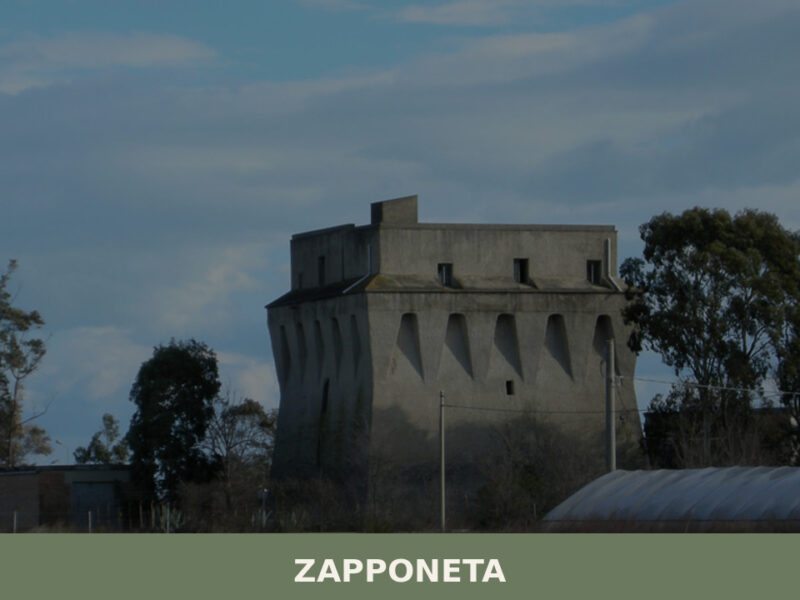
A flat Adriatic village at two metres above sea level, Zapponeta sits where the Tavoliere plain meets the coast. Salt, wind, and wheat define this quiet corner of Foggia province.
Accadia
 Mountain
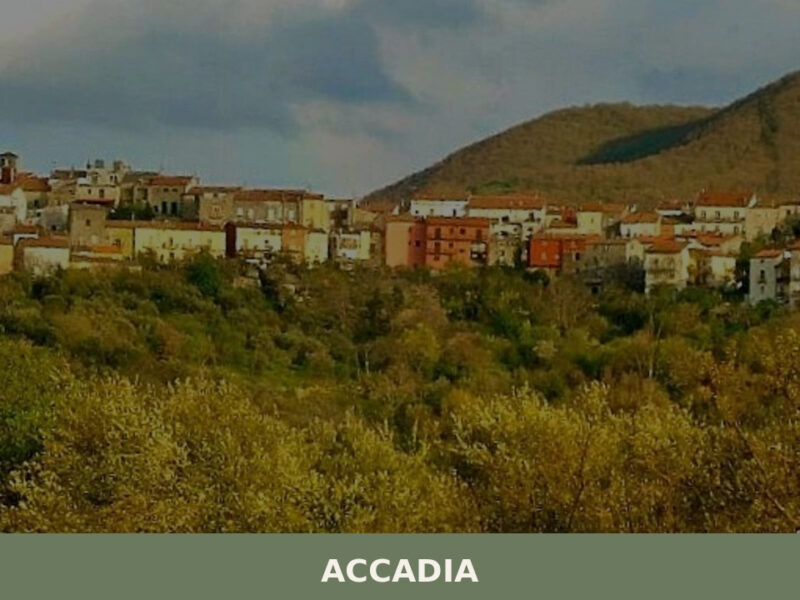
Perched at 650 metres above sea level on the western edge of Puglia’s Subappennino Dauno, the small village of Accadia feels like a secret whispered between mountains and sky. Home to just over 2,200 inhabitants, this ancient hilltop settlement in the province of Foggia rewards visitors with crumbling medieval ruins, sweeping panoramas, and a fierce […]
Serracapriola
Sea
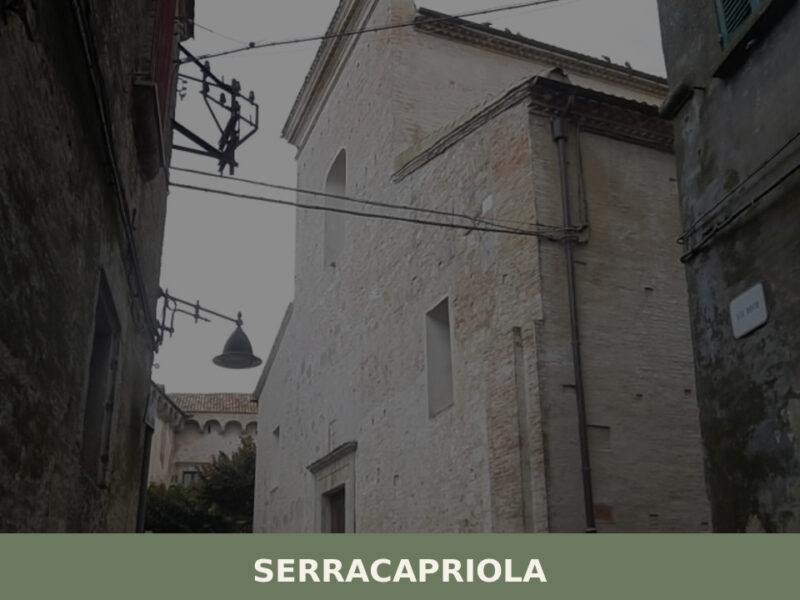
A hilltop village of 3,656 people overlooking the Fortore valley in Foggia province. Serracapriola offers a Norman castle, medieval alleys, and honest Puglian cooking far from the crowds.
Locorotondo
 Hills
Hills
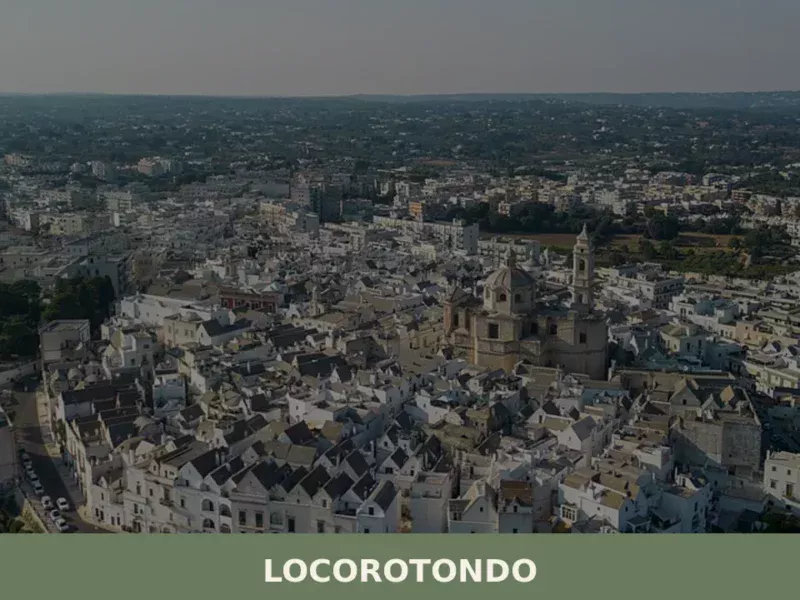
The toponym Locorotondo, documented as early as the 12th century as “Luogo Rotondo” (Round Place), derives from the concentric configuration of its historic center, an urban feature that still distinguishes it within the Itria Valley landscape. Located 410 meters above sea level, this municipality in the province of Bari has 14,258 inhabitants and presents a […]
Guagnano
 Plains
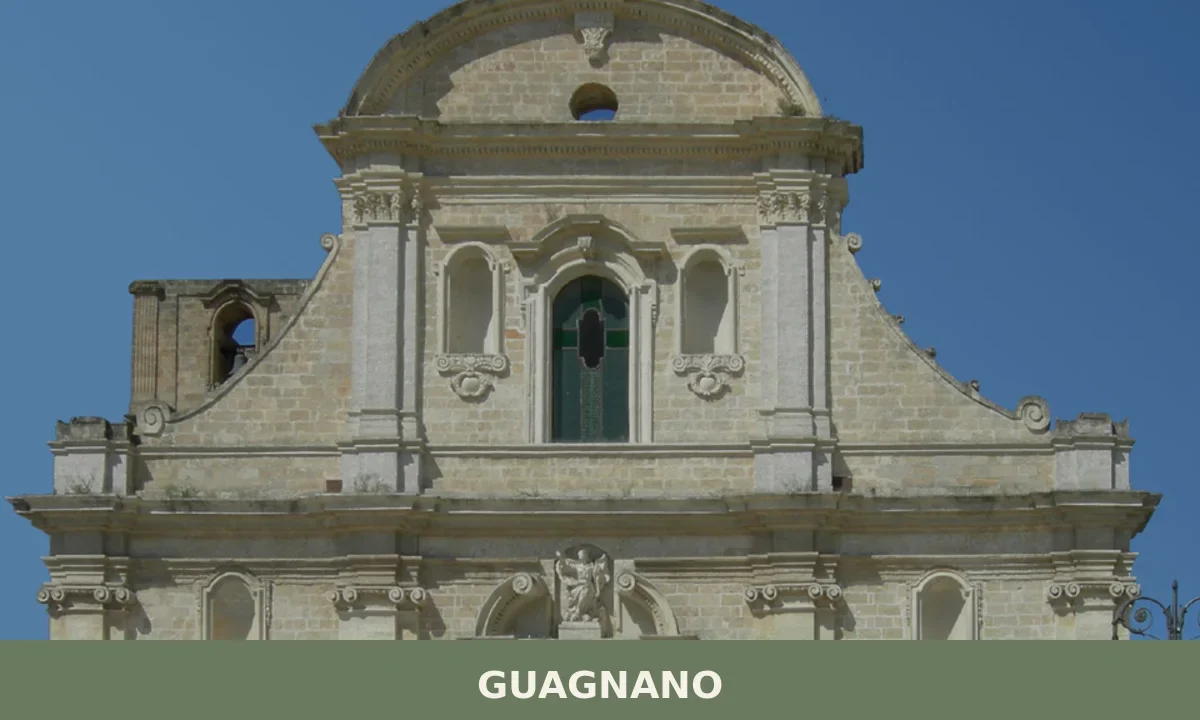
A wine-producing comune of 5,306 residents in Lecce province. Guagnano draws visitors for its Salice Salentino DOC vineyards, 18th-century Baroque churches and scattered masserie (fortified farmhouses).
Giovinazzo
Sea
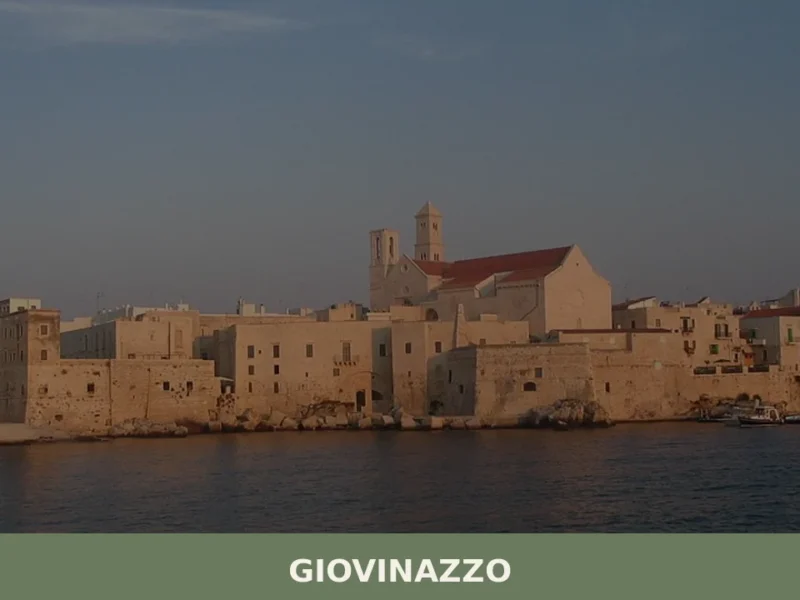
The walls of Giovinazzo’s old port form an irregular semicircle jutting out into the Adriatic Sea, visible from the SS16 state road that runs along the Bari coastline. This small city of 19,366 inhabitants, sitting at just 7 metres above sea level, retains a compact medieval historic centre, still partly surrounded by the original city […]
Barletta
Sea
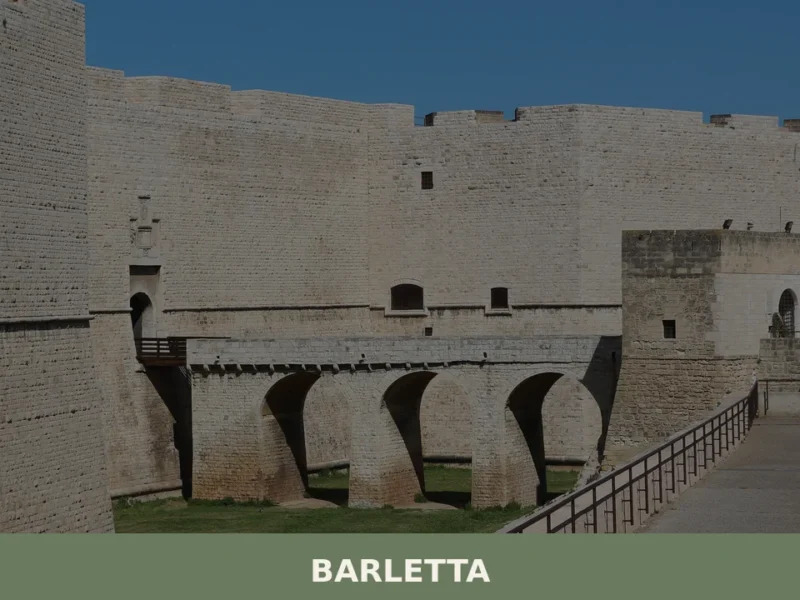
What to see in Barletta, Puglia, Italy: the Colossus, a Norman castle, and the 1503 Disfida. Population 94,700. Discover top attractions and how to get there.
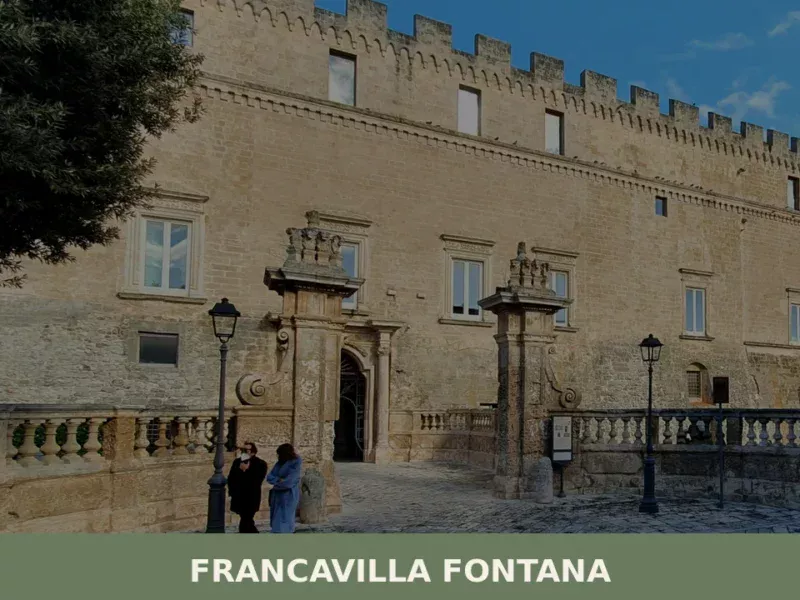
Francavilla Fontana
Plains
Discover what to see in Francavilla Fontana, Puglia: Baroque palaces, the medieval basilica, local food, travel tips and how to get there.
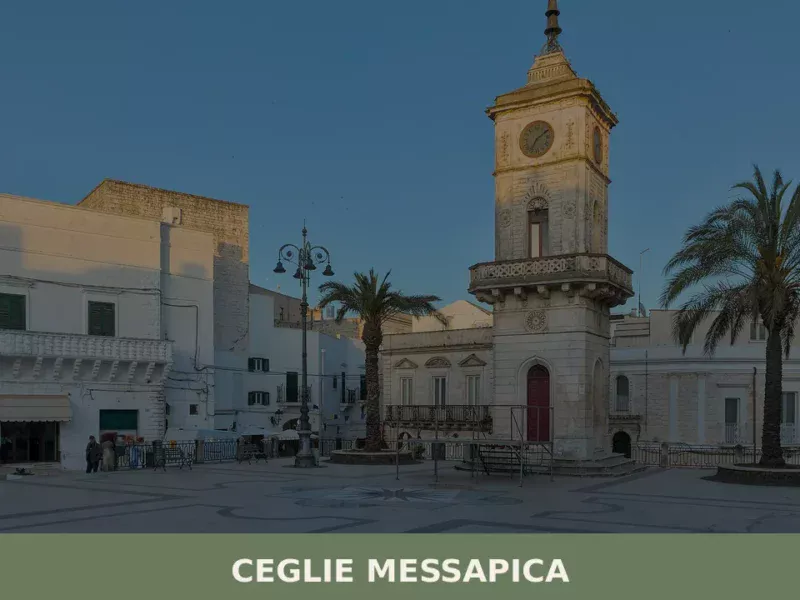
Ceglie Messapica
Sea
Discover what to see in Ceglie Messapica: the Ducal Castle, medieval chianche streets, ancient olive groves, karst caves and Puglia's finest local food.
Motta Montecorvino
Mountain
A 651-inhabitant hilltop village in Puglia's Daunia hills, Motta Montecorvino rewards slow visitors with medieval lanes, long views over the Tavoliere plain, and robust mountain cooking.




🏡 Know Alliste better than we do?
If you’re a local or have been there, your knowledge matters: add what’s missing or fix a detail on this page.