


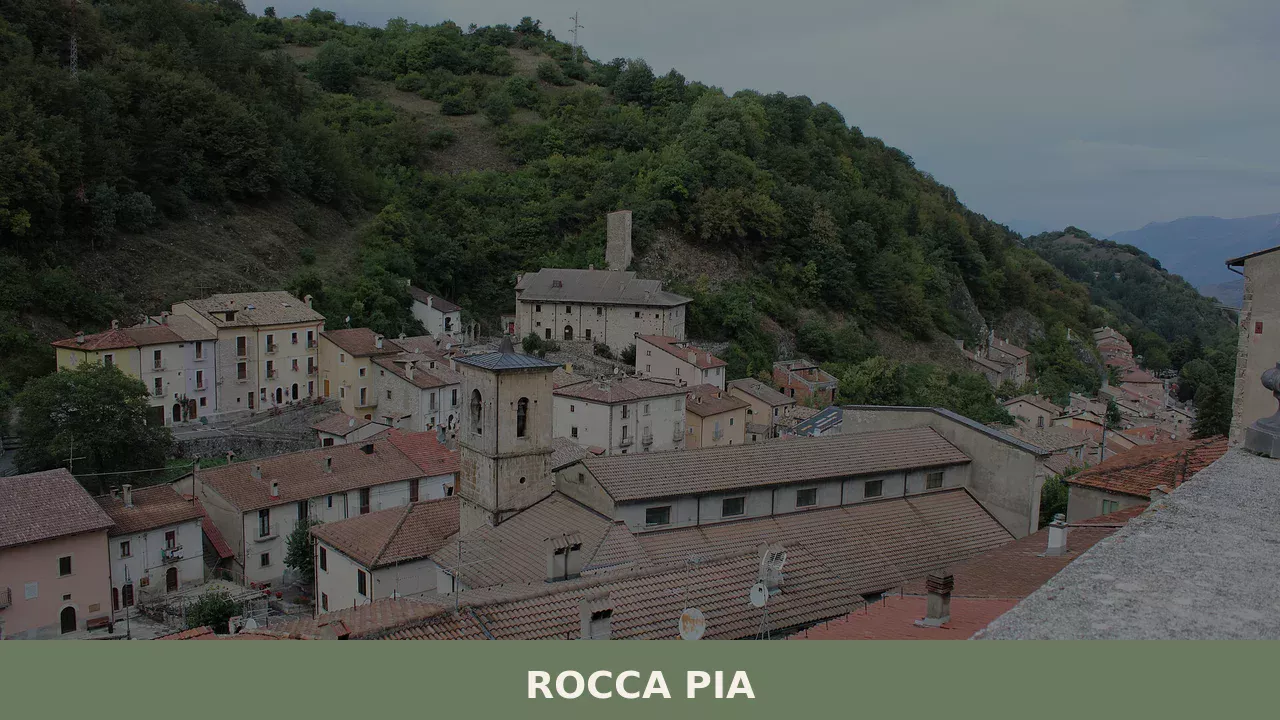
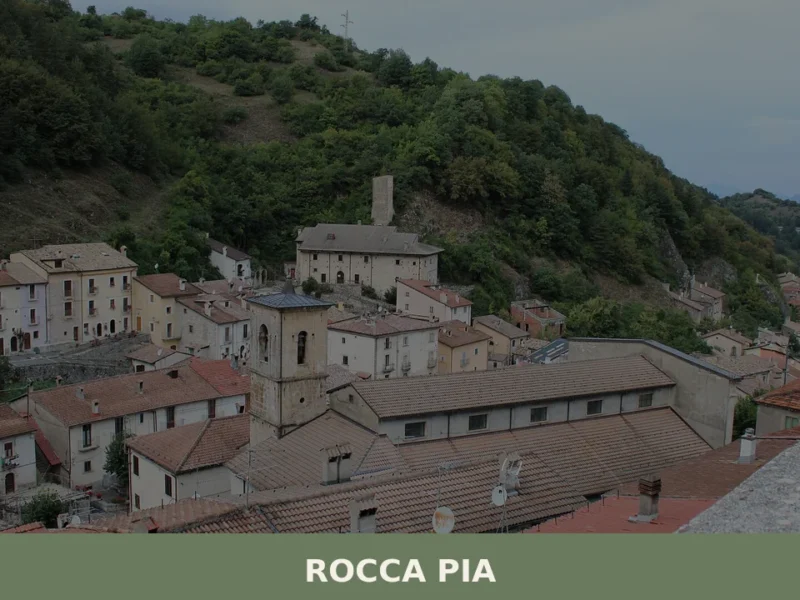
Rocca Pia
 Mountain
what to see in rocca pia, Italy: Explore this Abruzzo comune near L’Aquila. Discover its territory extending to the Cinquemiglia Plain. Read our guide.
Discover Rocca Pia
The landscape around Rocca Pia unfolds towards the broad expanse of the Cinquemiglia Plain, a significant geographical feature in the Abruzzo region of Italy. This small comune, situated in the Province of L’Aquila, defines a historical and administrative presence within a distinctive mountainous environment.
The village serves as a quiet marker in the Abruzzese terrain, characterized by its natural surroundings and documented historical boundaries.
For those wondering what to see in rocca pia, visitors can explore the geographical context of this comune, which is part of the Province of L’Aquila.
Its territory, documented as extending up to the Cinquemiglia Plain, offers a tangible sense of its historical reach and natural setting.
The Rocca Pia highlights include understanding its regional importance within Abruzzo and appreciating its position in the wider Italian landscape, a region approximately 680 m (2,231 ft) above sea level.
History of Rocca Pia
Rocca Pia is formally recognized as a comune, an administrative division fundamental to the Italian governmental structure, located within the Province of L’Aquila. This province, situated in the heart of the Abruzzo region, is characterized by its mountainous terrain and rich historical legacy.
While the exact etymology of ‘Rocca Pia’ and its founding date are not detailed in the provided sources, its existence as a comune implies a historical continuity of settlement and local governance over many centuries, a common characteristic of villages throughout central Italy, much like Bassano in Teverina in Lazio. Understanding what to see in rocca pia involves appreciating its regional context.
A significant geographical aspect of Rocca Pia is its territorial reach, extending up to the level of the Cinquemiglia Plain.
This vast, high-altitude plain, located in the central Apennines, has historically served as a crucial transit point and grazing area for livestock, influencing the economic and social life of surrounding communities. The connection to the Cinquemiglia Plain suggests that Rocca Pia’s development was intertwined with the broader regional movements and activities, even if specific historical events for the comune itself are not explicitly documented.
This historical interaction with its environment highlights its strategic position.
The historical trajectory of Rocca Pia, while not detailed with specific dates or figures in the provided information, can be understood within the context of the Abruzzo region’s enduring character. From its potential ancient roots to its modern-day administrative role, Rocca Pia has maintained its identity as a distinct community. Its continued existence within the Province of L’Aquila underscores the resilience and historical depth of Italy’s smaller towns, preserving a unique local heritage amidst the changing tides of history.
For those interested in the historical fabric of Abruzzo, Rocca Pia offers a point of study.
What to see in Rocca Pia, Abruzzo: top attractions
The Cinquemiglia Plain Territory
The defining geographical feature associated with Rocca Pia is its historical territory, which extended up to the renowned Cinquemiglia Plain. This vast plateau, located at an elevation averaging around 1,250 m (4,101 ft), offers expansive views of the surrounding Apennine landscape. Visitors can appreciate the scale of this plain, which has historically been a significant area for pastoral activities and a natural corridor through the mountains. This understanding is crucial for anyone researching what to see in rocca pia and its unique identity.
The Comune of Rocca Pia
Rocca Pia functions as a comune, an administrative and residential center within the Italian system.
As a town, it embodies the typical characteristics of small Italian municipalities, often featuring a central piazza, a main church, and residential buildings clustered together. Exploring the layout of the comune itself allows visitors to observe the daily life and local architecture that define such settlements in the Abruzzo region. The modest scale of the town ensures a focused experience for those interested in local governance and community structure, a model seen across Italy for centuries.
Location in the Province of L’Aquila
The location of Rocca Pia within the Province of L’Aquila positions it within a region known for its dramatic mountain scenery and rich cultural heritage.
L’Aquila, the provincial capital, is approximately 70 km (43.5 mi) north-west, providing a broader regional context. This area is characterized by the Apennine peaks, offering a backdrop of natural beauty that shapes the local environment. Visitors can consider Rocca Pia as a point of reference within this larger provincial tapestry, understanding its place in a region of significant historical depth, similar to how Vicenza serves as a cultural hub in Veneto.
Connection to the Abruzzo Region
Rocca Pia is an integral part of the Abruzzo region, an area of Italy celebrated for its national parks, rugged coastline, and distinct culinary traditions.
The region’s diverse geography, ranging from high mountains to Adriatic shores, offers a wide array of experiences for travelers. While specific regional attractions within Rocca Pia itself are not detailed, its inclusion in Abruzzo allows visitors to connect with the broader regional identity.
The regional character is evident in the landscape and the general atmosphere of its towns, including Rocca Pia, which has been part of this region for centuries.
The Town’s Character
As a town, Rocca Pia presents an opportunity to experience a typical Italian village environment away from larger urban centers. Such towns often feature narrow streets, traditional stone buildings, and a slower pace of life, reflecting centuries of local development. Observing the general architecture and street plan of Rocca Pia can provide insights into the traditional building practices of the Abruzzo region.
This allows visitors to appreciate the unadorned character of a small Italian community, focused on its daily rhythms and local interactions, a common thread in many Italian villages.
Local food and typical products of Rocca Pia
The provided sources for Rocca Pia do not detail specific local gastronomic traditions, historical culinary influences, or unique dishes.
Therefore, any discussion of local food must be placed within the broader context of the Abruzzo region’s renowned cuisine. Abruzzo is generally known for its hearty, mountain-influenced fare, often featuring robust ingredients like lamb, sheep’s cheese, and various types of pasta. This understanding is key when considering what to see in rocca pia beyond its geographical definition.
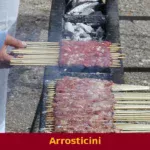
Without specific information on Rocca Pia’s unique dishes, it is not possible to name particular recipes or describe their ingredients and traditional techniques. However, visitors to the area surrounding Rocca Pia might encounter typical Abruzzese specialties such as Arrosticini, skewers of lamb meat grilled over charcoal, or various pasta dishes like Maccheroni alla Chitarra, often served with rich meat sauces.
These regional staples offer a taste of the broader culinary identity of Abruzzo, reflecting centuries of local farming and cooking methods.
The available authoritative sources do not list any specific certified products directly associated with Rocca Pia, such as DOP (Denominazione di Origine Protetta) or IGP (Indicazione Geografica Protetta) designations.
Therefore, no specific product names with their corresponding municipalities can be provided. Generally, Abruzzo is home to several certified products, including certain olive oils and cheeses, but none are directly linked to Rocca Pia in the provided data, meaning a detailed description is not possible for this specific comune.
Information regarding specific food fairs, local markets, or designated places to purchase typical products within Rocca Pia or its immediate vicinity is not available in the provided sources. Visitors interested in regional products would typically need to explore larger towns or regional markets in the Province of L’Aquila, where such events and sales points are more commonly documented.
The absence of specific data for Rocca Pia means a detailed guide on where to buy local specialties cannot be offered, necessitating broader regional exploration.
Festivals, events and traditions of Rocca Pia
The provided sources do not contain any information regarding specific festivals, events, or traditional celebrations held in Rocca Pia, including details about a patron saint festival or its associated dates and rituals.
Therefore, it is not possible to describe any unique local processions, music, or fireworks that might characterize such events. The absence of this data means we cannot provide a specific calendar of local festivities for Rocca Pia, leaving visitors to infer regional traditions.
Similarly, there is no information available about documented food fairs, specific traditional markets, or other cultural practices unique to Rocca Pia. While many Italian villages hold annual events to celebrate local produce or historical customs, the details for Rocca Pia are not specified in the given authoritative sources.
Visitors seeking such experiences would need to research events in larger towns within the Province of L’Aquila or the broader Abruzzo region, where these traditions are more frequently documented and accessible.
When to visit Rocca Pia, Italy and how to get there
Determining the absolute best time to visit Rocca Pia, Italy, without specific local climate data, typically aligns with the general patterns of the Abruzzo region.
The summer months, from June to September, usually offer pleasant temperatures for exploring, though mountain areas can still be cool at higher altitudes. Spring (April-May) and autumn (October) provide milder weather and fewer crowds, making them ideal for those who prefer a quieter experience. For those specifically asking what to see in rocca pia during their visit, the milder seasons offer comfortable conditions for general exploration. As a comune in a mountainous province, the terrain around Rocca Pia may present uneven paths, which is common in many historic Italian villages, potentially requiring comfortable walking shoes.
Reaching Rocca Pia, a comune in the Province of L’Aquila, Italy, primarily involves road travel due to its location.
The nearest major motorway is likely the A25 or A24, which traverse the Abruzzo region. From a major city like Rome, Rocca Pia is approximately 150 km (93.2 mi) east, a drive that typically takes around 1 hour and 45 minutes to 2 hours, making it feasible for a day trip. The closest significant train station would be in Sulmona or L’Aquila, from which onward travel by local bus or taxi would be necessary, as Rocca Pia itself does not have a train station.
For international visitors, the nearest major airport is Rome Fiumicino Airport (FCO), approximately 170 km (105.6 mi) away, with a driving time of about 2 hours, a travel pattern not unlike reaching Belmonte Calabro in Calabria from its regional hubs.
For international visitors planning a trip to Rocca Pia, it is advisable to carry some Euros in cash, as smaller establishments in Italian villages may not always accept credit cards.
English may also be limited in local shops and restaurants, so having a few basic Italian phrases can enhance the experience.
Planning transportation in advance, especially for local connections from train stations, is also recommended to ensure a smooth journey to this Abruzzese comune, allowing for a more relaxed exploration of the area.
Visitors exploring Rocca Pia and the Abruzzo region may also find interest in other Italian villages that share a similar focus on local identity and historical continuity, such as Castelluccio dei Sauri in Puglia, which also offers a glimpse into regional traditions and a comparable sense of community character.
Frequently asked questions about Rocca Pia
What is the best time to visit Rocca Pia?
The best time to visit Rocca Pia is between late spring and early autumn. June through September offers the most accessible conditions for exploring this mountain village at 1,050 m altitude, with warm days and cool evenings. A particularly good reason to visit in summer is the feast of the patron saint San Giuseppe, celebrated on the second Sunday of August, which brings local traditions and community spirit to the village. Spring (April–May) and September offer fewer visitors and pleasant temperatures for walking in the surrounding Cinquemiglia Plain area.
What to see in Rocca Pia? Main monuments and landmarks
Rocca Pia is a small, authentic mountain village in the Province of L'Aquila where the main experience is the village itself: its traditional stone architecture, narrow streets, and central gathering spaces typical of historic Abruzzese comuni. The surrounding territory extending toward the Cinquemiglia Plain — a vast high-altitude plateau at around 1,250 m — is the defining landmark of the area. The plain offers sweeping Apennine panoramas that have shaped the village's identity for centuries and remain its most striking geographical attraction.
What are the main natural or scenic attractions of Rocca Pia?
The primary natural attraction linked to Rocca Pia is the Cinquemiglia Plain (Piana delle Cinquemiglia), a broad high-altitude plateau in the central Apennines historically used for transhumance and pastoral activities. Situated at approximately 1,250 m above sea level, it offers expansive open landscapes and mountain views. The surrounding Apennine terrain of the Province of L'Aquila, close to the Abruzzo, Lazio and Molise National Park area, makes this zone appealing for those seeking unspoiled mountain scenery in the heart of central Italy.
Who is Rocca Pia suitable for? Families, couples, hikers, solo travelers?
Rocca Pia is best suited to travelers seeking an authentic, off-the-beaten-path Italian mountain experience. With just 172 inhabitants at 1,050 m altitude, it appeals most to hikers and nature lovers drawn to the Cinquemiglia Plain and Apennine landscapes, as well as slow travelers and cultural explorers interested in the real fabric of small Italian village life. Couples looking for quiet mountain retreats and solo travelers seeking genuine Abruzzese atmosphere away from tourist crowds will find Rocca Pia particularly rewarding.
What to eat in Rocca Pia? Local products and specialties
Rocca Pia sits within the Abruzzo mountain food tradition, where lamb is central to the local diet. The most iconic regional dish you are likely to encounter in this area is Arrosticini — small skewers of sheep meat grilled over charcoal — a staple of the Province of L'Aquila's pastoral culture. Maccheroni alla Chitarra, a fresh egg pasta cut with a guitar-string tool and served with meat-based sauces, is another Abruzzese classic. Local sheep's cheeses and cured meats from the surrounding mountain communities also reflect the area's centuries-old shepherding heritage.
📷 Photo Gallery — Rocca Pia
Nearby Villages near Rocca Pia
In Abruzzo More villages to discover
Prata d’Ansidonia
Mountain
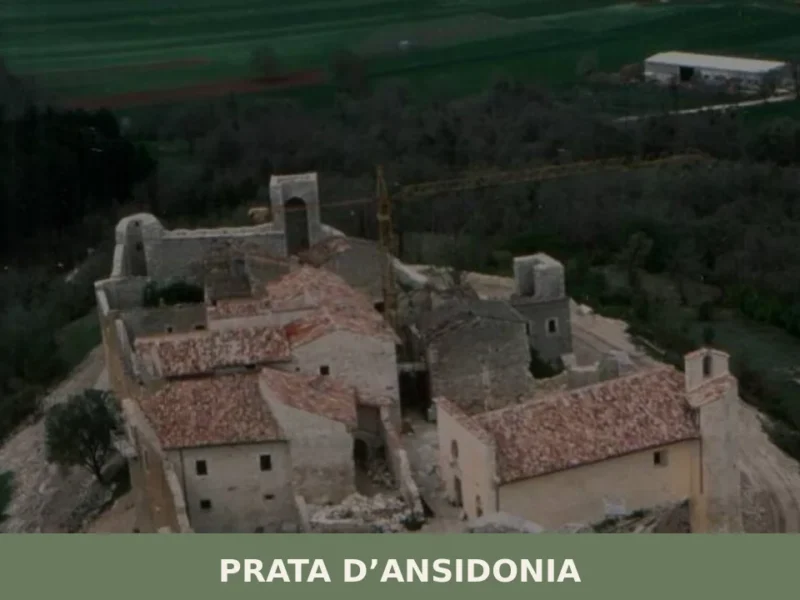
What to see in Prata d’Ansidonia? Discover the 5 must-see historic attractions of this village in Abruzzo. Plan your visit and immerse yourself in local history.

Cappelle sul Tavo
 Hills
Hills
What to see in Cappelle sul Tavo, Abruzzo, Italy: discover 5 top attractions, local food traditions and how to get there. Explore this Pescara province comune.
Teramo
Hills
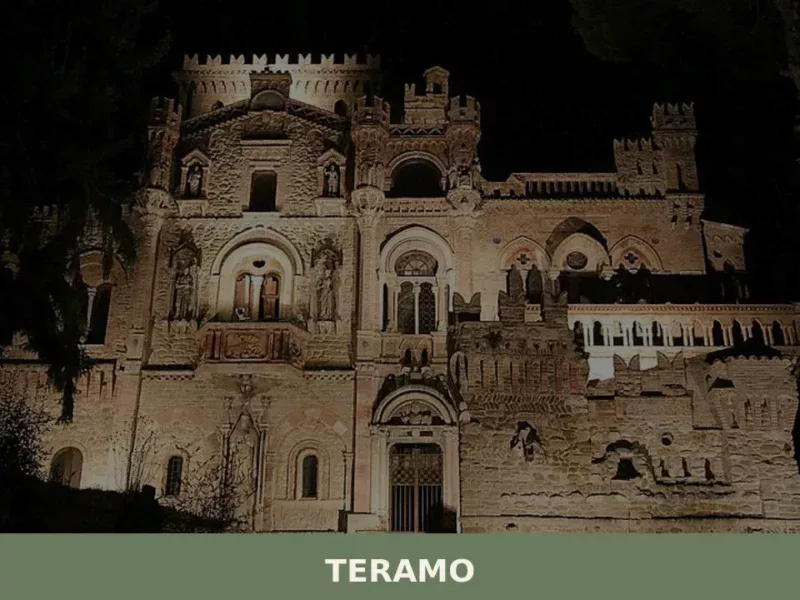
What to see in Teramo, Abruzzo, Italy: discover a Roman theatre from 30 BC, a 1158 cathedral, the Interamnia World Cup and 54,377-strong city. Complete guide.
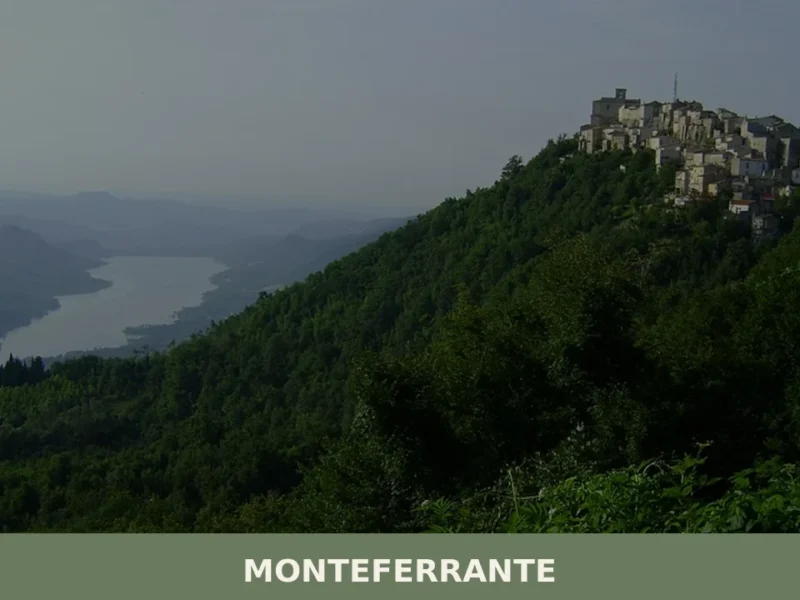
Monteferrante
Mountain
What to see in Monteferrante: discover the 5 main attractions of this mountain village, from the Church of St. John the Baptist to natural trails. Plan your trip!
Campli
Hills
What to see in Campli, Abruzzo, Italy: explore the Scala Santa, the Farnese archaeological museum, and the August porchetta festival in this village of 7,167 inhabitants. Discover it all.
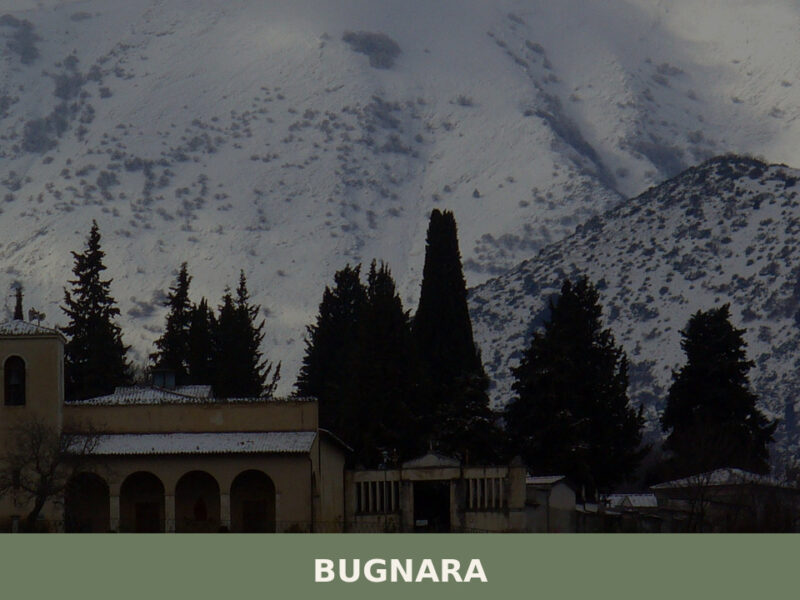
Bugnara
Hills
Morning light falls across the Sagittario valley in long, amber strokes, catching the limestone walls of a settlement that has watched over this corridor of central Abruzzo for the better part of a millennium. Bells from a church tower mark the hour, their sound flattening against the surrounding slopes before fading. The streets are narrow, […]
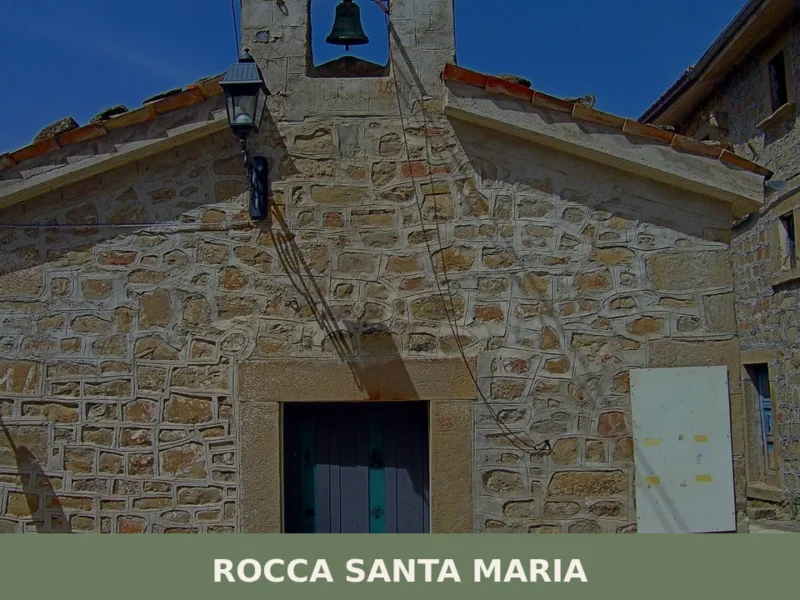
Rocca Santa Maria
Mountain
what to see in rocca santa maria, Italy. Explore a village of 560 inhabitants within Gran Sasso e Monti della Laga National Park. Discover its mountain frazioni and natural beauty.
Schiavi di Abruzzo
Mountain
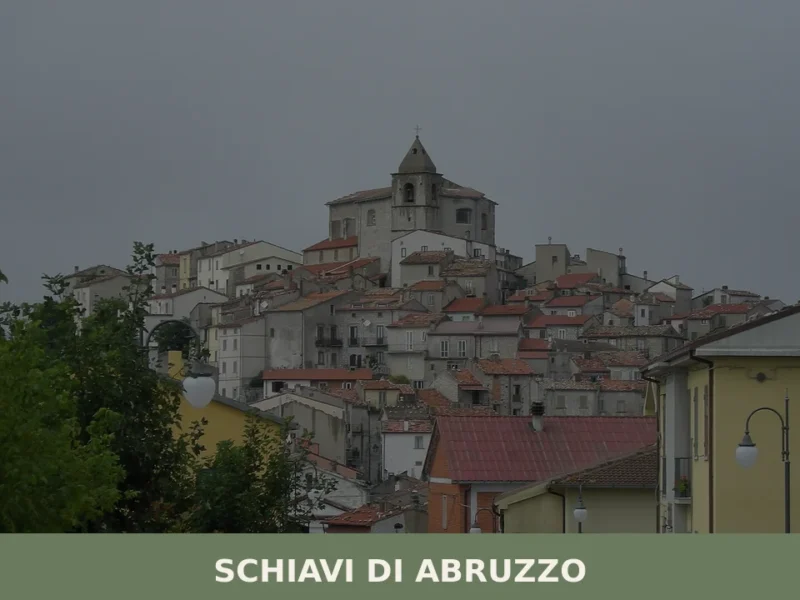
What to see in Schiavi di Abruzzo, Italy: Italic temples from 3 BC, a hilltop at 1,170 m, and a local dialect. Discover the complete travel guide for Abruzzo.
Rocca di Mezzo
Mountain
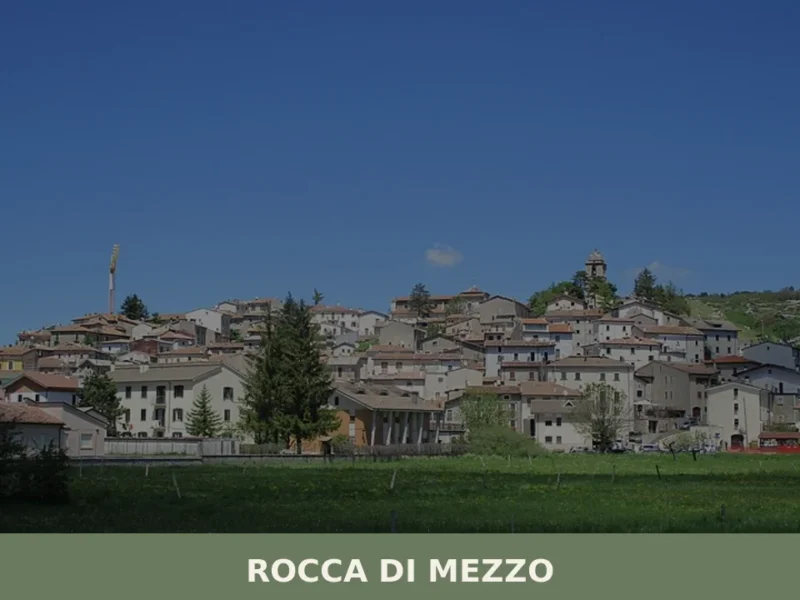
what to see in rocca di mezzo, Italy. Explore the administrative seat of the Sirente-Velino Regional Park in this L'Aquila comune with 1,499 inhabitants. Discover its role.
Pennadomo
Hills
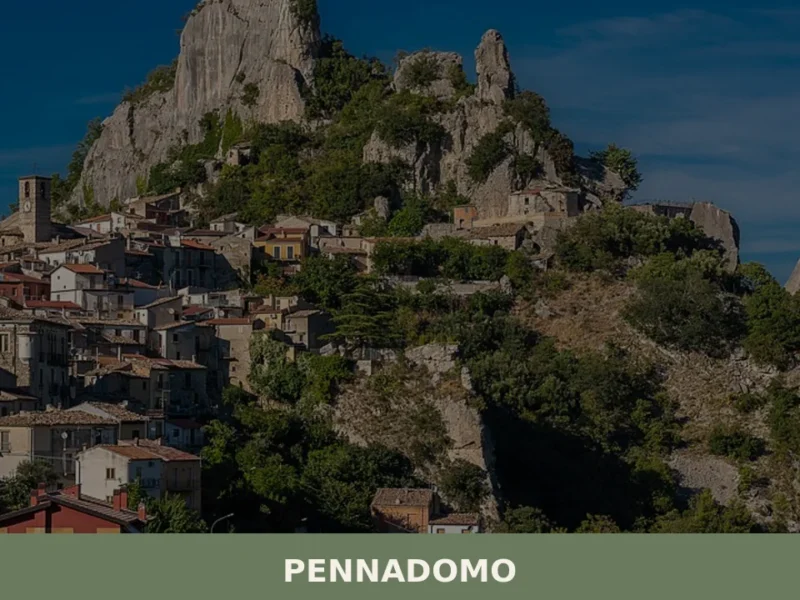
What to see in Pennadomo, Italy: 5 attractions at 460 m in Chieti province. Discover the feast of San Lorenzo, local food traditions and how to get there.


🏡 Know Rocca Pia better than we do?
If you’re a local or have been there, your knowledge matters: add what’s missing or fix a detail on this page.