


Rodì Milici
 Hills
Hills
Two urban nuclei, one Knights of Malta palazzo and the ruins of ancient Longane: Rodì Milici rewards visitors who look beyond the Sicilian coast.
Rodì Milici: Between Two Mountain Ranges and a Thousand Years of History
Two torrents mark the boundaries of this small municipality before the land rises toward the western fringe of the Peloritani range. To the east, the Patrì stream traces a natural border with Castroreale; to the west, the Mazzarà closes the territory. Between them, the hills roll at a modest altitude of 177 metres, carrying scattered hamlets, a medieval palazzo and the barely visible outline of an ancient Greek city buried under the fields.
Rodì Milici village in Sicily draws visitors for two concrete reasons: an extraordinary civic monument tied to the Sovereign Military Order of Malta, and an archaeological landscape that reaches from a Greek necropolis to a Roman farmstead. The municipality is not a single compact centre but a spread of places — the administrative seat of Rodì, the nucleus of Milici, and the smaller fractions of Pietre Rosse and Case Bruciate — each with its own character and its own pace.
A Municipality That Had to Fight to Exist
The administrative history of Rodì Milici is unusually turbulent for a village of its size. The municipality was first established in 1923 under the name Rodì, created by separating territory from the neighbouring commune of Castroreale. Four years later, in 1927, it was dissolved. The commune disappeared from the official register, absorbed back into surrounding administrative structures. Then, in 1947, it was reconstituted. The following year, 1948, the name changed to Rodì Milici, formally uniting the two main nuclei under a single toponym. The municipal coat of arms and banner were granted by decree of the President of the Republic on 11 April 1951, giving the reconstituted commune its official symbols: a banner divided in blue and red.
This administrative back-and-forth reflects broader patterns in post-unification and Fascist-era Italy, when many small southern communes were consolidated or suppressed for bureaucratic efficiency, only to be restored when local identity reasserted itself. Rodì Milici’s reconstitution in the postwar years was, in this sense, an act of municipal self-determination as much as a technical adjustment. The Siciliano spoken here belongs to the Messina variant of the language, a Romance tongue classified within the extreme southern group, carrying layers of Mediterranean influence accumulated over centuries of contact between cultures that passed through or settled on the island.
The territory itself tells a coherent geographical story. The land falls entirely within the hill zone, drained by the Patrì torrent and framed by the western Peloritani mountains on one side and the Nebrodi chain on the other. This double mountain presence gives the commune a transitional character: neither fully coastal nor fully inland, it sits at the edge where two distinct Sicilian landscapes begin to overlap. The municipal territory belongs to the coastal hill zone of Milazzo, an agricultural classification that reflects both the terrain and the farming traditions that have developed across it.
The Sovereign Military Order of Malta traces its origins to an 11th-century hospital in Jerusalem. That a palazzo bearing its insignia should stand in a Sicilian hill village of fewer than two thousand people is, by any measure, an unexpected encounter.
The Places That Define Rodì Milici
Palazzo dell’Ordine dei Gerosolimitani
The most immediately striking building in the village dates to the thirteenth century and was originally the property of the Order of Malta — the Sovereign Military Order of Saint John of Jerusalem, of Rhodes, of Malta. The palazzo, also known as the Priorale, now houses a museum dedicated to the Order, with artefacts and documentary materials tracing its history. The fountain-trough in Milici carries the same insignia, suggesting the Order’s presence extended across the territory rather than being confined to a single building. Together, the palazzo and the fountain offer a legible thread of medieval institutional history running through the landscape.
The Churches of Rodì and Milici
The commune holds several religious buildings distributed across its two main nuclei. The Church of San Bartolomeo is dedicated to the patron saint of the village, around whom the principal annual celebrations are organised. The churches of Santi Rocco e Biagio, San Filippo, dell’Immacolata and San Giovanni complete the ecclesiastical fabric. Visitors moving between Rodì and Milici will encounter these buildings at different scales and in different states of use — some active parish churches, others quietly marking a street corner or a small square. They form part of the ordinary religious geography of a Sicilian hill commune rather than a curated heritage circuit.
The Ruins of Longane
Within the municipal territory lie the remains of Longane, an ancient settlement whose traces include structural ruins and a necropolis. The site gives the area an archaeological depth that extends well beyond the medieval period. Alongside Longane, the territory also contains a Roman farmstead and a Greek necropolis at Mustaca, as well as a site identified as the Sanctuary of Pirgo and a geological feature known as the Cupola Rosata. These are not sites with visitor infrastructure in the conventional sense, but for anyone with a serious interest in Sicilian pre-Roman and Roman settlement patterns, the concentration of archaeological evidence here is noteworthy.
The Fontanile Abbeveratoio of Milici
The old watering trough in Milici is a modest piece of rural infrastructure, but its significance exceeds its scale. The stonework carries the heraldic insignia of the Order of Malta, confirming the Order’s historical involvement in the daily life of the locality. Functional objects bearing institutional emblems of this kind are relatively rare survivals in Sicilian rural settings. The fountain-trough reads as a footnote to the Palazzo dell’Ordine, but both deserve attention as complementary evidence of the same historical presence.
Food Culture in a Hill Hinterland
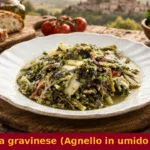
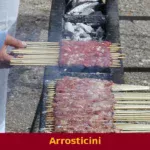
The municipal territory belongs to an agricultural hill zone, and the food culture of Rodì Milici reflects the produce and practices of the Messina hinterland rather than the coastal fishing traditions of the nearby Tyrrhenian shore. Cereals, legumes, vegetables and fruit grown on hill terrain form the base of local cooking. Olive cultivation and small-scale animal husbandry contribute to a larder that is straightforward and seasonal. The Siciliano culinary vocabulary here is one of land rather than sea — slow-cooked preparations, preserved vegetables, and the kind of bread-centred eating that characterises the interior communes of north-eastern Sicily.
The villages of the broader Messina province share a recognisable food culture rooted in similar terrain and similar agricultural rhythms. Visitors travelling through this area, and perhaps continuing toward Gangi or Geraci Siculo in the Madonie hinterland, will find related traditions expressed with local variations. The table at Rodì Milici is a place to eat well without spectacle.
Planning a Visit: Season, Access and Getting There
The best periods to visit fall in spring and early autumn. In April and May the hills carry green vegetation and moderate temperatures; September and October bring harvest activity and clearer light. Summer can be hot on the Sicilian interior hills, though the altitude offers some relief compared to the coast. The feast of San Bartolomeo, the village patron, is the principal moment of local celebration and worth timing a visit around if possible — the calendar details are available through the official municipal website at comune.rodimilici.me.it.
If you arrive by car, the village sits along the SP93 provincial road between kilometres 2 and 4. The SP97B Fontanelle also crosses the municipal territory. Public transport connections are maintained by AST interurban coach services, which link Rodì Milici with the wider provincial network. The nearest major urban centre is Messina, which provides the most practical base for visitors combining this area with other Peloritani destinations. Those exploring north-eastern Sicily more broadly may also pass through the territory when moving between the Tyrrhenian coast and the mountain interior.
| Departure | Distance | Time |
|---|---|---|
| Messina | approx. 45 km | approx. 50 min by car |
| Milazzo | approx. 20 km | approx. 25 min by car |
| Catania | approx. 140 km | approx. 1 h 45 min by car |
Visitors combining Rodì Milici with a broader Sicilian north-east itinerary might also consider the villages of the surrounding area as part of a longer journey. The municipality is compact enough to explore in half a day, though the archaeological sites reward a slower approach. A full day allows time for both the Palazzo dell’Ordine and the Longane ruins without rushing either.
Frequently asked questions about Rodì Milici
How do you get to Rodì Milici by car or train?
By car, Rodì Milici can be reached via the A20 Messina-Palermo motorway, exiting at either the Milazzo or Falcone toll gates depending on your direction of travel. By train, the nearest station is Barcellona Pozzo di Gotto, on the Messina-Palermo line, from which you can continue by car or local bus. The distance from Messina is approximately 45 km, which can be covered in under an hour.
When does the feast of the patron saint San Bartolomeo take place?
Saint Bartholomew the Apostle is celebrated on 24 August, a fixed date in the Catholic liturgical calendar. As in many Sicilian villages, the patron saint festivities traditionally include a solemn Mass, a procession carrying the statue of the saint, and moments of community gathering. For the detailed programme of local celebrations, it is advisable to contact the Municipality of Rodì Milici or the village parish.
How long does it take to visit Rodì Milici?
Rodì Milici lends itself to a half-day visit, which is enough time to explore the historic centre of Rodì with the Palace of the Knights of Malta, the main churches, and the surrounding hilly landscape. Those who wish to discover more of the agricultural territory, the Patrì and Mazzarà streams, and the hamlets of Milici and Pietre Rosse can extend the visit to a full day, perhaps combining it with a trip to Castroreale, the neighbouring municipality to the east.
📷 Photo Gallery — Rodì Milici


In Sicily More villages to discover

San Cataldo
Hills
With over 400 years of documented history and a remarkable archaeological zone, San Cataldo offers cultural depth that rewards curious visitors.
Caltanissetta
Hills
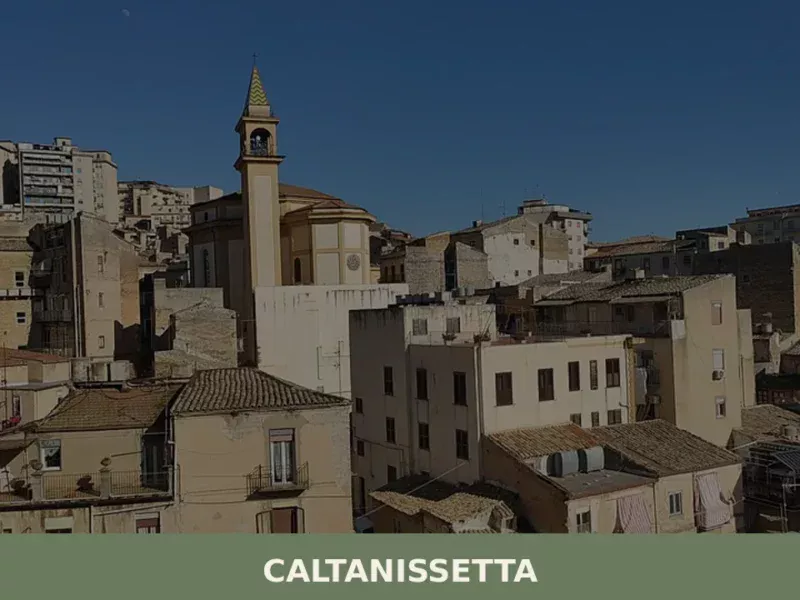
What to see in Caltanissetta: 61,000 residents at 568m, from Castello di Pietrarossa to Baroque churches and Holy Week. Plan your visit with this complete guide.
Acate
 Sea
Sea
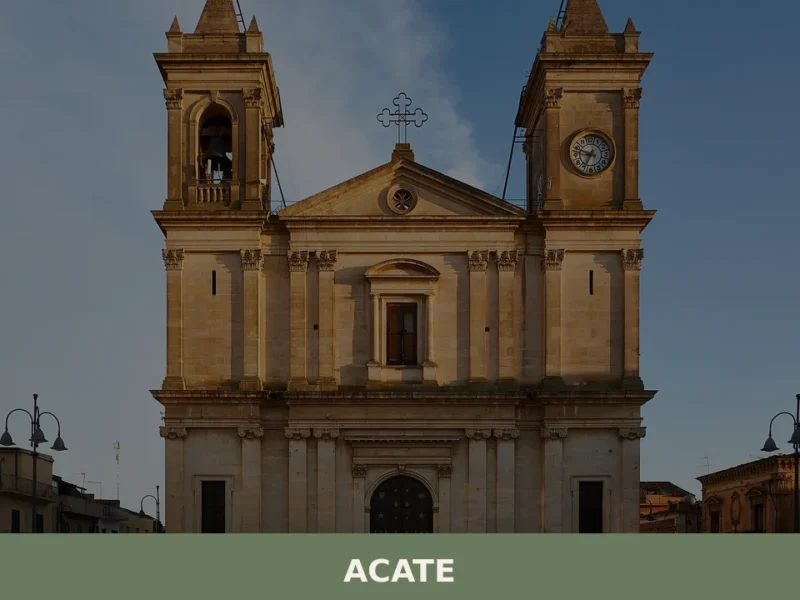
Discover what to see in Acate, the former Biscari in Ragusa province: Baroque history, Cerasuolo di Vittoria vineyards, castle and Iblean landscapes.
Godrano
 Mountain
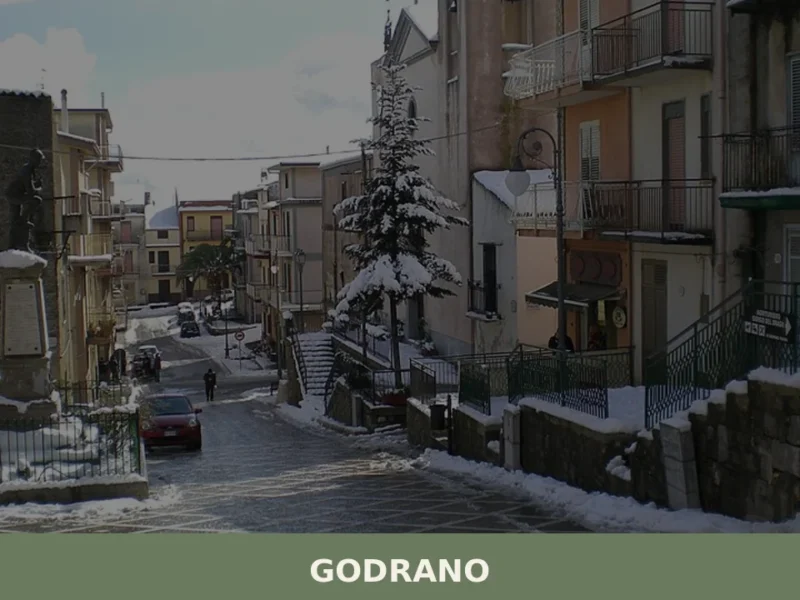
What to see in Godrano: from the Bosco della Ficuzza Reserve to the Palazzina Reale, churches and cuisine of the Sicani hinterland at 693 m above sea level.
Aliminusa
Hills
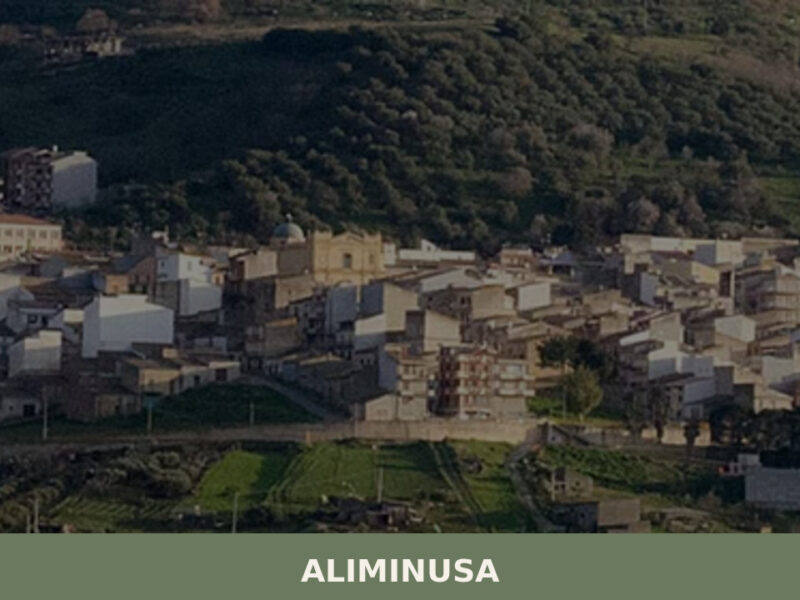
Morning light hits the limestone facades along Corso Umberto at a low angle, turning the walls the colour of raw honey. A few voices carry across the piazza — unhurried, familiar. Aliminusa is a village of just over a thousand people, set at 450 metres above sea level in the hills of the Palermo province, […]
Messina
Sea
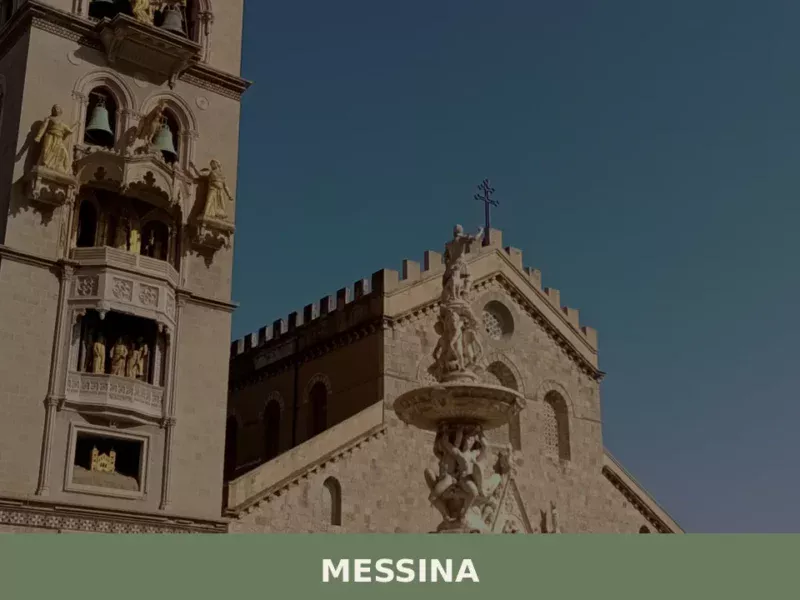
What to see in Messina: 242,267 inhabitants, the astronomical clock tower, two Caravaggios and the Norman Cathedral. Plan your visit and discover how to get there.
Bompietro
Mountain
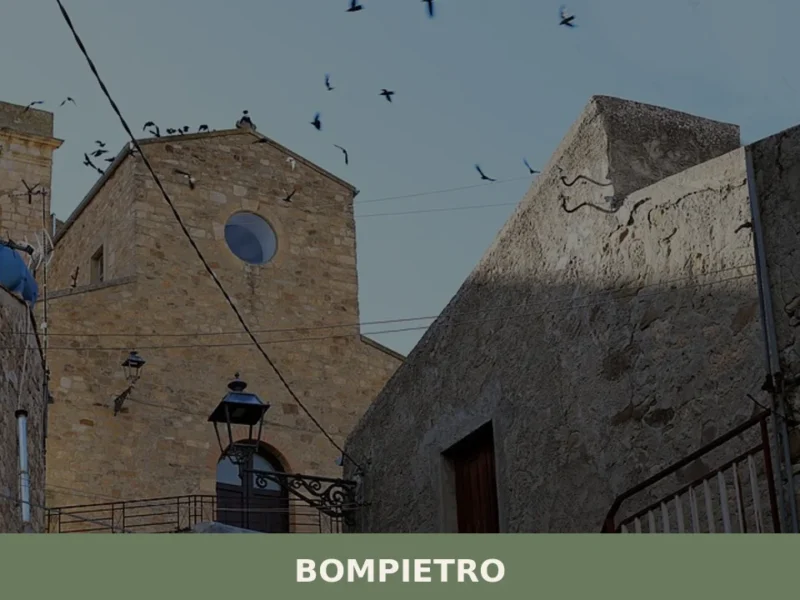
Morning light reaches Bompietro slowly, climbing over the Madonie range before it pours across the rooftops and into the narrow streets where older residents already occupy doorstep chairs. At 685 metres above sea level, the air carries a sharpness absent from the coast — part wild oregano, part cold stone. Fewer than 1,200 people live […]
Gangi
Mountain
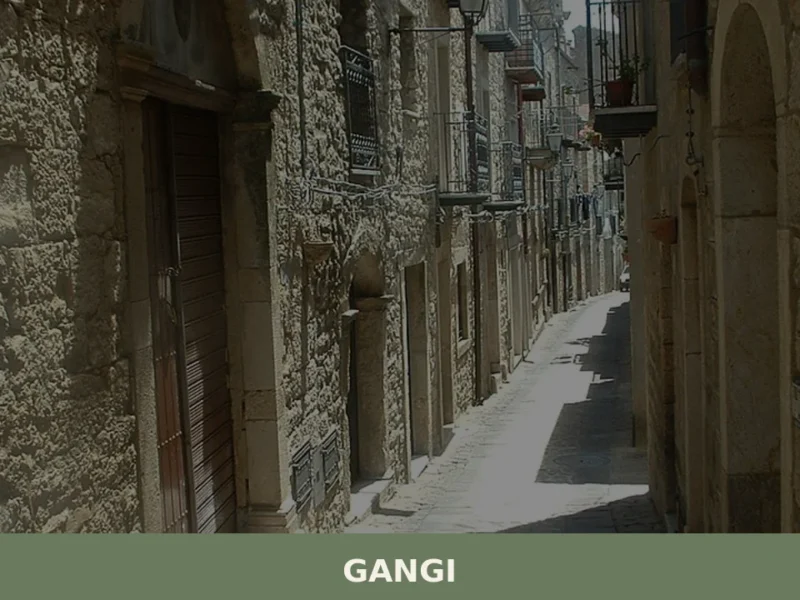
What to see in Gangi: Explore this Sicilian village at 1011m. Discover its rich history, typical cuisine, and the vibrant Sagra della Spiga. Plan your visit today!

Belpasso
Hills
A town rebuilt three times from volcanic catastrophe. Belpasso village in Sicily embodies resilience through its geometric urban grid and living festival traditions.
Poggioreale
Hills
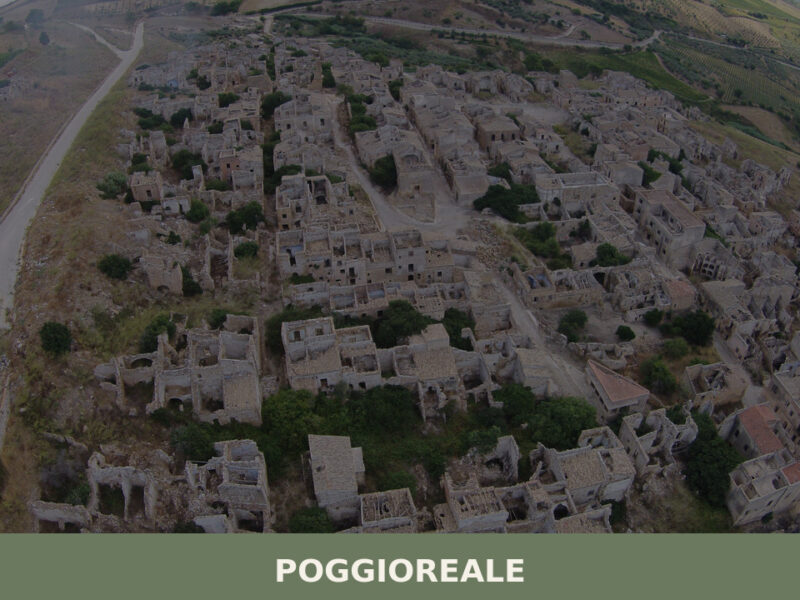
Morning light falls across cracked stone walls and doorways that open onto nothing but sky. In Poggioreale, silence is the dominant sound — the kind that presses against your ears and demands attention. This small community of roughly 1,505 inhabitants sits in the western interior of Sicily, within the province of Trapani, where the Belìce […]


🏡 Know Rodì Milici better than we do?
If you’re a local or have been there, your knowledge matters: add what’s missing or fix a detail on this page.