


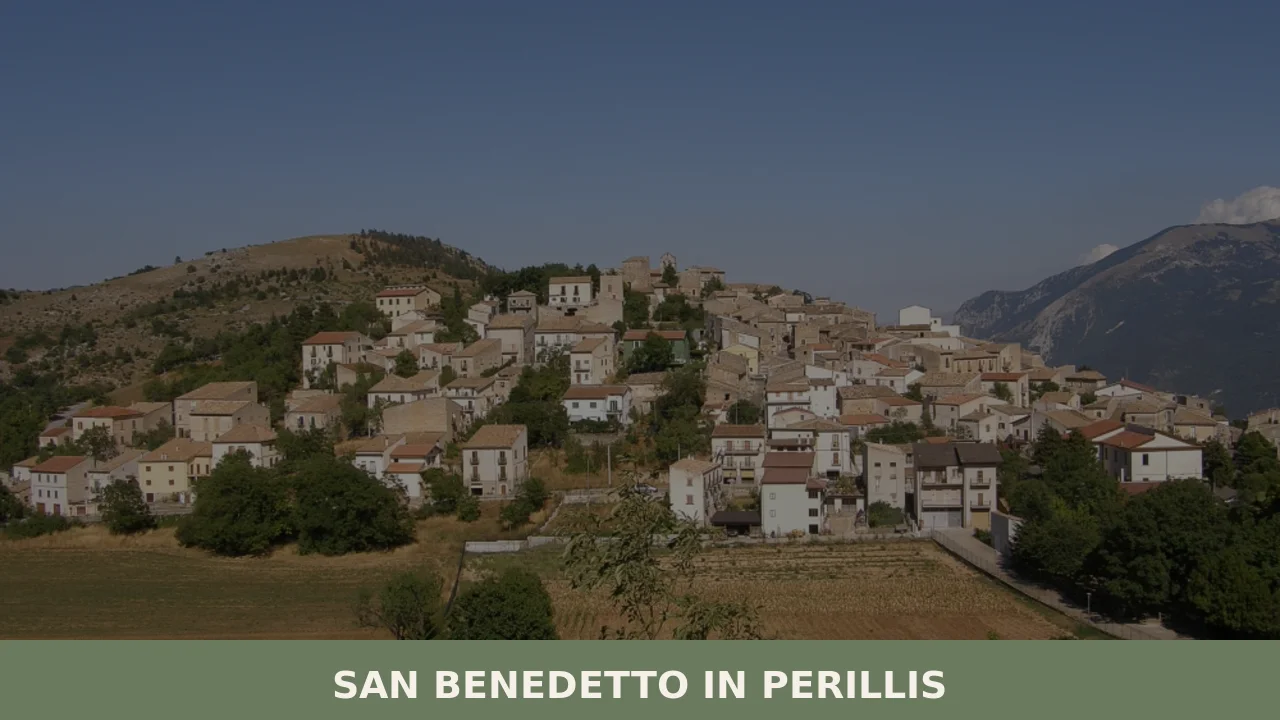
San Benedetto in Perillis
 Mountain
What to see in San Benedetto in Perillis, Abruzzo, Italy: 2 churches, a medieval monastery used in a 1985 film. Population 120. Discover top attractions and how to get there.
Discover San Benedetto in Perillis
Stone walls and a bell tower rise above the upland plateau of the province of L’Aquila at roughly 680 m (2,231 ft), the surrounding terrain opening onto a landscape of limestone ridges and cultivated fields that stretch toward the central Apennines. The monastery at the centre of the village is not an incidental structure: it was built during the High Middle Ages to serve the peasantry of the surrounding land, and its fabric has survived feudal grants, dynastic changes, and a Hollywood film crew.
Fewer than 120 people now live here, and the village covers the kind of compact ground where a single morning is enough to read its entire built record.
Deciding what to see in San Benedetto in Perillis is a focused exercise rather than an overwhelming one.
The village, which sits 43 km (27 mi) from L’Aquila, the regional capital, organises itself around two documented religious buildings and the monastery complex that gave it its name. Visitors to San Benedetto in Perillis find a settlement whose history moved through medieval monasticism, Spanish imperial patronage, aristocratic ownership, and Celestine religious administration — all legible in the structures that remain. The San Benedetto in Perillis highlights include the Church of S. Benedict, the Church of S.
Maria delle Grazie, and the monastery that appeared on screen in the 1985 fantasy film Ladyhawke.
History of San Benedetto in Perillis
The village takes its name directly from the monastery dedicated to Saint Benedict, a foundation that dates to the High Middle Ages. At that period, religious houses of this kind performed a dual function across the Apennine interior: they were centres of liturgical life and, equally, practical institutions that organised agricultural labour and provided basic services to the surrounding peasantry.
The land around what is now San Benedetto in Perillis was productive enough to sustain that foundation, and the monastery became the structural core around which the settlement gradually formed.
The suffix “in Perillis” is a toponym that identifies the specific locality, distinguishing this San Benedetto from the numerous other places bearing the same hagiographic dedication across central Italy.
The political history of the village shifted decisively in the sixteenth century, when Charles V of Spain — Holy Roman Emperor and ruler of the Kingdom of Naples, which encompassed Abruzzo — granted the lands around the town to one of the captains of his army. This was a standard instrument of imperial reward: military service exchanged for territorial rights over rural communities.
The grant inserted San Benedetto in Perillis into the wider system of feudal administration that governed much of southern and central Italy under Spanish rule, and it brought the village into contact with the broader currents of Counter-Reformation culture and Baroque patronage that were reshaping the ecclesiastical landscape of the region in the same period.
The nearby village of Acciano, set in the valley of the Aterno river some kilometres to the west, developed under comparable feudal and ecclesiastical pressures during the same centuries, giving both communities a parallel administrative history within the province of L’Aquila.
Control of the territory eventually passed to the Caracciolo family, one of the major aristocratic dynasties of the Kingdom of Naples, whose holdings extended across much of southern Italy. In the eighteenth century the Caracciolo were replaced by the Celestine Fathers of L’Aquila, a monastic congregation with deep roots in the Abruzzo region — the Celestines had been founded by Pietro da Morrone, who became Pope Celestine V in 1294, a figure closely associated with the territory of L’Aquila.
The Celestine Fathers brought the monastery back under direct religious administration after a period of lay aristocratic control, consolidating its function as a devotional and agricultural institution until the suppressions of religious houses that accompanied the Napoleonic period and, later, Italian unification progressively reduced the active presence of monastic orders across the peninsula.
What to see in San Benedetto in Perillis, Abruzzo: top attractions
The Monastery of San Benedetto
The monastery is the oldest documented structure in the village, its foundation predating the earliest written records of the settlement by centuries.
Built during the High Middle Ages to serve the rural population of the L’Aquila hinterland, the complex passed through the hands of a Spanish imperial grant, the Caracciolo family, and the Celestine Fathers of L’Aquila before reaching its current state.
What makes this building legible to a visitor today is precisely that accumulation: each phase of ownership left material traces in the stonework, the arches, and the spatial organisation of the complex. The monastery also holds a documented place in film history — in 1985 it served as a location for Ladyhawke, the American fantasy film directed by Richard Donner and starring Rutger Hauer and Michelle Pfeiffer. The best approach is on foot from the village centre, which allows the full scale of the structure to become apparent gradually.
Church of S.
Benedict
The Church of S. Benedict stands as the primary religious building associated with the monastery complex and with the Benedictine dedication that names the entire settlement. Its fabric reflects the long history of the site, with elements that correspond to different phases of construction and modification spanning from the medieval foundation through to the period of Celestine administration in the eighteenth century.
The interior proportions are typical of Apennine mountain churches: relatively narrow, with walls built to withstand the thermal stress of high-altitude winters. Standing inside, the visitor can follow the spatial logic of a building designed for a small rural congregation rather than for urban display. The church is located at the centre of the village, within easy walking distance of the monastery, and the two structures are best understood together as a single ecclesiastical ensemble rather than as separate monuments.
Church of S.
Maria delle Grazie
The second church documented in San Benedetto in Perillis is dedicated to the Madonna delle Grazie, a Marian devotion that spread widely across central and southern Italy from the late fifteenth century onward, often associated with miraculous images and with ex-voto traditions that linked agricultural communities to their patron saints. The dedication itself places the building within a specific layer of Counter-Reformation religious culture, when Marian shrines were actively promoted as focal points for popular piety in rural areas.
The exterior stonework, consistent with mountain building practice in the province of L’Aquila, uses locally quarried material that weathers to a grey-ochre tone. The church serves the active liturgical needs of the village’s current population of approximately 120 inhabitants, meaning it remains a functioning place of worship rather than a purely archaeological site.
Visitors should be attentive to service times before entering.
The Village Centre and Its Urban Fabric
San Benedetto in Perillis occupies a compact urban footprint characteristic of the smaller comuni — autonomous municipalities — of the L’Aquila province, where defensive logic and agricultural convenience shaped the original layout of buildings along ridgelines or slight elevations above the surrounding fields. The village sits at approximately 680 m (2,231 ft) above sea level, a height that gives it clear sightlines across the plateau toward the higher Apennine ranges to the east.
Walking through the centre takes less than twenty minutes at an unhurried pace, but the sequence of spaces — the area around the monastery, the two churches, the remaining residential fabric — rewards attention to materials and detail.
The province of L’Aquila experienced a severe earthquake in April 2009 that caused extensive damage across the region, and some structures in smaller villages still show evidence of consolidation work carried out in the years following that event.
The Surrounding Plateau and Approach Roads
The landscape immediately surrounding San Benedetto in Perillis is part of the upland interior of Abruzzo, a zone where the Apennine chain broadens into a series of elevated basins and plateaux between 600 m (1,969 ft) and 900 m (2,953 ft). The road approaches to the village cross open agricultural land and pass through the kind of unforested terrain that distinguishes the L’Aquila interior from the more thickly wooded slopes further east.
The village is located 43 km (27 mi) from L’Aquila, which means the drive in either direction passes through a sequence of smaller settlements and road junctions that give a clear picture of how this part of Abruzzo is organised at the territorial scale. The plateau is at its most visually distinct in late spring, when the cereal crops are still green and the higher ridges retain traces of snow, and again in October, when the light on the stone buildings is direct and the air temperature drops sharply after sunset.
Local food and typical products of San Benedetto in Perillis
The gastronomy of the L’Aquila interior is shaped by altitude, by the pastoral economy that dominated this part of Abruzzo for centuries, and by the relative isolation of upland communities from coastal trade routes.
The province of L’Aquila sits at the junction of several distinct productive zones: the high pastures that supported transhumant sheep-herding, the cereal fields of the elevated basins, and the woodland edges where foraging for fungi, wild herbs, and game remained economically significant into the twentieth century.
San Benedetto in Perillis, with its monastery foundation and its agricultural hinterland, participated in all three of these traditions. The monastic economy, in particular, tended to preserve and transmit food techniques — curing, fermenting, baking — that might otherwise have disappeared in smaller secular settlements.
The dominant protein in the cooking of this area is lamb and mutton, raised on the upland pastures and prepared using techniques that minimise waste and extend preservation.
Agnello alla brace, lamb grilled directly over wood embers with wild rosemary and garlic, is the most direct expression of that tradition: the cut is typically the shoulder or ribs, the cooking time is short and the heat is high, and the result carries the faintly smoky character of open-fire cookery.
Pasta e fagioli, a thick soup of dried beans and short pasta in a base of lard and dried chilli, reflects the winter diet of upland communities where legumes stored well and provided reliable caloric density during the months when fresh produce was unavailable.
Pecora alla cottora — older sheep cooked slowly in a sealed vessel with onion, celery, and mountain herbs until the meat separates from the bone — is the pastoral dish most directly tied to the transhumant calendar, traditionally prepared when animals too old for the flock were slaughtered in autumn.
The village of Cerchio, situated in the Fucino basin to the south of San Benedetto in Perillis, shares the same broad food culture of the L’Aquila interior, with lentils, dried pulses, and cured pork products forming the backbone of the local table in both communities. The Fucino basin, drained in the nineteenth century to create one of the largest agricultural plains in central Italy, now produces potatoes and other root vegetables that appear consistently in the cooking of surrounding villages.
No certified designation of origin products — DOP, IGP, or STG — have been specifically documented for San Benedetto in Perillis itself in the available sources, though the broader L’Aquila province is home to the Zafferano dell’Aquila DOP, saffron cultivated in the Navelli plateau area and recognised at European level for its specific organoleptic qualities.
Local food products in villages of this size are most reliably found at weekly markets in the nearest larger centres, or at the periodic sagre — traditional local food festivals — that take place across the L’Aquila province from late summer through to early November.
These events are organised around specific products: sausage, polenta, mushrooms, or lentils depending on the village and the season. Visitors planning to explore the food of the area would do well to check the calendar of events in L’Aquila and the surrounding municipalities before finalising dates.
Festivals, events and traditions of San Benedetto in Perillis
The religious calendar of San Benedetto in Perillis is organised around the dedication of its two churches.
The feast of Saint Benedict, observed on 21 March in the traditional calendar and on 11 July in the post-1969 Roman calendar, is the primary occasion for communal religious observance, typically involving a votive Mass, a procession through the village streets, and the gathering of the resident and emigrant community.
In a settlement of 120 inhabitants, the feast day draws back former residents from the larger cities of the region and from further afield, temporarily expanding the village’s active population and giving the occasion a social function that extends beyond the purely liturgical.
The feast of the Madonna delle Grazie, celebrated on 2 July in the liturgical calendar, provides a second focal point for Marian devotion in the village. Both observances follow the pattern common to small Apennine communities: the outdoor procession with a statue carried through the village, evening gatherings, and in some years a modest firework display after dark. No formally documented secular festivals, markets, or food fairs specific to San Benedetto in Perillis are recorded in the available sources, though the broader cultural calendar of the L’Aquila province offers numerous events accessible within a short drive.
When to visit San Benedetto in Perillis, Italy and how to get there
The best time to visit San Benedetto in Perillis depends on what a traveller is looking for.
Late spring — from mid-May to mid-June — offers mild temperatures at altitude, clear visibility across the plateau, and the period just before the main Italian holiday season, when smaller villages receive fewer visitors and accommodation in the surrounding area is easier to find.
Early autumn, from September through to mid-October, brings sharply defined light, cooler air, and the active period for local food festivals across the L’Aquila province. Winter at 680 m (2,231 ft) means genuine cold and occasional snow: the monastery and churches remain accessible, but road conditions on secondary routes in the interior can deteriorate quickly after a snowfall. For those whose primary interest is the Ladyhawke monastery location specifically, any season outside of winter provides comfortable visiting conditions.
San Benedetto in Perillis is located 43 km (27 mi) from L’Aquila, making it a practical day trip from the regional capital. From Rome, the distance is approximately 130 km (81 mi) via the A24 motorway, a journey of around 90 minutes by car under normal traffic conditions — exit at L’Aquila Est or L’Aquila Ovest depending on the approach, then follow secondary roads eastward into the upland interior. There is no railway station in the village itself; the nearest rail connections are at L’Aquila, served by Trenitalia regional services from Rome Tiburtina.
From L’Aquila, reaching San Benedetto in Perillis requires a car or local bus service — the road network in this part of the province is functional but infrequent in terms of public transport.
The nearest airport with scheduled international services is Rome Fiumicino (Leonardo da Vinci International Airport), approximately 160 km (99 mi) from the village. International visitors should be aware that English is not widely spoken in smaller shops and service points in the interior; carrying a supply of euro cash is practical, as card payment infrastructure in villages of this size is not always reliable.
Travellers driving through the area can extend their route to include Fano Adriano, a village in the Gran Sasso area of Teramo province that offers a different face of the Apennine interior, with higher elevation and proximity to the Gran Sasso massif.
The drive from San Benedetto in Perillis northward crosses varied terrain and passes through several of the smaller upland communities that make the provincial road network of Abruzzo worth following at a deliberate pace.
Those approaching from the Pescara direction on the Adriatic coast may also pass through Catignano, a village in Pescara province that sits on the transition zone between the coastal hills and the Apennine interior, and which provides a useful geographic reference point for understanding how quickly the landscape changes as one moves inland from the coast toward L’Aquila.
Frequently asked questions about San Benedetto in Perillis
What is the best time to visit San Benedetto in Perillis?
The ideal times to experience San Benedetto in Perillis are late spring and October. In late spring, the surrounding cereal crops are lush green, and the higher Apennine ridges may still hold traces of snow, offering stunning contrasts. October provides direct light on the historic stone buildings and a crisp, clear air as temperatures drop after sunset. While the village celebrates its patron saints, San Benedetto and the Madonna di Casaluce, specific dates for a patronal festival are not documented in the available information.
What are the historical origins of San Benedetto in Perillis?
San Benedetto in Perillis traces its origins to the High Middle Ages, forming around a monastery dedicated to Saint Benedict. This monastic foundation served both liturgical and practical agricultural functions for the surrounding peasantry, becoming the structural core of the settlement. The suffix 'in Perillis' specifically identifies its locality within central Italy. Over centuries, its control shifted from Spanish imperial grants to aristocratic families like the Caracciolo, and then to the Celestine Fathers of L'Aquila, shaping its unique historical trajectory.
What to see in San Benedetto in Perillis? Main monuments and landmarks
San Benedetto in Perillis offers a focused exploration of its history through key landmarks. Visitors can explore the ancient Monastery of San Benedetto, the village's oldest structure, which famously appeared in the 1985 film 'Ladyhawke.' Adjacent to it is the Church of S. Benedict, reflecting centuries of modifications. The Church of S. Maria delle Grazie, dedicated to a widespread Marian devotion, is also a functioning place of worship. These sites, along with the compact village centre, are easily walkable and best understood as an integrated historical and ecclesiastical ensemble.
What are the main natural or scenic attractions of San Benedetto in Perillis?
San Benedetto in Perillis is nestled within the scenic upland interior of Abruzzo, characterized by an elevated plateau ranging between 600m and 900m. The natural beauty lies in the expansive landscape of limestone ridges, cultivated fields, and the clear sightlines towards the higher Apennine ranges to the east. The approach roads to the village traverse open agricultural land and unforested terrain, offering panoramic views that are particularly striking in late spring with green crops and in October when the light enhances the stone buildings.
Where to take the best photos in San Benedetto in Perillis?
For memorable photos in San Benedetto in Perillis, focus on the panoramic views from the village's elevated position. Capture the village's stone walls and bell tower rising above the upland plateau, with the central Apennines as a dramatic backdrop, especially during late spring or October light. The approach on foot to the Monastery of San Benedetto provides excellent opportunities to photograph its scale and historical details. Additionally, the compact urban fabric of the village center, with its ancient churches and residential structures, offers charming street photography.
Are there museums, churches or historic buildings to visit in San Benedetto in Perillis?
Yes, San Benedetto in Perillis is home to significant churches and historic buildings. The most prominent is the Monastery of San Benedetto, an ancient complex with a rich history, known for its appearance in the film 'Ladyhawke.' Visitors can also explore the Church of S. Benedict, closely associated with the monastery, and the Church of S. Maria delle Grazie, which actively serves the local community's liturgical needs. There are no museums documented for the village, but these religious and historical structures provide a deep insight into its past.
What can you do in San Benedetto in Perillis? Activities and experiences
In San Benedetto in Perillis, visitors can immerse themselves in quiet exploration and historical discovery. Activities primarily involve walking through the compact village centre, which takes less than twenty minutes, to admire its urban fabric and historical architecture. You can visit the Monastery of San Benedetto and its associated churches, S. Benedict and S. Maria delle Grazie. The surrounding plateau offers opportunities for scenic drives or leisurely walks to appreciate the Abruzzese mountain landscape and its cultivated fields, particularly beautiful in spring and autumn.
Who is San Benedetto in Perillis suitable for? Families, couples, hikers, solo travelers?
San Benedetto in Perillis is ideally suited for visitors seeking tranquility, history, and an authentic experience of a small Abruzzese mountain village. It appeals strongly to history enthusiasts, solo travelers, and couples looking for a quiet escape. Those interested in medieval monasticism, unique architectural traces, and cinematic history will find it particularly engaging. While not offering extensive activities for families, it's perfect for anyone who appreciates slow travel, cultural immersion, and the serene beauty of the central Apennines.
Nearby Villages near San Benedetto in Perillis
In Abruzzo More villages to discover
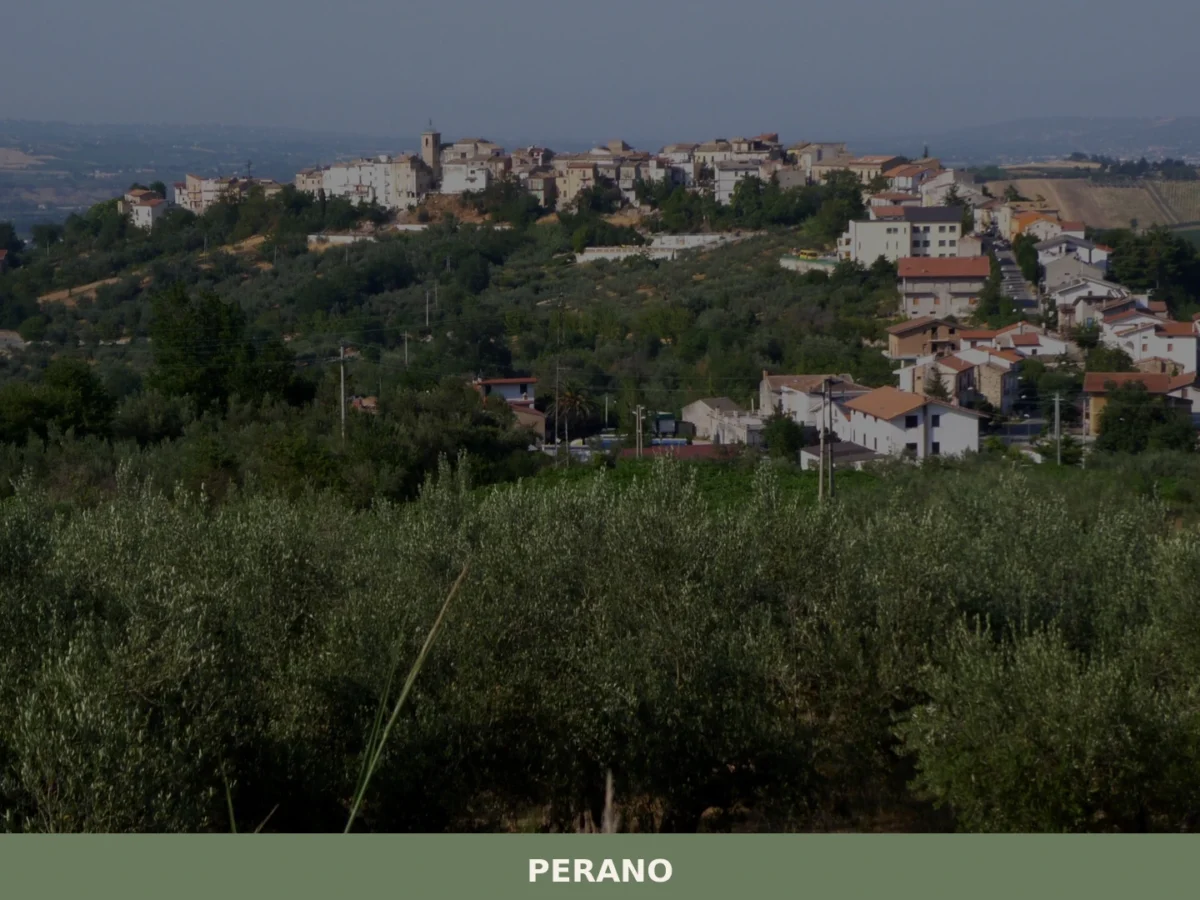
Perano
 Plains
What to see in Perano? Discover the complete guide to the 3 unmissable attractions of this Abruzzo village. Plan your visit now!
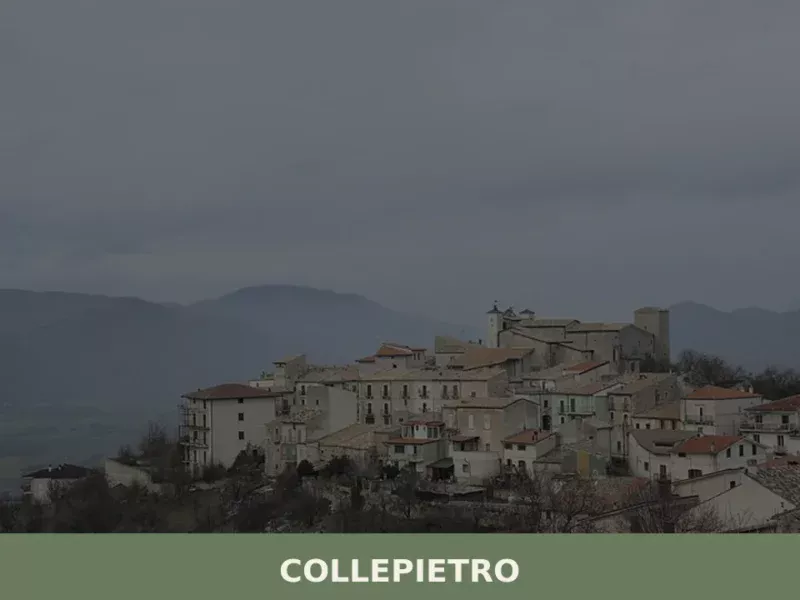
Collepietro
Mountain
Collepietro has 226 inhabitants and sits at 849 metres above sea level on the eastern slope of the Gran Sasso, in the province of L’Aquila. The municipal territory extends along a ridge overlooking the Piana di Navelli, an area known for saffron cultivation. Those wondering what to see in Collepietro will find a compact settlement […]
Cappadocia
Mountain
Cappadocia: discover historic churches and natural trails. Plan your visit today and experience the authenticity of this Abruzzo village.
Vacri
 Sea
Sea
What to see in Vacri? Explore the 5 must-see attractions of this Abruzzese village. Discover history and breathtaking views. Read on and plan your itinerary!
Colledimacine
Mountain
One hundred and eighty-eight residents in the 2001 census, now down to 158: Colledimacine contracts with the regularity of a slow heartbeat, yet it holds on along the eastern ridge of the Majella massif, at 770 metres above sea level, in the province of Chieti. Anyone wondering what to see in Colledimacine should be prepared […]
Salle
Mountain
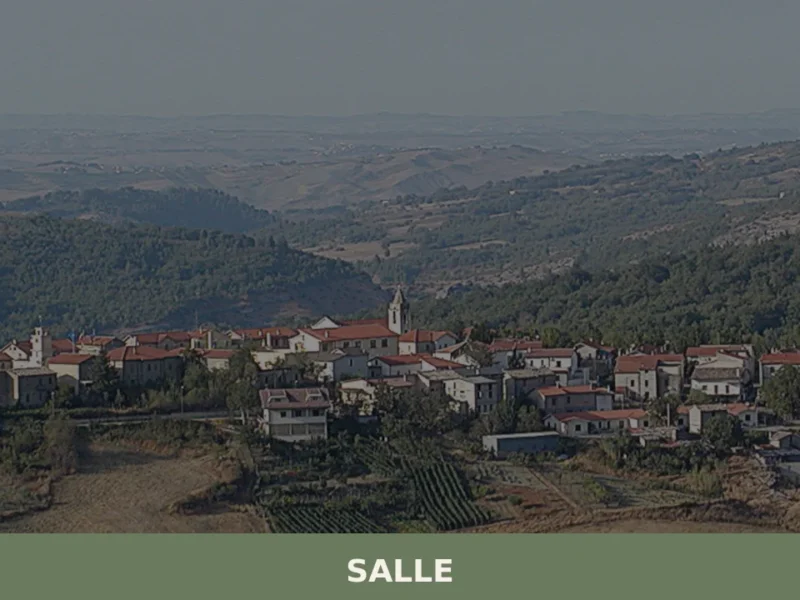
From its elevation of 680 m (2,231 ft) above sea level, the village of Salle overlooks the Orta Valley, where the river carves through limestone gorges towards the Majella massif. Stone houses, built from local materials, cluster tightly along ancient pathways, revealing centuries of human habitation in this mountainous landscape. The air often carries the […]
Nocciano
 Hills
Hills
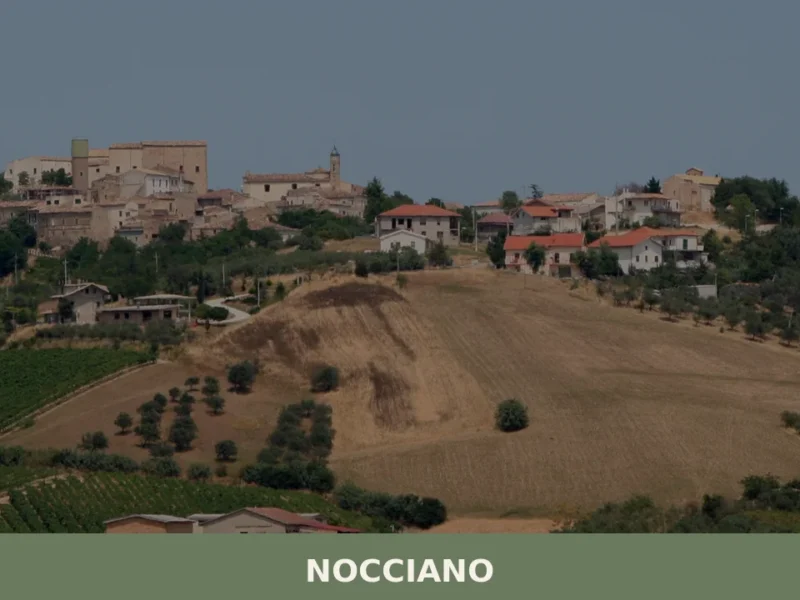
What to see in Nocciano? Discover the 5 must-see attractions of this historic village in Abruzzo, from the Castle to the old town. Plan your visit!
Casacanditella
Hills
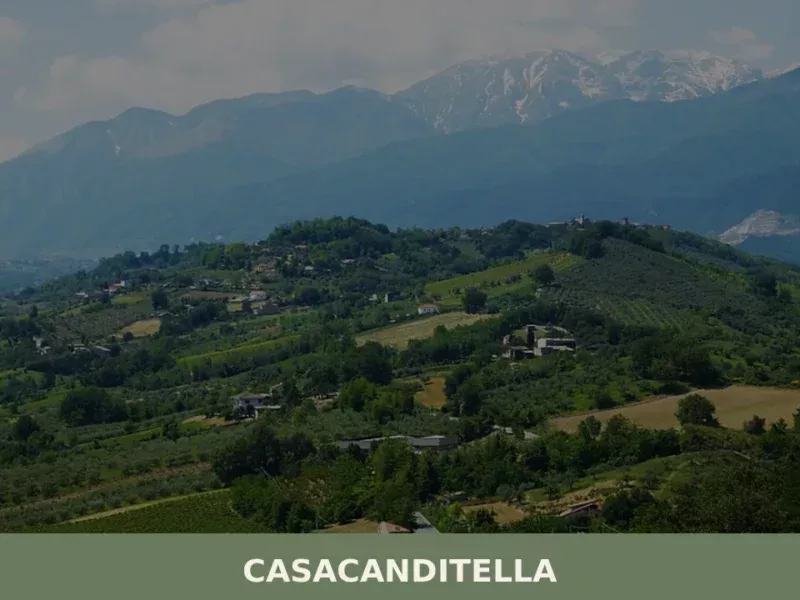
At 432 metres above sea level, on the eastern slope of the Majella descending towards the Foro river valley, Casacanditella has 1,169 inhabitants and a municipal territory that extends entirely across hilly terrain in the province of Chieti. Anyone wondering what to see in Casacanditella will find a compact urban centre, a church dedicated to […]
Vittorito
Mountain
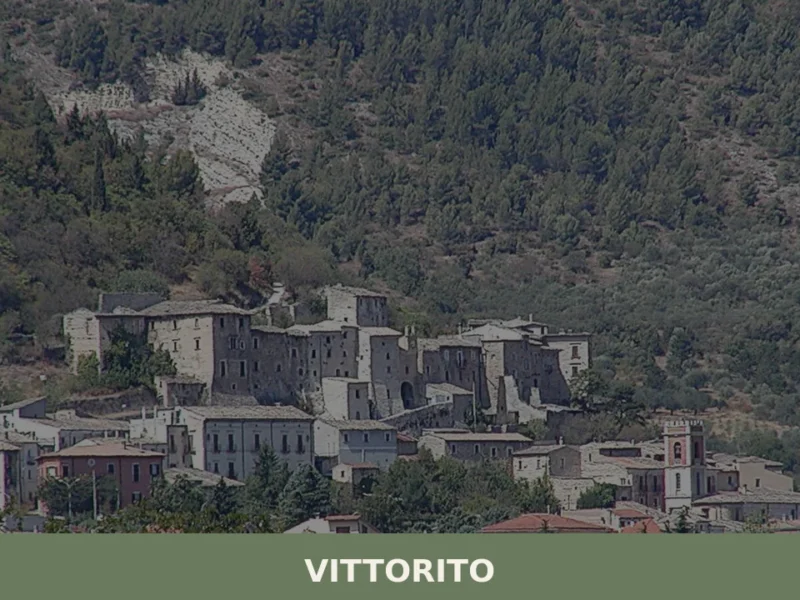
What to see in Vittorito: 5 attractions in this Abruzzo village, including the Church of San Pietro, the castle, and the historic centre. Discover the full guide.
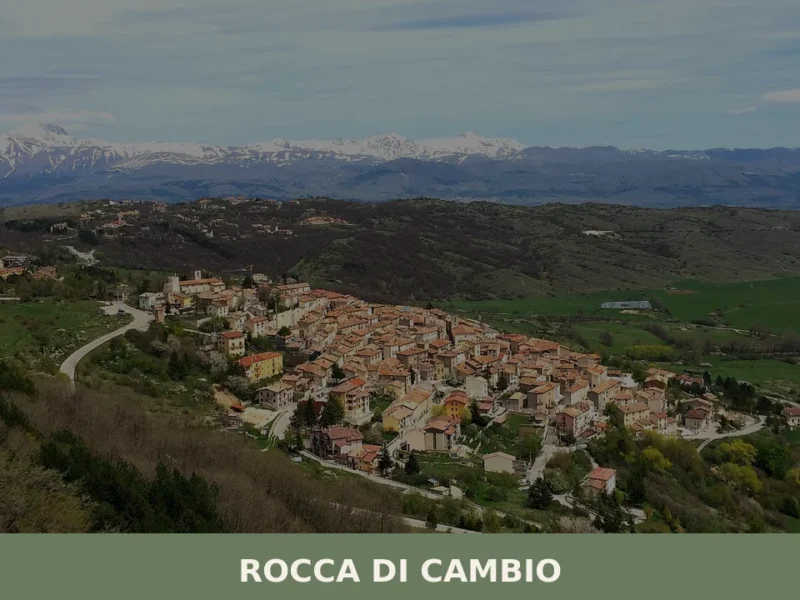
Rocca di Cambio
Mountain
What to see in Rocca di Cambio, Italy: explore the Abbey of Santa Lucia, Campo Felice ski resort and the Sirente-Velino Park. 495 inhabitants. Discover it now.


🏡 Know San Benedetto in Perillis better than we do?
If you’re a local or have been there, your knowledge matters: add what’s missing or fix a detail on this page.