


Beinasco
 Plains
Beinasco traces its roots to a Roman frontier post. Discover how this small town survived plague, warfare and transformation to anchor modern metropolitan Turin.
Beinasco: From Roman Garrison to Metropolitan Borgo
The Sangone river cuts through Beinasco’s centre like a scar, dividing the village into two distinct halves and marking the ancient boundary that Roman engineers once fortified. Five kilometres south-west of Turin, at 265 metres elevation on the Piemontese plain, this small comune of 17,351 inhabitants sits at the threshold of the metropolitan area, neither quite rural nor fully urban.
Beinasco began its existence in the first century before Christ as a military colony, strategically positioned to defend Turin‘s ancient predecessor, Augusta Taurinorum. The river itself provided a natural defensive line. Today the village preserves that dual character: a medieval castle still stands near its central piazza, and the names of its historic frazioni—Borgo Melano and Borgaretto, where roughly 7,400 of the residents live—echo centuries of settlement and regrowth.
From Roman Outpost to Plague-Stricken Borough
The name Beinasco likely derives from the Latin Benàcun, formed by merging a Roman personal estate, Batinus (from the owner Battius), with a Celto-Ligurian suffix -ascus. The settlement’s foundational purpose—protection of Turin—remained its defining function well into the medieval period.
In the early thirteenth century, Bishop Arduino di Valperga of Turin donated the castle, lands and inhabitants of the territory to Federico, founder of the De’ Federici dynasty and already lord of nearby Piossasco. By June 1239, Turin itself, now constituted as a free commune, took direct management of Beinasco to levy tolls at its gates. Territorial boundaries, confirmed by decree of Bishop Ugo Cagnola in 1236 and reaffirmed in 1288, solidified the village’s administrative identity. At mid-fourteenth century Beinasco aligned with Guelpic factions and endured raids from imperial troops. In 1501, Turin received formal title as lord of Beinasco, and by the late 1500s the territory passed again to the De’ Federici of Piossasco.
The seventeenth century brought catastrophe. In 1630, French forces under Duke Carlo Emanuele I of Savoia’s policy reversals destroyed Beinasco, razed the parish church and killed most of its population. Plague struck simultaneously. According to the historian Cibrario, of one hundred heads of household recorded before 1630, only eight survived the pestilence. The village lost its legal status as a community and nearly vanished from the map.
After the devastations of war and plague, Beinasco ceased to function as Turin’s defensive outpost and became simply an agricultural borough at the capital’s edge.
Duke Carlo Emanuele II later restored Beinasco’s right to form a comune. Around 1680, recovery seemed possible—until two more wars ravaged it again. In 1690, young Vittorio Amedeo II reversed his mother’s alliance with France and declared war. French commander Nicola Catinat led a scorched-earth campaign across Piedmont. On 4 October 1693, near the hamlet of Marsaglia on the road to Orbassano, a memorably bitter battle defeated Vittorio Amedeo II. Beinasco’s newly rebuilt houses burned once more. The War of Spanish Succession (1701–1713) brought further French raids and plunder. After a century of successive destructions, Beinasco abandoned its military function entirely and became an agricultural settlement.
Nineteenth-Century Recovery and Industrial Shift
Throughout the 1800s, population dwindled—to just over 900 by 1870—before growth resumed in the early twentieth century. A key driver was the rise of brick-works: the fornasé (tile labourers) became synonymous with Beinasco’s identity, especially after the formation of the Fornaci Riunite cooperative. In 1839, on decree of King Carlo Alberto, a new road linked Piossasco to Turin, reducing Beinasco’s isolation. Later, when Fiat’s Lingotto factory rose in Turin, many workers left the kilns for factory labour, reshaping the village’s economy once more. By 1992, the population had swelled to roughly 18,000, transforming a farm hamlet into a dense metropolitan borough.
Sacred Geometry and Medieval Stone
Church of San Giacomo Apostolo
The parish church bears witness to Beinasco’s pattern of loss and renewal. The original structure, likely built in the sixteenth century, fell victim to repeated destruction during the seventeenth-century wars. Beinasco historically belonged to the Archdiocese of Turin, not the Diocese of Lodi. The current building, reconstructed in 1740 and opened in 1743, follows a Greek-cross plan with a semicircular apse. Inside stand three altars: the main altar beneath a large crucifix and two lateral altars dedicated to the Sacred Heart and the Immaculate Conception. A wooden pulpit carved with figures adorns the right side of the sanctuary. The bell tower, 24 metres tall, serves as a visual anchor in the village centre. In 1945, workers uncovered an ancient Roman funerary stone inscribed in Latin—now displayed in the parish house entrance—bearing witness to the site’s first-century origins.
Medieval Castle
Near Piazza Alfieri stands a castle of medieval origin, once subject to Turin’s sovereignty and now privately owned. Though repeatedly altered across the centuries, it retains traces of its original architecture, including some twin-arched windows. The structure embodies the transition from frontier fortress to noble manor, reflecting the village’s shift from military to landed importance.
Borgo Melano and Borgaretto
The two historic frazioni mark distinct settlement zones separated by the Sangone. Borgo Melano preserves older rural patterns, while Borgaretto, home to nearly 40 percent of the comune’s population, developed into a more densely built neighbourhood during the twentieth-century expansion. Each retains its own parish church—San Luigi in Borgo Melano and Sant’Anna in Borgaretto—anchoring community life and local identity.
Torrente Sangone Corridor
The river itself functions as both natural boundary and public amenity. Its course through the village centre has shaped settlement patterns since Roman times, providing water for agriculture and industry while defining the landscape’s fundamental geometry. The 1768 petition to construct a bridge across it testifies to how dramatically the Sangone divided daily life and land use.
Agricultural Roots and Tile-Making Heritage
Beinasco’s modern identity was forged by brick and clay. The rise of the fornasé—workers in lateral tile-works—transformed it from a purely farming settlement into an industrial satellite of Turin. Fired clay became emblematic of the village’s labour culture and social fabric throughout the twentieth century. Though the furnaces have largely ceased operation, their memory remains lodged in family histories and local memory.
The surrounding plain, once rich in hay and poplar groves, still supports small-scale agriculture. The village’s coat of arms, granted by presidential decree in 1963, depicts precisely this landscape: azure sky merged with green fields watered by the golden-anchored Sangone, symbolising hope for fertile harvests under the radiant sun.
Planning Your Visit to Beinasco
Beinasco functions best as a morning excursion from Turin or a transit point on journeys through the western metropolitan belt. The village lies on a flat plain; there are no dramatic viewpoints or panoramic hikes. Instead, value lies in tracing the Sangone’s presence, observing the castle’s medieval traces, and understanding how close-proximity villages absorbed Turin’s industrial gravity. The climate follows northern Italian patterns: warm summers ideal for walking the river corridor, mild springs and autumns, cold winters.
Access is straightforward by regional train or car. The comune’s extreme population density—among the highest in Turin’s first ring of suburbs—means streets can feel congested during peak hours. Early morning visits reward patience with quieter squares and easier photography of the church and castle. The parish library in Borgaretto, named after writer Primo Levi, serves as a cultural reference point and sometimes hosts local exhibitions. The cinema-theatre Bertolino, attached to the main parish complex, occasionally programmes cultural events worth checking ahead.
| Departure Point | Distance | Journey Time |
|---|---|---|
| Turin (Porta Nuova station) | 5 km south-west | 15–20 minutes by regional train or car |
| Turin Caselle airport | Approx. 30 km | 30–40 minutes by car |
| Neighbouring Orbassano | Approx. 8 km south-west | 10 minutes by car |
Beinasco rewards slow looking rather than rapid tourism. Sit in Piazza Alfieri, trace the castle’s windows, visit the church on a weekday morning when light flows through the windows unobstructed, and walk the Sangone’s banks to sense the ancient strategic logic that placed a Roman garrison here two thousand years ago. The village’s true monument is not a single building but its survival—the fact that after plague, wars and industrial upheaval, a human settlement endures here still.
Frequently asked questions about Beinasco
How do I get to Beinasco from Turin by public transport?
Beinasco is located five kilometres south-west of Turin and is well-connected by train. The nearest railway station serves the Turin metropolitan area with regular commuter services. Journey time is approximately 10-15 minutes from central Turin. Local buses also connect Beinasco to Turin and surrounding communes. Check GTT (Turin public transport) schedules for current routes and timetables.
What is the patron saint of Beinasco and when is the feast celebrated?
San Giacomo (Saint James) is the patron saint of Beinasco. The feast day is celebrated on July 25th each year. This religious celebration is an important event in the village calendar and traditionally draws residents and visitors for religious services and community gatherings throughout the day.
What is the role of the Sangone river in Beinasco's geography and history?
The Sangone river divides Beinasco into two parts and has been central to the village's two-thousand-year history. Romans initially chose this location for its natural defensive position against southern invasions. Later, the river's current powered mills and defined territorial boundaries as Beinasco transitioned from a military fortress to an agricultural settlement after 1700.
How long should I plan to spend visiting Beinasco?
A day trip from Turin is typical for most visitors, taking 3-4 hours to explore the village's historical sites, including the castle and parish church mentioned in historical records. Beinasco is best visited as part of a broader Turin metropolitan exploration rather than as a standalone destination, given its suburban character and proximity to the regional capital's major attractions.
📷 Photo Gallery — Beinasco


In Piedmont More villages to discover
Balme
 Mountain
What to see in Balme, a village at 1,432 m in the Valle di Viù (TO): the historic centre, high pastures, the Alpi Cozie Park, local food and practical tips for your visit.
Prali
Mountain
Prali sits at roughly 1,400 metres above sea level in the Germanasca Valley, one of the Waldensian Valleys of the Piedmontese Alps, about 72 kilometres south-west of Turin. With a registered population of 252 inhabitants, it is one of the smaller comuni in the Metropolitan City of Turin — and until 1937 it was officially […]
Banchette
 Hills
Hills
Banchette is a municipality of 3,087 inhabitants in the province of Turin, situated at 266 metres above sea level on the Canavese plain, a few kilometres from Ivrea. Those wondering what to see in Banchette will find a settlement whose modern identity owes more to industry than to the Middle Ages: the area underwent significant […]
Alpette
Mountain
At 957 metres above sea level, on the eastern slope of Gran Paradiso, Alpette has 251 inhabitants spread between the central settlement and a handful of hamlets scattered along the pastures that climb towards Cima Quinzeina. Those looking into what to see in Alpette will find a village built almost entirely from local stone and […]

Acceglio
Mountain
Discover what to see in Acceglio, a 170-resident mountain village at the head of Valle Maira in Cuneo, Piemonte — trails, churches, alpine pastures and local food.
Balangero
Hills
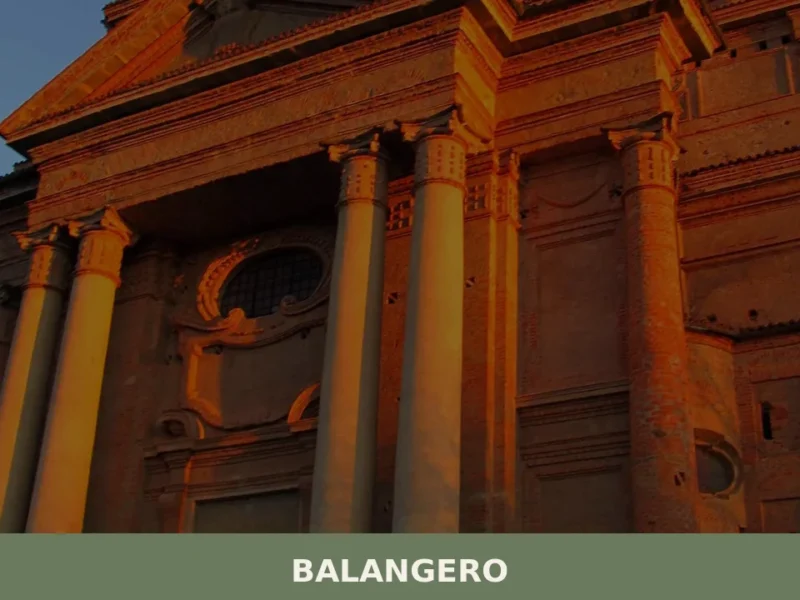
Balangero has just over 3,000 inhabitants and sits at 440 metres above sea level on a hillside in the northern part of the province of Turin. The village is known for having hosted, within its municipal territory, one of the largest asbestos mines in Europe — an extractive operation that left a deep mark on […]

Borgomasino
Plains
Discover what to see in Borgomasino, a 776-inhabitant Canavese village near Turin: history, local food, best time to visit and practical travel tips.
Angrogna
Mountain
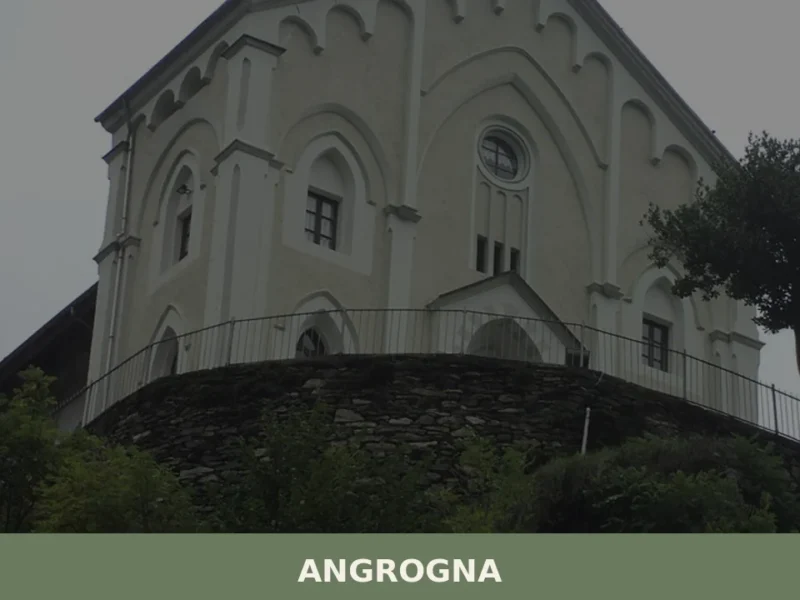
What to see in Angrogna: Chanforan, the Ghieisa d'la Tana, Waldensian trails, historic hamlets and mountain cuisine. A complete guide to the village.

Montà
Hills
4 distinct hamlets, one medieval castle and over 35 km of trails make Montà a rewarding base for exploring the Roero hills of Cuneo province.
Torino
Hills
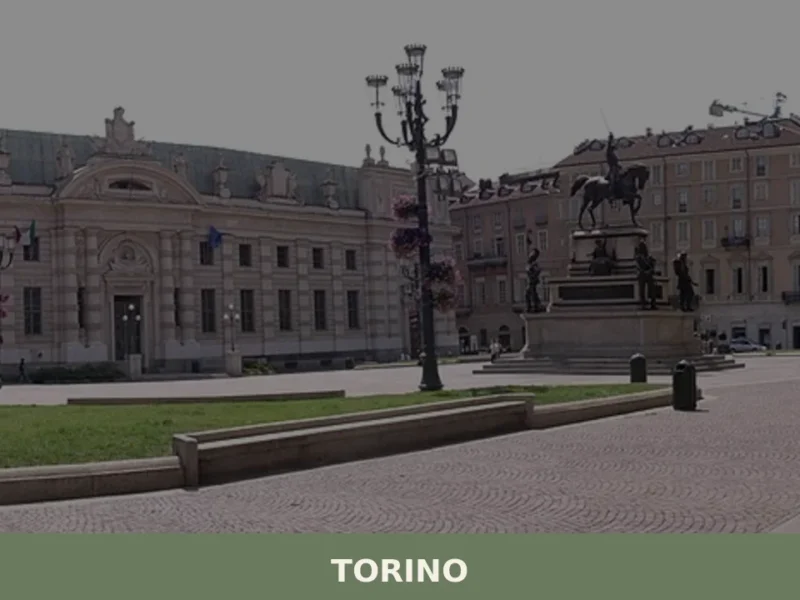
What to see in Torino: the city at 239m altitude with 841,600 residents. Explore 5 key attractions and Piedmontese cuisine. Read the full guide now.





🏡 Know Beinasco better than we do?
If you’re a local or have been there, your knowledge matters: add what’s missing or fix a detail on this page.