 Mountain
 Bare stone walls rise from narrow lanes where the air carries the mineral scent of high altitude and pine. Water runs downhill through the settlement in spring melt, and roofs slope steeply against winter snow. This is the texture of life in the Piedmont mountains—austere, functional, resilient.
Balme is a village of 97 inhabitants situated at 1,432 metres above sea level in the province of Turin, in the Valli di Lanzo (Lanzo Valleys). The settlement belongs to the Union of Mountain Municipalities of the Valli di Lanzo, Ceronda and Casternone, an administrative body that coordinates services across several isolated communities in this upland region. The village is known in the local Piedmontese dialect as Balme and in Francoprovençal as Bàrmes—linguistic echoes of the Alpine borderlands where French, Italian and regional tongues have always coexisted.
Small mountain villages survive not by growth or tourism, but by continuity: the same families, the same stone, the same seasonal passage for generations.
Identity and Territory of a High-Altitude Settlement
Balme embodies the character of a high-altitude mountain village—a place where terrain, not commerce, shapes daily life. Situated in the Lanzo Valleys, a chain of narrow gorges and upland basins north of Turin, the settlement lies on routes that have long connected the Turin basin to the Alpine passes toward France. The altitude of 1,432 metres places Balme above the tree line in some seasons and ensures that weather, snow cover and daylight hours structure the rhythm of residence here far more than urban infrastructure or tourism infrastructure.
The village’s patron saint is the Santissima Trinità (the Most Holy Trinity), a choice that speaks to deep Catholic roots in Piedmont’s mountain parishes. The official website of the municipality (comune.balme.to.it) provides current information on services and local governance, though Balme remains first and foremost a living settlement for residents rather than a destination marketed to outsiders.
Balme’s integration into the Union of Mountain Municipalities reflects a broader Piedmontese strategy: small villages share services, infrastructure and administrative costs to maintain viability in an era when young people often migrate to cities. This kind of inter-municipal cooperation is essential for sustaining schools, healthcare access and road maintenance in areas where population density is low and tax bases are thin.
Stone Architecture and the Built Landscape
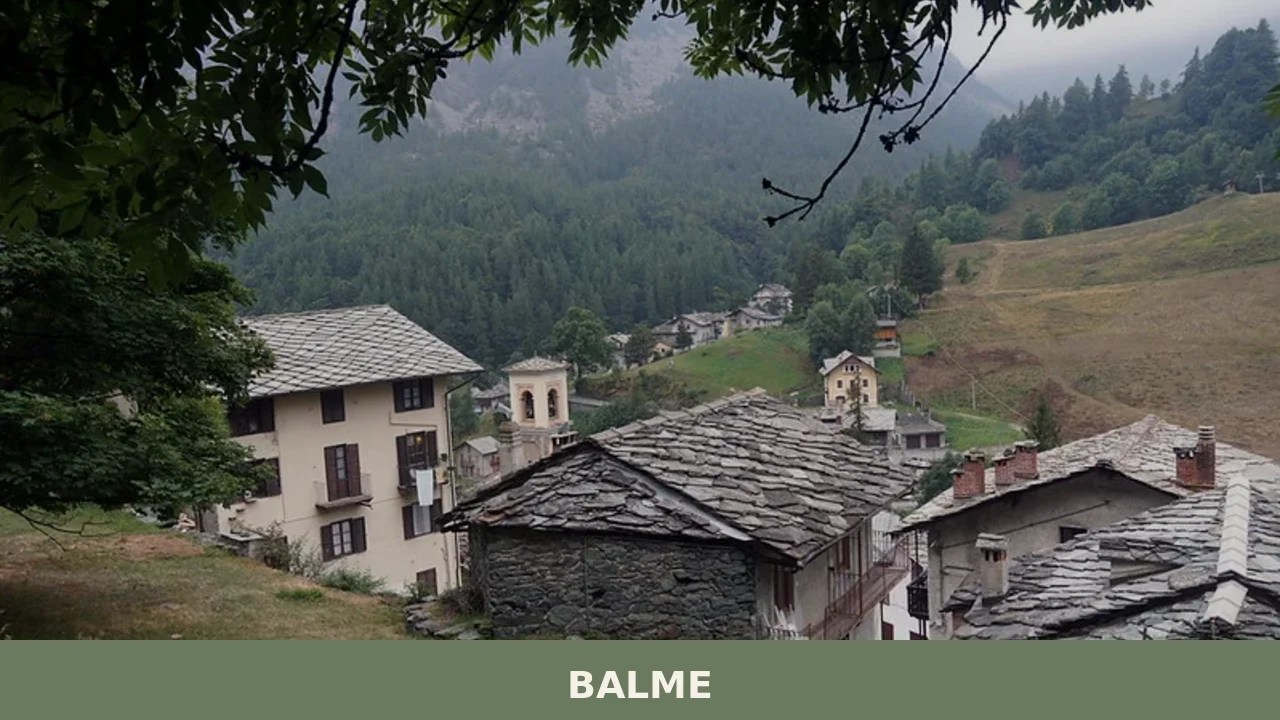
The buildings of Balme follow the logic of mountain construction: thick stone walls provide insulation against cold; steep roofs shed snow and rain; narrow lanes offer shelter from wind and conserve warmth. The village does not cluster in a formal plaza but spreads along the slope, with houses stacked vertically to follow the contours of terrain. This scattered arrangement is typical of Alpine settlements where water sources, stable ground and southern exposure determined where each family could build rather than any town plan imposed from outside.
The stone itself—grey and pale—comes from the bedrock of the Lanzo Valleys, an area of complex geology where granite and metamorphic formations crop out. Using local materials meant that construction costs were lower and that buildings blended into the landscape rather than standing apart from it. Few outsiders arrive in Balme to admire architecture as art; the buildings matter because they still function as homes, stores and gathering places.
The Sanctuary of the Santissima Trinità
The parish church dedicated to the Most Holy Trinity serves as the spiritual centre of Balme. Its presence anchors the village to Catholic tradition and calendrical rhythms—feast days, processions and seasonal masses structure community life. Churches in remote Alpine villages often possess frescoes, carved altars or wooden statuary from earlier centuries, though detailed documentation of Balme’s interior and its artistic contents lies outside the scope of readily available sources.
For visitors following Catholic pilgrimage routes through the Lanzo Valleys and the wider Turin mountains, the Santissima Trinità represents one point in a landscape of sacred sites. Nearby villages and valleys host other sanctuaries and monasteries, some of considerable historical importance. The relationship between Balme and these neighbouring religious centres forms part of a broader spiritual geography of the region.
Seasonal Access and Mountain Routes
Balme sits on the threshold of serious mountain travel. The village is accessible by road year-round, though winter snowfall can make access challenging without proper vehicles or winter tyres. The surrounding terrain offers walking routes into higher valleys and toward Alpine ridges, particularly during the snow-free months of June to September. Hikers and mountaineers treating Balme as a base camp rather than a destination in itself will find it a legitimate starting point for exploration of the Lanzo Valleys.
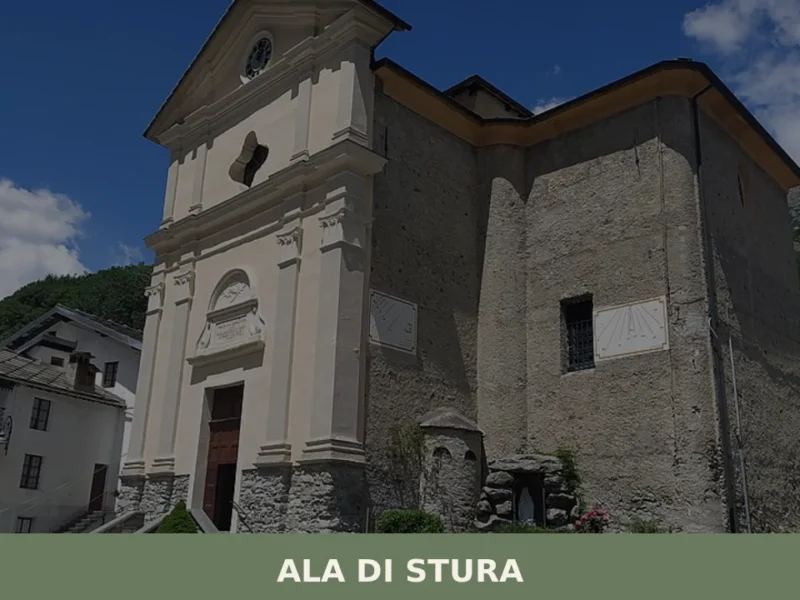
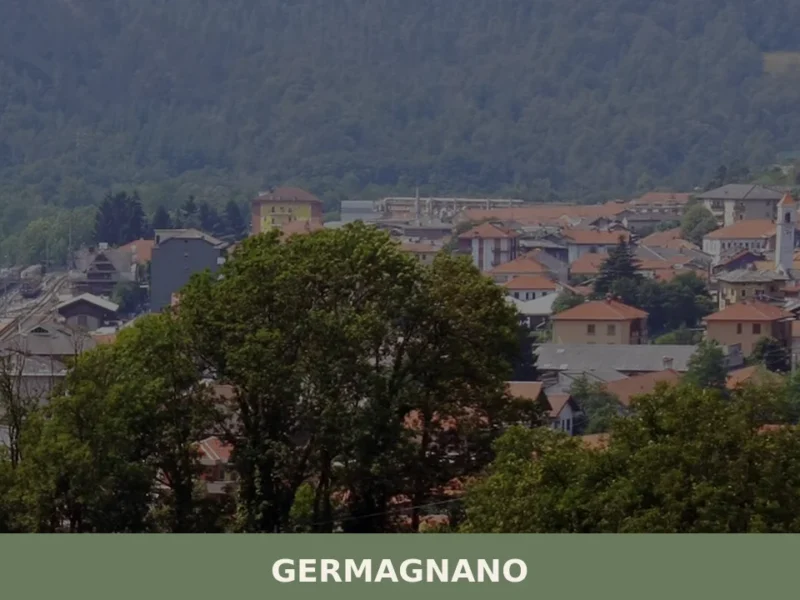
The nearest larger settlements—including villages such as Germagnano and Ala di Stura—lie within the same valley system and share similar mountain character. Broader territorial context comes from the Turin metropolitan area, which lies roughly 60 kilometres south by road but represents a different world of urban density and services.
Winter typically runs from November through March, with snow common above 1,200 metres. Spring arrives late—April and May see snowmelt and meadow greening. Summer is brief and cool, with stable weather most likely from mid-June to early September. Autumn, from September through October, brings clear skies and rapidly shortening days. Those planning a visit should pack for mountain conditions and consult local weather forecasts before travelling.
| Departure Point | Distance (approx.) | Travel Time (approx.) |
|---|---|---|
| Turin city centre | 60 km | 1.5 hours by car |
| Turin airport (Caselle) | 75 km | 2 hours by car |
| Germagnano (valley town) | 12 km | 30 minutes by car |
Local Life and Mountain Economy
Balme survives through a combination of small-scale agriculture, forestry, hydroelectric operations typical of Alpine valleys, and the presence of permanent residents for whom the village is home rather than a weekend retreat. Tourism, where it exists, is incidental—walkers and mountaineers pass through; few stay for extended periods. The village economy depends on residents’ attachment to place and on the maintenance of basic services that allow families to remain.
The linguistic landscape of Balme—where Piedmontese and Francoprovençal persist alongside Italian—reflects centuries of cultural exchange across mountain passes. Language, like architecture and seasonal rhythm, speaks to the deep territorial roots of mountain communities. These are not new villages or invented destinations; they are settlements where continuity matters more than change.