


Spinazzola
 Mountain
What to see in Spinazzola, Puglia, Italy: birthplace of a Pope and a Jesuit sinologist, 70 km from Bari. Discover top attractions, local food and travel tips.
Discover Spinazzola
The site where the Pignatelli family castle once stood is now empty ground, the structure entirely destroyed, yet the record of what happened inside its walls in 1615 is precise and uncontested. A future pope was born there. The plateau town of Spinazzola, in the province of Barletta-Andria-Trani, sits at a crossroads between the Murge highlands and the border of Basilicata, its streets running along a ridge that catches the north wind in winter and bakes under a southern Italian sun from June through August.
Deciding what to see in Spinazzola means engaging with a town whose documented history runs through papal Rome, the Jesuit missions to imperial China, and the agricultural economy of inland Puglia.
With a registered population of 6,515 as of December 31, 2017, and positioned approximately 70 km (43.5 mi) from Bari, Spinazzola, Puglia, Italy offers visitors a concentrated set of historical and cultural reference points. The town’s connections to two internationally significant figures — one a head of the Catholic Church, the other the first European scholar to systematically study the Chinese language — give it a historical weight unusual for a settlement of its size.
History of Spinazzola
Spinazzola developed as a settlement within the broader zone of the Murge, the karst limestone plateau that dominates inland Apulia. The town’s position, roughly equidistant between the Adriatic coastline and the Apennine foothills of Basilicata, made it a natural node for agricultural and pastoral activity across the medieval period. The surrounding territory, characterised by hard limestone soils and a dry continental microclimate, was worked primarily for cereal cultivation and sheep grazing, activities that shaped the social structure of the community for centuries.
The most consequential documented connection to external history is the birth of Antonio Pignatelli in the castle of the Pignatelli family, located within Spinazzola. Born in 1615, Pignatelli would go on to become Pope Innocent XII, elected to the papacy in 1691 and serving until his death in 1700.
The castle itself no longer stands — it was destroyed at some point after his birth — but the historical record of his origins in Spinazzola remains firmly established. His pontificate is noted for issuing the bull Romanum decet Pontificem in 1692, which prohibited popes from granting special favours to relatives, effectively ending the practice of nepotism in the papal court. During this same period, the broader province was under Spanish-administered Kingdom of Naples, a political context that shaped local governance and land ownership patterns across the Barletta-Andria-Trani area, including towns such as Terlizzi, which share a similar feudal administrative heritage from that era.
Roughly seventy years before Pignatelli’s birth, another figure of international significance came from Spinazzola. Michele Ruggieri, born in 1543, entered the Society of Jesus and was sent to Asia as part of the Jesuit mission to expand the Church’s presence in the Far East. He arrived in China in 1579 and, working alongside Matteo Ricci, became the first European to compile a systematic study of the Chinese language, producing a Portuguese-Chinese dictionary and translating Catholic catechism texts into Chinese.
Ruggieri died in 1607, and his work is recognised as foundational in the history of European sinology. The convergence of these two biographical trajectories — a future pope and a pioneering linguist-missionary — in a single inland Apulian town of modest size is a historical coincidence that the documentary record confirms without ambiguity.
What to see in Spinazzola, Puglia: top attractions
Site of the Pignatelli Family Castle
The ground where the Pignatelli castle stood is one of the most historically documented sites in Spinazzola, even though the structure itself no longer exists. The castle was the birthplace of Antonio Pignatelli in 1615, the man who would reign as Pope Innocent XII from 1691 to 1700. Standing at the site, visitors can understand the scale of the Pignatelli family’s local prominence: they held feudal authority over the territory, and the castle’s former position within the town’s fabric reflects the typical layout of southern Italian feudal settlements. The absence of the building makes the historical documentation all the more important to consult before visiting — the municipal records and local historical accounts fill in what stone no longer shows.
Historic Town Centre
Spinazzola’s centro storico follows the elongated ridge line characteristic of Murge plateau settlements, with the older residential fabric concentrated around a central axis that connects the principal religious and civic buildings.
The limestone used in construction throughout the older quarters is the same karst material extracted locally, giving facades a pale grey-cream tone that shifts colour depending on the angle of light and the season. The street pattern narrows towards the older core, where the scale of the buildings reflects the domestic architecture of a town that grew incrementally from the medieval period through the eighteenth century. Walking through the grid of the historic centre takes roughly forty minutes at an unhurried pace, and the exercise gives a clear sense of how the settlement expanded outward from its original feudal nucleus.
Church of the Madonna della Croce
Religious architecture in Spinazzola centres on several churches that mark the principal moments of the town’s devotional history. The Church of the Madonna della Croce is among the most referenced in local tradition, connected to the Marian veneration that remains active in the annual calendar of the community. The building’s interior retains decorative elements consistent with the Counter-Reformation period of southern Italian ecclesiastical architecture, a phase during which the Jesuit influence — itself connected to Spinazzola through Michele Ruggieri — was particularly strong across the Kingdom of Naples.
The church functions as an active place of worship, so visits are most practical during morning hours on weekdays or outside of scheduled services.
Panoramic Views over the Murge and Basilicata Border
From the higher points of Spinazzola, the view extends south and west across the Alta Murgia plateau and, on clear days, towards the elevated terrain that marks the beginning of Basilicata. The town sits at an elevation of approximately 470 m (1,542 ft) above sea level, high enough to give a clear orientation across the surrounding agricultural landscape. Fields of durum wheat, interspersed with olive groves and dry stone walls, extend towards the horizon. This visual geography explains the town’s historical function as a waypoint between the Adriatic-facing lowlands and the interior. The best light for this perspective falls in the late afternoon, when the sun descends towards the western ridges and the plateau colours shift from bleached yellow to a deeper ochre.
Michele Ruggieri Memorial Context
No formal monument to Michele Ruggieri currently dominates Spinazzola’s public space in a way comparable to major civic statues, but his connection to the town is documented and acknowledged within local cultural institutions. Born here in 1543, Ruggieri left for the Jesuit order and eventually reached China in 1579, where he spent years producing the first systematic European analysis of written and spoken Chinese.
He died in 1607, having spent his final years back in Europe. For visitors with an interest in the history of cultural exchange between Europe and Asia, Spinazzola represents a verifiable point of origin for a figure who shaped that exchange in its earliest documented phase. Local libraries and the municipal archive hold materials relevant to both Ruggieri and Pignatelli that are accessible to researchers.
Local food and typical products of Spinazzola
The food culture of Spinazzola is grounded in the agricultural output of the Alta Murgia: durum wheat, legumes, olive oil, and lamb form the basis of a kitchen that developed in conditions of relative scarcity and seasonal constraint. The inland position of the town, roughly 70 km (43.5 mi) from the Adriatic coast, means that the diet historically relied on preserved fish — dried cod and salted anchovies — rather than fresh seafood, combined with the produce of the surrounding fields and the animals raised on the plateau’s rough pasture. These practical origins are still legible in the way food is prepared and served in the area.
Pasta remains central to the local table, with hand-rolled formats made from semolina and water — no egg — consistent with the Apulian tradition.
Orecchiette, the small ear-shaped pasta pulled across a wooden board with a knife, appears with a range of sauces: braised lamb, cime di rapa (turnip tops sautéed in olive oil with garlic and chilli), or a slow-cooked tomato ragù with sausage and pork ribs. Lagane e ceci, a dish of wide flat pasta ribbons cooked with chickpeas in a broth seasoned with rosemary and dried chilli, is another preparation that reflects the legume-based economy of the Murge interior. Lamb is roasted or stewed with wild herbs — thyme, bay, rosemary — that grow on the plateau, and the meat carries the flavour of animals grazed on dry grassland rather than cultivated fodder.
The olive oil produced in the Murge highlands, including the territory around Spinazzola, falls within the broader Apulian olive oil tradition characterised by Coratina variety olives, which yield an oil with a notably bitter and peppery finish due to high polyphenol content. Bread baked from locally milled durum wheat semolina — with a dense yellow crumb and a hard crust — is the standard accompaniment to every meal and is produced by bakeries in and around the town using long fermentation times.
The area also produces dried legumes, particularly chickpeas and fava beans, sold loose in local markets and used in both domestic cooking and the restaurants that serve the surrounding agricultural community.
Local markets and small food shops in Spinazzola carry these products most reliably in autumn and early winter, when the olive harvest is recent and the new season’s legumes have dried. The period from October through December is the most productive for finding fresh-pressed oil directly from local producers. International visitors should note that English is rarely spoken in smaller food shops and markets, and carrying euro cash is practical since card payment terminals are not universally available in smaller establishments.
Festivals, events and traditions of Spinazzola
The principal religious event in Spinazzola’s annual calendar is the feast of the Madonna della Croce, the town’s patron, which draws participation from residents and visitors to the surrounding Murge territory. The celebration involves a solemn procession through the historic centre, during which the image of the Madonna is carried through the principal streets, accompanied by the local clergy, civic authorities, and devotees.
Music, fireworks, and outdoor gatherings mark the festive days surrounding the liturgical celebration, following the pattern common to southern Italian feste patronali — patron saint festivals that combine religious observance with communal gathering and food.
Beyond the Marian feast, Spinazzola participates in the broader calendar of agricultural celebrations that punctuate the Murge year: the wheat harvest in early summer, the olive harvest in autumn, and the seasonal slaughter of livestock in winter each carry informal traditions that are observed within family and community settings rather than as formalised public events. The town’s documented twin-city relationship with Verbania, in Piedmont on Lake Maggiore, has generated periodic cultural exchanges, though the specific schedule of such events varies from year to year and is best confirmed through the official Spinazzola municipal website before travel.
When to visit Spinazzola, Italy and how to get there
The most practical period for visiting Spinazzola is spring, between late April and early June, when temperatures on the Murge plateau are moderate — typically between 15°C and 25°C (59°F and 77°F) — and the agricultural landscape is at its most visually active, with wheat fields green and the last wildflowers on the limestone plateau.
This window also aligns with the broader advice for those researching the best time to visit Puglia: the spring months offer comfortable conditions for walking and sightseeing without the heat and tourist concentration that characterise July and August on the Adriatic coast. Autumn, from September through November, is the second recommended period, cooler than summer and timed to coincide with the olive harvest. Summer visits are feasible but require planning around the midday heat, which regularly exceeds 35°C (95°F) on the inland plateau.
Getting to Spinazzola by car is the most direct option. From Bari, the town is approximately 70 km (43.5 mi) to the southwest, reachable via the SS96 or the SS97, with a journey time of around one hour depending on traffic. From the A16 motorway (Napoli-Canosa), the Canosa di Puglia exit provides access to the SS93 and then connecting roads towards Spinazzola, adding roughly 40 km (24.9 mi) from the motorway. For those arriving by rail, the nearest significant rail hub is Bari Centrale, served by Trenitalia with connections from Rome (approximately 4 hours by high-speed rail to Bari), Naples (around 3.5 hours), and Milan (around 4.5 hours on fast services).
From Bari, onward travel to Spinazzola requires a local bus or a hire car, as the town does not have a direct train connection. The nearest airport with scheduled international flights is Bari Karol Wojtyla Airport, located approximately 80 km (49.7 mi) from Spinazzola, with a driving time of around one hour and fifteen minutes. A day trip from Bari to Spinazzola is feasible, allowing four to five hours in the town before returning to the coast in the evening. Visitors planning to explore the wider Murge area might consider combining Spinazzola with a stop at Locorotondo, a circular hilltop town in the Valle d’Itria zone that represents a contrasting Apulian landscape within the same day’s drive.
Those travelling with pushchairs or with limited mobility should note that the historic centre of Spinazzola, like most Murge plateau towns, has uneven stone surfaces and stepped alleys in the older quarters. The main street running along the ridge is more accessible, but full exploration of the historic fabric involves gradients and cobbled surfaces. Public parking is available at the margins of the historic centre. For anyone extending their Puglia itinerary further south, the town of Campi Salentina in the Salento zone offers a point of comparison for understanding how Apulian settlement patterns differ between the northern and southern ends of the region.
📷 Photo Gallery — Spinazzola


In Apulia More villages to discover
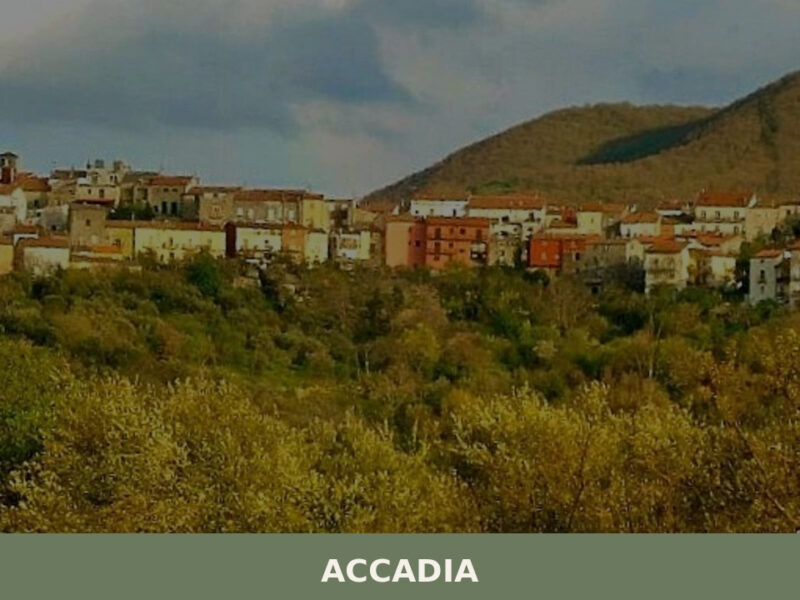
Accadia
Mountain
Perched at 650 metres above sea level on the western edge of Puglia’s Subappennino Dauno, the small village of Accadia feels like a secret whispered between mountains and sky. Home to just over 2,200 inhabitants, this ancient hilltop settlement in the province of Foggia rewards visitors with crumbling medieval ruins, sweeping panoramas, and a fierce […]
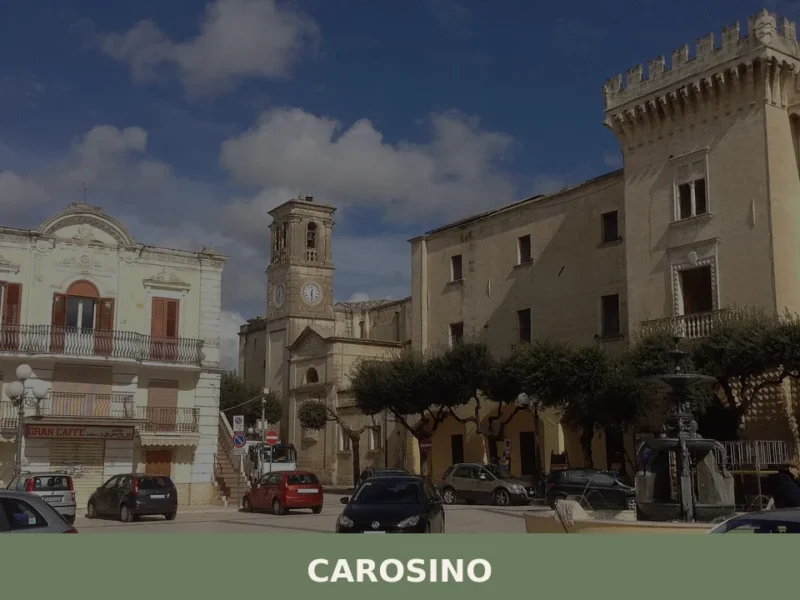
Carosino
 Plains
Carosino is a comune of 6,371 inhabitants in the province of Taranto, positioned in the Ionian arc of Puglia where the landscape flattens into olive groves and vineyards before reaching the coast. Known locally by its Salentine dialect name Carusinu, the town sits within a territorial context defined by centuries of agricultural production and the […]
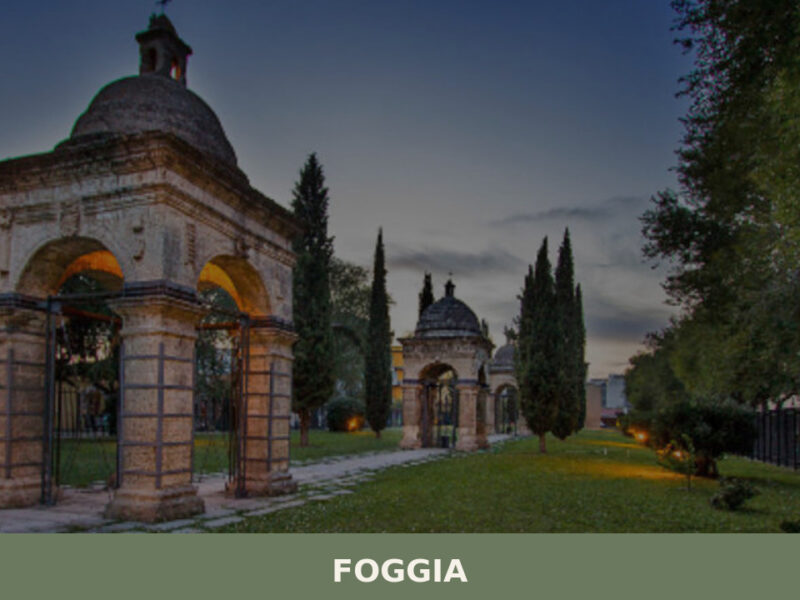
Foggia
Plains
Foggia, capital of the Capitanata, holds medieval traces, Daunian artefacts, and the culinary traditions of Italy's largest wheat plain. A guide to its overlooked layers.
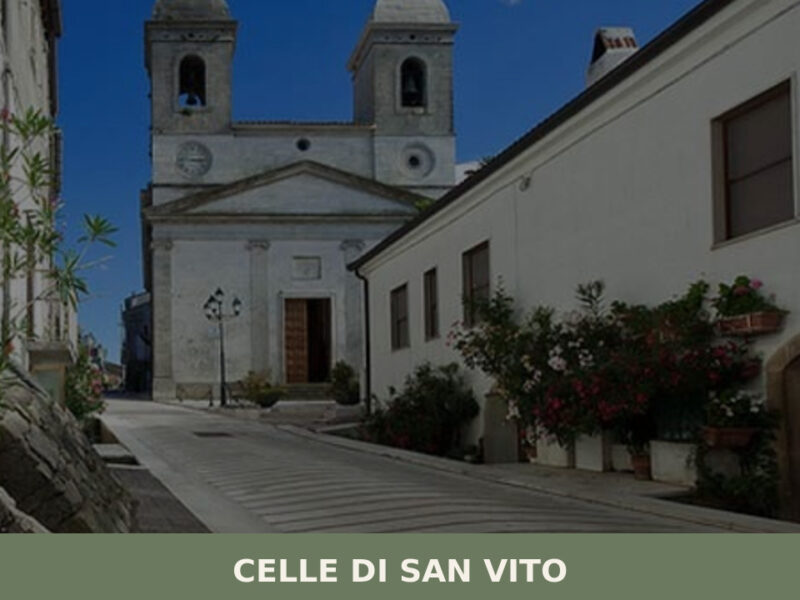
Celle di San Vito
Mountain
A 148-resident Franco-Provençal enclave at 726 metres in the Daunia sub-Apennines. Discover what to see in Celle di San Vito, from medieval stone lanes to linguistic heritage.
Faggiano
Plains
Discover what to see in Faggiano, a Taranto province comune in Puglia: history, food, best time to visit, and how to get there.
Galatina
Plains
Discover what to see in Galatina, Puglia: Gothic frescoes, tarantismo history, local food and practical travel tips for this Salento city near Lecce.
Barletta
 Sea
Sea
What to see in Barletta, Puglia, Italy: the Colossus, a Norman castle, and the 1503 Disfida. Population 94,700. Discover top attractions and how to get there.
San Pietro Vernotico
Sea
What to see in San Pietro Vernotico, Italy? Discover its 14th-century Torre Quadrata and the historic Chiesa Matrice. Explore this village, 36 m above sea level, for its rich past.
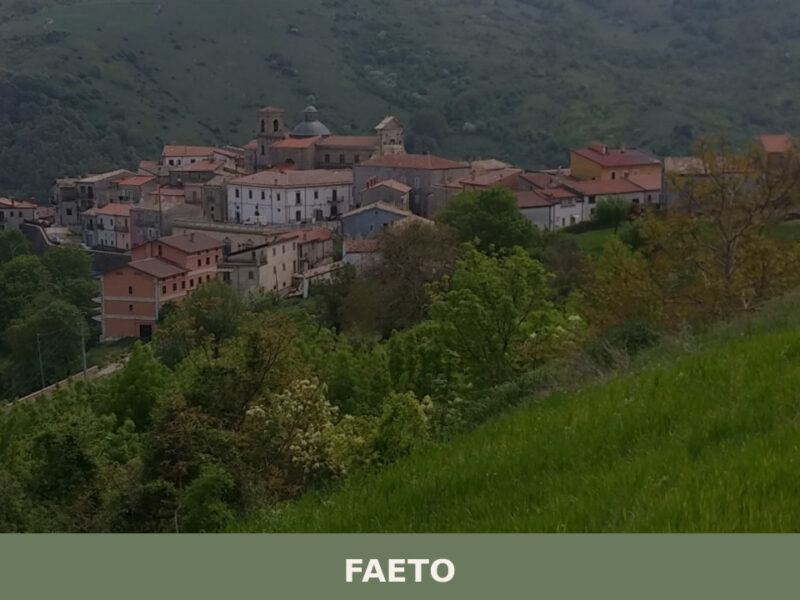
Faeto
Mountain
A Franco-Provençal-speaking village of 616 inhabitants high in the Daunia mountains. Discover what to see in Faeto: ancient dialect, beech forests, and Puglia's highest peak.
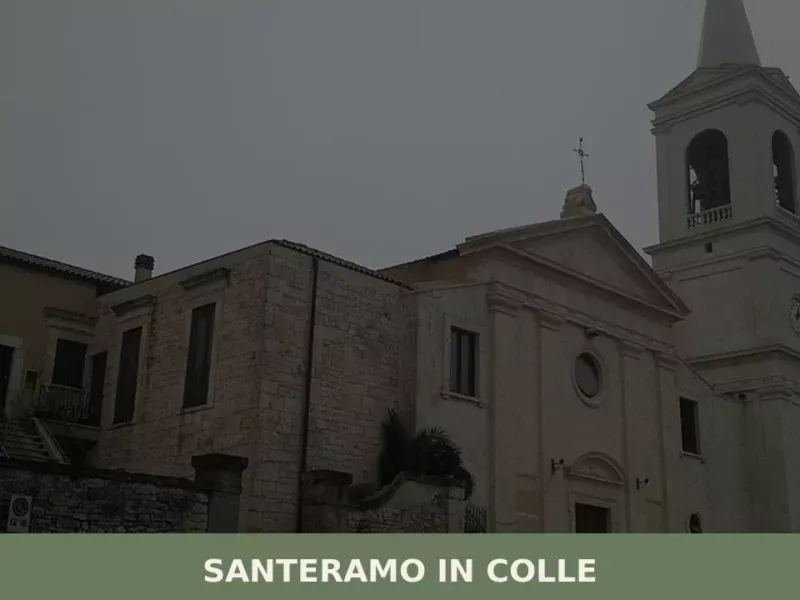
Santeramo in Colle
 Hills
Hills
What to see in Santeramo in Colle? Discover the top 5 attractions, from the historic center to beautiful churches. Plan your visit to Puglia!
🏡 Know Spinazzola better than we do?
If you’re a local or have been there, your knowledge matters: add what’s missing or fix a detail on this page.