


Tizzano Val Parma
 Mountain
2,198 residents and over a thousand years of documented history: Tizzano Val Parma draws visitors with its Romanesque pieve, medieval ruins and ski slopes on Monte Caio.
Tizzano Val Parma: Mountain Village Between Castle and Apennine Ridge
At 814 metres above sea level, the old centre rises around a long, narrow piazza flanked by two parallel rows of stone buildings. Above it, the silhouette of a ruined medieval castle breaks the skyline to the south, and below, the Torrente Parma carves the valley floor. The surrounding slopes alternate between dense woodland, rocky outcrops and gentler hillsides still under cultivation, while three watercourses — the Parma, the Parmossa and the Bardea — define the edges of the municipal territory.
Tizzano Val Parma sits in the upper-middle Parma valley in Emilia-Romagna, and two things set it apart for the visitor: a documented history stretching back to 991 and a landscape dominated to the south by the broad massif of Monte Caio, which rises to 1,584 metres. The village is known locally by its dialect name, Tisàn, and carries that double identity — mountain working community and seasonal resort — through every layer of its urban fabric.
A Name, a Legend and Ten Centuries of Contested Lordship
The place name derives from the Latin cognomen Titius, with the common Roman suffix -anus, marking it as a settlement of predial origin — land that once belonged to a family of that name. A local legend, however, offers a more colourful story: it links the village’s name to a Roman general, Tito Cornelio Balbo, who supposedly founded three fortified settlements in the area and gave each one a fragment of his own name — Tizzano, Corniglio and Ballone. The tale has no documentary support, and the village emblem — a burning firebrand, or tizzone — draws on a separate tradition involving the discovery of embers beneath the castle foundations, which historians equally dismiss.
The earliest written record of Tizzano dates to 8 March 991, when the place appears in a property deed. By 1005 the church of San Pietro was listed in a diocesan register compiled under the Bishop of Parma, Sigifredo II, confirming that both a community and an organised religious life had existed here for some time. Bronze Age finds at several locations across the municipality — including Femminatiche, Albazzano and Monteremo — push human presence back much further, while fragments of Etruscan pottery suggest that the ridge at Monteremo served as a crossing point toward the Parmossa ford during the Iron Age.
The castle, raised on the high ground south of the settlement between the tenth and eleventh centuries to guard the Parma valley and the old salt road, became the pivot around which lordship over the village turned for five hundred years. The Terzi family held it under Visconti investiture from the late fourteenth century; in 1386 Gian Galeazzo Visconti confirmed the concession to Niccolò Terzi the Elder and his heirs, and the following year Emperor Wenceslaus of Luxembourg ratified the family’s holdings in a diploma sealed at Nuremberg. After the assassination of Ottobuono de’ Terzi in 1409, the Fieschi took the castle; later, Niccolò de’ Terzi, known as il Guerriero, recovered it in service to Filippo Maria Visconti, only to lose it again when the Sforza came to power and granted the fief to another line. By 1495 the Pallavicino family held Tizzano under investiture from Ludovico il Moro. The castle changed hands again in the course of the sixteenth century, passed through a violent episode during the Italian Wars, and eventually settled under Farnese and then Doria ownership. The Doria held the largely ruined structure until the end of the eighteenth century, when feudal rights were extinguished under Napoleonic law.
During the Second World War, Tizzano hosted a number of Jewish refugees under the regime of internamento libero. In December 1943, nine of them were arrested and deported to Auschwitz, together with four Italian Jews sheltering in the hamlet of Reno. In recognition of its civilian sacrifice and partisan activity, the municipality was awarded the Bronze Medal for Military Valour on 5 October 1994.
Stone, Light and Water: The Places That Define the Village
Pieve di San Pietro
Standing on the summit of Monte Rotondo, the parish church of San Pietro is the oldest and most architecturally significant building in the village. It was already listed in a diocesan document of 1005, though the current stone structure was rebuilt in Romanesque form between the eleventh and twelfth centuries, developing a basilican plan with three naves. The facade is dominated by a heavy central bell tower integrated into a porch — an unusual arrangement known as a clocher-porche — and the flanks of the building still carry traces of their original decoration: narrow splayed windows, corbelled arches along the cornice and the carved archivolt of a secondary entrance portal. Inside, the naves are covered by timber truss ceilings and divided by massive columns with rough cubic capitals. The church was substantially restructured in the eighteenth century in a Neoclassical manner, then restored between 1957 and 1964 to remove most of those later additions; further structural consolidation work followed between 2010 and 2012. Frescoes painted in 1485 were detached during the twentieth-century restoration and moved to the nearby oratory.
Oratorio della Madonna del Santo Rosario
This small oratory was built in the early sixteenth century within the rebuilt village settlement and later reconstructed in 1791 by the confraternity of the Rosary. A solid bell tower rises in four stages beside the rectangular stone facade. Inside, the single-nave interior is divided into three vaulted bays, and it now houses five late-fifteenth-century frescoes transferred here from the Pieve di San Pietro during the mid-twentieth-century restoration works. A large Neoclassical altarpiece at the end of the presbytery frames a contemporary statue of the Madonna of the Rosary with the Child. The building suffered damage in the 2008 earthquake and was fully restored between 2010 and 2012.
Chiesa di San Genesio, Albazzano
The hamlet of Albazzano, within the Tizzano municipality, has its own church dedicated to San Genesio. The original chapel, first mentioned in a document of 1230, was destroyed by a landslide in 1500 along with the earlier settlement and rebuilt further uphill. It was elevated to an independent parish in 1564, enlarged around the mid-seventeenth century, and given a Neoclassical facade and bell tower toward the end of the eighteenth century. The interior, decorated with Empire-style stucco work, retains a fresco depicting the Pietà. The building was fully restored in 1950. It stands as a reminder that Tizzano’s territory is a patchwork of hamlets, each with its own religious and social history.
The Medieval Castle Ruins
The castle that once guarded the salt road through the Parma valley survives only as ruins on the high ground immediately south of the historic centre. Its documented existence stretches back to the eleventh century, and for centuries it defined the political identity of the entire valley. By the time the Doria family held it in the seventeenth century, the structure had already been reduced to a tower and a main residential building. Today the ruins are a physical landmark rather than a monument with interiors to visit, but they anchor the topography of the village — the old settlement developed around and below them, and the relationship between castle hill and piazza still shapes how one reads the historic core.
Monte Caio and the Schia Ski Area
The southern edge of the Tizzano municipal territory rises to the massif of Monte Caio, which reaches 1,584 metres at the Punta Bocchialini and marks the boundary with the neighbouring municipalities of Corniglio and Palanzano. On its slopes the ski resort of Schia developed during the second half of the twentieth century, turning the village into a destination for winter sports alongside its summer mountain tourism. Visitors who come for hiking in warmer months follow routes through the beech and fir woodland that covers the higher elevations, where the terrain shifts between rocky ridges and more open grazing land.
Mountain Flavours of the Parma Apennines
The territory of Tizzano sits within the broader food culture of the Parma Apennines, where altitude, forest and pasture determine what ends up on the table. The valley economy has historically combined small-scale farming on the river terraces with woodland produce from the higher slopes. Visitors staying in the village will find the local offer shaped by these same conditions — seasonal, mountain-inflected and closely tied to what the surrounding landscape can provide. The area’s position within the wider province of Parma, one of Italy’s most recognised food territories, means that cured meats and aged cheeses produced nearby appear on local tables, even if Tizzano’s own identity is more that of a mountain agricultural community than an agri-food destination in itself.
Planning a Visit: Seasons, Access and Distances
Tizzano is a village that changes character with the season. Summer brings families and hikers who use it as a base for excursions toward Monte Caio and the Apennine ridgeline; winter brings skiers heading to the Schia slopes. Spring and autumn offer the clearest light on the valley and the most manageable conditions for exploring the stone architecture of the historic centre. If you arrive by car from Parma, the most direct route follows the Parma valley road south through Langhirano, a journey of roughly 45 kilometres .
The village’s official website — comune.tizzano-val-parma.pr.it — publishes current information on events, accommodation and services. Visitors who want to extend their stay in the Parma Apennines can also look toward Albareto to the southwest or Bardi to the west, both mountain communities with their own distinct histories. For a different Emilian atmosphere, the flatland village of Sorbolo and the Reggiano Apennine settlement of Carpineti offer useful points of comparison.
Accommodation in Tizzano is modest in scale but varied enough to suit hikers, families and those travelling for cultural reasons. The village has no train connection; access by public transport requires a bus from Parma. Walkers arriving in summer should carry water on ridge routes, where the woodland gives way to open terrain and shade is intermittent.
| Departure | Distance | Time |
|---|---|---|
| Parma | approx. 45 km | approx. 55 min by car |
| Langhirano | approx. 22 km | approx. 30 min by car |
| Bologna | approx. 120 km | approx. 1 h 40 min by car |
| Milan | approx. 175 km | approx. 2 h 15 min by car |
Frequently asked questions about Tizzano Val Parma
How do you get to Tizzano Val Parma by car?
From Parma, take the SS513 (Via Emilia Ospizio) southward through the Parma valley toward Langhirano, then continue on the SP28 uphill to Tizzano Val Parma. The journey covers roughly 45–50 km and takes about one hour. The nearest motorway exit is Parma on the A1 Milano–Bologna. There is no direct train connection; the nearest railway station is Parma, from which you need a car or local bus service.
When is the feast of the patron saint San Pietro celebrated in Tizzano Val Parma?
Tizzano Val Parma celebrates its patron saint San Pietro on 29 June, the liturgical feast of Saints Peter and Paul. Local festivities typically include a religious Mass in the parish church and community events in the village piazza. June also coincides with the beginning of the summer season in the Apennine highlands, making the feast day a lively occasion combining religious tradition with the first influx of summer visitors to the area.
Are there marked hiking trails around Tizzano Val Parma and Monte Caio?
Yes. The Monte Caio massif, which reaches 1,584 metres at Punta Bocchialini, is served by trails maintained under the CAI (Club Alpino Italiano) network. Routes depart from the village and connect to the ridge system along the Parma–Tuscany divide. The terrain is typical Apennine high ground with beech forests and open pasture. Walkers should consult the CAI Parma section or local municipal offices for current trail maps and difficulty ratings before setting out.
What is the best season to visit Tizzano Val Parma?
Late spring and summer, from May through September, are the most suitable months. At 814 metres altitude, temperatures are significantly cooler than the Po Plain, making the village a traditional summer retreat. July and August see the highest visitor numbers. Autumn offers foliage colour in the beech and chestnut woods. Winter can bring snow and road closures on higher routes. The patron saint feast on 29 June marks the opening of the main summer season.
How long should you plan for a visit to Tizzano Val Parma?
A half-day is sufficient to walk the historic centre, visit the parish church and observe the medieval castle ruins above the village. A full day allows time for a hike toward Monte Caio or exploration of the surrounding hamlets within the municipality. Visitors combining Tizzano with the broader Parma Apennine food and landscape corridor — including Langhirano and Traversetolo — should budget at least one overnight stay to avoid rushed driving on mountain roads.
📷 Photo Gallery — Tizzano Val Parma


In Emilia-Romagna More villages to discover
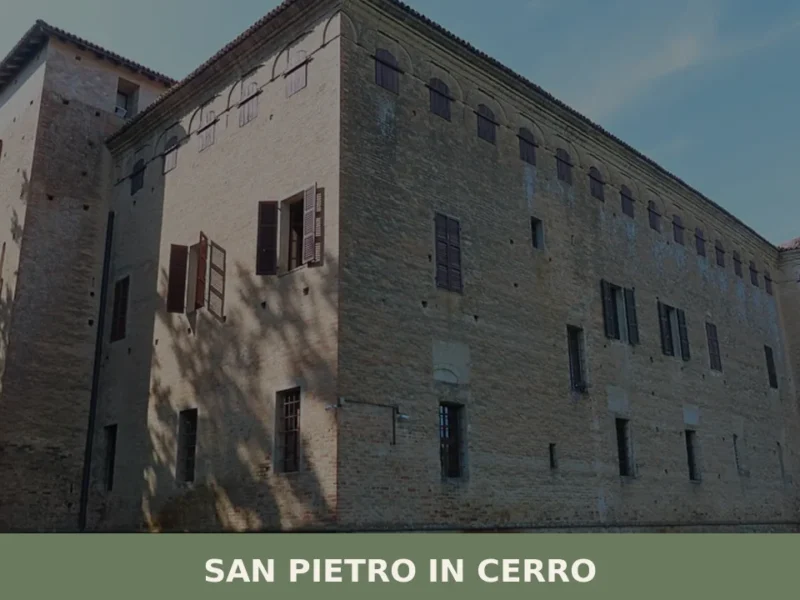
San Pietro in Cerro
 Plains
With its 769 inhabitants and an elevation of just 44 metres above sea level, San Pietro in Cerro is one of the smallest municipalities in the province of Piacenza, spread across the alluvial plain between the Arda torrent and the Po river. The fifteenth-century castle of the Barattieri counts, still standing today with its square-plan […]
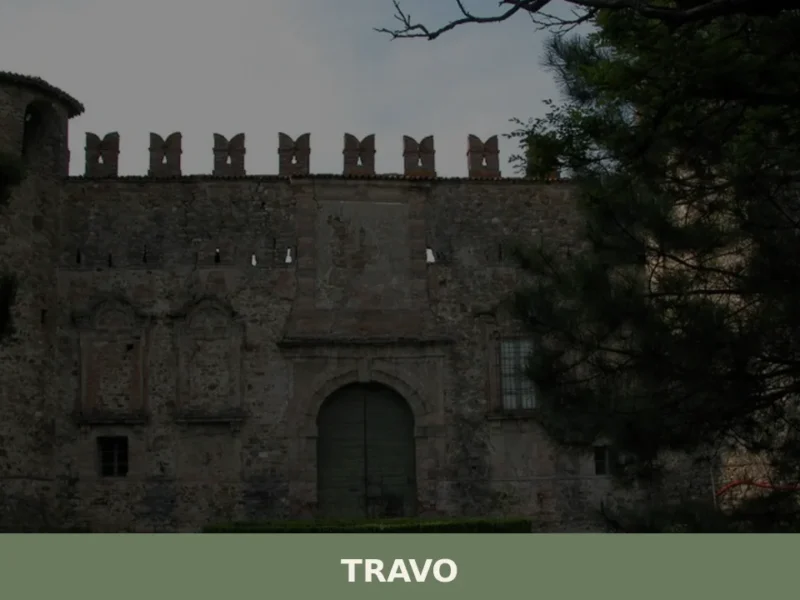
Travo
Plains
At 171 metres above sea level, in the lower Val Trebbia, Travo is one of those centres in the province of Piacenza where the historical layers of the past surface in visible, tangible ways: from pre-Roman foundations to the medieval domains of the Malaspina and Landi families, with traces of the Matildine Middle Ages in […]
Calendasco
Plains
What to see in Calendasco, a village of 2,485 residents on the Po plain at 55 m elevation. Discover the medieval castle, the 19 February Saint Conrad festival and Piacenza cured meats.
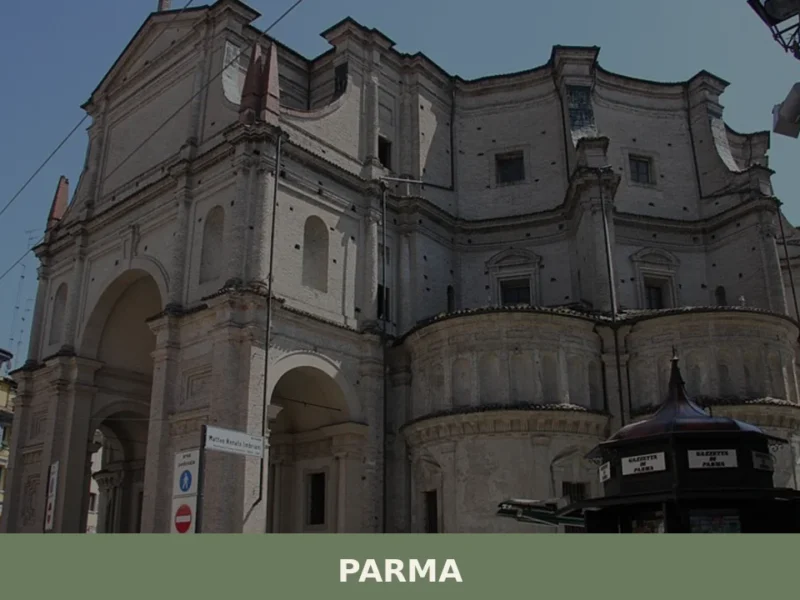
Parma
Plains
what to see in parma. Home to 177,714 residents, Parma offers the iconic Duomo, Baptistery, and world-famous Parma Ham. Explore its rich heritage.
Bardi
Mountain
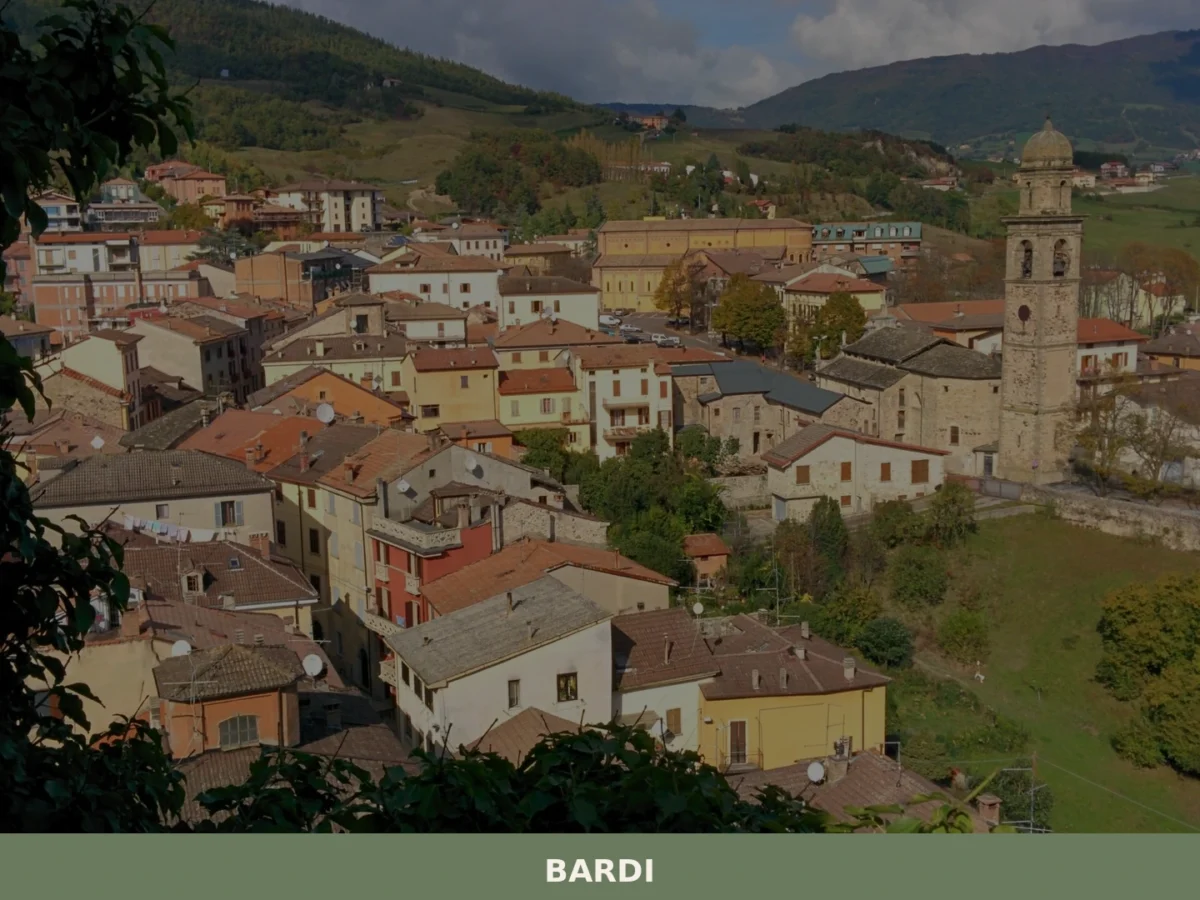
What to see in Bardi, Italy: Explore the Landi Castle and its 13th-century Oratory at 625 m altitude. Discover this mountain village in Emilia-Romagna.
Modena
Plains
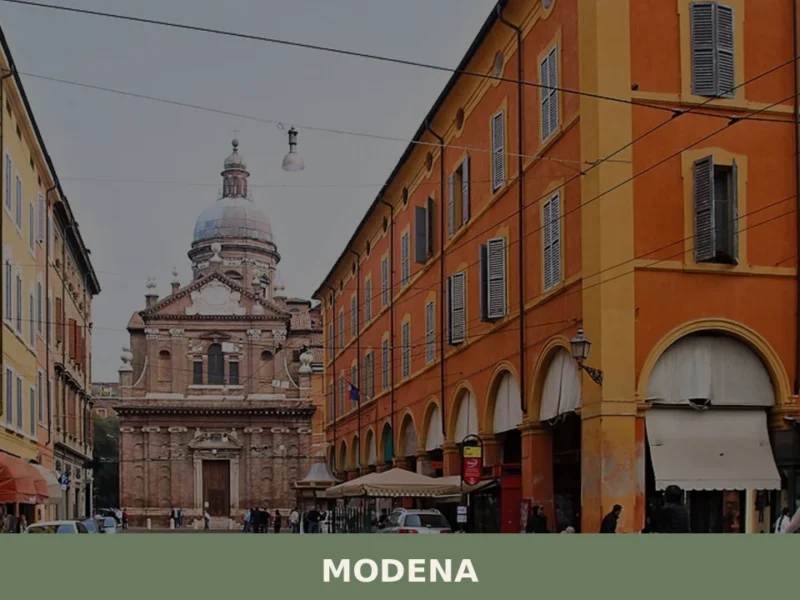
what to see in modena. Discover the UNESCO Duomo and Ducal Palace. Explore this city of 179,000+ residents and taste typical Modenese products.
Zerba
Mountain
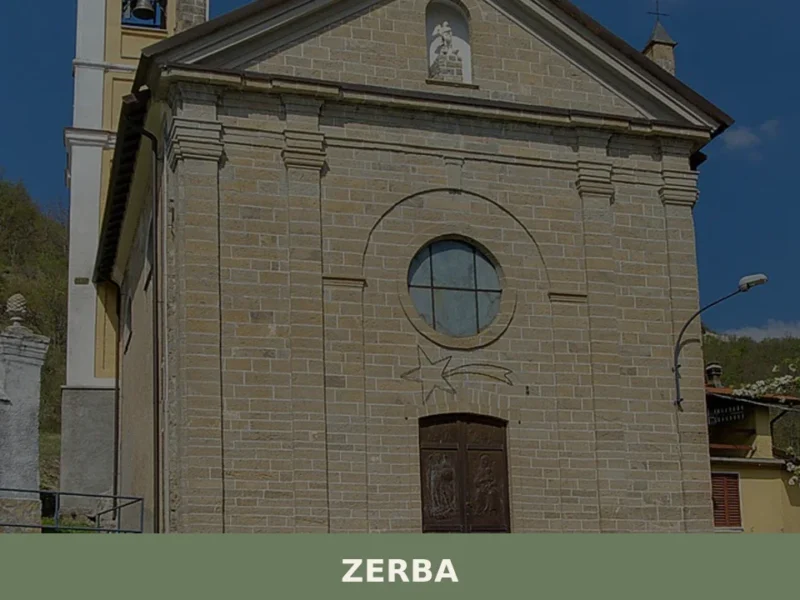
With just 71 registered inhabitants, Zerba is the least populated municipality in the entire province of Piacenza and one of the smallest in Italy. Situated at 906 metres above sea level in the upper Val Boreca, on the border between Emilia-Romagna and Liguria, this mountain settlement retains a sandstone building fabric that follows precise construction […]
Pecorara
 Hills
Hills
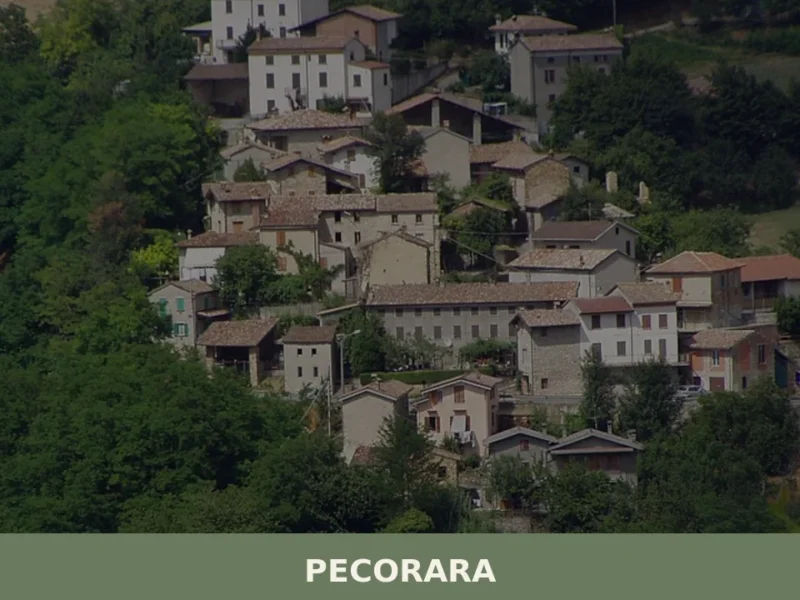
What to see in Pecorara? Discover 5 must-see attractions in this Emilia-Romagna village. Read the full guide and plan your visit!
Coli
Mountain
A documentary-style guide to Coli in the Trebbia valley. History, attractions, local food, and practical tips for visiting this Piacenza Apennine village.
Bobbio
Hills
What to see in Bobbio: a town of 3,710 at 272 m in the Trebbia valley, with a 614 AD abbey, the medieval Ponte Gobbo and a hilltop castle. Plan your visit now.
🏡 Know Tizzano Val Parma better than we do?
If you’re a local or have been there, your knowledge matters: add what’s missing or fix a detail on this page.