


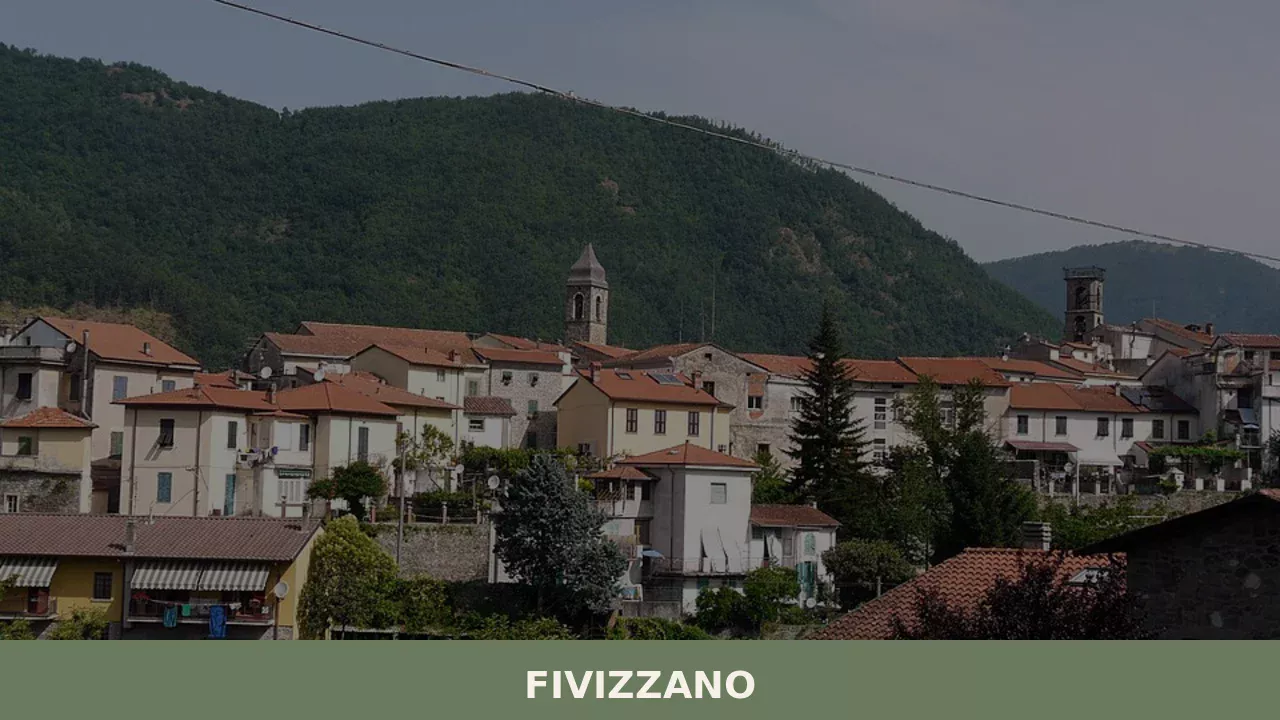
Fivizzano
 Hills
Hills
In 1477 a printing press active in Fivizzano produced an edition of Cicero’s Epistolae ad familiares, making this Lunigiana town one of the first places in Italy — and in Europe — to host the art of movable-type printing. The village stands at 326 metres above sea level in the province of Massa and Carrara, […]
Discover Fivizzano
In 1477 a printing press active in Fivizzano produced an edition of Cicero’s Epistolae ad familiares, making this Lunigiana town one of the first places in Italy — and in Europe — to host the art of movable-type printing. The village stands at 326 metres above sea level in the province of Massa and Carrara, with its 8,183 inhabitants spread between the historic centre and numerous surrounding hamlets. Asking what to see in Fivizzano means entering a territory that has tied its name to book culture, to the events of the Malaspina dynasty, and to its long-standing membership of the Grand Duchy of Tuscany, of which it represented the northernmost outpost.
History and origins of Fivizzano
The name Fivizzano appears in medieval documents as Fivizanum, probably derived from the Latin personal name Vivitius or Fibidianus, indicating an ancient agricultural estate from the Roman era. The territory fell within the orbit of the Malaspina marquises, who controlled its castles and trade routes between the Ligurian coast and the Po Valley. In 1355 the town came under Florentine rule: from that point on, Fivizzano became the seat of a captaincy and later a Florentine vicariate, a role it maintained for centuries, earning the title of “the last land of Tuscany” towards the border with the Este and Genoese domains.
The period of greatest cultural prominence coincided with the fifteenth century, when the Mazzoni family and other local humanists encouraged the introduction of printing. Jacopo da Fivizzano, a printer active between 1471 and 1477, produced at least three movable-type editions — a fact that places the town among the proto-typographic centres of the Italian peninsula, as documented in the dedicated Wikipedia entry. In the eighteenth century, under the House of Lorraine, the main square was redesigned along neoclassical lines, giving the village that orderly urban layout which distinguishes it from other Lunigiana towns.
The earthquake of 1920, with its epicentre in this very area, caused severe damage, and the subsequent reconstruction partly altered the appearance of the settlement. During the Second World War, the massacre of Vinca in August 1944 marked one of the most dramatic chapters in local history, with the killing of over 170 civilians by Nazi-Fascist troops. The territory preserves this memory through monuments, plaques, and a documentary trail available on the official municipal website.
What to see in Fivizzano: 5 main attractions
1. Piazza Medicea
The central square of Fivizzano, rectangular in shape and arcaded on three sides, was commissioned by the Medici in the sixteenth century and later modified during the Lorraine period. At its centre stands a white marble fountain from 1683, commissioned by Cosimo III de’ Medici. The noble palazzi that frame it — including Palazzo Fantoni-Bononi — feature sandstone façades with seventeenth-century portals and wrought-iron balconies.
2. Museum of Printing
Housed in the historic centre, it documents Fivizzano’s proto-typographic history with reproductions of the volumes printed by Jacopo da Fivizzano in the fifteenth century. The exhibition includes a press reconstructed according to fifteenth-century models and panels that place local production within the European context of the spread of printing after Gutenberg. A section is dedicated to the history of papermaking in Lunigiana.
3. Church of Saints Jacopo and Antonio
The main church, dedicated to the patron saints — including Saint Anthony the Abbot, celebrated on 17 January — houses a fifteenth-century baptismal font and seventeenth-century canvases from the Tuscan school. The façade, rebuilt after the 1920 earthquake, retains its original sandstone portal. The single nave contains an eighteenth-century organ that is still in working order.
4. Castle of Verrucola
About 3 kilometres from the centre, the fortress of Verrucola commands the valley from a rocky spur. Of Malaspina origin (eleventh–twelfth century), the complex includes a quadrangular tower, a curtain wall, and a chapel. Since the 1980s it has served as the studio of sculptor Pietro Cascella, who installed monumental marble works there. A visit allows you to observe the defensive structure in its architectural stratification.
5. Parish Church of Soliera
Located in the hamlet of Soliera, about 5 km from the centre, this twelfth-century Romanesque parish church preserves a carved portal featuring zoomorphic figures and vegetal motifs of Lombard workmanship. The three-nave interior has figured capitals and a semicircular apse. It is one of the best-preserved medieval religious buildings in Lunigiana, with decorative elements comparable to those of the parish churches in the Val di Magra.
Food and local products
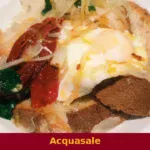
The cuisine of Fivizzano reflects its position at the crossroads of Tuscany, Liguria, and Emilia. The most distinctive dish is testaroli, discs of water-and-flour batter cooked on a testa — a red-hot cast-iron or terracotta plate — then cut into diamond shapes, briefly boiled, and dressed with Genoese pesto or with extra-virgin olive oil and pecorino. This preparation is recognised as a Traditional Agri-Food Product (PAT) of Tuscany. Alongside testaroli, the local tradition includes torta d’erbi (a savoury pie with wild greens, rice, and cheese), panigacci (thin flatbreads cooked between stacked terracotta discs), and spalla cotta di Filattiera, a PAT cured meat from Lunigiana made from the pig’s shoulder, slow-cooked and served warm. Miele della Lunigiana DOP, in both its acacia and chestnut varieties, is one of the few Italian honeys to hold Protected Designation of Origin status.
The territory of Fivizzano also falls within the production area of Olio extravergine di oliva Toscano IGP, with local cultivars yielding a medium-fruity oil. Among forest products, porcini mushrooms (Boletus edulis) gathered in the chestnut woods of the Lunigiana Apennines sustain a tradition of oil-preserved preparations and sauces for fresh pasta. Lunigiana chestnut flour, currently being considered for geographical indication recognition, is used to prepare castagnaccio and polenta di neccio. In summer and autumn, the hamlets organise food festivals dedicated to testaroli, mushrooms, and chestnuts, with communal open-air cooking in terracotta moulds following the traditional method.
When to visit Fivizzano: the best time of year
Fivizzano’s hill climate, at an altitude of 326 metres, makes the months between May and October the most suitable for a visit. Summer temperatures rarely exceed 30 °C, which allows you to walk through the historic centre and reach the Castle of Verrucola without the oppressive heat of the Tuscan plains. The feast of Saint Anthony the Abbot on 17 January brings the blessing of animals and a market that draws residents from the surrounding hamlets — a small-scale event but one deeply rooted in community life.
Autumn is the season of forest produce: porcini mushroom festivals between September and October, chestnut harvesting, and the cooking of polenta di neccio in the higher hamlets. In summer, the historic centre hosts artisan markets and cultural events linked to the printing tradition. Those who prefer to avoid summer weekends, when visitor numbers rise due to tourists from nearby Versilia, will find weekdays in June and September ideal for an uncrowded visit.
How to reach Fivizzano
By car, Fivizzano is reached from the A15 Parma–La Spezia motorway, Aulla exit, continuing for about 20 km along provincial road 63 towards the Cerreto Pass. From Florence the distance is approximately 150 km (about two hours via the A11 and A15); from La Spezia about 50 km; from Parma about 100 km via the Cisa Pass.
The nearest railway station is Aulla-Lunigiana, on the Pontremolese line (Parma–La Spezia), from where you need to continue by local bus or private transport. The closest airport is Pisa-Galileo Galilei, approximately 110 km away, connected to the A12 motorway and then the A15 towards Aulla. Parma airport is about 105 km away and serves as an alternative for those coming from the north. Local bus services — operated by Autolinee Toscane — connect Fivizzano to Aulla and to towns in the valley, but frequencies are limited: a private vehicle remains the most practical option.
Other villages to discover in Lunigiana
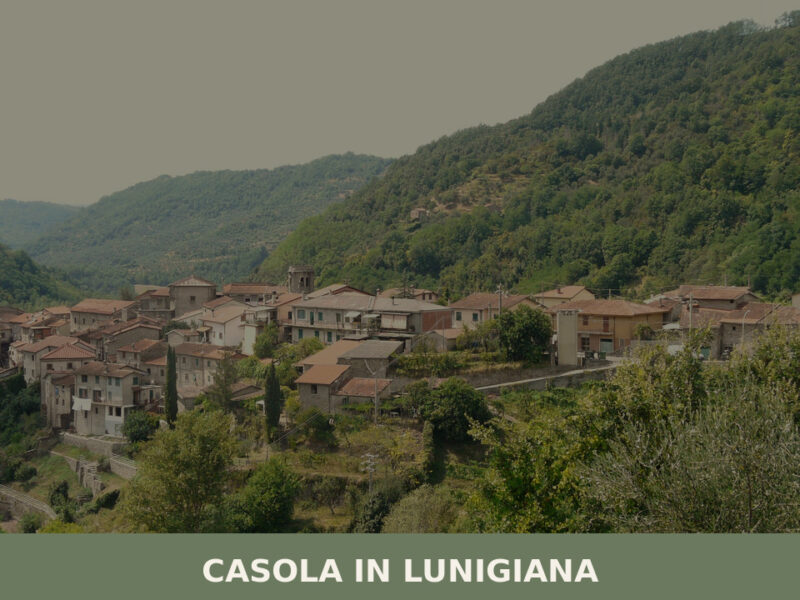
Lunigiana is a territory rich in smaller centres, each with its own architectural character and a specific historical function along the routes that linked the Tyrrhenian coast to the Po Valley. A few kilometres from Fivizzano, Casola in Lunigiana stretches along the valley of the Aulella torrent, in an area known for the discovery of prehistoric stele statues and for a culinary tradition centred on marocchini (chestnut-flour fritters). Its centre, more compact than Fivizzano’s, retains a tight medieval layout and a stone bridge over the torrent that marks the entrance to the village.
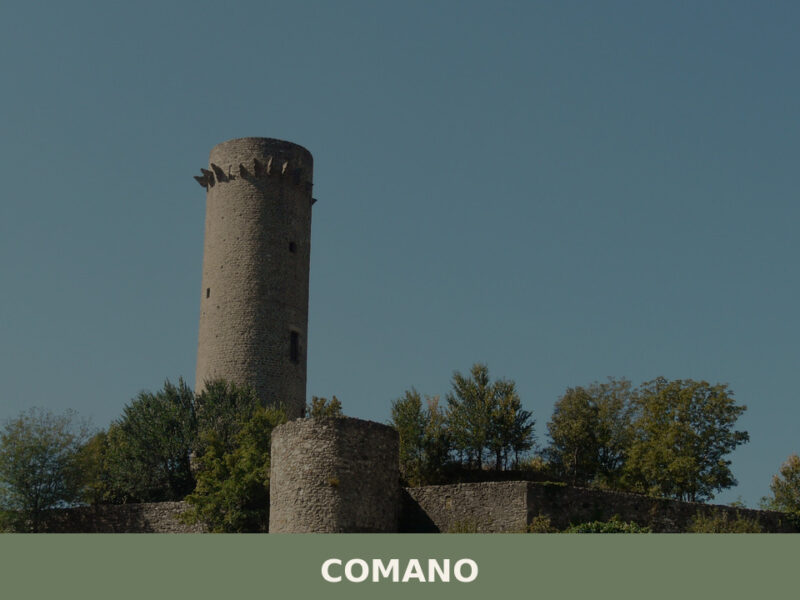
Heading up towards the Apennines, Comano occupies a mountain slope where chestnut groves give way to high-altitude pastures. The municipality, among the least populated in the province of Massa and Carrara, is made up of scattered hamlets connected by narrow roads that follow the ridge lines. Those visiting Fivizzano with an extra half-day to spare can plan a route taking in both of these centres, covering within a radius of 20–25 km three different expressions of the same Apennine territory.
Frequently asked questions about Fivizzano
What is the best time to visit Fivizzano?
May to October offers the most pleasant conditions: the hill climate at 326 metres keeps summer temperatures rarely above 30 °C, ideal for walking the historic centre and reaching the Castle of Verrucola. September and October are prime season for porcini mushroom and chestnut festivals in the hamlets. Weekdays in June and September are best for avoiding weekend crowds from nearby Versilia. On 17 January, the feast of patron saint Anthony the Abbot brings animal blessings and a traditional market drawing villagers from the surrounding hamlets — a genuine community event worth experiencing in winter.
What are the historical origins of Fivizzano?
The name Fivizzano derives from the Latin personal name Vivitius or Fibidianus, indicating a Roman-era agricultural estate. During the medieval period the territory fell under Malaspina rule, controlling trade routes between the Ligurian coast and the Po Valley. In 1355 Florence took control, establishing a captaincy and later a vicariate, earning the town the title 'last land of Tuscany.' Its greatest cultural moment came in the 15th century, when printer Jacopo da Fivizzano produced movable-type editions, making it one of Italy's earliest proto-typographic centres.
What to see in Fivizzano? Main monuments and landmarks
The five key sites are: Piazza Medicea, a 16th-century arcaded square with a 1683 white marble fountain by Cosimo III; the Museum of Printing, documenting 15th-century typographic heritage with a reconstructed press; the Church of Saints Jacopo and Antonio, housing a 15th-century baptismal font and a working 18th-century organ; the Castle of Verrucola, a Malaspina fortress 3 km from centre now housing sculptor Pietro Cascella's studio; and the Romanesque Parish Church of Soliera, 5 km away, with a carved 12th-century portal of Lombard workmanship.
What are the main natural or scenic attractions of Fivizzano?
Fivizzano sits within the Lunigiana Apennines, surrounded by chestnut woods that yield porcini mushrooms and chestnuts harvested in autumn. The countryside between Fivizzano and the Cerreto Pass offers Apennine landscapes accessible via provincial road 63. The Castle of Verrucola, 3 km from centre on a rocky spur, commands panoramic views over the valley. The hamlet of Comano, about 20–25 km away within the same circuit, reaches high-altitude pastures above the chestnut line, extending the natural itinerary beyond the village itself.
Where to take the best photos in Fivizzano?
The most photogenic spots are Piazza Medicea — particularly the 1683 marble fountain framed by sandstone arcades and wrought-iron balconies — and the Castle of Verrucola, whose quadrangular tower on a rocky spur above the valley provides dramatic architectural and landscape compositions. The carved Lombard portal of the Romanesque Parish Church of Soliera, 5 km from centre, offers detailed stone-relief photography. Autumn light in the surrounding chestnut woods, during the September–October mushroom and harvest season, adds strong natural colour to any visit.
Are there museums, churches or historic buildings to visit in Fivizzano?
Yes. The Museum of Printing in the historic centre displays reproductions of incunabula printed by Jacopo da Fivizzano, a reconstructed 15th-century press, and panels on Lunigiana papermaking history. The Church of Saints Jacopo and Antonio features a 15th-century baptismal font, 17th-century Tuscan-school canvases, and a functioning 18th-century organ. Palazzo Fantoni-Bononi on Piazza Medicea is a notable 17th-century noble residence. The Castle of Verrucola hosts Pietro Cascella's monumental marble works alongside its medieval defensive architecture. Specific opening hours should be confirmed via the municipal website.
What can you do in Fivizzano? Activities and experiences
Visitors can explore the proto-typographic heritage at the Museum of Printing, walk the medieval and Medici-era historic centre, and visit the Castle of Verrucola with its Cascella sculptures. Autumn brings organised food festivals dedicated to testaroli, porcini mushrooms, and chestnuts, with communal open-air cooking in terracotta moulds. Summer hosts artisan markets and cultural events tied to the printing tradition. A recommended half-day circuit extends to Casola in Lunigiana and Comano, covering three distinct expressions of Apennine Lunigiana within a 20–25 km radius.
Who is Fivizzano suitable for? Families, couples, hikers, solo travelers?
Fivizzano suits culturally curious travellers drawn to Renaissance printing history, medieval architecture, and authentic Tuscan-Ligurian gastronomy. Couples will appreciate the quiet Piazza Medicea and the scenic drive to the Castle of Verrucola. Food lovers will find PAT-recognised testaroli, panigacci, and Miele della Lunigiana DOP. Families with older children can enjoy the Museum of Printing's interactive reconstructed press. Hikers and nature enthusiasts benefit most in autumn, combining chestnut-wood walks with mushroom and harvest festivals. The limited public transport makes it most practical for travellers with a private vehicle.
What to eat in Fivizzano? Local products and specialties
Fivizzano sits at a Tuscan-Ligurian-Emilian crossroads with a distinctive food identity. Testaroli — flour-and-water discs cooked on cast-iron testa, dressed with Genoese pesto or olive oil and pecorino — are a PAT-recognised Tuscan specialty. Panigacci are thin flatbreads cooked between stacked terracotta discs. Torta d'erbi is a savoury pie with wild greens, rice, and cheese. Spalla cotta di Filattiera, a PAT slow-cooked cured pork shoulder from Lunigiana, is typically served warm. Miele della Lunigiana DOP (acacia and chestnut varieties) holds Protected Designation of Origin status, one of few Italian honeys to do so.
Nearby Villages near Fivizzano
In Tuscany More villages to discover
Calenzano
 Plains
What to see in Calenzano, Italy: 5 top attractions, medieval churches, Renaissance art, and practical tips. 11 km from Florence. Discover Calenzano, Toscana.
Licciana Nardi
Hills
The territory of Licciana Nardi includes six castles spread between the valley floor and the Apennine slopes, a concentration of defensive structures that documents the strategic role of this stretch of Lunigiana in controlling the routes between the Po Plain and the Tyrrhenian coast. With its 4,894 inhabitants distributed across 55 square kilometres at an […]
Arezzo
Hills
Discover Arezzo, a charming village in Tuscany, Italy. Explore its rich history, stunning architecture, and vibrant culture nestled in the heart of Toscana.
Forte dei Marmi
 Sea
Sea
What to see in Forte dei Marmi, Italy: the 1788 fortress, sandy beaches, satirical art museum and weekly market. Population 7,619. Explore the full guide.
Comano
Hills
Morning fog lifts slowly from the Taverone valley, revealing stone walls the colour of weathered bone. A church bell marks the hour — its echo rolls across chestnut groves before dissolving into silence. Comano sits in the upper Lunigiana, a commune of scattered hamlets across the hills of Massa e Carrara province, home to just […]
Casola in Lunigiana
Hills
Morning fog lifts slowly from the Aulella valley, revealing stone walls the colour of dried clay and a bell tower that has marked the hours here for centuries. The air carries woodsmoke and the faint mineral scent of chestnut groves climbing the surrounding slopes. With roughly one thousand inhabitants, Casola in Lunigiana remains one of […]
Prato
Plains
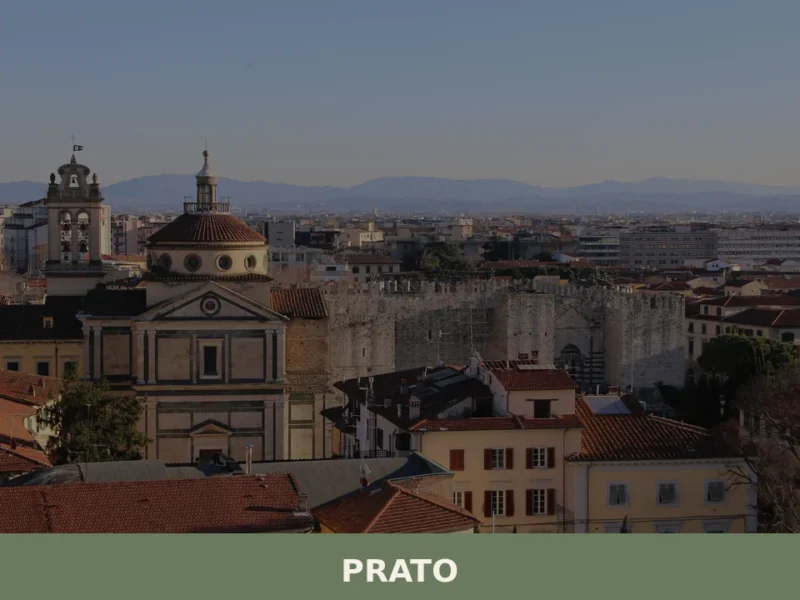
With nearly 187,000 inhabitants, Prato is the second most populous city in Tuscany and one of the largest urban centres in central Italy. Located on the plain between the Bisenzio river and the first foothills of the Apennines, the city has built a distinct identity over the centuries, defined by its textile industry, medieval art, […]
Zeri
 Mountain
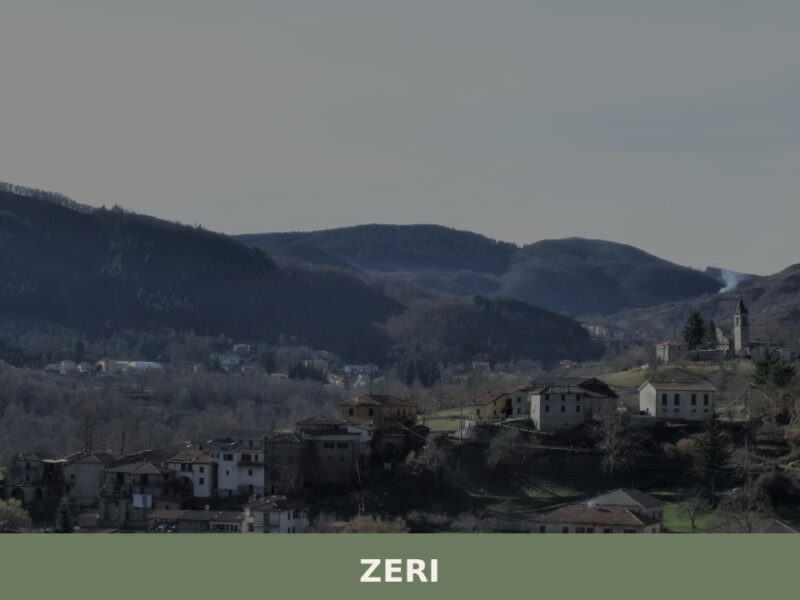
Morning mist lifts slowly from the Lunigiana valley floor, revealing a scattering of stone hamlets across green ridgelines that roll toward the Ligurian border. The air carries wood smoke and the distant sound of cowbells — the famed Zerasca breed still grazes these highlands. Zeri, a municipality of 1,166 inhabitants in the province of Massa […]
Fosdinovo
Hills
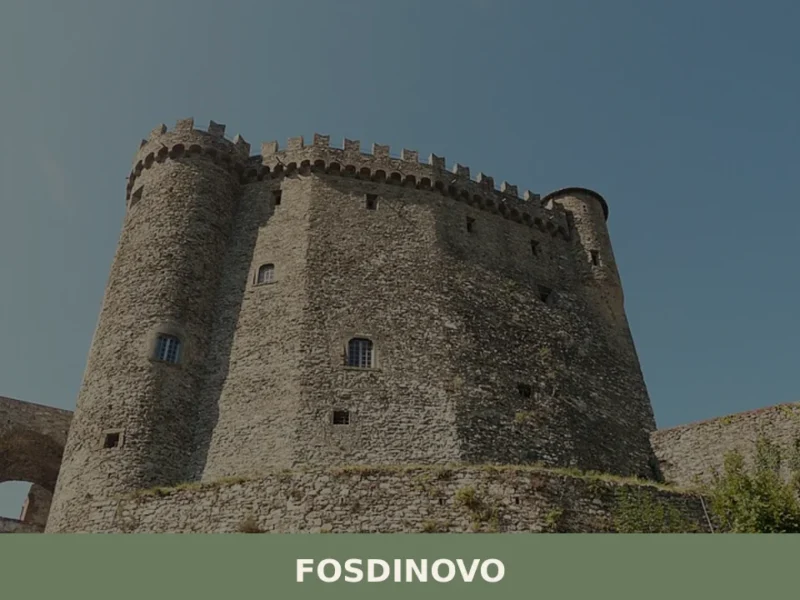
The Malaspina Castle of Fosdinovo has dominated the ridge separating the Val di Magra from the Apuan coast for over seven hundred years, with its four circular towers and a sentry walkway that can still be traversed. At 500 metres above sea level, this town in the province of Massa and Carrara has 4,982 inhabitants […]
Abbadia San Salvatore
Mountain
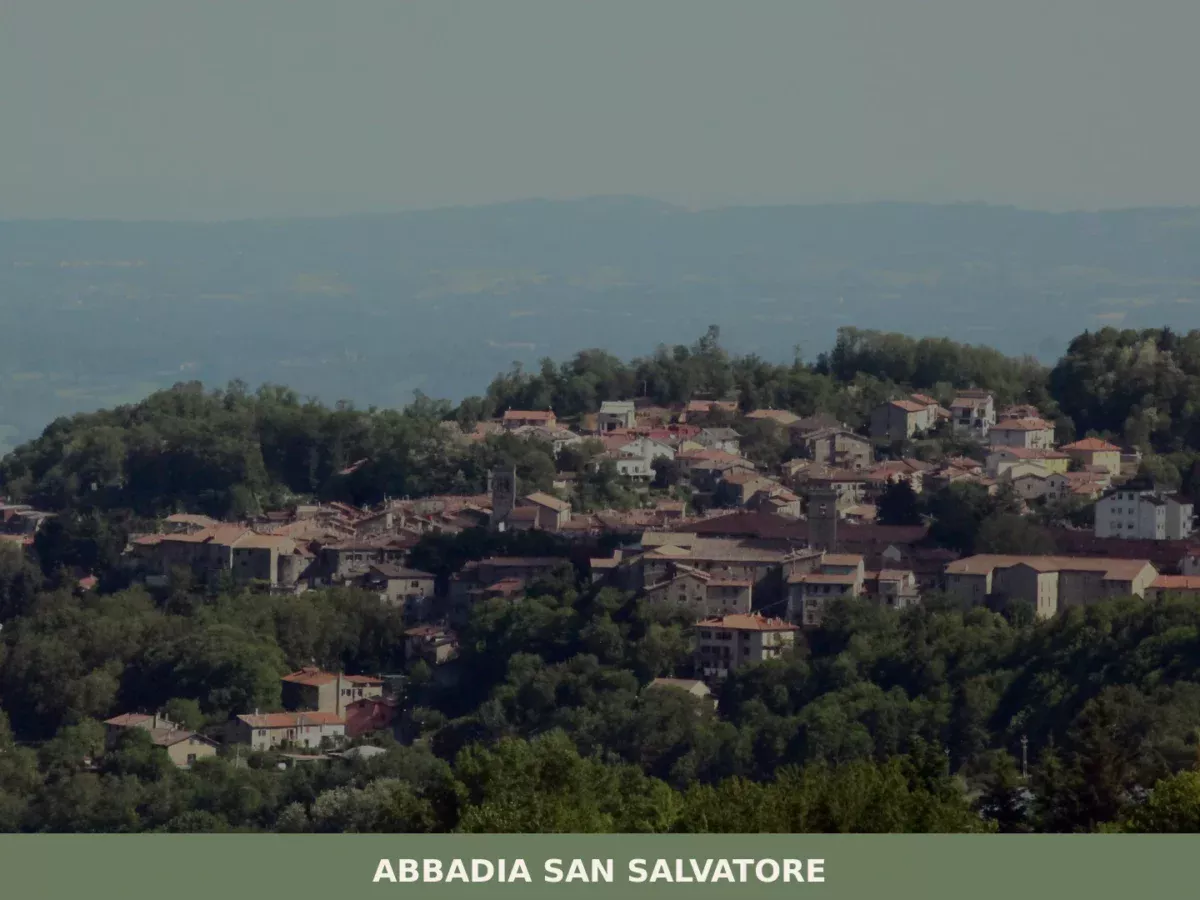
Discover what to see in Abbadia San Salvatore: the Lombard abbey, medieval borgo, mercury mining museum and Monte Amiata. Practical travel guide for Siena province.
🏡 Know Fivizzano better than we do?
If you’re a local or have been there, your knowledge matters: add what’s missing or fix a detail on this page.