


Andali
 Mountain
Discover Andali, a hilltop village in Calabria’s Sila Piccola at 650m, home to Arbëreshë culture, historic streets, and stunning valley views.
Discover Andali
At 650 meters above sea level, Andali rises with its compact houses on the southeastern slopes of Sila Piccola, offering a unique perspective on the valley below. The village, part of the Mountain Community of Presila Catanzarese, extends over an area of 17.9 km² and preserves the identity of the Arbëreshë communities, a cultural heritage that manifests itself in its traditions and urban fabric.
The mountainous profile and elevated position have always defined the character of this Calabrian settlement, where life flows following ancient rhythms.
Those who decide to explore what to see in Andali will discover a village that holds firm to its roots.
Those wondering what to see in Andali will find a village that encompasses about 5 main attractions, capable of revealing its historical and cultural character. The streets of the historic center, with their traditional architectures, invite a stroll that leads to the discovery of the Mother Church, the focal point of community life. The Arbëreshë heritage and the surrounding nature, typical of Sila Piccola, are distinctive elements that make a visit to Andali a significant experience for those seeking genuine contact with lesser-known Calabria.
History and Origins of Andali
Andali, known as Andalli in the Arbëreshë language, is a town whose historical roots are deeply tied to the presence of Albanian communities in Italy, an identity trait that still defines its character today.
This village, located at 650 meters above sea level on the southeastern slopes of Sila Piccola, has developed over the centuries a peculiar fusion of local Calabrian traditions and Arbëreshë cultural heritage.
Its geographical position, between the mountains and proximity to the coastal hills, has influenced the economic and social development of the community, which today numbers 582 inhabitants in the province of Catanzaro, a context also found in other centers of the region like Bocchigliero, also characterized by a strong mountain identity.
Andali’s evolution has also been shaped by its inclusion in specific administrative and territorial contexts, such as the Mountain Community of Presila Catanzarese, currently undergoing liquidation, and Agricultural Region no. 8 of the Catanzaro Coastal Hills. These frameworks have determined development policies and territorial management, guiding economic activities and landscape conservation.
The municipal area of 17.9 km² testifies to a territorial extent that has allowed for a balance between human settlement and the natural environment, characterized by a mountain landscape that opens up to gentler sceneries.
The demographic history of Andali, with its 582 inhabitants, reflects the typical dynamics of small Calabrian mountain towns, often subject to fluctuations and transformation processes.
The persistence of the Arbëreshë language and traditions represents an element of continuity and a living heritage passed down from generation to generation. This connection to its origins is a fundamental aspect for understanding the identity of the village, which continues to keep the memory of its past alive through rituals, festivals, and the preservation of a distinctive dialect.
Those who delve into the history of Andali discover an example of cultural resilience and adaptation to the territory.
What to see in Andali: main attractions
The Mother Church of Our Lady of the Rosary
The Mother Church of Andali, dedicated to Our Lady of the Rosary, features a sober facade that conceals the spiritual soul of the community within. Built at a time not specified by sources, but certainly a cornerstone of local religious life for centuries, the church houses sacred artworks and furnishings that tell the story of the inhabitants’ devotion.
Every year on October 7th, on the occasion of the patron saint’s feast day, the building becomes the starting and finishing point for processions, enlivening the village with a solemnity that attracts faithful and visitors alike. Inside, the naves and the high altar invite contemplation, while the decorations and stained-glass windows reflect the light, creating an atmosphere of reflection.
The structure, typical of mountain churches, is built with local materials that give it a robust appearance, well-integrated into the landscape.
The Arbëreshë Historic Center
Andali’s historic center winds through a network of narrow, winding alleys, where stone houses face each other, testifying to the ancient urban planning of the Arbëreshë communities. Strolling through these streets means immersing oneself in an atmosphere that evokes past times, with sudden glimpses revealing hidden courtyards and small open spaces.
The architectures, simple and functional, are characterized by traditional building elements, often with local stone portals and wrought-iron balconies adorning the facades. This inhabited core, which houses most of the village’s 582 inhabitants, preserves the memory of a past that saw the settlement of populations from Albania.
The arrangement of the buildings and the choice of materials reflect a deep connection with the mountainous territory, offering visitors an authentic vision of a Calabrian village.
The Panoramic Viewpoint
From its elevated position at 650 meters above sea level, Andali offers various panoramic viewpoints that open up to vast natural landscapes, dominating the valley below and the foothills of the Sila Piccola. The main viewpoint, easily accessible from the village center, allows one to gaze across the surrounding hills and, on clearer days, as far as the Ionian coast.
This observation point is ideal for understanding the territory’s conformation and the geographical isolation that has helped preserve Andali’s identity. The view, which changes color with the seasons, spans a predominantly wooded and agricultural landscape, typical of Agricultural Region no. 8 of the Coastal Hills. Those seeking a different perspective on inland Calabria will find here an opportunity to admire the vastness of the territory and take evocative photographs.
The Trails of Sila Piccola
The surroundings of Andali, situated within the context of the Sila Piccola and the Mountain Community of Presila Catanzarese, offer opportunities for nature explorations through trails and paths that delve into the vegetation.
These routes, which develop over varying elevations, allow visitors to discover the typical flora and fauna of the Calabrian mountain environment, away from the more frequented tourist paths. Many of these itineraries, some of which extend for several kilometers, are suitable for hikers of moderate difficulty and offer the chance to reach points of scenic interest or ancient ruins.
The dense vegetation, consisting of beeches, pines, and chestnut trees, creates a cool and shaded environment, particularly pleasant during the warmer months. Those wishing for a day outdoors can inquire at the municipal offices for updated maps of available routes and accessibility conditions, perhaps continuing their exploration towards similar natural areas near Bianchi, another Calabrian village with a rich natural heritage.
The Living Arbëreshë Culture
The presence of the Arbëreshë community in Andali is not merely a historical fact, but a living cultural reality that manifests itself in language, traditions, and a sense of belonging.
Andalli, as the village is called in Arbëreshë, is one of the centers in Italy where this heritage remains strong, kept alive through the daily use of the language and the celebration of specific rites. Elements of this culture can be observed in the traditional architecture of the historic center, in some local surnames, and, especially, in participation in festivities.
The intangible heritage, made up of songs, dances, and stories, represents a fundamental aspect for those wishing to understand the village’s profound identity. For those still wondering what to see in Andali, understanding this intangible richness is as important as visiting the physical locations, which contribute to preserving the uniqueness of its culture in the heart of Calabria.
Typical Cuisine and Products of Andali
The cuisine of Andali, like that of Sila Piccola, is rooted in a farming and pastoral tradition, characterized by the simplicity of its ingredients and the robustness of its flavors.
The mountainous environment has always influenced gastronomic choices, favoring local produce such as legumes, cereals, and vegetables, and meats derived from local livestock. This gastronomy reflects the need for substantial dishes, capable of providing energy for work in the fields and woods, typical of a village at 650 meters above sea level.
Arbëreshë influences may have introduced some specific elements, although the foundation remains firmly anchored to the most widespread Calabrian preparations, with particular attention to seasonality and the freshness of raw ingredients.
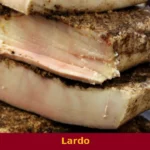
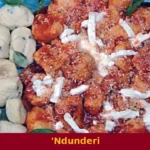
Among the dishes found in the local tradition, preparations based on pork stand out, often preserved in the form of sausages and cured meats, and homemade pasta, such as lagane or maccarruni, seasoned with rich meat or vegetable sauces.
Wild vegetables gathered in the surrounding woods and fields, like wild chicory and asparagus, enrich tables in spring, while in autumn, mushrooms and chestnuts take center stage. Sila potatoes, renowned for their quality, are a versatile ingredient used in soups, side dishes, or main courses. Pecorino and goat cheeses, products of local farming, are also present, often aged to enhance their intense flavor, accompanied by wood-fired homemade bread.
Although sources do not attest to typical products of Andali with specific certifications such as DOP, IGP, or PAT, the quality of its gastronomic offering lies in the authenticity of its ingredients and the faithfulness to recipes handed down from generation to generation.
The village’s cuisine is an example of how the biodiversity of the territory and rural wisdom can create unique flavors, difficult to replicate elsewhere, even though mountain culinary traditions are also widespread in localities like Anoia, which shares a strong connection with local produce.
Visitors to Andali have the opportunity to savor a gastronomy closely linked to the cycle of the seasons and the genuine products of the Calabrian mountains, discovering a culinary experience that is an integral part of the local cultural heritage and is distinguished by its simplicity and richness.
Festivals, Events, and Traditions of Andali
Andali’s calendar is marked by festive moments rooted in the community’s deep religious devotion and centuries-old traditions. The most significant celebration is the feast of the Madonna del Rosario (Our Lady of the Rosary), patron saint of the village, held annually on October 7th. This day sees the participation of all inhabitants, who join in a solemn procession that winds through the streets of the historic center, carrying the statue of the Madonna on their shoulders.
The rite is accompanied by traditional songs, often performed in the Arbëreshë language as well, which bear witness to the village’s cultural identity.
The festival is not only a religious moment but also an occasion for meeting and sharing, strengthening community ties and historical memory.
In addition to the patron saint’s festival, other minor observances and events related to the agricultural cycle or Arbëreshë traditions may enliven the village at various times of the year, although sources do not specify precise dates or details. These celebrations represent an opportunity for visitors to Andali to connect with local folklore and appreciate the vitality of its customs. Music, dances, and typical gastronomy often accompany these convivial moments, offering an authentic glimpse into village life. The persistence of these traditions, handed down from generation to generation, is a distinctive element of Andali, contributing to preserving the uniqueness of its culture in the heart of Calabria.
When to visit Andali and how to get there
The best time to visit Andali depends on the traveler’s interests, but its mountain location at 650 meters above sea level makes spring and summer particularly pleasant for those seeking mild temperatures and the opportunity to explore the surrounding nature. During these months, the trails of Sila Piccola are fully accessible and the vegetation is lush, offering ideal settings for excursions and outdoor walks.
Autumn, with its warm colors and abundant local produce, is another appealing time to discover the village and its gastronomy.
For those interested in religious and cultural traditions, October 7th is a key date to attend the feast of Our Lady of the Rosary, an event that enlivens the entire village with rites and celebrations. Those planning what to see in Andali should consider these factors for an optimal experience.
Reaching Andali requires a planned approach, given its location in the Calabrian hinterland. By car, the village is mainly accessible via State Road 109, which branches off from the Provincial Road. If arriving from the north or south via the A2 Motorway (Salerno-Reggio Calabria), the most convenient exit is Lamezia Terme, from which you continue for about 60 kilometers towards Catanzaro and then towards Sila Piccola.
The nearest railway station is Lamezia Terme Centrale, an important regional hub, connected to Andali via local bus services or taxis, while those traveling by car may consider extending their itinerary to larger centers such as Vibo Valentia, about 90 km away, to discover further beauties of Calabria.
The reference airport is Lamezia Terme International Airport (SUF), which is about 70 kilometers away, with an estimated travel time of one and a half hours. For specific timetables and routes, it is useful to consult the official website of the municipality of Andali, comunediandali.it.
| Starting Point | Approximate Distance | Estimated Travel Time by Car |
|---|---|---|
| Lamezia Terme (A2) | ~60 km | ~1 hour and 15 min |
| Catanzaro | ~35 km | ~50 min |
| Lamezia Terme Airport (SUF) | ~70 km | ~1 hour and 30 min |
Nearby Villages near Andali

🏡 Know Andali better than we do?
If you’re a local or have been there, your knowledge matters: add what’s missing or fix a detail on this page.