


Anoia
 Plains
What to see in Anoia? Explore the 5 main attractions of this Calabrian village. The complete guide awaits to help plan your visit. Learn more!
Discover Anoia
The landscape of Anoia, a comune in southern Italy, is defined by its unique bipartite structure, comprising two separate settlements: Anoia Inferiore and Anoia Superiore.
These distinct parts of the village are separated by approximately 800 m (0.5 mi), with Anoia Superiore positioned to the southeast of its counterpart.
This geographical arrangement, along the SS536 road, characterizes the visitor’s initial encounter with the area.
For those wondering what to see in Anoia, the experience centers on understanding its dual nature and exploring its constituent parts. Visitors to Anoia can delve into the distinct atmospheres of Anoia Inferiore and Anoia Superiore, which are linked by the SS536 road.
This unique configuration, with its 800 m (0.5 mi) separation, offers a specific insight into the settlement patterns of this part of Calabria, Italy.
History of Anoia
Anoia exists as a comune within the Metropolitan City of Reggio Calabria, a significant administrative division in the region of Calabria, located in southern Italy.
This designation places Anoia within a network of municipalities that share the rich historical and cultural influences of this ancient region, extending from the Ionian to the Tyrrhenian coasts.
The village’s current form is documented through its administrative boundaries, which include neighboring areas such as Melicucco and Primogenito to the southwest, and Maropati to the northeast. These geographical markers define its place within the broader Calabrian territory.
Further information can often be found on the official Comune di Anoia website.
A defining feature of Anoia’s documented history is its composition as two distinct frazioni, Anoia Inferiore and Anoia Superiore.
This separation, with Anoia Superiore situated approximately 800 m (0.5 mi) southeast of Anoia Inferiore, reflects a common pattern in some Italian rural settlements, where communities develop in response to topographical or historical factors such as land use or defensive needs. The presence of these two separate nuclei shapes the modern identity of the comune, influencing local administration and daily life for its residents.
The SS536 road further intertwines with the village’s identity, serving as a direct link between the two frazioni and connecting Anoia to other communities like Cinquefrondi and Maropati.
This infrastructural element is crucial for understanding the village’s integration into the broader regional landscape and its accessibility for both residents and visitors.
While specific ancient origins or pivotal historical events for Anoia are not detailed in available sources, its contemporary structure as a comune in Calabria reflects centuries of regional development and local community formation within this part of Italy.
What to see in Anoia, Calabria: top attractions
Anoia Inferiore
The settlement of Anoia Inferiore forms one of the two primary components of the comune of Anoia.
Visitors approaching this section will observe the typical residential structures and modest public spaces characteristic of a smaller Calabrian village. Its location, distinct from Anoia Superiore, suggests a historical evolution of separate community development within the same administrative unit.
Exploring its pathways offers a glimpse into the daily rhythm of local life, where many of the village’s essential services might be found.
Anoia Superiore
Anoia Superiore stands as the second distinct frazione, located approximately 800 m (0.5 mi) to the southeast of Anoia Inferiore.
This physical separation gives it a unique vantage point or character, often found in villages with elevated sections.
The connection via the SS536 road makes it accessible for exploration, revealing a complementary aspect to the lower settlement. Observing the architecture and layout here provides context to the village’s dual nature, perhaps with slightly different views of the surrounding landscape.
The SS536 Road
The SS536 road is more than just a thoroughfare; it is a vital artery connecting Anoia Inferiore and Anoia Superiore, and linking the comune to nearby towns such as Cinquefrondi and Maropati.
Driving or walking along this route offers a practical understanding of the geographical relationship between the two settlements.
The road’s course, which runs between Cinquefrondi and Maropati, provides varying perspectives of the local terrain and agricultural areas, revealing the broader landscape of the Metropolitan City of Reggio Calabria.
The Borders of Anoia
The defined borders of the comune of Anoia offer an abstract yet significant point of interest for understanding its geographical context.
Bordered by Melicucco and Primogenito to the southwest, and Maropati and Cinquefrondi to the northeast and southeast respectively, these boundaries delineate the village’s sphere of influence. Observing the transition between Anoia’s territory and its neighbors provides a sense of the agricultural and residential patterns typical of the Calabrian hinterland.
This regional integration is a key aspect of what to see in Anoia.
The Dual Nature of the Comune
Understanding the overall dual nature of Anoia, as a single comune composed of two separate frazioni, offers a unique conceptual attraction.
This administrative and geographical reality distinguishes Anoia from many other Italian villages, providing a specific lens through which to observe local governance and community life. The interplay between Anoia Inferiore and Anoia Superiore, despite their 800 m (0.5 mi) separation, exemplifies a particular form of settlement evolution in southern Italy.
This structural characteristic is integral to the identity of Anoia, Calabria, Italy.
Local food and typical products of Anoia
While specific culinary traditions directly tied to the village of Anoia are not detailed in available historical records, the comune, like many in the Metropolitan City of Reggio Calabria, partakes in the broader gastronomic heritage of Calabria.
This region of southern Italy is renowned for its robust and flavorful cuisine, deeply influenced by its Mediterranean climate, diverse agricultural landscape, and historical connections.
The local diet traditionally relies on fresh, seasonal ingredients cultivated in the fertile soils of the area, reflecting centuries of self-sufficiency and resourcefulness.
The Calabrian culinary tradition often features strong flavors derived from local produce, including rich olive oil, spicy chili peppers (peperoncino), and a variety of cured meats. Dishes like Nduja, a spreadable, spicy pork sausage, or Morseddu, a hearty offal stew, are emblematic of the region’s resourceful cooking.
Pasta dishes, frequently homemade, are often accompanied by robust sauces made with local tomatoes, eggplants, and fresh herbs.
Seafood also plays a role, particularly along the coast, though inland villages might focus more on lamb, pork, and vegetable-based preparations.
No specific certified products (DOP, IGP, etc.) unique to Anoia are documented in the provided sources.
However, the wider region of Calabria boasts several esteemed designations. For instance, Cipolla Rossa di Tropea Calabria (IGP), the famous red onion, originates from a nearby coastal area, and Bergamotto di Reggio Calabria (DOP), a citrus fruit, is cultivated throughout the Metropolitan City. These examples illustrate the regional emphasis on quality and origin, characteristics that would indirectly influence local food culture even in Anoia.
Across Calabria, many villages host local markets and sagre, which are traditional local food festivals, particularly during the harvest seasons from late summer through autumn.
These events celebrate specific local produce, such as chestnuts, mushrooms, or olives, and often feature regional specialties. While specific dates for Anoia are not available, visitors exploring the area might encounter such community gatherings in nearby towns, offering a chance to taste regional fare and observe local traditions.
This cultural aspect is part of the broader experience of visiting Calabria.
Festivals, events and traditions of Anoia
Information regarding specific festivals, patron saint celebrations, or unique traditions held exclusively within Anoia is not available in the provided sources.
However, communities throughout the Metropolitan City of Reggio Calabria share a rich tapestry of cultural and religious observances.
Many Calabrian villages typically celebrate their patron saint with an annual festival, often featuring religious processions, music, and community gatherings, usually occurring in the warmer months. These events are deeply rooted in local history and faith, fostering a strong sense of communal identity.
Beyond religious festivals, many Calabrian towns maintain traditions related to agricultural cycles, such as olive harvesting or grape pressing, which are celebrated with local feasts.
Artisanal crafts, though not specifically linked to Anoia in documented sources, also form part of the regional heritage, with skills passed down through generations.
Visitors to the broader region seeking to experience these traditions should consult local tourism boards or municipal websites for specific dates and events in nearby, larger towns, as these are often more widely publicized.
When to visit Anoia, Italy and how to get there
For those planning their trip and considering the best time to visit Calabria, including Anoia, the shoulder seasons of spring (April-May) and autumn (September-October) are often recommended.
During these months, the weather is typically mild and pleasant, ideal for exploring the village’s two settlements and the surrounding landscape without the intense heat of summer. Summer (June-August) can be quite hot, with temperatures frequently exceeding 30°C (86°F), making coastal areas more popular, though evenings inland can be cooler.
Winters are generally mild but can bring rain.
Reaching Anoia requires planning, as it is situated inland within the Metropolitan City of Reggio Calabria.
For those arriving by car, the A2 Autostrada del Mediterraneo (formerly A3) is the primary route through southern Italy. The most convenient exit would likely be Rosarno, from which Anoia is approximately 15-20 km (9.3-12.4 mi) inland via local roads such as the SS536.
Driving allows for flexible exploration of Anoia Inferiore and Anoia Superiore, as well as nearby villages like Acquaro. The nearest major train station is Rosarno, a hub on the Tyrrhenian railway line, offering connections to larger Italian cities via Trenitalia.
The nearest major airports serving the region are Lamezia Terme International Airport (SUF) and Reggio Calabria Airport (REG).
Lamezia Terme is approximately 90-100 km (56-62 mi) north of Anoia, with a driving time of around 1 hour 15 minutes to 1 hour 30 minutes.
Reggio Calabria Airport, to the south, is about 60-70 km (37-43 mi) away, taking roughly 1 hour to reach by car. For international visitors, it is advisable to carry some Euros cash, as smaller shops and establishments in rural areas may have limited card facilities.
While English may not be widely spoken in all local businesses, a few basic Italian phrases will be greatly appreciated.
Exploring Anoia offers a specific lens into the rural character of Calabria. Travelers interested in discovering more of the region’s diverse landscapes and traditions can also consider visiting villages such as Bisignano, known for its historical significance further north, or Amaroni, which presents another example of a Calabrian community with its own unique identity.
Frequently asked questions about Anoia
What is the best time to visit Anoia?
The best time to visit Anoia is during the shoulder seasons of spring (April-May) and autumn (September-October). The weather during these months is typically mild and pleasant, ideal for exploring the village's two distinct settlements, Anoia Inferiore and Anoia Superiore, and the surrounding Calabrian landscape. Summer (June-August) can be quite hot, with temperatures often exceeding 30°C, while winters are generally mild but may bring rain. As information on specific local festivals or the patron saint feast for San Nicola di Bari in Anoia is not available, these factors do not influence the recommended visiting period.
What to see in Anoia? Main monuments and landmarks
The primary attractions in Anoia revolve around its unique bipartite structure: exploring Anoia Inferiore and Anoia Superiore. These two distinct settlements, separated by approximately 800 meters, offer visitors a genuine glimpse into the daily rhythm and architectural evolution of a smaller Calabrian village. Drive or walk along the SS536 road, which connects the two frazioni, to appreciate their geographical relationship and the surrounding agricultural landscape of the Metropolitan City of Reggio Calabria. Understanding this dual nature is the conceptual landmark, revealing unique settlement patterns in southern Italy.
What can you do in Anoia? Activities and experiences
In Anoia, the main activity is immersing yourself in the village's unique dual nature by exploring its two distinct parts: Anoia Inferiore and Anoia Superiore. Visitors can wander through the pathways of each settlement to observe local life, residential structures, and modest public spaces. Driving or walking the SS536 road, which links the two frazioni, provides practical insight into their geographical relationship and offers varying perspectives of the local terrain. This experience allows for a quiet appreciation of a typical Calabrian hinterland community and its distinctive settlement patterns.
Who is Anoia suitable for? Families, couples, hikers, solo travelers?
Anoia is particularly suitable for travelers seeking an authentic and quiet experience away from mainstream tourism. It appeals to solo travelers, couples, and cultural explorers interested in understanding unique settlement patterns and local Calabrian life. Visitors who appreciate delving into the distinct atmospheres of two separate village parts, exploring local roads, and observing the daily rhythm of a smaller community will find Anoia engaging. It's ideal for those wishing to immerse themselves in the genuine character of southern Italy's lesser-known regions.
What to eat in Anoia? Local products and specialties
While Anoia doesn't have specific certified products unique to the village, it shares in the rich gastronomic heritage of Calabria. Visitors can expect robust and flavorful cuisine, deeply influenced by fresh, seasonal ingredients. Local specialties often include spicy chili peppers (peperoncino), rich olive oil, and cured meats like 'Nduja. Regional dishes such as 'Morseddu' (offal stew) and pasta with local tomato and eggplant sauces are common. While not exclusive to Anoia, the wider region boasts products like 'Cipolla Rossa di Tropea Calabria' (IGP) and 'Bergamotto di Reggio Calabria' (DOP).
📷 Photo Gallery — Anoia
Getting there
Piazza Arciprete Cananzi, 89020 Anoia (RC)
Nearby Villages near Anoia
In Calabria More villages to discover
Stilo
 Sea
Sea
The Cattolica church occupies a spur of rock above the rooftops, its five small domes visible from the valley floor before the rest of the village comes into focus. Below the church, the streets narrow and the stone deepens in colour, shifting from pale grey to near-black where the walls absorb the shadow. Iron and […]
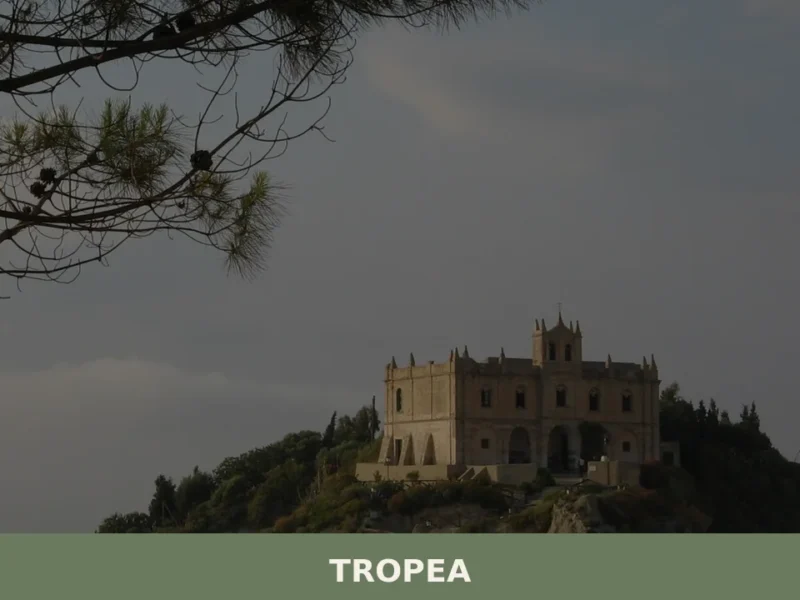
Tropea
Sea
What to see in Tropea, Calabria, Italy: explore 5 top attractions, the famous red onion, sandy beaches on the Tyrrhenian Sea. Discover how to get there.
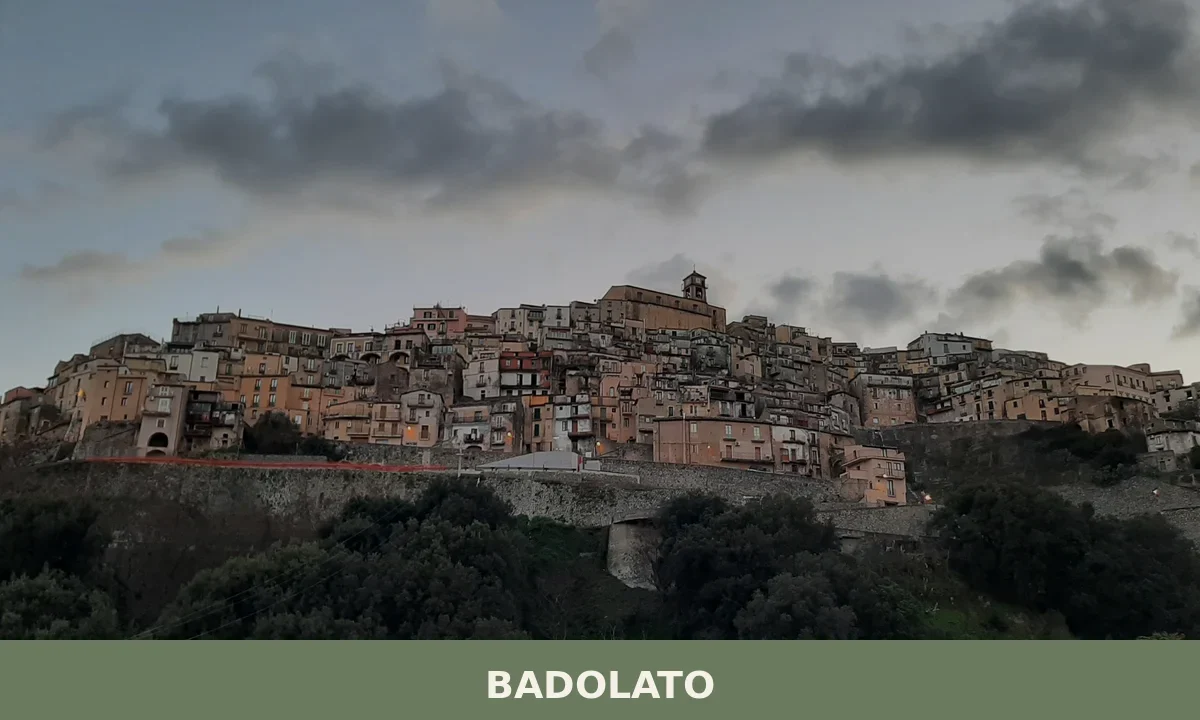
Badolato
 Mountain
What to see in Badolato, Calabria, Italy: Byzantine churches, a 17th-century castle, and olive oil production 30 km from Catanzaro. Discover the complete guide.
Amendolara
Sea
Explore Amendolara village, a charming Italian gem nestled in Calabria. Discover its rich history, stunning landscapes, and authentic local culture. Plan your visit today!
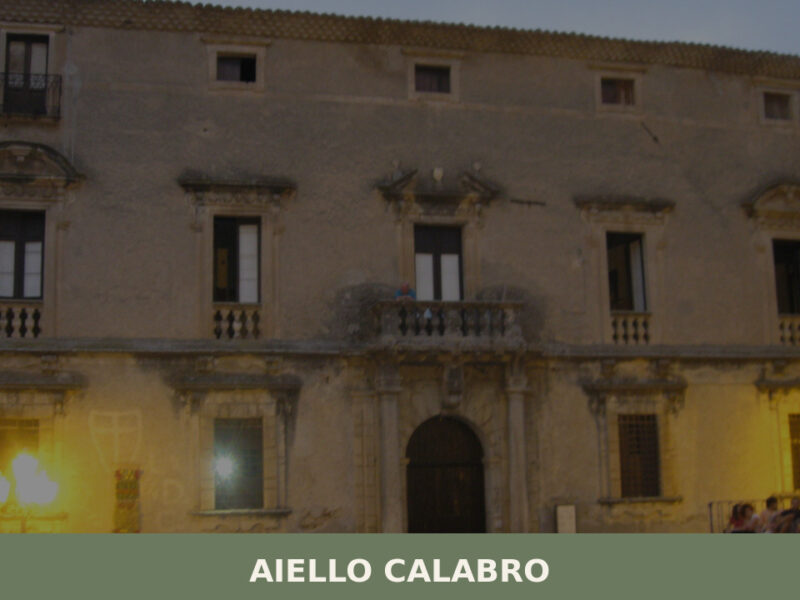
Aiello Calabro
 Hills
Hills
A hill village in Cosenza province at 502 metres, Aiello Calabro holds medieval ruins, noble palazzi, and a living food culture shaped by centuries of mountain life.
Aprigliano
Mountain
Explore Aprigliano Calabria, a picturesque village nestled in the heart of Italy. Uncover its rich history, stunning landscapes, and authentic Calabrian charm. Plan your visit today!
Acquaformosa
Mountain
A mountain village of 988 inhabitants in Cosenza province, Acquaformosa offers ancient springs, Pollino trails, and deep Calabrian food traditions at 756 metres above sea level.
Gerace
Hills
A rock formed from sea fossils laid down 60 million years ago rises 500 metres (1,640 ft) above the Ionian plain. From its summit, on a clear day, the coastal town of Locri and the sea beyond it are visible as distinct horizontal bands of terracotta, grey, and blue. The hill is composed of marine […]
Belmonte Calabro
Sea
In 1270, Charles I of Anjou granted Drogone de Beaumont the fief that would give rise to the name Belmonte — from the French Beaumont, meaning beautiful mountain. Sitting at 262 metres above sea level on the Tyrrhenian side of the Cosenza province, the village today has 1,984 inhabitants and preserves a historic centre layered […]
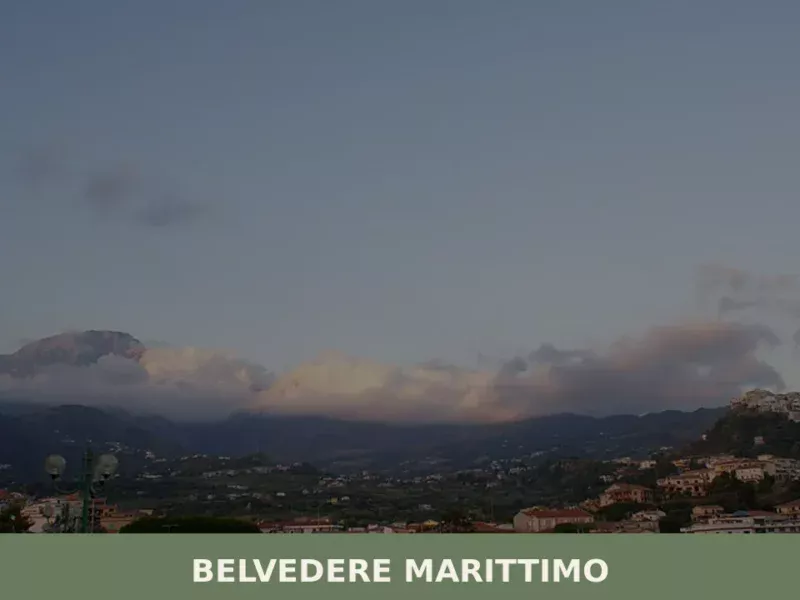
Belvedere Marittimo
Sea
Belvedere Marittimo, a village in the province of Cosenza, stands at 150 meters above sea level and has a population of 9,292 inhabitants. This Calabrian location, classified among the lowland villages, offers a view of the Cosenza Tyrrhenian coast, combining historical elements with its proximity to the coast. Its geographical position has shaped its identity […]

🏡 Know Anoia better than we do?
If you’re a local or have been there, your knowledge matters: add what’s missing or fix a detail on this page.