


Cagnano Varano
 Sea
Sea
6,579 residents live between a brackish lagoon and the Gargano hills. Stone lanes, patron saints Michele and Cataldo, and a shoreline unlike anywhere else in Foggia province.
Cagnano Varano: Identity, Landscape and History on the Gargano
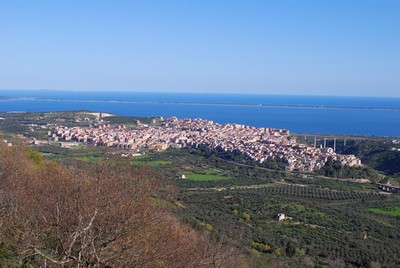
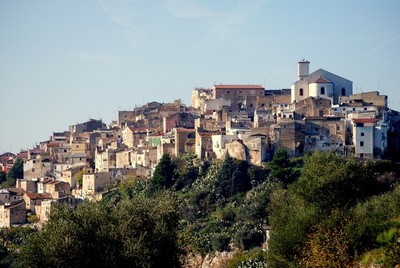
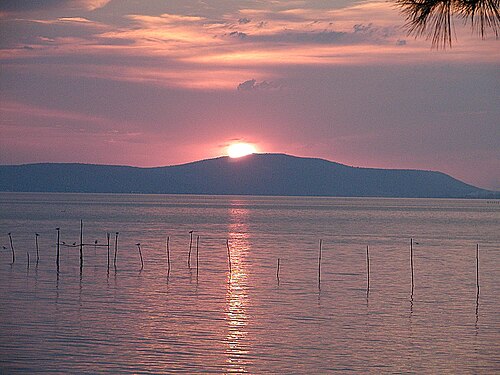
The water is always visible. From the upper lanes of the old town, the broad surface of Lago di Varano catches the afternoon light and holds it flat, a brackish mirror pressed between the Gargano hills and the Adriatic coast. The stone houses climb a gentle ridge at 165 metres above sea level, looking down over reeds, fishing boats and a lagoon that has shaped the daily life of this community for centuries. Arrive at dusk and the colours move through amber into grey with unusual speed, the lake absorbing every last shade before the sky goes dark.
Cagnano Varano village in Apulia stands on the northern Gargano promontory in the Province of Foggia, and it offers two draws that few villages in the region combine so directly: a working lakeside economy still rooted in eel fishing and mussel farming, and a compact historic centre where the pace of daily life remains visibly unhurried. With a population of around 6,579, it is large enough to sustain its own civic identity yet small enough that a morning on foot covers its essential geography.
A Name, a Lake and the Long Arc of Settlement
The name Cagnano likely derives from a Latin root related to land tenure or personal ownership, a pattern common across the medieval settlements of the Capitanata plain. Varano, by contrast, refers directly to the lagoon — Lacus Varanus in older documents — which provided the economic foundation for any community choosing to live on these hills. The relationship between the village and its water has never been purely scenic. The lake supplied protein, trade routes and a natural boundary that influenced how the settlement grew and defended itself over many generations.
The Gargano promontory attracted early human presence because of its combination of fresh water, forest resources and proximity to Adriatic sea routes. Cagnano’s position, slightly elevated above the lagoon shore rather than directly on it, suggests a practical calculation by its early inhabitants: close enough to exploit the water, high enough to avoid seasonal flooding and easier to defend. This pattern of elevated lakeside settlement is repeated at several points around Lago di Varano, giving the whole northern shore a coherent historical character even where the individual villages differ in size and layout.
Through the medieval and early modern periods, the territory passed through the overlapping jurisdictions typical of the Mezzogiorno — Norman influence, Angevin administration, Aragonese rule — without any single episode leaving a monument dramatic enough to anchor a precise founding date. What accumulated instead was a slower stratigraphy: churches rebuilt on older foundations, a civic centre that grew organically around the main square, and a devotional landscape shaped by the twin patronages of Santi Michele e Cataldo. The choice of Michele connects the village to the wider Gargano cult centred on Monte Sant’Angelo, one of the defining sacred geographies of southern Italy. Cataldo, bishop of Taranto venerated across Apulia, adds a second layer of local religious identity that distinguishes Cagnano from its immediate neighbours.
The Places That Define Cagnano Varano
Lago di Varano
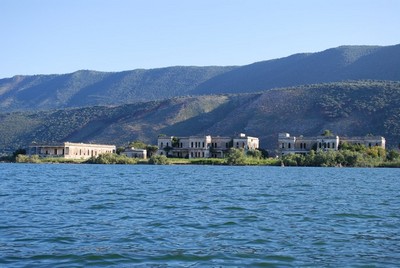
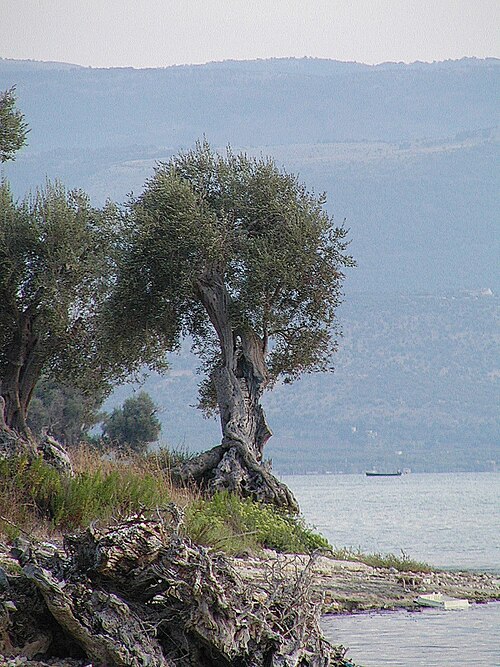
The lagoon is not administratively part of Cagnano Varano alone — its shores are shared among several municipalities — but no account of the village makes sense without it. Roughly 20 kilometres long and separated from the Adriatic by a narrow sand bar, Lago di Varano is a brackish environment supporting eel, mullet and shellfish. Fishing activity continues on a small commercial scale, and the working boats moored along the northern shore remain a visible part of everyday life. Visitors who walk down from the historic centre to the lakeside road will find a landscape that is functional rather than decorative, with stacked nets and drying equipment giving the waterfront a purposeful character.
The Historic Centre and Its Main Square
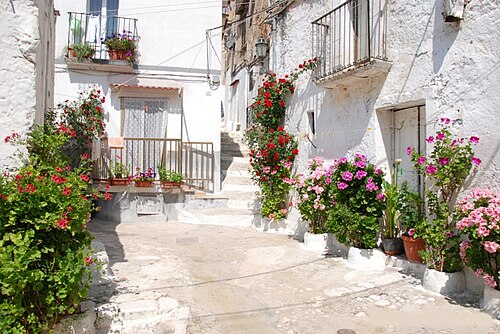
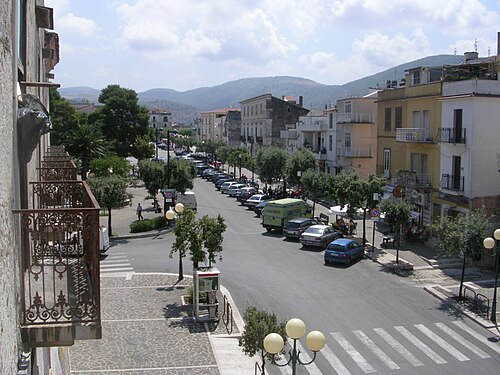
The old town organises itself around a central square that functions as the social pivot of the village. Stone-paved lanes branch off toward the residential quarters, where the building fabric dates largely from the eighteenth and nineteenth centuries, with occasional older structures incorporated into later construction. The facades are modest by the standards of Apulian baroque, favouring local limestone over elaborate decoration. Walking the upper lanes in the early morning, before the heat builds, gives the clearest sense of the settlement’s compact geometry and its relationship to the lake below.
The Parish Church of the Patron Saints
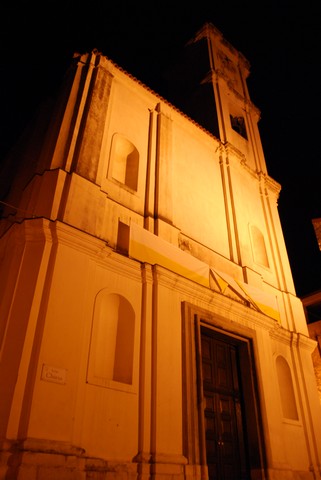
The main parish church is dedicated to the village’s patron saints, Michele and Cataldo, and stands at the heart of the historic centre. The building as it appears today reflects interventions over several centuries, with the interior preserving devotional artworks and furnishings accumulated across different periods. The feast day celebrations in honour of the two saints represent the most significant moment in the village’s liturgical calendar, drawing residents back from elsewhere in Italy and generating a temporary intensification of street life, music and procession that briefly transforms the scale of the place.
The Surrounding Gargano Landscape
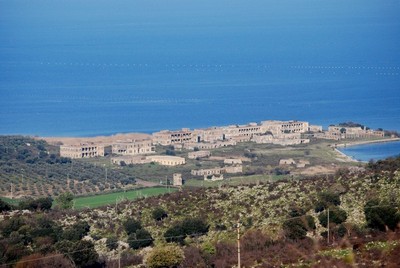
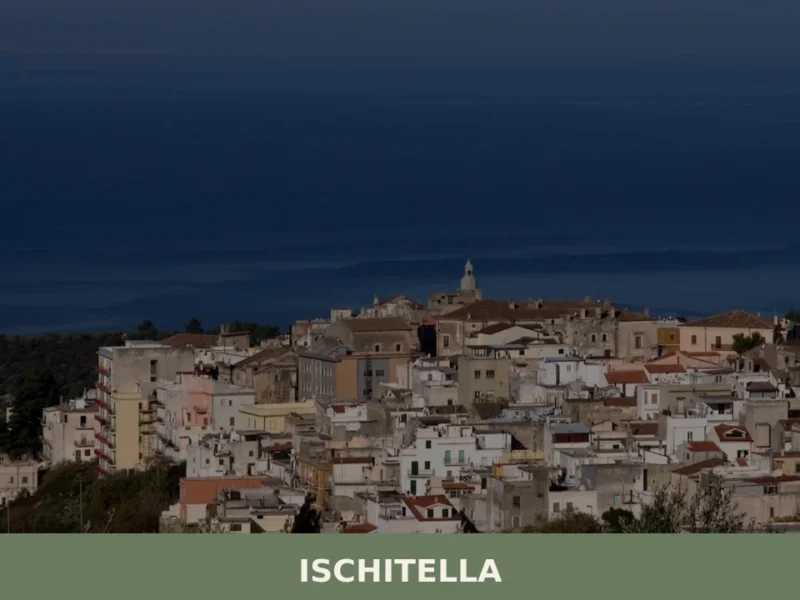
Beyond the immediate village boundary, the territory opens toward the forested interior of the Gargano National Park. The road south from Cagnano climbs quickly into oak and pine woodland, offering a counterpoint to the flat water of the lagoon. This combination of lake, hill and coastal forest within a short distance makes the area around Cagnano unusually varied for a single day of exploration. The nearby village of Ischitella sits on a ridge above the same lagoon and makes a natural companion visit, as does Carpino, known for its folk music tradition rooted in the same Gargano territory.
Lake Fish, Olive Groves and the Local Table
The food culture of Cagnano Varano is inseparable from Lago di Varano. Eel has historically been the prestige product of the lagoon, prepared in ways that reflect both the practical knowledge of fishing families and the broader culinary habits of northern Apulia. Mullet, caught in the same brackish waters, appears in local preparations alongside the freshwater species that populate the inner reaches of the lake. The agricultural land surrounding the village produces olives, contributing to the broader Apulian olive oil economy of the Foggia province.
The village does not sustain a dense restaurant circuit on its own, but its proximity to the Gargano coast means that the wider area offers points where lake fish and Adriatic seafood appear on the same menu. Eating in Cagnano means eating close to the source: the distance between the water and the plate is measurable in minutes rather than hours.
When to Visit and How to Arrive
The best window for visiting Cagnano Varano runs from late April through June and again from September into October. Summer — particularly July and August — brings heat, crowded Gargano roads and a different rhythm to the village, with returning residents swelling the population and the waterfront becoming busier. Spring and autumn offer cooler temperatures, better light for the lake landscape and the chance to move through the historic centre without pressure.
The patron saint festivities in honour of Michele and Cataldo represent a specific reason to time a visit around the liturgical calendar. The processions and street celebrations give a direct view of how the village marks its own identity, separately from the tourism flows that pass through the broader Gargano coast in summer.
If you arrive by car, the most practical approach is via the SS89 coastal road from Foggia or from Manfredonia, turning inland toward the northern lagoon shore. The village has limited but sufficient parking at the edge of the historic centre. Visitors travelling without a car will find that the Gargano’s public transport connections are infrequent; a hire car from Foggia remains the most flexible option. From Foggia it is also straightforward to extend a Gargano itinerary toward Apricena to the west or, for a longer excursion, to the Isole Tremiti by ferry from the Gargano coast.
Lago di Varano is one of the largest coastal lagoons in Italy, stretching nearly 20 kilometres along the northern Gargano shore — a body of water so extensive that on overcast days its far bank disappears entirely, and the fishermen working its centre appear to be out at sea.
| Departure | Distance | Time |
|---|---|---|
| Foggia | approx. 85 km | approx. 1 h 15 min by car |
| Manfredonia | approx. 55 km | approx. 50 min by car |
| Bari | approx. 190 km | approx. 2 h 10 min by car |
| Pescara | approx. 200 km | approx. 2 h 20 min by car |
The official municipal website at comune.cagnano-varano.fg.it publishes current information on local events, civic services and any access restrictions to the lake area or historic centre.
Frequently asked questions about Cagnano Varano
È possibile visitare Cagnano Varano come gita giornaliera da Foggia o da Bari?
Sì. Da Foggia, Cagnano Varano dista circa 90 km e si raggiunge in un'ora di auto, rendendola una comoda gita di mezza giornata. Da Bari il percorso è di circa 200 km (circa due ore e mezza). Il centro storico, la Grotta di San Michele e le sponde del Lago di Varano si visitano in tre-quattro ore, quindi partire la mattina da Foggia consente di rientrare comodamente nel pomeriggio.
Quali sentieri o percorsi naturalistici sono documentati nei pressi del Lago di Varano?
Il Lago di Varano rientra nel territorio del Parco Nazionale del Gargano, che gestisce una rete di sentieri escursionistici numerati dal CAI. Le sponde del lago sono percorribili a piedi e in bicicletta lungo tracciati pianeggianti adatti a tutti, con particolare interesse per il birdwatching data la ricchezza di avifauna della laguna. Il tratto sabbioso dell'Isola di Varano, che separa il lago dall'Adriatico, è accessibile ed è meta frequente di camminatori.
Quando si celebra la festa patronale di San Michele a Cagnano Varano?
La devozione a San Michele Arcangelo è profondamente radicata a Cagnano Varano, legata all'omonima grotta-santuario sul colle. Le celebrazioni principali in onore dell'Arcangelo Michele si tengono tradizionalmente il 29 settembre, data della festa liturgica di San Michele nel calendario cattolico, con processioni e pellegrinaggi alla grotta che richiamano fedeli dai paesi circostanti del Gargano.
Esistono strutture ricettive a Cagnano Varano o nelle immediate vicinanze?
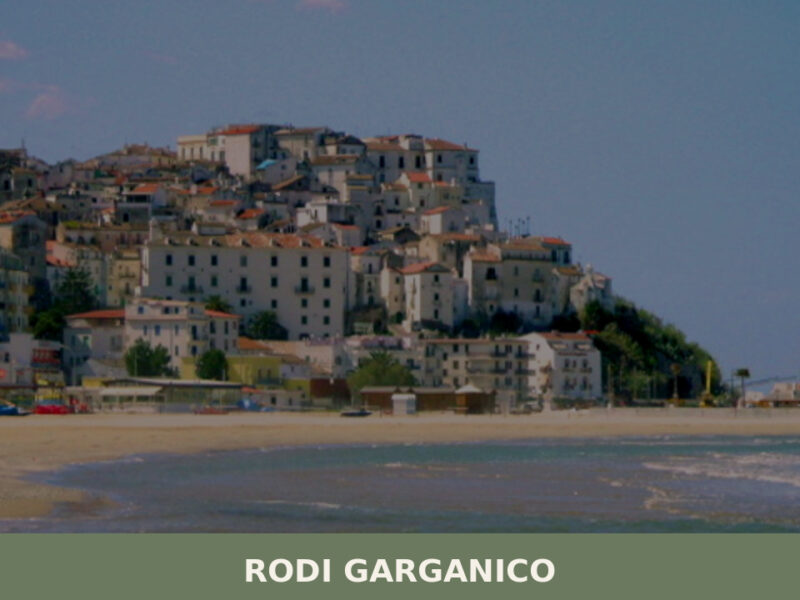
Nei pressi di Cagnano Varano e sulle sponde del Lago di Varano sono documentate strutture agrituristiche e B&B, in linea con l'offerta ricettiva diffusa nel Parco Nazionale del Gargano. Per soggiorni più ampi, i centri vicini di Rodi Garganico e Vico del Gargano dispongono di una maggiore concentrazione di hotel e case vacanza. Si consiglia di verificare la disponibilità sui principali portali di prenotazione o sul sito del Parco Nazionale del Gargano.
📷 Photo Gallery — Cagnano Varano
Nearby Villages near Cagnano Varano

In Apulia More villages to discover
San Giovanni Rotondo
 Hills
Hills
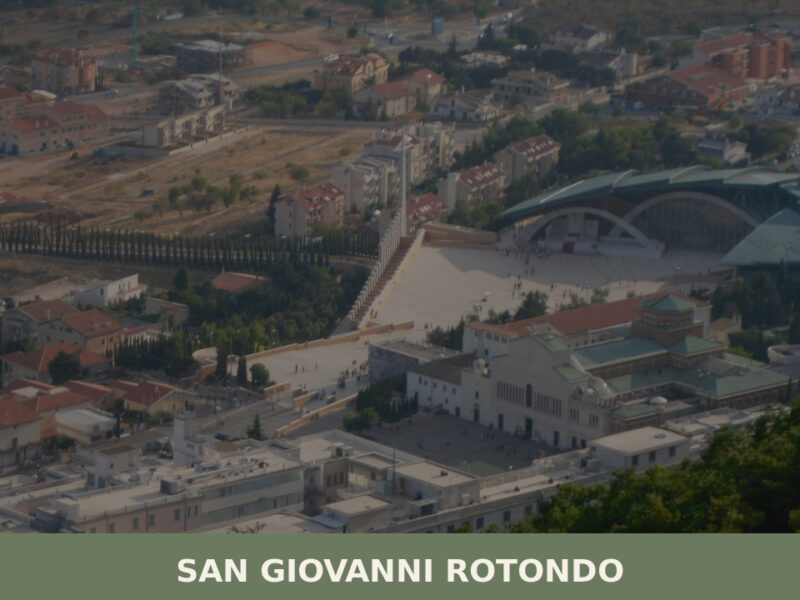
San Giovanni Rotondo, in the Apulian Gargano, combines faith, medieval history, and nature. Discover the must-see attractions, traditional dishes, and tips for visiting Padre Pio's hometown.
Toritto
Hills
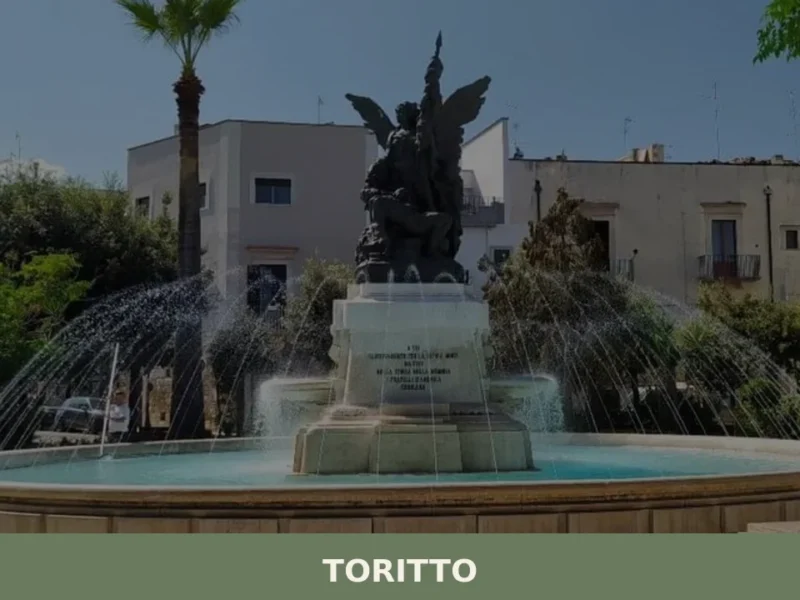
What to see in Toritto, Italy: Explore almond groves and the Chiesa Madre at 240 m. Discover vibrant festivals and indulge in local cuisine.
Castellana Grotte
Hills
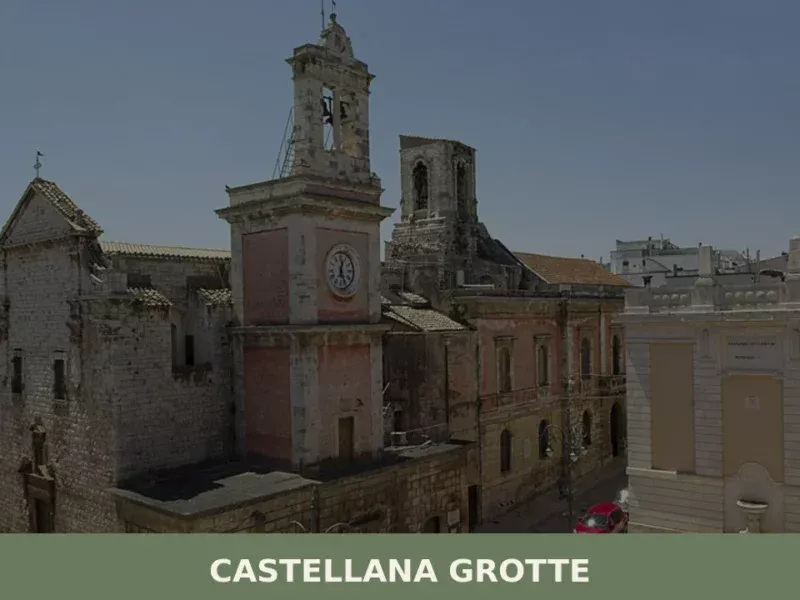
In 1938, speleologist Franco Anelli descended for the first time into a karst chasm a few kilometres from the town centre, revealing to the world an underground system stretching over three kilometres — one of the most extensive in Europe. That discovery permanently transformed the identity of an agricultural municipality on the south-eastern Murgia, placing […]
Ruvo di Puglia
Hills
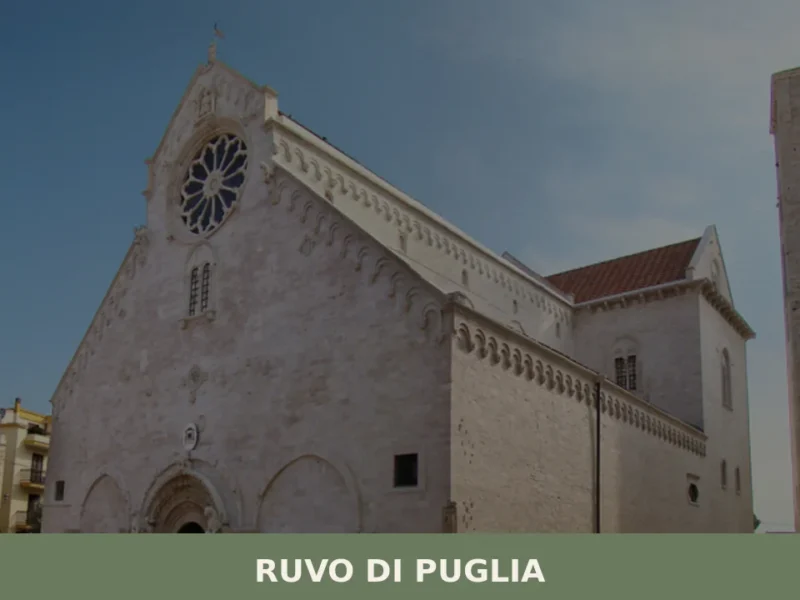
Discover 5 unique attractions in Ruvo di Puglia. Explore the Cathedral and Jatta Museum. Plan your visit now!
San Marco in Lamis
Hills
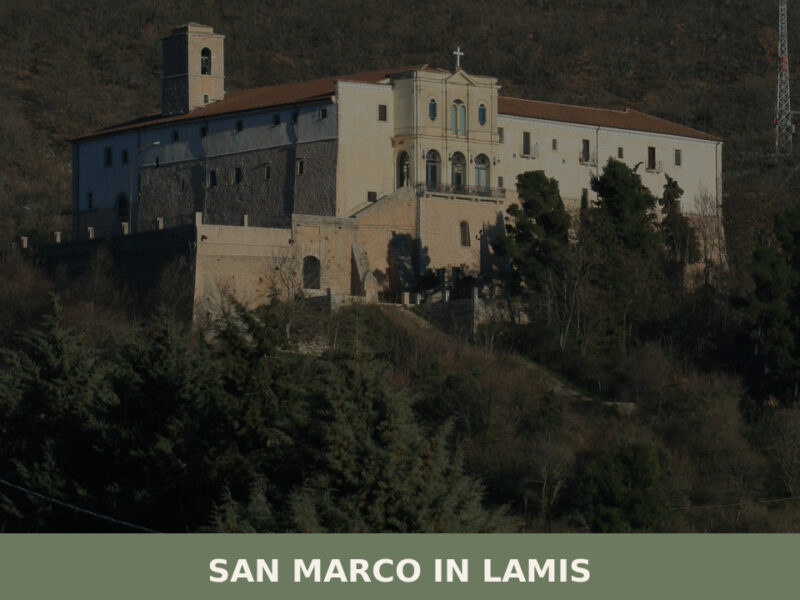
A highland town on the western Gargano, San Marco in Lamis holds ancient monasteries, a dramatic Good Friday fire procession, and the quiet intensity of inland Puglia.
Bitetto
 Plains
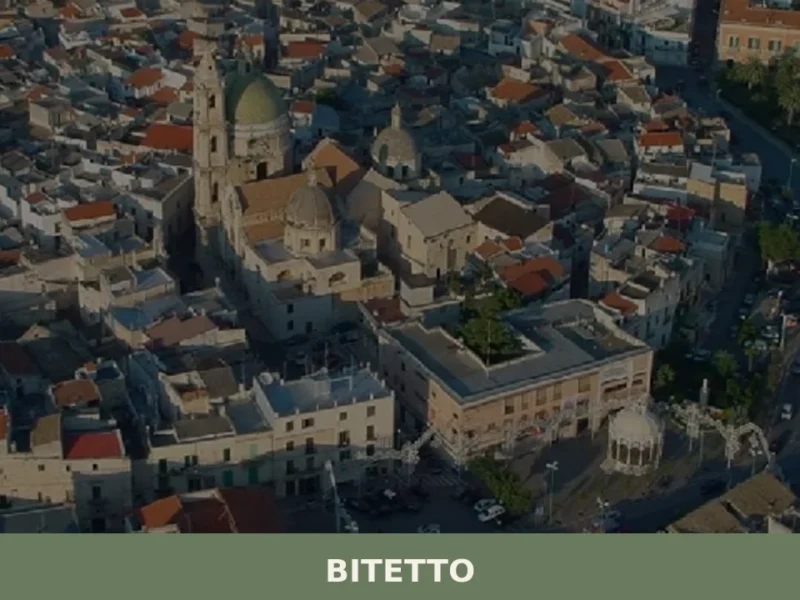
What to see in Bitetto, Italy: Discover its 14th-century cathedral and the legacy of Blessed James. Explore this Puglian village, 139 m above sea level, for a rich historical journey.
Monopoli
Sea
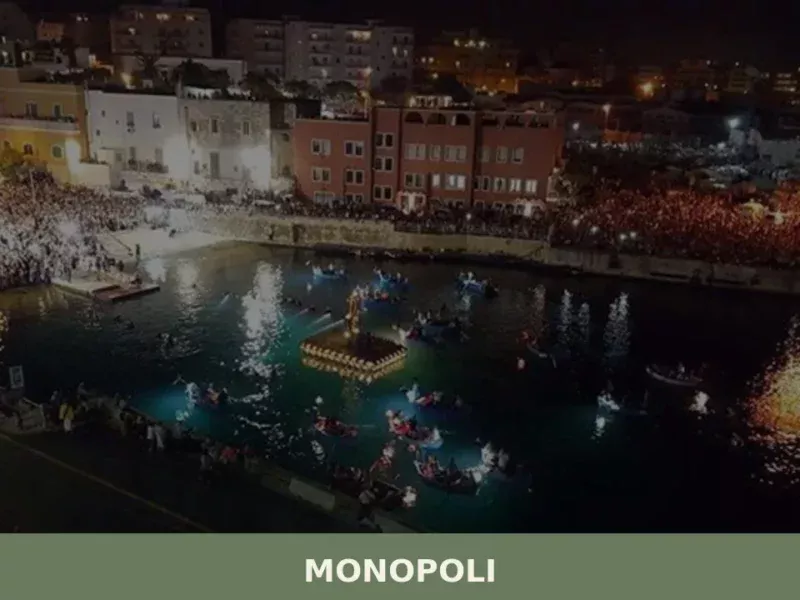
From the promontory where the Castle of Charles V stands, the view sweeps across the Adriatic, a horizon of waters that have shaped Monopoli’s identity for centuries. This port city, whose name evokes the idea of a “unique city,” reveals itself through its architecture, which tells of historical layers, from Messapian walls to Spanish fortifications. […]
Casamassima
Hills
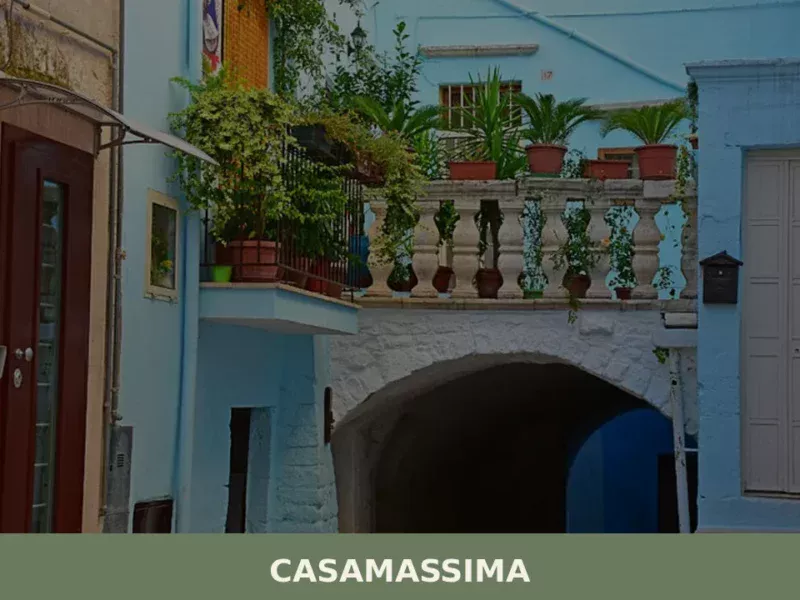
The façades painted with blue limewash in the historic centre earned Casamassima the nickname “Blue Village” — a unique case among Apulian villages and one of very few in Europe. This tradition, documented from the 19th century onward and linked according to local belief to a vow made to the Virgin Mary during a plague […]
Manfredonia
Sea
A port city founded by King Manfred on the Gargano coast, Manfredonia holds a medieval castle, pre-Roman carved stele, and one of Puglia's oldest carnivals.
Ginosa
Sea
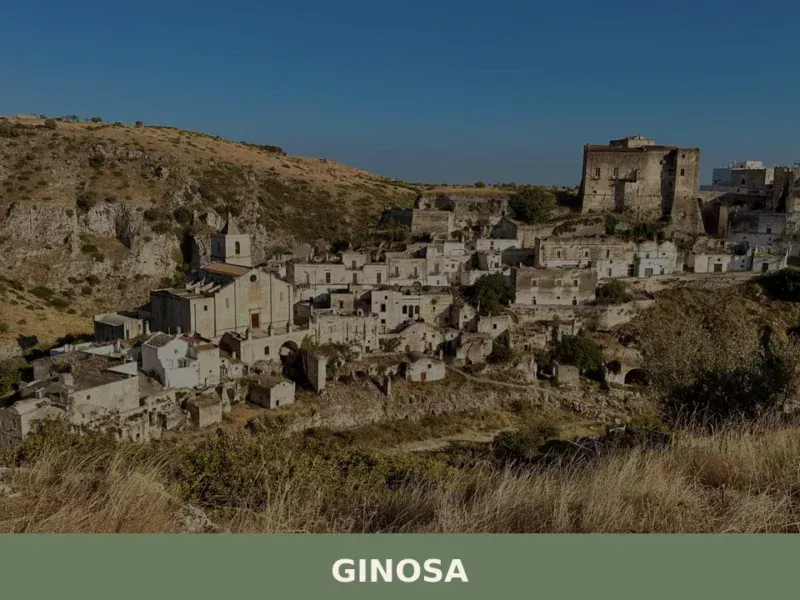
Discover what to see in Ginosa, Puglia: the dramatic gravina, rupestrian churches, castle, cathedral and Ionian coast. Practical travel guide with tips.





🏡 Know Cagnano Varano better than we do?
If you’re a local or have been there, your knowledge matters: add what’s missing or fix a detail on this page.