Flat fields stretch to the horizon in every direction, broken only by the slow curve of the Mella river to the east and the scattered rooflines of farmhouses half-buried in maize and forage crops. This is the low Brescia plain, where the landscape speaks less of mountains or drama than of water management, seasonal rhythm, and the patient work of generations who learned to bond soil and settlement together.
Dello village in Lombardy sits at 84 metres above sea level in the Brescia province, a comune of 5,675 residents spread across four main hamlets and dozens of farmsteads. Two reasons draw visitors: the layered medieval churches that mark each hamlet as a spiritual anchor, and the Chiodini Festival, held every October, where thousands gather to buy and eat the local honey fungus that crowns the autumn harvest.
Medieval Roots and Sacred Geometry
Dello emerged into documented history during the late medieval period, first called Hello in the 13th century and later Ellum in the 15th. The earliest institutional centre was a Christian pieve (a baptismal parish church) dedicated first to the Assumption, then to San Macario, around which farming settlements began to cluster. The monastery of Santi Cosma e Damiano owned substantial lands here and initiated major drainage works that transformed the waterlogged plain into cultivable fields—a labour that took centuries.
Two medieval fortified hamlets once anchored Dello’s defence: Quinzanello, still visible in discrete ruins at the start of the 17th century, and Dello itself, whose stronghold was later replaced in the 1800s by a palazzo built in castle style. Military pressure came from outside: in June 1452, the Sforza army concentrated on Dello’s territory during their war with Venice; in autumn 1521, Spanish and papal troops passed through. A squared tower rose in Boldeniga during the 16th century, and the church of Santi Giorgio e Rocco was built in Dello in the second half of that same century.
In 1610, Giovanni da Lezze’s Catastico bresciano recorded Dello as a settlement of roughly one thousand inhabitants spread across two hundred families, with Corticelle holding a hundred families and Boldeniga about twenty—a portrait of a stable, modestly prosperous rural zone under Venetian influence.
By the 17th and 18th centuries, the landscape had settled into its modern parish geography. The church of San Giacomo rose in Corticelle, consecrated in the 1600s. Dello’s main parish church was elevated in the 1700s, as were the parish churches of Quinzanello and Boldeniga. Noble families like the Fenaroli, Prati, and Requiliani held land, while farming families such as the Sandri and Ceruti worked it. A communal mill supplied the settlement. This pattern—scattered hamlets, sacred anchors, farmland in between—persists today.
Churches and Sacred Anchors
Church of San Giorgio Martire
The main parish church of Dello proper stands as the visual and spiritual focus. Built in the 18th century and designed by Antonio Corbellino, it houses eight bells tuned to the key of C and holds a collection of paintings by regional masters: Dusi, Pittoni, Cattaneo, Mombello, and Carloni among them. A brick campanile rises beside it. The interior preserves the scale and decoration of a prosperous rural parish.
Church of San Giacomo, Corticelle
Corticelle Pieve, the hamlet most closely linked to the Mella river’s dynamics, shelters this church. San Giacomo contains traces of 15th-century frescoes and paintings attributed to local and regional artists: Trainini, Ricchi, Scalvini, and Savanni. The presence of such fresco layers hints at continuous devotion and patronage over centuries.
Church of San Zenone, Boldeniga
This church preserves a painting of Saint Catherine in mystical marriage, attributed to Moretto, a 16th-century Brescia master. San Zenone serves as the spiritual marker of Boldeniga, one of the smallest hamlets, yet invested with the same liturgical care as Dello itself.
Church of San Pietro Martire
Erected in the 11th century, San Pietro is the oldest fabric in the comune. It contains 15th-century frescoes and demonstrates the Romanesque stylistic traits that date its walls. Though modest in size, it anchors the deep chronology of Christian settlement in this zone.
Santuario della Pieve della Formigola and Santuario della Madonna della Spiga
Two shrines mark the devotional landscape: the Pieve della Formigola near Corticelle Pieve and the Madonna della Spiga near Quinzanello. Both are pilgrimage destinations within the broader network of rural Marian and agricultural shrines of the low Brescia plain.
The Chiodini Mushroom Festival and Seasonal Life
Every October, on the fourth Sunday, thousands of visitors converge on Dello for the Sagra del Fungo Chiodino, a festival centred on the chiodini—honey fungus (Armillaria mellea)—that grows in the woodlands and fields surrounding the comune. The festival opens market stalls where fresh mushrooms are sold alongside prepared dishes served in the gastronomic tent, and temporary exhibitions fill the Palazzo Baronio. The event draws crowds chiefly from neighbouring comuni and reflects the deep cultural and economic value of autumn foraging in this agricultural belt.
Beyond the festival, Dello’s economy remains rooted in the land: maize and forage dominate the crop rotation, supporting substantial dairy and beef cattle herds. Two major industrial enterprises—Hayes Lemmerz, producing aluminium alloy wheels, and Rodel, specialising in high-fashion clothing manufacture for fashion designer Cinzia Rocca—anchor the modern workforce, though smaller factories concentrate in the Ponte Rosso industrial zone. The mixing of field work and light manufacturing typifies the Brescia plain’s 20th- and 21st-century rhythm.
Territory and Waterways
Dello’s territory measures 23.08 square kilometres across terrain that is almost entirely flat, interrupted only by the Mella river’s channel to the east. The land slopes gently from about 90 metres in the north-west to roughly 73 metres in the south-east. The provincial road running centre-west and the Mella channel do not function as hard boundaries; instead, they divide a landscape of human use and historical extension.
Historically, the Mella differed from major rivers like the Oglio in that it united communities across its banks rather than separating them. Dello, Corticelle, Castelmella, Offlaga, and Manerbio all extended their territories onto both shores. Corticelle Pieve and the nearby settlement of Movico exemplify this system: small hamlets positioned on the higher margins of the gentle slope toward the river, maintaining dialogue with both banks. The Mella’s function was to bind rather than divide.
The hamlet boundaries themselves reflect human settlement and property lines rather than natural features. Scattered among the four main centres and larger farmsteads (cascinali) lie dozens of smaller installations—Colombare Comincini, Lombardo, Monache, San Rocco, multiple fenile (hay storage buildings), and individual cascade farms—creating a dispersed rural fabric typical of the Brescia hinterland.
Planning Your Visit
Dello is accessible by road from Brescia city and surrounding comuni. The nearest significant urban centre is Brescia, the provincial capital. Neighbouring villages within Brescia province—Barbariga, Longhena, Mairano, Offlaga, Brandico, Azzano Mella, Capriano del Colle, and Corzano—form a network of similar low-plain settlements worth exploring by car.
| Departure Point | Distance | Approximate Travel Time |
|---|---|---|
| Brescia city centre | 20–25 km | 30–40 minutes by car |
| Desenzano del Garda | 30–35 km | 45–55 minutes by car |
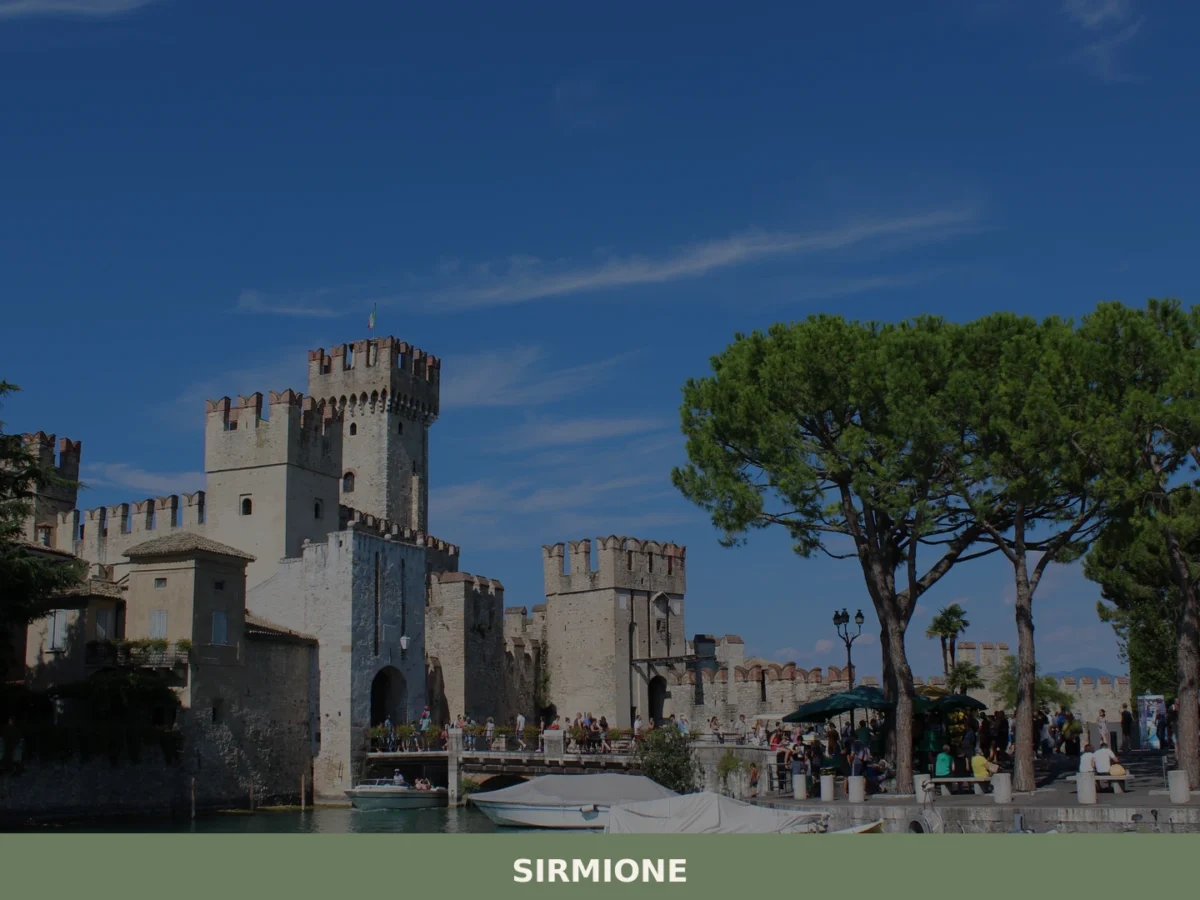
| Lake Garda shore (Sirmione) | 35–40 km | 50–60 minutes by car |
The October Chiodini Festival is the signature event and draws the largest crowds. Outside the festival season, Dello remains a quiet working village; spring and autumn are ideal for church visits and slow exploration of the hamlet structure and surrounding farmland. The comune’s official website, comune.dello.bs.it, carries current events and administrative information. Visitors with an interest in rural Lombard history and the evolution of medieval parish systems will find the layered chronology of its churches and hamlets deeply rewarding, even without commercial tourism infrastructure.


 Mountain