


Melegnano
 Plains
A town of 18,000 residents where the Lambro River winds through a Renaissance military landscape. Melegnano’s famous 1515 and 1859 battles shaped Italian and European history.
Melegnano Village in Lombardy: From Roman Station to Renaissance Stronghold
Melegnano Village in Lombardy: From Roman Station to Renaissance Stronghold
Water defines Melegnano. The Lambro River curves through this low-lying Milanese town in long, deliberate loops, its banks lined with the remnants of medieval levees and early modern fortifications. At 88 metres above sea level, the village sits in the flat agricultural heartland of the Basso milanese, sixteen kilometres southeast of Milan along the Via Emilia—a route that has carried merchants, armies and pilgrims for two thousand years. The landscape is spare, the light diffuse, the rhythm of seasons and water rather than of tourism.
Melegnano village in Lombardy is a settlement of some 18,000 inhabitants whose identity was forged in warfare and trade. Two decisive battles—one in 1515 between French and Swiss troops, the second in 1859 between Austro-Hungarian and Franco-Piemontese forces—left an imprint that still shapes how the town is remembered. Its Thursday market, established in the 15th century, continues without interruption. Its feudal fortress, now dismantled, once housed dukes and mercenary captains. Visitors come to understand a less celebrated layer of the Italian regional story: how a river-fed comune served as a strategic hinge between the great powers of the Renaissance and the age of nations.
From Gallo-Celtic Settlement to Roman Waystation
Archaeological finds from the late 1800s—tombs, pottery and metal objects dating to the 4th century BCE—suggest that Gallo-Celtic peoples established a stable settlement here long before Rome. The river provided water, the flat terrain allowed cultivation, and the location would have offered natural shelter within the regional network of early Italic tribes.
The Romans formalized what had been gradual occupation. By 333 CE, an anonymous pilgrim travelling the road to Rome documented a station called “mutatio ad IX” (a horse-changing post at the ninth Roman mile) at what is now Melegnano. This waystation sat on the via Mediolanum–Placentia, connecting Milan (Mediolanum) to Piacenza (Placentia) via the ancient city of Lodi Vecchio (Laus Pompeia). For nearly four centuries, Melegnano was not a place of independent importance but a functional node—a rest point where merchants paused, animals were swapped, and messages changed hands.
Medieval Conflict and Ecclesiastical Authority
By the late 6th century, the Lambro was becoming a commercial artery as well as a natural boundary. When Franks and Longobards clashed at Melegnano in 590, they were already competing for control of a town whose water access and position along a major road made it valuable. In the 10th century, a local pieve (a rural church with territorial and administrative jurisdiction) was established, giving Melegnano its first independent ecclesiastical authority over the surrounding villages.
The high medieval period saw Melegnano drawn into the great struggles between empire and city-states. After the Communes of Lombardy defeated Emperor Frederick Barbarossa and won recognition of their independence (following the Battle of Legnano), Melegnano passed from Lodi to Milanese control through a treaty of peace. Under the Visconti, who rose to supremacy in Milan, the settlement became a minor but defensible stronghold. Gian Galeazzo Visconti, a powerful duke, used Melegnano as a retreat; he fell ill here in 1402 and died within its walls. After his death, the castle became an object of contention between rival claimants to the Duchy of Milan, until the Visconti consolidated power once again.
By the 15th century, at least five monasteries flourished in the surrounding countryside, each exploiting the Lambro for milling, fishing and water transport. The Carmelite friars arrived in 1393 and established agricultural granges modelled on Carthusian practice. Giorgio Merula, a contemporary writer, praised the region’s “waters of perpetual clarity abundant with excellent fish”—a reminder that medieval prosperity rested on practical mastery of the river as much as on stone fortifications.
The Sixteenth Century: Military Fame and International Consequence
Melegnano’s greatest moment of historical visibility came in 1515 The French victory shifted the military balance in Italy and sent ripples across Europe. With this triumph, Francis I secured Milan and forced Maximilian Sforza to cede the entire duchy to French rule. The battle was so consequential that Swiss mercenaries and their employers—the 13 cantons of the Confederation—negotiated a treaty of “Perpetual Peace” with France and adopted a policy of military neutrality that Switzerland maintains to this day. In France itself, Francis I
French control of Milan proved short-lived. The Habsburgs soon moved to reclaim the duchy, eventually placing it under Francesco II Sforza, who in 1532 granted Melegnano and its fortress to Gian Giacomo Medici, a skilled condottiero (military commander) who rose through military service. Medici was made marquis, and his family held feudal authority over the town for generations. His brother rose to become Pope Pius IV, who granted Melegnano a Bolla del Perdono (Indulgence Bull), a religious privilege still observed in a local feast. The Thursday market, established in the ducal period, was reconfirmed by Philip II in 1556 after the abdication of Charles V and later by Austrian administrators, anchoring Melegnano’s identity as a trading centre.
Plague, War and Administrative Reorganization
The second half of the 16th century brought plague. In 1576, the first major outbreak struck; the town authorities ordered the construction of a lazaretto (plague hospital) at what is now the Cappella della Madonnina di Sarmazzano. The impact was devastating. Thirty years later, in 1630, plague returned with even greater force. This time, the community had prepared: the Hospital of Pilgrims was built near the church of San Pietro to receive and care for the afflicted.
War compounded suffering. In the mid-17th century, military campaigns brought conflict and requisition to the surrounding farmland. By the early 18th century, after the Peace of Utrecht transferred Milan to Austrian rule, the town’s finances were in collapse. The municipality recorded an annual deficit of nearly 1,579 Austrian lire and carried a debt of over 87,000 lire—sums insurmountable for a population reduced to about 1,700 souls through emigration, disease and military requisition. Petitions to the Holy Roman Emperor Charles VI for relief brought some mitigation, but recovery was slow. The Austrians demolished three medieval gates (Sant’Angelo, di Milano, and del Lambro) to modernize the town’s layout. Under the Empress Maria Theresa, a new cemetery was built outside the walls for sanitary reasons—a forward-thinking measure that anticipated Napoleonic health reforms.
In 1796, Napoleon’s armies swept through Lombardy. Melegnano was forced to pay contributions totalling 11,400 Austrian lire and 20 kilograms of pure silver. The religious orders and monasteries were dissolved. The Congress of Vienna in 1815 restored Austrian administration. The organization of Melegnano into neighbourhoods reflected local administrative development under Austrian rule. Austrian authorities promoted agricultural innovation, particularly the cultivation of rice and the construction of marcite (irrigated meadows).
The Final Battles and Modern Identity
Melegnano’s second great military encounter occurred in 1859. On 8 June, following the French-Piemontese victory at Magenta, Austrian forces retreated through the Milanese and clashed with the advancing Franco-Piemontese army near Melegnano. This engagement was part of the Second Italian War of Independence.
From that point onward, Melegnano’s story became less dramatic but more stable. The settlement grew modestly, industrialization touched it lightly, and the Thursday market—interrupted only by war and plague—remained the town’s pulse. Today, Melegnano is a working comune of the metropolitan area of Milan, neither a commuter suburb nor a heritage village, but a place where agricultural memory, water management and small-town civic life persist within the gravitational field of a great city.
River, Fortress and Ecclesiastical Heart
The Lambro and its Medieval Engineering
The Lambro River is not dramatic but essential. It arrives from the northwest, traces sinuous curves across Melegnano’s 4.93 square kilometres, and continues southeast toward Lodi. Medieval and Renaissance engineers understood its dual nature: a source of mill power, fish, and water transport, but also a flood risk that required constant management. Stone levees, sluices and diversions were built and rebuilt; the Seveso River, which once entered the Lambro near Melegnano, was eventually diverted to prevent combined flooding. Walking along the river or crossing one of its bridges gives a sense of how water shaped every commercial and defensive decision the town made.
The Castle and the Marquis’s Palace
Melegnano’s fortress no longer stands as a complete edifice. What remains is Palazzo Visconti, the administrative seat built when the Visconti ruled Milan. In the 16th century, under the Medici marquises, this building was the centre of feudal authority—a place where military orders were issued, disputes were settled, and the rhythms of rural power were administered. The palazzo recalls the town’s period of greatest territorial importance, when Melegnano was not merely a market town but a defended position and a noble residence. The building remains a focal point of civic identity.
Church of San Pietro and Religious Continuity
The Church of San Pietro stands as Melegnano’s principal parish church. Its history is layered: a structure existed here in the medieval period, but the current church took its recognizable form in the 17th century, with the first stone of a major reconstruction laid in 1660. The Hospital of Pilgrims, built nearby in the 1630s to shelter plague victims, was one of the most tangible acts of civic charity in the town’s history. The church remains the spiritual centre of a Catholic community that has persisted through centuries of political upheaval, from the Visconti era through Spanish and Austrian rule to the modern Italian state.
The Weekly Market and Commercial Identity
The Thursday market is Melegnano’s most enduring institution. Established in the 15th century under Filippo Maria Visconti and reconfirmed by Spanish and Austrian rulers, it has operated continuously for nearly six hundred years—interrupted only by plague and war. The market embodies the town’s economic roots: agricultural produce, livestock, textiles, metalwork and everyday goods. The rhythmic return of market day is woven into the calendar and social memory of the comune more deeply than any monument. For a visitor, the market offers an unmediated glimpse of how a small Lombard town sustains itself.
Cappella della Madonnina di Sarmazzano
This small chapel marks the site where the town’s lazaretto was built in 1576 to isolate plague victims. The chapel is a modest but poignant reminder of the successive waves of infection that tested Melegnano’s resilience in the 16th and 17th centuries. It speaks to practical piety: the community’s effort to protect both body and soul in the face of catastrophic illness. Though humble, it is integral to understanding how survival, faith and civic duty were intertwined in the everyday life of a medieval and early modern town.
The Land and the Table
Melegnano sits in the agricultural heartland of the Basso milanese, a landscape of marcite (irrigated grasslands), rice paddies and market gardens fed by the Lambro and its system of channels and levees. The soil is rich, the water abundant, and the season long. This is not the terrain of wine or olive oil, but of hardy grains, forage crops and dairy production. The Austrian administrators of the 18th century actively promoted rice cultivation and meadow irrigation, shaping an agricultural economy that persists today.
The local table reflects these foundations. Rice dishes, polenta and risotto appear on tables throughout Lombardy; here in Melegnano, such preparations draw on centuries of cultivation just beyond the kitchen door. The Lambro’s fish—freshwater species mentioned in medieval documents—historically supplied protein to monastic communities and to town dwellers during Lent. Contemporary restaurants and family kitchens in Melegnano prepare simple, seasonal dishes rooted in the regional tradition, though no single signature dish belongs uniquely to this town. The food is an expression of landscape and history, not of culinary innovation.
How to Reach and Experience Melegnano
Melegnano is accessible by car, train and bus from Milan. The comune lies along the historic Via Emilia (Strada Statale 9), which runs southeast from the city. For those arriving by public transport, regional trains connect Milan to Melegnano and other towns in the Basso milanese. The journey is short—never more than half an hour from Milan’s central stations—yet the landscape shifts noticeably: the urban density thins, the flat agricultural plain opens, and the river landscape becomes visible.
| Departure Point | Distance | Approximate Time |
|---|---|---|
| Milan (city centre) | 16 km | 20–30 minutes by car; 30–40 minutes by regional train |
| Lodi | 22 km | 25–35 minutes by car |
| Milan Linate Airport | 18 km | 25–35 minutes by car |
The best time to visit is late spring through early autumn, when the landscape is verdant and the Thursday market is in full operation. The market typically occupies the central piazza and surrounding streets; it is worth timing a visit to coincide with it. Melegnano does not draw large numbers of international tourists; this is partly a virtue, as the town retains the rhythms of a working comune rather than adopting the aesthetics of heritage tourism. A visitor might spend a morning or afternoon exploring the Palazzo Visconti, the Church of San Pietro, walking along the Lambro, and then visiting the market or a local restaurant to taste the regional cuisine.
The town is quieter than Milan, but it is not remote. It serves as a logical waypoint for anyone exploring the Milanese countryside, the medieval network of small towns along the Lambro and Ticino valleys, or the route toward Lodi and the Piacenza plains. The climate is typical of the Po Valley: warm and humid in summer, cool and misty in winter, with spring and autumn offering temperate conditions and clear light suitable for exploration and photography.
Frequently asked questions about Melegnano
How do I reach Melegnano from Milan by public transport?
Melegnano is located 16 kilometres southeast of Milan. The town is served by regional train connections via the Milan-Piacenza railway line. Journey time from Milan Central Station is approximately 20–30 minutes. Local buses also connect Melegnano to Milan and surrounding towns. By car, take the SS9 (Via Emilia) or access via the A1 motorway, exiting toward Piacenza direction.
When is the best time to visit Melegnano?
Visit during spring (April–May) or autumn (September–October) for mild weather and agricultural activities on the Basso milanese plains. June is ideal for the Feast of San Giovanni Battista (patron saint), celebrated with traditional events. Thursday markets operate year-round but are most vibrant during harvest season. Summer can be humid; winter is cold and occasionally foggy.
What are the opening hours and admission fees for Melegnano's main monuments?
The article mentions the feudal fortress but opening hours and admission details are not specified. Contact the Melegnano municipal tourism office or local heritage authorities for current information on fortress visits, the parish church dedicated to San Giovanni Battista, and any guided tour availability. Many small Lombardy villages offer free access to outdoor historic sites.
Are there cycling routes around Melegnano?
Melegnano's flat terrain in the Basso milanese makes it suitable for cycling. The Lambro River valley offers potential for bike routes, though specific CAI (Italian Alpine Club) trails or dedicated cycling paths are not detailed in available sources. Contact local tourism offices for current cycling route information and bike rental services in the area.
What food specialities should I try in Melegnano?
Melegnano is situated in Lombardy's agricultural heartland. Local cuisine features risotto, polenta, and traditional Milanese dishes. The region is known for dairy products, including Grana Padano and local cheeses. Thursday's historic market (established in the 15th century) is an excellent place to sample regional produce, meats, and traditional specialities prepared by local vendors.
📷 Photo Gallery — Melegnano


In Lombardy More villages to discover
Biandronno
 Hills
Hills
 Lake
Lake
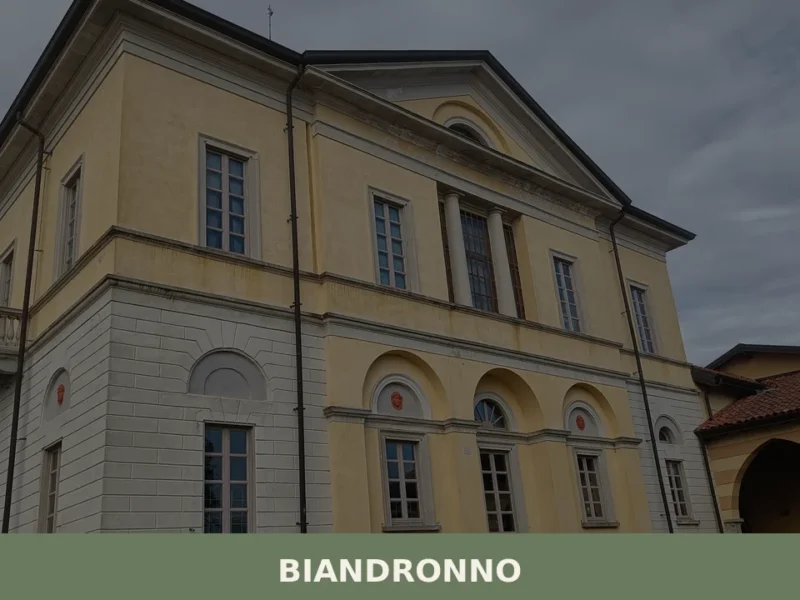
At 262 m a.s.l., Biandronno extends across the gentle hills that characterize the province of Varese, offering a panorama that opens onto the surrounding reliefs and the plain. The village, with its population of 3,162 inhabitants, maintains a discreet atmosphere, typical of smaller Lombard centers where life flows at rhythms tied to the territory. In […]
Cadrezzate
Hills
Lake
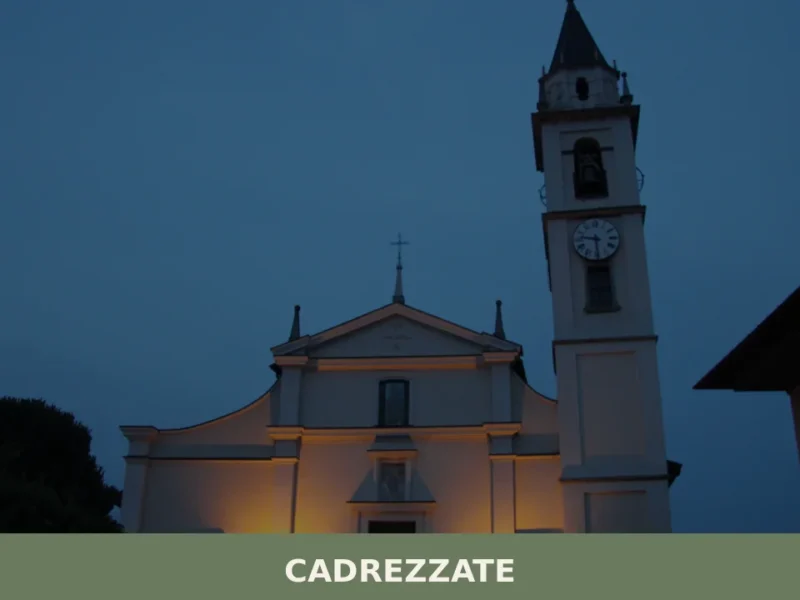
Cosa vedere a Cadrezzate: borgo a 281m sul Lago di Monate, 1.854 abitanti. Lago limpido, chiesa patronale, sentieri collinari e cucina varesina. Guida completa.
Barasso
Hills
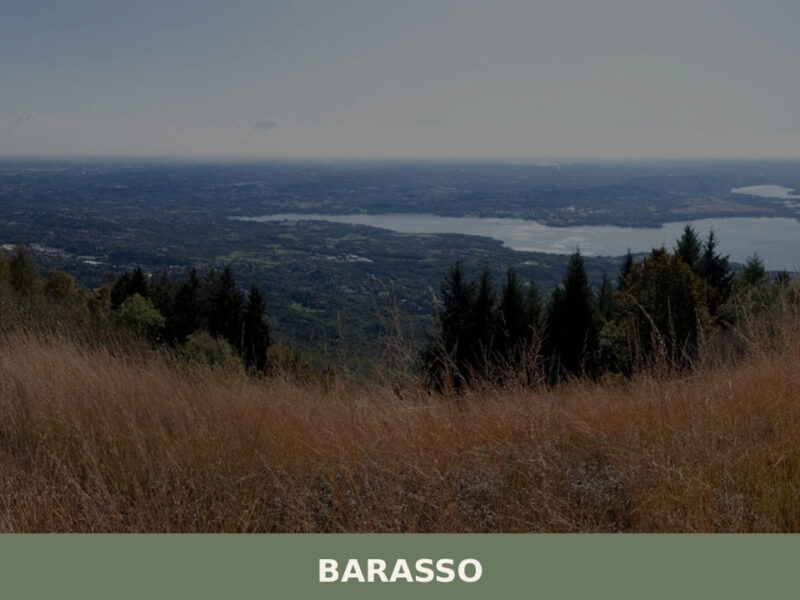
Morning light filters through chestnut canopies along Via Roma, casting long shadows across stone walls that have absorbed centuries of Lombard weather. A church bell marks the hour — unhurried, familiar, absorbed by the surrounding green hills above Varese. Barasso, home to roughly 1,710 inhabitants, occupies a quiet slope in the Varesotto prealpine belt, a […]
Lodi
Plains
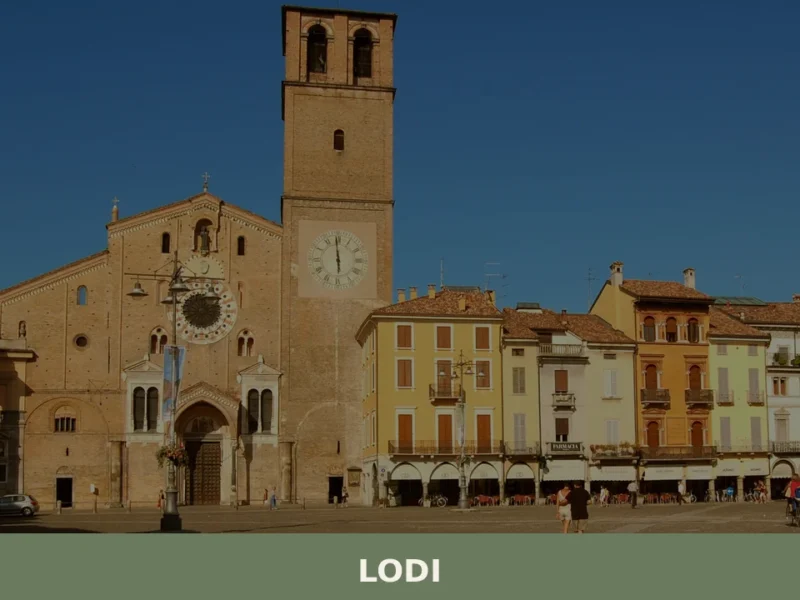
What to see in Lodi, Italy: Discover its 1454 Treaty legacy and 1796 Battle site. Explore this Lombard city, 87 m (285 ft) above sea level, for a unique historical day trip.

Rogeno
Hills
Lake
3,035 residents, one patron saint, and a village whose families shaped Italian history. Rogeno rewards slow exploration along the southern Brianza.
Bisuschio
Hills
In Bisuschio, in the province of Varese, economic activity linked to ceramic production developed starting from the 18th century, with local kilns contributing to the manufacture of tableware and bricks for the area. This hillside village, located 370 meters above sea level, offers a view of the Prealpine landscape and nearby lakes. For those wondering […]
Pavia
Plains
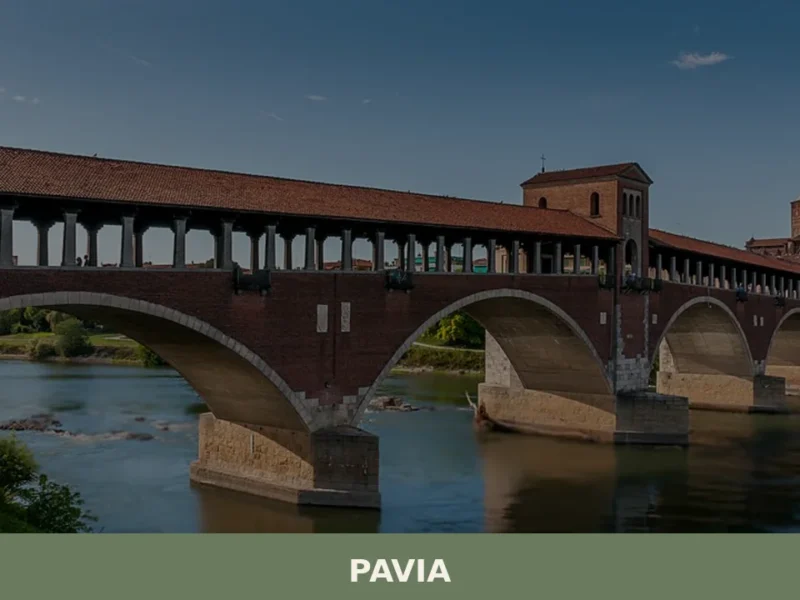
what to see in pavia, home to 70,636 residents. Discover its iconic Duomo, the historic Certosa, and the ancient University. Explore Pavia's rich heritage now.

Dalmine
Plains
7 historic hamlets merged into one municipality. Dalmine offers Roman foundations, a fascist-era urban plan and remarkable World War II air-raid shelters.
Azzio
Hills
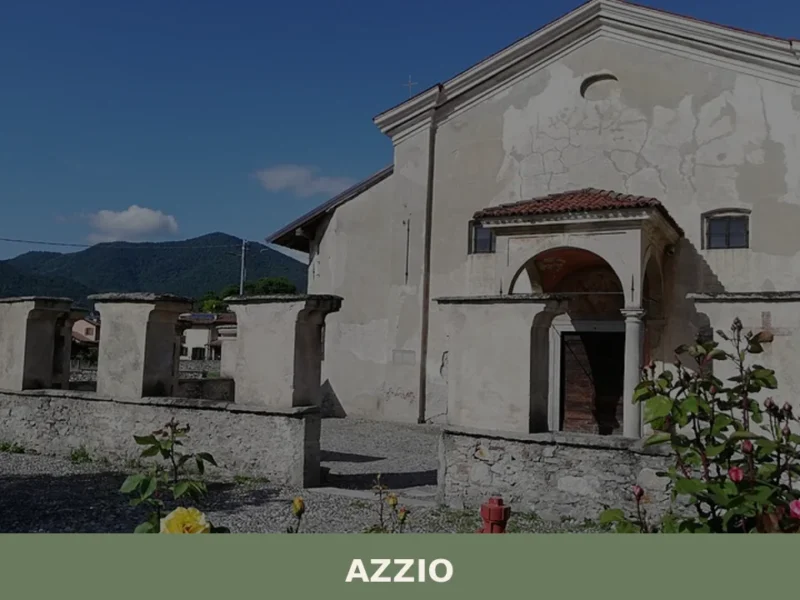
What to see in Azzio: discover attractions like the Parish Church and the Path of the Rocks. Explore Azzio now!
Besano
Hills
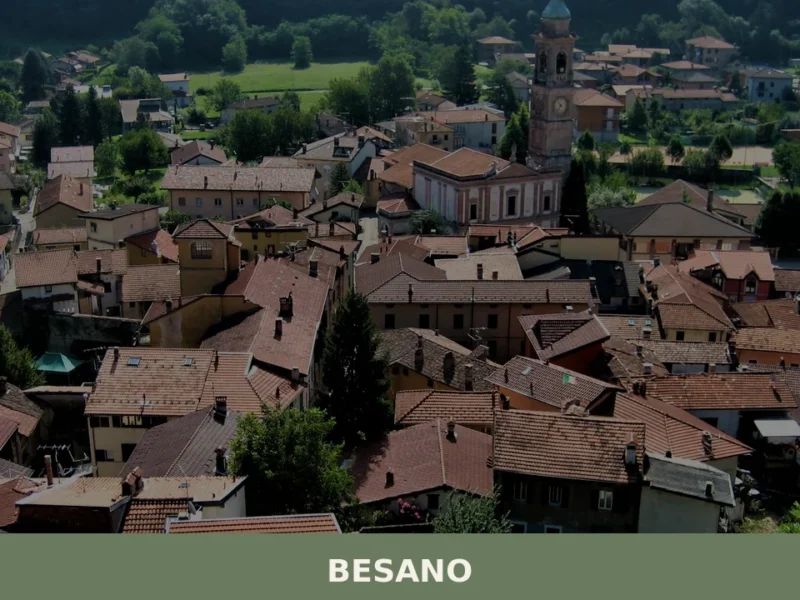
What to see in Besano, Italy: Explore the paleontological site and discover village life at 350 m (1,148 ft) a.s.l. Read our guide to Lombardy's unique corners.




🏡 Know Melegnano better than we do?
If you’re a local or have been there, your knowledge matters: add what’s missing or fix a detail on this page.