


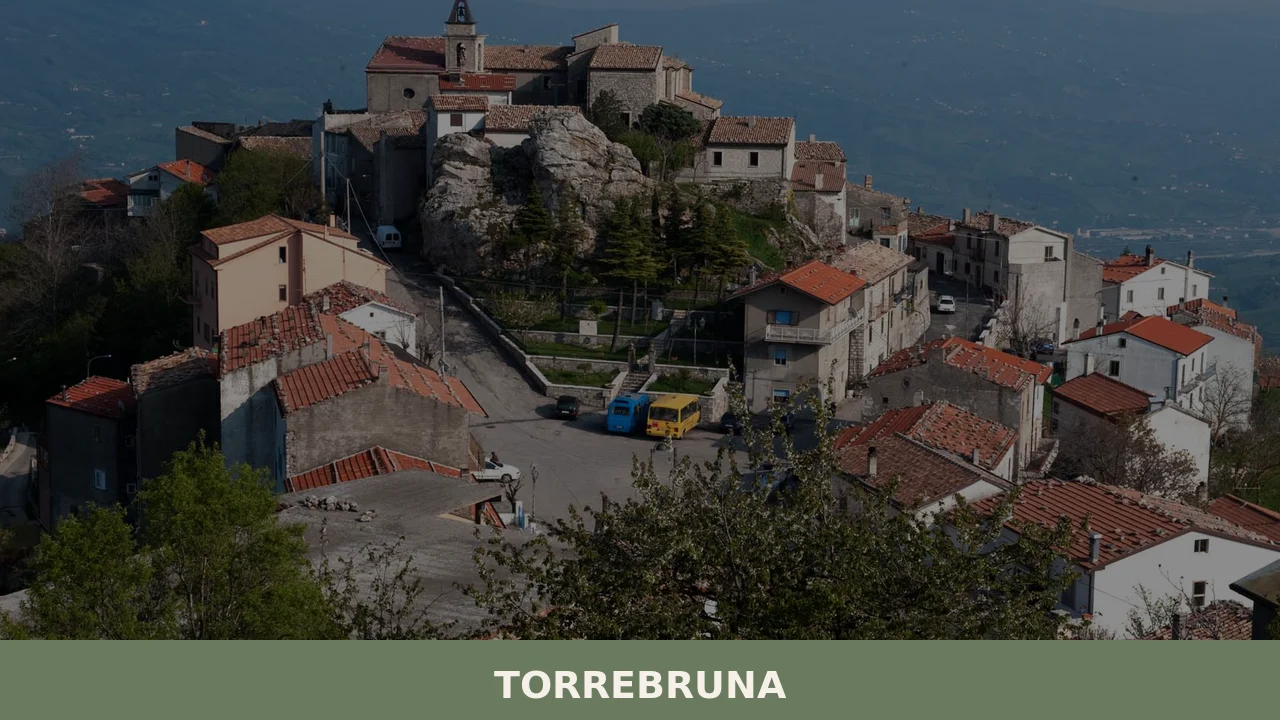
Torrebruna
 Mountain
What to see in Torrebruna, Italy: 3 historic monuments, 879 inhabitants, fortified boroughs and a 17th-century church. Discover how to get there and when to visit.
Discover Torrebruna
The concentric rings of Torrebruna’s fortified borough close inward toward a single point: the parish church at the exact centre of the plan.
That geometric logic, rare in the hill villages of inland Chieti, dates to the 13th century in its original form, with substantial rebuilding carried out five centuries later.
The outer walls still describe the same circle they did when the first stones were laid, and the relationship between the perimeter and the sacred interior has not changed in its essentials across those eight hundred years.
Deciding what to see in Torrebruna is straightforward because the record is precise: two fortified boroughs, a Baroque church, and the spatial organisation of a medieval hill settlement that has survived largely intact. The village stands in the province of Chieti, Abruzzo, Italy, with a resident population of 879. Visitors to Torrebruna find a compact site where every principal monument is reachable on foot within minutes, making the place practical as a half-day stop or a considered day trip from Lanciano or Vasto.
History of Torrebruna
The name Torrebruna combines the Italian word for tower, torre, with bruna, meaning dark or brown, a reference most likely to the colour of the stonework of the original defensive structure that gave the settlement its identity.
The fortified borough at the centre of the village was established in the 13th century, placing its foundation within the general period of feudal consolidation that characterised the interior of the Abruzzo region following the Norman reorganisation of southern Italy. Control of elevated positions along the river valleys of the Chieti hinterland was strategically significant, and the concentric plan adopted at Torrebruna reflects a deliberate choice to maximise defensive coherence with the parish church as the protected nucleus.
The 18th century brought a second major phase of construction and consolidation to the main borough.
This period coincides with the relative stability of the Kingdom of Naples under Bourbon administration, during which many small communes in the Abruzzo interior were partially rebuilt or regularised. The result at Torrebruna is a layered fabric: 13th-century spatial logic overlaid with 18th-century masonry detailing. A second fortified settlement, the borough of Guardiabruna, followed a similar trajectory, with its origins in the 16th century and its definitive form also reaching completion during the 18th century.
Guardiabruna functioned as a secondary fortified nucleus within the same communal territory, suggesting that the area required more than one defensible concentration of population during the early modern period. The village of Civitaluparella, situated in the same Chieti upland zone, shares a comparable pattern of dual or multiple fortified settlements reflecting the insecurity of the 16th-century landscape in this part of Abruzzo.
The 17th century added a distinct ecclesiastical layer to Torrebruna’s built record with the construction of the Church of Trasfigurazione di Nostro Signore Gesù Cristo. This building represents the Counter-Reformation investment in rural religious architecture that characterised the Diocese of Chieti’s activity across the inland communes during that century. The church is independent of the parish structure embedded within the fortified borough, giving Torrebruna two distinct religious buildings of documented historical origin.
The village has maintained its character as a small agricultural commune through the modern period, with the current population of 879 reflecting the gradual demographic contraction common to the hill settlements of interior Chieti since the mid-20th century.
What to see in Torrebruna, Abruzzo: top attractions
Fortified Borough of Torrebruna
The defining physical feature of what to see in Torrebruna is the fortified borough itself, whose concentric plan is immediately legible from the arrangement of the streets.
The innermost ring encloses the parish church, which occupies the geometric centre of the settlement. The plan dates to the 13th century, with the 18th-century reconstruction responsible for much of the masonry fabric visible today. Walking the perimeter gives a clear sense of how the original design subordinated every residential element to the defence of the central sacred space.
The best approach is on foot from the main access road, where the layering of different construction phases becomes apparent in the variation of stonework across adjacent wall sections.
Fortified Borough of Guardiabruna
Guardiabruna constitutes a second, distinct fortified settlement within Torrebruna’s communal boundaries, with origins documented to the 16th century and its present configuration completed during the 18th century. The site operates as a counterpoint to the main borough: where Torrebruna’s layout is concentric and inward-facing, Guardiabruna reflects the different defensive priorities of the early modern period in which it was primarily shaped.
The two boroughs together make Torrebruna an unusual case among the small communes of the Chieti province, where a single municipal territory preserves two separately fortified nuclei from different centuries.
Visitors arriving from the direction of Liscia, a nearby commune in the same provincial area, will find Guardiabruna a useful point of comparison for understanding how defensive architecture in this part of Abruzzo evolved between the medieval and early modern periods.
Church of Trasfigurazione di Nostro Signore Gesù Cristo
Built in the 17th century, the Church of Trasfigurazione di Nostro Signore Gesù Cristo stands as the principal free-standing religious building of Torrebruna outside the fortified borough’s internal parish structure. The dedication to the Transfiguration of Christ is relatively uncommon as a primary church title in small Abruzzo communes, making this building theologically as well as architecturally specific.
The 17th-century construction period places it within the broader programme of rural church-building undertaken across the Diocese of Chieti during the decades following the Council of Trent. The exterior stonework and the proportions of the façade are consistent with the provincial Baroque idiom practised by local builders in inland Chieti during that century. It is worth entering the church during daylight hours to observe the interior spatial organisation, which is best appreciated without artificial lighting.
The Concentric Urban Plan
The spatial layout of Torrebruna itself qualifies as a documented historical artefact.
The concentric organisation of the streets around the central parish church is a 13th-century planning decision that has remained legible for eight centuries, surviving the 18th-century rebuilding phase without fundamental alteration to its geometry. Few villages of comparable size in the province of Chieti preserve this degree of planning coherence from the medieval period.
The plan is best understood by climbing to an elevated point within the borough and observing how each successive ring of buildings relates to the central religious core. The narrow connecting passages between rings are original features of the defensive logic: they limited the movement of potential attackers through the settlement.
This is also where the relationship between the two construction phases — 13th and 18th century — is most visible in the stonework transitions.
The Borough Perimeter and Surrounding Landscape
The outer edge of Torrebruna’s fortified borough gives onto the open landscape of the Chieti interior, a terrain of cultivated slopes and uncultivated ridgelines typical of this part of Abruzzo at elevations ranging across the hill zone. The perimeter wall, where it survives in identifiable sections, dates in its current form primarily to the 18th-century reconstruction while following the earlier medieval line.
Standing at the perimeter, the relationship between the village’s elevated position and the agricultural land below is immediately clear: the site was chosen for visibility and control over the surrounding terrain, not for proximity to water or roads. Those visiting the area as part of a broader itinerary through inland Chieti may also consider the village of Palena, another fortified settlement in Abruzzo with documented medieval origins, as a complementary destination on the same route.
Local food and typical products of Torrebruna
Torrebruna sits within the agricultural interior of the Chieti province, a zone whose food traditions are rooted in the subsistence farming and pastoral economy that characterised inland Abruzzo for several centuries.
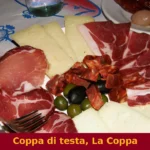
The area lies within the broader culinary orbit of the Frentani territory, historically defined by cereal cultivation, sheep farming, and the production of cured meats and aged cheeses from local flocks. These are not seasonal specialities but year-round staples whose preparation techniques have remained largely consistent across generations, shaped by the availability of local ingredients rather than external culinary influence.
The table in this part of Chieti tends toward dishes built from few ingredients handled with precision.
Pasta alla chitarra, the square-section egg pasta cut on a wire instrument of the same name, appears across the Abruzzo interior in variations that change from village to village: in the Chieti uplands, it is often served with a slow-cooked lamb ragù seasoned with local chilli and rosemary.
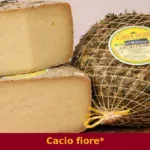
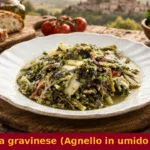
Agnello cacio e uova, lamb finished with a sauce of aged pecorino and beaten eggs added off the heat, is a technique specific to Abruzzo and distinguishes the local preparation from superficially similar dishes in neighbouring regions. Fiadoni, small pastry cases filled with a mixture of local cheese and egg, are prepared particularly around Easter and represent one of the clearest continuities in documented Abruzzo food tradition.
The Chieti province and the surrounding Abruzzo territory are associated with several products under European quality certification schemes, though the specific certified products with distribution centred on Torrebruna itself are not individually itemised in available documentation.
The broader Abruzzo region is home to the Zafferano dell’Aquila DOP, saffron cultivated in the plateau around L’Aquila, which historically reached the cooking of the Chieti interior as a trade commodity.
Locally produced olive oil from hill-zone cultivars and pecorino aged in cave conditions are commercially present across the province, though formal certification documentation specific to Torrebruna’s immediate territory is not confirmed in current sources.
Small food markets and seasonal fairs associated with the agricultural calendar operate across the Chieti interior during the autumn months, typically September through November, when the harvest of cereals, legumes, and olives coincides. These events function as the primary point of contact between village producers and visitors, and they offer the most direct access to the cured meats and aged cheeses produced in the surrounding farms. Carrying cash is practical at these markets, as card payment infrastructure in smaller rural venues across inland Abruzzo is not uniformly available.
Festivals, events and traditions of Torrebruna
The liturgical calendar structures the principal public events in Torrebruna as it does in most communes of the Chieti interior.
The Church of Trasfigurazione di Nostro Signore Gesù Cristo, dedicated to the feast of the Transfiguration of Christ, observed on 6 August in the Roman Catholic calendar, gives the village one of its fixed annual reference points. The feast day in communities with this dedication is typically marked by a solemn Mass, a procession through the main streets of the borough, and evening celebrations that may include outdoor gatherings and local music. The concentric plan of the fortified borough makes processional routes through the settlement a natural extension of the urban geometry.
The parish church at the centre of the fortified borough generates a second annual cycle of observance tied to its own patronal calendar.
In the broader pattern of Abruzzo hill communes, these events are community-wide occasions that draw both residents and people with family connections to the village who have relocated to larger centres. The sagra, a traditional food fair tied to a local agricultural product or seasonal ingredient, is a format common across the Chieti interior during summer and early autumn, and communes of Torrebruna’s size typically participate in or organise one such event annually, though specific dates and dedicated products for Torrebruna are not confirmed in current documentation.
When to visit Torrebruna, Italy and how to get there
The most practical period to visit Torrebruna, Abruzzo, Italy is between late April and early June, and again in September and October.
Spring brings the Abruzzo interior into full agricultural activity after the winter closure of many upland roads, and the light at this latitude gives the stonework of the fortified boroughs its clearest definition. Summer in inland Chieti runs warm and dry, with temperatures in July and August regularly exceeding 30°C (86°F), making morning visits before 11:00 the most comfortable option.
Autumn combines moderate temperatures with the activity of the agricultural harvest period, when food markets and local events concentrate in the surrounding communes. Those specifically interested in the Church of Trasfigurazione di Nostro Signore Gesù Cristo and its patronal feast should plan around 6 August. Winter access is possible but the shorter days and occasional snow at higher elevations across inland Chieti reduce the practical window for visiting the outdoor features of the boroughs.
Torrebruna is accessible by car via the A14 Adriatica motorway.
The nearest practical exit is Lanciano, from which Torrebruna lies approximately 30 km (18.6 mi) inland along provincial roads. From Vasto the distance is similar, at around 35 km (21.7 mi). There is no direct rail connection to Torrebruna; the nearest functioning station on the Trenitalia network is at Lanciano or Vasto, from which onward travel requires a private vehicle or local taxi. The nearest international airport is Pescara’s Abruzzo Airport, approximately 90 km (55.9 mi) from Torrebruna, with a driving time of roughly 1 hour 20 minutes under normal traffic conditions.
From Rome, Torrebruna is approximately 270 km (167.8 mi) by road, making it a long day trip from the capital but comfortably reached as part of a multi-day itinerary through Abruzzo. For international visitors, it is worth noting that English is not widely spoken in shops and smaller establishments in this part of inland Chieti; carrying euros in cash is advisable for any purchases in the village or at local markets. Travellers extending their route northward through the Chieti hills may find the commune of Cugnoli a useful additional stop, as it represents a comparable scale of hill settlement in the Abruzzo interior with its own documented historical structure.
Frequently asked questions about Torrebruna
What is the best time to visit Torrebruna?
Late spring (May–June) and early autumn (September–October) offer the most comfortable conditions for exploring Torrebruna on foot, with mild temperatures at 845 metres elevation and clear views over the Chieti interior. The feast of the patron saint Placido (monk) falls on 5 October, making early October a particularly atmospheric time to visit, when the village marks its most significant annual religious celebration. Summer remains pleasantly cool compared to the Adriatic coast, while winter brings cold temperatures and occasional snow that can complicate access along the upland roads.
What are the historical origins of Torrebruna?
Torrebruna was established as a fortified borough in the 13th century, during the period of feudal consolidation that followed the Norman reorganisation of southern Italy. Its name combines torre (tower) and bruna (dark or brown), a reference to the original defensive structure's stonework. The concentric layout, with the parish church at its geometric centre, reflects deliberate medieval planning. A second fortified nucleus, Guardiabruna, dates to the 16th century. Both boroughs underwent substantial rebuilding in the 18th century under the relative stability of Bourbon rule in the Kingdom of Naples.
What to see in Torrebruna? Main monuments and landmarks
The three principal sites are all reachable on foot within minutes of each other. The 13th-century Fortified Borough of Torrebruna, with its distinctive concentric street plan, is the centrepiece; the parish church occupies the geometric heart of the layout. The separate Fortified Borough of Guardiabruna, with 16th-century origins, offers a counterpoint study in early modern defensive architecture. The Church of Trasfigurazione di Nostro Signore Gesù Cristo, built in the 17th century in provincial Baroque style, is best visited during daylight hours to appreciate the interior spatial organisation without artificial lighting.
Where to take the best photos in Torrebruna?
The most rewarding photographic positions are two: an elevated point within the fortified borough itself, from which the concentric ring structure of the streets becomes clearly legible, and the outer perimeter of the borough wall, where the village's elevated position against the open agricultural landscape of the Chieti interior creates a strong foreground-to-horizon composition. The variation in stonework between 13th-century and 18th-century construction phases is also visible along the perimeter, offering close-up architectural detail. Early morning light is generally best for the stone surfaces.
Are there museums, churches or historic buildings to visit in Torrebruna?
Torrebruna has two documented religious buildings of historical significance. The parish church embedded within the concentric fortified borough dates in plan to the 13th century, with 18th-century masonry fabric. The Church of Trasfigurazione di Nostro Signore Gesù Cristo is a standalone 17th-century building whose dedication to the Transfiguration is notably uncommon as a primary church title in small Abruzzo communes. Both buildings reflect the provincial Baroque idiom of the Diocese of Chieti. Specific opening hours are not centrally published; visiting during morning hours or around religious observances is the most reliable approach.
Who is Torrebruna suitable for? Families, couples, hikers, solo travelers?
Torrebruna suits visitors with a specific interest in medieval and early modern urban form, religious architecture, and the landscape of the Abruzzo interior. The compact, walkable site makes it practical for couples and independent travellers seeking a considered half-day stop rather than a resort destination. Architecture and history enthusiasts will find the rare concentric borough plan and the dual fortified nuclei genuinely unusual at this scale. The elevated mountain setting at 845 metres and the surrounding Chieti upland terrain also appeal to walkers and those combining village visits with broader inland Abruzzo itineraries.
What to eat in Torrebruna? Local products and specialties
Torrebruna sits within the Frentani culinary territory of inland Chieti, where the table is built on sheep farming and cereal cultivation. The most representative dishes are pasta alla chitarra served with slow-cooked lamb ragù seasoned with local chilli and rosemary; agnello cacio e uova, a distinctly Abruzzese preparation of lamb finished off the heat with aged pecorino and beaten egg; and fiadoni, small pastry cases filled with local cheese and egg traditionally prepared at Easter. Aged pecorino and cured meats from local flocks are year-round staples across the area.
Getting there
Piazza del Municipio, 66050 Torrebruna (CH)
Nearby Villages near Torrebruna
In Abruzzo More villages to discover
Tortoreto
 Sea
Sea
The village of Tortoreto, located in the province of Teramo, stands at 227 meters above sea level, maintaining an observation position over the Adriatic coast. Its historical foundation is attested in Roman times with the name of Castrum Salini, a settlement that indicated its proximity to salt pans and its function of territorial control. Today, […]
Villa Sant’Angelo
Mountain
What to see in Villa Santu2019Angelo? Discover 5 must-see attractions and the history of the ancient village. Plan your guided visit now!
Cagnano Amiterno
Mountain
Morning light falls flat across the high plateau west of L’Aquila, catching the stone walls of a settlement that has survived earthquakes, depopulation, and the slow erosion of memory. The air carries woodsmoke and the cold mineral scent of mountain water. Cagnano Amiterno, home to just over 1,400 residents, sits in a landscape shaped by […]
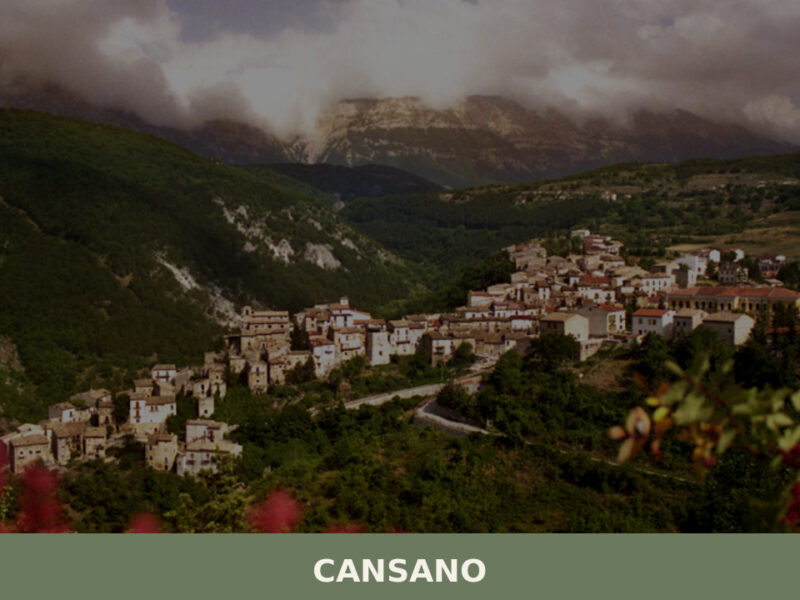
Cansano
Mountain
A guide to Cansano in Abruzzo — its Roman archaeological site of Ocriticum, medieval stone centre, Majella trails, and pastoral food traditions at 835 metres.
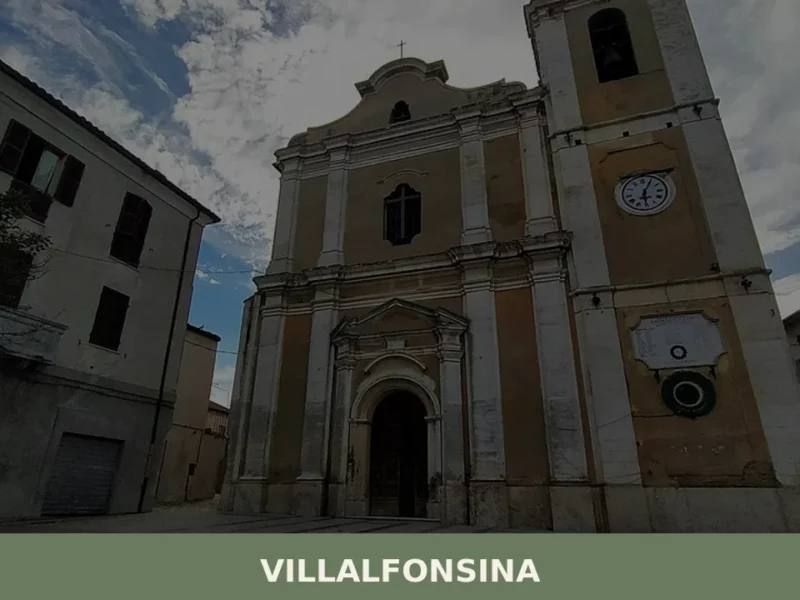
Villalfonsina
 Hills
Hills
Villalfonsina has 895 inhabitants and sits at 203 metres above sea level, on a hillside terrace overlooking the coastal plain of the central Adriatic, in the province of Chieti. Its name carries a precise historical reference: the dedication to a feudal lord of the d’Avalos family, Alfonso, who left a lasting mark on the village […]
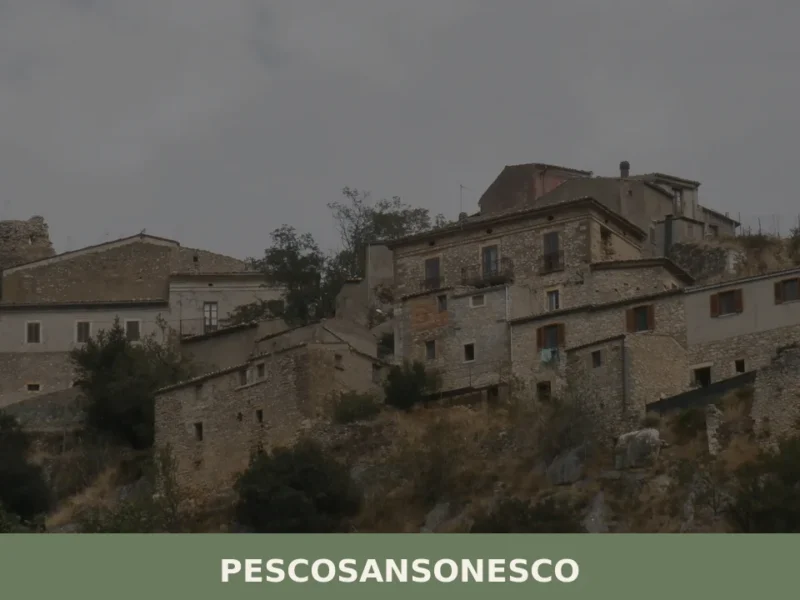
Pescosansonesco
Mountain
What to see in Pescosansonesco, Italy? Discover this village at 610 m altitude, exploring its ancient ruins and a renowned sanctuary. Read our guide.
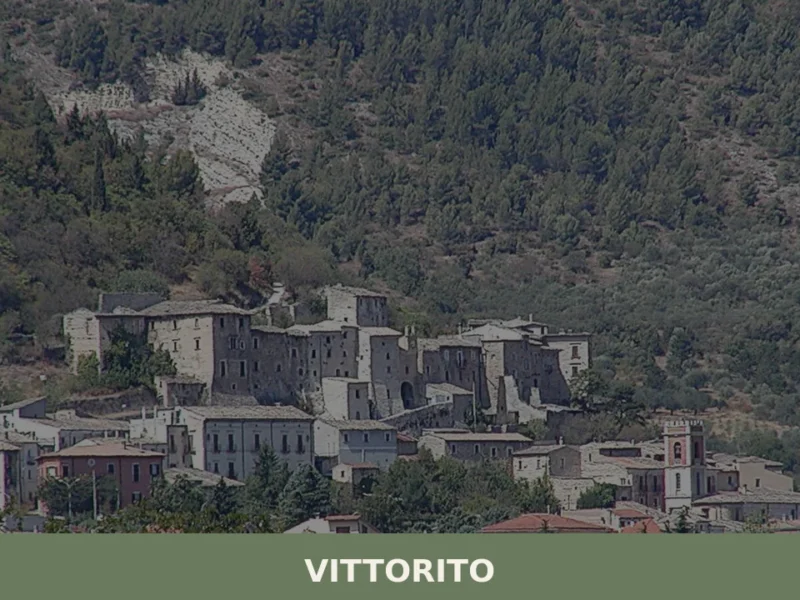
Vittorito
Mountain
What to see in Vittorito: 5 attractions in this Abruzzo village, including the Church of San Pietro, the castle, and the historic centre. Discover the full guide.
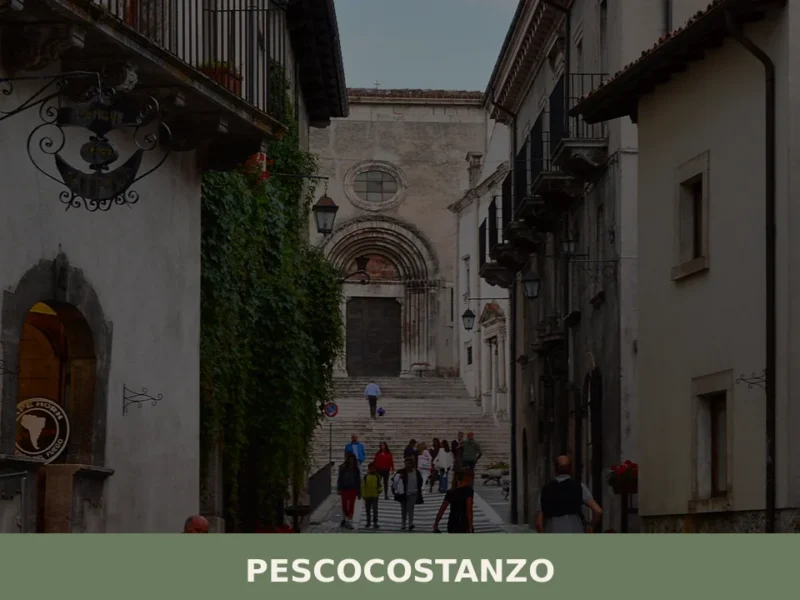
Pescocostanzo
Mountain
what to see in pescocostanzo offers a blend of mountain beauty and historical charm in Italy. Discover its 1,138 inhabitants, the Maiella National Park, and the Basilica di Santa Maria del Colle. Explore Abruzzo's heart.
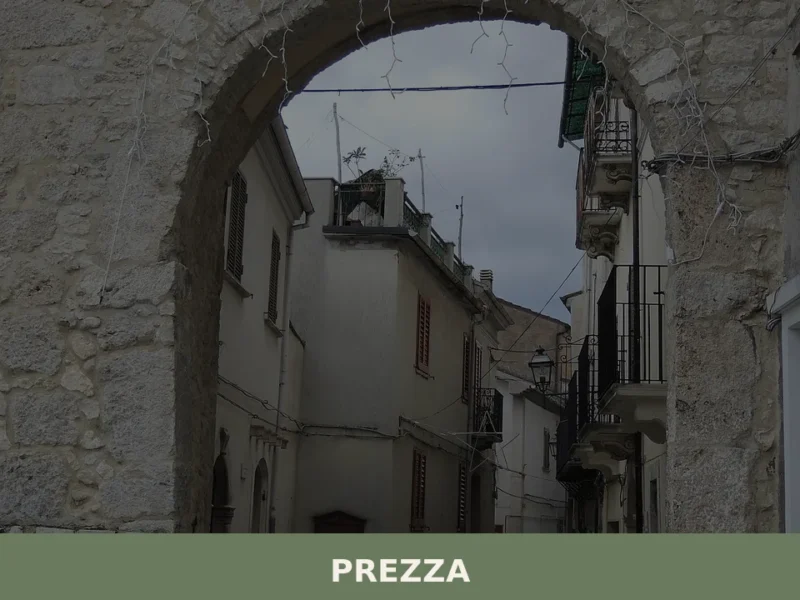
Prezza
Mountain
What to see in Prezza, Italy: explore a medieval hilltop comune at 480 m, the Praesidium Winery, and the Church of Santa Lucia. Discover Abruzzo's Valle Peligna.
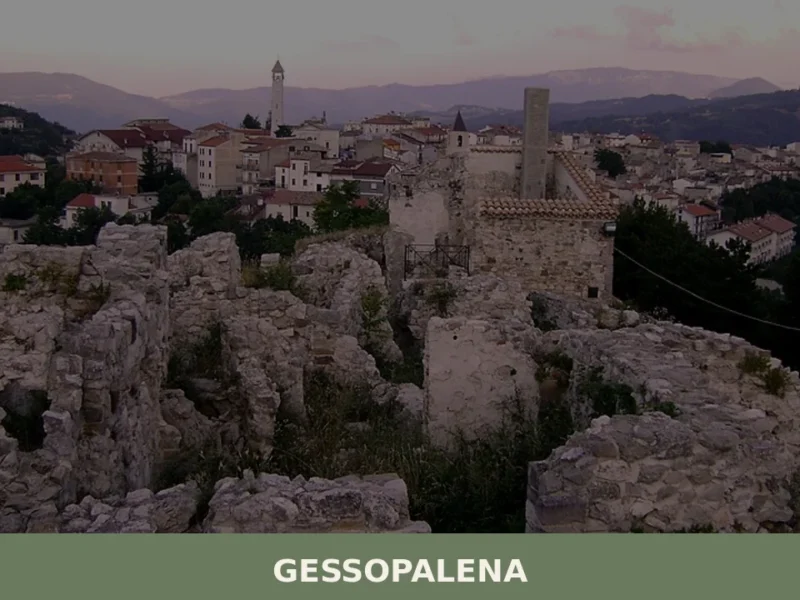
Gessopalena
Mountain
In 1943, retreating German troops dynamited the entire historic core of Gessopalena, reducing to rubble a settlement that for centuries had exploited the geological peculiarity of its terrain: gypsum. That whitish mineral, quarried and worked since Roman times, had given the village its name and shaped its houses, its walls, even the foundations of its […]
🧀 Italian traditional products

🏡 Know Torrebruna better than we do?
If you’re a local or have been there, your knowledge matters: add what’s missing or fix a detail on this page.