


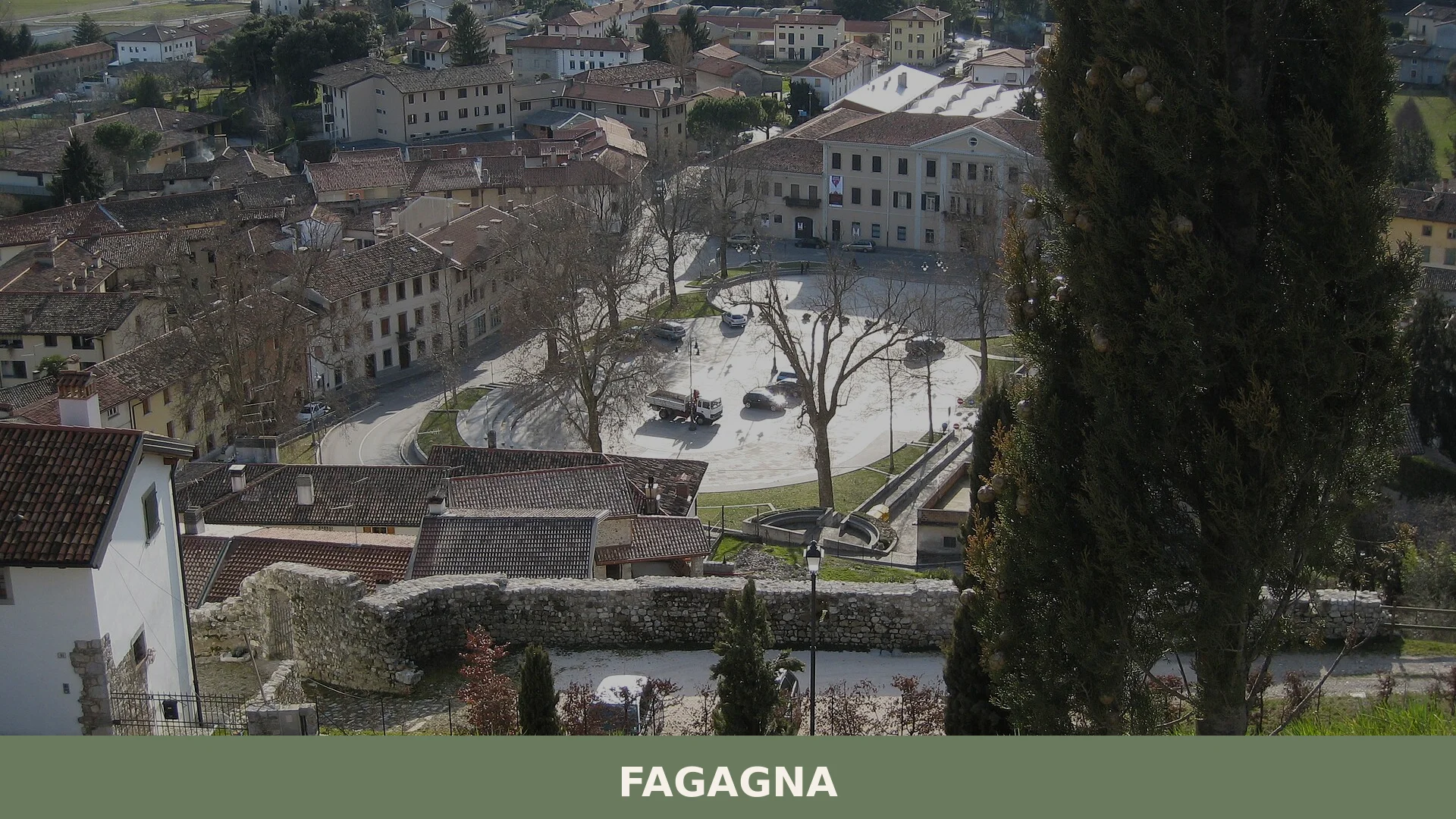

6,048 residents, two medieval castles and a living stork sanctuary make Fagagna one of Friuli’s most layered hill villages.
Fagagna: a Friulian Hill Village Between Castles and Wetlands
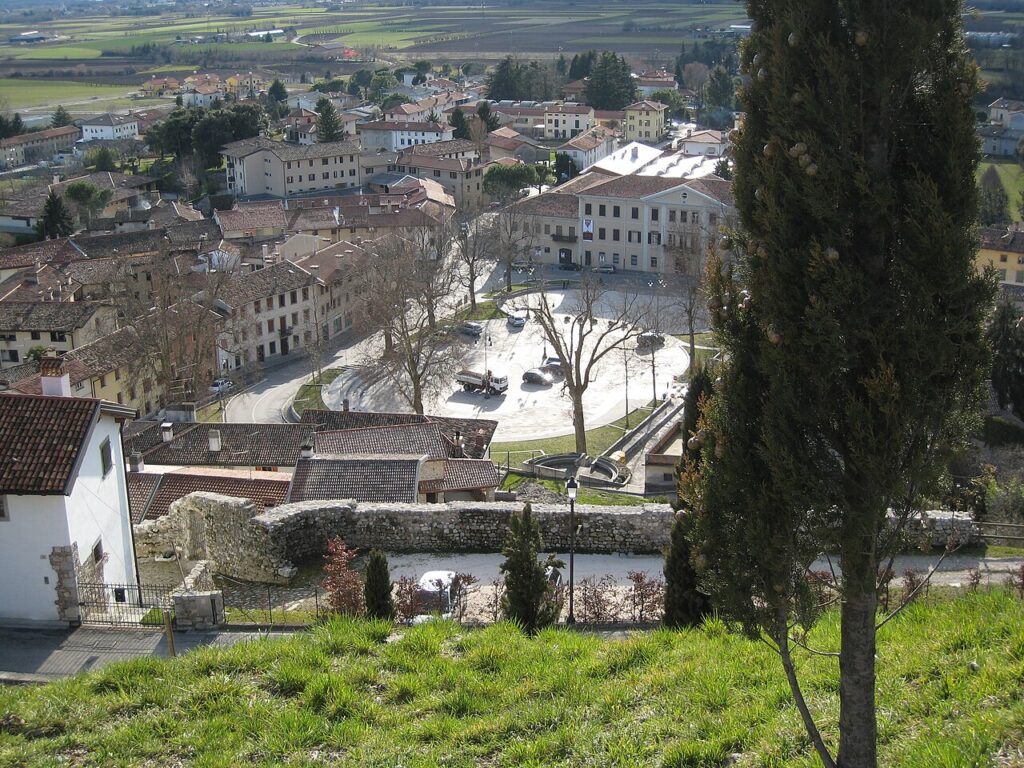
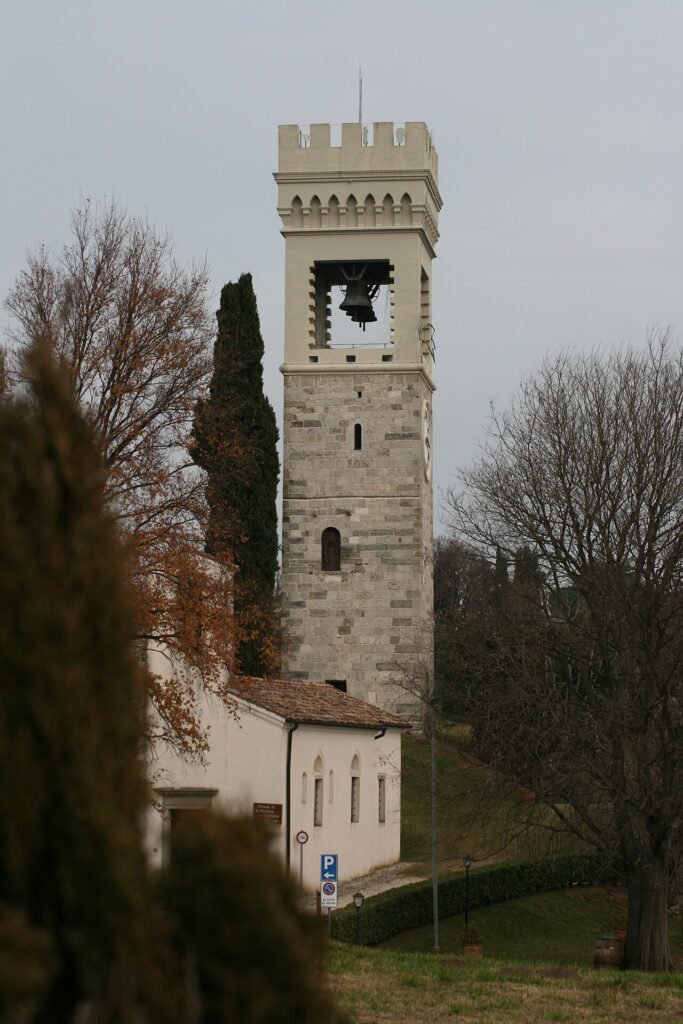
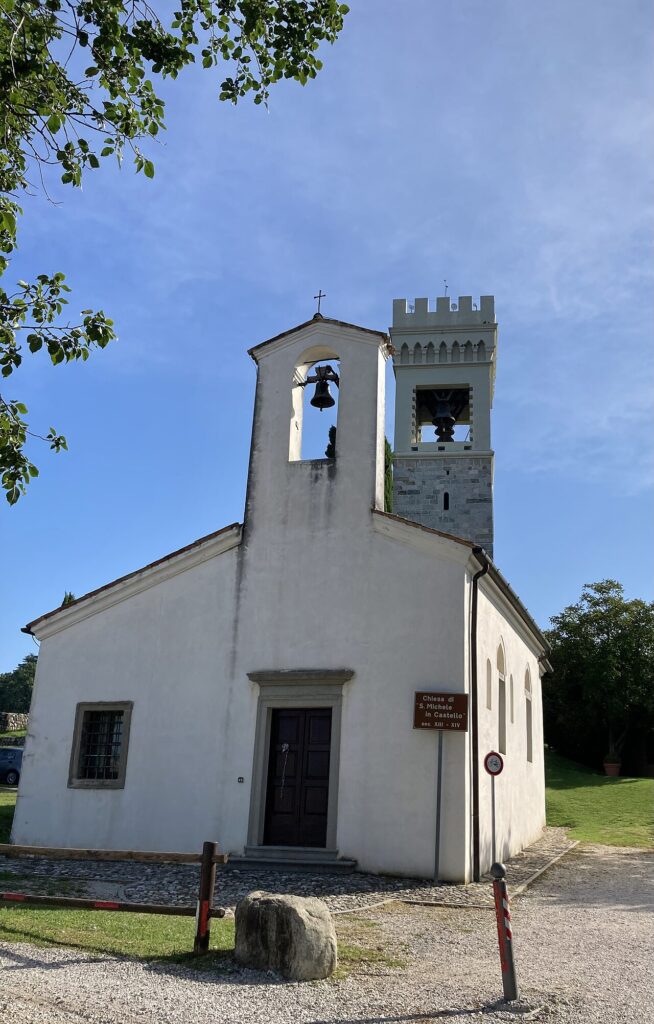
A stone tower converted into a bell tower rises above a plateau at 177 metres, looking out over the Friulian plain with the authority of something that has stood in place since the early medieval period. Below it, the lanes of a small borough fan out from the old communal palace, whose first-floor window still bears the winged lion of Venice carved in relief. The air in September smells of village festivals; in winter it carries wood smoke and the memory of lard slowly ground with mountain herbs.
Fagagna village in Friuli-Venezia Giulia draws two distinct kinds of attention: historians come for the layered medieval fabric of its two castles and its documented Patriarchal past, while nature visitors head directly to the wetland oasis where white storks were reintroduced in the late twentieth century. Both journeys start from the same compact centre in the province of Udine, home to approximately 6,048 residents known as fagagnesi.
A Communal Life Built Around a Hilltop Stronghold
The name Fagagna appears in written records from the late tenth century, when the Emperor Otto II granted its castle to the Patriarch of Aquileia. The site had already served as a transit point in Roman times, sitting along a route that connected the municipium of Concordia Sagittaria with Gemona and the road toward the north. That continuity of use — military, commercial, administrative — explains why the hill never emptied out even as power changed hands repeatedly over the following centuries.
The Patriarchs of Aquileia organised the territory around a system of noble families who held the castle in fief and a gastaldo who administered justice across a gastaldìa covering Fagagna and seventeen surrounding villages. By the end of the fourteenth century, five small boroughs that had grown around the base of the hill merged with the castle settlement to form the Comunità di Fagagna, governed by a council of twelve — four nobles and eight commoners. That balance between aristocratic custody and popular participation gave the town a civic character that persisted well into the Venetian period.
In 1420, Fagagna surrendered to the armies of the Republic of Venice as they consolidated control over Friuli. The Venetian era left its mark architecturally: the communal palace built in the early sixteenth century displays a ground-floor loggia and a first-floor triple window topped by the lion of Saint Mark. A far more recent historical episode unfolded at Villa Volpe, where on 24 May 1915 Italy’s declaration of war against Austria-Hungary was signed — an event commemorated by two plaques still visible on the building’s facade.
Castles, Churches and a Museum of Rural Memory
Castello di Fagagna
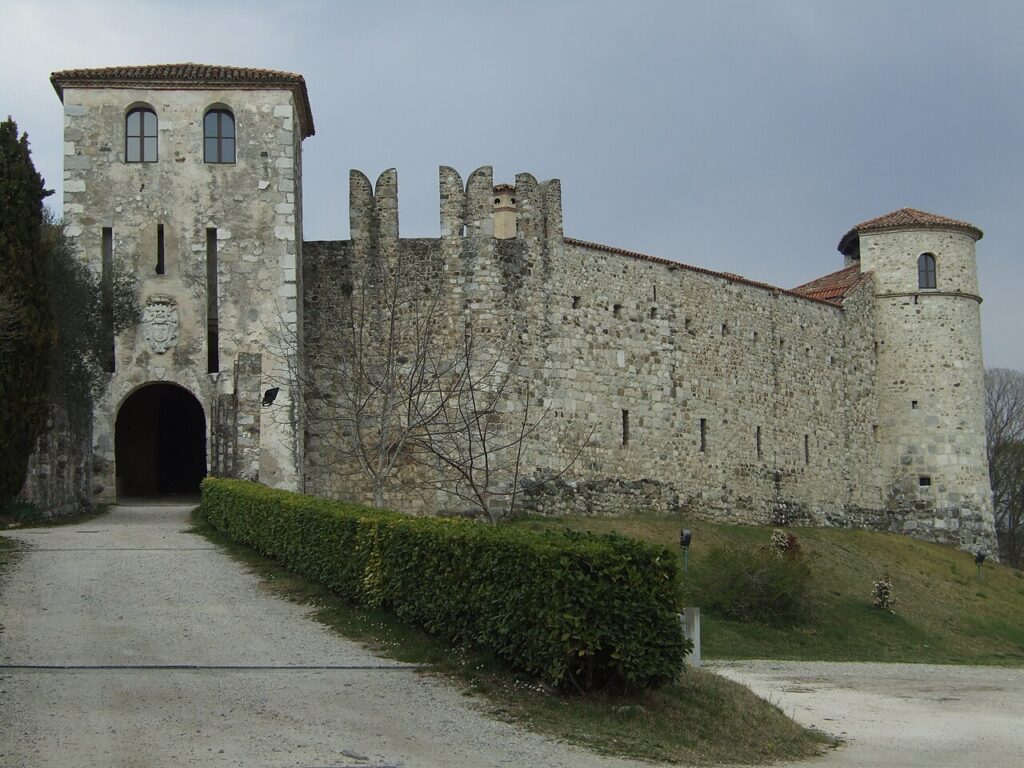
The castle occupies the flat summit of the hill above the village centre, reached by a steady climb from the main street. Its oldest components — the first ring of walls, the tower now serving as a bell tower, and the ruined Patriarchal palace — go back to at least the tenth century. A second defensive perimeter was added lower down the slope during the thirteenth and fourteenth centuries to protect the noble residences that had grown there. Of the three original gates in this lower circuit, only the one known as the porta di Sinagoga survives. The communal palace built just inside it remains the visual anchor of the historic centre.
Castello di Villalta
Castello di Villalta stands on ground that may have been occupied since prehistoric times, and its first documentary mention dates to 1158. The stronghold proved its defensive worth in the early thirteenth century when it successfully resisted a siege by the forces of Ezzelino III da Romano. Later centuries brought less fortune: during the peasant revolt of 1511 — known in local memory as the Crudele giovedì grasso — the castle was attacked and largely destroyed, and a violent earthquake a few days later reduced what remained. The ruins carry a concentrated sense of those successive calamities.
Chiesa di San Leonardo
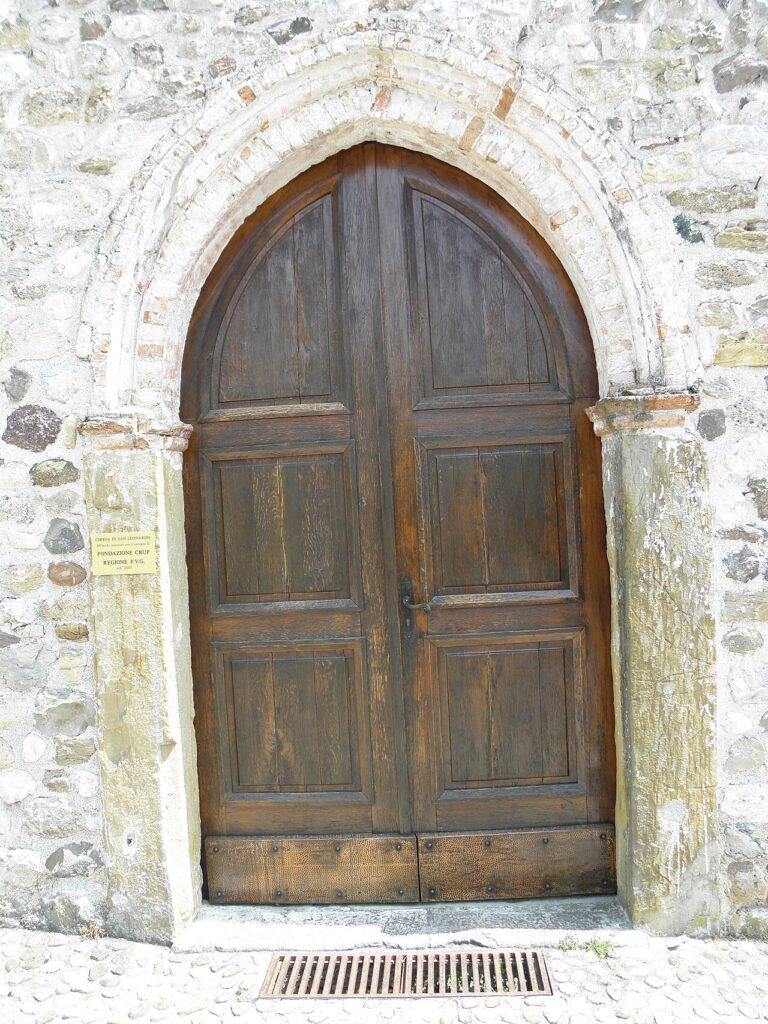
This small church in Borgo Riolo probably dates from the late fourteenth or early fifteenth century. It fell out of religious use during the Napoleonic suppressions at the start of the nineteenth century and served as a hay store for decades. Restored by the municipality, it now shelters a cycle of frescoes depicting scenes from the life of Saint Leonard. The first three panels belong to the late Vitalesque manner current in Friuli at the end of the fourteenth century; the fourth has been associated with the hands of Domenico Lu Domine and Antonio Baietto, artists documented in Fagagna around 1413.
Oasi dei Quadris
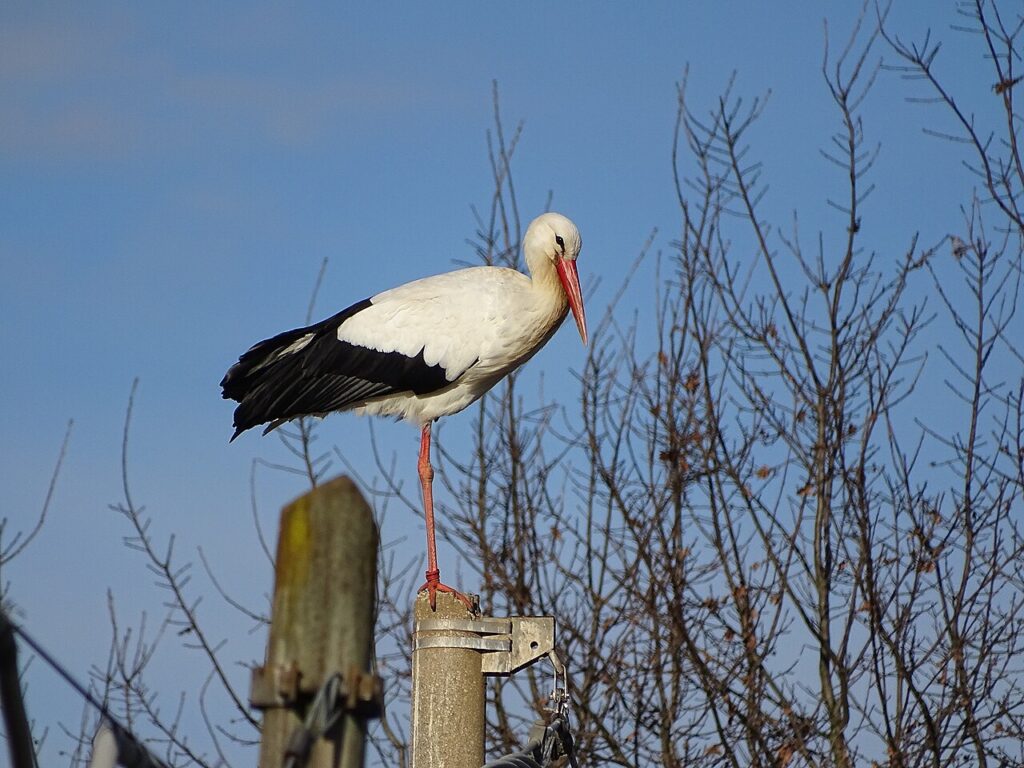
Created in 1989, the Oasi dei Quadris introduced white storks back into the Friulian landscape after a long local absence. The sanctuary now also hosts specimens of the northern bald ibis kept in semi-captivity. The surrounding wetland sits within or adjacent to a protected biotope of damp meadows — an ecosystem type increasingly rare on the plain. Spring visits, when the stork nests are active, give the oasis a different energy from the quieter autumn months.
Museo della Vita Contadina Cjase Cocèl
The Cjase Cocèl museum takes its name from the Chiarvesio family, nicknamed Cocèl, who once lived in the building. It reconstructs rural and artisan life from the nineteenth century through the first half of the twentieth, using original tools, furniture and working spaces. The complex includes a forge, a mill and a dairy. Two reconstructed rooms — one a schoolroom, the other dedicated to the craft of merletto a tombolo (bobbin lace) — reflect skills that Fagagna maintained over generations. The museum anchors the village’s identity as a place that has kept its agricultural memory physically intact.
The Flavours Fagagna Calls Its Own
One product above all defines Fagagna’s culinary identity: pestàt, a compound of ground lard seasoned with herbs and spices, used as a cooking base and condiment. It carries a Slow Food Presidium recognition, which means it is produced according to documented traditional methods and actively protected from industrial dilution. The recipe is simple in its ingredients but precise in its proportions and its long resting time, and local households and producers treat it as a point of pride rather than a curiosity.
The broader food landscape of the province of Udine brings additional context to a meal in the area. Cheeses, cured meats and preserved vegetables associated with the wider Friulian territory are part of everyday cooking here, and the wines of the Friuli Grave and Friuli Colli Orientali appellations are the natural companions at any table. The September village festival is the moment when all of this comes together most visibly, with the Corsa degli Asini — a donkey race held every year since the late nineteenth century — giving the festivities a competitive edge that draws participants from across the borough districts.
Planning your visit and getting there
Fagagna can be reached using the practical reference points below. Distances and journey times are kept concise so the access information stays clear and consistent.
| Departure | Distance | Time |
|---|---|---|
| Udine | approx. 15 km | approx. 20 min |
| Trieste | approx. 110 km | approx. 1 hour and 15 min |
| Venezia | approx. 130 km | approx. 1 hour and 30 min |
These practical reference points are enough to plan the journey without overloading the text with unstable logistics. Once on site, the village is best understood slowly, on foot and in relation to the surrounding landscape.
Frequently asked questions about Fagagna
How do I get to Fagagna by car or public transport?
By car, Fagagna is reached via the A23 motorway (Udine–Tarvisio), exiting at Udine Nord, then following provincial roads toward Codroipo through the Friulian foothills; the village sits roughly 18 kilometres northwest of Udine city centre. By public transport, regional buses operated by SAF connect Udine with Fagagna on a regular schedule. The nearest railway station is Udine, from which a connecting bus completes the journey. Street parking is available on the village perimeter near the historic centre.
When is the best time to visit Fagagna?
Late spring and early summer offer mild temperatures ideal for exploring the wetland oasis and hilltop lanes. The patronal feast of San Giacomo on 25 July brings traditional celebrations to the village centre, making late July particularly lively. September is also recommended, as the article notes the village hosts local festivals that season. Winter visits are quieter but atmospheric, with wood smoke and a slower pace. Birdwatchers targeting the stork colony should visit between March and August when the birds are present.
What outdoor and cycling routes are available around Fagagna?
Fagagna lies within the Colline Moreniche del Friuli area, which offers waymarked cycling itineraries connecting hilltop villages across the glacial morainic ridge. The Ciclovia Alpe Adria Radweg, one of Europe's most celebrated cycling routes, passes through the broader Udine province and can be accessed within a short ride. Local CAI (Club Alpino Italiano) sections maintain walking trails through the surrounding hills and towards the Oasi dei Quadris wetland reserve, where paths are accessible on foot year-round.
What is the Oasi dei Quadris and why is it significant?
The Oasi dei Quadris is a wetland nature reserve on the outskirts of Fagagna, managed as a habitat for white storks that were reintroduced to Friuli in the late twentieth century after disappearing from the region. The site is one of the few places in northeastern Italy where storks nest regularly. It also hosts a variety of waterfowl and amphibians. The reserve is open to visitors, particularly families and birdwatchers, and represents one of Fagagna's most distinctive ecological attractions alongside its medieval heritage.
How long should I plan for a visit to Fagagna, and is there accommodation nearby?
A half-day is sufficient to walk the historic centre, view the converted bell-tower, and visit the communal palace façade with its Venetian lion relief. Combining the old town with the Oasi dei Quadris extends the visit to a full day. Accommodation options in the immediate area include agriturismos in the surrounding Colline Moreniche countryside, offering farm-stay experiences with local Friulian food. The city of Udine, 18 kilometres away, provides a wider range of hotels and B&Bs for visitors using Fagagna as a day trip.
📷 Photo Gallery — Fagagna
In Friuli-Venezia Giulia More villages to discover
Erto e Casso
 Mountain
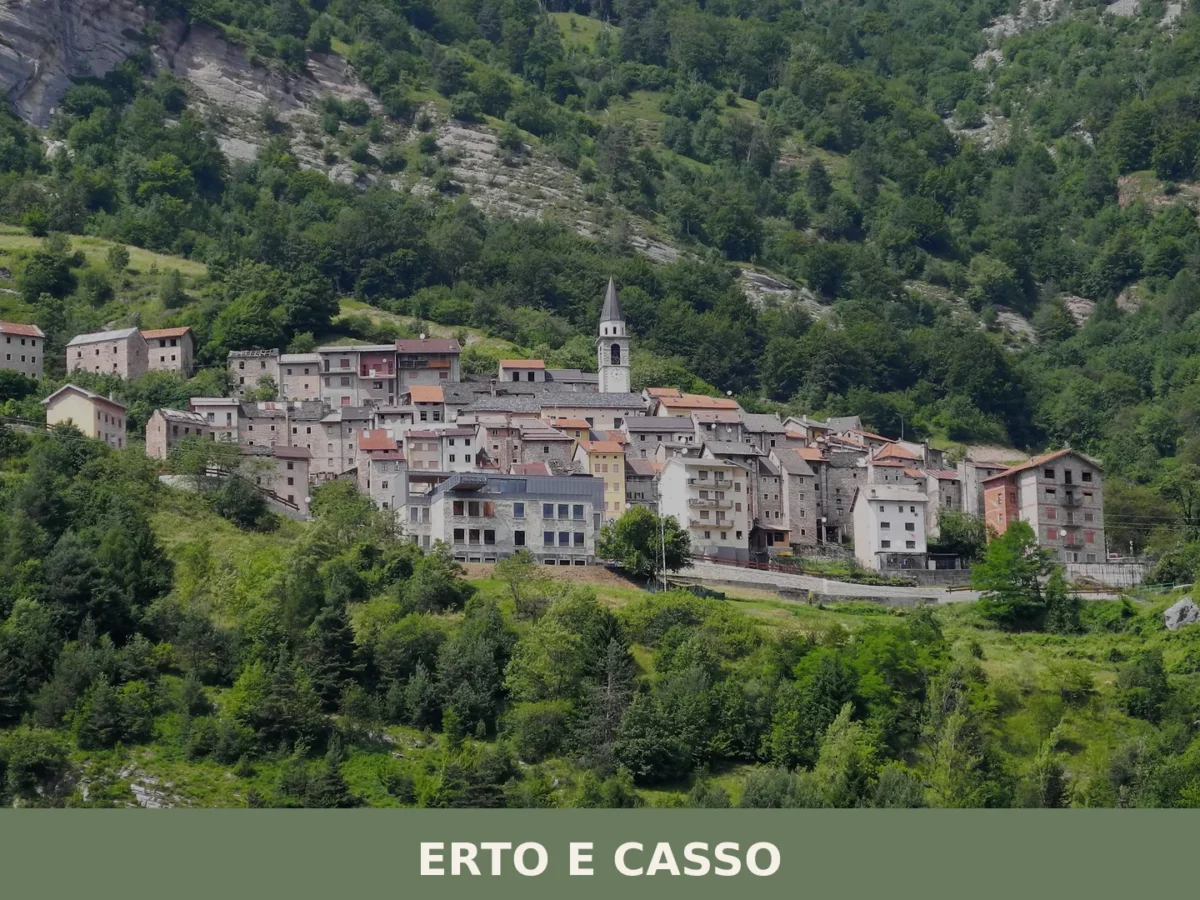
Erto e Casso is a mountain comune of about 360 inhabitants at 814 metres in the Val Vajont, Pordenone, forever linked to the catastrophic landslide of 9 October 1963.
Basiliano
 Plains
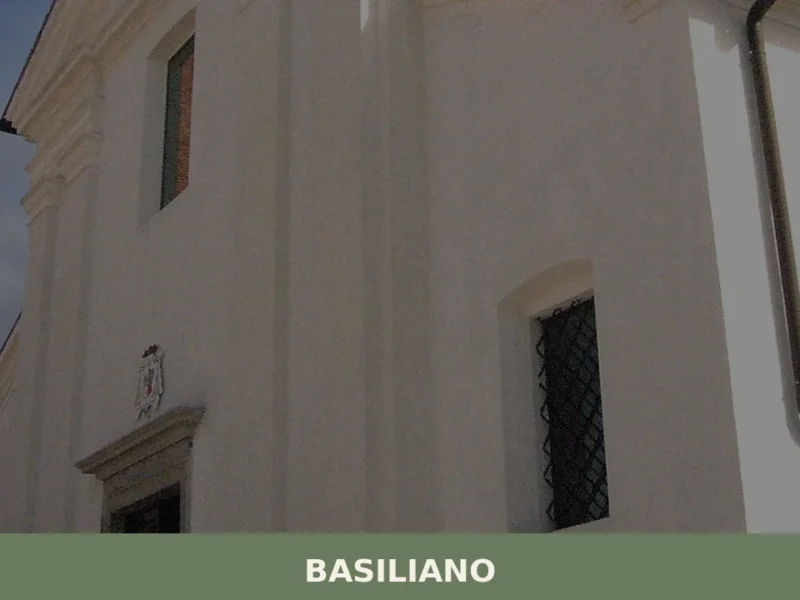
In 1309, a notarial deed drawn up in Udine recorded the transfer of certain feudal rights relating to the territory of Basiliano, confirming the existence of a settlement already organised along the route connecting Udine to Codroipo. Today that route partly coincides with regional road 464, and anyone travelling along it crosses a plain where […]
Castions di Strada
Plains
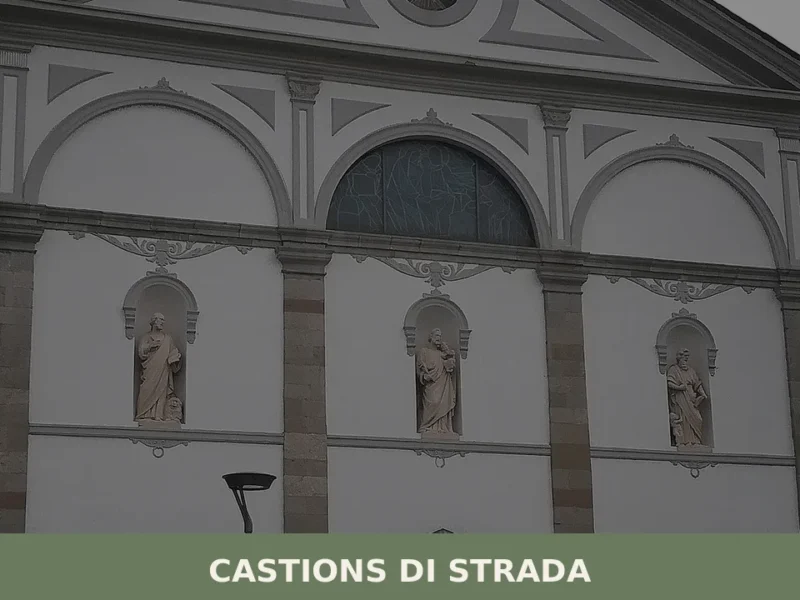
A straight road cuts across the Friulian plain at twenty-three metres above sea level, and along that route — the ancient road that connected Aquileia to Concordia Sagittaria — a settlement grew whose very name declares its reason for being. Castions di Strada owes its identity to that Roman road, to a network of drainage […]
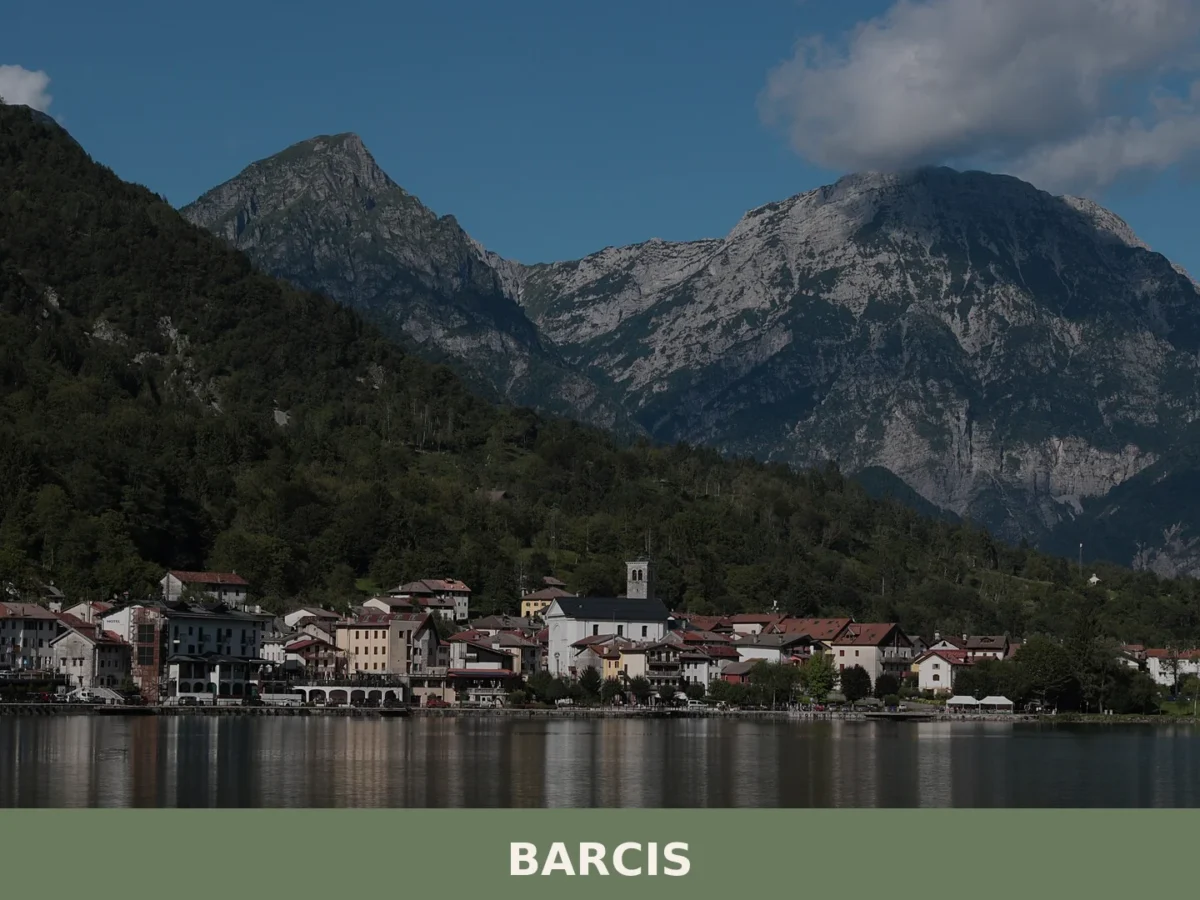
Barcis
Mountain
231 inhabitants. A small mountain comune where medieval stone meets a luminous artificial lake, ringed by limestone summits and ancient mountain paths.
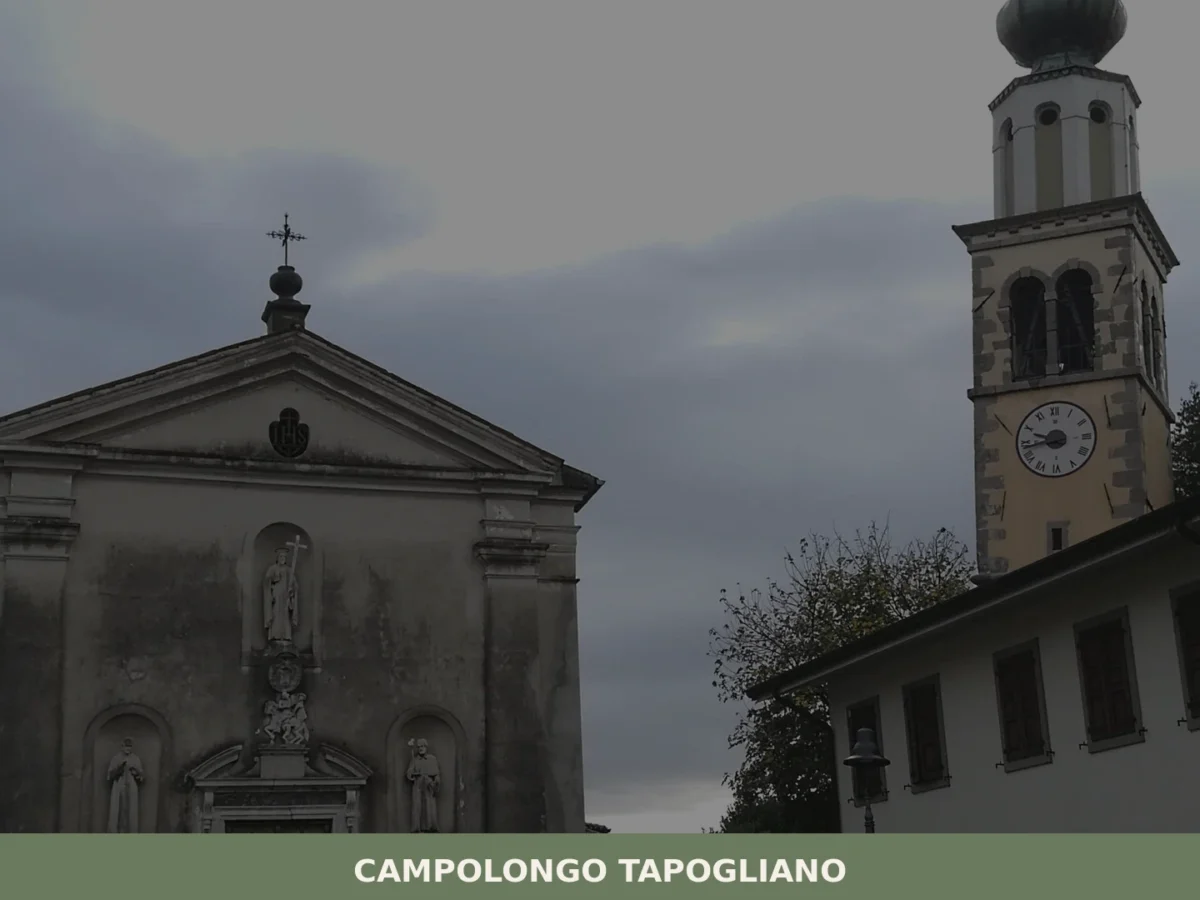
Campolongo Tapogliano
Plains
What to see in Campolongo Tapogliano, Friuli-Venezia Giulia, Italy. Explore a comune born in 2009, its twin-town ties with France, local food and how to get there.
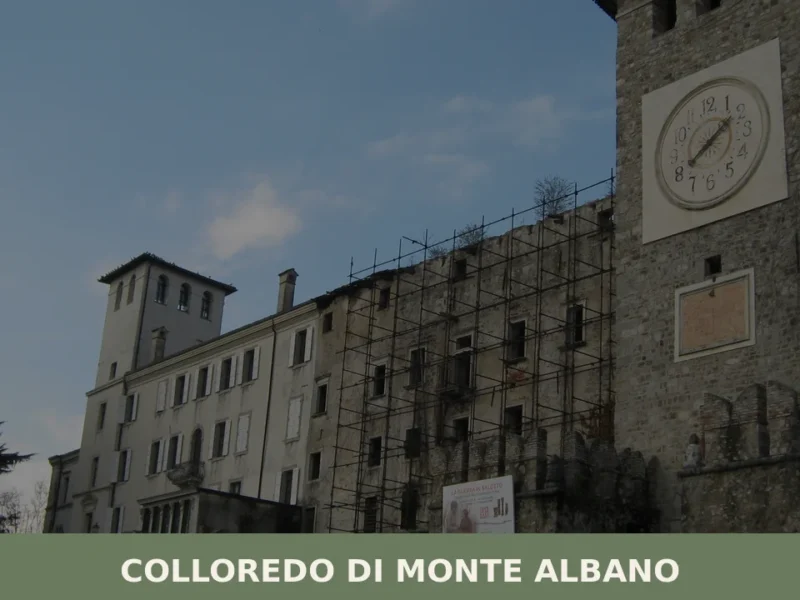
Colloredo di Monte Albano
 Hills
Hills
The earthquake of 6 May 1976 split the history of Colloredo di Monte Albano in two: before and after. The castle of the Counts of Colloredo, one of the most imposing noble residences in Friuli, largely collapsed that evening, and with it shattered an architectural heritage built over seven centuries. Today, after decades of restoration, […]
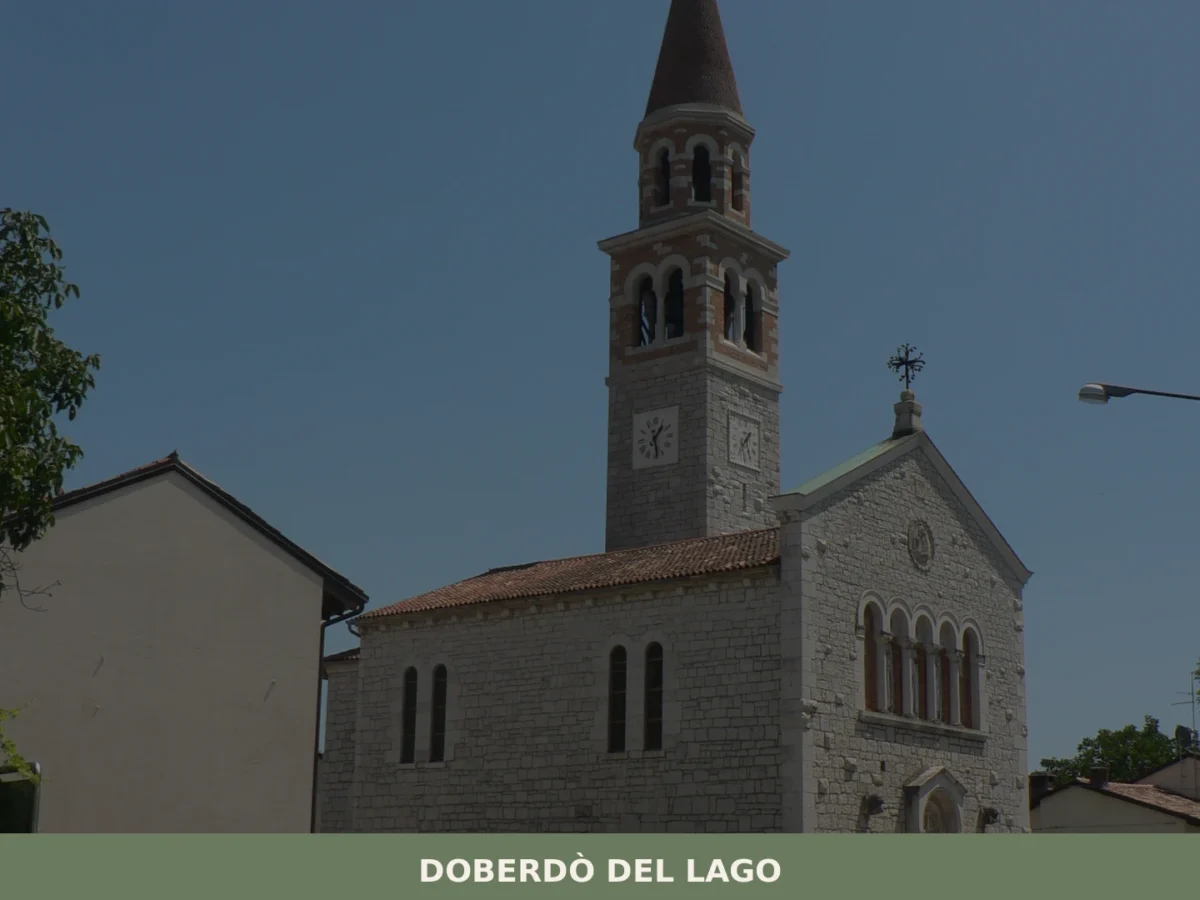
Doberdò del Lago
Plains
What to see in Doberdò del Lago, Italy, a village with 1,340 inhabitants. Discover the unique Karst Plateau and explore significant WWI sites. Plan your visit to Friuli-Venezia Giulia.
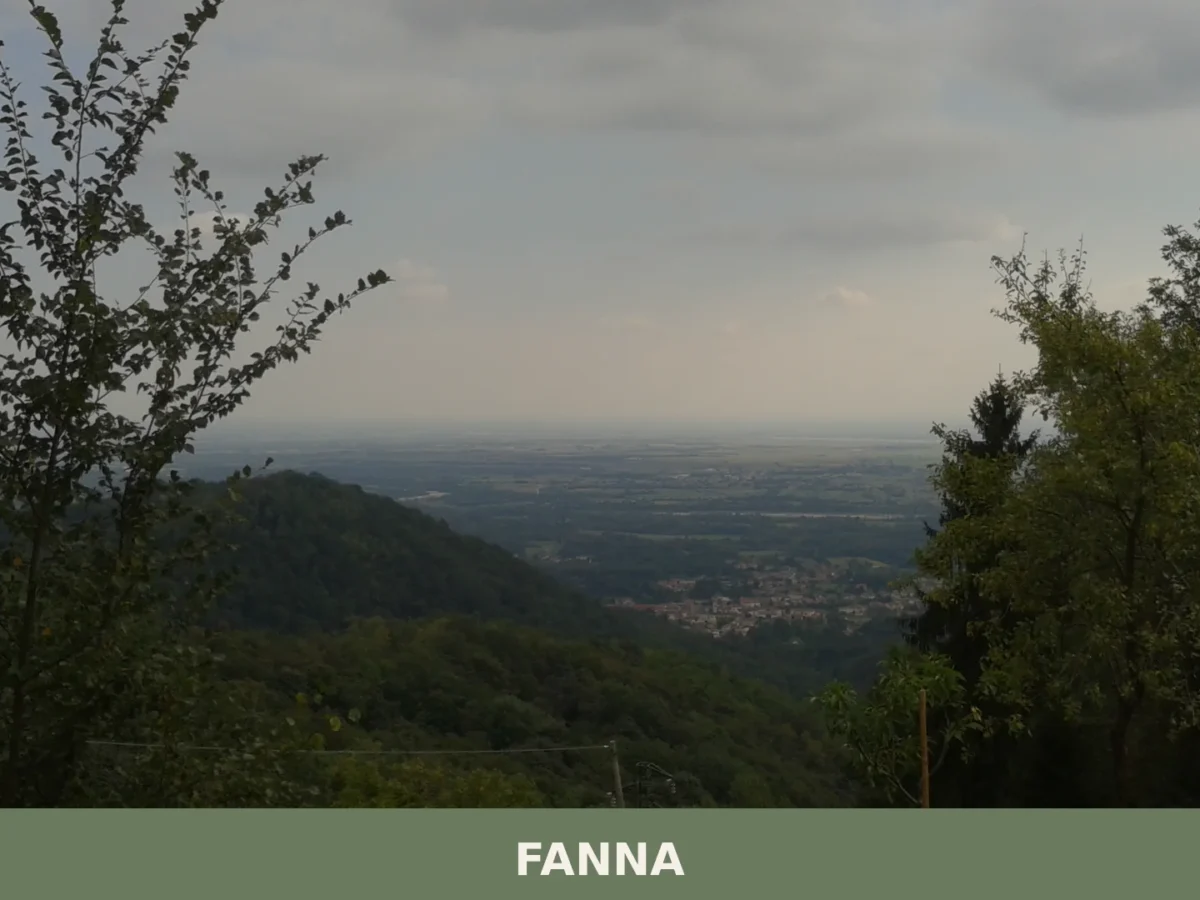
Fanna
Hills
Around 1,464 residents live in Fanna, a Friulian village where medieval castle ruins, a pilgrimage sanctuary and a living tradition of ancient apple varieties reward curious visitors.
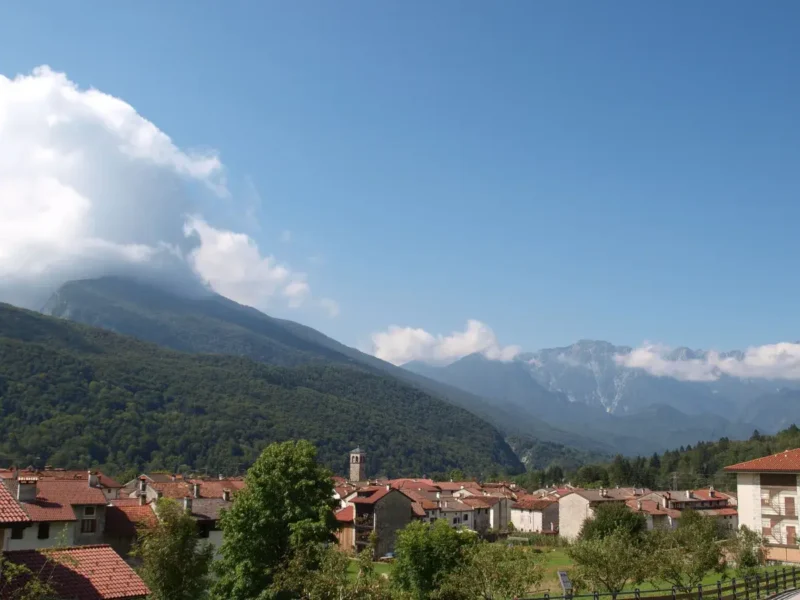
Andreis
Mountain
What to see in Andreis, a village of 242 residents in the Friulian Dolomites Park: attractions, local food, how to get there and when to visit.
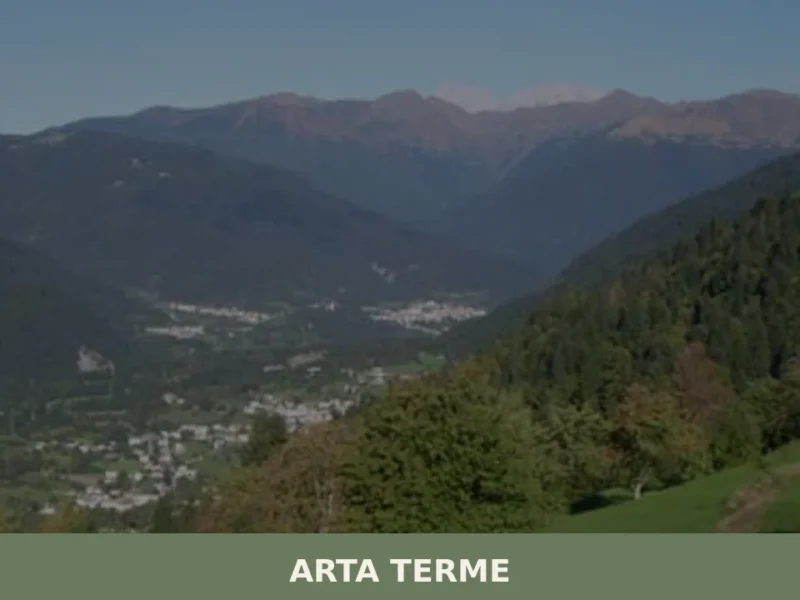
Arta Terme
Hills
In 1687, the physician and naturalist Giovanni Battista De Candido published the first treatise on the healing properties of the sulphurous waters flowing from the Fonte Pudia spring in the territory of Arta. That document marked the beginning of a thermal spa tradition that would define the economic identity of this Carnic centre for the […]

🏡 Know Fagagna better than we do?
If you’re a local or have been there, your knowledge matters: add what’s missing or fix a detail on this page.