



Barrafranca is a hill town of roughly 11,500 inhabitants in the province of Enna, central Sicily, with roots reaching from an ancient Greek settlement to a medieval feudal borough that took its curren
Discover Barrafranca
Barrafranca is a hill town of roughly 11568 inhabitants in the province of Enna, central Sicily, sitting at 450 metres above sea level on the south-western slopes of the Monti Erei, between the Tardara and Braemi rivers, about 30 kilometres from the provincial capital. Its recorded history stretches from a settlement tentatively identified with the ancient Greek foundation of Ἲβλα Ἡεραῖα — later romanised as Callonania — through a Norman phase as Convicino, to its current name, which it took in 1529 under the influence of the Barresi family, the feudal lords who governed the area from around 1330. The urban fabric that visitors walk through today still pivots around the castle those lords built and the churches that grew up beside it over the following centuries.
For travellers seeking a destination where medieval feudal history, Baroque ecclesiastical art, and a living calendar of religious and agricultural traditions converge in a single inland comune, the Barrafranca village in Sicily offers a concentrated and largely unhurried experience. The town covers just over 53.64 square kilometres of rolling interior landscape, and its quarters — from Canale and Costa to Convento and Itria — preserve the successive layers of an expansion that moved outward from the castle across several hundred years. Two civic museums, a cluster of churches holding works attributed to painters of regional standing, and a well-documented Holy Week procession give the visit its substance.
Barrafranca village in Sicily: history and feudal roots
Barrafranca, a hill town in the province of Enna, traces its origins to a settlement traditionally identified with the ancient Greek foundation of Ἲβλα Ἡεραῖα — also referred to as Galeota or Galatina — later romanised as Callonania, and acquired its present name in 1529 after roughly two centuries under the control of the Barresi family.
During the Norman period the town was known as Convicino. Around 1330 it passed into the hands of the Barresi family as a feudal holding, and it was Marchese Matteo III Barresi who shaped its early urban character: he promoted the construction of the first houses and exempted newly arrived inhabitants from fiscal obligations, a concession that gave rise to the second element of the town’s current name — franca, meaning free of tribute. Under these conditions the population grew steadily, and the settlement began to spread outward from the castle of the Barresi, first westward toward the Sopra Canale quarter, then eastward toward the monastery lands, and eventually northward.
Churches, Museums and the Castle of Barrafranca
Barrafranca preserves a collection of religious buildings spanning several centuries, from the oldest church of Maria SS. della Stella — documented before 1598 — to the modern Chiesa Santa Famiglia di Nazareth, along with two museums and the remains of the Barresi castle around which the town originally grew.
Chiesa Maria SS. della Stella
The oldest surviving church in Barrafranca predates 1598. Inside, two significant canvases are held: San Isidoro agricola, attributed to Pietro D’Asaro, and Sant’Alessandro, by Francesco Vaccaro. The church also houses the Cristo Deposto — known locally as the Signore dell’Urna — a figure in cartapesta rendered at natural scale, measuring approximately 1.40 m, positioned so that it can be laid inside an urn for display and carried in procession. This church is home to the town’s patron saints, Sant’Alessandro and the tela of Maria SS. della Stella, venerated on 3 May and 8 September respectively.
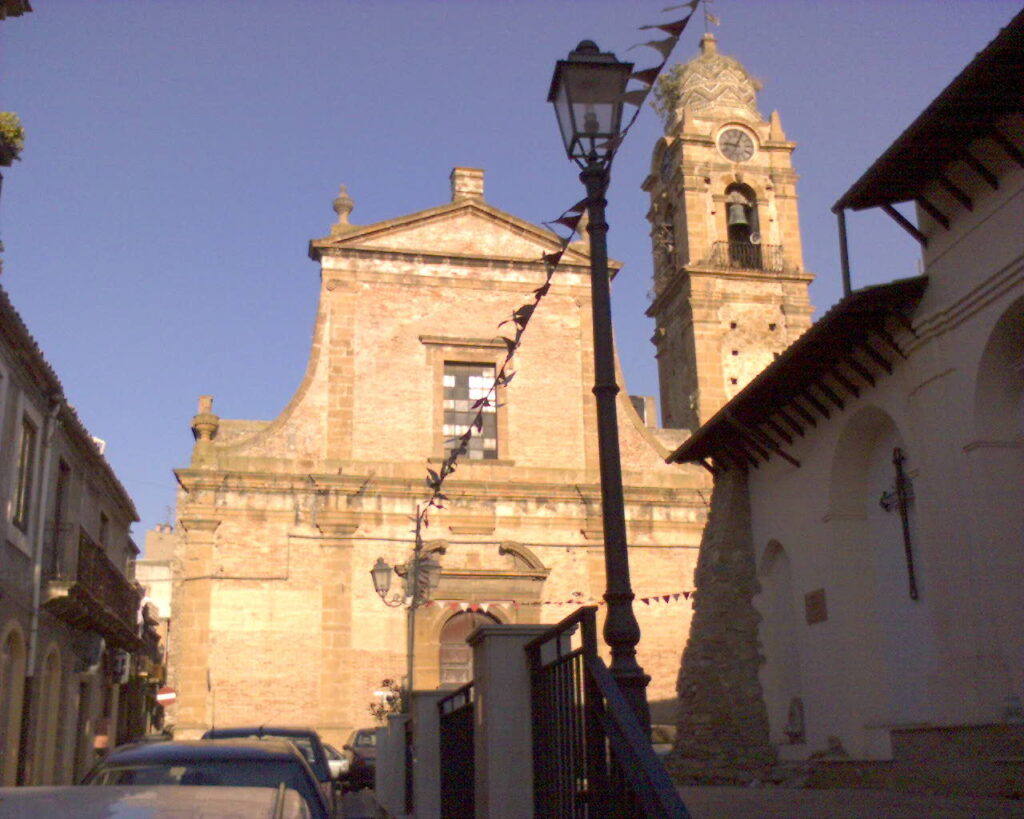
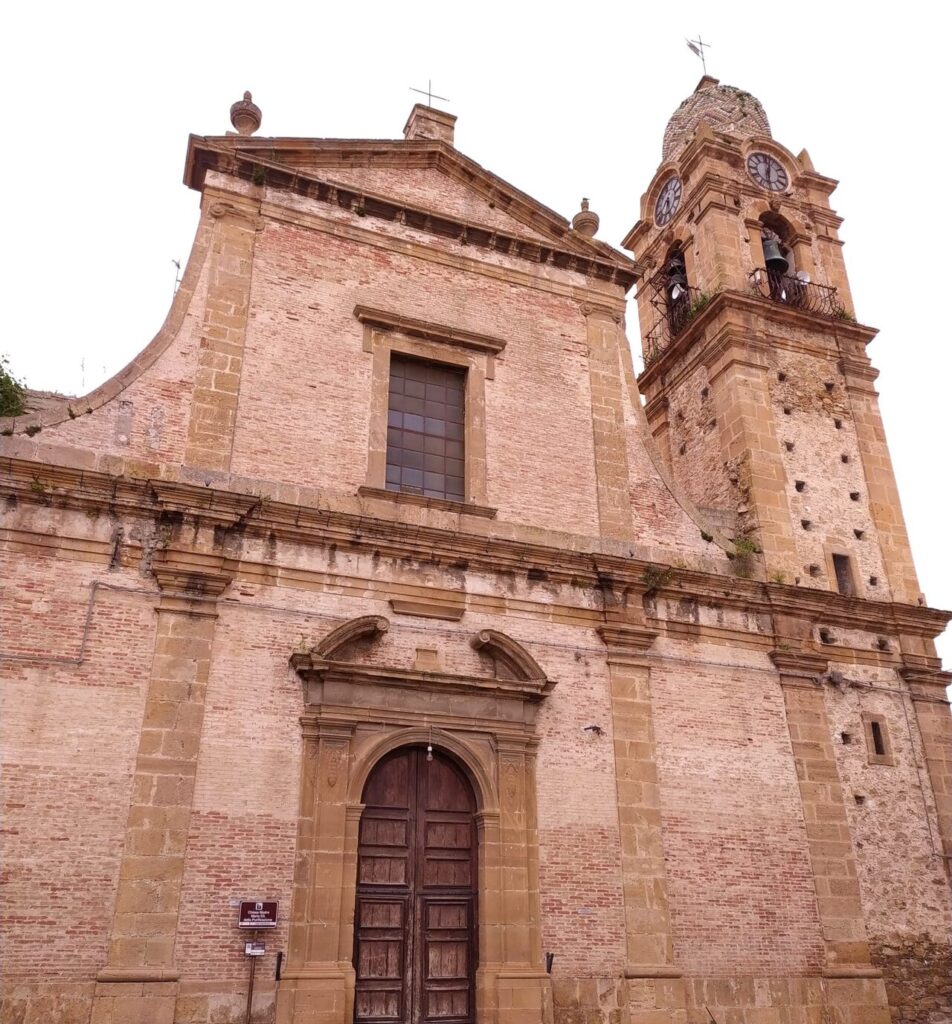
Chiesa Madre (1728)
Chiesa Maria SS. dell’Itria
Dating from the fifteenth century, this church preserves the Annunziata, a painting attributed to Mattia Preti, as well as an older canvas of the Madonna dell’Odigitria and the wooden simulacrum of the Nostra Signora del Sacro Cuore di Gesù.
Chiesa Madre della Divina Grazia
Built around the mid-seventeenth century, the church features a carved stone portal and a large-format painting of Maria Santissima delle Grazie. Inside it also houses the simulacrum of the Madonna, Madre della Divina Grazia.
Monastero delle Benedettine and Chiesa di San Benedetto
This complex belongs to the late Sicilian Baroque. The church interior contains a carved wooden altar framed by spiral columns.
Chiesa di San Francesco
Documented before 1694, the church holds statues of the Immacolata and of San Pasquale Baylon. The high altar is executed in carved and inlaid wood.
Other Churches
The Chiesa Sacro Cuore and the Chiesa Santa Famiglia di Nazareth — the latter built in the early 1980s and restored in 2007 — are both in a modern architectural style. The Chiesa San Giovanni is also present in the town.
Castello dei Barresi and the Palazzo Municipale
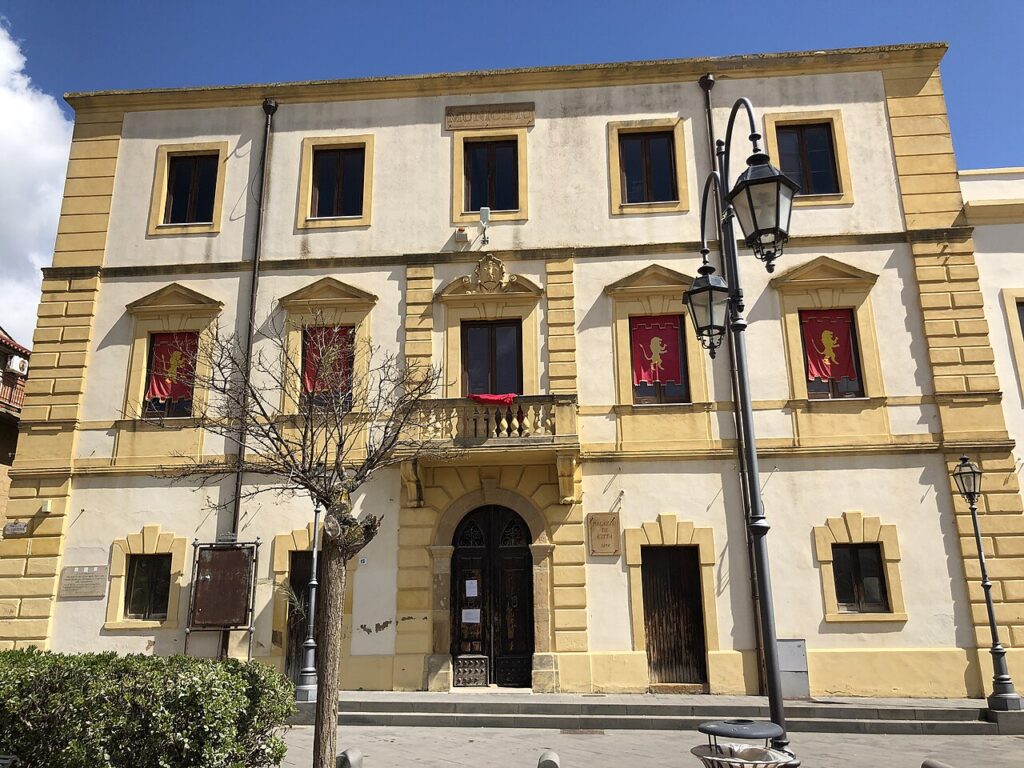
The castle of the Barresi family marks the nucleus around which Barrafranca developed. The Palazzo Municipale, whose façade was restored at the end of the 1920s, is the civic building that provided the occasion for the creation of the town’s first unofficial heraldic emblem.
Museo Bellico and Museo della Passione
Two museums are open in Barrafranca: the Museo Bellico and the Museo della Passione, the latter connected to the town’s documented Holy Week traditions.
Barrafranca and Its Territory: Local Flavours and Certified Products
Barrafranca’s agricultural tradition centres on vegetables — notably onions — alongside wheat, almonds, olives, grapes and citrus, while the surrounding Enna province also produces certified specialities including Arancia Rossa di Sicilia IGP, Ficodindia di San Cono DOP, Pagnotta del Dittaino DOP, Pecorino Siciliano DOP and Pesca di Leonforte IGP.
The town’s own countryside reflects the mixed upland farming of the Sicilian interior. Five olive presses operate in the area, and almonds were once processed locally at a dedicated facility. Livestock farming also forms part of the local economy, alongside small-scale cultivation of cereals and fruit.
The broader Enna province has a tradition of artisan spirits and preserved foods listed among regional heritage products, among them acquavite di miele iblea and liquore al mandarino, though these belong to wider Sicilian tradition rather than to Barrafranca specifically. Locally crafted goods extend beyond food: marble work, ceramics, ironwork, wooden items, gesso cornices and cement statuary are all part of the artisan output that visitors may encounter in and around the town.
Wine lovers will find that the wider Sicilian interior is framed by several denominations, with the Contea di Sclafani DOC among the most geographically relevant to this part of the island. The Cerasuolo di Vittoria DOCG and the Etna DOC are produced in other parts of Sicily and are best sought out in those respective territories.
Planning your visit and getting there
Barrafranca can be reached easily from the lower Val Pellice and the Turin area. The practical distances and journey times below are kept concise on purpose, so the access information stays clear and consistent.
| Departure | Distance | Time |
|---|---|---|
| Enna | approx. 40 km | approx. 35-40 min |
| Caltanissetta | approx. 30 km | approx. 30 min |
| San Michele di Ganzaria | approx. 20 km | approx. 20 min |
These practical reference points are enough to plan the journey without overloading the text with unstable logistics. Once on site, the village is best understood slowly, on foot and in relation to the surrounding landscape.
Frequently asked questions about Barrafranca
What is the best time to visit Barrafranca?
May is ideal: the Feast of Sant'Alessandro, patron saint, takes place on May 3rd with religious processions and local celebrations. Spring offers mild weather perfect for exploring the hilltop town and its surrounding countryside. Holy Week (Easter period) is also significant, featuring well-documented processions that draw visitors interested in Sicilian religious traditions and Baroque ecclesiastical art.
How do I reach Barrafranca by car from Enna?
Barrafranca lies approximately 30 kilometres south-west of Enna, the provincial capital. The town sits at 464 metres elevation on the slopes of Monti Erei. Drive via regional roads through central Sicily's interior landscape. For motorway access, use the nearest A19 or A20 connections serving the Enna province, then follow secondary roads toward the comune.
What historical periods shaped Barrafranca's identity?
The town evolved from ancient Greek Ἲβλα Ἡεραῖα (later Callonania), through Norman rule as Convicino, to its 1529 name under the Barresi feudal family. The Barresi lords (governing from circa 1330) built the castle that anchors the urban layout today. Successive centuries added churches and expanded quarters—Canale, Costa, Convento, Itria—each layer documenting medieval and Baroque development around the original fortification.
What can visitors see and do in Barrafranca?
The castle remains the focal point of the medieval core. Two civic museums offer local history and culture. Several churches contain artworks attributed to regional painters, showcasing Baroque ecclesiastical art. The Holy Week procession is well-documented and attracts visitors. The town spans 53 square kilometres of rolling landscape suitable for leisurely walks through historic quarters and countryside exploration.
How long should I plan to spend in Barrafranca?
A half to full day suffices for most visitors. This allows time to walk the medieval quarters around the castle, visit the churches and two civic museums, and absorb the unhurried, authentic atmosphere of this 11,500-inhabitant hill town. Those attending the May 3rd feast or Holy Week processions should plan accordingly for the festive calendar and additional cultural immersion.
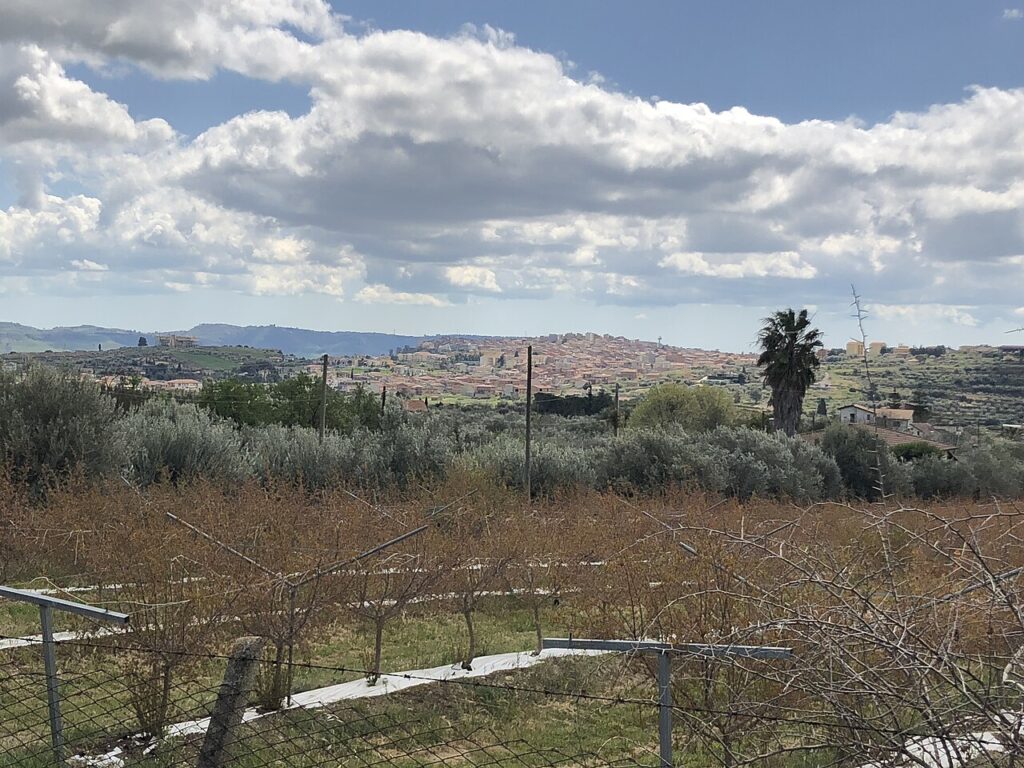
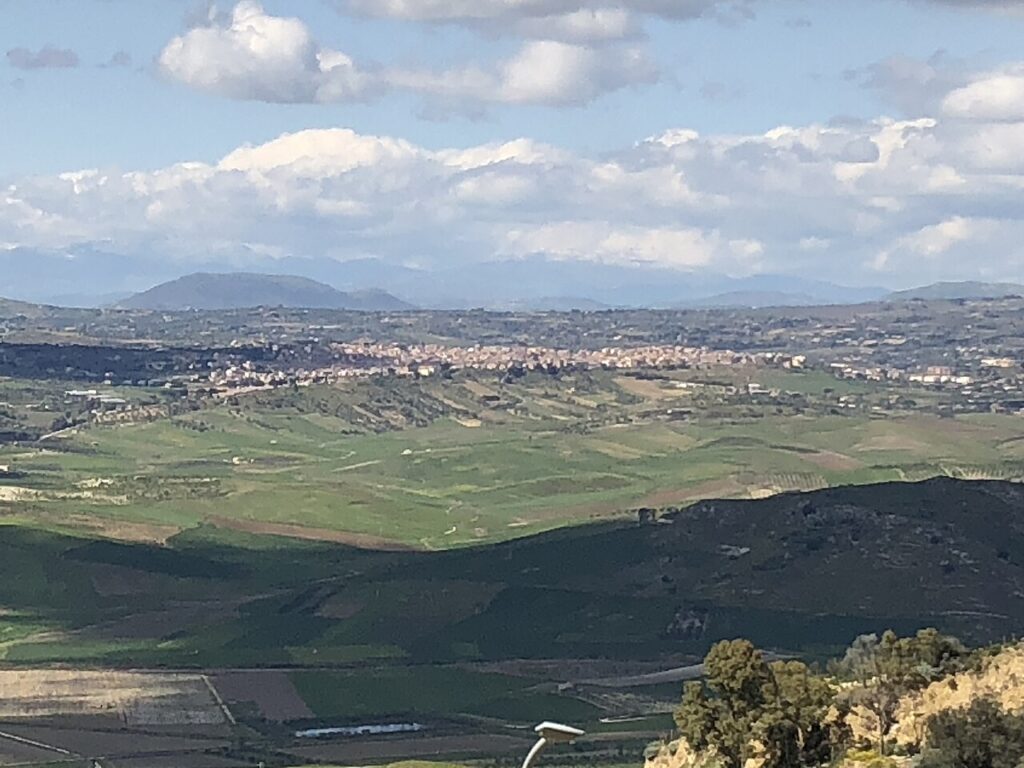
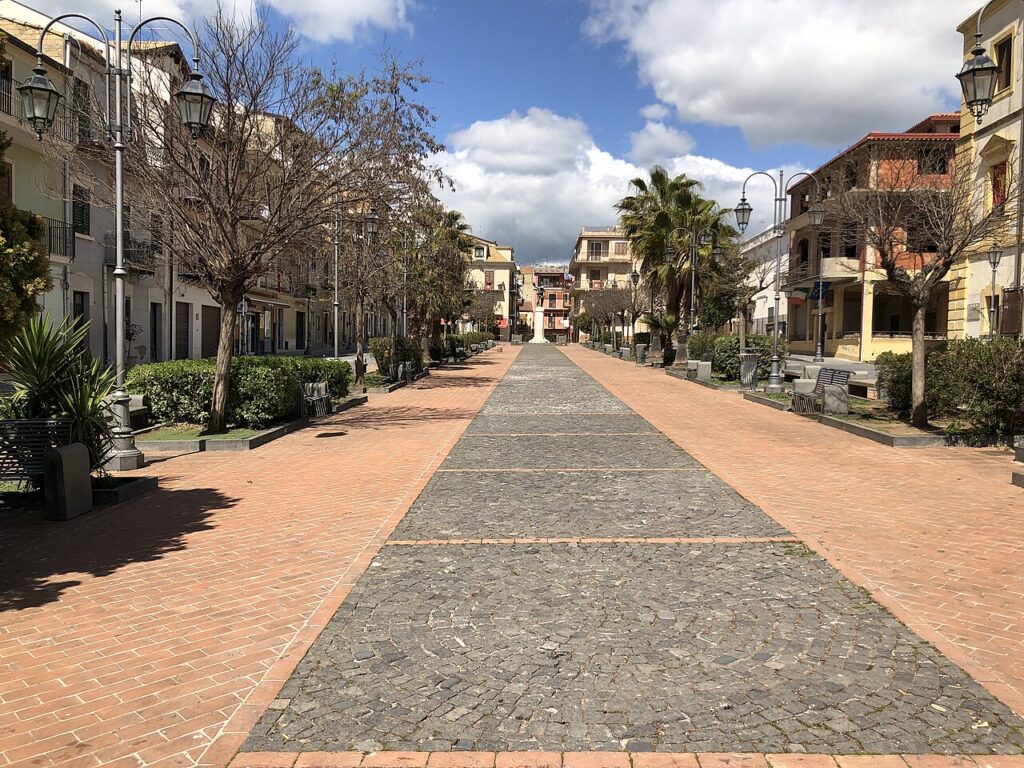
📷 Photo Gallery — Barrafranca
In Sicily More villages to discover
Ragusa
 Sea
Sea
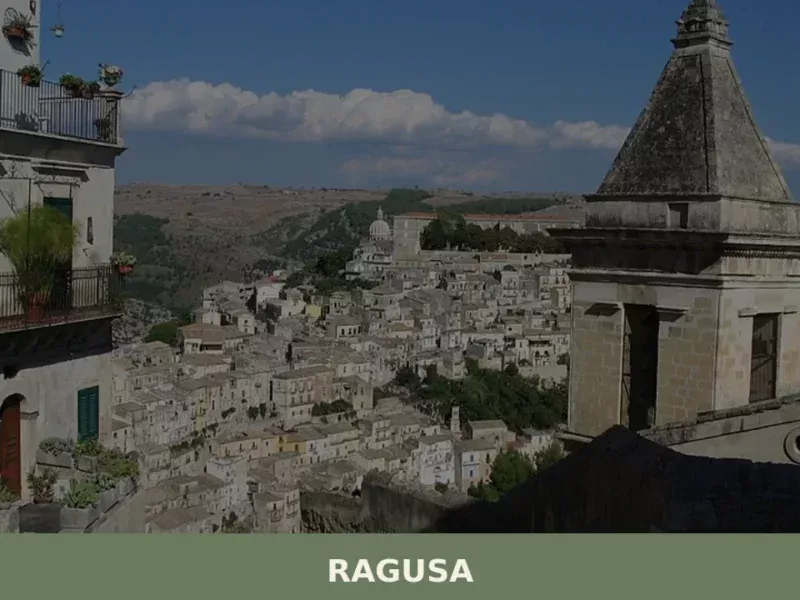
What to see in Ragusa, a UNESCO city at 520m with 70,000 residents: explore Ibla, San Giorgio, Giardino Ibleo and Cotognata PAT. Plan your visit now.
Aci Bonaccorsi
Sea
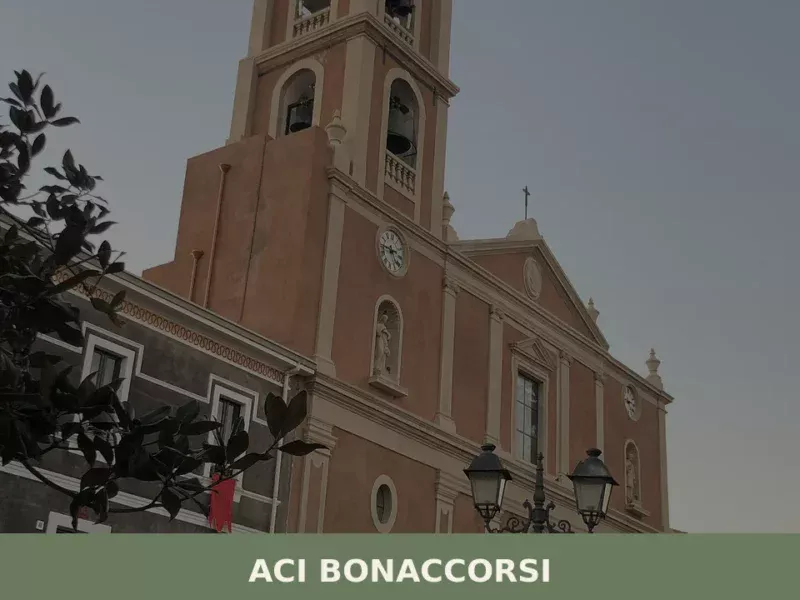
Discover what to see in Aci Bonaccorsi: Etna views, volcanic architecture, IGP citrus groves and Italy's 2022 most virtuous municipality on the Ionian slope.
Alcamo
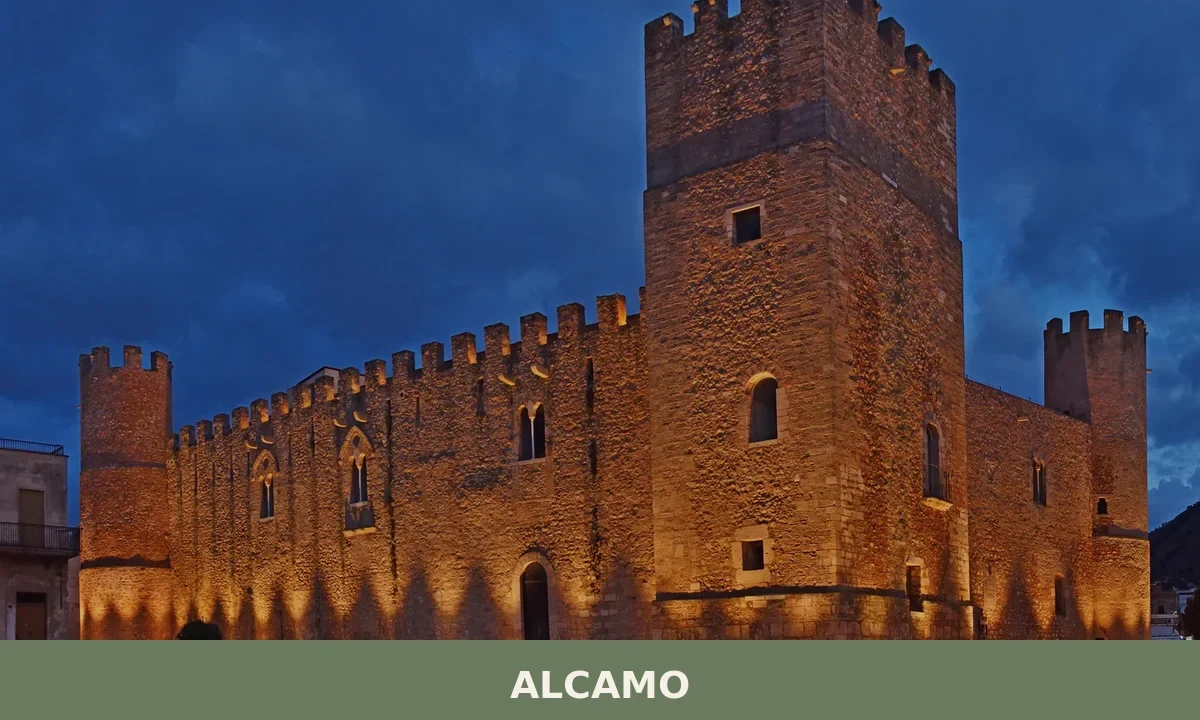
Alcamo sits where Arab merchants once haggled at fiorenti markets and Norman barons held court. Discover how a Mesolithic settlement became Sicily's most layered trading town.
Bompietro
 Mountain
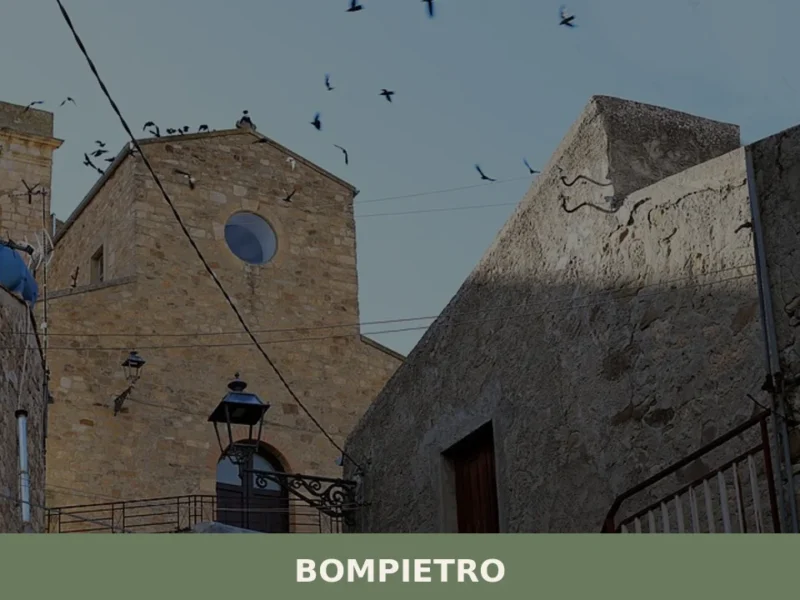
Morning light reaches Bompietro slowly, climbing over the Madonie range before it pours across the rooftops and into the narrow streets where older residents already occupy doorstep chairs. At 685 metres above sea level, the air carries a sharpness absent from the coast — part wild oregano, part cold stone. Fewer than 1,200 people live […]
Basicò
 Hills
Hills
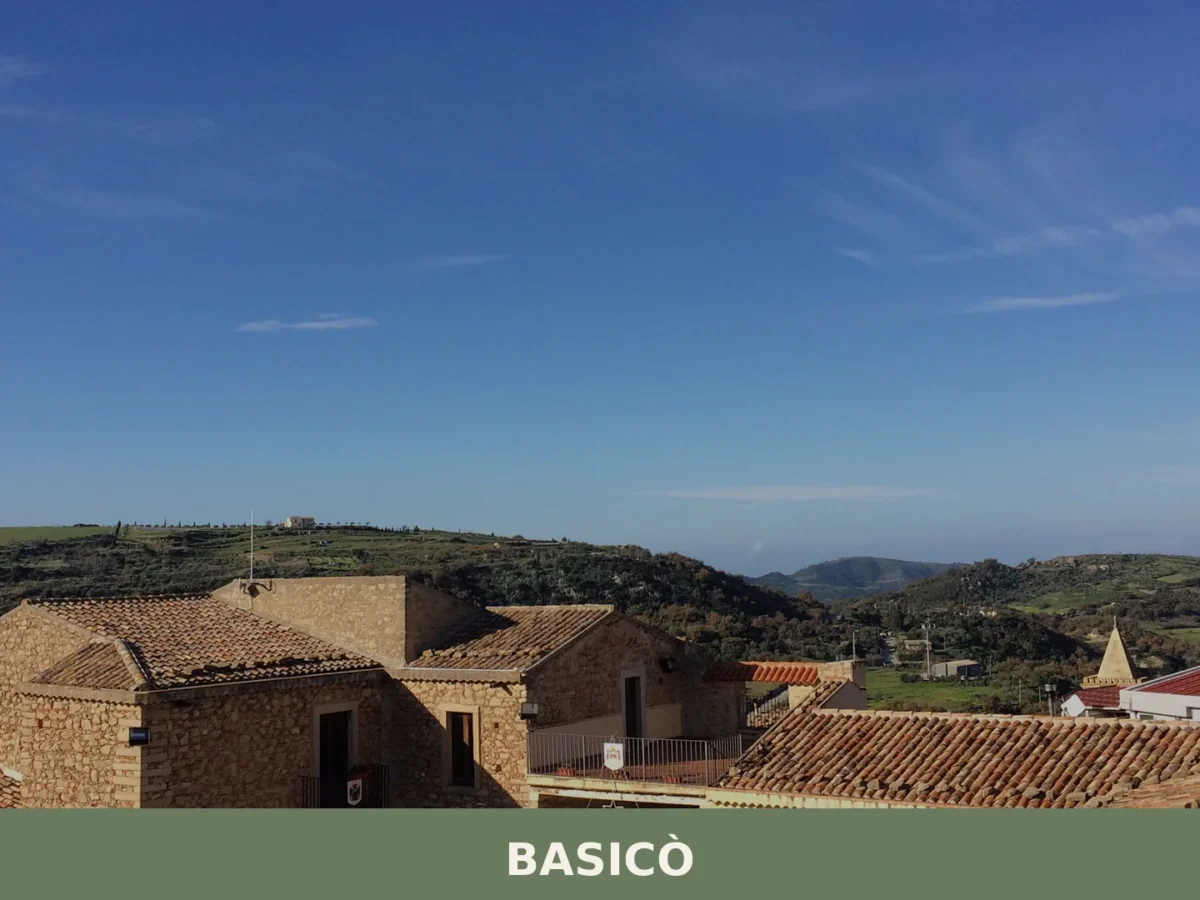
Basicò is a hilltop comune in the province of Messina, Sicily, with a documented history stretching back to 1262 and a living tradition of provola cheese, feudal architecture and prehistoric archaeolo
Siracusa
Sea
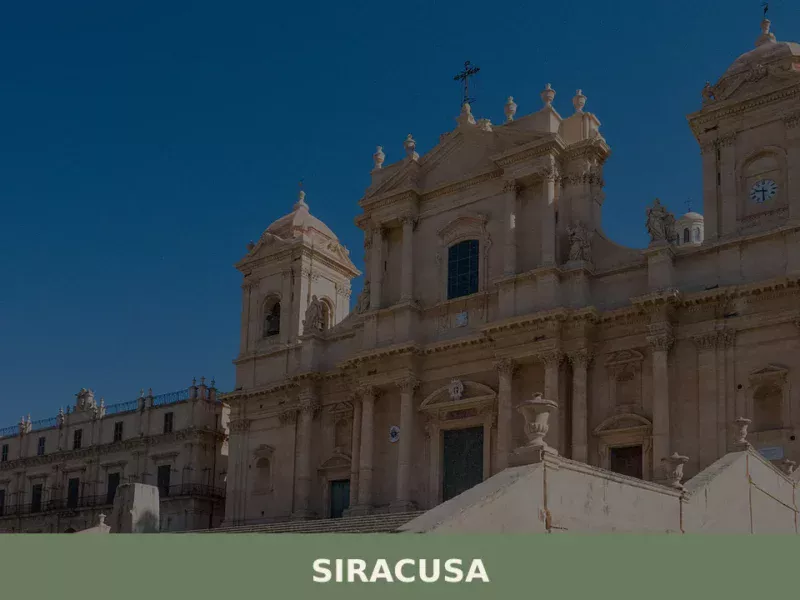
What to see in Siracusa: UNESCO city of 118,644 people. Explore the Greek Theatre, Ortigia, and the Catacombs of San Giovanni. Plan your visit with our complete guide.
Aci Castello
Sea
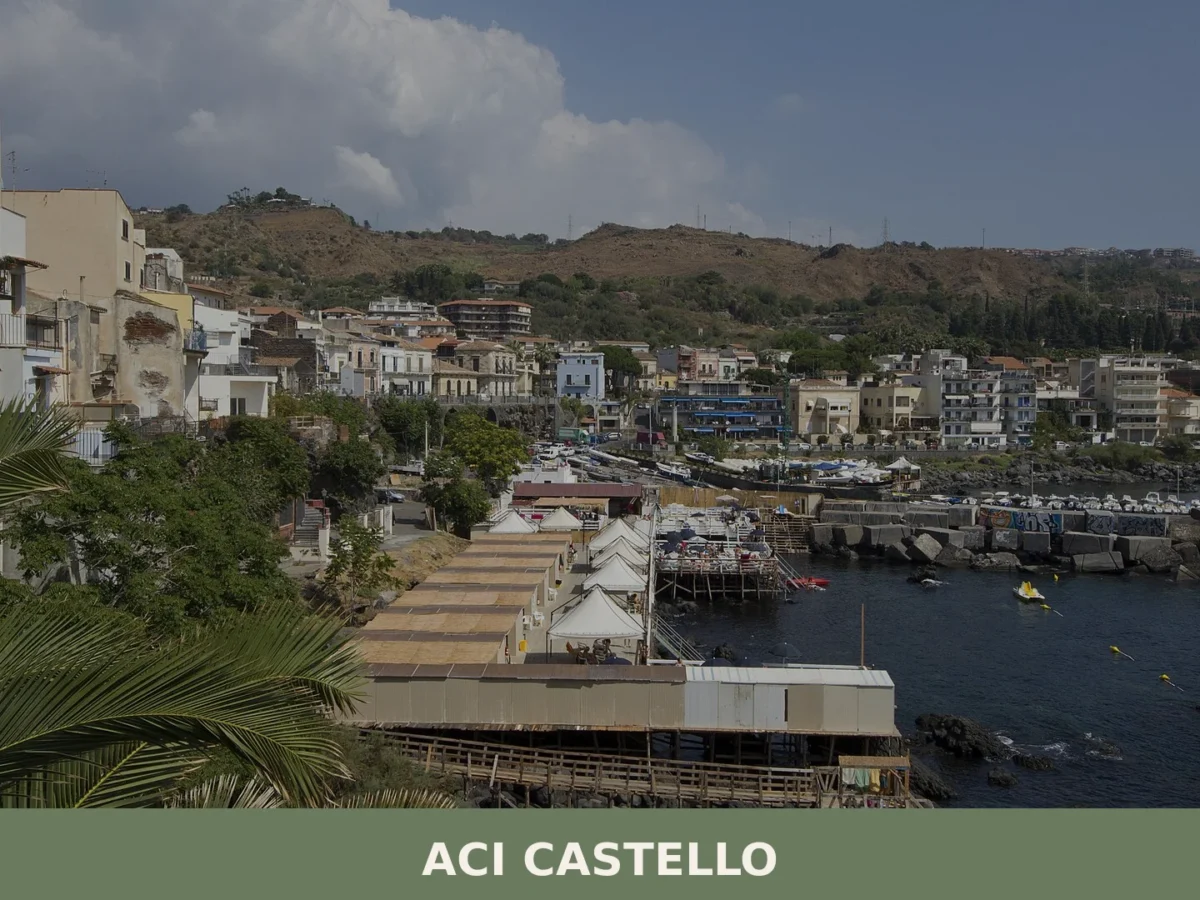
A clifftop village on the Ionian coast with a 12th-century castle and layers of Greek, Roman and medieval settlement. Where coastal life meets archaeological depth.
Cefalà Diana
Hills
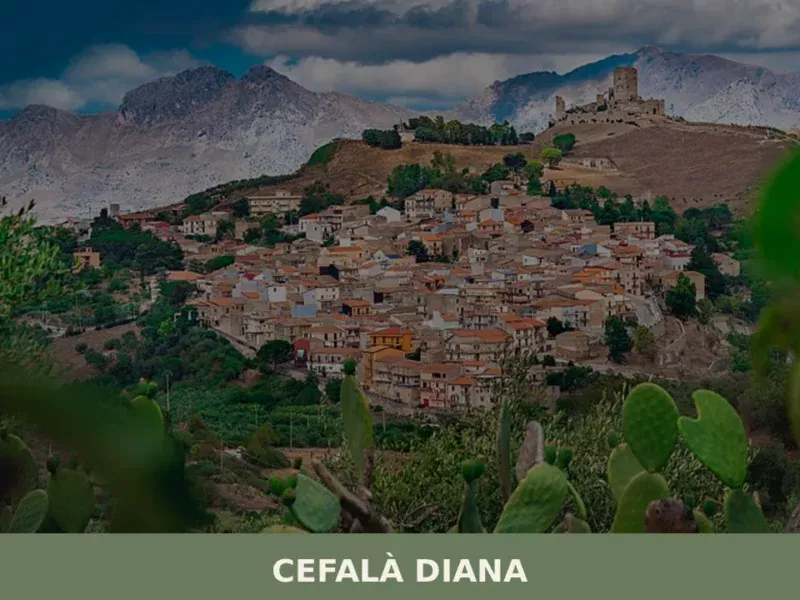
Discover what to see in Cefalà Diana, Sicily: Arab-Norman baths, castle ruins, local food, best season to visit, and how to get there from Palermo.
Barcellona Pozzo di Gotto
Sea
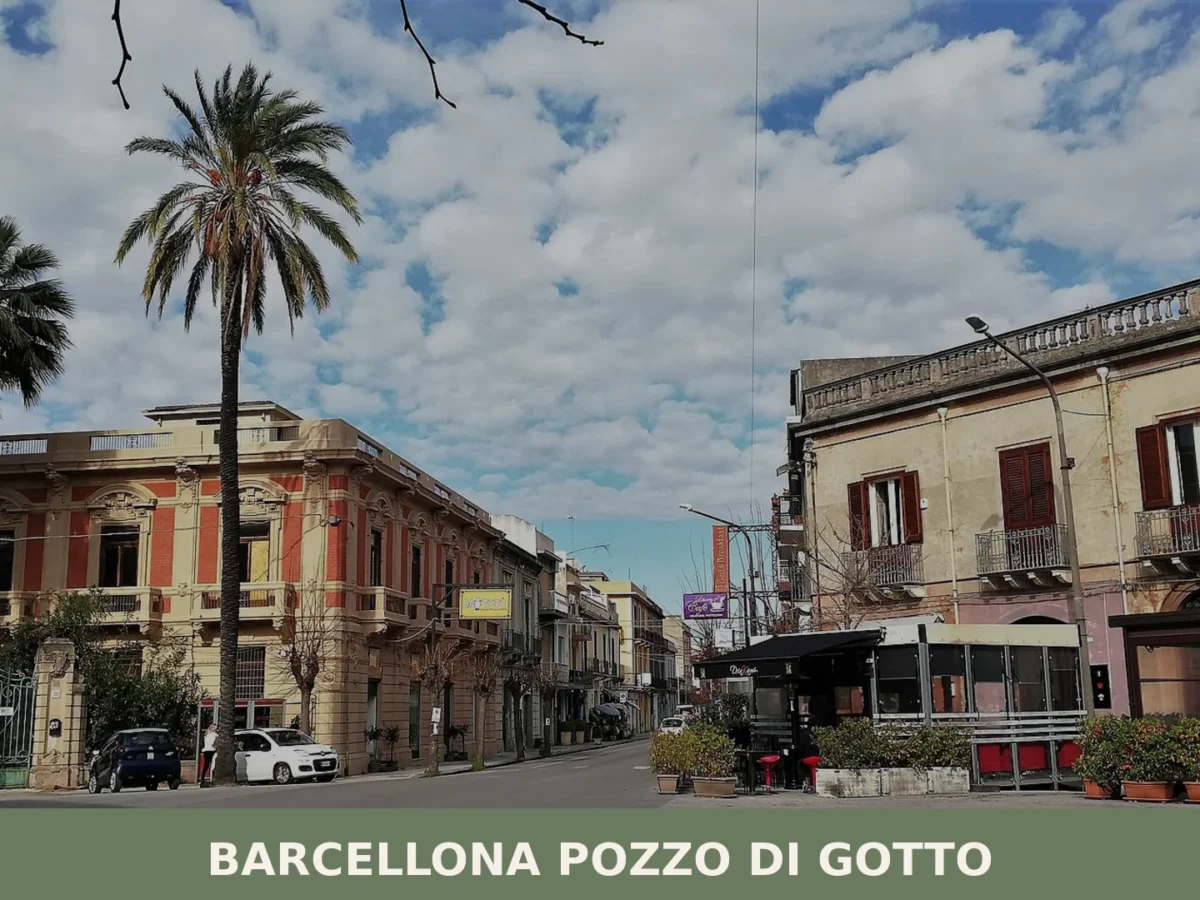
Barcellona Pozzo di Gotto is a town of nearly forty thousand inhabitants in the province of Messina, Sicily, where the plain of the torrente Longano meets the Tyrrhenian shore.
Acireale
Hills
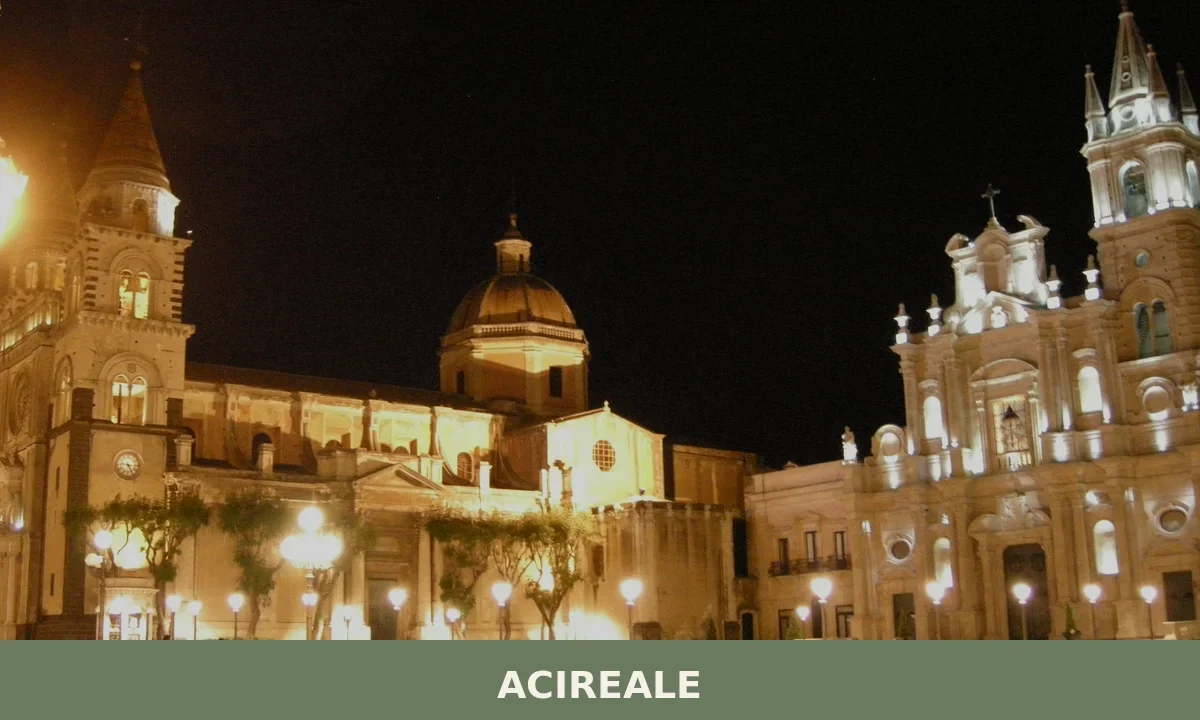
What to see in Acireale, Italy: explore 5 top attractions, the Carnival dating to 1594, and the IGP Etna Lemon. Discover Acireale, Sicilia with our complete guide.
🏡 Know Barrafranca better than we do?
If you’re a local or have been there, your knowledge matters: add what’s missing or fix a detail on this page.