


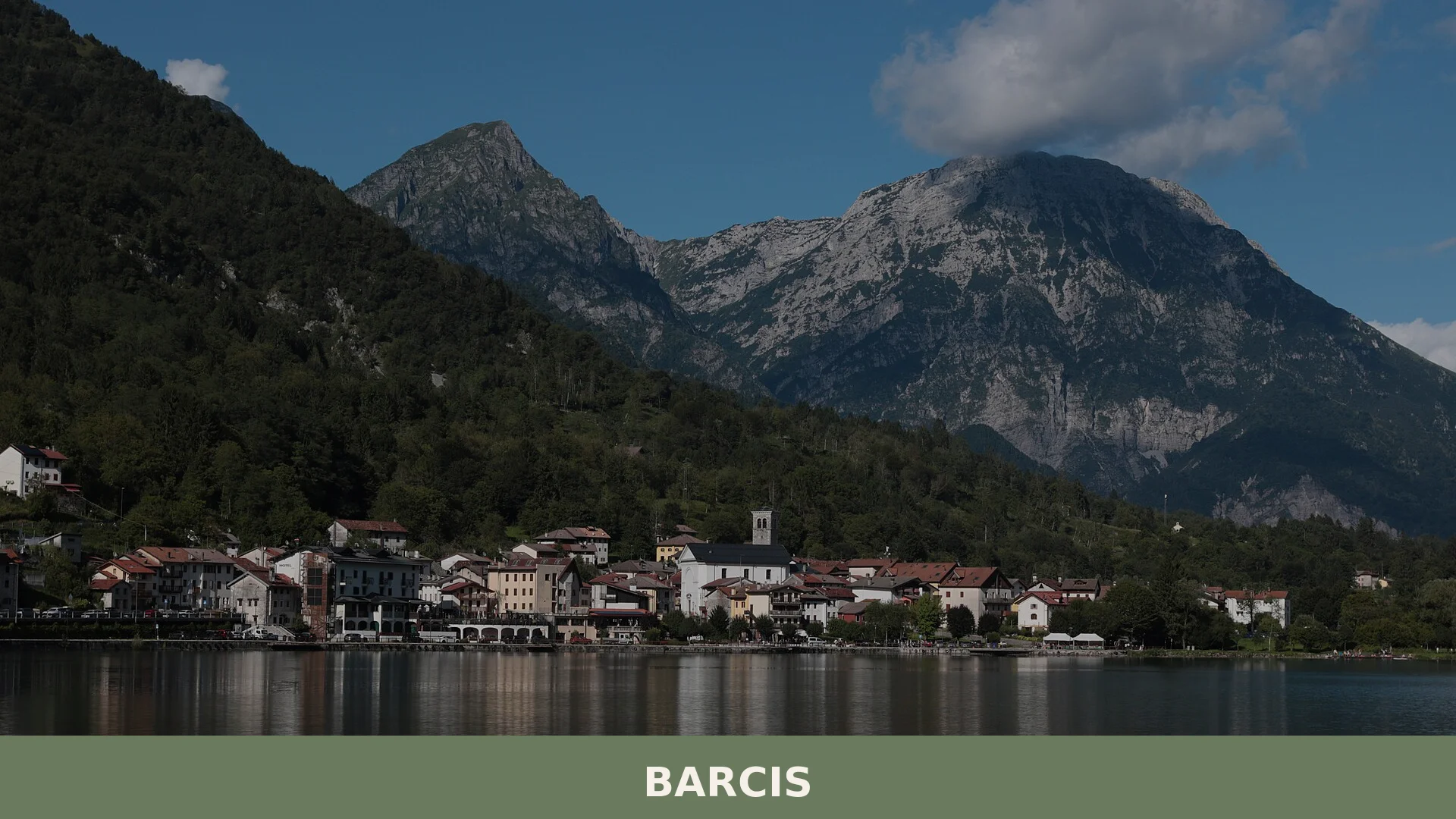
Barcis
 Mountain
231 inhabitants. A small mountain comune where medieval stone meets a luminous artificial lake, ringed by limestone summits and ancient mountain paths.
Barcis: A Medieval Village on an Emerald Lake in the Dolomites
At 409 metres above sea level, Barcis village in Friuli-Venezia Giulia rises from a fold in the Valcellina, its stone houses facing a lake of impossible green. This is no natural wonder, but a human one: the water was created by a dam built in the 1950s, yet it has the colour of a fable, fed by cold streams from the limestone walls that surround the village on all sides. Mountains pierce the sky here—Crep Nudo to the west at 2,207 metres, Monte Cavallo to the south at 2,251 metres—and the echo of their presence governs everything: the light, the weather, the rhythm of labour and rest.
With a population of just 231, Barcis is no tourist sprawl but a working mountain community where Italian mingles with Friulian, the regional language. The settlement speaks in two registers: the medieval ecclesiastical past—recorded in papal bulls as early as 1182—and the post-war industrial landscape of hydroelectric ambition. Most visitors come for the emerald lake and the hiking trails that spiral up into the Dolomites, yet Barcis has also become known for a string of summer cultural events and the curious fact that a meteorite fell here in 1953.
Origins and Medieval Foundations
The name Barcis may derive from barc, a term from the upper-Venetian area meaning “hut” or “shelter,” suggesting that the place began as a cluster of seasonal dwellings. Alternative etymologies—such as the Friulian barce, meaning “boat” or “depression”—have been proposed by local scholars.
The earliest written record dates to 13 December 1182, when Pope Lucio III placed the abbey of Sesto al Reghena under papal protection against the usurpations of a local nobleman. Barcis, then a territorial designation rather than a specific village, formed part of those monastic holdings. For centuries, spiritual authority lay with the bishop of Concordia, while temporal power was exercised by the abbot and, later, by feudal lords such as the nobles of Montereale and Spilimbergo. A pivotal moment came in 1327, when the bishop presided over a legal dispute and chartered a market, marking the first time the written word “Barcis” referred to a specific village rather than a region—a sign that the old centre of Cellis had been abandoned, probably due to landslides.
Over the following centuries, Barcis endured repeated calamities. Fire destroyed much of it in 1606. In November 1917, it became a flashpoint in the fighting between Italian and German troops, with the Val d’Arroscia Alpine battalion mounting a stubborn defence. Another fire, more severe, swept through during the Second World War in 1944. Yet the village’s true transformation came in the 1950s, when the construction of a hydroelectric dam between 1952 and 1954 flooded the lower valley, creating the lake that now defines the place. That same period saw the recovery of a stony relic from the sky: in 1953, a pallasite meteorite fell near Barcis, a fragment of the deep solar system arriving on the limestone slopes.
Churches and Sacred Monuments
Church of San Giovanni Battista
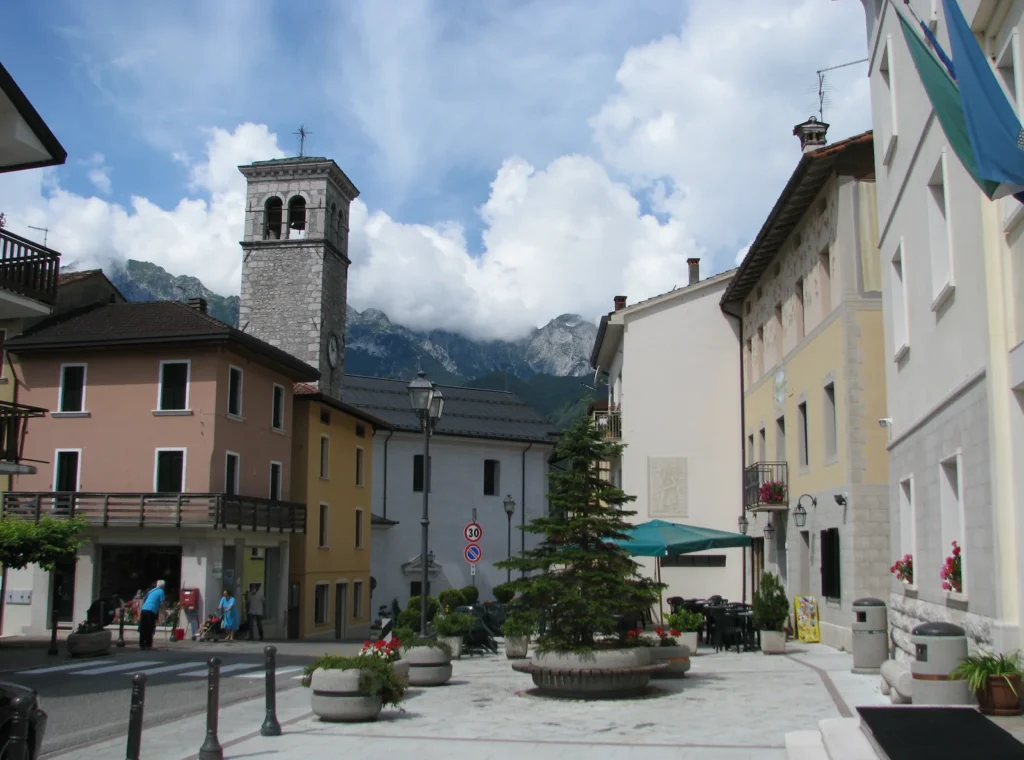
The parish church, dedicated to Saint John the Baptist, dates to the 16th century, though it underwent substantial remodelling in the 19th century. It stands at the centre of village life and is the seat of the patron saint’s feast, celebrated on 24 June. The church’s interior and exterior have been adapted many times to serve the practical needs of the community, but it remains the primary place of worship and a marker of civic identity.
Chapel of San Giorgio in Roppe
High in the hamlet of Roppe rises a small church tradition places in the 8th century, though all current structures date from the 18th century. A landslide destroyed the original building in 1392, and what stands today is a careful reconstruction. The chapel sits on a hillside overlooking the village and the lake, accessible by mountain paths that reward walkers with expansive views of the surrounding peaks.
Chapel of San Daniele del Monte
Built around 1240 on a steep mountainside, this isolated chapel was struck by lightning in 1806, an event that left its mark on the structure. Today only ruins remain visible, but they bear witness to centuries of devotion and to the mountain communities’ determination to maintain sacred sites even in remote, exposed locations. The site itself is reached by hiking trails that connect the lower villages to the upland pastures and the ridge paths.
Church of San Francesco in Ribe
Located in the hamlet of Ribe and dating to the 18th century, this modest church was built by villagers as protection against wolves and other dangers of the high country. It reflects the pragmatic piety of Alpine communities, where spiritual shelter and physical security were woven into the same act of building.
Lake, Dam and Natural Landmarks
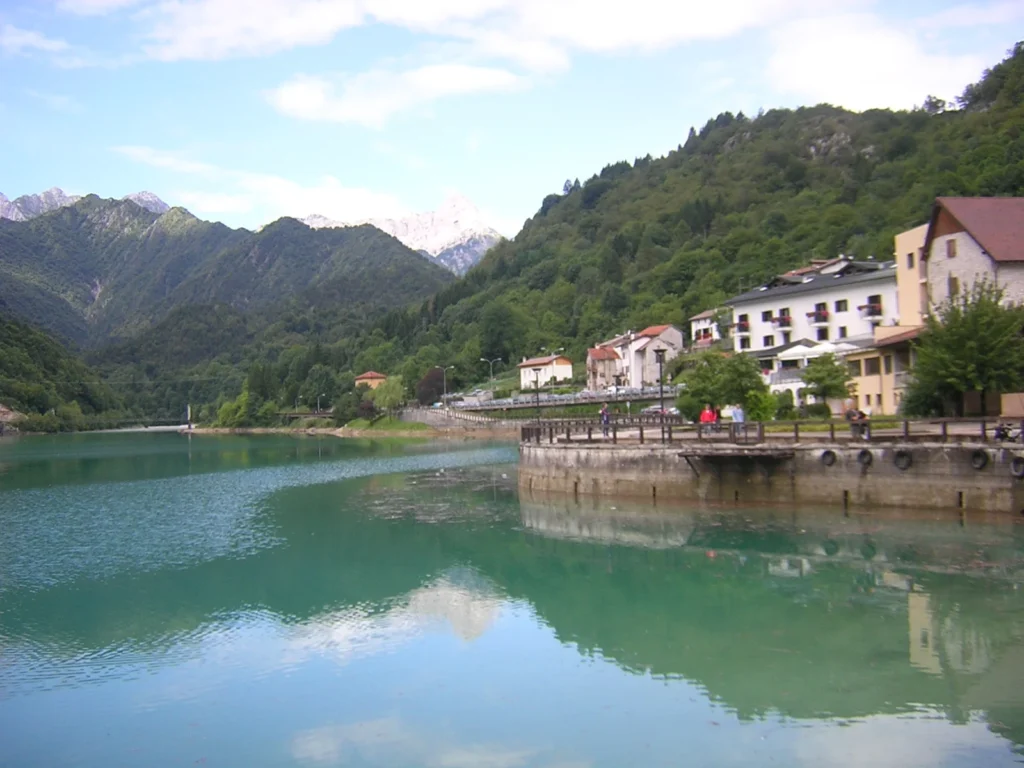
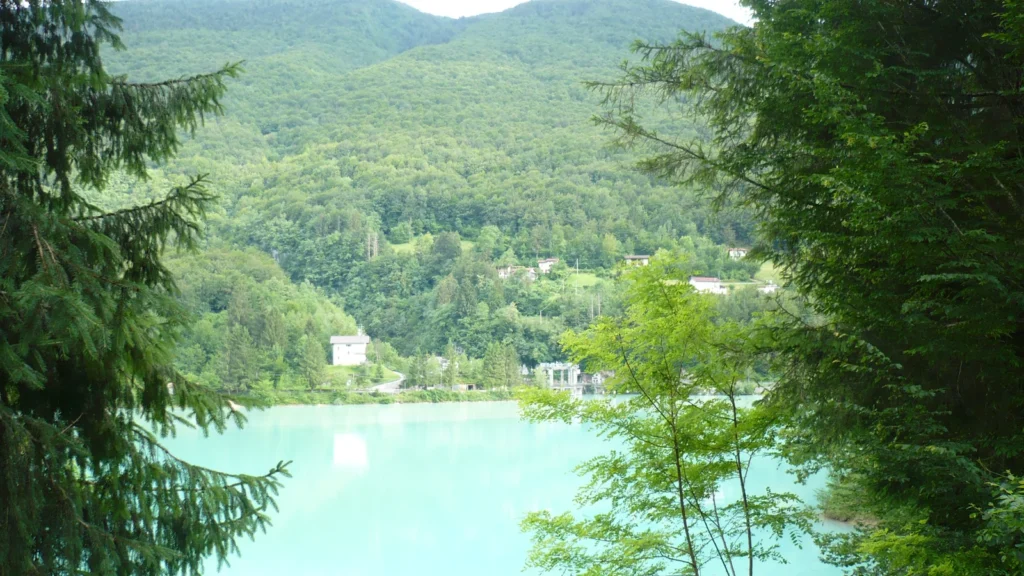
The lake of Barcis—officially Lago Aprilis—is the visual heart of the village. Its emerald water, fed by glacial streams and limestone springs, fills a valley that was once densely settled. The dam that created it, constructed between 1952 and 1954 and still walkable across, is itself a feat of mid-20th-century engineering. On clear days, the water mirrors the surrounding mountains with startling precision, creating a sense of double height and illusion.
Beyond the lake, the landscape opens into protected natural areas. The Forra del Cellina is a narrow gorge cut by the river, accessible by a fifty-five-metre suspended bridge that allows visitors to traverse the limestone chasm and experience the raw geology that has shaped the valley. The Grotta Bus de la Volpe offers a speleological detour, while the Parco Regionale del Prescudin spreads across the ridges and slopes to the east, protecting beech forests and Alpine meadows.
Village Architecture and Cultural Traces
Beyond the churches, Barcis holds a handful of secular buildings of note. Palazzo Centi, dating to the 17th century, blends the rustic stone tradition of the Valcellina with the more refined loggia style of Venetian architecture. Its double-arched façade—the lower arcade ribbed, the upper a full rounded arch—speaks to a family of means and cosmopolitan taste. On the façade of the old inn called the Aquila Nera, an artist named Pierino Sam (1921–2010), a painter from the nearby city of Pordenone, painted an elaborate sundial in fresco, adorned with zodiacal symbols and an eagle soaring among the hour numerals—a fitting image for a place where the sky presses close and the high country is ever present.
Food and Agricultural Tradition
The Pordenone province and the Friuli-Venezia Giulia region produce a roster of protected foods that define the local table. Brovada—turnip tops preserved in wine—is a winter staple, tangy and assertive, while Montasio, a hard cow’s cheese aged in caves, carries the mineral character of the high pastures. Pitina, a spiced paste of pork and herbs, and the Salamini italiani alla cacciatora (hunter’s salami) round out the charcuterie tradition. Beyond these, the region claims dozens of other products: preserved pears, elderberry syrups, and the distinctive friulano wines from the Grave and Latisana zones, which arrive in the village via regional networks.
The village itself sits at the intersection of Alpine pasture and valley cultivation. Polenta, soups enriched with beans, and roasted game reflect the rhythm of the mountains and the seasons. In summer, when festivals animate the village, these foods appear on long tables, shared among visitors and residents alike.
Seasons, Access and Planning Your Visit
Barcis is reachable year-round, though summer (June to September) is the season of maximum activity. The lake is calmest in early morning, when the water reflects the peaks without ripple. Winter transforms the landscape, with snow dusting the higher slopes while the village itself often remains clear. The village hosts a calendar of events: in June, the Notte di San Giovanni (Saint John’s Night) and motorboat competitions enliven the waterfront; in July, the national literary prize honouring the local poet Giuseppe Malattia della Vallata draws scholars and readers, while a sumo championship and street art competitions offer more eclectic draws. In November, the Bruno Cavallini Prize celebrates local cultural figures.
The village is best explored on foot once you arrive. Most core attractions are within a ten-minute walk, though the hiking trails that radiate outward demand good footwear and several hours. A car is useful for reaching the trailheads and for visiting the nearby villages of Andreis and Aviano, which lie in the same valley system. The village has small groceries and a handful of restaurants; do not expect the amenities of a larger town, and plan supplies accordingly.
| Departure Point | Distance | Travel Time |
|---|---|---|
| Pordenone (city) | 35 km | 45 minutes by car |
| Udine (regional capital) | 80 km | 1 hour 20 minutes by car |
| Venice Marco Polo Airport | 150 km | 2 hours 15 minutes by car |
The nearest train station is at Maniago, about 12 kilometres away, from which buses and taxis serve the upper valley. If you arrive in summer, book accommodation in advance: the village is small, and the lake draws steady traffic. Hikers should carry water, sun protection and a good map, as trails can be steep and exposure high. The paths themselves are well-marked, connecting Barcis to the ridges and to the neighbouring settlements across the Valcellina.
Frequently asked questions about Barcis
What is the best time to visit Barcis?
Summer (June to September) is ideal for hiking and water activities on the lake. The patron saint feast of San Giovanni Battista on June 24th brings local cultural celebrations. Spring offers mild weather and blooming Alpine meadows, while autumn provides crisp air and dramatic mountain light. Winter is quieter but can be cold at 409 metres altitude. Check local weather forecasts before visiting, as mountain conditions change rapidly.
How do I reach Barcis from major cities?
Barcis is located in Pordenone Province, Friuli-Venezia Giulia. The nearest major city is Pordenone (approximately 40 km away). Access is by car via regional roads through the Valcellina valley. The closest railway station is at Maniago or Pordenone, from which you'll need a car or local bus service. No direct motorway exit serves the village directly; approach via SS13 or regional routes toward the mountain valleys.
What hiking trails are available around Barcis?
Barcis serves as a gateway to Dolomites hiking. Trails spiral upward toward peaks including Crep Nudo (2,207 m) and Monte Cavallo (2,251 m). The lake itself offers walking paths with scenic views. CAI (Italian Alpine Club) routes connect the village to broader Friulian mountain networks. Trail difficulty ranges from family-friendly lakeside walks to demanding alpine routes. Detailed maps and guidance are available from local tourism offices or the CAI.
Is there accommodation available in Barcis village itself?
Barcis is a small working community of 231 residents, so accommodation options are limited. Typically, visitors find agriturismos (farm stays) and small family-run guesthouses in the immediate area rather than large hotels. Nearby towns like Maniago offer more extensive lodging choices. Book in advance, especially during summer months and the June 24th patron saint festival. Contact local tourism offices for current lists of verified accommodations.
What unusual historical event happened in Barcis?
A meteorite fell on Barcis in 1953, making the village a minor point of astronomical and geological interest. This event is documented in local records and adds a curious footnote to the village's modern history, distinguishing it from other Alpine settlements. The meteorite occurrence reflects the village's position beneath open mountain skies where such phenomena are occasionally recorded.
📷 Photo Gallery — Barcis
In Friuli-Venezia Giulia More villages to discover
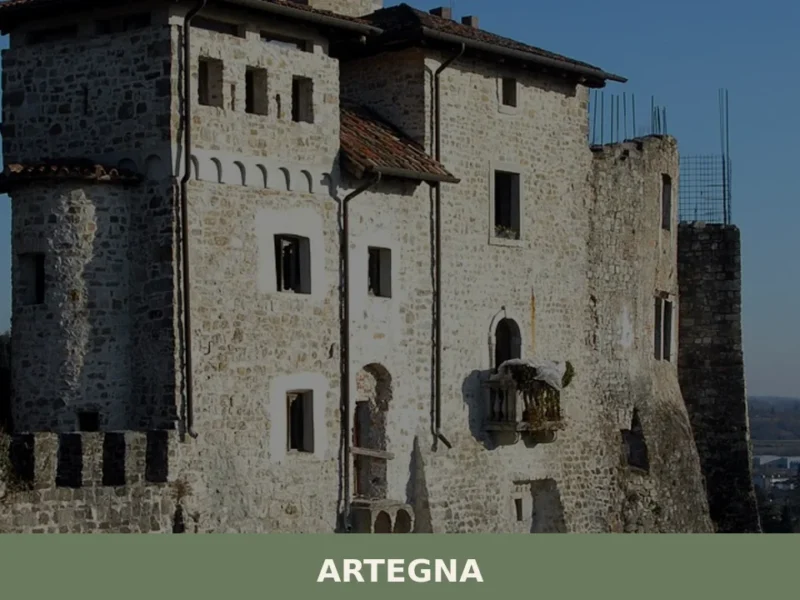
Artegna
 Hills
Hills
In 1976, two violent earthquakes devastated Friuli, and Artegna was among the hardest-hit communities. The reconstruction that followed did not simply raise walls again: it redesigned the very identity of the town, bringing to light archaeological layers buried beneath the rubble of the San Martino hill. Today, anyone wondering what to see in Artegna will […]
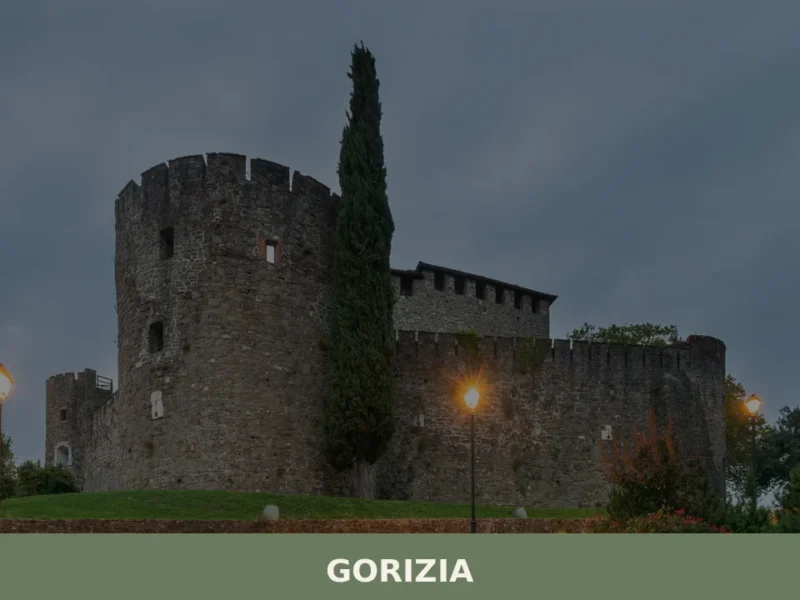
Gorizia
 Plains
What to see in Gorizia, located at 84m. Discover 5 historic attractions, including its iconic Castle, and savor typical local cuisine. Explore your trip!
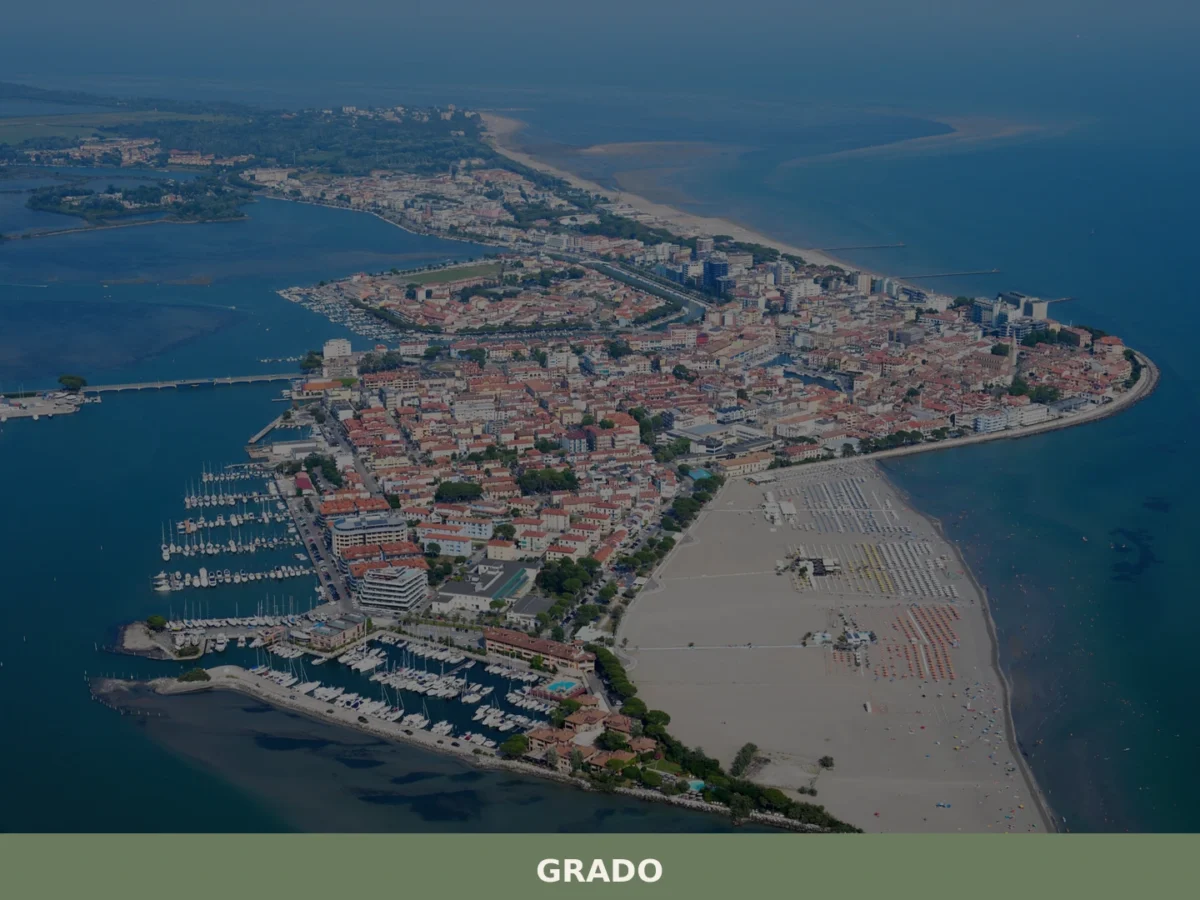
Grado
 Sea
Sea
What to see in Grado, Italy? Explore its 2 m altitude, discover over 7,658 residents, and visit the impressive Basilica di Sant'Eufemia. Discover Italy's unique offerings today.
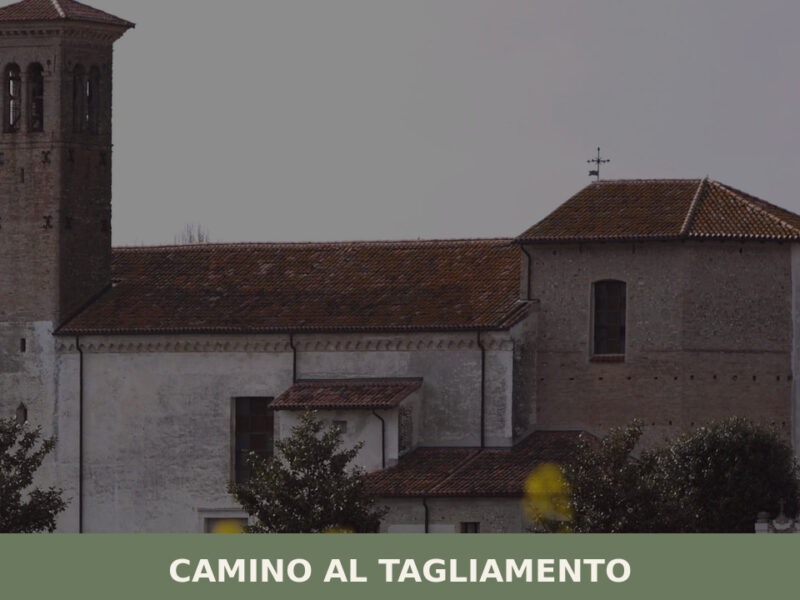
Camino al Tagliamento
Plains
A guide to Camino al Tagliamento in Friuli Venezia Giulia — its medieval parish church, the Tagliamento riverbed, rural hamlets, and Friulian food traditions.
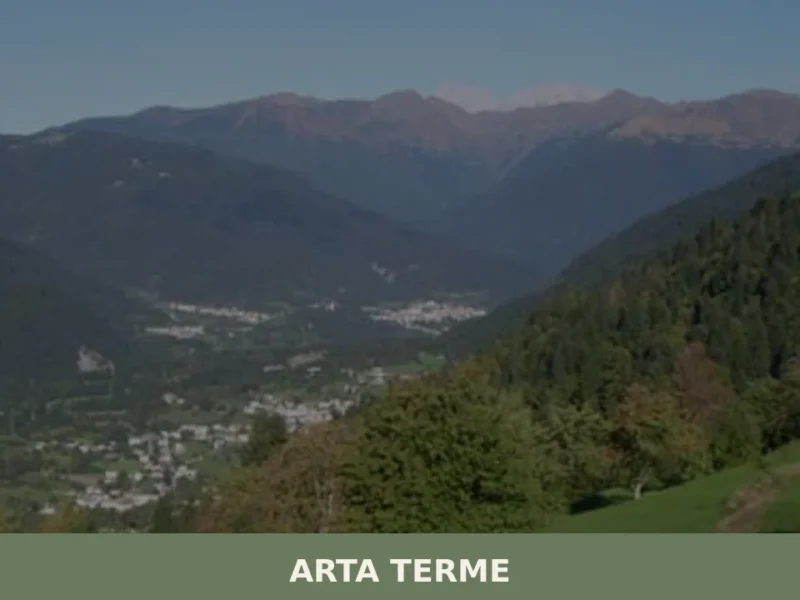
Arta Terme
Hills
In 1687, the physician and naturalist Giovanni Battista De Candido published the first treatise on the healing properties of the sulphurous waters flowing from the Fonte Pudia spring in the territory of Arta. That document marked the beginning of a thermal spa tradition that would define the economic identity of this Carnic centre for the […]
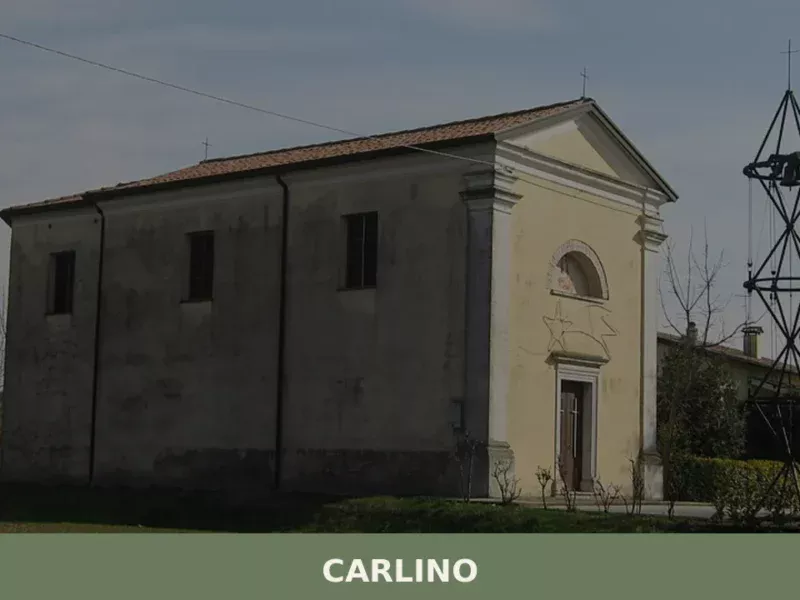
Carlino
Plains
The first thing you notice arriving in Carlino is the industrious silence of the Friulian plain, broken only by the rustle of water flowing through the drainage canals that cross the municipal territory. We are in the Bassa Friulana, province of Udine, just a few kilometres from the Marano Lagoon, in a land where agriculture […]
Ampezzo
Hills
A documentary-style guide to Ampezzo in Carnia, covering its history, key attractions, Carnic cuisine, and how to reach this quiet alpine village in Friuli Venezia Giulia.
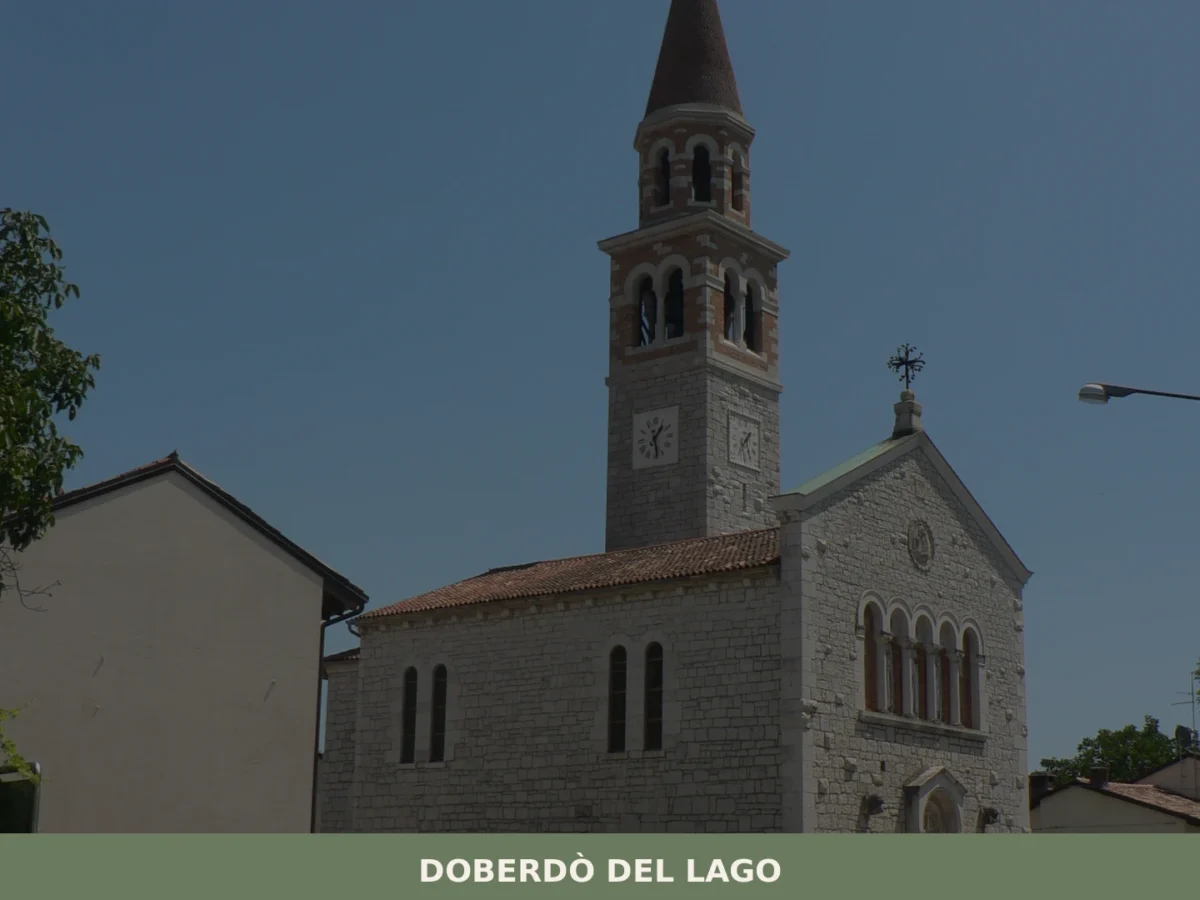
Doberdò del Lago
Plains
What to see in Doberdò del Lago, Italy, a village with 1,340 inhabitants. Discover the unique Karst Plateau and explore significant WWI sites. Plan your visit to Friuli-Venezia Giulia.
Cassacco
Plains
The Castle of Cassacco appears in documents of the Patriarchate of Aquileia as early as 1158, when Patriarch Ulrich II confirmed its possession to the local lords. Since then, that manor in a commanding position over the Friulian plain has shaped the life of an entire rural territory, defined by cultivated fields, rows of vines […]
Arba
Plains
What to see in Arba: Explore Italy's Arba, a village at 210 meters altitude. Discover its historic church and vibrant patron saint festival on September 29. Read more.



🏡 Know Barcis better than we do?
If you’re a local or have been there, your knowledge matters: add what’s missing or fix a detail on this page.