In the rolling landscape of central Sardinia, lies a village whose identity has been forged as much through loss and recovery as through centuries of settlement. Stone walls frame narrow passages, and the rhythm of daily life still follows the seasons—olive harvest, woodcraft, the steady pulse of a rural community.
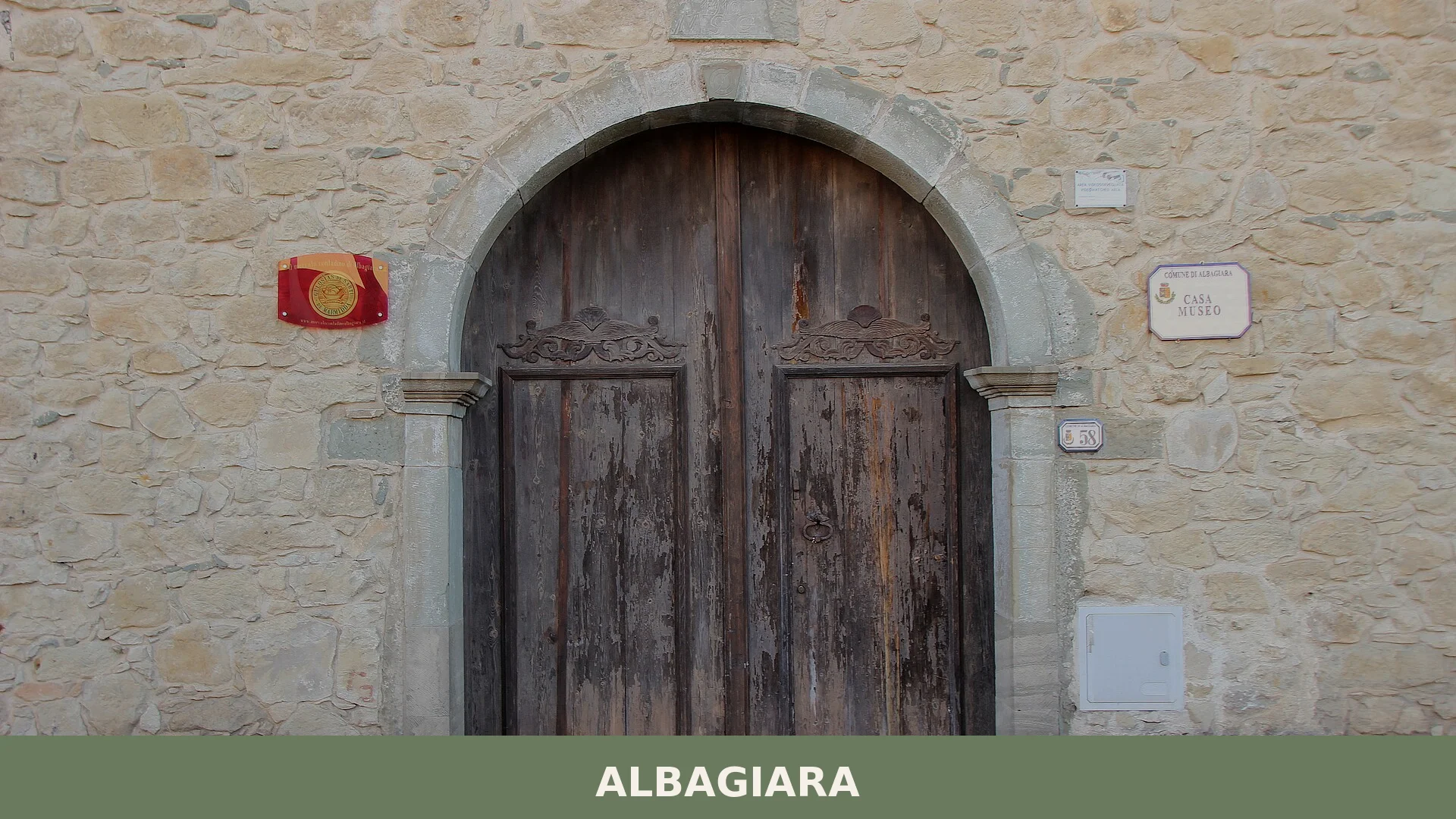
Albagiara village in Sardinia is a comune of 273 inhabitants in Oristano Province, surrounded by five documented nuraghi and an economy rooted in olive cultivation and timber work. Visitors seeking to understand the layered identity of central Sardinia will find in Albagiara a living record of administrative transformation and cultural continuity.
A Path Through Autonomy and Identity
The village’s name carries within it the story of territorial change. Originally known as Ollastra Usellus, Albagiara operated as an independent comune from 1861 until 1927, when it was incorporated into the neighbouring municipality of Usellus. This period of administrative merger lasted three decades. In 1959, the village reclaimed its autonomy under the new name Ollasta (established by Regional Law No. 1), and five years later, in 1964, it adopted the name Albagiara through Regional Law No. 9. The comune’s symbols—its stemma (coat of arms) and gonfalone (banner)—were formally granted by presidential decree on 17 October 1992, marking official recognition of its modern civic identity.
This trajectory from independence to absorption to renewed autonomy reflects broader patterns of administrative reorganization across Sardinia during the 20th century. For those interested in how rural Sardinian communities have navigated institutional change, Albagiara’s documented transitions offer concrete evidence of resilience and local determination.
The Nuraghi of Albagiara’s Territory
Nuraghe Bingias
One of five Bronze Age structures scattered across the comune’s lands, Nuraghe Bingias stands as a marker of pre-historic settlement. These megalithic towers, built without mortar, dominate the landscape and signal the long human presence in this region. Visitors exploring the countryside may encounter these ruins, which serve as anchors to Albagiara’s deep territorial identity.
Nuraghe Furisinu, Lea, Lussorio and Porcili
Four additional nuraghi—Furisinu, Lea, Lussorio, and Porcili—complete the archaeological signature of Albagiara’s territory. Together, these five structures represent one of the densest concentrations of Bronze Age monuments in the immediate region. While not formally excavated or developed as public sites, their presence in the landscape speaks to sustained habitation and social organization in this part of central Sardinia across millennia.
The nuraghi of Sardinia are among the Mediterranean’s most enigmatic archaeological monuments, their purposes debated and their builders’ culture still incompletely understood—yet their persistence in the landscape remains undeniable.
Language, Craft and Agricultural Life
The community of Albagiara speaks a variant of Sardinian known as campidanese occidentale (western Campidanese), the dialect of central and southern Sardinia. This linguistic heritage connects the village to a broader regional identity while marking its distinctive local character.
The village economy has long rested on two pillars: olive cultivation and timber work. The surrounding territory, at moderate elevation, supports extensive olive groves that feed both local consumption and regional commerce. Woodcraft traditions—carpentry and timber processing—represent skilled trades that has sustained families and maintained craft knowledge across generations. These activities sustain the village economy and anchor its seasonal rhythms.
Albagiara’s patron saint is San Sebastiano (Saint Sebastian), whose feast day falls on 20 January. This annual observance anchors the village’s religious and social calendar, drawing community members to shared celebration and renewal of collective identity.
When to Visit and How to Arrive
Albagiara is most accessible by car, as public transport connections to this small comune are limited. The village experiences a Mediterranean climate typical of central Sardinia, with warm, dry summers and mild winters. Spring (April–May) and autumn (September–October) offer the most pleasant conditions for countryside exploration, when temperatures are moderate and the landscape shows agricultural activity.
The nearest significant town is Oristano, the provincial capital, which offers larger services, accommodation options, and transport connections. Visitors can use Oristano as a base for regional exploration. The province of Oristano contains numerous other small villages—including Usellus, Gonnosnò, Villa Verde, and Ales—which can be combined into a single-day or multi-day itinerary focused on central Sardinian rural life and archaeology.
| Departure Point | Distance | Approx. Time |
|---|---|---|
| Oristano | Distance not verified | Approx. 30 minutes by car |
| Cagliari (airport) | Distance not verified | Approx. 1 hour 20 minutes by car |
| Sassari | Distance not verified | Approx. 2 hours 20 minutes by car |
The village itself has no dedicated hotels or restaurants; visitors should arrange meals and lodging in nearby towns such as Oristano or in other villages within the province. A visit to Albagiara works best as part of a broader exploration of Oristano Province, combining archaeological interest, rural landscapes, and traditional Sardinian culture. For those researching Bronze Age settlement patterns, local administration or family history research related to rural Sardinia, the documented nuraghi and the municipality’s administrative archive (accessible through the official comune website) may prove valuable resources.

 Mountain