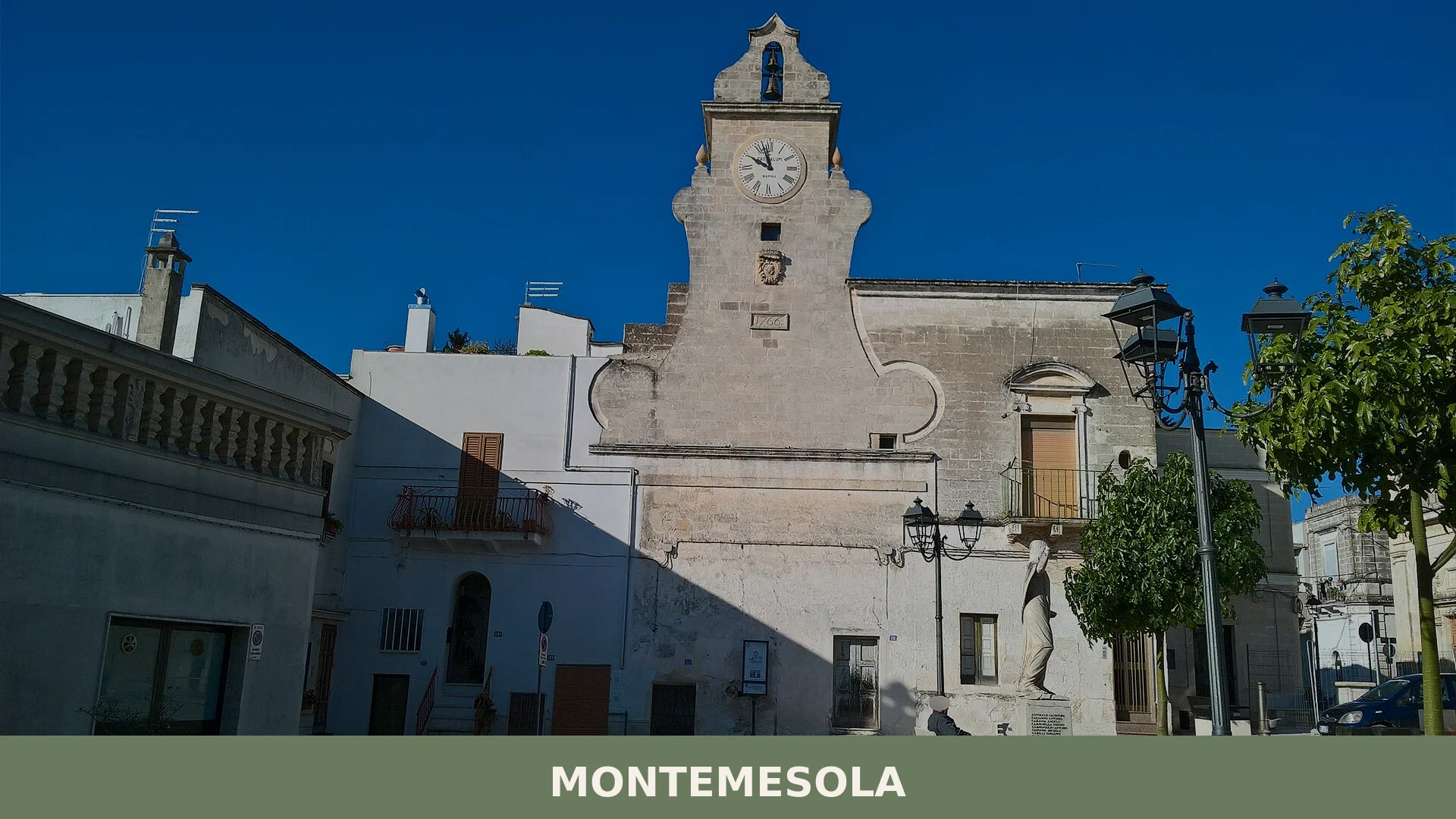
From the hilltop where Montemesola sits at 178 metres above sea level, the Taranto Gulf opens toward the horizon. Stone buildings cluster in elliptical patterns across the sloping terrain, their ochre facades catching the light of the Ionian plateau. Below, the famous gravina—a deep limestone scar cutting through the earth—descends toward Taranto itself, while the surrounding Murgia landscape rolls outward, vineyard and olive grove meeting sky.
Montemesola village in Apulia is a modest comune of the Taranto province in Puglia, with 3,478 inhabitants and a history that spans from medieval casale to modern agricultural and manufacturing centre. Its draw is twofold: the Palazzo Marchesale, a feudal residence that anchors the town’s geometric core, and the buried legacy of a Byzantine Albanian colony whose ritual and art once shaped the spiritual identity of the place.
Foundation and Medieval Lordship
The etymology of Montemesola remains debated. One interpretation traces the name to the Latin Montis-mensulae, meaning “the shelf of the mountain”—a reference to the elliptical form of the settlement as it rests upon the hilltop, appearing shelf-like when compared to the higher ridges behind it. A second theory points to the Pugliese dialect word mesula, signifying a heap of stones. What is certain, however, is the documented foundation: on 1320, the Regia Corte granted Berengario De Mandorino the right to repopulate the abandoned site known as Montismesuli. The casale had lain empty, victim to successive abandonment and resettlement driven by malaria and feudal disputes. By 1360, Berengario’s authority was already contested: Archbishop Giacomo I de Atri of Taranto stood accused of laying waste to the feud, burning houses, destroying crops and plundering livestock and grain.
The De Mandorino tenure proved unstable. By 1416, Roberto de Mandorino sold half the feud to his uncle Giorgio for 25 once (a unit of currency), and Giorgio then passed his share to Giovanni de Noha, a Taranto nobleman. The consolidation of the feud under a single lord came slowly. It was not until 1464 that Giovanni de Noha acquired the second half from Gabriella de Mandorino, uniting the entire casale under his control. De Noha’s investment was substantial: in 1471 he commissioned the construction of the Palazzo Marchesale, its first section oriented toward Piazza IV Novembre. He drained swampland, recruited settlers from nearby towns and—notably—received Jewish immigrants drawn by the promise of economic opportunity. Yet the venture faltered: as late as 1477, the casale remained largely uninhabited.
In 1578, Archbishop Lelio Brancaccio of Taranto found within the Church of the Holy Spirit an iconostasis with three doors, after the Byzantine tradition, and a mixed population of “Latinos et Albanenses”—a snapshot of a community caught between two rites and two worlds.
De Noha died in 1483, and his widow Luisa Muscettola assumed management of the feud. In 1494, King Alfonso II of Naples approved her donation of the casale to their son, Giovanni Andrea. When Giovanni Andrea died without clear heirs, the estate was divided in 1511 between his daughters Caterinella and Antonia de Noha. The fragmentation invited new actors: on 7 July 1545, Caterina sold her half to Paolo Carducci, and in 1618, Antonia transferred her portion to Giovanni Tommaso Galeota. By 1560, Ludovico Carducci—who had acquired Paolo’s half with the royal assent of King Charles V—held the title of baron. His tenure, documented by an episcopal visitation in 1578, revealed a village transformed by its Albanian settlers.
The Albanian Colony and Byzantine Rite
In the early 16th century, a community of Albanian refugees established themselves at Montemesola, drawn by the hope of a new home and—according to tradition—by the discovery of an icon of the Virgin Mary that had miraculously saved the locality from famine. They built the Church of the Holy Spirit according to Byzantine custom, with the altar oriented to the east and the entrance to the west, following the cardinal points that symbolized the kingdom of light. The interior was richly appointed: an iconostasis with three doors framed the sanctuary, and the walls bore frescoes of Eastern saints, some of which have since faded due to humidity.
On 6 May 1578, Archbishop Lelio Brancaccio of Taranto visited the church and documented a community divided between old Roman rite and the Greek Orthodox liturgy. The population was recorded as “mixed of Latinos et Albanenses.” Ludovico Carducci, the feudal baron at the time, had appointed a Latin priest, Don Nicola Pellegrino Caponi from Bari, to administer the sacraments—a move that effectively hastened the extinction of the Byzantine rite among the younger generation. The archbishop found Caponi inadequately trained in Latin itself, noting him as unfit. By the start of the 17th century, the surviving Albanians had, of necessity, fully adopted the Latin rite. The Byzantine inheritance faded, leaving behind only the memory of frescoes and the architectural echo of a three-ported iconostasis.
The Carducci and Saraceno Dynasties
The Carducci family held Montemesola from the mid-16th century through the early 1600s. Ludovico, his son Ottavio (died 1612) and grandson Donato Maria (died 1621) succeeded in turn. Donato Maria’s heir, Fabio, died childless in 1624, and his brother Francesco took the title. Francesco married twice: his second wife, Antonia Galeota, bore him three children, including Teresa. On 3 July 1689, Teresa married Tommaso Niccolò d’Aquino, a poet from Taranto, though she died in childbirth in 1705. Francesco’s son by Antonia, Ottavio Giacinto, married Barbara Antoglietta of the Fragagnano nobles and fathered Marzia Antonia, who would become the last heir of her branch of the feud.
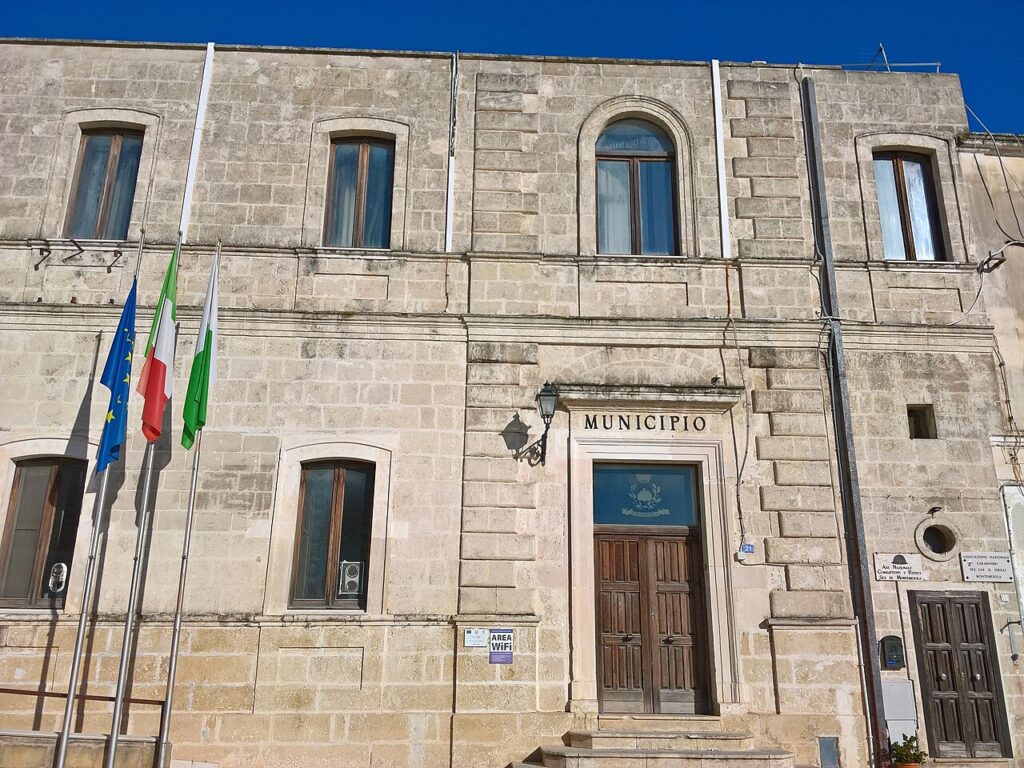
In 1700, Marzia Antonia married Andrea Saraceno, a nobleman who then acquired the other half of the casale from Alessandro Galeota, son of Giovanni Tommaso. In the second half of the 18th century, Andrea Saraceno achieved the unification of the entire feud under a single hand. In 1755, Andrea Saraceno received the title of marquess for the fief of Montemesola by royal privilege. His greatest contribution came in 1794, when he substantially restored and enlarged the Palazzo Marchesale from its eastern face and demolished decrepit dwellings to create the modern street layout and piazzas that define the village centre today. With the abolition of feudal privileges in 1806, the era of noble rule ended. Saraceno’s testament of 1810 passed his properties to his son Francesco. By 1820, through the marriage of Francesco’s daughter Vittoria to Nicola Chyurlia, Marquess of Lizzano, the Saraceno holdings passed into the Chiurlia family and beyond the village’s immediate sphere.
The Palazzo Marchesale
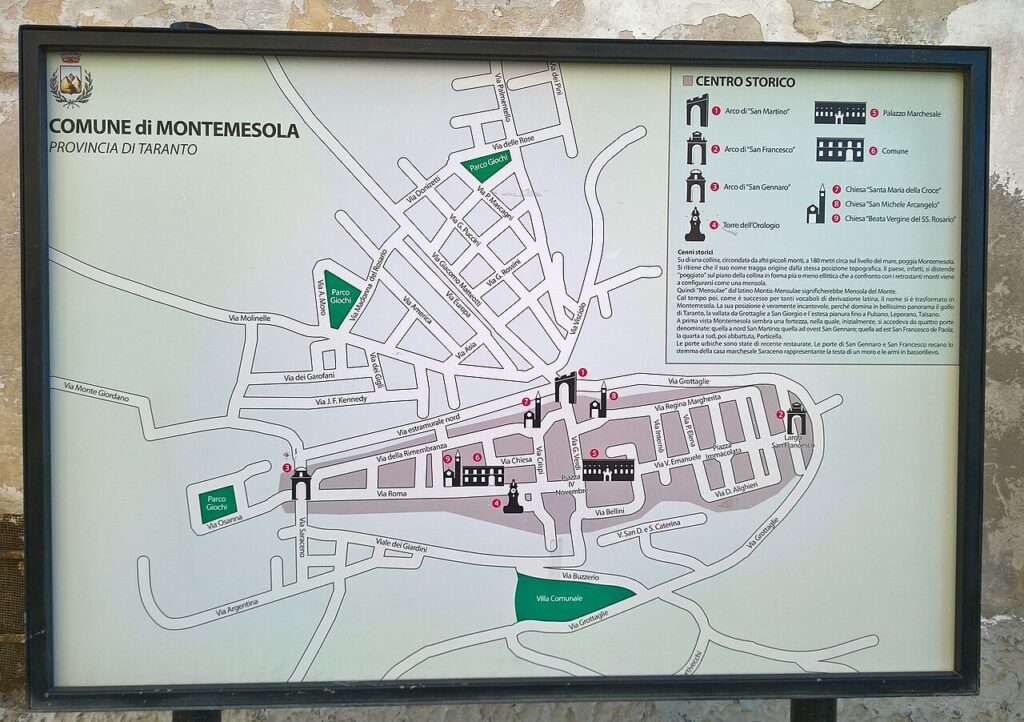
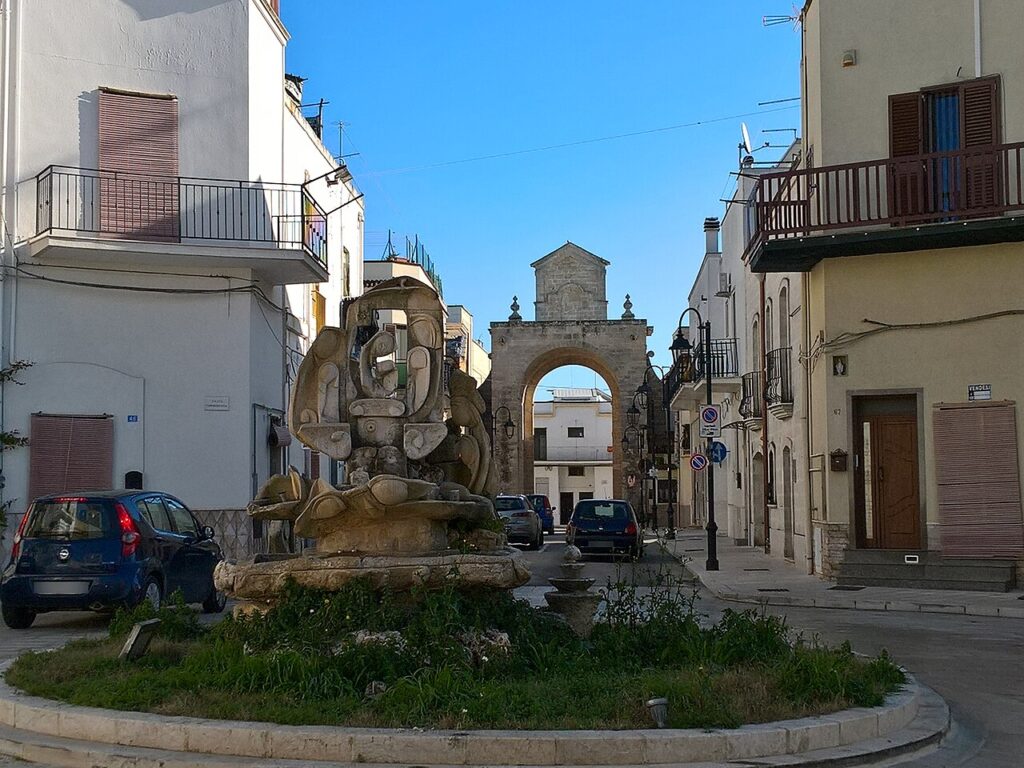
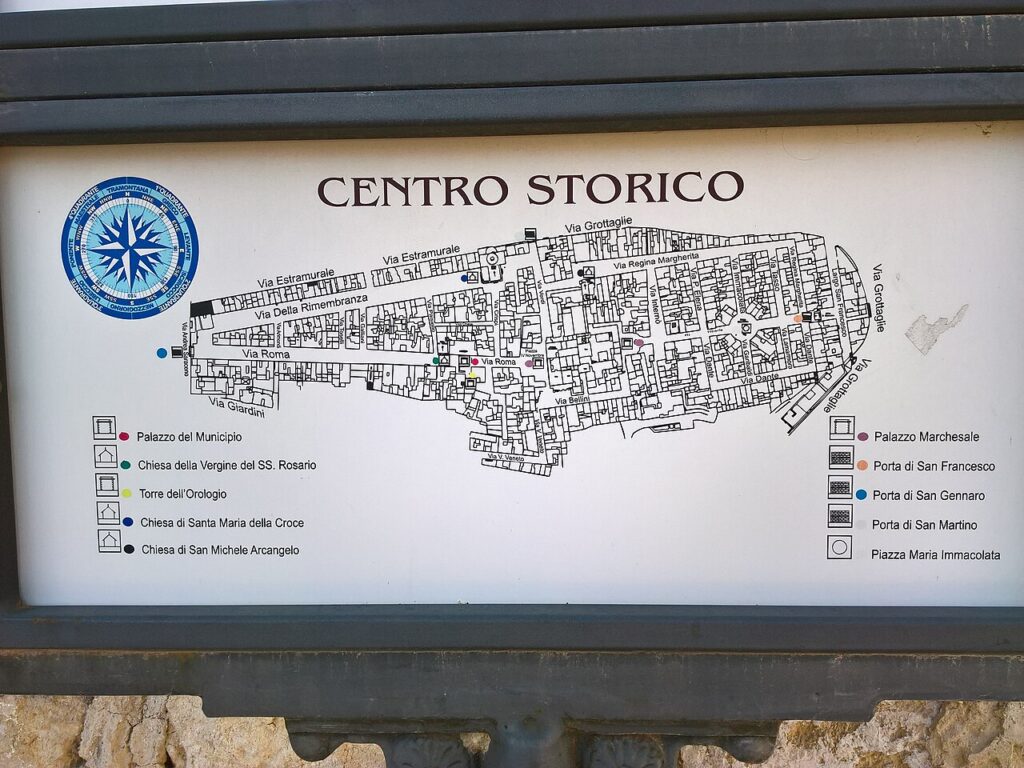
Standing at Via Roma 14, the Palazzo Marchesale serves as the formal heart of Montemesola’s urban plan. Giovanni de Noha commissioned its initial construction in 1471, raising the section that faced Piazza IV Novembre. The palazzo remained substantially unchanged until 1794, when Andrea Saraceno undertook a major restoration and eastward expansion. The building’s classical proportions and symmetrical façade embody the aspirations of feudal nobility to display order and permanence. From the palazzo, four principal thoroughfares radiate outward: Viale delle Rimembranze and Via Roma to one side, closed by the Porta San Gennaro; Via Regina Margherita and Via Vittorio Emanuele to the other, terminated by the Portone di San Francesco di Paola. This geometric arrangement, unusual among medieval hill villages, suggests deliberate urban planning—a characteristic that distinguishes Montemesola from the organic sprawl of contemporary settlements in the region.
Churches and Sacred Heritage
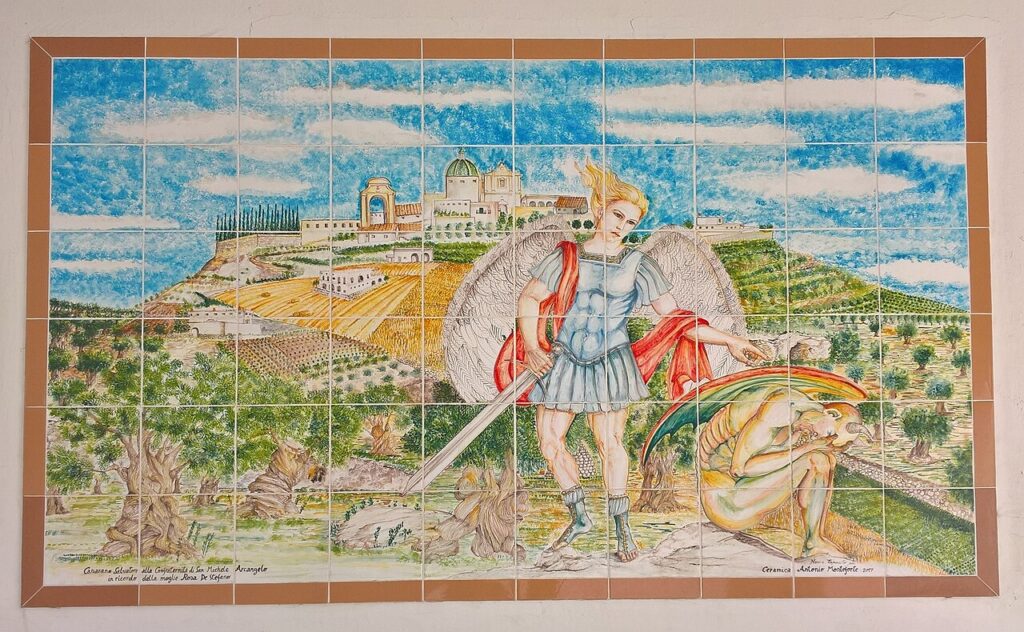
The Church of the Vergine del SS. Rosario, located on Via Roma, houses the cult of the Madonna del Rosario, the patron saint whose feast falls on 7 October. This modern church replaced or absorbed earlier devotions to the Virgin. The Church of San Michele Arcangelo, situated at Via R. Margherita 19, stands as another anchor of local piety. A third sacred site, the Church of Santa Maria della Croce at Via Delle Rimembranze 1, completes the trio of active parishes. Of these, the Church of the Holy Spirit—the ancient Byzantine structure visited by Archbishop Brancaccio in 1578—no longer functions as a place of worship and survives, if at all, only in fragmentary form or local memory. Its loss represents the erasure of the visual and spiritual world that the Albanian colonists had built.
The Land and Its Rhythms
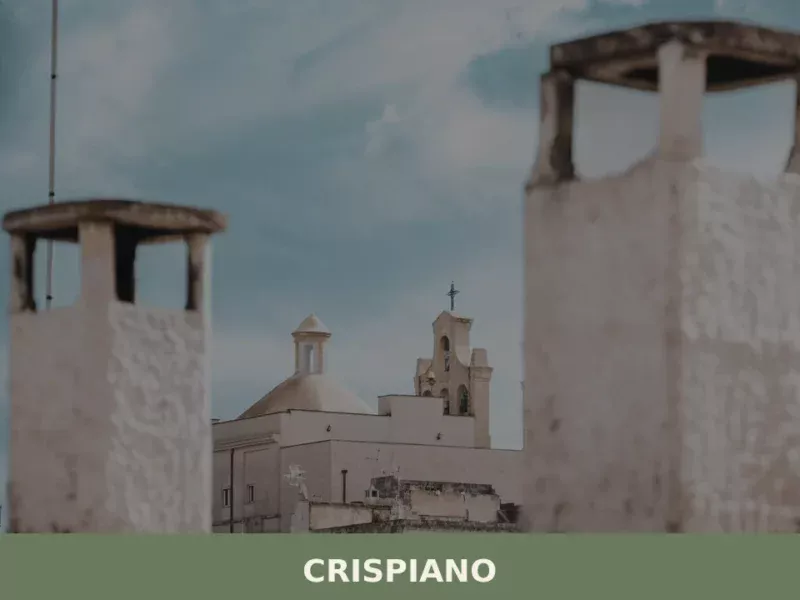
Montemesola occupies a commanding position on the Murgia tarantina, a limestone plateau that rises to modest but strategic height. The village overlooks the Golfo di Taranto to the south, the valley from Grottaglie to San Giorgio Ionico to the east, and the coastal plain stretching toward Pulsano, Leporano and Villa Castelli to the west. The gravina—that celebrated ravine of tufaceous limestone—cuts through the landscape just metres from the village, a natural boundary that once shaped settlement patterns and now draws geologists and nature enthusiasts. Nearby municipalities include Crispiano and Carosino to the west, and Grottaglie to the east.
Outside the compact village centre, the territory unfolds in a collage of traditional masserie—fortified farmsteads—dating to the 16th century, many still embedded within olive groves, vineyards and spontaneous vegetation. These estates embody the agrarian traditions of the Taranto interior, their cellars doubling as wine and oil storage. The 19th century saw robust development in agriculture and handicraft after the abolition of feudal privilege. The 20th century brought small tile and brick factories, leveraging local clays. Oil production, table grapes and quality wines became mainstays. In the 1960s, the construction of the vast Italsider steelworks at Taranto and the expansion of the provincial capital redirected labour and investment toward industrial centres. The late 1990s reversed this tide: the decline of heavy industry prompted a return to locally rooted enterprise in manufacturing and farming.
Flavours of the Countryside
The culinary identity of Montemesola reflects the agricultural landscape that surrounds it. A signature dish pairs finely mashed fava beans with fragments of bread and raw or cooked vegetables—peppers, aubergines, artichokes and wild chicory among them. The perfection of this humble plate depends upon a drizzle of oil, ideally Olio Terre Tarentine DOP or Olio Terra d’Otranto DOP, both protected designations from the province. Beyond beans, the village benefits from the broader wine and table-grape traditions of Taranto. Local producers craft wines of modest but genuine standing, and the early-ripening table grapes—marketed under the Uva di Puglia IGP label—represent a point of pride among farmers. These products emerge from deep agricultural roots, sustained by family holdings and cooperative networks that have endured the industrial upheavals of the modern era.
When to Visit and How to Reach
Montemesola welcomes visitors year-round, though the spring months (April–May) and autumn weeks (September–October) offer the most temperate climate. The feast of the Madonna del Rosario on 7 October draws local observance. Summer heat can be intense, while winters are mild but occasionally rainy. The village is best explored on foot once you have parked in or near the centre; the narrow lanes and modest distances between landmarks suit pedestrian rhythm.
By car from Taranto, Montemesola lies inland via the provincial road network. The journey takes roughly 20–30 minutes depending on starting point and traffic. Public transport connects to Taranto and regional towns, though service frequencies may be limited outside peak hours. The nearest substantial railway station is Taranto itself, which offers connections to Bari, Lecce and Naples. If arriving by air, Bari (Karol Wojtyła Airport) lies approximately 100 kilometres north and can be reached by car or bus within two hours.
| Departure point | Distance | Estimated time |
|---|---|---|
| Taranto city centre | 15 km | 20–25 minutes (car) |
| Grottaglie | 9 km | 12–15 minutes (car) |
| Crispiano | 8 km | 10–12 minutes (car) |
| Bari airport | 100 km | 1 hour 15 minutes–1 hour 45 minutes (car) |
The village offers modest accommodation and dining options within or very close to the historic centre. For a fuller range of services, restaurants and hotels, Taranto—just 15 kilometres away—serves as a logical base. The commune’s official website, https://www.comune.montemesola.ta.it/, provides local information and administrative contacts. Visitors with an interest in Byzantine art history, medieval feudalism or Pugliese countryside traditions will find Montemesola a rewarding, if understated, destination—one that rewards slow exploration and willingness to listen to the layered voices embedded in its stone and soil.
 Mountain