


Arenzano
 Sea
Sea
What to see in Arenzano, Liguria, Italy: explore a 16th-century patrician villa, a Saracens’ Tower, and a coastal sanctuary. Population 11,445. Discover it all.
Discover Arenzano
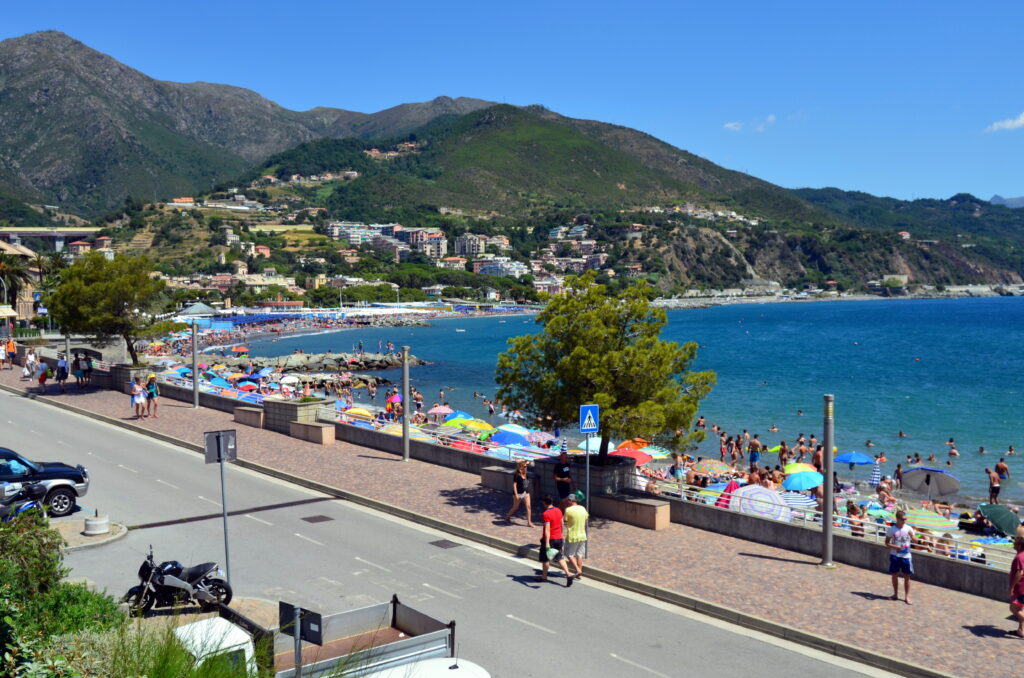
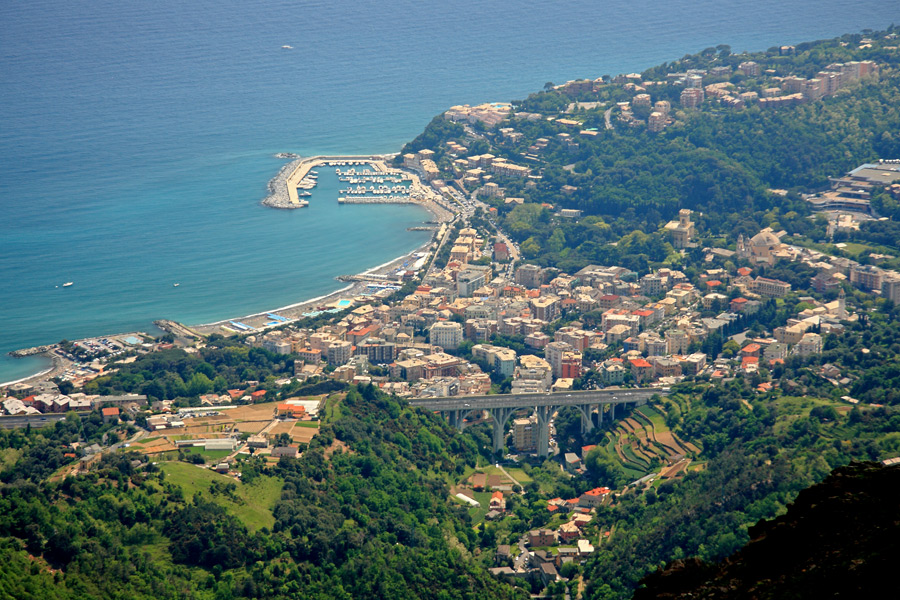
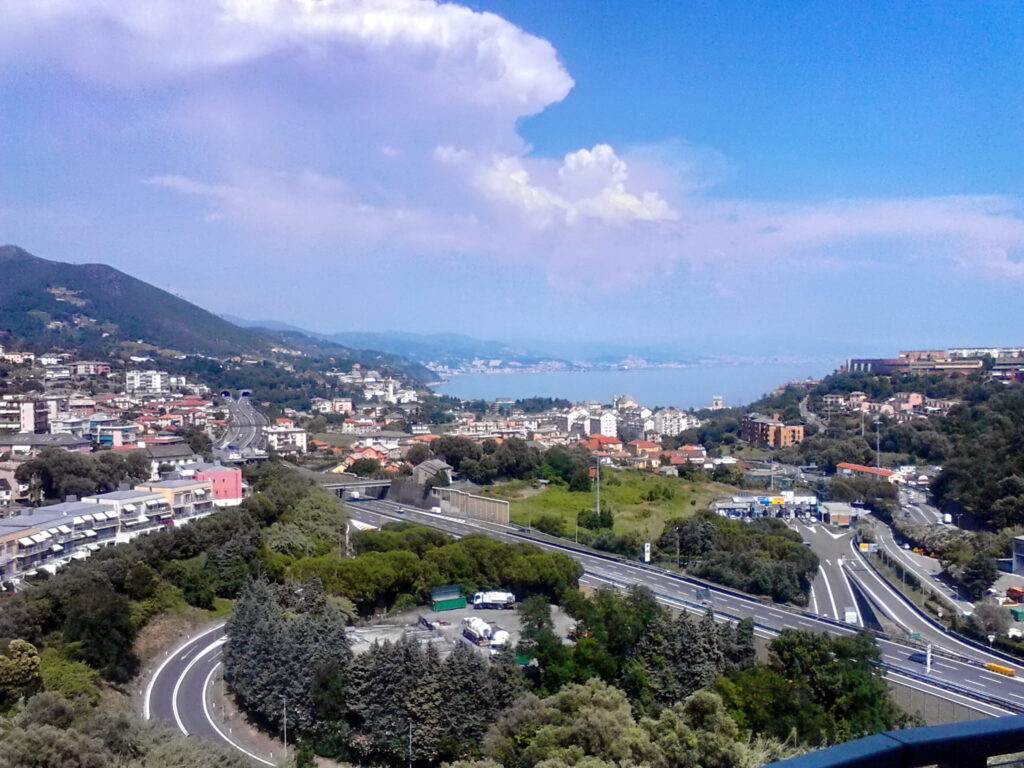
A 16th-century tower rises above the bay of Capo San Martino, its stone bulk built not for ceremony but to hold a watch line against raids from the Maghreb coast. Below it, the shoreline curves into the Ligurian Sea while the municipal territory climbs steeply inland, two thirds of it mountainous, towards peaks that exceed 1,000 m (3,281 ft) inside the Beigua Regional Park. The rivers Lerone, Cantarena, and Lissolo cut through that landscape before the land flattens into the coast where the town’s 11,445 residents live and work.
Deciding what to see in Arenzano becomes clearer once you understand how the town is structured: a narrow coastal strip backed by abrupt terrain, with five principal attractions concentrated within walking distance of the seafront.
Visitors to Arenzano find a Genoese patrician villa that now serves as the town hall, two active sanctuaries, a medieval defensive tower, and access to one of Liguria’s largest regional nature parks. The town sits roughly 30 km (18.6 mi) west of Genoa, making it a workable day trip from the regional capital and a practical base for exploring the western stretch of the Italian Riviera.
History of Arenzano
The earliest traces of settlement in the area date to the first centuries of the Roman Empire. The ancient toponym recorded in historical sources is Arentianis, a Latin place-name that historians link to a land holding or property belonging to the Arentii, a Ligurian family whose name became attached to the territory over generations. This etymology connects the modern town directly to a pre-medieval ownership structure, where place names functioned as property markers rather than purely geographic labels.
Throughout the early medieval period, Arenzano followed the political and military fortunes of Genoa, the dominant power along this stretch of the Ligurian coast. As Genoa expanded its commercial and military reach across the Mediterranean during the Middle Ages, the coastal settlements west of the city came under its administrative and defensive umbrella.
That relationship explains the presence of the Saracens’ Tower, constructed in the 16th century specifically to provide advance warning of pirate incursions originating from North African ports. The tower was a practical response to a documented threat: the Barbary corsairs regularly targeted Ligurian coastal towns during that period, and a network of signal towers was the standard defensive measure. Villages further inland in the same region, such as Fontanigorda, developed along different lines, their geography offering protection that coastal settlements like Arenzano had to construct artificially.
In the 16th century, the Negrotto Cambiaso family, one of the Genoese patrician dynasties that accumulated rural properties throughout the Riviera di Ponente, built their villa on the Arenzano hillside. That building, discussed in detail in the attractions section below, marks the town’s integration into the broader economy of Genoese aristocratic land ownership.
In the 20th century, Arenzano acquired a further layer of modern identity: the town became home to many employees of the internationally recognised architectural firm of Renzo Piano, whose offices are located nearby. The town holds formal twin-city agreements with Loutraki in Greece (since 1957), Pontoise in France (since 1958), Domburg in the Netherlands (since 1958), El Jadida in Morocco (since 1964), and Tata in Hungary (since 1994).
What to See in Arenzano, Liguria: Top Attractions
Sanctuary of the Infant Jesus of Prague
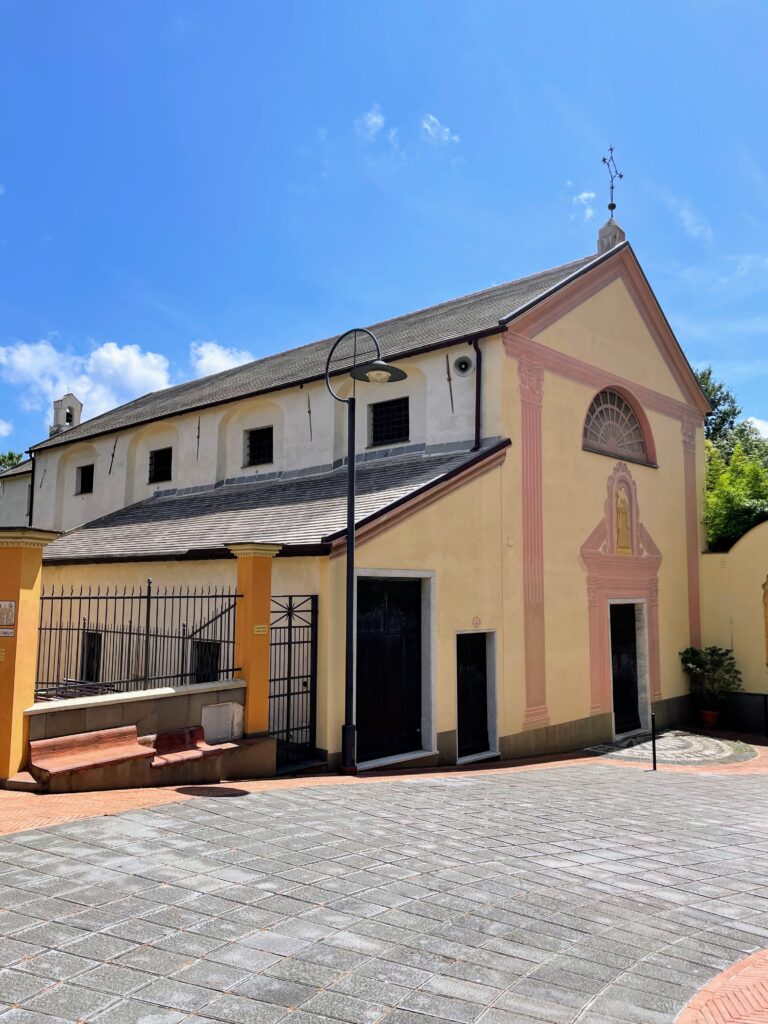
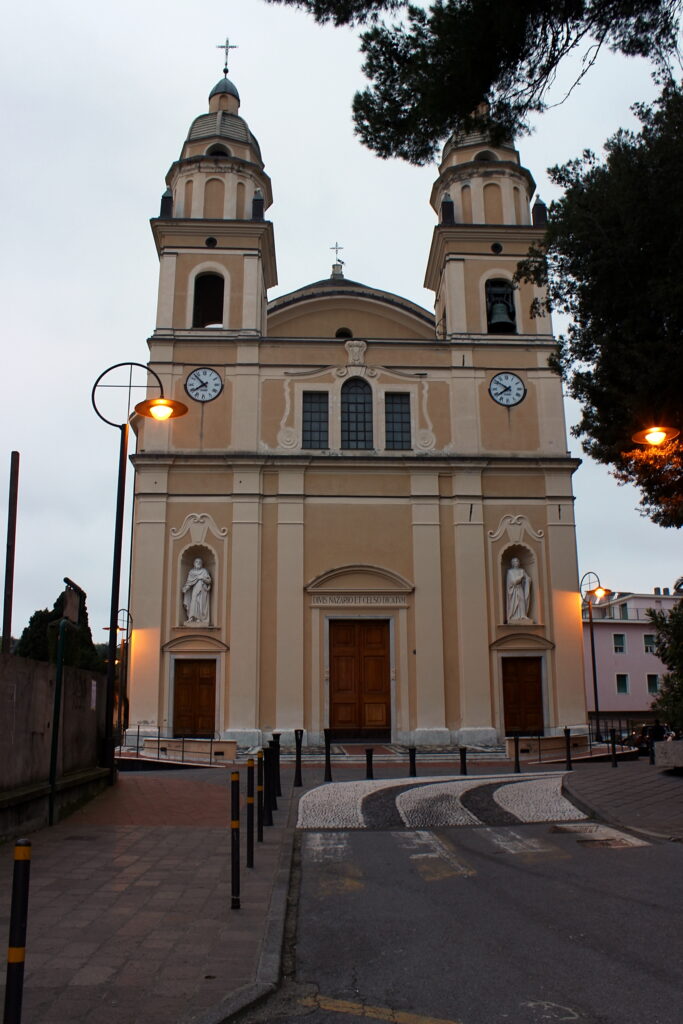
The Sanctuary of the Infant Jesus of Prague is the most visited religious site in Arenzano and one of the few Italian sanctuaries specifically dedicated to this Bohemian devotional image. The cult of the Infant Jesus of Prague spread from Central Europe into Italy during the modern period, and this sanctuary became its principal Italian centre.
Inside, the devotional focal point is a representation of the crowned infant figure, replicated from the original wax statue preserved in the Church of Our Lady of Victory in Prague. The sanctuary draws pilgrims throughout the year, with peak attendance during summer. For visitors interested in religious art and iconography, the interior merits careful attention for the devotional objects and votive offerings accumulated over decades of active pilgrimage.
Villa Negrotto Cambiaso
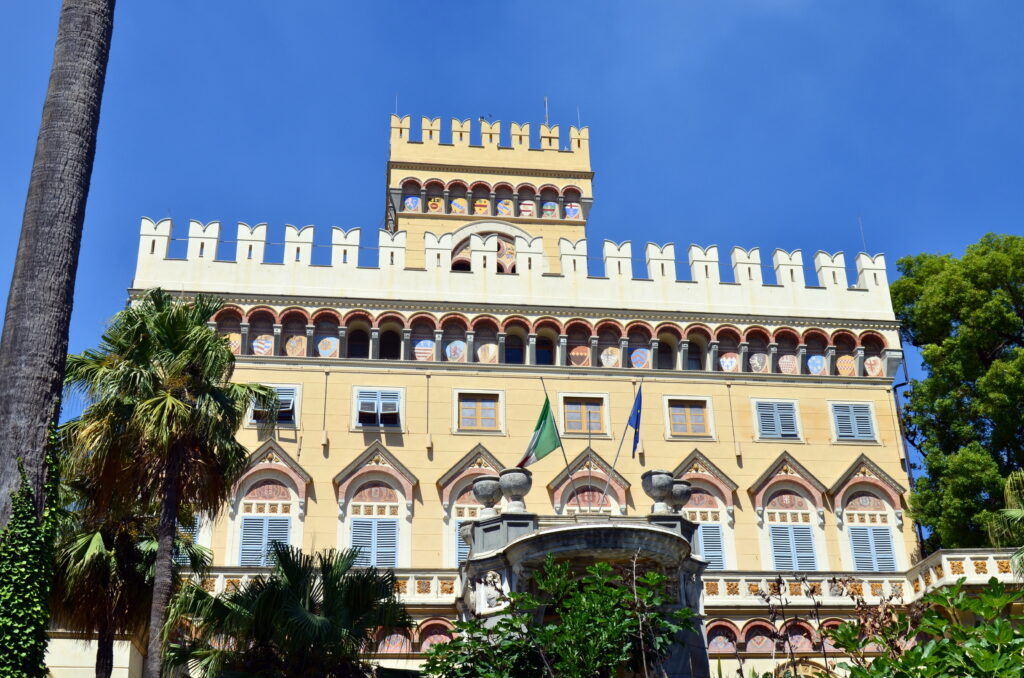
The Villa Negrotto Cambiaso was built in the 16th century by one of Genoa’s patrician families and now functions as Arenzano’s municipal town hall. The building represents a category of Ligurian aristocratic architecture that combined residential comfort with visible displays of family status: large park, structured gardens, and imported tree species.
The park surrounding the villa contains Lebanon cedars and Araucarias — trees that were status symbols in Genoese patrician culture because their rarity and cost of transport demonstrated the family’s wealth and connections. Visitors can observe the park’s mature specimens, some of which have reached considerable height over the centuries since planting. Because the building operates as the town hall, access to the exterior and park is generally possible during administrative hours.
The Saracens’ Tower
The Saracens’ Tower dates to the 16th century and stands as the most immediately legible piece of Arenzano’s defensive history. Built at a coastal vantage point, it was designed to detect and signal against sudden raids by pirates operating from the Maghreb — a real and frequent threat to Ligurian coastal communities during that century.
The tower’s construction follows the typology common to the Ligurian coastal watch-tower network: a compact stone structure positioned for maximum visual range over the sea approach. Standing beside it, the sightline over the bay becomes the most instructive feature: the tower’s placement makes sense only when you consider what it was built to watch for. The exterior stonework is accessible and worth examining for the construction technique and the mortar joints that have endured five centuries of sea air.
Sanctuary of Our Lady of the Olivette
The Sanctuary of Our Lady of the Olivette is the second of Arenzano’s two active religious sanctuaries. Its name references the olive groves that historically characterised the lower hill slopes of the Ligurian Riviera, connecting the building to the agricultural landscape that surrounded it at the time of its foundation. The sanctuary occupies a position slightly elevated from the main coastal strip, which gives the approach a different character from the town centre.
Ligurian hill sanctuaries of this type typically served the spiritual needs of farming and fishing communities whose working routes passed through the surrounding land. The building itself is modest in scale, consistent with a local devotional site rather than a major pilgrimage destination, and functions as an active place of worship.
Parco Naturale Regionale del Beigua
A substantial portion of Arenzano’s municipal territory falls within the boundaries of the Parco Naturale Regionale del Beigua, one of the largest regional nature parks in Liguria. The park’s terrain within the Arenzano municipality is predominantly mountainous, with peaks rising above 1,000 m (3,281 ft).
This abrupt change in elevation — from sea level to over a kilometre in a relatively short horizontal distance — defines the physical character of the town’s hinterland. The park offers marked trails that ascend from the coastal zone into the mountain range, giving walkers access to terrain that contrasts sharply with the beach and harbour below. Those visiting Arenzano in spring or autumn find the park’s trails in the most navigable condition; summer heat at lower altitudes can make the initial ascent demanding.
Local Food and Typical Products of Arenzano
Arenzano sits within the culinary geography of the Riviera di Ponente, the western arm of the Ligurian coast where the food tradition reflects both the proximity of the sea and the steep agricultural terraces that rise immediately behind the shoreline. Ligurian cooking in this stretch of coast developed under distinct constraints: the land is limited, the terraces are narrow, and transport inland was historically slow. That context produced a cuisine built around what could be grown on hillside plots — olive oil, herbs, legumes, vegetables — combined with the fish and shellfish available from the Ligurian Sea directly offshore.
The foundational preparation of the Ligurian table is pesto alla genovese, a sauce of fresh basil leaves, garlic, pine nuts, Parmigiano Reggiano, Pecorino, and local olive oil, worked together without heat.
In Arenzano and the surrounding coast, pesto appears on trofie — a short, twisted egg-free pasta with a firm texture — or on trenette, a flat narrow noodle. Focaccia genovese, the flatbread baked with olive oil and coarse salt pressed into its surface before the oven, is produced daily in local bakeries and eaten at any hour. Along the waterfront, fritto misto di mare — mixed fried seafood, typically including small fish, squid rings, and prawns in a thin batter — appears regularly on restaurant menus, the fish sourced from the Ligurian Sea fishing grounds.
The olive oil produced along the Ligurian Riviera uses the Taggiasca olive variety, which yields an oil with a mild, low-bitterness profile distinct from the more robust Tuscan or Sicilian oils. While specific certified designation details for Arenzano’s immediate territory are not separately documented in available sources, the broader Ligurian olive oil tradition — particularly the Riviera Ligure DOP designation — applies to this coastal zone.
The Taggiasca olive also appears preserved in brine or under oil as a table product, and both forms are sold in the town’s food shops.
Summer brings the busiest period for food vendors and waterfront restaurants in Arenzano, as the resident population of 11,445 expands considerably with seasonal visitors. The town holds a number of festivals during the summer months, some of which include food stalls serving local preparations. For provisions to take away, the covered market and the food shops along the main shopping streets stock the full range of Ligurian pantry staples.
Festivals, Events and Traditions of Arenzano
Arenzano hosts a number of festivals during the summer season, a pattern common to coastal Ligurian towns where the warmest months coincide with both the tourist influx and the local calendar of religious and civic observance. The sources confirm the general presence of summer festivals without specifying precise dates for individual events, but the summer cycle in towns of this type typically includes processions associated with the patron saint, evening markets, and open-air performances along the seafront.
The Sanctuary of the Infant Jesus of Prague generates its own cycle of religious observance, drawing pilgrims from across northern Italy at various points in the year, with gatherings that combine liturgical ceremony with the broader public life of the town.
The twin-city agreements that Arenzano holds with communities in Greece, France, the Netherlands, Morocco, and Hungary — established between 1957 and 1994 — have historically supported cultural exchange events, though the specific programme varies by year. Local traditions in Ligurian coastal towns of this size tend to anchor around the feast days of the patron saints venerated in the town’s two sanctuaries. Visitors planning a trip specifically to coincide with local religious events should check the current programme with the municipal tourist office or the sanctuary administration directly, as the calendar is subject to annual variation.
When to Visit Arenzano, Italy and How to Get There
The best time to visit Arenzano for beach use and outdoor activity along the coast is between June and September, when sea temperatures in the Ligurian Sea make swimming comfortable and the waterfront restaurants operate at full capacity. However, those intending to walk in the Beigua Regional Park will find May and October more suitable: the trails are less crowded, the midday heat is manageable at altitude, and the light on the bay is clearer.
Winter visits are viable for the sanctuaries and the Villa Negrotto Cambiaso park, though some waterfront businesses close between November and March. International visitors should carry some euros in cash, as smaller shops and food stalls in the area may not accept cards, and English is not always spoken in local shops away from the main tourist strip.
Arenzano is located approximately 30 km (18.6 mi) west of Genoa along the A10/A26 motorway corridor. Drivers arriving from Genoa take the Autostrada A10 and exit at Arenzano. From Milan, the journey by car covers roughly 145 km (90 mi) via the A7 motorway connecting to the A26 near Alessandria, with a total drive time of approximately 1 hour 45 minutes under normal conditions. By rail, Trenitalia operates regional services between Genoa Piazza Principe station and Arenzano, with a journey time of approximately 25 to 30 minutes on the coastal line.
The nearest major international airport is Genoa Cristoforo Colombo Airport, located roughly 20 km (12.4 mi) east of Arenzano; from the airport, the combination of a short bus transfer to Genova Sestri Ponente station and the regional train service provides a practical route into town. Those arriving from further afield — Florence, for example, is roughly 230 km (143 mi) away via the A12 and A10 motorways — can reach Arenzano in under three hours by car or by high-speed train to Genoa followed by the regional connection.
Visitors exploring the Ligurian interior as well as the coast can extend their itinerary to include Vobbia, a village in the Genovese hinterland that represents the inland counterpart to Arenzano’s coastal character, or travel west along the Riviera to visit Giustenice, a hill village in the Savona province that preserves a distinct medieval layout.
Those interested in the more remote Ligurian valleys might consider a detour to Aquila d’Arroscia, a small comune in the upper Argentina valley whose position illustrates how drastically the Ligurian landscape changes once you move even 40 km (24.9 mi) inland from the shore.
📷 Photo Gallery — Arenzano
In Liguria More villages to discover
Chiusavecchia, Liguria: An Ancient Italian Village Guide
 Plains
What to see in Chiusavecchia, Italy: Explore this Ligurian village at 140m altitude. Discover its historic core and the feast of San Biagio.
Calice Ligure
Plains
What to see in Calice Ligure, Italy: explore top attractions, local food and how to reach this Savona village of 1,727 people. Discover Liguria's inland.
Onzo
 Hills
Hills
What to see in Onzo, Liguria, Italy: explore a village of 224 inhabitants 80 km from Genoa. Discover top attractions, local food, and how to get there.
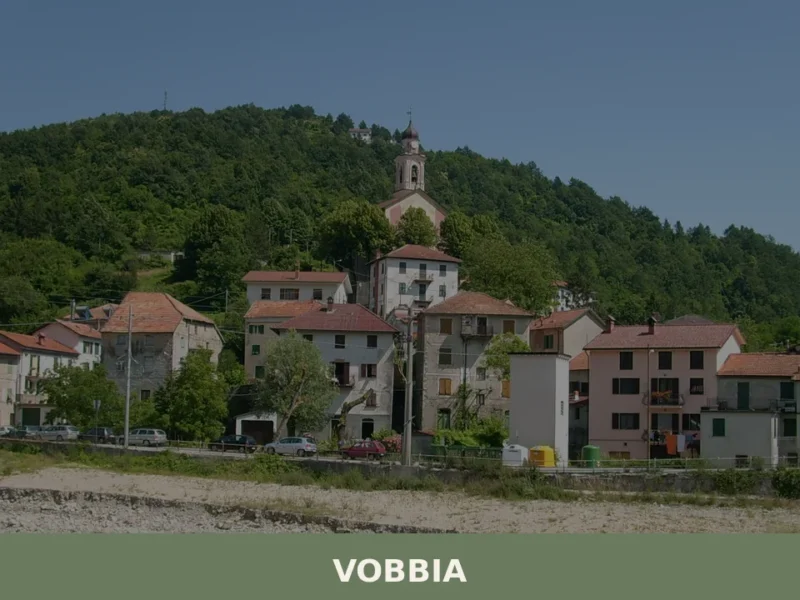
Vobbia
 Mountain
What to see in Vobbia, Italy? Explore this Ligurian village of 453 inhabitants, a gateway to Antola Regional Natural Park and its scenic trails. Discover local architecture and panoramic views.
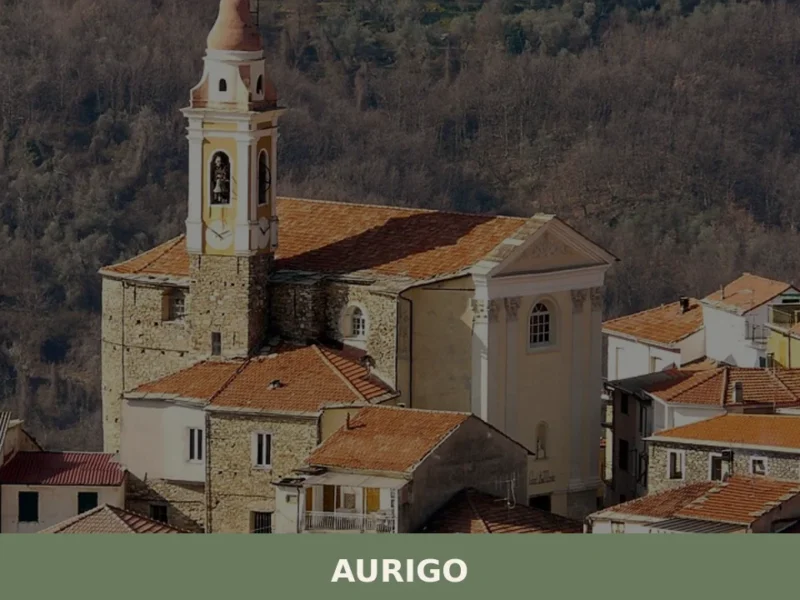
Aurigo
Hills
A 331-inhabitant village above the Impero Valley. Discover what to see in Aurigo: centuries-old sanctuaries, stone lanes, and olive terraces across the Ligurian hinterland.
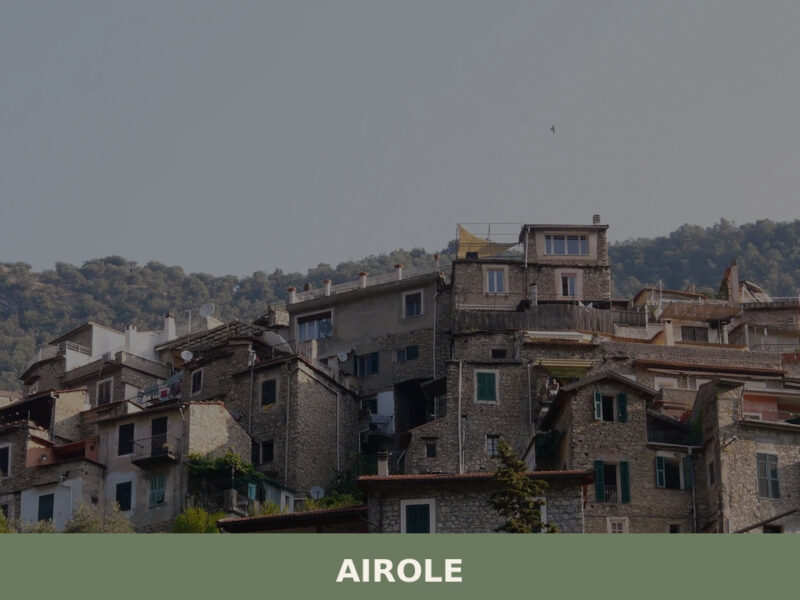
Airole
Plains
A compact Ligurian hill village of 365 inhabitants in the Roia valley. Discover what to see in Airole, from medieval stone alleys to terraced olive groves.
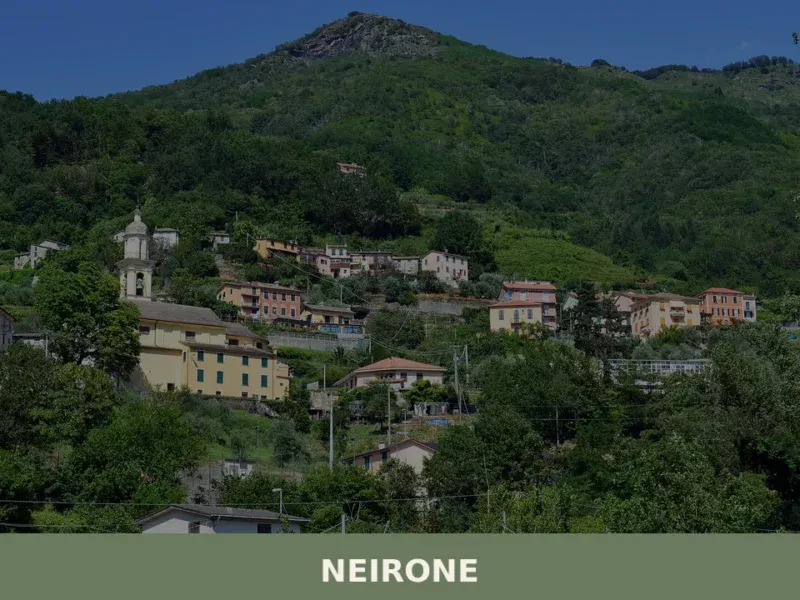
Neirone
Mountain
what to see in neirone explores this Ligurian village of 954 inhabitants in Italy. Discover local landscapes and general Ligurian cuisine.
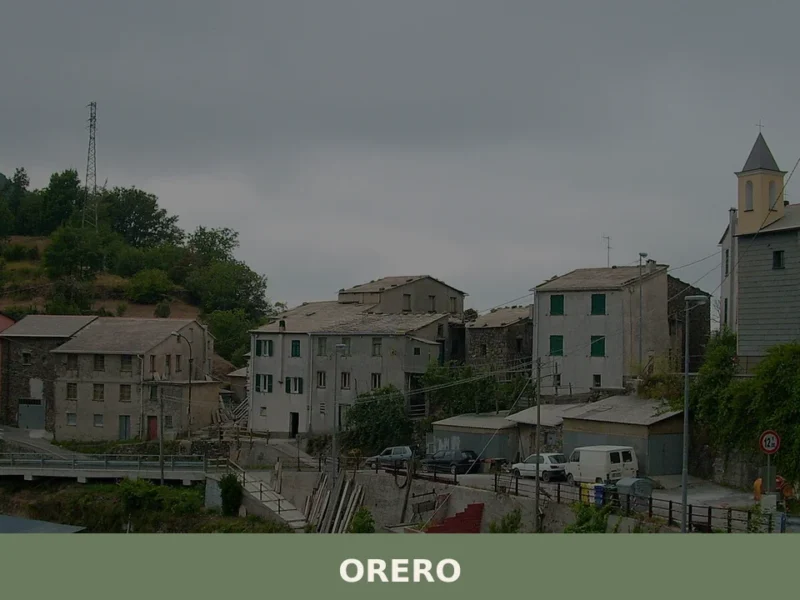
Orero
Mountain
What to see in Orero, Italy: Explore a Ligurian village at 400 m (1,312 ft) altitude. Discover the 17th-century Sant'Ambrogio Church and the autumn Chestnut Festival. Read our guide.
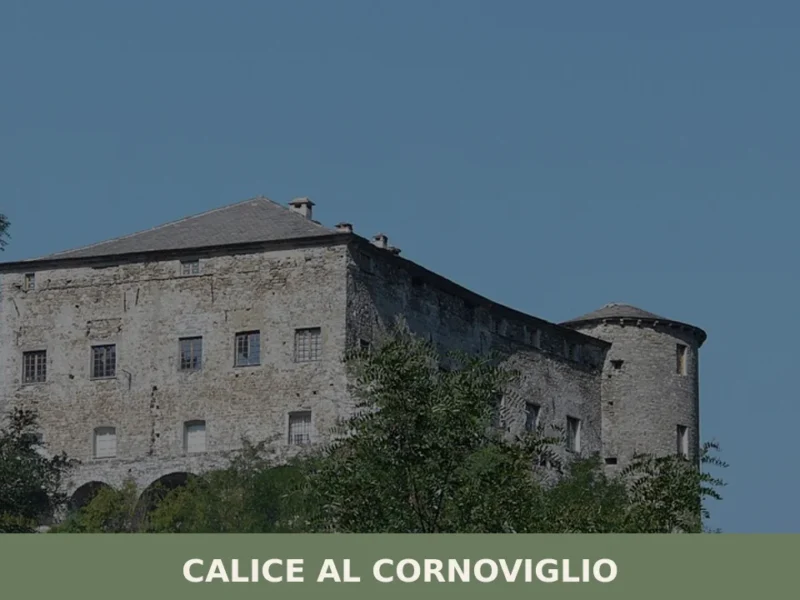
Calice al Cornoviglio
Hills
Discover Calice al Cornoviglio: medieval castle, baroque church, and historic village. Explore Ligurian hinterland's history and nature.
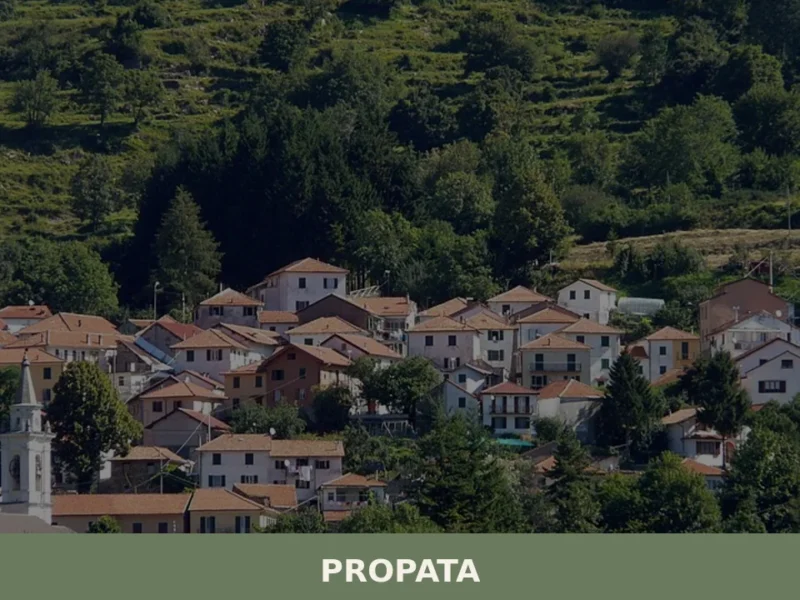
Propata
Mountain
What to see in Propata, Italy: Discover the parish church and its Maragliano statue in this Ligurian village of 156 inhabitants. Explore its history.






🏡 Know Arenzano better than we do?
If you’re a local or have been there, your knowledge matters: add what’s missing or fix a detail on this page.