


Aquila d’Arroscia
 Mountain
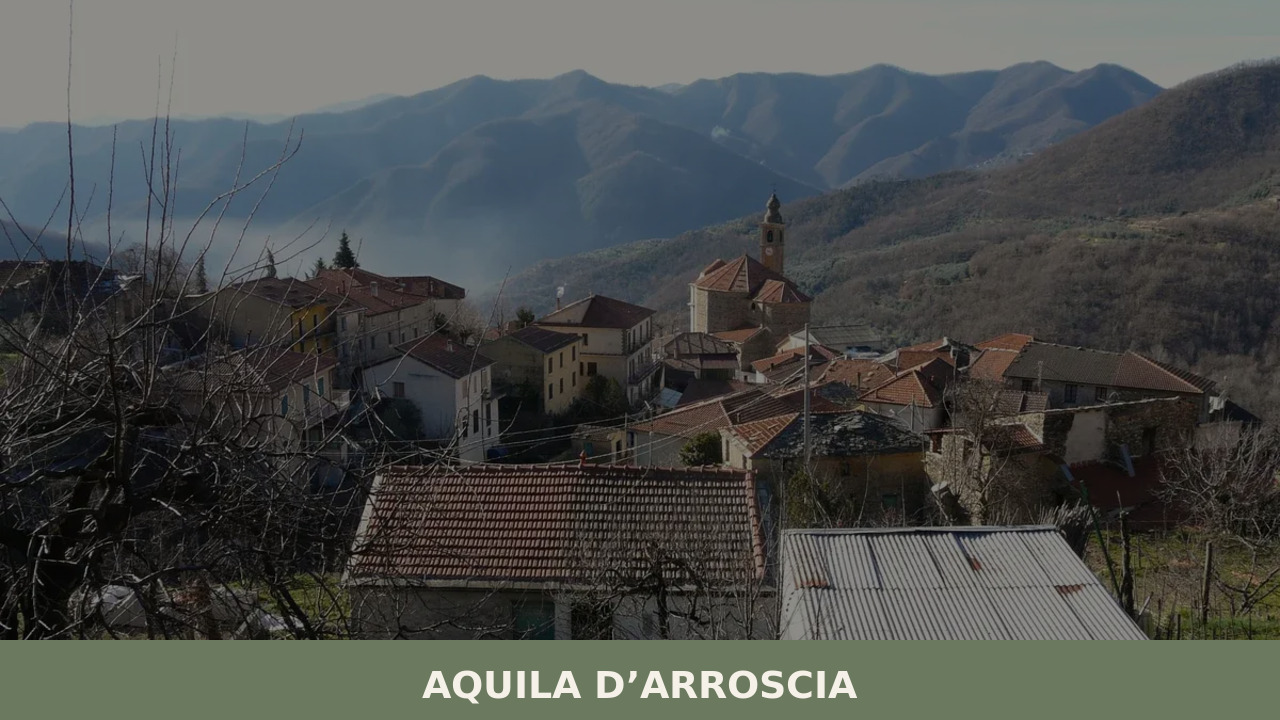
From the heights of the Arroscia Valley, the stone facades and light plasterwork of Aquila d’Arroscia stand out against the intense green of the Mediterranean maquis, dotted with olive groves that trace the slopes. The profile of the parish bell tower, with its slender spire, emerges among the slate roofs, marking the highest point of […]
Discover Aquila d’Arroscia
From the heights of the Arroscia Valley, the stone facades and light plasterwork of Aquila d’Arroscia stand out against the intense green of the Mediterranean maquis, dotted with olive groves that trace the slopes. The profile of the parish bell tower, with its slender spire, emerges among the slate roofs, marking the highest point of a compact settlement clinging to the mountain.
The narrow streets, often covered by masonry vaults, seem to suddenly open onto small squares that offer unexpected glimpses of the valley below.
For those looking for a concrete answer to the question of what to see in Aquila d’Arroscia, this village in the province of Imperia, with its 142 inhabitants and an altitude of 680 meters above sea level, offers an authentic experience of its territory.
Visitors to Aquila d’Arroscia will find a well-preserved historic center with its Parish Church of Santa Reparata, a panoramic viewpoint overlooking the valley, and a network of trails inviting exploration of the surrounding nature. The village represents an ideal starting point for discovering the inland Liguria and its traditions.
History and origins of Aquila d’Arroscia
The origins of Aquila d’Arroscia are deeply linked to its strategic position and its very name, which evokes the image of an elevated outpost, perhaps once the site of a watchtower or a military garrison. The toponym “Aquila” could indeed derive from the Latin root “aquila,” referring to the bird of prey, or more likely to an elevated point that allowed a wide view of the surrounding territory.
The specification “d’Arroscia” immediately places the village in the context of the eponymous valley, an area that has played a crucial role in communications between the Ligurian coast and the Piedmontese hinterland since antiquity.
Over the centuries, the territory of present-day Aquila d’Arroscia was affected by the feudal dynamics typical of western Liguria, passing under the control of various noble families who vied for dominion over the internal valleys.
The history of these small mountain centers is often fragmented, but it is plausible that the village experienced periods of relative prosperity linked to subsistence agriculture, livestock farming, and the control of commercial transit. The oldest architectures, with their thick walls and small windows, suggest a past where defense played a primary role, in a context not dissimilar to that of other Ligurian villages like Tribogna, also characterized by a defensive urban structure.
The integration of Aquila d’Arroscia into the Marquisate of Clavesana first, and subsequently, in more recent times, under the influence of the Republic of Genoa, contributed to shaping the cultural and administrative identity of the village.
Significant historical events, such as the Napoleonic campaigns of the late 18th century and the annexation to the Kingdom of Sardinia in 1815, left their mark, but daily life continued to revolve around the rhythms of agriculture and the local community. Today, the village represents a living testament to a rural past that has managed to preserve its authentic character, despite the social and economic transformations that have affected the entire Ligurian region.
What to see in Aquila d’Arroscia: Main Attractions
Parish Church of Santa Reparata
The Parish Church of Santa Reparata stands in the heart of the village, its facade blending Baroque elements with a sober elegance typical of Ligurian religious buildings. Its partially plastered stone walls show the wear of time, while the entrance portal, often made of marble or local stone, welcomes the faithful and visitors. Inside, the single-nave interior is illuminated by windows that filter in diffused light, highlighting the side altars and pictorial decorations which, though not grand in scale, tell the story of local devotion.
The church is dedicated to Saint Reparata, patron saint of the village, whose feast day is celebrated on October 8th, and it represents the spiritual heart of the community.
The Historic Center and the Carrugi
The historic center of Aquila d’Arroscia is a fascinating labyrinth of “carrugi”, the typical narrow and winding streets that meander between stone houses.
These streets, often paved with cobblestones and interspersed with passages covered by barrel vaults, offer an immersive experience into the medieval urban fabric. The dwellings, built with local stone and characterized by slate or grey stone portals, directly face the alleys, creating a sense of continuity and protection. Walking through these alleys, one can notice architectural details such as small votive shrines, ancient fountains, and framed windows, which reveal the history and daily life of the village.
The compact structure of the historic center, with its houses leaning against each other, is a common feature of Ligurian inland villages, which sought protection and made the best use of available space on steep slopes.
Panoramic Viewpoint (former Watchtower)
Given its altitude of 680 meters above sea level and its dominant position over the Arroscia Valley, Aquila d’Arroscia offers a highly evocative panoramic viewpoint, believed to have once been the site of an ancient watchtower. From this elevated spot, often reachable by a short climb from the village’s alleys, the gaze sweeps across the surrounding peaks, cultivated terraces, and the winding course of the Arroscia stream.
On clear days, it’s also possible to glimpse the profiles of nearby villages and, in the distance, the blue hues of the Ligurian Sea. This viewpoint is not only a place for landscape contemplation but also a spot from which to understand the defensive and territorial control function the village has had throughout its history, offering a view that extends for tens of kilometers.
Oratory of Saint John the Baptist
Adjacent to the parish church, or in a slightly secluded position, one often finds the Oratory of Saint John the Baptist, a secondary place of worship but of great importance to local confraternities.
These oratories, widespread throughout Liguria, served as a meeting and prayer place for lay associations dedicated to charitable works and assistance.
The architecture of the Aquila d’Arroscia oratory is generally simpler than that of the main church, with a linear facade and a small bell gable. Inside, one can admire wooden furnishings, processional banners, and sometimes frescoes or canvases depicting scenes from the life of the Baptist. These buildings represent a fundamental piece for understanding the social and religious life of the village in past centuries, with a history that often dates back to the 17th or 18th century.
Nature Trails of the Arroscia Valley
For those who wish to explore the surrounding nature and discover what to do in Aquila d’Arroscia beyond cultural visits, the nature trails of the Arroscia Valley offer numerous opportunities. The village is a starting point for hiking itineraries that wind through chestnut and oak forests, ancient olive groves, and mountain pastures.
These routes, with elevation gains ranging from a few tens to several hundred meters, allow access to ancient mills, rural chapels, and lesser-known panoramic viewpoints.
The local flora is rich and varied, with species typical of the Mediterranean scrub alternating with those of the mountain environment. Before embarking on a hike, it is always advisable to inquire about the difficulty of the routes and their passability, especially in winter months or after heavy rains, to fully enjoy a safe experience in the valley’s unspoiled nature.
Typical cuisine and products of Aquila d’Arroscia
The gastronomic tradition of Aquila d’Arroscia, like that of many villages in the Ligurian hinterland, is rooted in rustic, simple, and genuine peasant cuisine, which values local produce and resources. The culinary influences are typical of western Liguria, with a strong connection to olive oil, aromatic herbs, and vegetables. The village’s mountainous location has historically favored the use of ingredients such as mushrooms, chestnuts, and farmed products, integrating the most common Mediterranean diet preparations with robust and decisive flavors.
Local cuisine is a reflection of history and geography, blending mountain frugality with the rich aromas and flavors of the nearby coast.
Among the typical dishes found in the area, mushroom tagliatelle represent a classic tradition, prepared with porcini mushrooms gathered in the surrounding woods and a simple sauce based on tomato and parsley.
Another robust dish is Ligurian-style rabbit, cooked with Taggiasca olives, pine nuts, rosemary, and white wine, which enhances the intense flavors of the region. There are also seasonal vegetable preparations, such as savory tarts filled with Swiss chard, rice, and cheese, or the famous farinata, a type of thin chickpea flour flatbread, baked in a wood-fired oven.
These dishes, despite their simplicity, tell the story of a cuisine that has managed to transform humble ingredients into culinary delights.
Regarding certified products, at present there are no DOP, IGP, PAT, DOC, or DOCG certifications specifically linked to Aquila d’Arroscia. However, the Arroscia Valley is renowned for the production of extra virgin olive oil, obtained mainly from the Taggiasca cultivar, which gives the oil a delicate and fruity flavor with almond notes.
The area is also appreciated for its wines, particularly Ormeasco di Pornassio DOC, a lively and fruity red, and Pigato DOC, an aromatic and savory white, both produced in the valley’s vineyards. Visitors to the village can look for fresh, seasonal products, such as mushrooms and chestnuts in autumn, or wild-growing aromatic herbs, which can be purchased directly from local producers or in small village shops, ensuring the freshness and authenticity of the ingredients.
Festivals, events, and traditions of Aquila d’Arroscia
Life in Aquila d’Arroscia is marked by traditions and celebrations rooted in the community’s religious and rural history.
The most significant event is the patron saint’s festival in honor of Santa Reparata, held annually on October 8th. This occasion is a moment of great participation for the inhabitants, who gather for religious celebrations, including a solemn procession that winds through the village streets, carrying the statue of the saint. During the festival, the streets come alive with stalls offering typical products and local crafts, accompanied by traditional music and moments of conviviality that strengthen the community’s sense of belonging.
In addition to the patron saint’s festival, Aquila d’Arroscia’s calendar may include, depending on the season, small local festivals dedicated to regional products, such as the olive harvest in autumn or the blooming of herbs in spring.
These events, though small in scale, offer an opportunity to discover local customs and savor traditional cuisine prepared according to ancient recipes.
Traditions linked to the agricultural cycle and religious festivities continue to be a vital element of the village, keeping its cultural identity alive and offering visitors a chance to immerse themselves in the authenticity of Ligurian mountain life, an aspect also found in villages like Davagna, with its harvest-related celebrations.
When to visit Aquila d’Arroscia and how to get there
The best time to visit Aquila d’Arroscia varies according to traveler preferences, but generally, spring and early autumn offer ideal conditions. In spring, nature awakens with lush blossoms and mild temperatures, perfect for hikes on the trails of the Arroscia Valley. Autumn offers spectacular foliage and the opportunity to participate in events related to chestnut or olive harvesting, in addition to enjoying pleasant temperatures.
Summer can be hot, but the village’s altitude ensures a cooler climate compared to the coast, making it a pleasant destination for those seeking tranquility. Winter, with possible snowfalls, transforms the landscape into a picturesque scene, ideal for those who love quiet and intimate atmospheres, even if some trails might be less accessible.
To reach Aquila d’Arroscia, it is advisable to use a car.
Those coming from Genoa or Ventimiglia can take the A10 Motorway (Autostrada dei Fiori) and exit at the Albenga toll booth, then continue on State Road 582 of Colle di San Bernardo towards Pieve di Teco, and from there follow the signs for the village. The distance from Albenga is about 35 kilometers, with an estimated travel time of about 50 minutes. The nearest train station is Albenga, from which you can then continue by public bus or taxi, although public transport connections to the hinterland may be less frequent.
The most convenient airport is the Genoa Cristoforo Colombo Airport, about 100 kilometers away, or Nice Airport in France, about 110 kilometers away, both with a travel time of about 1 hour and 40 minutes. For updated timetables and transport information, it is advisable to consult the official website of the Municipality of Aquila d’Arroscia.
| Starting Point | Distance | Estimated Time |
|---|---|---|
| Albenga (A10 toll booth) | 35 km | 50 min |
| Genoa (Airport) | 100 km | 1 h 40 min |
| Nice (Airport) | 110 km | 1 h 40 min |
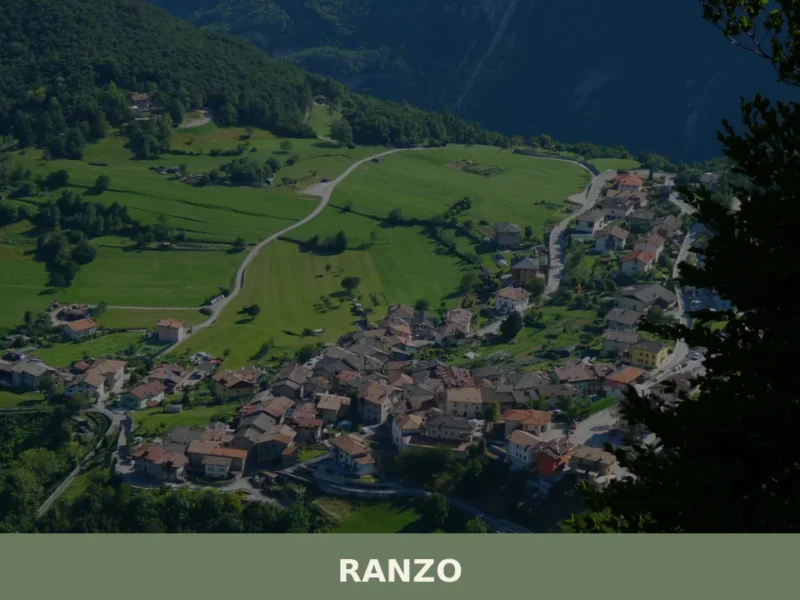
Those visiting Aquila d’Arroscia can extend their itinerary by exploring other fascinating Ligurian villages nearby. A few kilometers away is Ranzo, also located within the Arroscia Valley, sharing a similar agricultural landscape and traditions related to wine production. Another interesting destination is Deiva Marina, a coastal town that offers a significant contrast to the mountainous hinterland, allowing you to combine a mountain experience with the charm of the Ligurian sea.
Nearby Villages near Aquila d’Arroscia



🏡 Know Aquila d’Arroscia better than we do?
If you’re a local or have been there, your knowledge matters: add what’s missing or fix a detail on this page.